A profitable PPR range is narrow on pipe and wide on fittings. Depth belongs on two or three outside diameters in a single pipe construction; the fitting side needs presence across every family an installer can meet on site, because the missing elbow — not the missing pipe — is what sends a contractor to the merchant down the road.
By the Hitze Technical Content Team · Technical review: 25 July 2026
Key Takeaways
- A full PPR catalogue is a combinatorial trap. Nine outside diameters across three constructions is 27 pipe lines before a single fitting is counted.
- Stock one construction deep and treat the other two as indent items until your own invoices prove otherwise.
- Do not guess a pipe-to-fitting ratio. Count the fittings on three of your own recent jobs — the method below shows how, and typically concentrates most movement in three families.
- Valves, brass-insert transitions and the fusion machine are not accessories. They are the lines that let you quote a whole job instead of half of one.
- Pipe and fittings need different reorder rules: pipe is freight-bound and bulky, fittings are cash-dense and margin-rich. In the US tariff they are not even taxed alike — 5.3% on plastic fittings against 3.1% on rigid propylene pipe.
- Before shelf space is committed, make the supplier prove certificate scope per model and that pipe and fittings come from one warrantable system.
Most advice about stocking PPR stops at “carry the common sizes.” That is not a range plan — it is a shrug. A range plan states which lines get depth, which get presence, which are indent-only, and what event triggers a reorder on each. This guide builds that plan from two things you can actually verify: the published structure of a real PP-R catalogue, and a fitting count you can reproduce on your own jobs.
The arithmetic that traps distributor cash
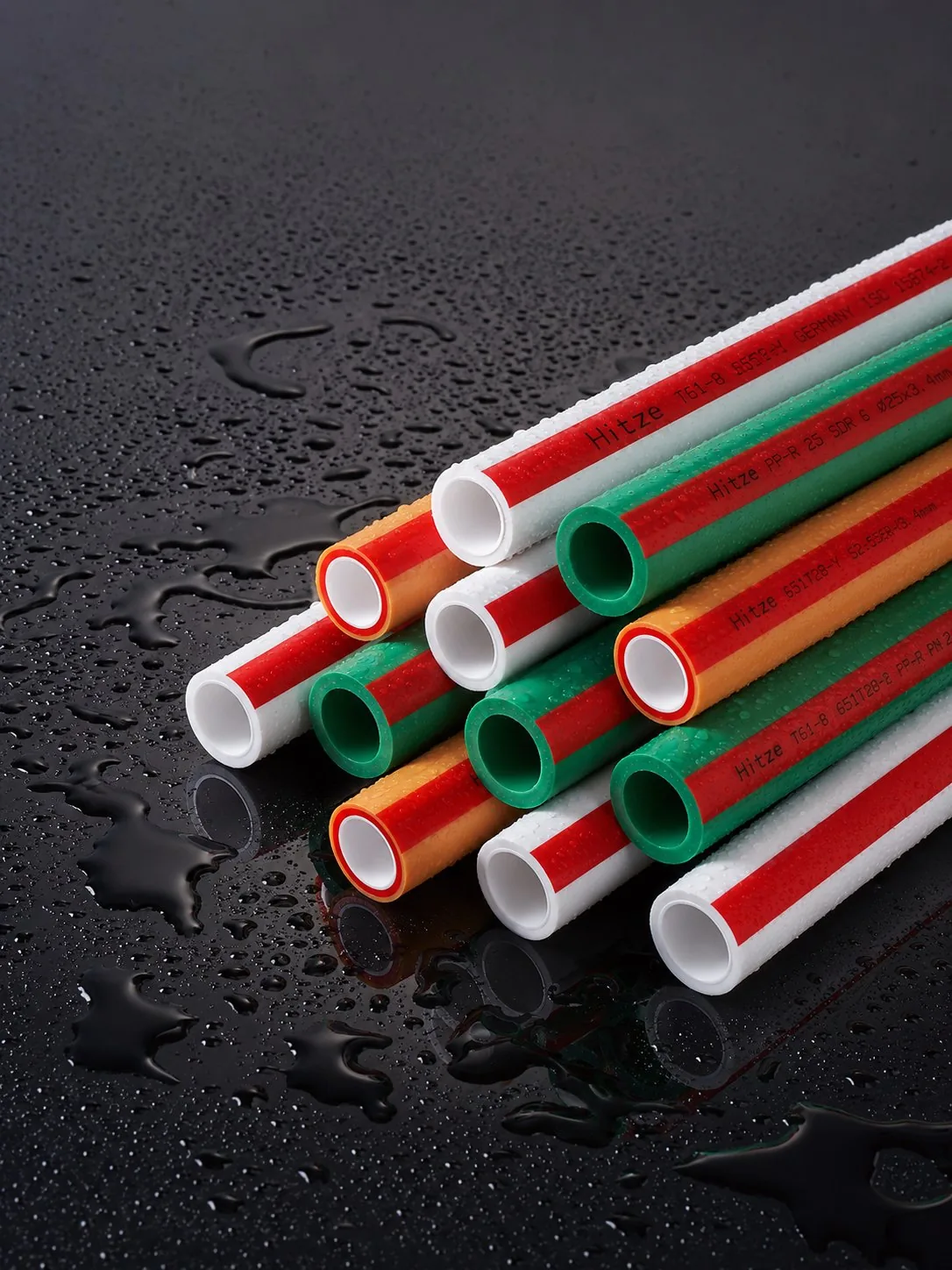
Start with the shape of the catalogue rather than the price list. A PP-R range built to DIN 8077/8078 and EN ISO 15874 is normally offered in nine outside diameters from 20 mm to 110 mm. Hitze publishes exactly that span — OD 20, 25, 32, 40, 50, 63, 75, 90 and 110 mm, with walls from 3.4 mm to 18.3 mm and bores from 13.2 mm to 73.4 mm — and offers it in three distinct constructions: a self-cleaning ceramic-core PP-R, a fibre-glass-reinforced PPR-FB-PPR, and a PPR-AL-PPR aluminium composite.
Nine diameters multiplied by three constructions is twenty-seven pipe lines. That is before the fitting side is opened, where each family — sockets, elbows, tees, unions, valves — repeats across the diameters it serves, and where reducing shapes multiply again because a reducer needs a size pair rather than a size. A merchant who says yes to the whole catalogue has not bought a range. They have bought a warehouse full of decisions somebody else made.
The consequence is cash, not clutter. Every line carries a minimum sensible quantity, and the ones that never move still occupy the same capital as the ones that turn monthly. The discipline that fixes this is simple to state and uncomfortable to apply: only lines that a customer can walk in and buy today deserve depth. Everything else is either presence — one or two units so a job can be completed — or indent, ordered against a specific project. Sorting your list into those three buckets before you place a first order is the single highest-return hour in this whole exercise.
Core pipe: nine diameters, three constructions
Outside diameters do not share demand evenly, because they do not do the same job. The small end feeds fixtures, the middle carries branches and risers, and the large end appears only when a project specifies it. Ranking them by duty gives you a defensible first cut long before you have your own sales history.
| OD band | What it actually does | Stock decision |
|---|---|---|
| 20 · 25 mm | Fixture drops and short branches — the majority of metres in any dwelling | Deep. These are your never-out-of-stock lines |
| 32 · 40 mm | Apartment entries, sub-mains, small risers | Working depth — enough to finish a flat without a special order |
| 50 · 63 mm | Risers and plant-room distribution in light commercial work | Presence only, unless you serve a commercial contractor base |
| 75 · 90 · 110 mm | Main distribution on larger buildings; specified, not bought off the shelf | Indent against a named project. Never speculative |
The construction choice is the more expensive mistake, because it silently triples everything above. The three types are not interchangeable on the shelf even where they are interchangeable in a wall: ceramic-core and fibre-glass-reinforced PP-R are rated 10 bar at class 1 and 8 bar at class 2, while the PPR-AL-PPR aluminium composite is rated 6 bar at class 1 and 4 bar at class 2. A counter assistant who hands over the wrong green pipe has handed over a different pressure class.
So pick one construction as the house line and stock it properly. For general hot and cold potable work, the ceramic-core type is the straightforward default. Carry the fibre-reinforced type where long hot runs and thermal movement are a live complaint among your installers, and treat the aluminium composite as a specified item for closed heating loops that need the oxygen barrier. If you are unsure which of your customers is asking for which, that question is answered faster by your last quarter of quotations than by any catalogue. The size, SDR and PN guide covers how the wall series behind each of these interacts with pressure and temperature.
Fittings: derive the mix, do not guess it
Every supplier will happily tell you an attachment ratio. Ignore all of them, including any you read here, because the number depends entirely on the buildings your customers work on. What travels between markets is not the ratio — it is the method for getting it. A fitting count is a property of the pipework topology, so you can derive it by counting, then check it against your own invoices.
Here is that count worked on a stated layout. Take a two-bathroom, one-kitchen apartment plumbed in PP-R: a 32 mm cold entry, a water heater in the utility space, 25 mm zone branches to each of the three wet areas on both hot and cold, and 20 mm drops to each terminal. The fixtures are a WC, basin and shower in each bathroom, plus a sink and a washing-machine point in the kitchen — thirteen outlets in total, fed by six zone runs, over roughly 90 m of pipe of which about 82 m is 20 mm and 25 mm. Assume the pipe is stocked in 4 m straight lengths, because that is what decides how many joining sockets the runs consume.
| Fitting family | Count | Where the number comes from |
|---|---|---|
| Brass-insert threaded elbows and sockets | 13 | One termination per outlet |
| 90° elbows | 18 | Six run terminations plus two routing changes per run |
| Equal and reducing tees | 7 | Thirteen outlets less six run ends — holds for this branch-and-drop layout, not for a manifold topology |
| Equal sockets | 10 | Joins where a run exceeds the stocked straight length |
| Reducing sockets | 8 | Two 32→25 transitions, six 25→20 |
| Stop and ball valves | 8 | Six zone isolators plus two mains |
| Total, excluding clips | 64 | Plus roughly one pipe clip per metre |
This is a worked model on a stated layout, not a sales statistic — swap in your own fixture counts and the totals move. But the shape of the answer is stable, and it is the shape that drives purchasing. Three families — terminations, elbows and tees — account for 38 of the 64 fittings, just under 60% of the count. Those three get depth in 20 mm and 25 mm and nothing else does. Sockets, reducers and valves are needed on every job but in low unit counts, which means presence, not depth. And the 82 m of 20 mm and 25 mm pipe against 8 m of 32 mm tells you where the pipe money goes.
Run this same count on three recent jobs before your first order, and again after ninety days against what actually left the building. The gap between the two tells you which families you over-bought and which you starved, and no supplier can hand you that comparison.
The lines that stop a customer walking out
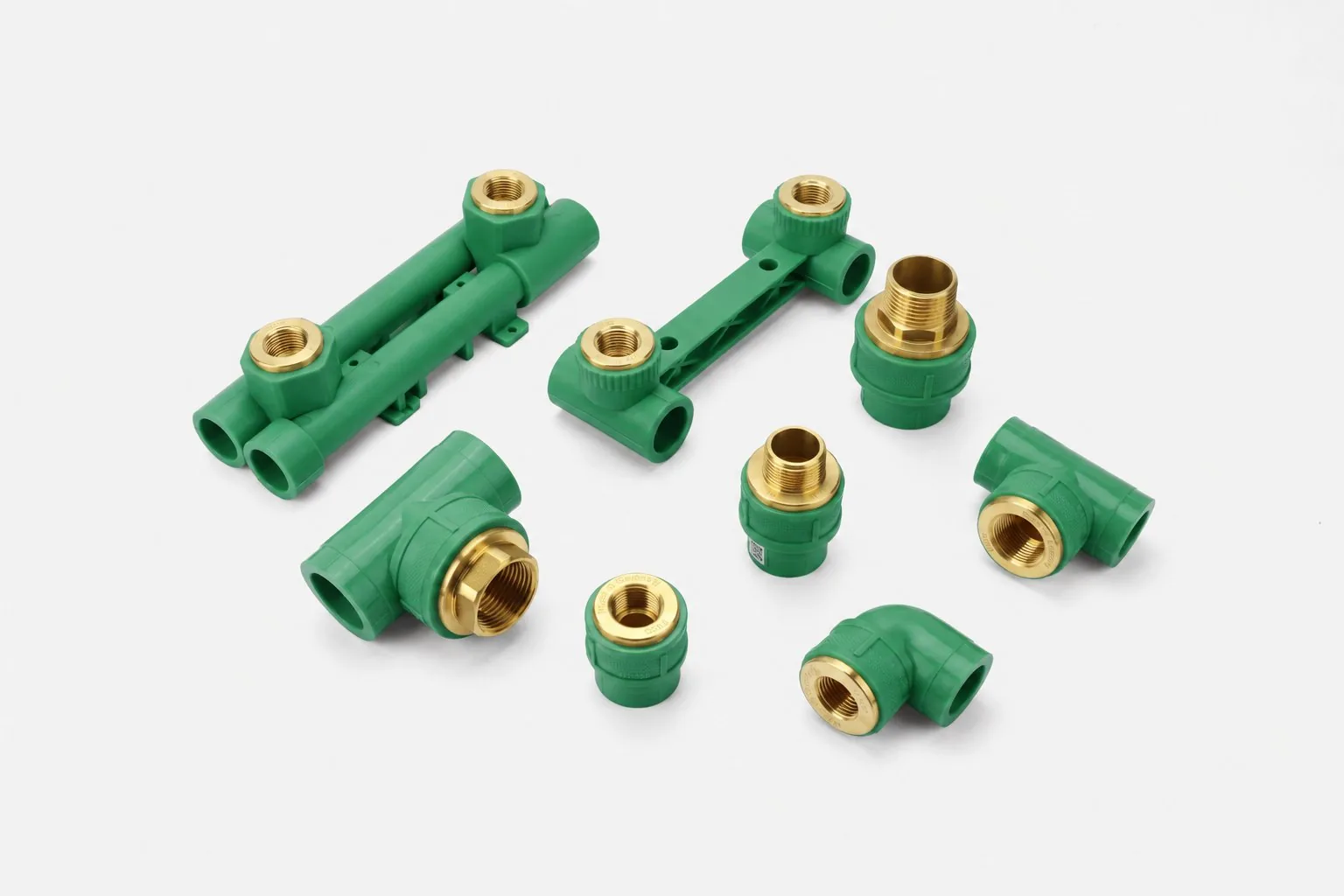
A PPR range fails at its edges. The installer who buys pipe and fittings from you still needs to isolate the zone, transition to a threaded tap connection, fuse the joints and prove the line before handover. Miss any of those and the job is finished somewhere else — along with the next one.
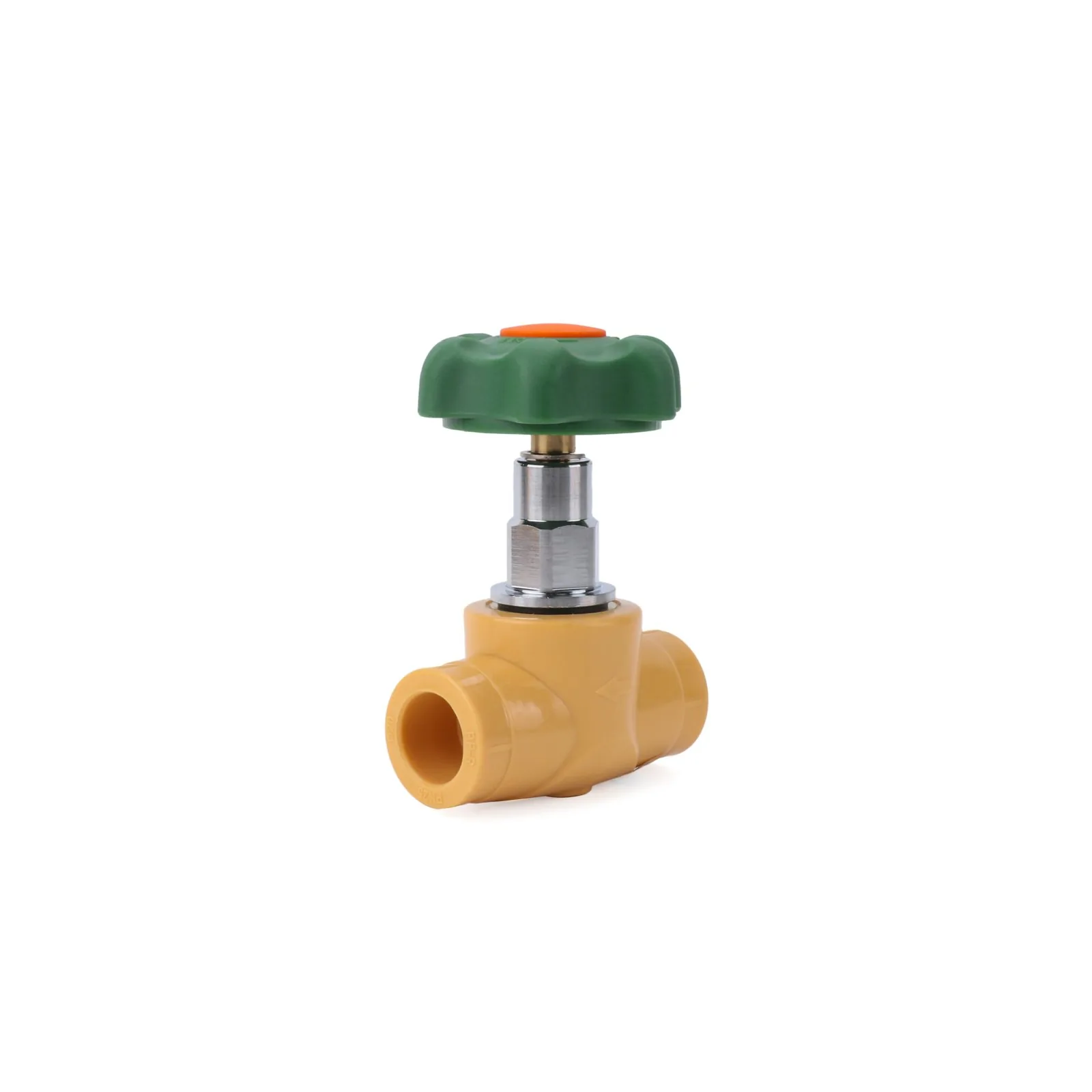
Valves come first. A heat-fusion range that includes ball valves, gate and stop valves and concealed stop valves lets you sell isolation in the same material and with the same tool, instead of pushing the installer into a threaded adapter and a brass valve from a different brand. Metal transitions come second and are non-negotiable: PP-R meets taps, meters, heaters and existing steel at every job, and brass-insert threaded fittings — Hitze supplies them from 1/2 inch to 2 inch in male and female — are the point where that happens. Under-stocking transitions is the most common way a “complete” PPR range turns out not to be.
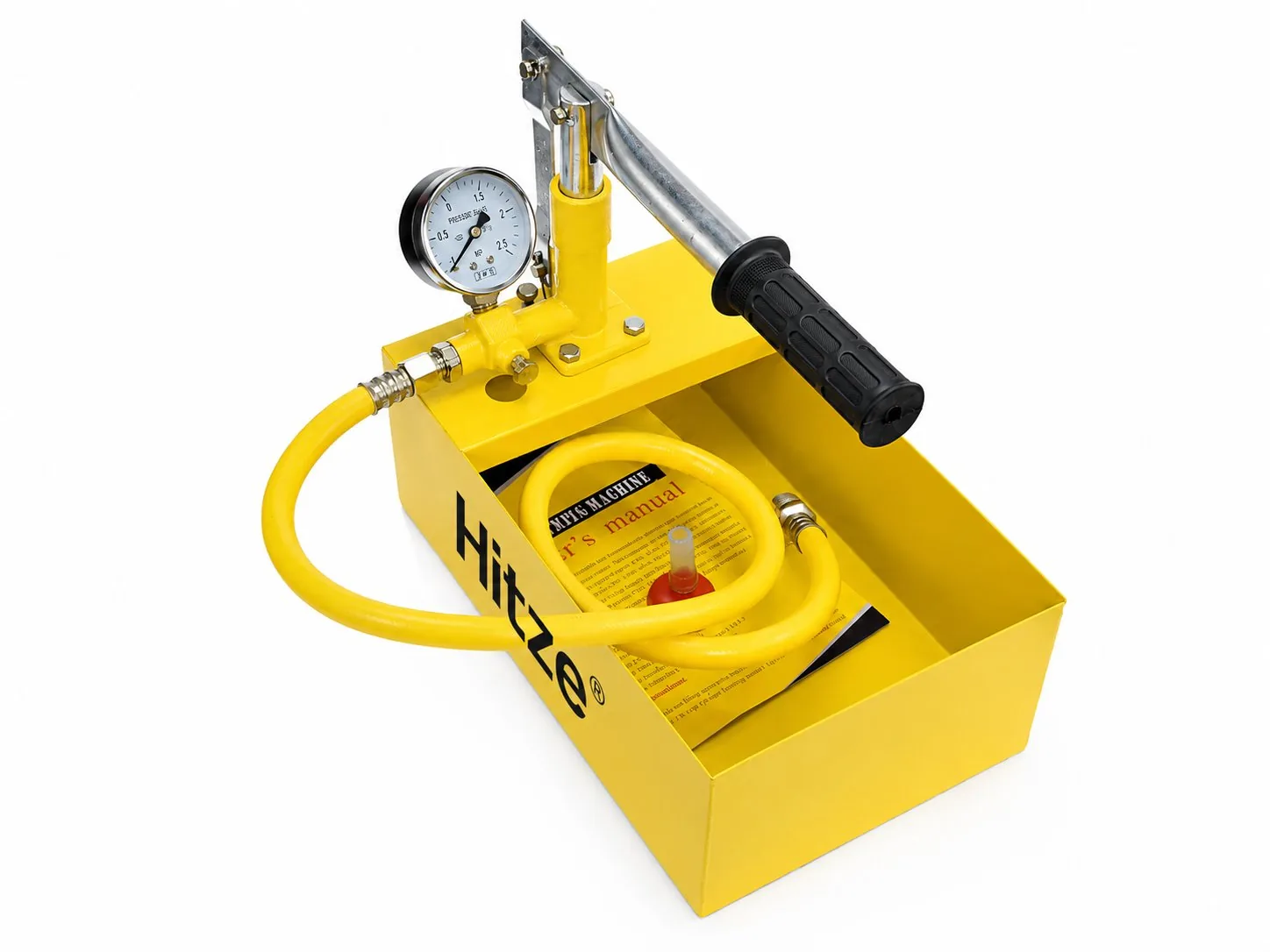
Tools and commissioning come third, and they are where a distributor stops being a shelf. PP-R cannot be installed without a socket-fusion machine, and no responsible handover happens without a pressure test. Hitze supplies both the fusion welding machine and a PN40 manual test pump alongside the pipe and fittings. These are low-turn, high-anchor lines: a contractor who bought their machine from you buys consumables from you for years. If you carry them, make sure your counter staff can talk about heating times and socket depth — the fusion procedure guide and the welding machine comparison exist for exactly that conversation. Wholesale buyers checking whether one supplier covers all four edges at once can work through the full PP-R fitting, valve and tooling list before deciding how many brands the range really needs.
Three assortments: counter, trade and full-system
Assortments should be defined by what they let you quote, not by how many boxes they contain. These three tiers escalate on capability, and each one is a defensible stopping point — you do not have to reach the third to be a credible PPR source.
| Tier | Pipe | Fittings and valves | What it lets you quote |
|---|---|---|---|
| Counter | One construction, 20 and 25 mm deep; 32 mm working depth | Sockets, elbows, tees, reducers and brass transitions in 20–32 mm; ball valves | Repairs, single bathrooms and small refits, complete, same day |
| Trade | Counter tier plus 40 and 50 mm working depth; second construction on the fastest two sizes | Full fusion family to 63 mm, unions, gate and concealed stop valves, clips and bridge bends | Whole apartments and small commercial fit-outs without a special order |
| Full-system | Trade tier plus 63 mm depth; 75–110 mm indent against named projects | Adds manifolds, Y-strainer, full brass-insert range to 2 inch, fusion machine and PN40 test pump | Tendered projects, contractor supply agreements and system-level responsibility |
Note what escalates between the tiers. It is not diameter for its own sake — it is the ability to answer yes to a larger question. The counter tier answers “can you finish my bathroom today.” The trade tier answers “can you supply this whole flat.” The full-system tier answers “can you stand behind a specified installation,” which is a different commercial relationship and needs the documentation to match — and it is the point at which a formal importer and distributor supply arrangement starts to pay for itself rather than adding paperwork.
One structural advantage is worth planning around: where a supplier imposes no minimum order quantity, you can start at the counter tier and let real demand fund each escalation, rather than buying a full-system range on a forecast. Hitze confirms no-MOQ ordering and sample-first evaluation, which is what makes a staged range practical instead of theoretical. The trade-off is freight efficiency, and the honest answer is that small replenishments cost more per unit — what a real factory offers on a first order covers where that line sits.
Planning a PPR range for a wholesale or distribution business?
Send the outside diameters, constructions and fitting families your market actually asks for, plus your destination country, and ask for a scope-matched response rather than a generic price list. Hitze supports no-MOQ ordering, sample-first evaluation and a 50-year product warranty; confirm warranty scope and commercial terms in the quotation itself.
What never earns deep stock
Dead stock in a pipe business is rarely dramatic. It is a pallet of 90 mm bought for a project that changed specification, and a shelf of reducing tees in a size pair nobody asked for twice. Four categories account for most of it, and all four are predictable enough to avoid on day one.
- Large diameters bought speculatively. The 75, 90 and 110 mm lines are specified into a project, not chosen at a counter. They also consume the most cash and the most rack space per unit sold. Order them against a named job with a deposit, or not at all.
- A second and third construction carried across the whole size range. Duplicating nine diameters in a construction your customers have not yet asked for is the fastest way to triple your holding without touching your revenue.
- Obscure reducing pairs. Reducers multiply combinatorially. Stock the transitions your worked count actually produced — in the example above, 32→25 and 25→20 — and indent the rest.
- Anything bought purely to hit a container. Filling the last cubic metre with slow lines converts a freight saving into frozen cash at a worse exchange rate than you think.
Catch it early with a ninety-day rule: any line that has not moved in its first ninety days on the shelf is reclassified from depth to presence, and its reorder is cancelled rather than reduced. Reviewing quarterly rather than annually is what keeps the mistake at one order instead of four. It also gives you a clean input for gross margin return on inventory investment — gross margin divided by average inventory at cost, the measure the plumbing trade uses to compare lines that turn slowly at high margin against lines that turn fast at low margin.
Reorder rules for pipe and for fittings
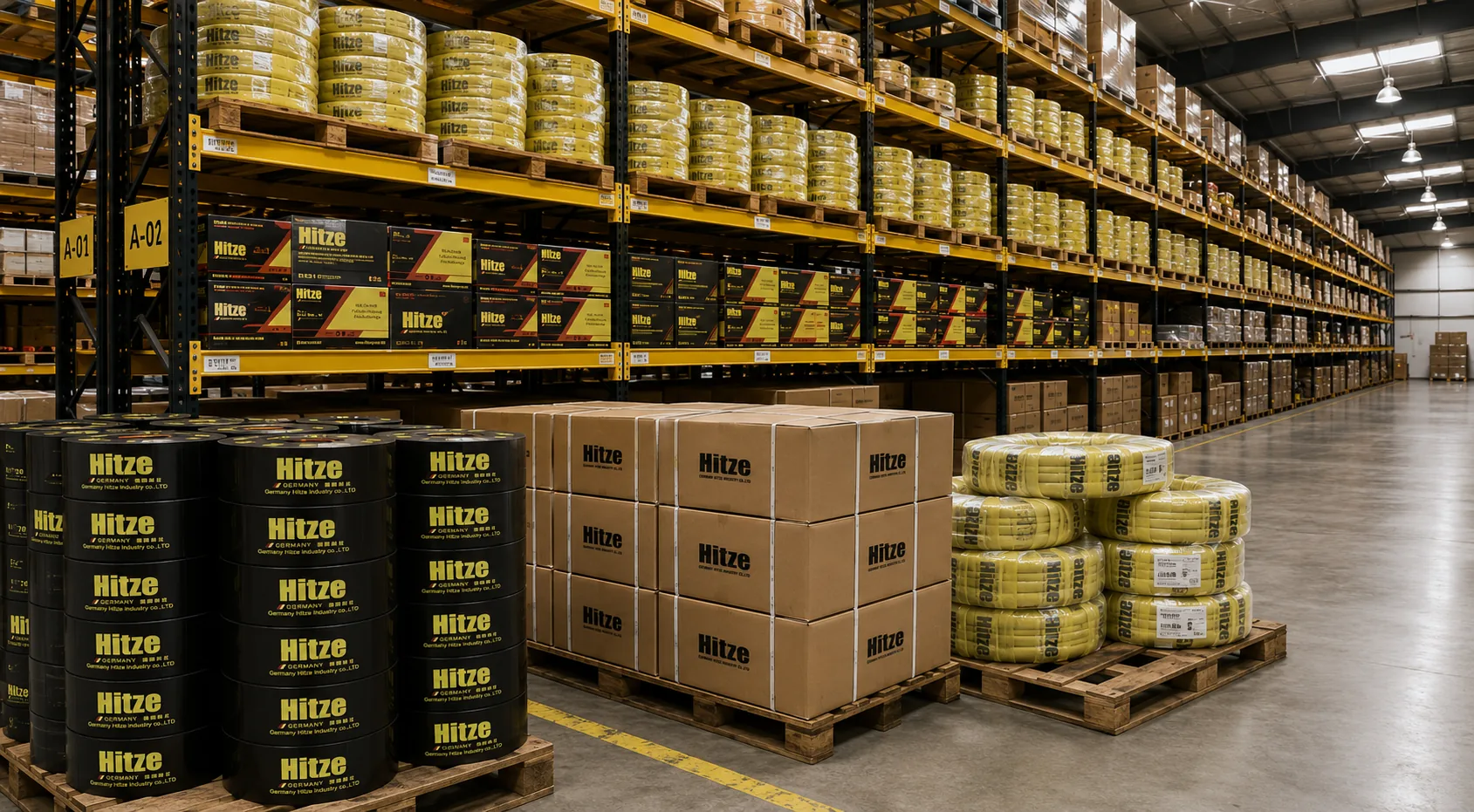
The mechanics are standard and worth stating plainly, because most small distributors reorder on the feeling that a shelf looks empty. A reorder point is the demand you expect during the replenishment lead time, plus a safety buffer: reorder point = average daily usage × lead time in days + safety stock. Safety stock is a service-level decision, not a comfort blanket — the more variable your demand and the longer your lead time, the larger it has to be, and every unit of it lowers your turns.
What is specific to PPR is that the same formula produces very different behaviour on either side of the range, and treating both with one rule is where distributors get hurt.
| Pipe | Fittings | |
|---|---|---|
| Binding constraint | Volume — it fills a container long before it fills an invoice | Cash and line count — dense, valuable, many SKUs |
| Cost of a stockout | High but substitutable — a customer may accept the next size or wait | Severe — one missing elbow loses the whole basket |
| Sensible safety stock | Lean on slow diameters, generous on 20 and 25 mm | Generous across the three high-count families, minimal elsewhere |
| Reorder trigger | Consolidate to a shipment cycle; review before each container | Continuous — top up on every pipe order |
The practical rule that falls out of this: let pipe set the shipping calendar and let fittings ride along. Pipe volume decides when a consolidated order makes freight sense; fittings are small enough that topping them up on that same shipment costs almost nothing in space and prevents the stockouts that actually lose sales. Set the review date to the shipment cycle rather than the calendar month, and the two stop fighting each other. Once the cadence is stable, formalising it with the factory is the next step — building a reorder programme covers the lead-time and consistency side of that relationship.
Where duty and freight change the picture
Assortment planning that stops at the FOB price will misprice half the range, because pipe and fittings do not behave alike once they leave the factory. Two structural differences matter enough to build into the plan.
The first is duty. In the United States tariff, rigid tubes and pipes of polymers of propylene fall under HTS 3917.22.00.00 at a general rate of 3.1%, while fittings of plastics fall under HTS 3917.40.00 at 5.3% — a spread of 2.2 percentage points on the side of the range that already carries the higher unit value. Anyone importing into the US should also note that the 3917.22.00.00 entry carries a Chapter 99 cross-reference to subheading 9903.88.02, so origin-specific additional duties must be checked against the schedule in force on the date of entry rather than assumed from last year’s landed cost. Both rates are published in the USITC Harmonized Tariff Schedule, and other markets set their own — verify yours before the rate is baked into a price list.
The second is freight density. PP-R ships as rigid straight lengths rather than coils — commonly 4 m, though this varies by producer and should be confirmed on the packing list before you plan a load — which means pipe buys volume and fittings buy weight. A container of pipe reaches its volumetric limit with the payload half used, while cartons of fittings are compact and heavy. The planning consequence is that pipe and fittings should be costed per unit on different bases: pipe against cubic metres of container space, fittings against duty and cash. Our breakdowns of landed cost per unit and container loading for pipe work through both.
What to make the supplier prove first
Shelf space is a commitment to a supplier as much as to a product. Before the first container, four things should be evidenced on paper — not asserted in an email — because each one becomes expensive to discover later.
- Certificate scope per model, not per company. A supplier holding a credential does not mean every SKU on your order is covered by it. Ask which certificate covers which model, its current validity, and the listing number. Hitze publishes manufacture to DIN 8077/8078 and EN ISO 15874 with SKZ testing, and supplies certificate and listing numbers on request in the certification pack rather than printing them on marketing pages. Our certification pack checklist lists the documents to demand.
- Pipe and fittings from one qualified system. A fused joint is only as good as the pairing that was tested. Mixing brands across a fusion joint is where warranty arguments start — see why a single-brand system is warrantable. Confirm the warranty covers the system rather than the pipe alone; Hitze states a 50-year product warranty, and the scope and exclusions belong in your quotation, not in a brochure.
- Print and batch traceability. The pipe print line is your receiving inspection. Confirm what it will carry — material, size, class, standard and batch — before production, and check the first delivery against it.
- Packing data before you plan a load. Straight lengths, bundle counts and carton quantities determine both your rack layout and your container fill. Get the packing list with the quotation; a supplier who cannot produce one has not thought about your side of the transaction.
If you are also considering a copper-lined variant for hygiene-sensitive work, apply the same evidence test rather than accepting the positioning — the PPR-CU range and the certifications overview are the places to start that conversation, and product-level test evidence is the thing to ask for.
For wholesalers and importers building a first PPR range
If you are ready to price a counter or trade tier, send your size list, preferred construction and destination market. Hitze manufactures PP-R to DIN 8077/8078 and EN ISO 15874 with SKZ testing, supplies the matching fusion fittings, valves, brass transitions and tools as one system, and imposes no minimum order quantity — so a staged range can start small and scale on real demand. Not the right fit if you need a single pallet delivered locally next week; this is a factory-direct supply relationship.
Bottom line
A PPR range is not a catalogue you accept — it is a set of decisions about where your cash sits. Narrow the pipe side to one construction with real depth on 20 and 25 mm. Buy breadth rather than depth on fittings, and let a counted takeoff from your own jobs, not a supplier’s ratio, tell you which three families carry the movement. Carry the valves, transitions and tools that let you finish a job instead of half of one. Then reorder pipe on the shipping cycle and fittings continuously, and review anything that has not moved in ninety days.
Do that and the range funds its own expansion. Skip it and the catalogue expands anyway — just onto the wrong shelves. If you want to sanity-check the specification side before committing, start with what PP-R actually is and the pipe and fitting system it has to match, then work outward to the wholesale supply terms that make the numbers work.
FAQ
Which PPR sizes should a new distributor stock first?
Start with 20 mm and 25 mm at real depth, since fixture drops and branches consume most of the metres on a dwelling, and hold 32 mm at working depth so an apartment entry can be completed. Treat 50 mm and above as presence or indent until your own invoices justify more.
How many fittings should I stock per metre of PPR pipe?
There is no transferable ratio, because it depends on the buildings your customers work on. Count the fittings on three recent jobs, tallying them by family and by size rather than as one total, then re-count after ninety days of actual sales. It is the per-family split, not the headline ratio, that tells you where depth belongs. The method transfers between markets; the number does not.
Should I stock all three PPR constructions?
Not at launch. Ceramic-core, fibre-glass-reinforced and aluminium-composite PP-R carry different pressure classes — 10 and 8 bar for the first two, 6 and 4 bar for the composite — so duplicating them across nine diameters triples your holding and creates counter errors. Stock one deep and indent the others.
Do PPR pipe and fittings attract the same import duty?
Not in the United States. Rigid tubes of polymers of propylene are classified under HTS 3917.22.00.00 at a 3.1% general rate, while fittings of plastics fall under HTS 3917.40.00 at 5.3%. Other markets set their own rates, and origin-specific additional duties must be checked separately on the date of entry.
Can I start a PPR range without a minimum order quantity?
It depends on the supplier. Hitze confirms no minimum order quantity and supports sample-first evaluation, which makes a staged counter-to-trade range practical. The trade-off is freight efficiency, since small replenishments cost more per unit than a consolidated shipment.
What causes dead stock in a PPR range?
Most commonly four things: large diameters bought speculatively rather than against a named project, a second or third pipe construction duplicated across the full size range, obscure reducing pairs, and slow lines bought only to fill the last cubic metre of a container.