Key takeaways
- Landed cost is a stack, not a price. Per-unit landed cost = (FOB unit price + freight + insurance + duty + MPF + HMF + broker + bond + drayage) ÷ units per container. How far the invoice sits below your true dock cost depends on origin — the worked example lands at roughly +20% for a non-China container and past +50% once China-origin tariffs stack on.
- US duty is charged on FOB value, not CIF. Freight and insurance are not dutiable if your broker deducts them with a rated bill of lading — but they still add to your per-unit cost. Buying CIF without that paperwork means you overpay duty on your own shipping.
- Plastic pipe MFN duty is 3.1% (HTS 3917.32/39); plastic fittings 5.3% (3917.40); brass fittings 3% (7412.20). The number that moves your cost is origin: China-made plastic pipe carries a +25% Section 301 duty on top.
- Two flat CBP fees hit every ocean entry: MPF at 0.3464% (FY2026 floor $33.58, cap $651.50) and HMF at 0.125% (ocean only, no cap).
- The tariff floor is moving in 2026. A temporary Section 122 global surcharge (10% operative, 15% statutory ceiling) sunsets 24 July 2026, but replacement Section 301/232 measures with no cap are advancing — model your per-unit cost at two tariff scenarios, not one.
- The fixed per-container fees are why a right-sized first order beats a forced minimum. With no MOQ, you fill the box to your real demand and cash-flow instead of over-ordering to hit a supplier’s floor — the freight, broker, bond and drayage still dilute across whatever you load.
Most importers who ask “what does this pipe cost me?” answer with the FOB number on the proforma invoice. That number is comforting and wrong. By the time a coil of PEX is on a shelf in your warehouse, it has picked up ocean freight, marine insurance, an MFN duty, a Section 301 surcharge if it came from China, two federal user fees, a broker charge, a bond, and drayage from the port. How much that stack adds depends entirely on origin: on a full non-China container the worked example below lands at roughly +20% over FOB, but a China-origin load carrying the +25% Section 301 duty and the current global surcharge can push the same box past +50% — and none of it shows up until you reconcile the entry. If you quote your distributors or bid a project off the invoice price, you are pricing at a loss and won’t know until the accounting closes. This guide breaks the landed cost of imported pipe into every line that hits your per-unit number, grounds each fee against the authoritative source, and shows you where the real money — and the real control — lives.
The full per-unit stack: nine lines that turn an invoice into a cost
Per-unit landed cost is arithmetic, not estimation. You take everything the shipment costs from the factory gate to your dock, then divide by the number of sellable units inside the container. The trap is that half the lines are fixed per entry and half scale per value or per volume, so the same fee that is trivial on a full container is punishing on a half-empty one. Here is the whole stack, in the order CBP and your broker will actually apply it.
| Cost line | What it is / how it’s charged | Verified rate / basis | Scales with |
|---|---|---|---|
| 1. FOB product cost | Price at the origin port, before shipping. The dutiable base. | Per proforma invoice | Units × unit price |
| 2. Ocean freight | Container slot, port-to-port. Pipe is volume-limited, not weight-limited. | Per container / CBM (market rate) | Volume (CBM) |
| 3. Cargo insurance | Marine cover for loss/damage in transit. | ~0.3–1.0% of shipment value | Value |
| 4. Import duty (MFN) | Column-1 rate on the FOB customs value. | Pipe 3.1% · plastic fittings 5.3% · brass fittings 3% | FOB value × rate |
| 5. Trade-remedy duty | Section 301 (China), plus any active global surcharge. | +25% (China List 3); 10% Section 122 to 24 Jul 2026 | Origin + value |
| 6. MPF | CBP Merchandise Processing Fee, on entered value. | 0.3464% · FY2026 min $33.58 / max $651.50 | Value (capped) |
| 7. HMF | Harbor Maintenance Fee, ocean shipments only. | 0.125% · no minimum, no maximum | Value |
| 8. Broker + bond | Entry filing; customs bond (continuous is cheaper for repeat imports). | Per entry (market); bond required >$2,500 | Per entry |
| 9. Drayage + last mile | Port pickup to your warehouse; chassis, fuel, delivery. | Per container (market) | Per container |
Read that table as two groups. Lines 2, 8 and 9 are fixed per container — freight, broker, bond, drayage cost roughly the same whether the box is 60% or 100% full, so your job is to fill the box. Lines 4–7 are value-driven — they follow your declared FOB value, which is exactly why the FOB-vs-CIF question below decides how much duty you pay. The two CBP user fees (MPF and HMF) are published on the CBP user-fee table and are not negotiable — only your entered value moves them. Get the loading right and the entry declared right, and the same pipe lands cheaper without a single price negotiation.
This is also where a supplier’s minimum-order policy quietly enters your landed-cost math. If a factory forces you to a high MOQ, you have two bad options: pad the container with SKUs you don’t yet have demand for just to dilute the fixed fees, or ship a half-empty box and eat the same freight and drayage across fewer units — either way your per-unit number suffers. A supplier with no MOQ removes that dilemma: you size the load to the demand you can actually turn, tune the mix so the box is genuinely full of pipe you’ll sell, and let the fixed lines dilute across real inventory rather than dead stock. On a first import, that difference is cash-flow you keep rather than shelf-warmers you financed to unlock a price.
The FOB-vs-CIF trap: why buying “delivered” can quietly cost you more duty
Here is the single most misunderstood line in the whole calculation, and the one that separates importers who protect margin from those who leak it. The United States assesses import duty on transaction value — the FOB price of the goods at origin — not on the CIF value. Under 19 CFR § 152.103, the charges for international freight and insurance incident to shipment to the US are excluded from transaction value when they are identified separately — so those costs are non-dutiable. If you buy on CIF or DDP terms and your invoice shows one lump number, your broker cannot see where the goods end and the shipping begins, and CBP will assess duty (and MPF, and HMF) on the entire figure — including the freight you already paid for. You end up paying a 3.1% duty, a 0.3464% MPF and a 0.125% HMF on your own ocean freight.
The fix is documentation, not renegotiation. To deduct freight and insurance from the dutiable value, your broker needs objective evidence — a rated bill of lading, or a commercial invoice that lists goods, freight and insurance as separate line items with backup. With that in hand, duty is calculated only on the goods. Without it, the non-dutiable costs cannot be split out and you overpay on every entry. This is why a disciplined importer either buys FOB and controls the freight leg directly, or insists on a CIF invoice that itemises the shipping. Choosing an Incoterm is a customs-value decision as much as a logistics one — if you want the full risk-and-cost comparison, read our companion guide on FOB, CIF and DDP for pipe imports before you sign your next contract.
Duty and tariff: the line that origin, not brand, decides
Classification is the easy part and rarely where importers go wrong. Plastic tubes and pipes without fittings — PEX, PE-RT, PP-R and multilayer coil or straight length — sit under HTS heading 3917, specifically 3917.32.00 or 3917.39.00, at a general (MFN, Column 1) duty of 3.1%. Plastic pipe fittings move up to 3917.40.00 at 5.3%. Copper-alloy (brass) fittings fall under 7412.20.00 at 3%. Those base rates have been stable and are published in the USITC Harmonized Tariff Schedule; verify your exact ten-digit code before every campaign because sub-headings shift.
The line that actually moves your landed cost is country of origin — and origin for duty purposes is where the goods were manufactured or substantially transformed, not the nationality of the brand on the label. This trips up importers of German, Italian and other European-branded systems constantly: a European brand whose pipe is extruded in Asia is dutiable at that manufacturing origin’s rate. If that origin is China, the pipe carries a Section 301 List 3 duty of +25% (Chapter 99 heading 9903.88.03) stacked on top of the 3.1% MFN — turning a ~3% duty line into a ~28% one. That single fact can be the difference between a container that pencils and one that doesn’t, so confirm the manufacturing origin, not just the marketing story, before you model the cost.
One relief worth knowing: the antidumping/countervailing (AD/CVD) orders on Chinese pipe cover cast-iron fittings and welded stainless pressure pipe — not plastic PEX/PE-RT/PP-R pipe. So plastic piping does not attract those extra AD/CVD duties, though brass fittings should be checked case by case. Do not let a nervous forwarder pad your model with an AD/CVD line that doesn’t apply to your plastic pipe.
The 2026 moving target: model two tariff scenarios, not one
If you are calculating landed cost in mid-2026, you are calculating on a floor that is about to shift. The temporary Section 122 global import surcharge (Trade Act of 1974) took effect 24 February 2026 at 10% ad valorem — the rate the February 2026 presidential proclamation actually imposed, below the 15% statutory ceiling the section authorises — and expires by operation of law at 12:01 a.m. EDT on 24 July 2026, 150 days after it began, unless Congress affirmatively extends it (for the sunset mechanics, see this trade-counsel analysis of the 150-day clock). On paper, that is a 10-point cut to your ad-valorem stack in a matter of days.
Do not build your pricing on that relief arriving cleanly. Replacement measures are advancing in parallel — a June 2026 Section 301 determination proposing 10–12.5% additional duties on dozens of trading partners, and Section 232 actions — and unlike Section 122 these carry no statutory rate ceiling and no fixed expiry. The honest way to price a container that arrives across this boundary is to model two scenarios: one with the surcharge, one without, and quote your distributors off the higher one until the entry actually liquidates. Importers who assumed a single rosy number in past tariff transitions ate the difference; the ones who hedged kept their margin.
A worked example: one 40HQ of PEX, invoice to per-unit
Walk one shipment end to end so the arithmetic is concrete. An importer buys a 40HQ of coil PEX on FOB terms with a declared goods value of, say, $28,000. The freight rates, per-unit prices and drayage below are illustrative market figures for the walk-through only, not Hitze rates — ours vary by market and order and are quoted on request — but the fee percentages are the verified, non-negotiable ones.
| Line | Basis | Illustrative amount |
|---|---|---|
| FOB goods value (dutiable base) | Invoice | $28,000.00 |
| MFN duty — HTS 3917.32 | 3.1% × $28,000 | $868.00 |
| MPF | 0.3464% × $28,000 (within min/max) | $96.99 |
| HMF (ocean) | 0.125% × $28,000 | $35.00 |
| Ocean freight + insurance | Market (non-dutiable if itemised) | $3,400.00 |
| Broker + continuous-bond share | Per entry (market) | $260.00 |
| Drayage + last mile | Per container (market) | $850.00 |
| Total landed cost | Sum | $33,509.99 |
| Per-unit uplift over FOB | ÷ units | ≈ +19.7% |
On this FOB, non-China-origin example the uplift is about 19.7%. Now change one variable: if that same pipe were manufactured in China, add the +25% Section 301 duty ($7,000) and — until 24 July 2026 — the 10% Section 122 surcharge ($2,800), and the same container lands near $43,310, a per-unit uplift of roughly 55%. Same pipe, same freight, same broker — origin alone nearly triples the cost premium. That is why “what’s your FOB price?” is the wrong opening question, and “where is it manufactured, and what’s the all-in?” is the right one.
What Hitze checks so your per-unit number holds
A landed-cost model is only as reliable as the paperwork behind the entry, and a supplier who understands import mechanics saves you more than one who simply quotes a low FOB. As a German brand of engineered piping systems — founded in 1974, running a 120,000 m² production base with 1,000+ employees and exporting to 118+ countries — Hitze structures shipments so the fee lines above land where they should. In practice, on an export order that means:
- Itemised commercial invoices that separate goods, freight and insurance, so your broker can lawfully deduct non-dutiable costs and you are not paying duty on shipping.
- Correct HTS-aligned product descriptions on the packing list — coil pipe under 3917, fittings under 3917.40 / 7412.20 — so classification disputes don’t stall the entry or trigger a re-rate.
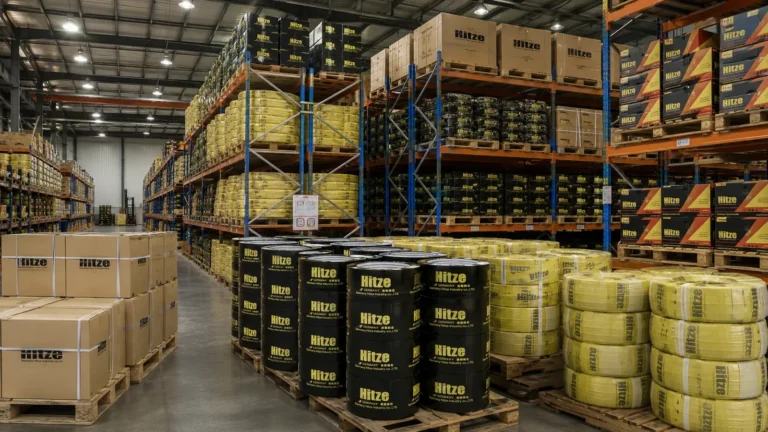
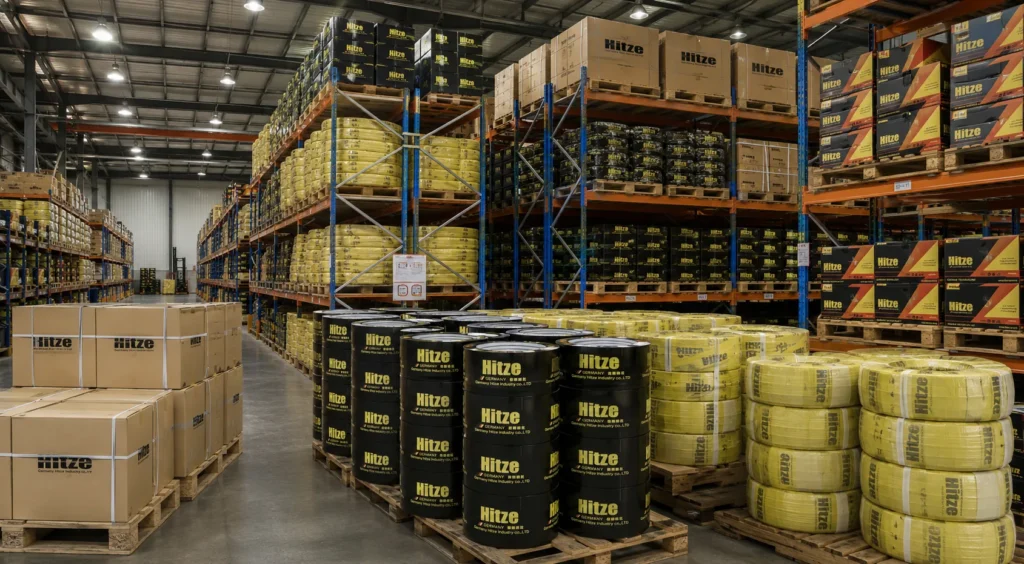
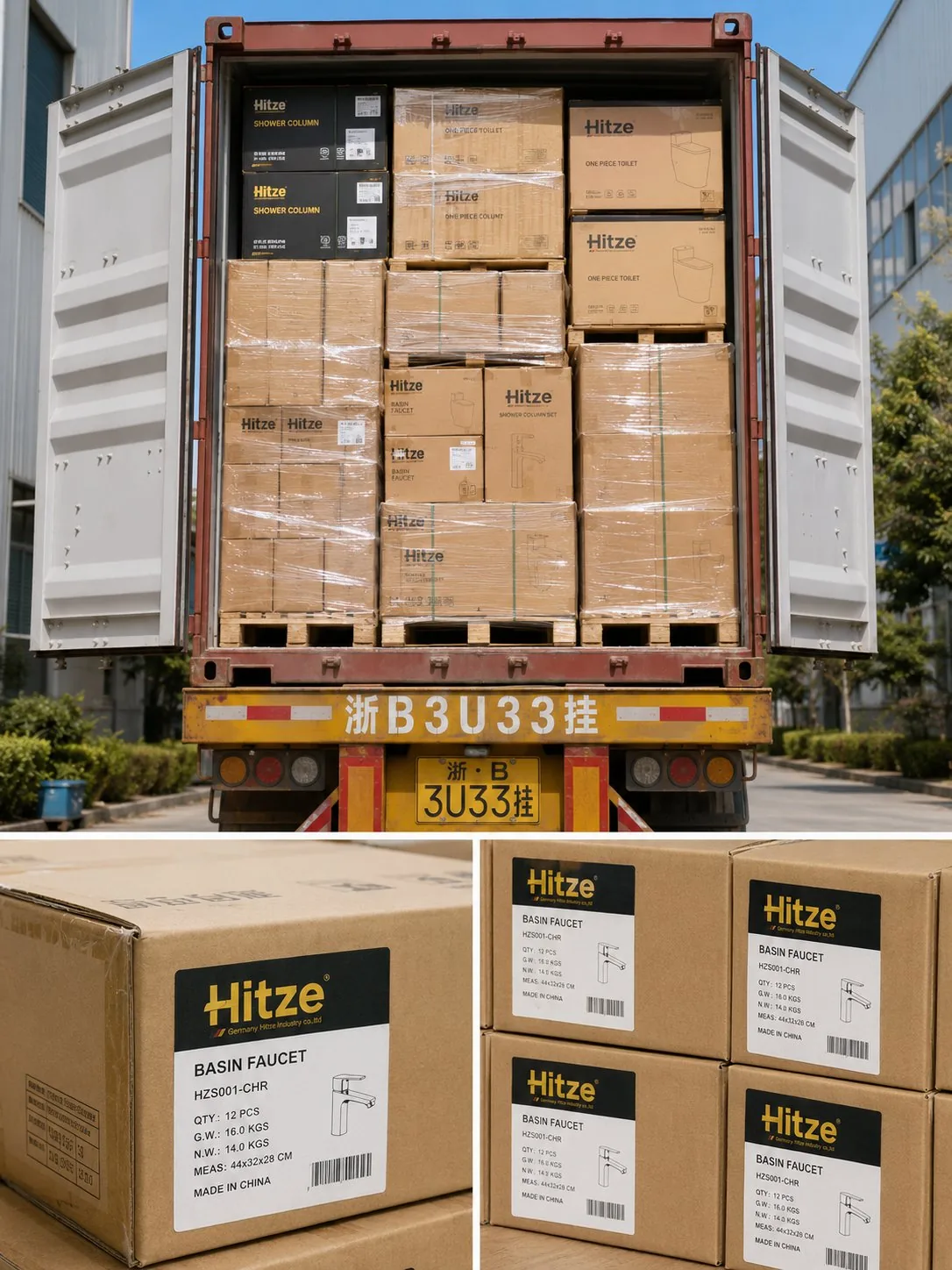
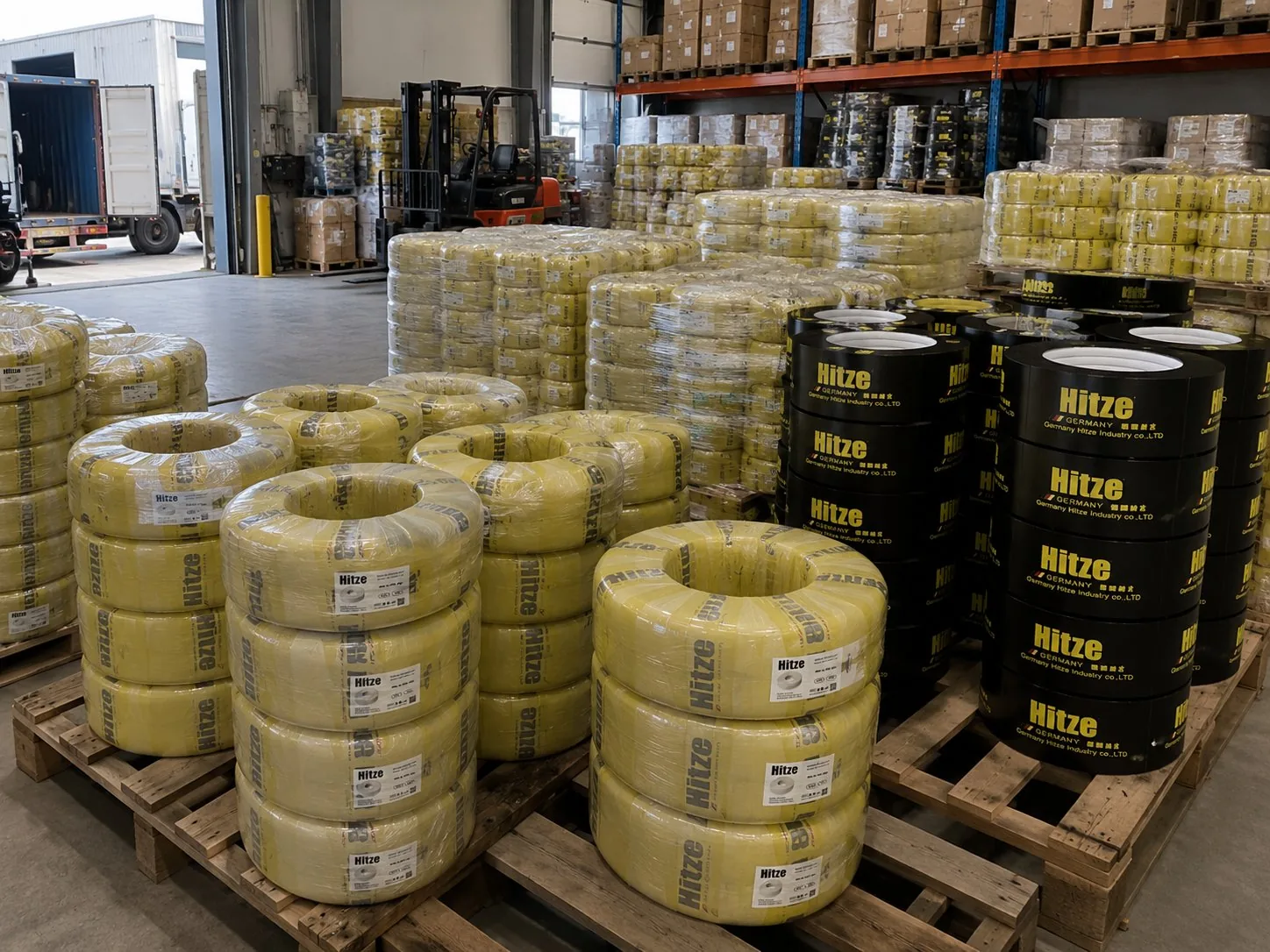
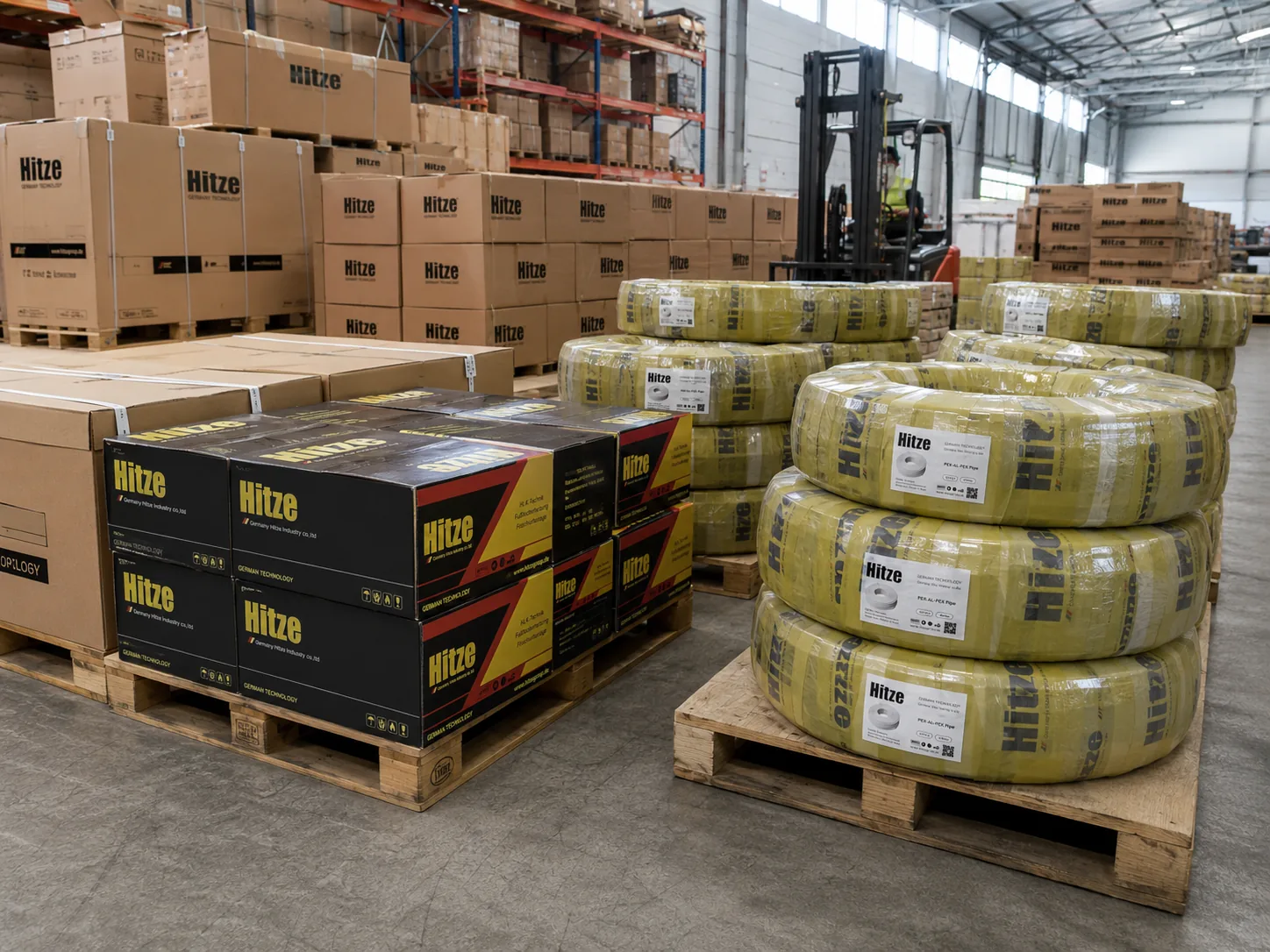
- Dense, verified container loading — with no MOQ to force the mix. Because freight and drayage are fixed per box, coil nesting and carton stacking directly cut your per-unit cost; our warehouse stages coils and cartons container-ready for a full 40HQ. And because there is no minimum order quantity, you fill that box to your real demand — a right-sized first order or a genuinely full container of pipe you’ll sell — instead of over-buying to unlock a price.
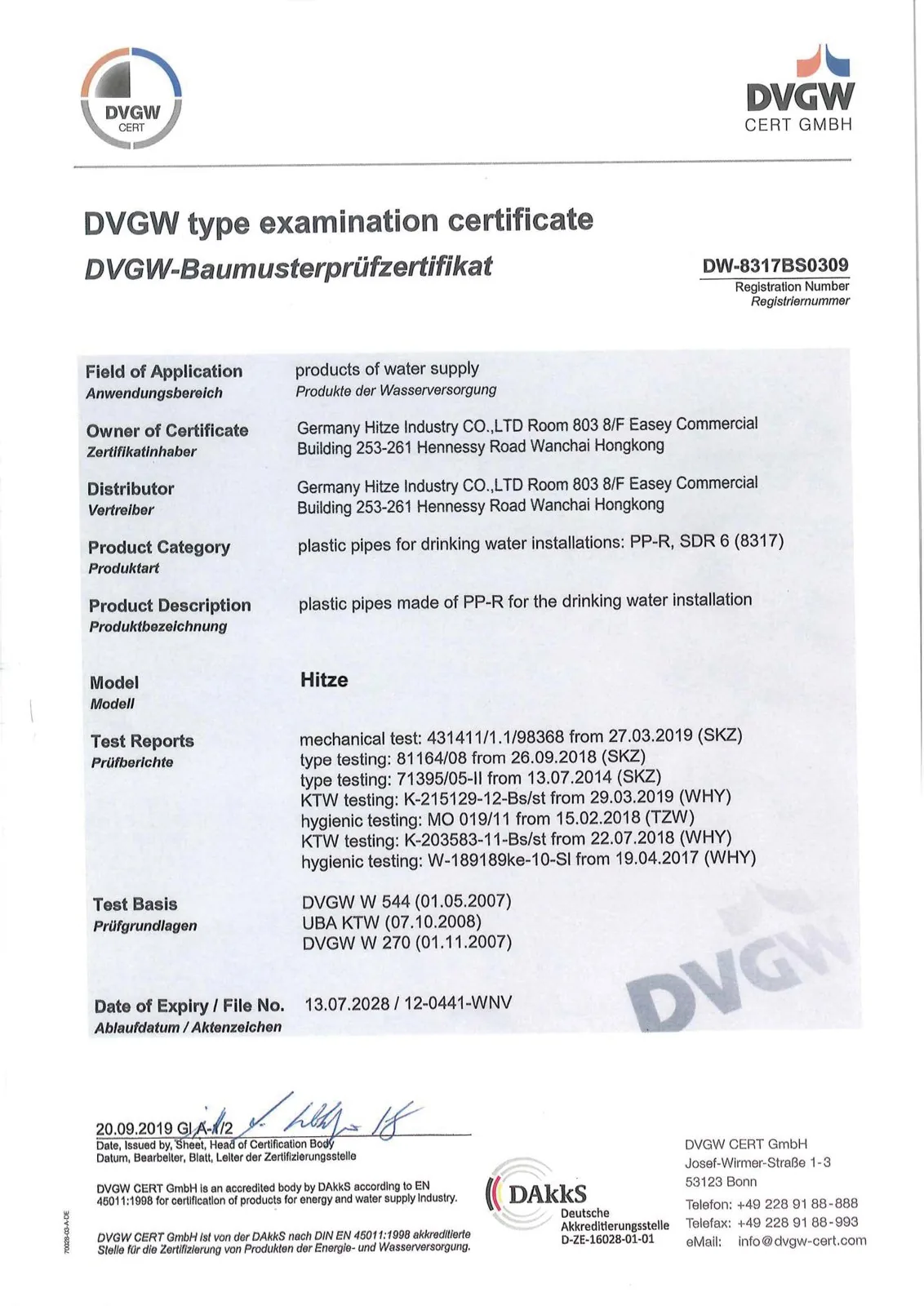
- A complete compliance pack — built to German DIN standards (DIN 8077/8078, EN ISO 15874, DIN 4726) and backed by SKZ, DVGW, WRAS and NSF/BS 6920 potable-water testing, plus certified-to cUPC/UPC (IAPMO), NSF-14 and NSF/ANSI 61 — so your goods clear market-access review instead of sitting in a hold that racks up demurrage.
- A matched pipe-and-fitting system backed by a 50-year warranty. Landed cost is a per-unit number, but total cost of ownership runs longer: buying pipe and fittings as one warranted system — rather than mixing brands at the joint — is what keeps a downstream failure from turning a cheap FOB line into an expensive callback.
None of that changes a CBP fee rate. What it changes is whether you actually get the FOB-basis deduction, the dense container and the clean clearance you modelled — the difference between the number on your spreadsheet and the number in your ledger.
Best for / not for: when a full-stack landed-cost model matters
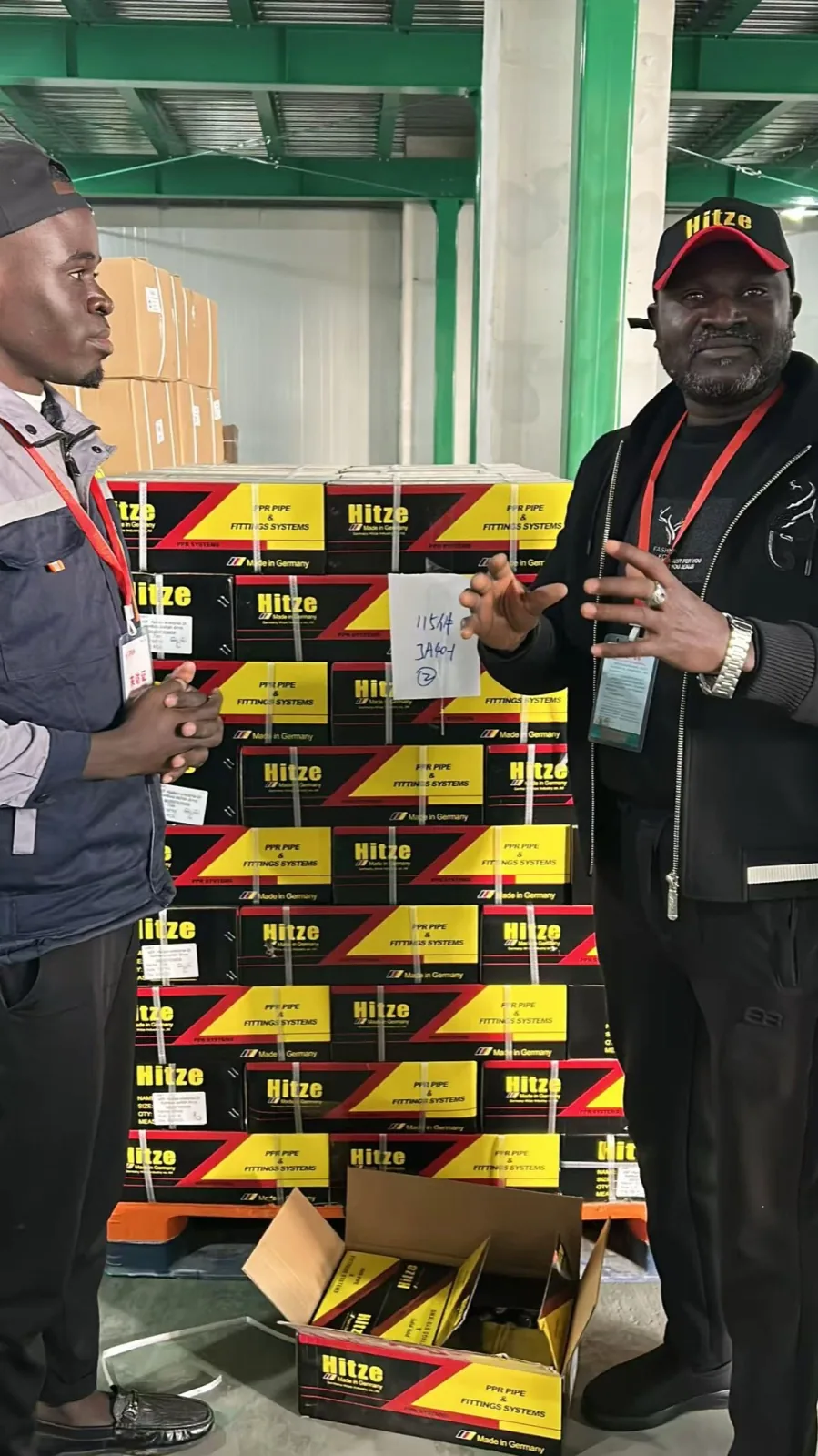
Do the full nine-line breakdown when you are a distributor or contractor buying by the container, quoting downstream customers off your cost, or comparing a European-branded quote against a China-origin one where the +25% Section 301 line decides the winner. At container volume the fixed fees dilute and the value-driven fees dominate, so precision pays. It also matters when you are switching Incoterms or first-time importing, where a single FOB-vs-CIF mistake compounds on every future entry.
You can skip the deep model when you are buying a one-off sample or a sub-$2,500 informal-entry parcel — the formal-entry fees, bond and broker structure don’t apply the same way, and the FOB price is a fair proxy. But the moment you scale to commercial quantities, the invoice price stops telling the truth and the stack takes over. Don’t let a first small order lull you into pricing your first container off the same math.
The clean way to bridge those two worlds is to right-size the first order rather than jump straight to a full forced-minimum container. Because Hitze runs no MOQ, an importer can start with samples or a partial load — proving the classification, the itemised-invoice workflow and the actual demand — and only scale the container fill once the per-unit stack is validated in their own ledger, not on a spreadsheet. That sequencing keeps first-import cash tied to inventory you can move, not to a minimum you had to buy your way past.
Get a landed-cost-ready quote, not just an FOB number
If you are an importer or distributor pricing by the container and you need the manufacturing origin, HTS descriptions, itemised invoicing and a densely loaded 40HQ that make your per-unit model hold, that is exactly how Hitze structures export orders. With no MOQ, you can right-size a first import — samples or a partial load — and scale the container fill once the per-unit stack checks out in your ledger. This is for trade and wholesale buyers — not direct-to-homeowner. Pricing and freight vary by market and order and are quoted on request.
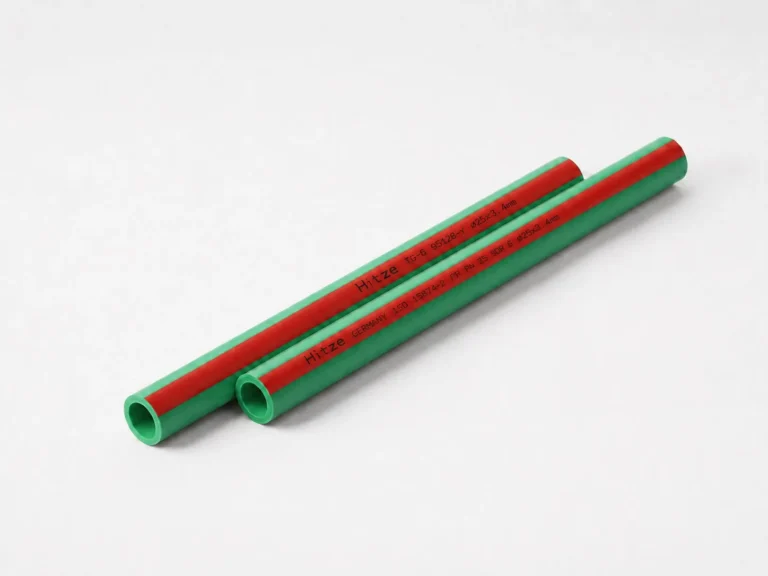
For the product side of the equation, our PEX pipe and multilayer PEX-AL-PEX ranges classify under HTS 3917 for the rates above; if compliance-driven clearance is your worry, our certifications and market-compliance documentation is what keeps entries moving. Wholesale-volume programs are covered on our wholesale plumbing & heating pipe page.
Frequently asked questions
Is US import duty on pipe calculated on the FOB or the CIF value?
On the FOB transaction value — the price of the goods at origin. International freight and marine insurance are non-dutiable, so if you import on CIF terms your broker must deduct them from the invoice using a rated bill of lading or an itemised commercial invoice. If those costs cannot be separated with objective evidence, CBP assesses duty on the full CIF figure and you overpay.
What is the US import duty rate on plastic pipe and fittings?
Plastic tubes and pipes without fittings (PEX, PE-RT, PP-R, multilayer) classify under HTS 3917.32.00 / 3917.39.00 at a 3.1% general (MFN) rate. Plastic pipe fittings are 3917.40.00 at 5.3%. Brass (copper-alloy) fittings are 7412.20.00 at 3%. Confirm your exact ten-digit code in the USITC Harmonized Tariff Schedule, and remember Section 301 adds +25% on China-origin plastic pipe on top of these.
What are MPF and HMF, and how much do they add?
The Merchandise Processing Fee (MPF) is a CBP fee of 0.3464% of the entered value on formal entries, with a FY2026 minimum of $33.58 and maximum of $651.50 per entry (a $4.03 surcharge applies to manual filings), as set in CBP’s FY2026 user-fee adjustment. The Harbor Maintenance Fee (HMF) is 0.125% of the customs value and applies only to ocean/vessel shipments, with no minimum and no maximum. Both are user fees charged independently of import duties.
Does a German brand mean I pay European or German duty rates?
No. Duty is set by country of origin — where the goods were manufactured or substantially transformed — not by the nationality of the brand. Hitze is a German brand of engineered piping built to German DIN standards, but for CBP purposes your duty rate follows the actual manufacturing origin of the specific goods on your entry. Always confirm manufacturing origin before you model landed cost, because a China origin adds the +25% Section 301 line.
Why is my landed cost so much higher than the FOB invoice?
Because the FOB invoice is only the first of nine cost lines. How much freight, insurance, duty, MPF, HMF, broker, bond and drayage add depends on origin: the worked example in this guide lands a full non-China container at about +20% over FOB, while a China-origin load carrying the +25% Section 301 duty and the current global surcharge runs past +50%. The fixed per-container fees (freight, broker, drayage) are why a densely loaded 40HQ lands cheaper per unit than a half-empty one.
Will landed costs drop when the Section 122 surcharge expires in July 2026?
The 10% Section 122 global surcharge (imposed below the 15% statutory ceiling) is scheduled to expire by operation of law on 24 July 2026, which on its own would lower the ad-valorem stack. But replacement Section 301 and 232 measures with no statutory rate ceiling are advancing in parallel, so overall tariff exposure may not fall. Model your per-unit cost at two scenarios — with and without the surcharge — and quote off the higher one until your entry actually liquidates.
Does a supplier’s MOQ affect my per-unit landed cost?
Yes — indirectly but materially. The fixed per-container fees (freight, broker, bond, drayage) dilute across however many units you load, so a high forced minimum pushes you either to pad the box with slow-moving SKUs or to ship it half-empty, and both hurt your per-unit number. A supplier with no MOQ lets you size the load to real demand: fill the container with pipe you’ll actually sell, keep first-import cash tied to turnable inventory, and scale volume only after the per-unit stack is validated. Hitze operates with no MOQ, so a first order can be right-sized down to samples or a partial load.