Trust · Quality Control
Pipe Quality Control & Testing — How Hitze Holds Tolerance Batch After Batch
Any factory can send a perfect sample. The real question in B2B is different: will carton #500 match carton #1? This page opens up the Hitze QC process — dimensional control, pressure-cycle and burst testing, oxygen-barrier verification to DIN 4726, and AQL sampling that keeps every production lot consistent.
Sample-quality is easy. Batch-quality is engineering. Every step below names the test method and the standard it follows — because a QC claim you can’t tie to a method and a number isn’t a QC claim, it’s marketing.
Written for technical buyers, private-label brands, importers, contractors and MEP consultants who carry the quality risk downstream.
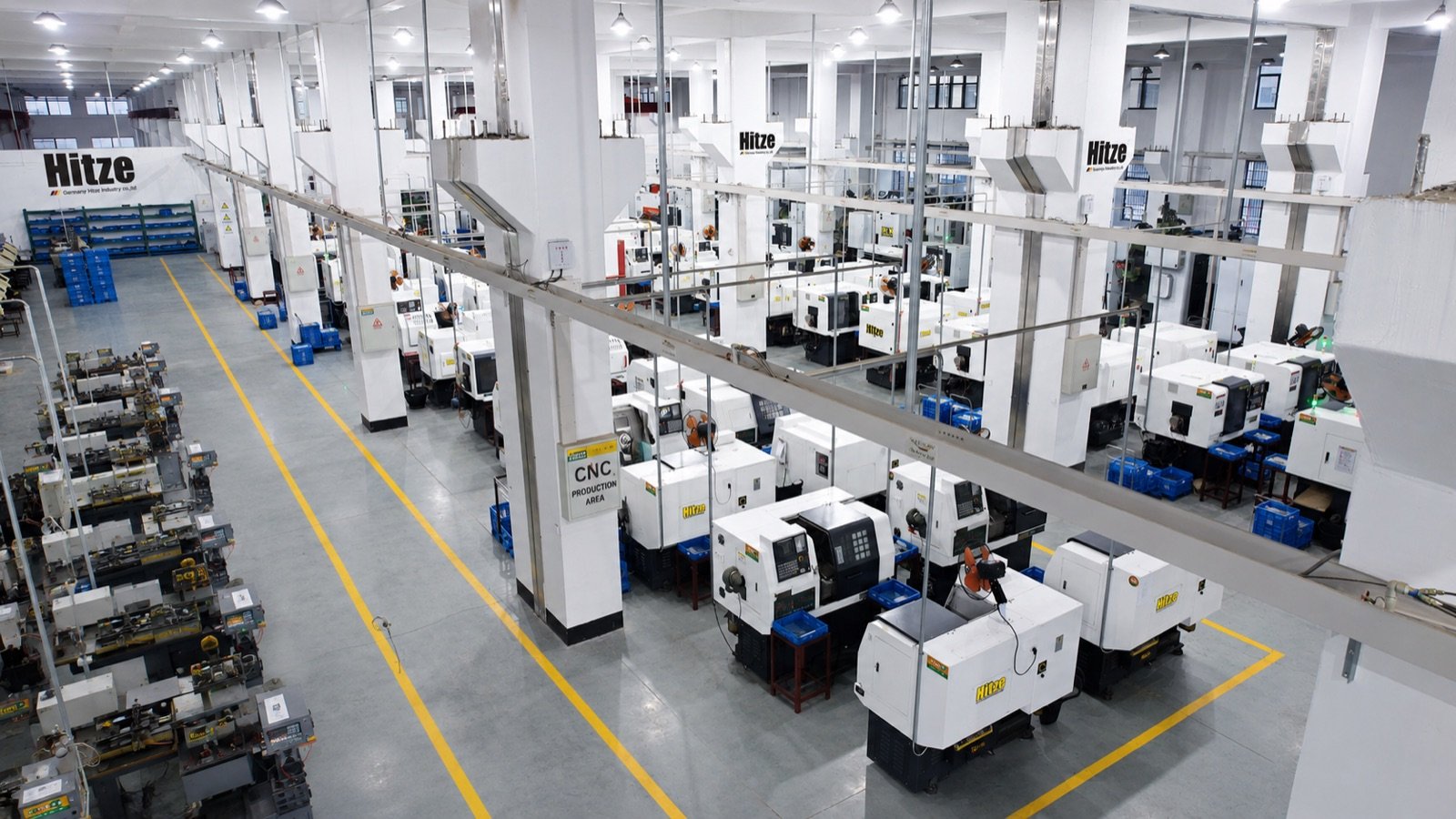 Measure · Test · Trace
The QC Chain
Five Gates, In Order — From Geometry to a Traceable Batch
We walk the full quality-control chain the way pipe moves through it: dimensional control, then pressure-cycle and burst testing, then oxygen-barrier verification, then AQL sampling, then batch consistency. Each gate names what it tests and the standard it follows.

Dimensional Control
OD, wall thickness and ovality held to band so fittings seat and seal.
Pressure & Burst
Hydrostatic, pressure- and thermal-cycling, then burst to prove margin.
Oxygen Barrier
EVOH / aluminium-core barrier verified against the DIN 4726 limit.
AQL Sampling
Every lot sampled per ISO 2859-1 against the same acceptance limits.
A fifth gate — batch consistency & traceability — repeats gates 1–4 the same way on every lot and records the result, so the paperwork stands behind the pipe. Hitze’s own measured results are added lot by lot; where a specific figure is still being compiled, we say “coming soon” rather than invent one.
Gate 1 · Dimensional Control
Dimensional Control: OD, Wall Thickness & Ovality Tolerance
In a piping system, tolerance is not a detail — it is the seal. If outer diameter, wall thickness or ovality drift out of band, press and push-fit fittings stop seating cleanly, and a joint that passed on the sample leaks on the jobsite. So dimensional control is the first gate in the Hitze QC chain.
| Dimension controlled | How it’s measured | Why it matters | Tolerance basis |
|---|---|---|---|
| Outer diameter (OD) | Laser gauge / go–no-go rings, in-line + sampled | Fittings size to OD; drift breaks the seal | EN ISO 21003 (multilayer) · EN ISO 15874/15875 (PEX) |
| Wall thickness | Ultrasonic / point micrometer around circumference | Thin wall = weak point + wrong pressure class | ASTM F876/F877 · EN ISO 15875 |
| Ovality (roundness) | Roundness gauge across two axes | Out-of-round pipe won’t seal in press jaws (TH/U/F/M) | Per product standard |
| Layer thickness (multilayer) | Cross-section measurement of aluminium + polymer layers | True 5-layer vs thin-wall lookalike | EN ISO 21003 · ASTM F1281/F1282 |
Why tight tolerance protects the buyer: a pipe held to a tight OD and wall band guarantees that the press fitting seats and the push-fit grab-ring bites the same way on every length — no field surprises, no leak callbacks. This is exactly where cheap “spec-once, drift-later” pipe fails.
Hitze measured tolerance: Coming soon — the framing above is the tolerance basis we build and inspect to; per-SKU measured bands (OD / wall / ovality ±mm, layer nameplate values) are added in the TDS / QC report.
Speccing press or push-fit systems? The multilayer PEX-AL-PEX family is where layer-thickness control matters most, and the engineering these tolerances protect is set out in full on the pipe-technology page.
Gate 2 · Strength Validation
Pressure-Cycle & Burst Testing: Proving It Won’t Leak
Dimensional control gets the geometry right; pressure testing proves the pipe survives service. Heating and potable piping is validated against standard test regimes designed to catch pinholes, thin-wall weak points, delamination and joint failure before the pipe ships.
Why the pressure-cycle test matters most: a pipe can pass a single static pressure hold and still fail in the field, because real systems cycle — heating on, heating off, thousands of times. The pressure-cycle test loads the pipe the way a decade of service does, exposing weak welds (multilayer aluminium seam), fitting-interface fatigue and thin-wall points that a one-shot test misses. Burst testing then confirms how much margin sits above the rated working pressure.
| Test | What it does | Simulates | Standard basis |
|---|---|---|---|
| Hydrostatic (long-term) pressure | Sustained internal pressure at elevated temperature | Design-stress rating over service life | EN ISO 15875-2 · ASTM F876/F877 |
| Pressure cycling | Repeated pressurise / depressurise cycles | Years of on/off hydronic operation | EN ISO 15875-2 |
| Thermal cycling | Repeated hot ↔ cold cycles | Expansion/contraction, delamination in multilayer | Product test regime |
| Burst test | Pressurise to failure | Confirms safety margin above rated pressure | ASTM / EN ISO burst method |
Hitze measured results: Coming soon — the test methods above are the industry-standard regimes Hitze validates to; lot-specific measured values (hydrostatic / cycling / burst margin above rated bar, report numbers) are in the QC report.
Ask for the test-protocol summary → See the pressure-test rig →
Gate 4 · ISO 2859-1
AQL Sampling: The Statistics Behind “Every Batch Is the Same”
You can’t 100%-test every meter of pipe in a production run — but you can prove, statistically, that a lot meets an agreed quality level. That’s what AQL (Acceptance Quality Limit) sampling does, and it’s how a serious manufacturer guarantees consistency instead of hoping for it.
Per-Lot Sampling
Every production lot is sampled to a defined plan — lot size determines sample size, and a set number of defects rejects the whole batch. Method basis: ISO 2859-1.
What Gets Inspected
Dimensional conformance (OD / wall / ovality), surface and print-line quality, marking legibility, and — for heating pipe — barrier-layer presence.
Accept / Reject Discipline
A lot that fails the sampling plan is held, not shipped. The difference between “we hope it’s consistent” and “we can prove this lot is.”
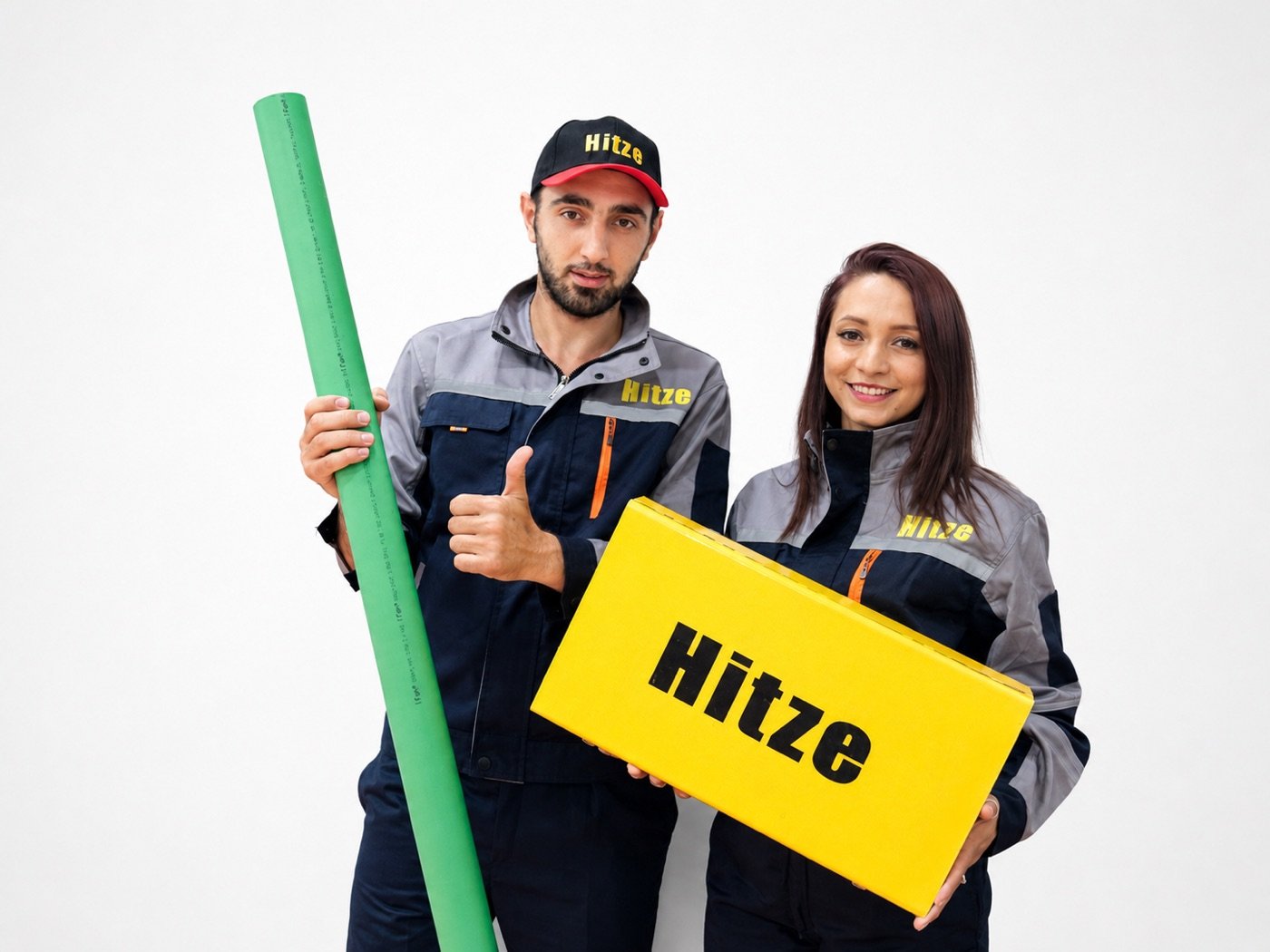
Hitze AQL plan & acceptance figures: Coming soon — ISO 2859-1 is the method; the specific AQL level (e.g. inspection level and acceptance numbers) and measured defect rate are added in the QC Process Pack.
Gate 5 · Traceability
Batch-to-Batch Consistency & Traceability
Dimensional control, pressure testing, barrier verification and AQL sampling only pay off if they’re repeated the same way on every lot and recorded. That’s what turns “good quality” into a traceable asset the buyer can stand behind.
- Same limits, every lot: the same tolerance bands, test methods and AQL plan are applied to every production run — so the 500th carton is inspected against the identical acceptance criteria as the first.
- Batch identification: production lots carry batch / date coding, so a delivered carton can be traced back to its production run and inspection record.
- Retained samples: samples are retained per lot, allowing a shipped batch to be re-checked if a downstream question ever arises.
- Conformity documentation: each lot can be backed by a Certificate of Conformity / QC report — the paperwork a private-label brand or importer needs to reassure their customers.
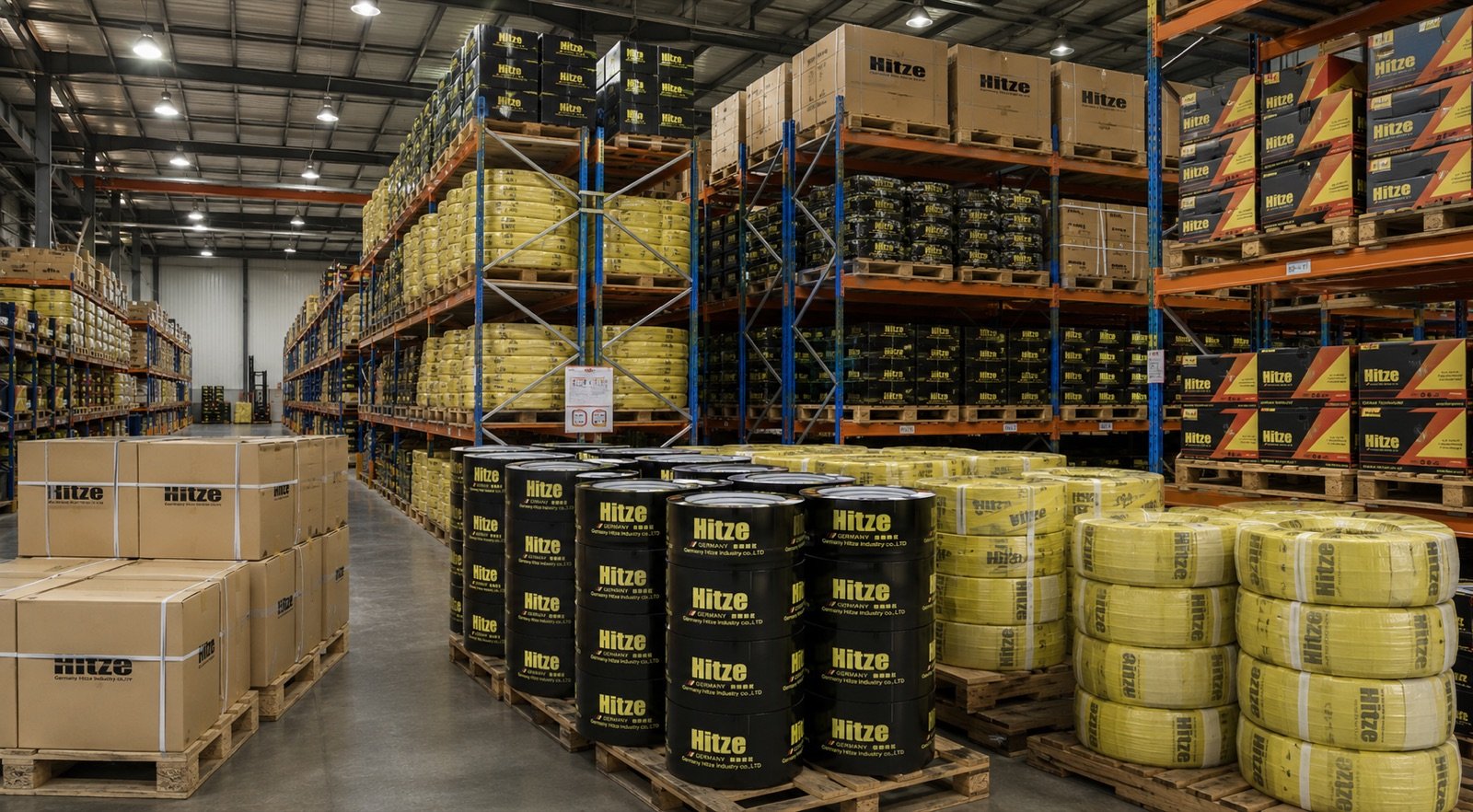
Why this matters for your brand: when you sell under your own name, batch consistency and traceable documentation protect you from a single bad lot becoming a brand crisis. Hitze’s brand-plus-ODM model is built to give private-label partners this backing.
Hitze traceability records & QC report template: Coming soon — batch coding rules, retained-sample period, the COC / QC report template and consistency statistics are added on confirmation.
Why the Chain Holds
A German Brand, a Standards-Anchored QC Chain
The QC chain above isn’t a one-off — it runs on a production base with the scale and standards behind it. Every gate ties to a recognised standard you can name in your own spec and acceptance terms.
These are the test and product standards the QC chain is built and inspected to. Certificate and listing numbers are supplied in the Certification Pack and are verifiable at source — ask us, then check for yourself.
Lead Magnet
Download the QC Process Pack
One email, one PDF — the full quality-control chain your technical, purchasing and QA teams need to evaluate a supplier.
The QC Process Pack includes:
- The Hitze QC flow chart (dimensional → pressure/burst → barrier → AQL → batch)
- Tolerance bands by product line (OD / wall / ovality) — per-SKU measured values Coming soon
- Test methods & standards reference (EN ISO 15875-2 · ASTM F876/F877 · DIN 4726 · ISO 2859-1)
- AQL sampling plan — AQL level & acceptance numbers Coming soon
- Batch report / Certificate of Conformity template
Request the QC Process Pack
QC flow chart, tolerance bands, test methods & standards, and an AQL sampling plan in one PDF. Work email required. The pack ships to verified trade accounts.
Hitze supplies trade only — wholesalers, contractors, importers and private-label brands. Not a homeowner retail store. Want to see it in person? Book a Factory & QC Tour to see the measuring bench and pressure-test rig, or request a quote.
FAQ
Quality Control & Testing FAQ
What tolerance do you hold on OD and wall thickness?
How do you test the pipe for leaks?
How do you guarantee batch-to-batch consistency?
How is the oxygen barrier checked?
Can you provide a QC report with each batch?
Want to verify the standards behind these tests? See certifications & compliance, or apply these controls to the multilayer PEX-AL-PEX pipe family.
Get Started
Get the QC Process Pack & a Quote
Tell us your product lines, target market and volumes — we reply with the QC Process Pack (tolerance bands, test methods, AQL plan, batch report template) and pricing for your region.