If you are launching your own pipe brand, one number decides whether the project is real or just a spreadsheet: the pipe manufacturer MOQ. Set too high, and a first order becomes a five-figure bet on a market you have not tested. Set sensibly — or removed entirely — and you can validate print, packaging, certification and resale margin on a batch you can actually sell through. This guide explains how MOQ, samples and first orders really work at a pipe factory, and it takes a clear position on the other side: Hitze imposes no MOQ at all, so a private-label buyer can start with samples or a small trial order and scale only once the market proves out. Here is how MOQ math works across the industry, why most factories set a container or pallet floor, and how a no-MOQ policy changes the risk on your first order.
Key Takeaways
- MOQ is not a wall — it is a reflection of one thing: the fixed cost of a production run (extrusion changeover, mould setup, print plates, QC). Understand the cost and you can move the number.
- Samples and a small trial order almost always come before MOQ. Ask for samples first, and ask whether the sample cost is credited against your first production run.
- A single stated MOQ is a red flag. A real factory quotes MOQ per SKU and per pipe type — a stock PEX coil, a custom-printed multilayer coil and a private-label carton each carry different economics.
- The lowest first order comes from ordering an unbranded stock product; custom print, custom colour and own-brand certification each raise the floor.
- Hitze takes the opposite position on the base product: no MOQ. You can start with samples or a small trial order and scale only after the market proves out. Paired with a 50-year warranty on the matched pipe-and-fitting system, that makes a first order unusually low-risk.
What MOQ Actually Is — and Why a Pipe Factory Sets One
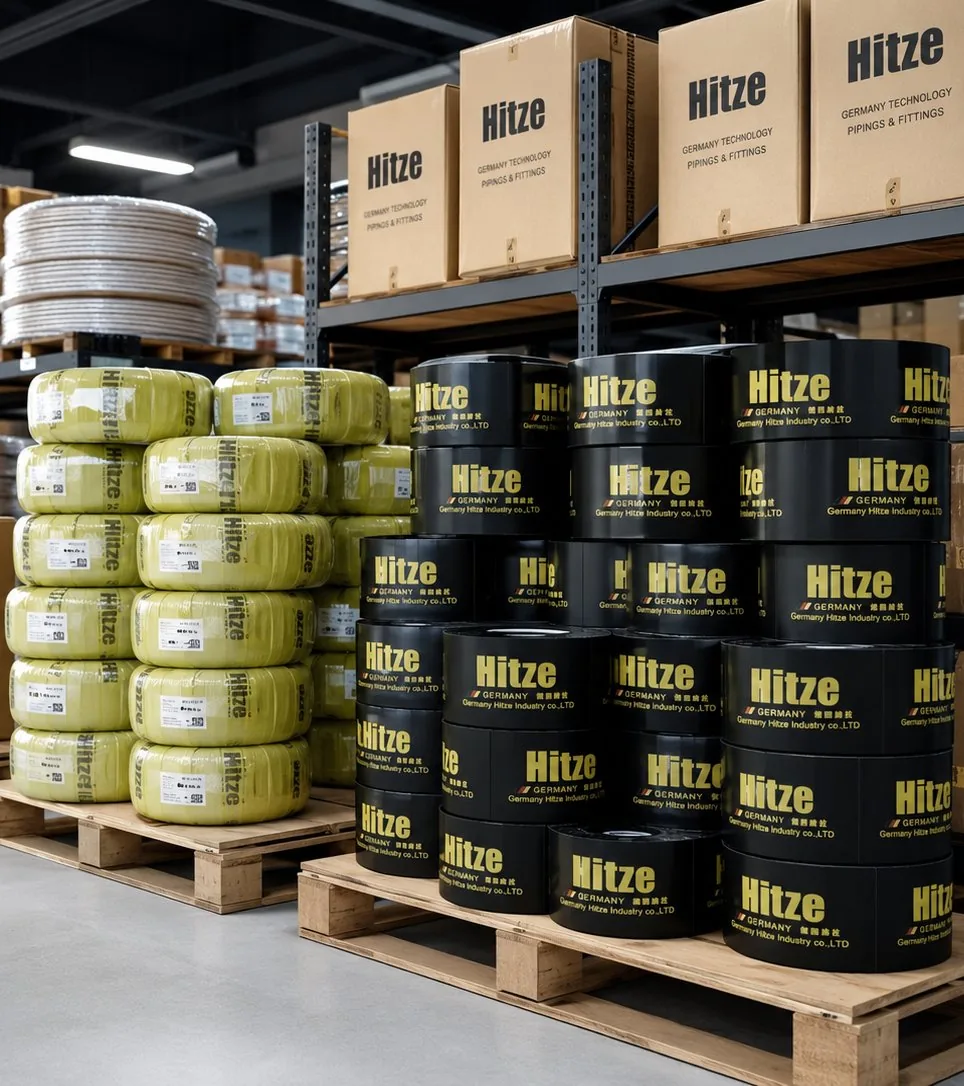
Minimum order quantity is the smallest amount a supplier will accept in a single order. That is the textbook definition, and it is where most buyers stop reading. The useful part is the why: an MOQ exists to cover the fixed costs of a production run — costs that do not shrink just because your order is small. On a pipe line those fixed costs are concrete and unavoidable. An extrusion line has to be purged and re-set for a new resin, colour or diameter; a fitting mould has to be loaded and warmed; a custom print plate has to be cut; and a QC sequence has to run whether you make 200 metres or 20,000. Spread those across a small batch and the per-metre cost balloons. Spread them across a container and they nearly disappear. The MOQ is simply the point where the run pays for itself.
This is why the buyer question that actually matters is not “what is your MOQ?” but “what is driving your MOQ on this product?” For a stock item the factory already runs — a standard white PEX-b coil, a green PP-R length in a common size — the setup is minimal, so the floor is low. Ask for a custom pipe colour, a printed brand line down the wall, a specific coil length or a private-label carton, and you have added setup steps, each with its own economic minimum. A factory that quotes you one flat number for all of the above either has not thought about your order or is padding. A factory that walks you through the difference is telling you how its plant really works.
There is a second reason MOQ deserves respect: consistency. A pipe that passes a pressure and dimensional check on a 200-metre trial but drifts out of tolerance across a 40-foot container is worthless to you, because your reorders have to match. A serious manufacturer sizes MOQ partly so the run is long enough to be dimensionally stable and fully traceable — not just long enough to be profitable. When you push for an unusually small batch, that is the trade-off you are negotiating against, and it is worth understanding before you ask.
Samples and Trial Orders Come First — Use Them Properly
No competent buyer places a first production order without holding the product first. Samples exist precisely so you can validate quality, wall construction, print, fittings compatibility and certification paperwork before you commit real money — and a real factory expects the request. Two practical rules save you the most grief. First, ask whether the sample cost is credited against your first production order; many manufacturers will apply it, which turns your sample fee into a deposit rather than a sunk cost. Second, treat samples as a test protocol, not a photo op: cut the pipe and inspect the wall, press or fuse a fitting the way your installers will, and confirm the printed markings match what you were promised.
Between a free sample and a full MOQ there is usually a middle rung common across manufacturing: a trial order at a higher per-unit price but below the standard minimum. This is the single most useful lever a private-label buyer has. It lets you put a genuinely branded product — your print, your carton — into a handful of real customers’ hands, gather feedback, and confirm the certification documents survive contact with your own market’s inspectors, all before you scale. Expect to pay more per metre on a trial batch; that premium is the factory absorbing the same fixed setup over fewer units, and it is a fair deal when the alternative is a container of an unproven SKU.
Here is where the factories genuinely differ, and where we take a position. Most manufacturers still gate that trial rung behind a floor — a pallet, a half-container, a full container — because they are protecting the economics of a single run. Hitze does not: there is no MOQ on the base product at all. You can begin with samples, move straight to a small trial order sized to your actual first customers, and reorder against real sell-through instead of a forecast. That is not a discount or a one-off favour; it is a deliberate policy, and it is only structurally possible because Hitze spreads fixed setup costs across a large, always-running plant rather than loading them onto your batch. For a first-time buyer the practical effect is simple: the de-risking step (samples, then a small trial) is the first order, with nothing you have to clear before it.
Insider warning
A “sample” pulled from a golden batch tells you nothing about production consistency. When it matters, ask for samples cut from a normal run — and, if you can, ask for the batch/test record that goes with them. A factory that can produce that record on request is a factory that keeps one.
How MOQ Scales by Product Type — a Realistic Comparison
The biggest mistake private-label buyers make is treating “pipe” as one MOQ. It is not. A stock coil, a custom-printed coil, a moulded fitting and a full own-brand certified line sit on completely different cost curves. The table below is a general map of what drives the floor higher as you move from stock to fully custom — not a Hitze price list, which varies by market and order. Use it to sequence your launch: start where the floor is lowest, prove the market, then climb.
| What you order | What drives the MOQ | Relative first-order floor | Best first step for… |
|---|---|---|---|
| Stock pipe, neutral (unbranded PEX / PP-R coil) | Almost nothing — line already runs it | Lowest | Testing demand & resale margin fast |
| Stock pipe in your carton (private-label packaging) | Carton print plate + minimum print run | Low–moderate | A brand that needs shelf presence now |
| Custom-printed pipe (your logo down the wall) | Print set-up + colour/resin changeover | Moderate | Owning the product visually, not just the box |
| Custom colour / bespoke spec | Dedicated resin run + line purge | Higher | Differentiating on a mature range |
| Own-brand certified line (cert under your name) | Certification fees + audit + volume to amortise | Highest | A committed brand scaling a proven SKU |
Read the table as a staircase, not a menu. The smart sequence for most first-time pipe brands is: sample → small trial in stock product → first production order with your carton → custom print once volume justifies the setup → own-brand certification once the SKU is proven. Each step raises the floor, and each step should be paid for by the revenue the previous step generated. Trying to start at the top — a custom-coloured, custom-printed, own-brand-certified line as your first order — is how buyers end up with a warehouse of product and no market. A factory worth working with will actively steer you down this staircase rather than upsell you to the top of it.
How Hitze Builds and Checks a First Order
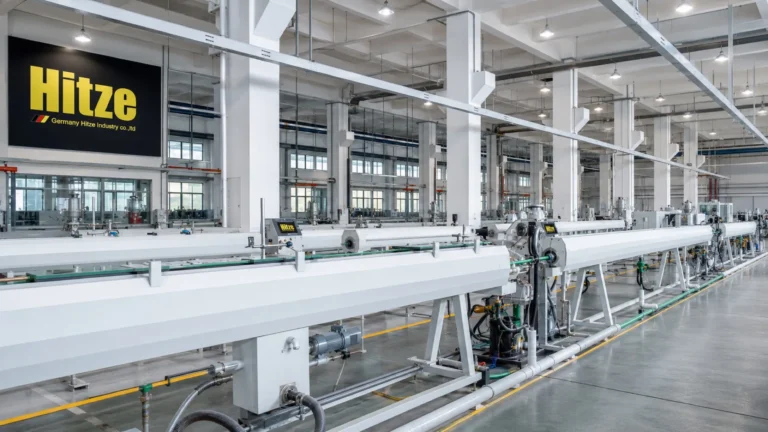
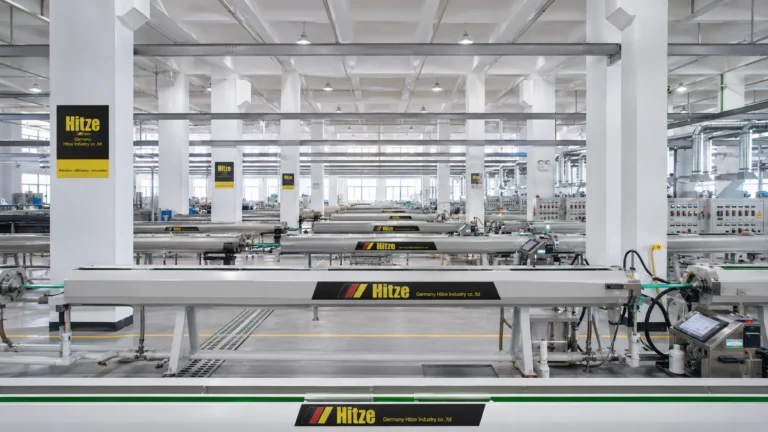
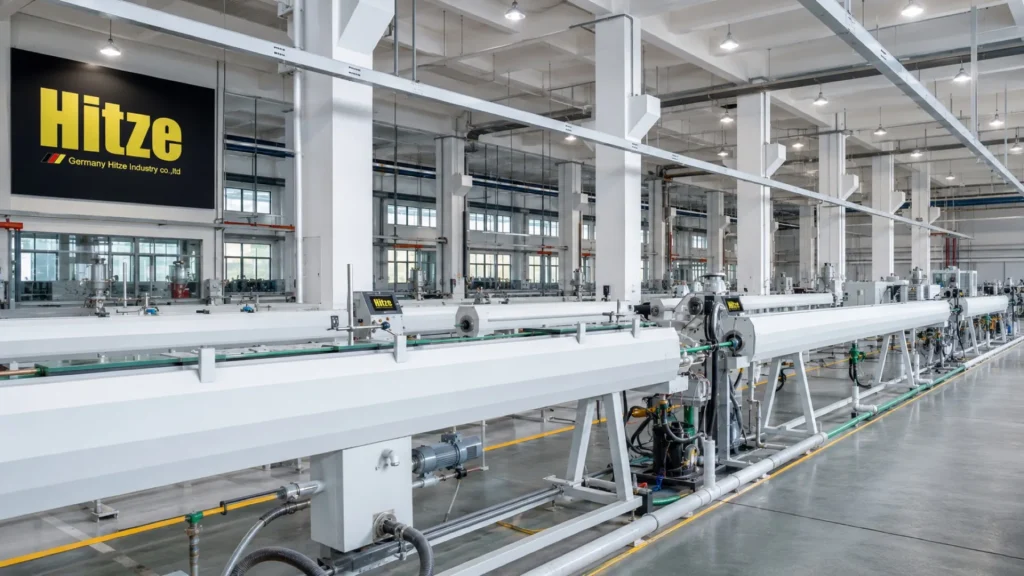
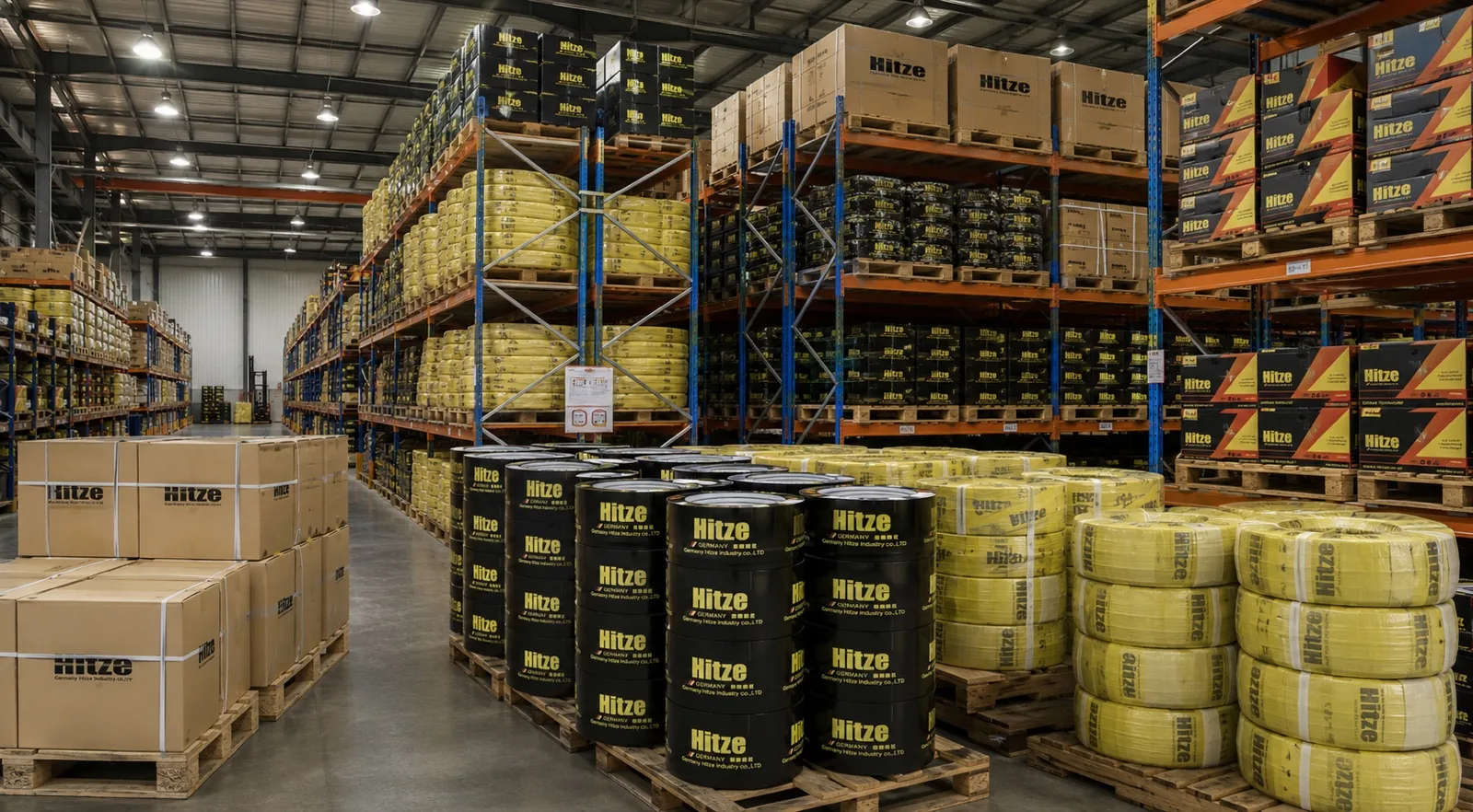
Hitze is a German brand of engineered piping systems — legal entity Germany Hitze Industry Co., Ltd., founded in 1974, running a 120,000 m² production base with 1,000+ employees and exporting to 118+ countries. For a private-label buyer, those numbers matter for one reason: a factory at that scale can run no MOQ on the base product and hold dimensional consistency across reorders, because the fixed costs are spread over a large, always-running plant rather than loaded onto your single batch. A small workshop has to charge you a container to break even on a run; a plant this size does not. That is the structural reason the no-MOQ policy is real rather than a slogan — and it is why you can start with samples or a small trial and still get pipe that matches, batch after batch, when you scale.
Two things sit behind that first order and lower the risk further. First, warranty: Hitze backs the matched pipe-and-fitting system — pipe, press or fusion fitting and the connection between them — with a 50-year warranty. That length only makes sense on a system engineered to hold together as a system, and for a private-label buyer it is a concrete answer to the question every new brand fields from its own installers and inspectors: what happens if a joint fails in year twelve. A no-MOQ first order that you can place for the price of a trial batch, standing behind a 50-year warranty, is an unusually low-risk way to enter a market. Second, traceability: because the run is dimensionally checked and recorded, the trial batch you approve is the batch your reorder matches — the warranty and the consistency are the same promise stated two ways.
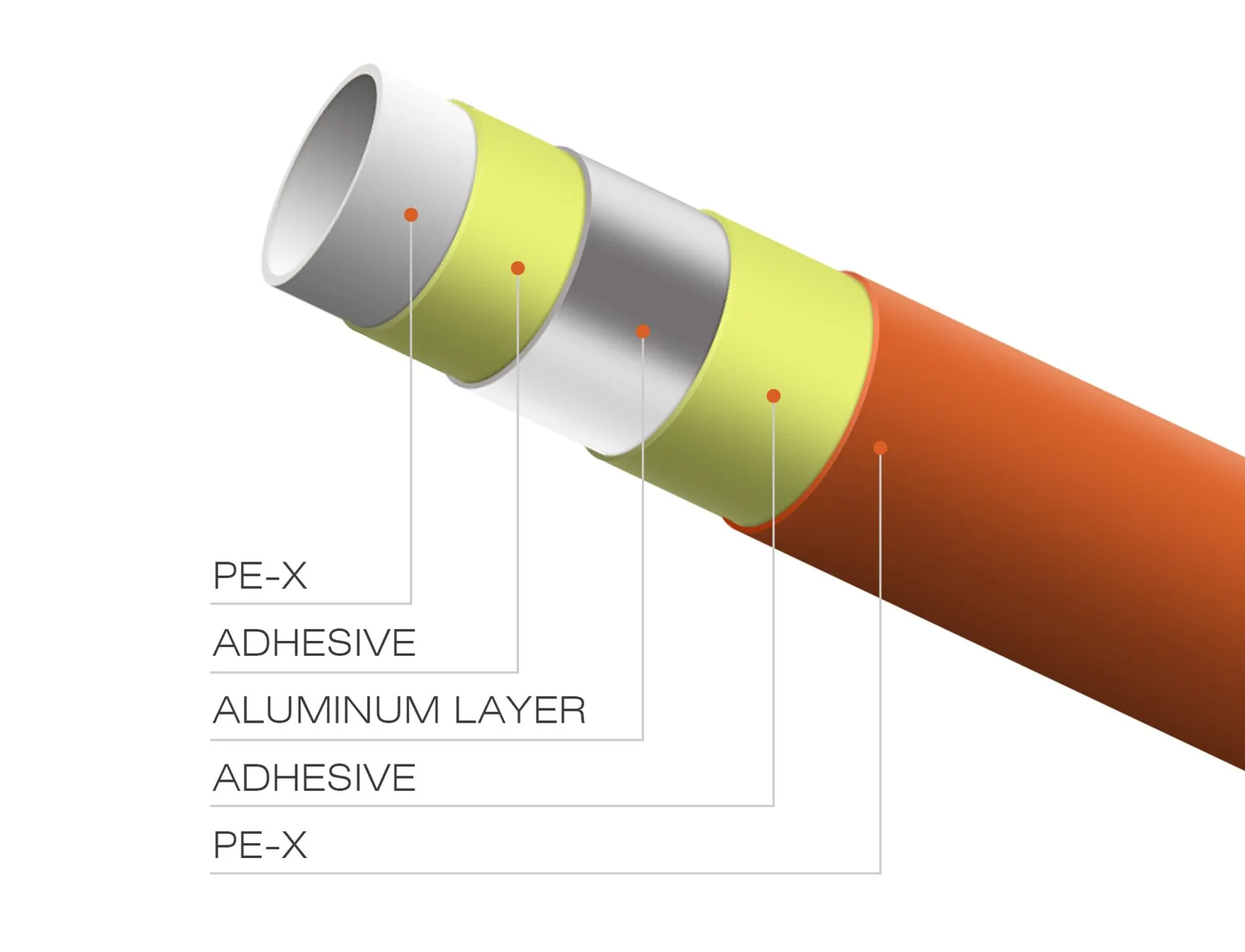
On the product itself, the checks are not marketing — they are the standards the pipe is built to. Hitze’s PP-R systems are engineered to EN ISO 15874, the standard governing polypropylene pipe for hot and cold water installations, and its heating pipe is built to the DIN 4726 oxygen-barrier requirement, which limits oxygen permeation (of the order of 0.32 mg/(m²·d) at 40 °C for a class 4 / underfloor-heating application; the limit is higher for hotter class 5 radiator systems) so dissolved oxygen cannot corrode the ferrous parts of a hydronic system. Multilayer PEX-AL-PEX is made with a butt-welded aluminium core welded into a continuous seam on the line, then pressure- and dimension-tested. When your samples arrive, these are the things to verify — because they are the things that get checked in production.
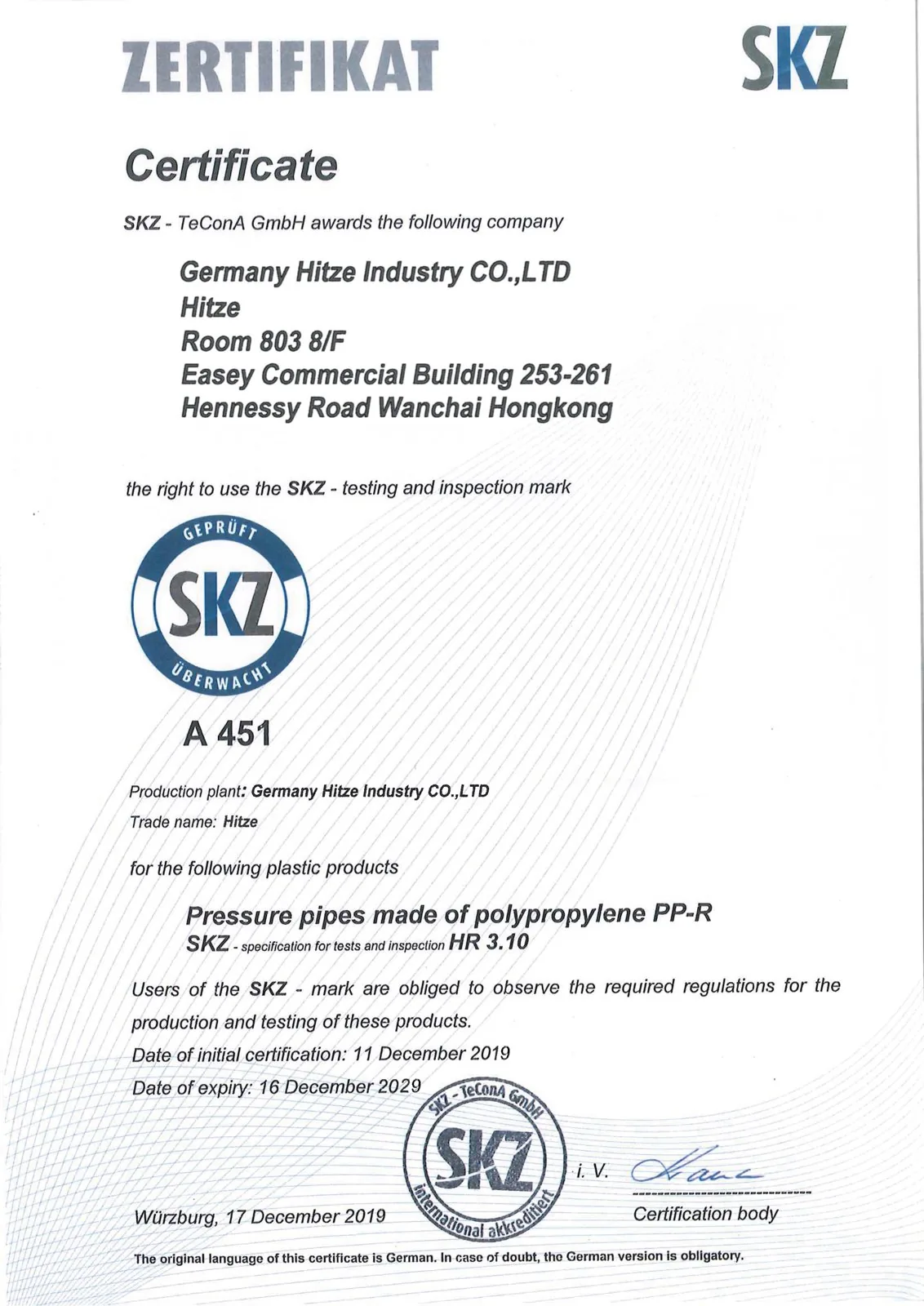
The certification side is where a private-label first order lives or dies, and it is worth being precise. Hitze holds real, numbered certificates — SKZ (the German plastics certification body, accredited to DIN EN ISO/IEC 17065) for PP-R and PE-Xb, DVGW type examination for potable-water PP-R, WRAS material approval for the UK, and an NSF laboratory BS 6920 potable-water report — and states certification to cUPC/UPC via IAPMO, NSF-14, NSF/ANSI 61 and CE with a Declaration of Performance. Certificate numbers are available on request. What that means for your MOQ conversation: the base products are already certified, so a stock or private-label-carton first order can ship into a regulated market without you funding a fresh certification. Getting a certificate re-issued under your own brand name is a separate, larger step — one you take once a SKU is proven, not on day one. You can see the full scheme list on the certifications & compliance page.
A Realistic First-Order Walkthrough
Picture a regional heating distributor in North America who wants to launch a private-label multilayer pipe line but has never imported directly. Here is how a sane sequence runs, end to end. Week one, they request samples of 16 mm and 20 mm PEX-AL-PEX in the two sizes their market moves most, plus the matching press fittings, and ask for the sample cost to be credited against a first order. They cut the pipe, confirm the five-layer wall and the welded aluminium core, and hand a length to their lead installer to press with the jaw profile his crew already owns.
Samples pass. Rather than jump to a custom-printed, custom-coloured line, they place a modest first production order of stock coils in their own carton — the low-to-moderate rung on the staircase. That gets a genuinely branded box onto shelves and into a dozen contractors’ vans without funding a print-plate run or a resin changeover. They also plan the import: multilayer and PEX pipe fall under HS heading 3917 (plastic tubes, pipes and fittings); PEX supplied with fittings classifies in the US under HTSUS 3917.33.00 at an MFN (Column 1 general) duty rate of 3.1% ad valorem, with plastic fittings under 3917.40. That 3.1% is only the base rate, though: goods of Chinese origin under HS 3917 currently carry an additional Section 301 duty that stacks on top — for 3917.33.00 the tariff schedule flags heading 9903.88.03 (25%), and for fittings under 3917.40 heading 9903.88.02 (25%) — so a China-sourced first order lands closer to 28%+, not 3.1%. Rates, headings and any exclusions change; this distributor confirms the exact figures for their specific product and origin with their own customs broker before the container sails.
Three months later the stock-in-your-carton SKU has sold through and the reorder is consistent with the first batch. Now the custom print and, eventually, own-brand certification make sense, because each is funded by proven demand rather than hope. The reason this distributor could sequence it this way is that no MOQ stood between the sample and that first small carton order — with a container floor, the “modest first order” step simply would not exist, and the staircase would collapse into a single leap. Removing the MOQ is what makes the staircase affordable: it lets a buyer climb one rung at a time, each rung paid for by the last, instead of betting the business on the top step. Pricing, freight and lead times in this scenario still vary by market and order and are quoted on request; the quantity floor, however, is not a variable — there isn’t one.
Who a No-MOQ, Sample-First Partner Is — and Isn’t — For
Best for: first-time private-label brands testing a market; distributors who want a branded box before committing to a full custom line; importers who need certified base product now and their own certification later; and buyers who value the ability to reorder consistently more than a rock-bottom unit price. If your plan is a staged launch — sample, trial, stock-in-carton, then scale — a partner with no MOQ is exactly what you want: there is no floor to clear before the first real order, the flexibility pays for itself in avoided dead stock, and the 50-year system warranty gives you something concrete to stand behind when your own customers ask what backs the product.
Not the best fit for: a buyer who genuinely needs the absolute lowest per-metre price on a single massive commodity run and does not care about branding, service or reorder consistency — a pure spot-market commodity broker will sometimes beat a branded manufacturer on that one metric. It is also not for a buyer who wants a fully custom-coloured, custom-printed, own-brand-certified line as their very first purchase with no sample stage; that is possible, but it is the top of the staircase, not the bottom, and any factory that pretends otherwise is not protecting you.
Ready to price your first order?
If you are a private-label brand, distributor or importer who wants to start with samples and a small first batch — then scale a proven SKU — Hitze’s private-label & ODM piping programme is built for that staircase, with no MOQ on the base product and a 50-year warranty on the matched pipe-and-fitting system. Explore the PEX and multilayer PEX-AL-PEX ranges, request samples, and ask for pricing and lead time for your specific market and order — there is no minimum to clear first. If you only need one giant unbranded commodity run at the lowest possible price, tell us — we will be honest about whether we are the right fit.
Frequently Asked Questions
What is a typical MOQ for a pipe manufacturer?
Across the industry there is no single number, and any factory that quotes one flat figure for every product should make you cautious. MOQ is set per SKU and per pipe type because each carries different setup costs — a stock coil the line already runs has a very low floor, while a custom-printed, custom-coloured or own-brand-certified line has a higher one. Most factories still set a floor of a pallet or a container to protect a single run’s economics. Hitze is the exception: there is no MOQ on the base product, so you can start with samples or a small trial order and scale only once the market proves out. Customisation such as your own print or colour still carries its own setup minimum, but nothing gates the base product.
Can I get samples before committing to an MOQ?
Yes — and you should. A real factory expects a sample request and often a small trial order priced above the per-unit production rate but below the full minimum. Always ask whether the sample cost can be credited against your first production order, which many manufacturers will do. Use samples as a test protocol: cut the pipe, inspect the wall and core, press or fuse a fitting the way your installers will, and confirm the printed markings and certification paperwork match what you were promised.
Does Hitze have a minimum order quantity?
No. Hitze imposes no MOQ on the base product, which is unusual for a pipe manufacturer — most set a pallet or container floor to protect a single run’s economics. That means you can start with samples or a small trial order sized to your actual first customers, then reorder against real sell-through rather than a forecast. It is a deliberate policy, made possible because fixed setup costs are spread across a large, always-running plant. Custom print or colour still carries its own setup minimum, but the base product does not. The matched pipe-and-fitting system also carries a 50-year warranty, so a no-MOQ first order is unusually low-risk. Pricing and lead time vary by market and order and are quoted on request.
Does a custom-branded first order have a higher MOQ than stock pipe?
Usually, yes — but not by the same amount at every step. Putting stock pipe in your own printed carton adds a carton print run. Printing your logo down the pipe wall adds print set-up and a colour or resin changeover. A custom pipe colour adds a dedicated resin run. Getting a certificate re-issued under your own brand name adds certification fees and audit time. The lowest first-order floor is always unbranded stock product; each layer of customisation raises it, which is why a staged launch beats jumping to a fully custom line on day one.
Is Hitze pipe made in Germany?
Hitze is a German brand of engineered piping systems, founded in 1974 and holding a German trademark registration with the DPMA. The products are engineered in Germany and built to German DIN and EN ISO standards — for example EN ISO 15874 for PP-R and DIN 4726 for oxygen-barrier heating pipe — and they carry German and international certifications including SKZ, DVGW and WRAS. The honest framing is “German brand, engineered in Germany, built to German DIN standards,” with certification documents available on request.
Can the pipe be certified under my own brand name?
The base products are already certified — SKZ, DVGW, WRAS, NSF laboratory testing to BS 6920, and stated certification to cUPC/UPC (IAPMO), NSF-14, NSF/ANSI 61 and CE with a Declaration of Performance — so a stock or private-label-carton first order can ship into a regulated market without you funding a new certification. Having a certificate re-issued specifically under your own brand name is a separate, larger step with its own fees and audit. Most brands do the certified stock order first and pursue own-brand certification once the SKU is proven. Certificate numbers are available on request.
What HS code and import duty apply to plastic pipe?
Plastic tubes, pipes and hoses and their fittings fall under HS heading 3917, which is harmonised worldwide for its first six digits. In the US, PEX supplied with fittings classifies under HTSUS 3917.33.00 at an MFN (Column 1 general) duty rate of 3.1% ad valorem, with plastic fittings under 3917.40. That 3.1% is only the base rate. Goods of Chinese origin under HS 3917 currently incur an additional Section 301 duty that stacks on top — the tariff schedule flags heading 9903.88.03 (25%) for 3917.33.00 and 9903.88.02 (25%) for fittings under 3917.40 — so a China-sourced order can land closer to 28%+, not 3.1%. Always confirm the exact subheading, origin rate and any current exclusions for your specific product with your own customs broker, since classification depends on material, reinforcement and whether fittings are included, and both the base and Section 301 schedules change.