Import, Logistics & Wholesale Supply · For plumbing/heating wholesalers & distributors
Plastic pipe is the classic “shipping air” cargo: a 40ft High Cube fills on volume long before it hits its weight limit, so every centimetre of trapped air inside a coil or half-empty carton is freight you paid for and cannot resell. This guide shows a wholesaler how coils, straight lengths and fitting cartons actually load into a 40HQ, where the wasted cube hides, and how to brief a supplier so the box arrives dense, documented and clearing customs clean.
Key Takeaways
- A 40HQ holds roughly 76.3 CBM nominal but only ~60–68 CBM usable in practice — and pipe almost always cubes out before it weighs out, so density, not tonnage, is your cost lever.
- Max gross for a 40HQ is about 30,480 kg; a full container of PEX/PP-R coils weighs only a fraction of the ~26–28 tonne payload ceiling (an estimated 8–12 tonnes for a coil-only load, given PEX’s ~941 kg/m³ material density), so you leave most of the payload on the table if you plan by weight.
- The biggest single win is coil geometry: eye-to-sky vs eye-to-wall stacking, coil ID/OD, and whether small pipe is nested inside larger coils.
- Mixed loads (coils + straight PP-R lengths + fitting cartons) beat single-SKU loads for both cube utilisation and per-container margin — if the supplier plans them.
- Every box needs a VGM (SOLAS, mandatory since 1 July 2016) and a clean HS-code & certification pack, or dense loading buys you nothing when the box is held at the port.
Why pipe “ships air” — and what a 40HQ actually gives you
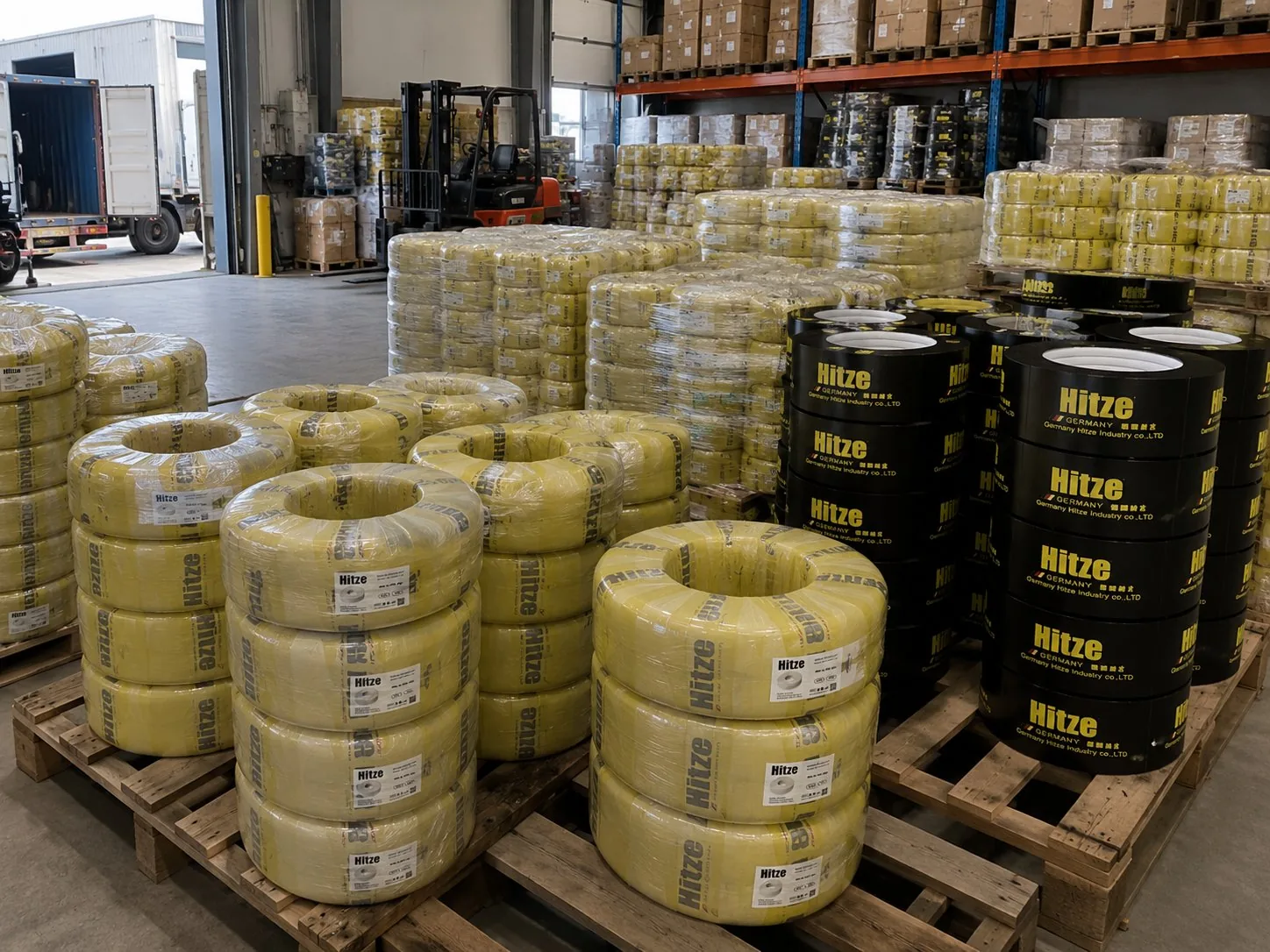
Start with the number that governs everything: a 40ft High Cube’s internal envelope is roughly 12.03 m long × 2.35 m wide × 2.70 m high, which multiplies out to about 76.3 CBM of theoretical space. You will never load that. Once you subtract the air between round coils, the dunnage and lashing, the door-end access you need for the last row, and the simple fact that pipe does not tessellate like a brick, realistic usable volume lands around 60–68 CBM (40HC published dimensions). Experienced shippers treat that nominal 76.3 CBM as a ceiling, not a goal: they plan to fill as much usable volume as the product geometry allows and treat anything above the realistic band as a bonus, not a baseline.
Now the weight side. That same box tops out near 30,480 kg gross, leaving roughly 26,300–28,560 kg of payload after tare. Here is the trap: because PEX resin is light (its solid material density is only about 941 kg/m³) and the packed load is mostly the air inside and between hollow coils, a 40HQ packed solid with PEX or PP-R coils typically weighs a fraction of that ceiling — an estimated order of 8 to 12 tonnes for a full coil load, far under the payload limit. Plastic pipe is light and hollow, so you hit the walls long before the axle. Plan the order “to weight” and you will fill it to 55 CBM, note that you are well under the weight limit, and quietly ship 10–13 CBM of nothing — on a single box, the difference between landing 30,000 metres of pipe and 34,000. Across a year of reorders it is a rebate you never claimed.
So the discipline is simple: treat a pipe container as a volume problem, verify it as a weight problem. Plan every SKU by the cube it displaces and wastes, then confirm at the end that you are under the gross-mass and VGM limits — which, for plastic pipe, you almost always are. That reframing beats any freight-rate negotiation, because the rate is identical whether the box is 68% full or 88% full.
Coils vs. straight lengths: the packing-density decision
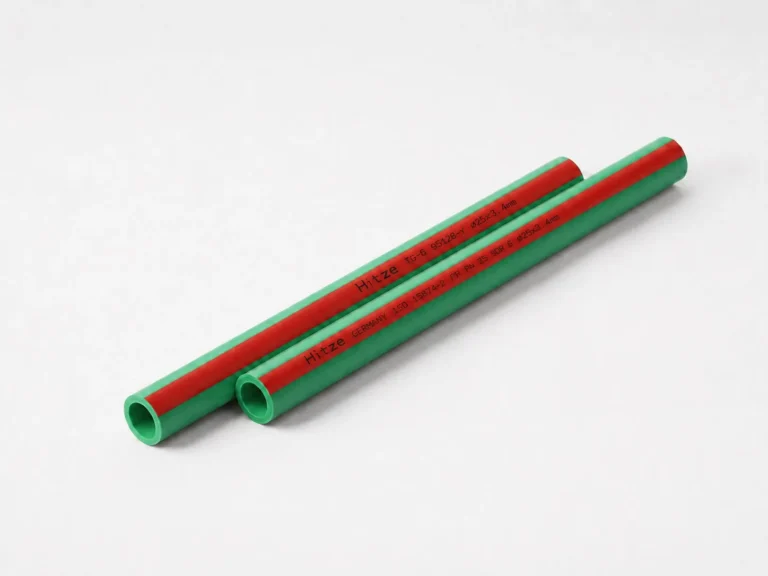
Plastic piping arrives in two geometries that load nothing alike. Coilable pipe — PEX, PE-RT, PEX-AL-PEX multilayer and small-diameter HDPE — ships in rings; rigid pipe — PP-R and larger HDPE/PP — ships in straight bars, typically 4 m. Knowing how each behaves in the box lets you direct the supplier’s loading plan instead of accepting whatever falls off the line.
Where the air hides in a coil
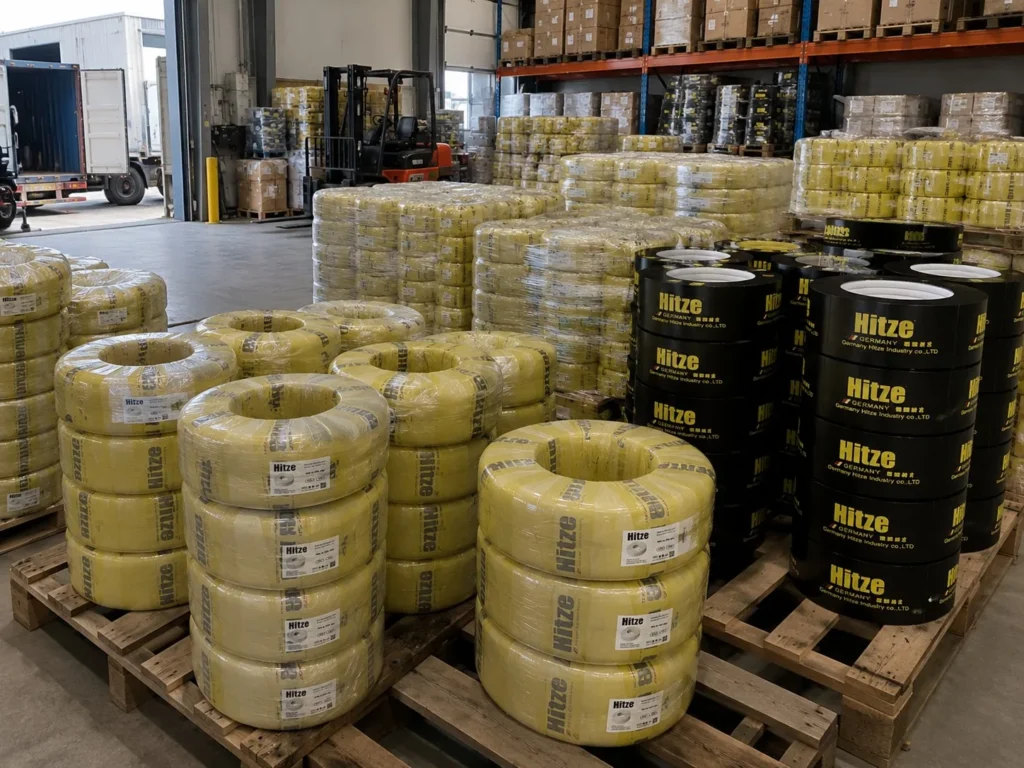
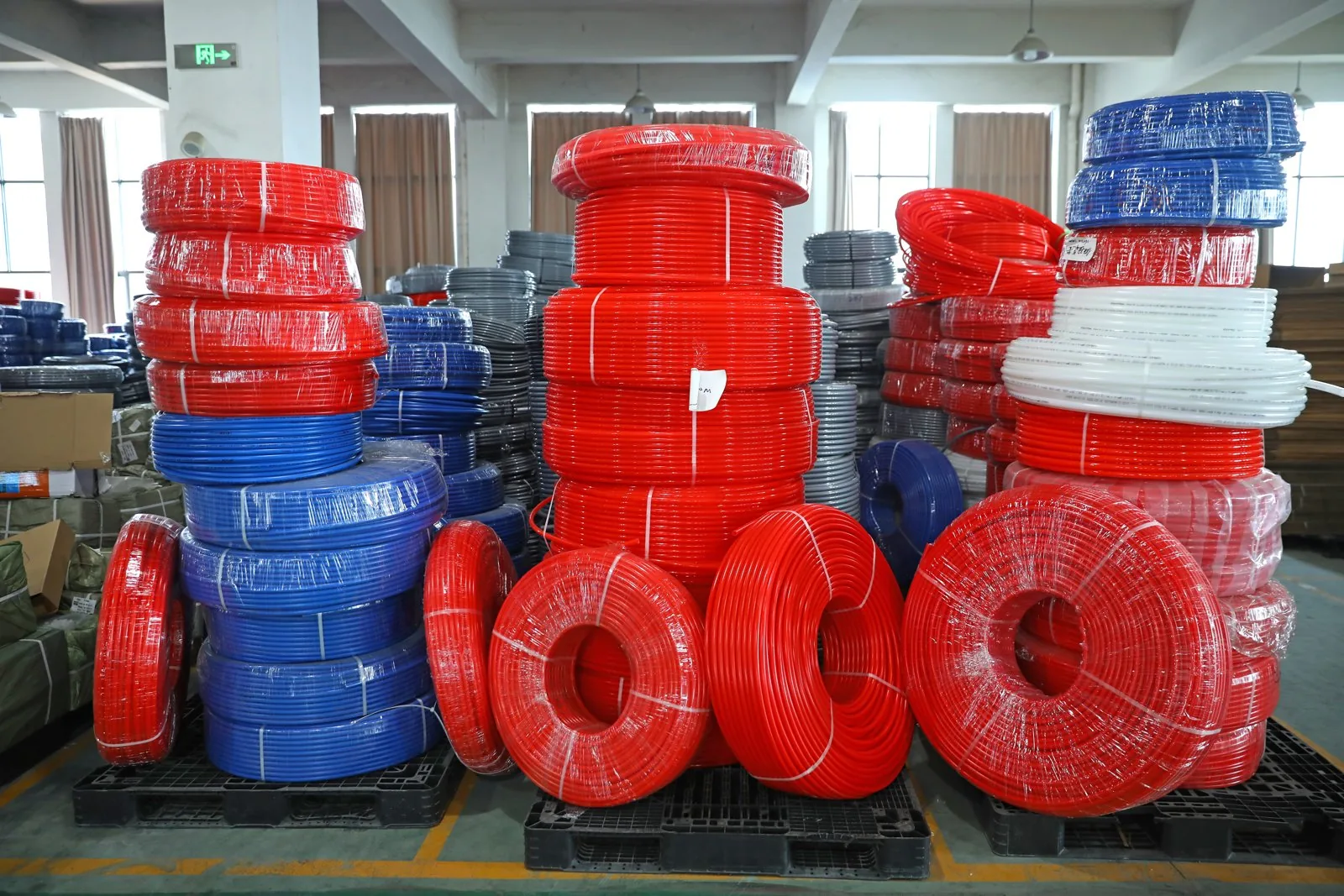
A coil is a doughnut, and a doughnut has a hole. The single biggest source of wasted cube in a pipe container is coil inner diameter left empty. A 200 m coil of 16 mm PEX might have a 900 mm outer diameter and a 500 mm hole in the middle — that hole is dead air unless something goes in it. The two levers that recover it are:
- Nesting smaller coils inside larger ones. A tight 100 m coil of 16 mm barrier pipe drops neatly into the eye of a 25 mm or 32 mm coil. Done systematically across the load, nesting can recover several CBM per container.
- Coil-ID discipline at the winder. Winding to a smaller, consistent inner diameter shrinks the wasted hole and makes coils stack squarely instead of leaning. It is a factory-side decision that a distributor should specify at PO stage, not discover on arrival.
The second variable is stacking orientation. Coils can be laid “eye to sky” (flat, holes facing up, stacked like pancakes) or “eye to wall” (on edge, rolled in like a filing cabinet). Eye-to-sky stacks are stable and let you column-stack to the roof of a High Cube — which is exactly why the 2.70 m interior height of a 40HQ matters more for coils than for anything else; every extra layer of flat-stacked coils is pure recovered cube. Eye-to-wall packs tighter side-to-side and suits heavier, larger-OD coils that would crush if stacked flat too high. The right answer depends on coil weight and wall stiffness, which is why it is a conversation with the factory, not a default.
Straight lengths: the 4 m constraint and the door problem
Rigid PP-R and large HDPE ship as 4 m bars, and here the enemy is not the coil hole — it is length versus container geometry. A 40HQ’s ~12.03 m floor takes exactly three 4 m lengths end to end with a few centimetres to spare, so straight pipe loads beautifully along the container. The waste comes at the door end, where the last partial bundle and the access gap you leave for the forklift can strand a metre of usable length. Bundling PP-R tightly with the smaller diameters slid inside the larger ones (a 20 mm bar riding inside a 63 mm bar) is the straight-length equivalent of coil nesting, and it is the difference between a tidy 65 CBM load and a rattly 58 CBM one.
A practical rule for wholesalers who stock a full range: let the straight PP-R build the walls and floor, and let the coils fill the volume and the voids. PP-R bundles create flat, rigid tiers you can stack coils and cartons on top of; the coils then flow into the spaces the rigid geometry leaves behind. A single-SKU container — all coils, or all straight pipe — almost always cubes out lower than a thoughtfully mixed one.
Fitting cartons, manifolds and the mixed-load math
Fittings are the great void-filler of a pipe container. Press, compression, push-fit and brass fittings ship in cartons that are dense, cuboid and stackable — the opposite of a coil in every way. The mistake is treating a fitting order as a separate shipment. A carton of brass fittings weighs far more per CBM than pipe, so a modest quantity of fittings uses up your spare payload (remember, the pipe barely dented it) while filling the exact voids that coils and bundles cannot.
Manifolds sit in between: brass and stainless underfloor-heating manifolds are heavier and awkwardly shaped, best boxed and slotted into door-end tiers where their weight sits low. The strategic point for a distributor is that a single-source supplier who makes pipe, fittings and manifolds can load them into one optimised container, balancing the light-and-bulky against the heavy-and-dense. Split the order across two factories and you surrender that lever — two half-optimised boxes instead of one full one.
| Cargo type | Loads by | Density profile | Role in a mixed 40HQ |
|---|---|---|---|
| PEX / PE-RT coils | Volume (cubes out) | Very light, hollow | Fill volume; nest small inside large |
| PEX-AL-PEX multilayer coils | Volume | Light, stiffer wall | Eye-to-sky column stacks to roof |
| PP-R straight lengths (4 m) | Volume + length fit | Light, rigid | Build floor/wall tiers; nest small in large |
| Fitting cartons (press/brass) | Weight-dense | Heavy, cuboid | Void-fill; uses spare payload |
| Manifolds (brass/stainless) | Weight-dense | Heavy, awkward | Low door-end tiers, weight sits low |
Illustrative density profiles for load planning; exact CBM and weight per unit vary by size mix and packaging and are confirmed per order.
A worked 40HQ: from empty box to 66 CBM
Here is how a mixed reorder actually assembles, using illustrative geometry so you can see the logic (a real quotation replaces these with your exact SKU mix). Say a distributor orders a balanced range for hydronic and potable projects and the target is a full 40HQ at ~65 CBM and comfortably under 12 tonnes.
- Floor tier — PP-R straight lengths. Three-abreast 4 m bundles run the floor, small diameters nested in large, forming a flat load-bearing deck — roughly 18–22 CBM and a couple of tonnes, with a rigid base instead of coils rolling underfoot.
- Volume tier — coils, eye to sky. PEX, PE-RT and multilayer coils column-stack on the PP-R deck toward the 2.70 m roof, 16 mm coils nested into the eyes of the 25/32 mm coils. This is where the High Cube’s height pays off — 35–40 CBM and still only 4–6 tonnes.
- Void & door-end fill — cartons and manifolds. Dense fitting cartons drop into the gaps between coil columns; manifold boxes sit low near the doors. Several tonnes of paid-for payload you had spare anyway, squaring off the load so nothing shifts.
- Verify, don’t guess. Tally the packed volume (~64–66 CBM, inside the 68 CBM ceiling) and gross mass (~9–12 tonnes, far under 30,480 kg), issue the VGM, and the box is dense, stable and legal.
The lesson is not the exact numbers — your mix will differ — it is the sequence: rigid geometry first to build structure, coils to fill volume, dense cartons to fill voids and spend spare weight. A supplier who loads in that order routinely lands 64–66 CBM; one who floor-loads coils first and hopes usually stalls at 55–58 and you eat the gap.
What Hitze checks before a container is sealed
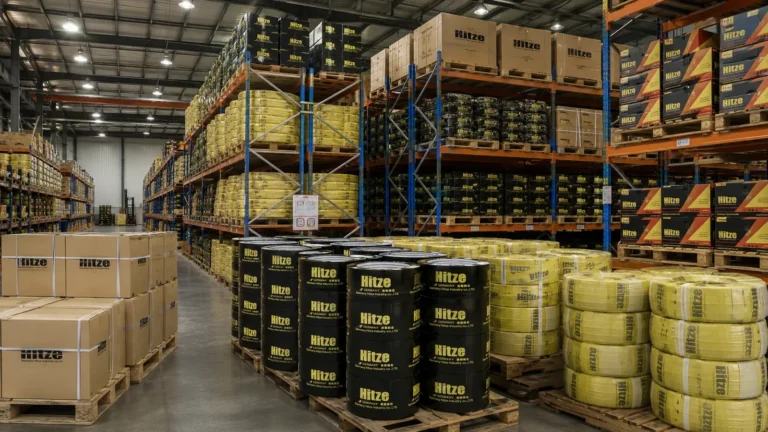
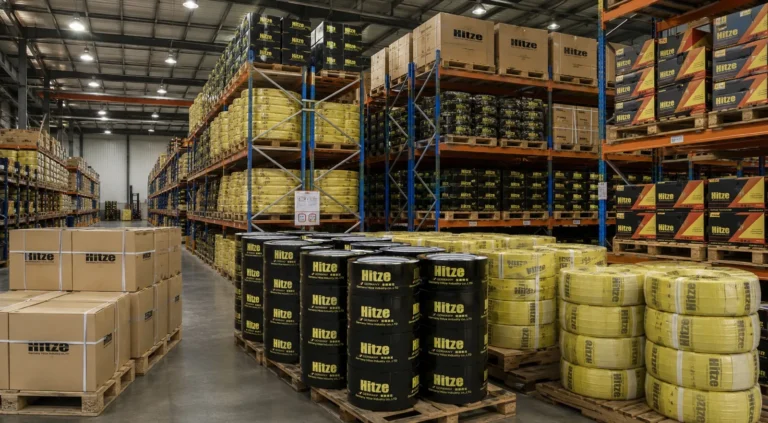
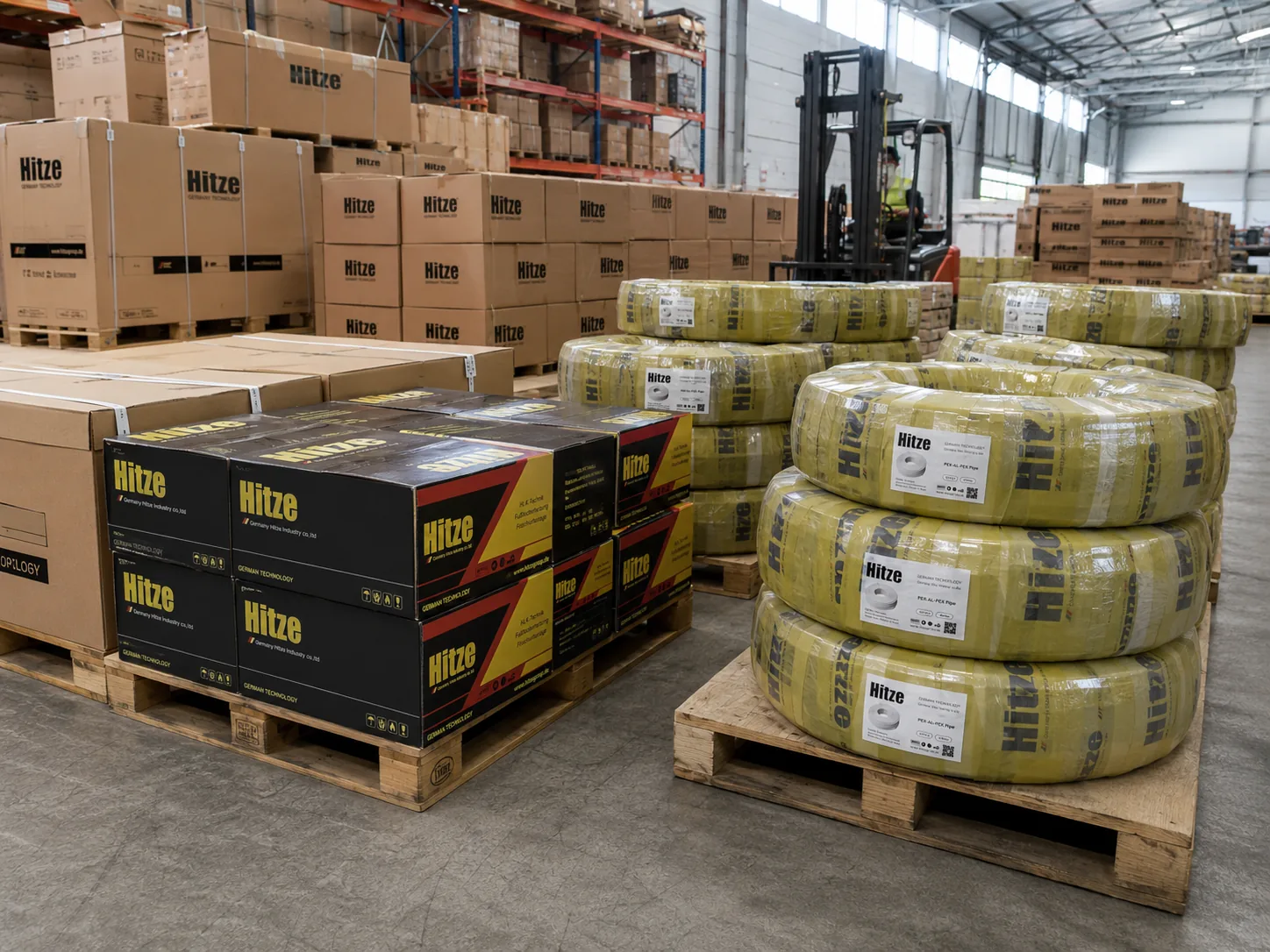
Hitze is a German brand of engineered piping systems — founded in 1974, running a 120,000 m² production base with 1,000+ employees and exporting to 118+ countries — and container loading is treated as part of the product, not an afterthought handed to a forwarder. Because the full range (PEX and PE-RT coils, PEX-AL-PEX multilayer, PP-R lengths, HDPE/PP, press/compression/push-fit and lead-free brass fittings, and underfloor-heating manifolds) is made under one roof, the loading plan can balance light-and-bulky against heavy-and-dense in a single optimised box rather than across two suppliers. What the team checks before the doors close:
- Load plan by cube, not just by weight. The SKU mix is planned to fill volume — coil nesting, eye-to-sky stacking, PP-R bundling — because plastic pipe cubes out first.
- Coil ID and winding consistency so coils stack square and nest cleanly, recovering the inner-diameter void that quietly wastes cube.
- Verified Gross Mass captured for the SOLAS declaration, so the box will actually be accepted for vessel loading.
- Correct HS-code line items and a complete certification pack travel with the goods — SKZ, DVGW, WRAS, NSF/BS 6920, ISO 45001 and SAI Global StandardsMark evidence, with cUPC/UPC, NSF-14, NSF/ANSI 61 and CE/DoP certified-to documentation available on request — so density at origin is not undone by a hold at destination.
- Private-label loads ship with the print, packaging and paperwork under your brand, palletised or floor-loaded to your preference. Exact coils-per-container and cartons-per-container counts are confirmed against your specific order and vary by market and mix.
Everything above is built to German DIN and EN ISO standards — DIN 8077/8078 and EN ISO 15874 for PP-R, DIN 4726 for oxygen-barrier heating pipe, EN 12201 / ISO 4427 for PE100 water pipe. That dimensional consistency is itself a loading advantage: pipe that runs out of round or off-diameter will not stack or nest cleanly, and that is exactly where cube quietly leaks away.
Compliance at the seams: VGM, HS codes and duty
Dense loading is wasted if the container is held. Two pieces of paper decide whether a well-packed box sails or sits.
Verified Gross Mass (VGM). Under the IMO’s SOLAS convention, in force worldwide since 1 July 2016, the shipper must submit a verified gross mass — cargo plus packaging plus the empty container’s tare — before the container is loaded onto the vessel; no valid VGM, no loading. You can weigh the packed box (Method 1) or sum the individual item weights and add the tare (Method 2). For plastic pipe this is rarely a constraint — you are nowhere near the weight ceiling — but the declaration is mandatory regardless, and a supplier who captures it as part of loading saves you a scramble at the port.
HS codes and duty. Plastic piping classifies under HS heading 3917 — “tubes, pipes and hoses and fittings therefor, of plastics.” Rigid polyethylene pipe (PEX/PE-RT/HDPE) generally falls under 3917.21, rigid polypropylene (PP-R) under 3917.22, and plastic fittings under 3917.40. For US imports, the general (MFN) duty on other plastic tubes/pipes (HTS 3917.39.00) is 3.10% and on plastic fittings (HTS 3917.40.00) is 5.30%, with “Free” rates available under listed free-trade and preference programs. Duty is levied on customs value, so a denser container does not raise your duty — but the correct 10-digit HTS line and matching commercial-invoice descriptions are what keep the entry clean. Confirm the exact 8- or 10-digit subheading and current rate for your specific product and origin with your customs broker or the official schedule before you file; classification turns on polymer, wall and whether fittings are attached.
Best for / not for: who should push for a mixed dense load
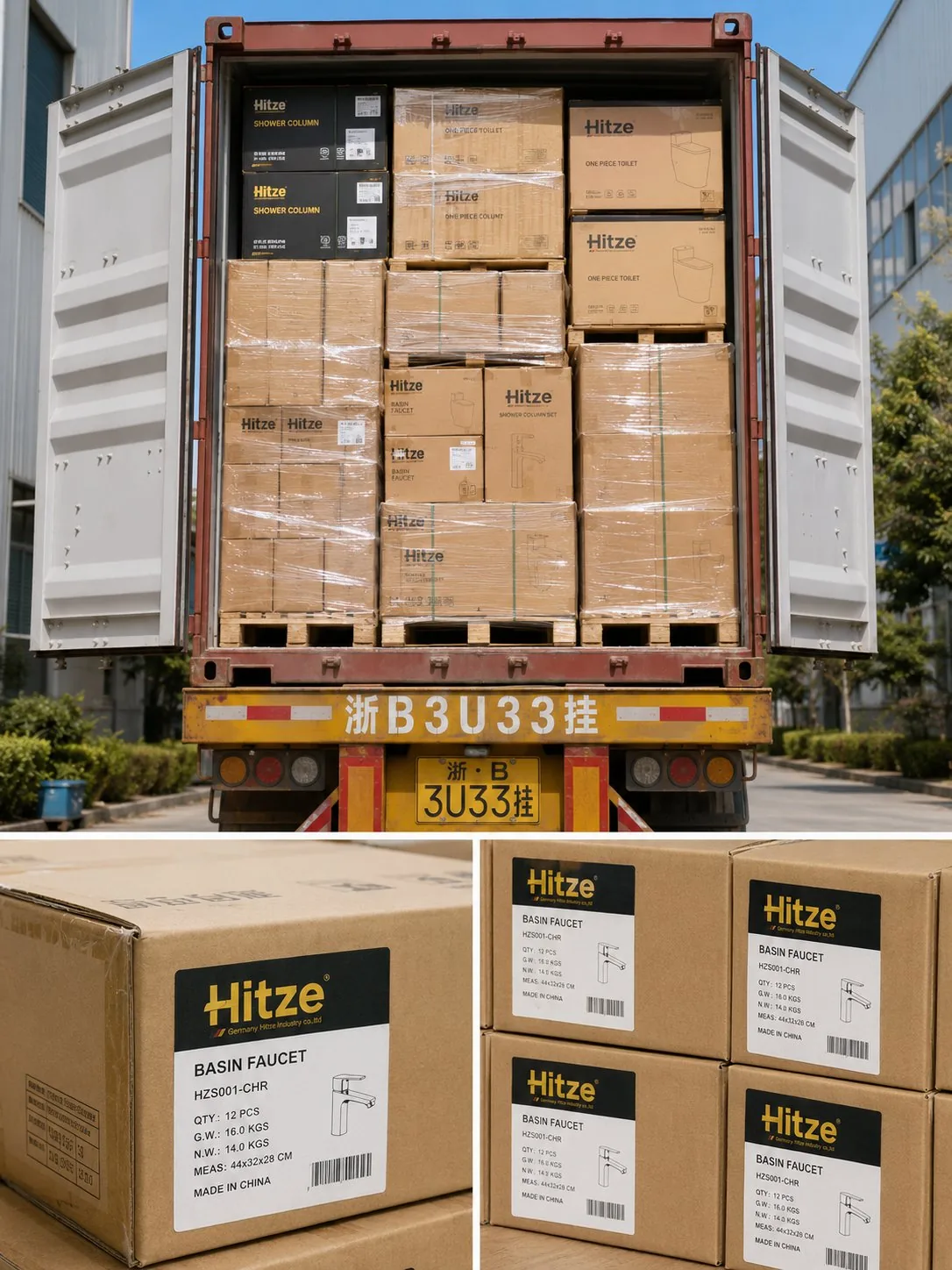
A dense, mixed-SKU 40HQ is best for distributors and wholesalers ordering a range — pipe plus fittings plus manifolds — who reorder regularly and want the lowest landed cost per metre. It is best for buyers with the warehouse to break down a floor-loaded, nested container on arrival, and for anyone whose freight is the dominant line in their landed cost. Single-source buyers gain the most, because only a supplier who makes everything can balance the load in one box.
It is not the right call for a first sample order or single-SKU trial, where a few palletised coils in an LCL slot are simpler and loading efficiency barely moves the needle. It matters less if your dock cannot handle floor-loaded goods and needs everything palletised — palletising costs you cube (pallets and their air are not free), a fair trade for unload speed, but a trade you should make knowingly. And if you are genuinely weight-constrained — bulk brass or manifolds with little pipe — the “shipping air” framing inverts and you plan to the 28-tonne payload instead.
Loading a mixed pipe container this quarter?
If you are a plumbing or heating wholesaler or distributor stocking a full range and your freight-per-metre is creeping up, ask your supplier to plan the box by cube, not by weight — and to hand you the VGM and certification pack with it. Hitze quotes container loading as part of the order: a single-source mix of coils, straight PP-R, fittings and manifolds, loaded to the top of the usable-cube band, with documentation that clears customs clean. See how a wholesale plumbing & heating pipe program is structured, or if you import for resale, how an importer & distributor supply arrangement handles the paperwork end to end.
Best for range-buyers and repeat importers. Not aimed at single-sample first orders — though those are welcome too, sample-friendly and low-commitment.
One more contextual pointer: if the load you are optimising is coil-heavy, most of the density gain lives in the pipe itself — how PEX pipe and PEX-AL-PEX multilayer pipe are wound and sized. Get the coil geometry right at the factory and the container almost loads itself.
Frequently asked questions
How much pipe fits in a 40HQ container?
A 40HQ gives about 76.3 CBM nominal and ~60–68 CBM usable. The metre count depends on diameter and coil geometry, but the binding constraint is volume, not weight: a full container of coils weighs only a fraction of the ~26,300–28,560 kg payload ceiling (an estimated 8–12 tonnes for a coil-only load). Plan by cube; the exact metre count is confirmed against your size mix.
Is it better to ship pipe in coils or straight lengths?
Neither alone maximises the box. Coils fill volume and their inner diameters nest smaller pipe; straight 4 m PP-R builds rigid tiers that coils and cartons stack onto. A mixed load — straight pipe as structure, coils as volume, fitting cartons as void-fill — reaches the top of the usable-cube band, where single-SKU loads stall 8–12 CBM short.
What is VGM and do I need it for a pipe container?
VGM (Verified Gross Mass) is the SOLAS requirement, mandatory worldwide since 1 July 2016, that the shipper declares the total verified weight — cargo, packaging and container tare — before the box is loaded onto the vessel. Without a valid VGM the container is not loaded. It applies to every packed container including pipe; a good supplier captures it as part of loading.
What HS code and duty apply to plastic pipe imports?
Plastic pipe classifies under HS heading 3917 — rigid polyethylene under 3917.21, rigid polypropylene (PP-R) under 3917.22, and plastic fittings under 3917.40. For US imports the general duty on other plastic tubes/pipes (HTS 3917.39.00) is 3.10% and on fittings (HTS 3917.40.00) is 5.30%, with Free rates under listed FTA/preference programs. Always confirm the exact 8- or 10-digit subheading and current rate for your product and origin with your customs broker before filing.
Should I palletise or floor-load a pipe container?
A genuine trade-off. Floor-loaded, nested coils reach the highest cube utilisation and lowest freight per metre; palletising costs several CBM but speeds unloading on a forklift-run dock. Floor-load if freight dominates your landed cost and you have labour to break down the load; palletise if unload speed matters more.
Is Hitze pipe made in Germany?
Hitze is a German brand of engineered piping systems, designed by its German engineering team and built to German DIN and EN ISO standards, with German-issued SKZ and DVGW certification alongside WRAS, NSF/BS 6920 and ISO 45001 approvals. For container loading, that tight-tolerance dimensional consistency is a practical edge: pipe that nests and stacks predictably is pipe that fills the box.
Container dimensions, cube utilisation, VGM rules and HS/duty figures in this guide are drawn from public logistics and tariff sources current as of 2026 and are provided for planning; verify exact container specs, VGM procedure, HS classification and duty rates with your carrier, freight forwarder and customs broker for your specific shipment. Hitze-specific loading counts vary by order and are confirmed per quotation.