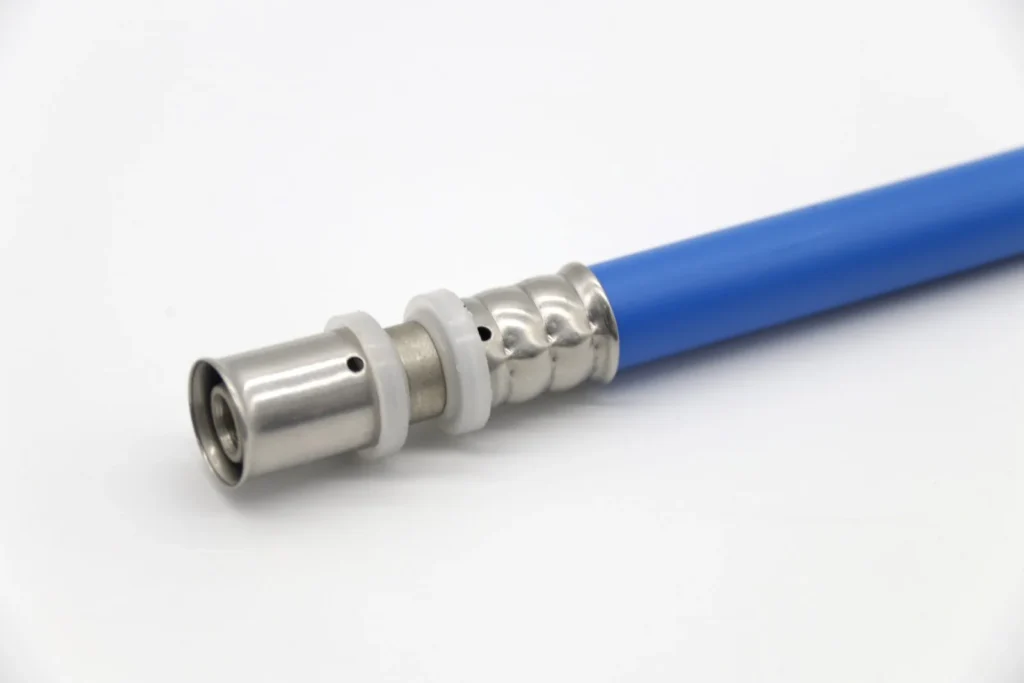
The moment that decides whether you keep a plumbing account is not the quote — it is the phone call two years later when a joint weeps behind a customer’s drywall and everyone in the chain starts pointing at the next brand up the line. If you resell pipe from one factory and fittings from another, you have quietly sold your customer a system that no single manufacturer warrants. A mixed-brand joint has no single warranty owner; a matched Hitze pipe-and-fitting system carries a 50-year warranty because one manufacturer stands behind the whole joint — pipe, fitting, ring and seal — not just the metre of pipe leading up to it. This is the distributor’s case for building a warrantable pipe system from one brand: what a system warranty actually is, why mixing brands usually voids it, and how a single, defensible 50-year figure turns into a resale proposition your competitor shipping the cheapest mixed pallet cannot put on paper.
Key Takeaways
- A “warrantable system” is a legal construct, not a product. The headline 25-year warranties from Uponor, Viega, Zurn and Jones Stephens all apply only when their pipe is joined with their own fittings — the coverage attaches to the matched pair, never to a loose length of pipe.
- Mixing brands is the fastest way to void both warranties. Viega states it is not liable for components it did not manufacture or sell; MrPEX disclaims coverage for compatibility with non-MrPEX products. There is no crimp ring on the market that lets you cross two makers’ PEX and keep either warranty intact.
- The standards were written as systems, not parts. ASTM F877 and EN ISO 15874 certify pipe and fittings together — ISO 15874 even has a dedicated Part 5 for “fitness for purpose of the system.” Single-brand sourcing is how you inherit that match by design.
- Your resale exposure is the callback, not the crimp. When a mixed-brand joint fails, the claim lands on the last recognisable brand in the chain — often the distributor. One brand across pipe, fitting, O-ring and brass collapses that ambiguity.
- Hitze puts a 50-year warranty on the matched system. One manufacturer stands behind the whole joint, so the coverage is a figure you can resell — and with no MOQ, you can trial the matched pipe-and-fitting set on samples or a small order before you commit the range.
- Best for distributors and importers who resell to trade and carry warranty exposure. Not built for pure spot-buyers flipping one container with no after-sale relationship.
What “warrantable” actually means when a pipe system is on the line
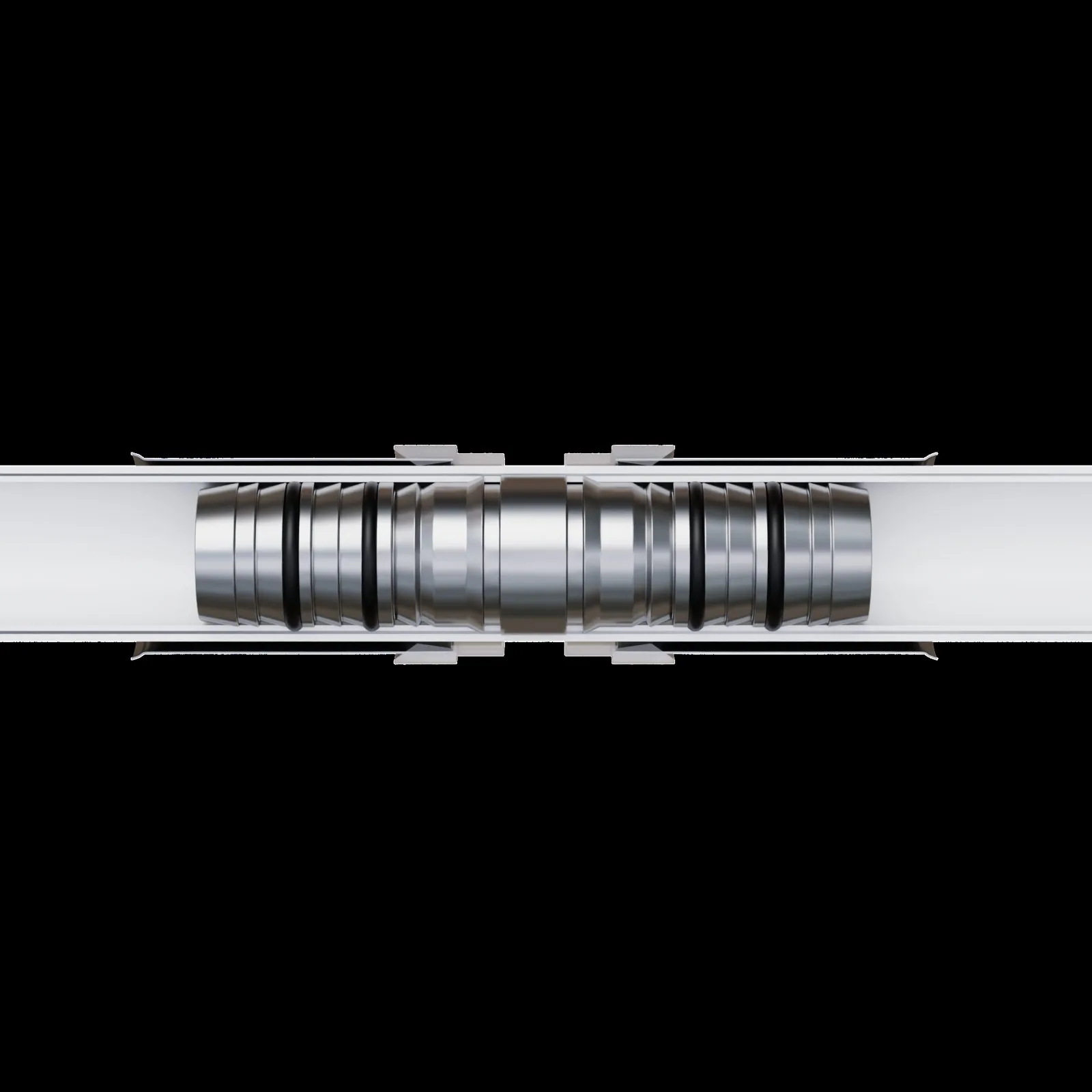
Distributors use the word “warranty” loosely, and that looseness is exactly where money leaks. A pipe warranty and a system warranty are different animals. A pipe warranty covers a defect in the tube itself — a bad extrusion, a delamination, a material fault. A system warranty covers the assembled joint: pipe, fitting, ring, seal and the connection between them, under real pressure and temperature cycling. Your customer does not have a leak in “the pipe” or “the fitting” in isolation; they have a leak at the joint, and only a system warranty reaches that far.
Look at how the market’s biggest names actually word it. Uponor offers a 25-year transferable limited warranty “when used with ProPEX ASTM F1960 fittings as a system” — not for the pipe alone. Viega warrants ViegaPEX tubing installed with Viega press fittings “as a system” for 25 years. Jones Stephens grants its 25-year term only when the install is “comprised of only Jones Stephens PEX tubing and PEX fittings.” MrPEX is even blunter: 30 years on the pipe and 2 years on the fitting individually, but a single transferable warranty only when the two are installed as one MrPEX system. Read those clauses side by side and the pattern is unmistakable — the long, sellable warranty is a reward for keeping the whole joint under one roof. The instant you split the joint across two suppliers, you are back to two short, partial promises that each carve out the other maker’s parts.
For a distributor, this reframes the entire sourcing decision. You are not buying pipe and buying fittings; you are buying (or forfeiting) the right to hand your customer a single, defensible warranty. That right has a resale value your competitor who ships the cheapest mixed pallet cannot match — and the length of the term is part of the value. The market’s headline single-brand promises sit at 25 years; a matched Hitze pipe-and-fitting system carries a 50-year warranty, because one manufacturer owns the pipe, the fitting, the ring and the seal and can stand behind the joint as a unit. For your own resale proposition that is a concrete, sellable number: instead of forwarding a supplier’s pipe-only paper and hoping the fitting side holds, you list one 50-year system warranty on your line card — the kind of figure a specifier remembers and a mixed pallet can never quote. Because there is no MOQ, you can validate that the matched system performs on samples or a small trial order before you re-platform your whole range onto it.
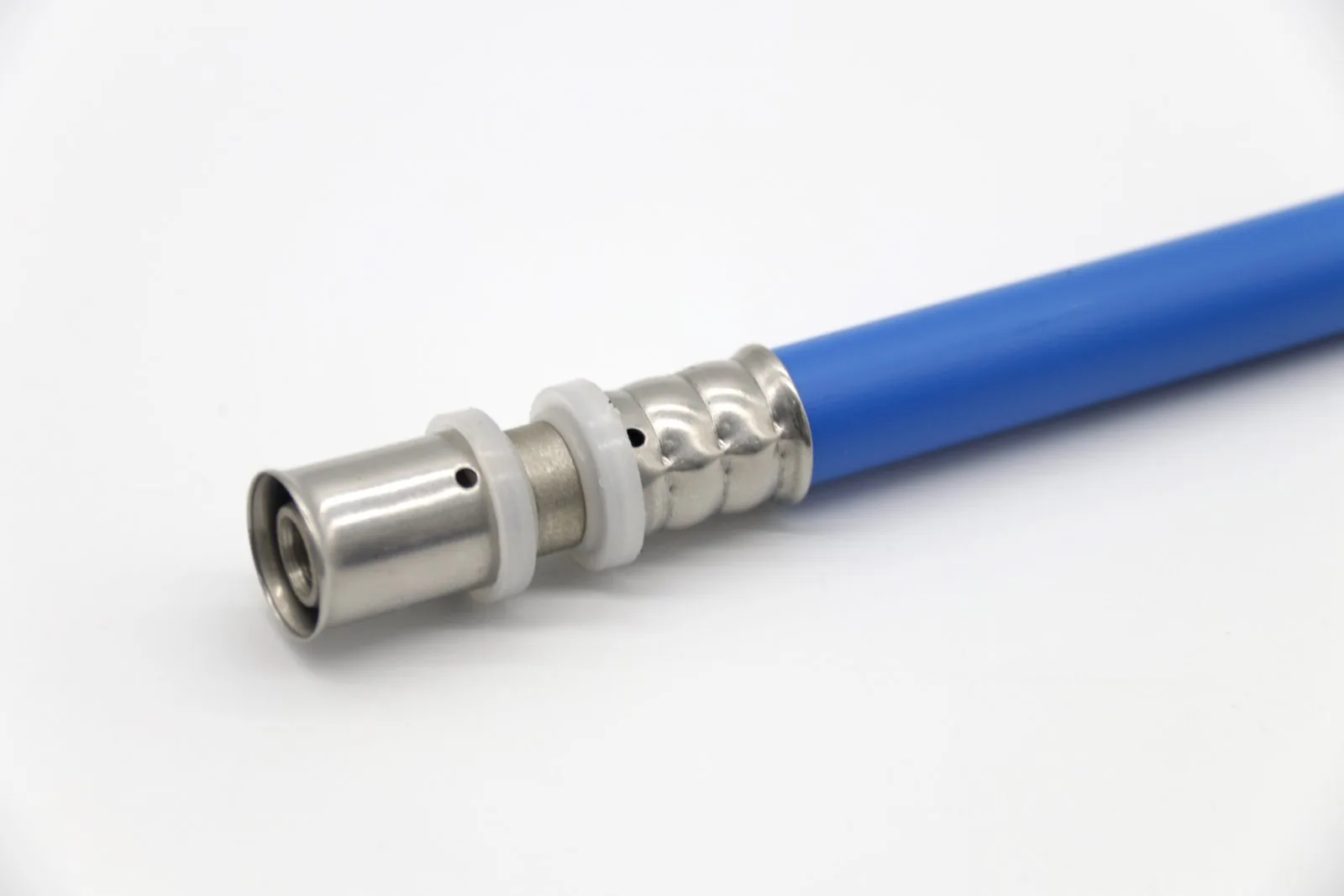
Why mixing brands quietly voids the coverage you thought you sold
The trap is that a mixed-brand joint usually works — on the bench, on install day, through the pressure test. It fails on the warranty, not on the pressure gauge, and it fails silently until water is running down a wall. Every serious manufacturer builds a fence around its own components precisely because it cannot vouch for a competitor’s tolerances, brass grade or O-ring compound. Viega’s warranty explicitly excludes liability for anything in the plumbing system “other than those manufactured or sold by Viega.” MrPEX disclaims warranty for “claims related to compatibility with non-MrPEX products.” These are not fine-print gotchas; they are the standard shape of every plastics-pipe warranty in the market.
Now walk the failure downstream, because this is what actually reaches your P&L. An installer makes up a joint with your pipe and a bargain fitting from a second source. Two years later it weeps behind drywall. The homeowner calls the plumber; the plumber calls the merchant; the merchant calls you. When the insurer’s loss adjuster photographs a mixed-brand, out-of-warranty joint as the failure point, both manufacturers have a written exclusion to hide behind — and the last brand anyone can name in the chain is frequently the distributor who supplied the pallet. You did not make the pipe or the fitting, but you assembled the exposure. A single-brand system is the only structure that lets one manufacturer stand behind the pipe, the fitting, the seal and the brass at once, so the claim resolves instead of ricocheting. This is also where the contractor’s callback risk changes shape: a matched system under a single 50-year warranty means the fitter who made up the joint is not gambling that two makers’ tolerances agree, and if a joint does fail there is one warranty owner to call rather than a standoff between two exclusions. The 50-year figure is not marketing garnish here — it is the practical measure of how long one manufacturer is willing to own the whole joint, which is exactly the exposure a distributor is trying to offload.
There is a second, subtler cost most buyers never price in: documentation drift. Two suppliers means two certificate packs, two revision cycles, two chances that a WRAS or NSF listing lapses on the half of the system you are not watching. When a project inspector or a private-label customer asks you to prove the system is compliant, a split supply chain forces you to reconcile two evidence trails that were never designed to agree.
The standards already assume a single system — that is the whole point
The strongest argument for single-brand sourcing is that the standards bodies got there first. Compatibility is not a hope you pass on to the installer; it is written into the specification — and a two-supplier chain is a bet that both ends read the same clause the same way. Three examples that matter for what you stock:
PEX (potable and hydronic). ASTM F877 is a hot- and cold-water distribution system specification — it governs tubing and fittings together and points to the exact fitting families that are valid on PEX: F1807 metal-insert crimp, F1960 cold-expansion with a PEX reinforcing ring, and F2159 plastic-insert crimp. When your pipe and fittings are built to that same reference set by one factory, the bore, the ring and the sleeve all resolve to a single spec. When they come from two, you are trusting that a fitting certified under one reading seats correctly on a pipe extruded to another — and the joint is where that trust is tested at pressure.
PP-R (hot and cold water). EN ISO 15874 is not one document but a family: Part 1 general, Part 2 pipes, Part 3 fittings, and — tellingly — Part 5 “fitness for purpose of the system.” Heat-fusion is unforgiving: two PP-R materials with different melt-flow behaviour can weld cosmetically and still under-bond, so a fused socket and the pipe it welds to are meant to share a defined material class. A single-brand PP-R range is how you keep that melt match instead of gambling on it.
Radiant heating. DIN 4726 caps oxygen diffusion through barrier pipe — current editions at roughly 0.32 mg/(m²·d) at 40 °C (older editions expressed it volumetrically as about 0.10 g/(m³·d)) — specifically to stop oxygen-diffusion corrosion from attacking the ferrous parts of a heating loop. Pair a compliant barrier pipe with a manifold or fitting that ignores that spec and you reintroduce exactly the corrosion path the pipe was chosen to close. The barrier only protects a system if the whole system respects it.
What Hitze checks so a single-brand system is warrantable end to end
Hitze is a German brand of engineered piping systems — founded in 1974, running a 120,000 m² production base with 1,000+ employees and exporting to 118+ countries — and the reason that scale matters here is that pipe and fittings are made and verified under one roof, to the same drawings. When a distributor asks “can I warrant this as a system?”, these are the checks that answer the question:
- Dimensional match by design. Multilayer PEX-AL-PEX, PEX, PE-RT and PP-R pipe are extruded to the same size classes the press, compression and push-fit fittings are moulded and machined to — 16 / 20 / 25 / 32 mm and up — so the joint is a matched pair, not two independent tolerances meeting for the first time on site.
- Jaw-profile consistency. Press fittings are supplied against the common jaw profiles (TH / U / F / M), so the contractor’s existing press tool closes the same crimp the fitting was validated on — removing the mixed-tool guesswork that turns into callbacks.
- Lead-free brass, stated by grade. Potable brass is specified by alloy — DZR grades CW724R, CW511L, CW602N and standard CW617N — so the metal in the fitting is the same metal you are certifying for drinking-water contact, not an unnamed “lead-free” that a second supplier can quietly change.
- Hydrostatic and pressure verification. Pipe and fittings are pressure- and hydrostatic-tested against the DIN 8077/8078, EN ISO 15874 and DIN 4726 references before they ship — the same standards the system warranty leans on.
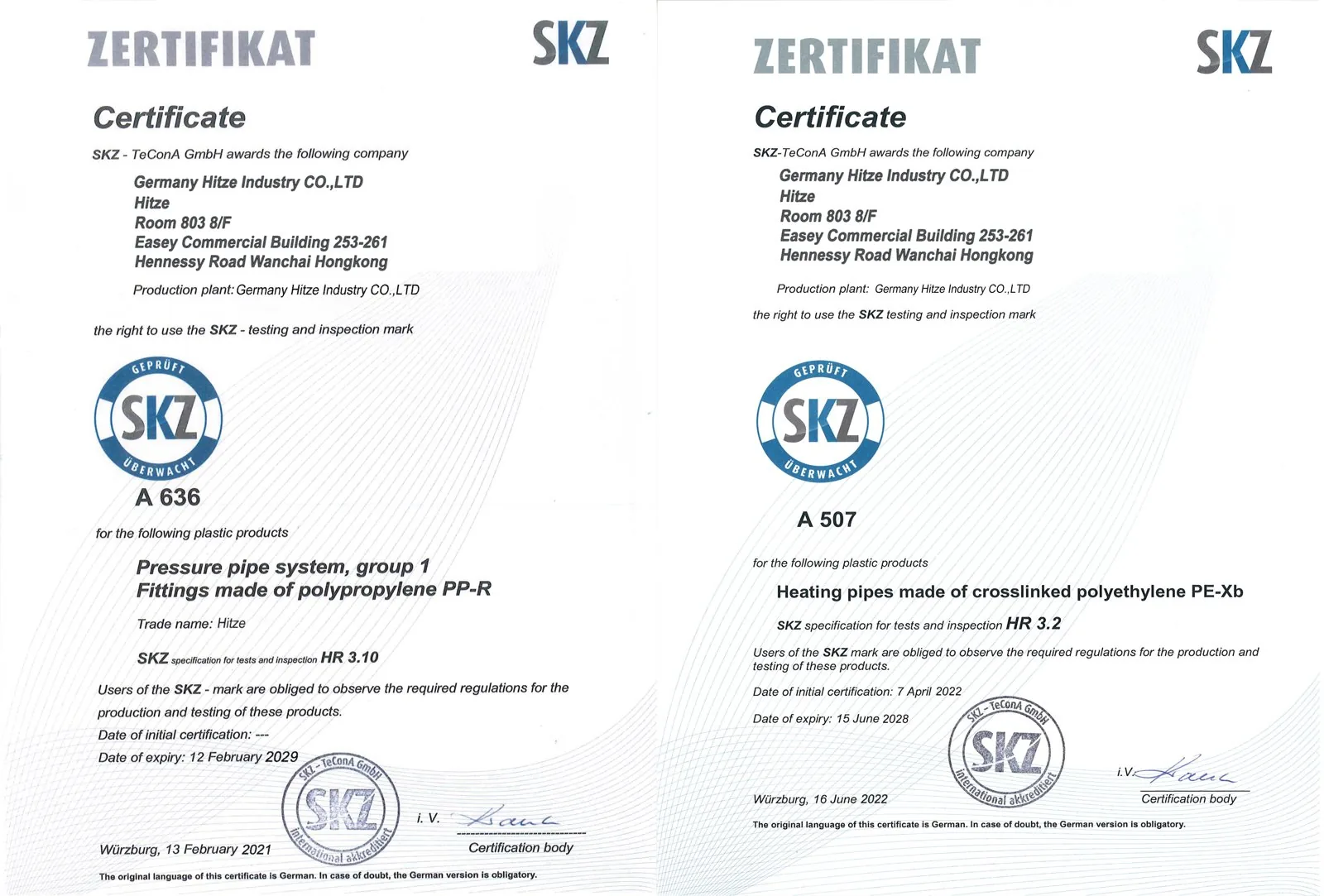
- One compliance file for the whole joint. The system is backed by recognised schemes — SKZ (PP-R pressure pipe and fittings, PE-Xb heating pipe), DVGW type examination for PP-R drinking-water pipe, WRAS material approval, an NSF Laboratories BS 6920 potable-water test report, and ISO 45001 — with cUPC/UPC, NSF-14 and NSF/ANSI 61 stated as certified-to. Specific certificate and listing numbers are available on request and vary by market and order.
- A 50-year warranty on the matched system. Because the checks above hold pipe and fitting to one set of drawings under one roof, Hitze stands behind the assembled joint with a 50-year system warranty — the coverage attaches to the matched pair, not to a loose length of pipe. That is the figure you resell, and with no MOQ you can put the matched system through your own pressure and fit-up checks on a sample or trial order before you certify it under your line.
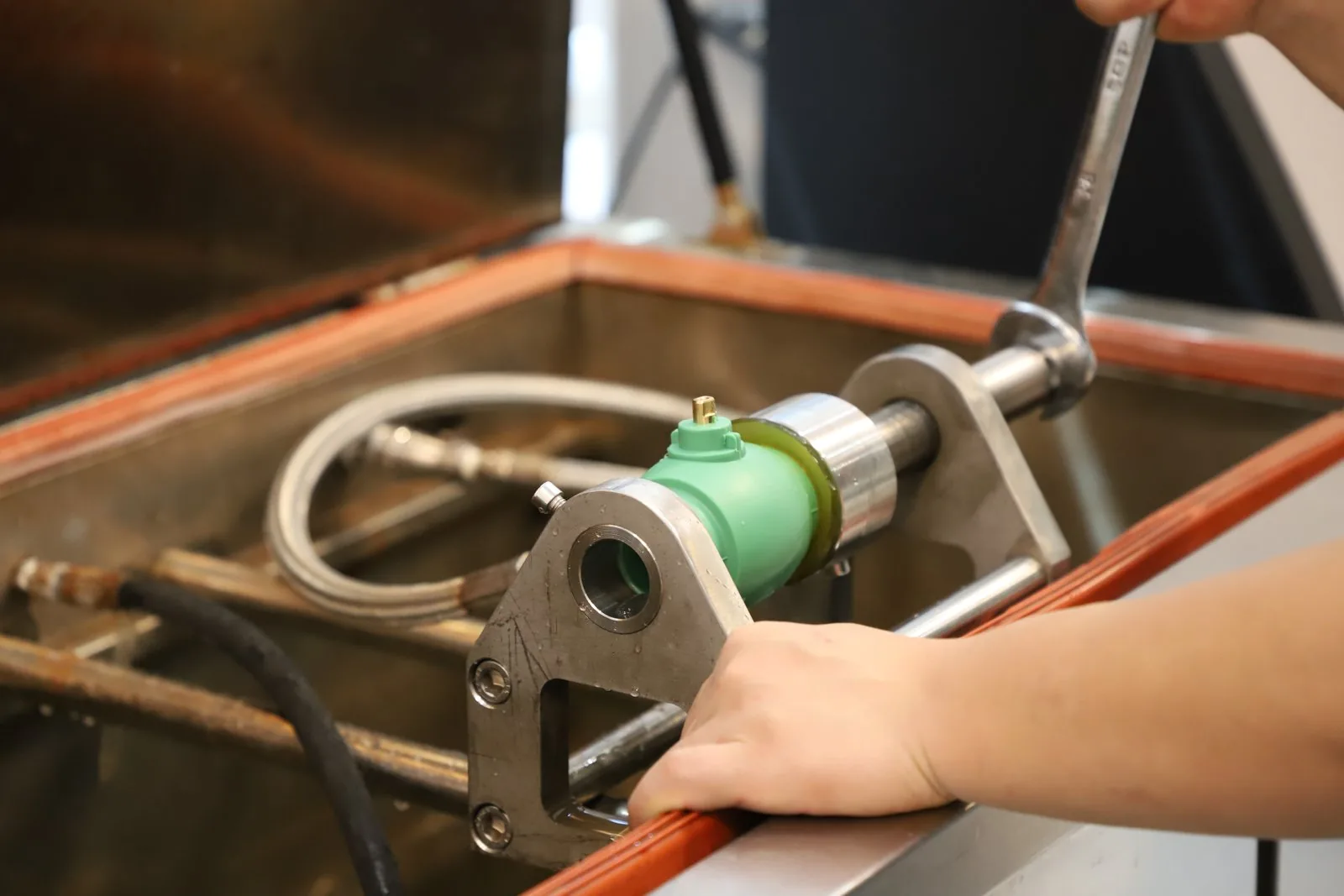
That single-file logic is the practical difference between claiming a system warranty and actually being able to defend one. When a specifier or an inspector wants proof, the certifications and compliance documentation covers the pipe and the fitting as one submission — not two evidence trails you have to force into alignment after the fact.
A worked scenario: from container to a claim that resolves
Here is how the single-brand structure pays off end to end. A regional distributor supplies a mid-rise residential project: PP-R risers for hot and cold water, multilayer PEX-AL-PEX for the in-slab distribution, and a bank of brass underfloor-heating manifolds feeding the radiant loops. Sourced as one brand, the pipe, the press and compression fittings, the manifolds and the lead-free brass all arrive on the same POs, under one certificate pack, dimensionally matched and jaw-profile compatible.
Eighteen months in, a fitter reports a slow weep at one PP-R socket on the fourth floor. The building manager escalates; the main contractor demands a warranty response within days or threatens to withhold retention on the whole plumbing package. Because every component in that joint traces to one manufacturer, the claim has nowhere to fragment: there is no second maker to blame the pipe, no second brass grade to interrogate, no gap between two certificate revisions. The distributor produces one system compliance file, points to a single 50-year system warranty that covers the assembled joint rather than the pipe alone, and the manufacturer stands behind it — so the fix is a replacement socket, not a six-week finger-pointing exercise while retention money sits frozen. That one-owner, 50-year backing is what lets the distributor answer the contractor’s callback in days instead of quarters. Now run the same scenario with the fittings bought from a cheaper second source: both warranties carve out the other’s parts, the insurer sees a mixed joint, and the distributor — the last named brand on the delivery note — eats the exposure. The few cents saved per fitting bought a five-figure dispute. And because Hitze sets no MOQ, the distributor who wanted to de-risk this before committing could have qualified the matched system on a trial order first — proving the joint and its warranty on a small volume rather than discovering the exposure on a live project.
Single-brand vs mixed-supply: the warranty trade-off at a glance
| Factor | Single-brand system (pipe + fittings, one maker) | Mixed supply (pipe and fittings split) |
|---|---|---|
| Warranty type | One system warranty covering the assembled joint — Hitze: 50 years on the matched pipe + fitting | Two partial pipe/fitting warranties that exclude each other’s parts |
| Coverage on a mixed joint | Intact — single maker owns the whole joint | Commonly reduced or voided (Viega, MrPEX language) |
| Standards match | Built to one reference set (ASTM F877 / ISO 15874) | Two interpretations meeting at the joint |
| Compliance file | One pack for pipe + fitting | Two packs, two revision cycles to reconcile |
| Where the claim lands | Resolves at the manufacturer | Ricochets to the last named brand — often you |
| Apparent unit price | Sometimes a touch higher line-by-line | Can look cheaper per item — before the first claim |
| Trial before you commit | Hitze: no MOQ — qualify the matched system on samples or a small order | Two vendors, two minimums to clear before you can test the joint |
Best for — and where single-brand is not the right call
Best for: distributors and importers who resell into trade and carry the callback; private-label and ODM brands that need to certify and warrant a system under their own name; and MEP-facing supply where a project specifier will demand one coherent submittal. If your customer ever comes back to you after the sale, a warrantable single-brand system is the cheapest insurance you can stock.
Not built for: pure spot-buyers flipping a single container of commodity pipe with no after-sale relationship, jurisdictions where you are legally obliged to dual-source, or one-off jobs where the pipe and fitting will demonstrably never share a joint. Honesty matters here — single-brand sourcing buys warranty coherence and compliance simplicity, not the lowest possible sticker on every line item. If you never see the customer again, that coherence has little value; if you do, it is usually the difference between a replacement socket and a frozen retention cheque.
One more honest caveat: a single supplier is, on paper, a single point of failure. The answer is not two shallow suppliers — it is one factory deep enough to be your internal dual source, running parallel extrusion and moulding lines and holding container-ready stock across the range, so you keep single-brand warranty coherence and continuity without paying the two-vendor tax.
Building a range you can actually warrant?
If you resell to trade and carry the warranty exposure, it is worth pricing a single-brand system against your current mixed pallet — not on unit price, but on the claim you would have to defend. Hitze supplies pipe and fittings engineered as one system, backed by a 50-year warranty on the matched joint and the compliance documentation to prove it. Because there is no MOQ, you can qualify the matched building blocks on samples or a small trial order before you re-platform your range — PP-R pipe & fittings, multilayer PEX-AL-PEX pipe and press fittings — or talk to us about a private-label system, warranted under your own brand. Best fit for distributors, importers and own-brand owners who stand behind their systems after the sale; less relevant for one-off spot buys.
Frequently asked questions
What makes a pipe system “warrantable” as opposed to just a warranted pipe?
A warranted pipe covers a defect in the tube. A warrantable system covers the assembled joint — pipe, fitting, ring and seal — under pressure and temperature cycling. Leaks happen at joints, so only a system warranty reaches the actual failure point. That requires pipe and fitting from one manufacturer built to the same specification.
Does mixing pipe and fittings from different brands really void the warranty?
In most cases, yes. Manufacturers warrant their pipe and fittings as a system and explicitly exclude components they did not make or sell — Viega, MrPEX, Uponor and Jones Stephens all word it this way. There is no crimp ring that lets you cross two makers’ PEX and keep both warranties. The joint may pass a pressure test on install day and still leave you with no coverage when it fails later.
As a distributor, why does a mixed-brand failure become my problem?
Because when a joint fails and both manufacturers point to their written exclusions, the claim travels to the last recognisable brand in the chain — frequently the distributor named on the delivery note. You did not make the pipe or the fitting, but you assembled the exposure. A single-brand system removes the ambiguity so one manufacturer owns the joint and the claim resolves instead of ricocheting back to you.
Is Hitze made in Germany?
Hitze is a German brand of engineered piping systems — founded in 1974, engineered in Germany and built to German DIN standards, holding a German trademark registration with the DPMA. Its systems are DVGW-certified and SKZ-tested. The value for a warrantable system is that pipe and fittings are engineered together to those standards, so the whole joint is covered by one coherent compliance file rather than two.
Which certifications should a warrantable system carry for the US and Europe?
For US potable use, look for NSF/ANSI 61 and cUPC/UPC listing — NSF/ANSI 61 is required by 49 US state drinking-water agencies and roughly 17% of submitted products fail initial testing, so a live listing is meaningful. For the UK and EU, WRAS and DVGW plus CE with a Declaration of Performance are the key marks. Hitze holds SKZ, DVGW, WRAS, NSF (BS 6920) and ISO 45001; certificate numbers are available on request.
How long is the warranty on a matched Hitze system, and what does it cover?
Hitze offers a 50-year warranty on the matched pipe-and-fitting system — the coverage attaches to the assembled joint (pipe, fitting, ring and seal), not to a loose length of pipe. Because one manufacturer makes and verifies both halves to the same drawings, it can stand behind the whole joint under a single term, which is why the figure is longer than the 25-year single-brand warranties common in the market. For a distributor, that is a concrete number you can resell and a contractor callback that resolves at one warranty owner instead of a standoff between two exclusions.
Can I get a warrantable system certified and warranted under my own private-label brand?
Yes — that is the point of buying the system from one manufacturer. Because a single factory owns the pipe, the fittings and the compliance file, the system can be documented and certified under your own name rather than split across suppliers who each only cover half the joint. There is no MOQ, so you can start with samples or a small trial order before committing the range; certification scope is confirmed on request and varies by market.


