Key Takeaways
- Canada accepts plumbing pipe certified to the CSA B137 series: B137.5 for PEX, B137.11 for PP-R/PP-RCT, B137.10 for PEX-AL-PEX and B137.18 for PE-RT — the National Plumbing Code references these directly.
- A cUPC mark from IAPMO R&T proves certification to the applicable Canadian standards and is accepted across all provinces and territories. Hitze holds cUPC; certificate numbers are available on request.
- Plastic pipe without fittings lands under CBSA tariff item 3917.32.90 at 6.5% MFN — but plastic fittings (3917.40.00) and brass fittings (7412.20.00) enter duty-free. That split changes how you structure orders.
- China lost Canada’s GPT preference in 2015 and China-origin goods never qualify under CUSMA, so the MFN column is your rate — no US-style Section 301 surcharge applies to plastic pipe.
- 5% GST is payable at the border on the duty-paid value; GST-registered importers recover it as an input tax credit, so your only sunk border cost on a typical mixed container is the 6.5% on the pipe itself.
Canada looks like the easier sibling of the US import market — no Section 301 tariffs, lower entry-bond drama, one national model code. Then your first container hits a plumbing inspector in Ontario who has never seen your brand, asks where the certification mark is on the pipe wall, and your distributor’s launch stalls for a quarter. The duty side of importing pipe to Canada is genuinely simpler than the American version; the acceptance side is where importers get hurt. This guide walks both, in order: which CSA standards your pipe must be certified to, what the cUPC mark actually buys you, how CBSA classifies and taxes heading 3917 goods in 2026, and what the provinces will and won’t accept when the pipe reaches a job site.
CSA B137: The Standard Series That Decides Whether Your Pipe Is Sellable
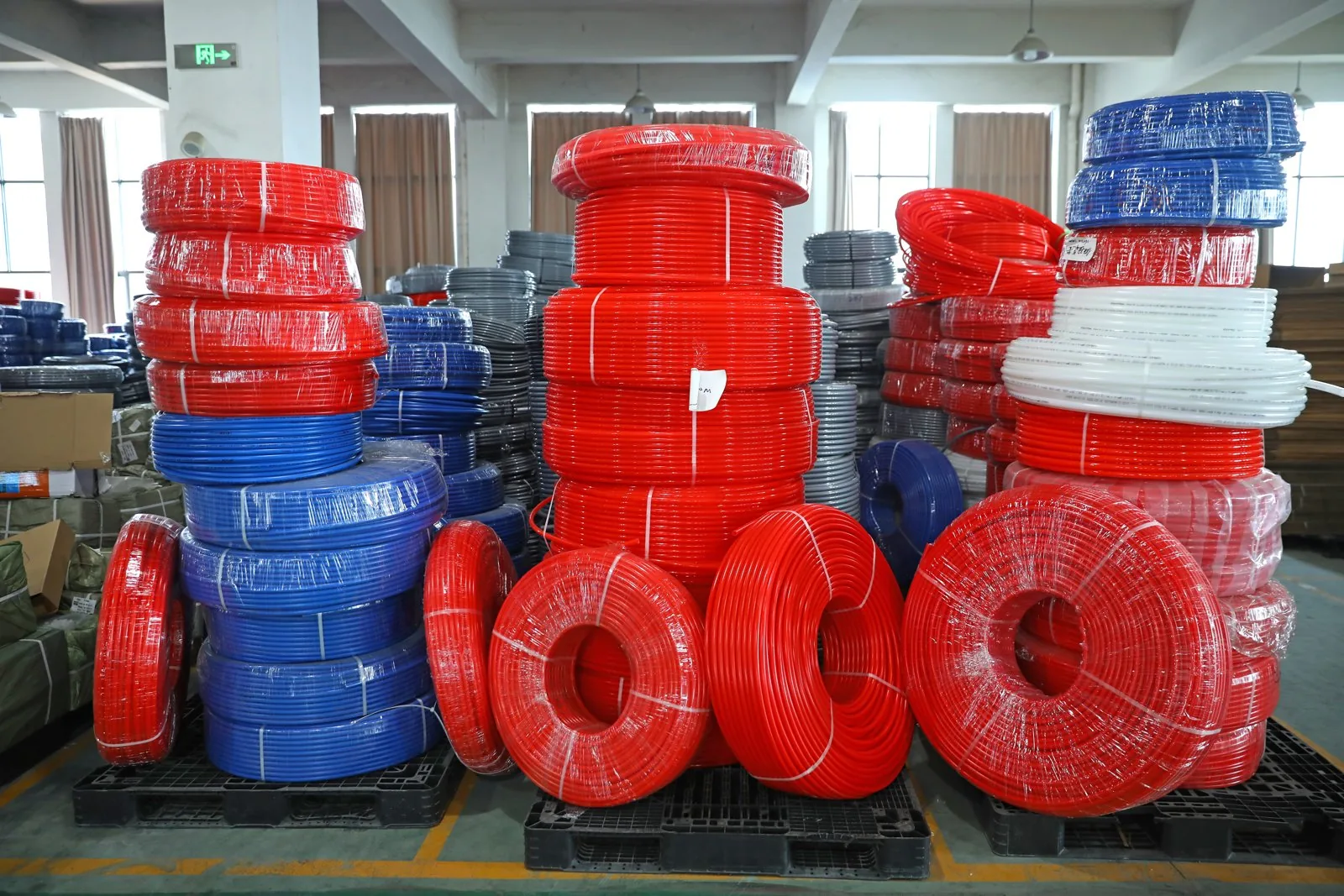
In the United States, plastic pressure pipe lives under ASTM standards — F876/F877 for PEX, F2389 for PP-R. Canada wrote its own series instead: CSA B137, the thermoplastic pressure piping compendium published by CSA Group. The National Plumbing Code of Canada (NPC) references B137 parts by number, which means a pipe certified only to ASTM is, in the eyes of a Canadian plumbing inspector, an uncertified pipe. This is the single most common mistake importers make when they extend a working US program north: the product is identical, the paperwork is worthless.
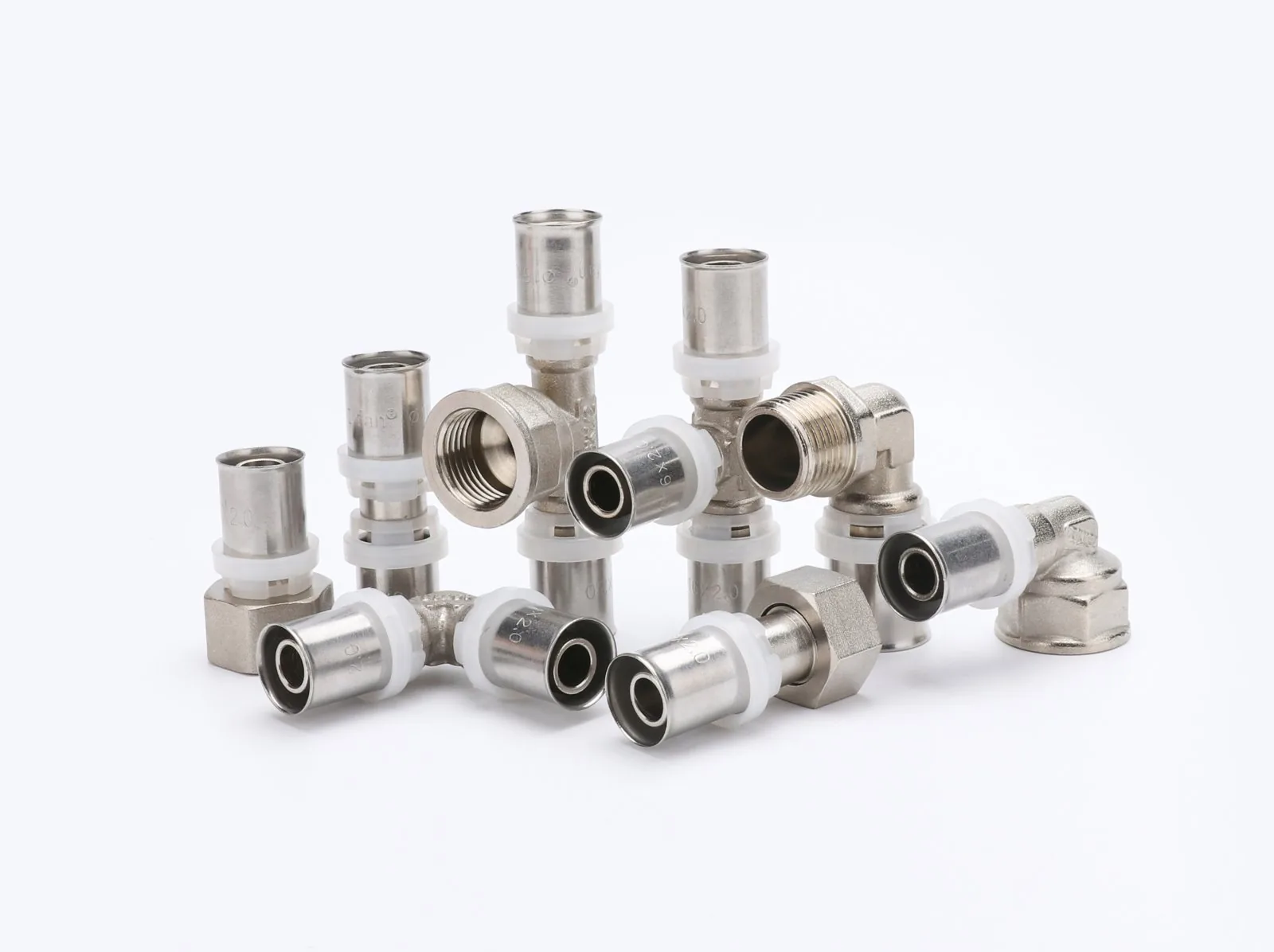
The parts that matter for a residential and light-commercial piping program are these four. CSA B137.5 covers crosslinked polyethylene (PEX) tubing systems for pressure applications — the Canadian counterpart to ASTM F876. CSA B137.11 covers polypropylene (PP-R and PP-RCT) pipe and fittings for pressure applications, classified by dimension ratio in sizes NPS-3/8 to NPS-28 and joined by socket fusion, electrofusion or butt fusion. CSA B137.10 covers PEX-AL-PEX composite pressure pipe — the five-layer construction with a welded aluminium core. And CSA B137.18 covers PE-RT tubing systems for pressure applications, including radiant panel heating and hydronic use. If your supplier’s certificate list doesn’t map each product family you plan to import onto one of these part numbers, you don’t have a Canadian program yet — you have inventory.
Two practical notes from the trenches. First, the standards are living documents: the NPC’s February 2025 revisions package updated the referenced editions of several B137 parts, and the National Plumbing Code of Canada 2025 has since been published by the National Research Council. Ask your certification body which edition your listing covers — a listing frozen against a superseded edition is a slow-burning problem, not an immediate one, but distributors notice. Second, B137.11’s plumbing-service pressure floor is specific: minimum hydrostatic pressure ratings of 1105 kPa at 23 °C and 690 kPa at 82 °C for plumbing applications. When you compare supplier quotes, ask for the hydrostatic test data against those two points rather than accepting a generic “PN20” claim — European PN ratings and Canadian kPa-at-temperature ratings are related but not interchangeable, and the certification body will test to the Canadian numbers.
What cUPC Actually Means — and Why It’s the Efficient Path for an Importer
There are several roads to a Canadian certification mark: CSA Group itself, and SCC-accredited bodies such as IAPMO R&T, Intertek and QAI can all certify plumbing products to the B137 standards. The mark most relevant to importers running a North American program is cUPC, issued by IAPMO R&T. The small “c” is the whole story: where the UPC mark shows compliance with the applicable US codes and standards, the cUPC mark shows the product has additionally been certified to the applicable Canadian standards — the B137 parts above, for pipe — and IAPMO R&T’s marks of conformity are accepted by all provinces and territories.
Why does this matter commercially? Because one certification file then serves two markets. If you already sell in the US, extending a UPC listing to cUPC through the same body is dramatically cheaper and faster than opening a parallel CSA file from zero — one audit stream, one mark on the pipe print line, two countries. We unpacked the US-side logic of these marks in cUPC vs NSF vs UPC: which certification your US plumbing import needs; the short Canadian version is that cUPC rolls the code-acceptance question and the standards question into a single mark an inspector can find on the pipe itself. Hitze products carry cUPC, and the certificate numbers behind the mark are available on request — which is exactly the phrasing you should demand from any supplier, because a factory that says “we are cUPC certified” but stalls when you ask to verify the listing in IAPMO R&T’s public directory is describing a certificate it hopes to have.
One insider warning: the mark must be on the product, not just the paperwork. Canadian inspectors read the pipe print line. A container of pipe produced before your listing was finalized — physically identical, but printed without the mark — is not compliant stock, and no letter from the factory fixes that on a job site. When you place a first Canadian order, put the print-line text into the purchase order as a specification: standard number, certification mark, size, pressure class. It costs nothing and it removes the single cheapest way for a factory to ship you unsellable pipe.
CBSA Tariff Classification: Heading 3917 and the Duty Rates That Actually Apply
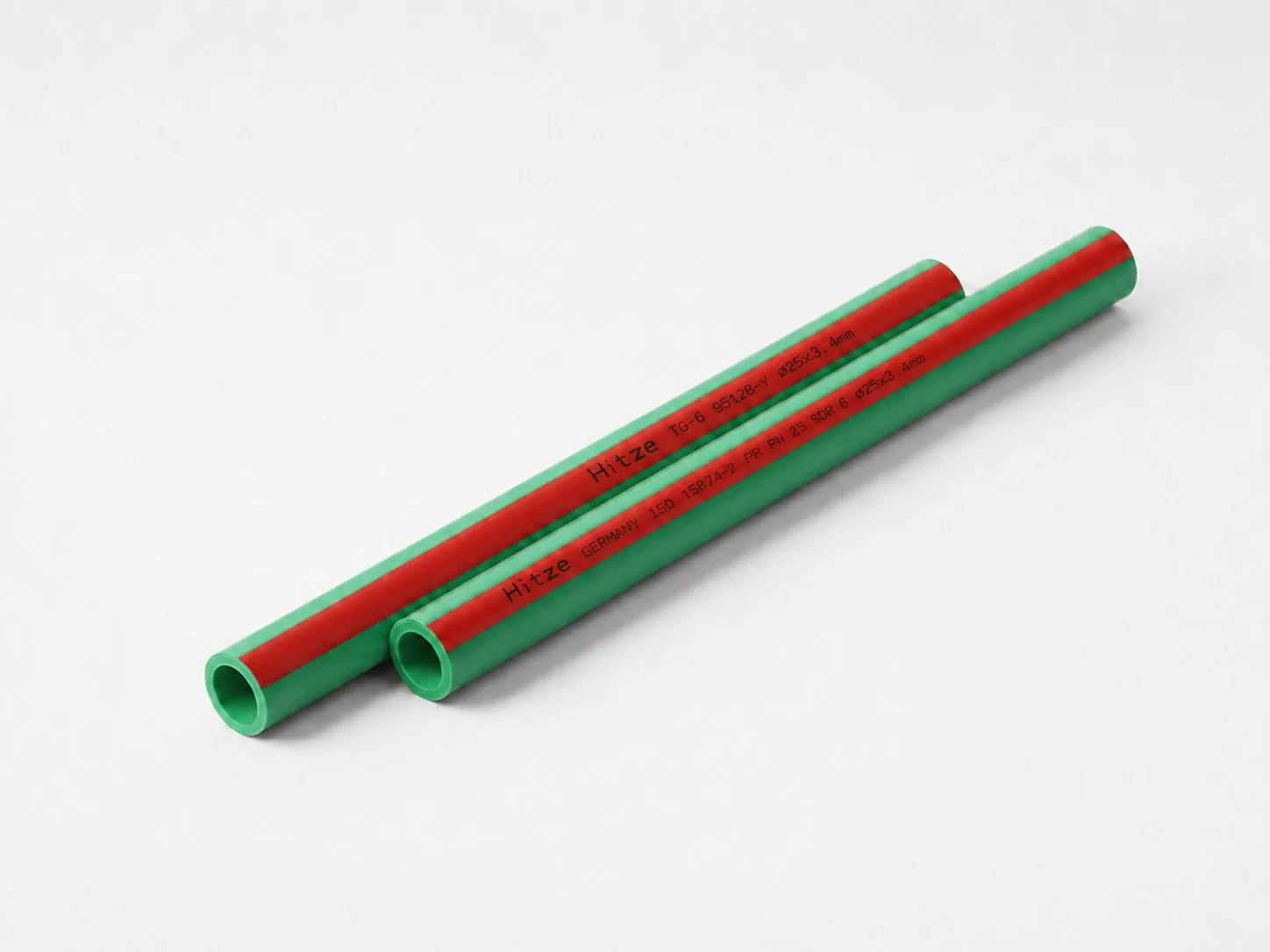
Plastic pipe and fittings classify under heading 39.17 of Canada’s Customs Tariff — “tubes, pipes and hoses and fittings therefor, of plastics” — same heading logic as the US HTS, different rates entirely. Here is where the 2026 CBSA schedule puts the products a piping importer actually buys:
| Tariff item | What it covers | MFN rate (China origin) | US comparison |
|---|---|---|---|
| 3917.32.90 | Rigid pipe without fittings — PEX, PE-RT, PP-R, HDPE coils and lengths | 6.5% | 3.1% + 25% Section 301 ≈ 28.1% |
| 3917.33.00 | Pipe supplied with fittings attached | 6.5% | varies by line |
| 3917.40.00 | Plastic fittings — PP-R fusion fittings, PPSU push-fit bodies | Free | 5.3% + 25% Section 301 |
| 7412.20.00 | Copper-alloy (brass) fittings — press, compression, threaded | Free | 3% + Section 301 |
Read that table twice, because it contains the strategic fact of the Canadian market: pipe pays, fittings don’t. Canada’s MFN rate on the pipe itself (6.5%) is roughly double the US base rate, but plastic fittings under 3917.40.00 and brass fittings under 7412.20.00 both enter free from any MFN origin. On a typical mixed container where fittings are 25–40% of invoice value, your blended duty rate lands around 4–5% — and unlike the US, there is no China-specific surcharge stacked on top. For an operator running both markets, that spread is enormous: the same China-origin PEX coil that carries roughly 28.1% in combined US duty (3.1% MFN plus the 25% Section 301 List 2 addition) crosses into Canada at a flat 6.5%. We’ve broken down the American side line by line in Importing plumbing pipe to the USA: HS codes, duties and clearance — comparing the two articles side by side is a fifteen-minute exercise that has redirected more than one distributor’s expansion plan.
Two classification traps worth naming. First, don’t be tempted by 3917.32.10, the duty-free sibling line: it covers pipe of specific polymer headings and end-uses (and explicitly excludes polymers of propylene), and polyethylene-based pipe — PEX, PE-RT, HDPE — isn’t in its polymer list either, so standard plumbing and heating pipe falls to the 6.5% “other” line. A broker who quotes you the Free rate off a quick database lookup is setting you up for a CBSA reassessment plus interest. Second, if your supplier packs pipe and fittings as boxed “kits,” CBSA may classify the set under 3917.33.00 at 6.5% on the whole value — including the fittings that would have been free if invoiced and packed as separate line items. Keep pipe and fittings as separate commercial-invoice lines with separate values. It’s free money.
Origin Rules: Why CUSMA Doesn’t Help You and GPT No Longer Exists for China
The Canadian tariff schedule lists a long row of preferential rates — UST and MXT (the CUSMA columns), CPTPT, CEUT and others — and every one of them shows Free for heading 3917. None of them apply to China-origin pipe. CUSMA preference requires the goods to originate in the US, Mexico or Canada under the agreement’s rules of origin; pipe extruded in China does not become a US good by sitting in a Chicago warehouse or being re-boxed in Buffalo. Routing China-origin pipe through a US distributor and claiming UST at the Canadian border isn’t tariff planning — it’s a false origin declaration, and CBSA verifications on origin are exactly the kind of low-effort, high-recovery audit the agency likes.
The historical footnote that still confuses spreadsheets: Canada’s General Preferential Tariff (GPT, the 3% column you’ll see against 3917.32.90) stopped applying to China on January 1, 2015, when Canada withdrew GPT status from 72 higher-income economies. Any landed-cost model still carrying a 3% GPT assumption for Chinese pipe is eleven years out of date. The MFN column is your rate — full stop. The one adjacent regime to keep an eye on: since October 2024 Canada has applied a 25% surtax to listed Chinese steel and aluminum goods, which remains in force through the government’s ongoing review. Plastic pipe under 39.17 and brass fittings under 74.12 are not on those lists, but if your program includes steel-heavy SKUs — manifold cabinets, steel pipe clamps in bulk — have your broker screen the surtax schedules by tariff item before you commit a purchase order.
GST at the Border: The 5% That Isn’t Really a Cost
Every commercial import pays 5% GST at the border, calculated on the duty-paid value — the value for duty plus the customs duty itself, per the CBSA’s step-by-step guide to importing commercial goods. Unlike the duty, this is not a sunk cost for most importers: if you’re GST-registered (and any serious Canadian importer of record is), the border GST comes back as an input tax credit against the GST you collect from customers. Model it as working capital, not cost — you finance it for one filing cycle, then recover it. What you cannot recover is the 6.5% duty on the pipe, so that’s the number your landed-cost sheet must carry; our full per-unit landed-cost breakdown shows where that duty line sits among freight, inland and clearance in the total stack.
Administratively, the game changed in late 2024: since October 21, 2024, every importer of record must be registered in CBSA’s CARM system (the CARM Client Portal), which is now how duties and taxes are assessed and paid on a monthly billing cycle. If you’re a US distributor planning to act as non-resident importer into Canada, budget real setup time for CARM registration, a business number and financial security — it’s paperwork, not difficulty, but it cannot be done the week the container arrives. Provincial sales taxes (HST portions above 5%, or PST in provinces like BC) are generally not collected by CBSA on commercial imports the way the federal GST is; they surface downstream in your sales chain, so ask your accountant rather than your broker where they land in your specific structure — this varies by province and business model.
The Provincial Reality: A Model Code, Ten Interpretations
Here’s the part no tariff database tells you: the National Plumbing Code is a model code. Provinces and territories adopt it — some as published, some with amendments, some on a lag of a year or more behind the newest edition. Ontario runs plumbing through its Building Code, Quebec through its Construction Code chapter, BC through the BC Plumbing Code; the technical content largely tracks the NPC, but adoption timing and local amendments differ. For an importer, the practical consequence is simple: certification to the referenced CSA B137 standard with a mark from an SCC-accredited body (cUPC among them) is the passport that works everywhere, while anything less — a factory test report, an ASTM-only listing, a European DoP — is a conversation with each inspector individually. You will not win ten of those conversations.
The second provincial reality is the installer. Fusion-welded PP-R and press-fitted multilayer systems live or die on local trade familiarity, and a distributor who imports pipe without budgeting for installer training will watch contractors default to whatever brand their wholesaler stocks. The importers who succeed in Canada treat the certification mark as table stakes and compete on system completeness — matched pipe and fittings from one factory, one warranty covering the joint, training support for the crews. That is a supplier-selection criterion, not a marketing one: if your factory sells you pipe and buys its fittings from a second plant, the “system” warranty has a seam exactly where the leak will be.
What Hitze Checks Before a Canadian Order Ships
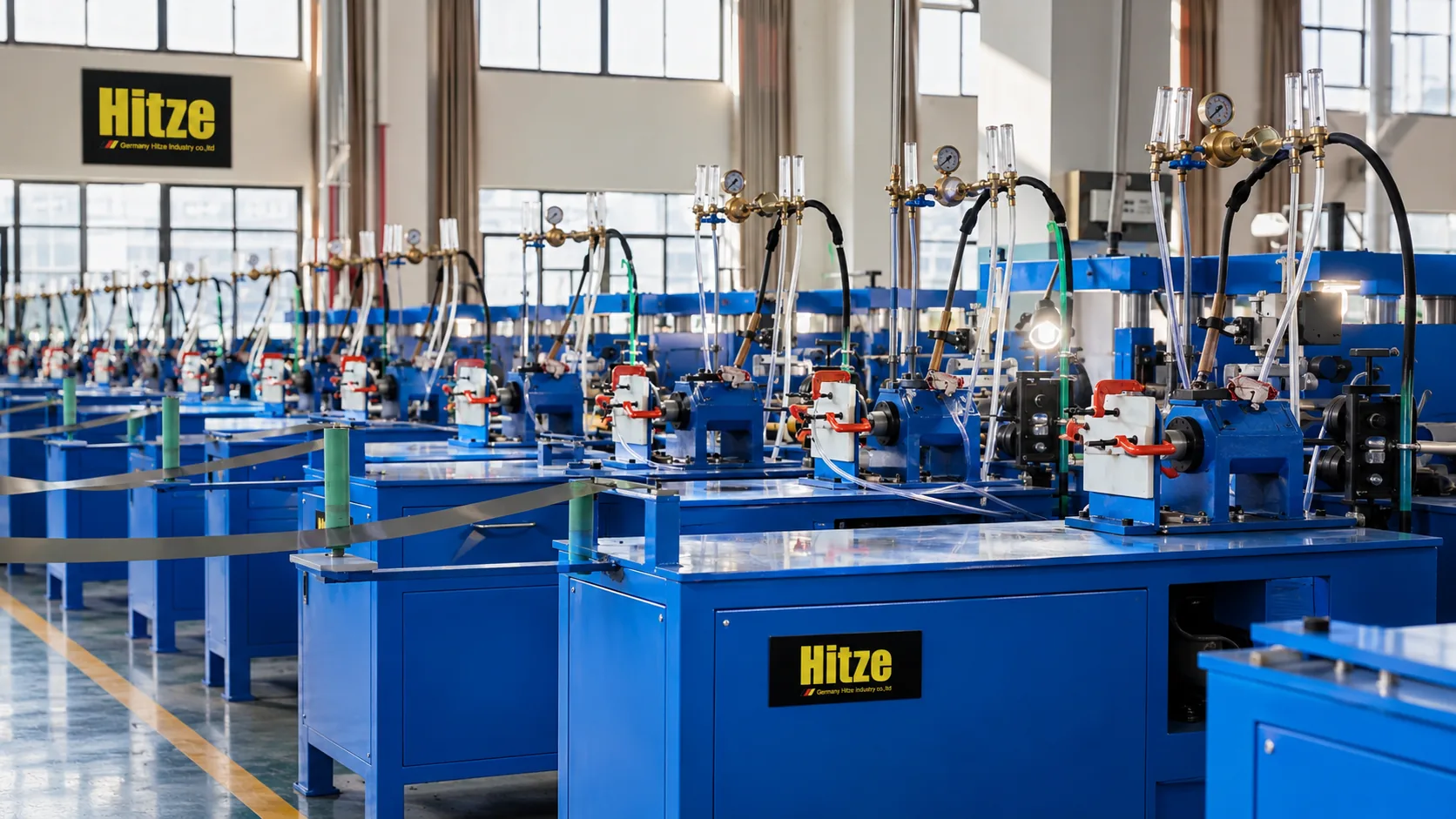
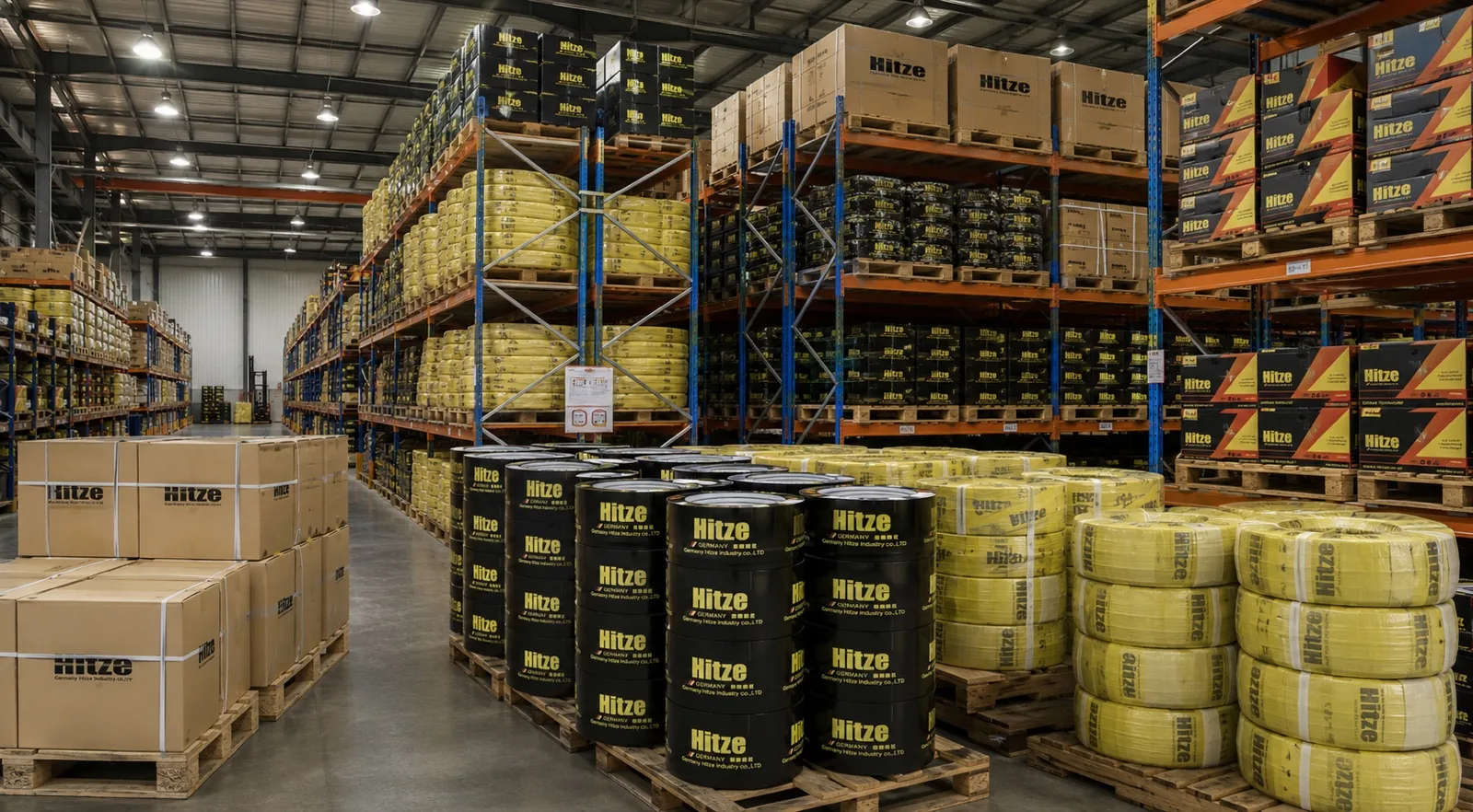
Hitze is a German brand of engineered piping systems, founded in 1974, producing on a 120,000 m² base with 1,000+ employees and exporting to 118+ countries — and the North American programs run through a fixed pre-shipment discipline rather than goodwill. For Canada-bound orders, the sequence looks like this. Classification first: every SKU on the order is mapped to its tariff item — pipe lines to 3917.32.90, plastic fittings to 3917.40.00, brass to 7412.20.00 — and invoiced as separate lines so the duty-free fittings stay duty-free. Certification second: the cUPC listing is matched against the exact products and sizes ordered, and the pipe print line is confirmed against the listing before extrusion, not after. Then production verification: hydrostatic pressure testing on calibrated bench rigs against the standard’s temperature-pressure points, dimensional checks on OD and wall at the line, and batch traceability printed on the pipe itself. The same factory system carries SKZ and DVGW type-approval files, WRAS material approval and ISO 45001 occupational health and safety management — the audit infrastructure a certification body needs to keep a listing alive year after year.
Documentation ships before the container does: commercial invoice with per-line tariff items and origin, packing list matched to carton marks, certificates referenced by scheme with numbers available on request for broker and inspector verification. If you’re building a Canadian distribution program and want a factory that treats the border as part of the product, the importer and distributor program is where that conversation starts — including private-label print lines, which for Canada must carry the certification mark under your brand’s listing, a transfer process worth starting three to six months before your first container.
Worked Example: A Mixed 40HQ from Shanghai to Toronto
Numbers make the structure obvious, so take a realistic mixed container for an Ontario wholesaler: PEX and multilayer coils invoiced at CAD 58,000 and brass press fittings at CAD 22,000, FOB Shanghai, China origin, all products cUPC-listed. Classification: coils under 3917.32.90 at 6.5% MFN; brass fittings under 7412.20.00 at Free. Duty: 58,000 × 6.5% = CAD 3,770 on the pipe; CAD 0 on the fittings. GST: 5% on the duty-paid value — (80,000 + 3,770) × 5% = CAD 4,188.50 — payable through CARM, recoverable as an input tax credit on the next GST filing. Cash at the border: CAD 7,958.50. True sunk border cost after ITC recovery: CAD 3,770, or 4.7% of goods value. Confirm with your broker how freight is treated in your value for duty under the transaction-value rules — the direction of that adjustment typically works in the importer’s favour compared to CIF-basis regimes, but it depends on your Incoterms and shipment structure.
Now run the counterfactual that costs real importers real money: the same container invoiced as 200 boxed “installation kits” at CAD 80,000, pipe and fittings bundled per box. CBSA classifies the kits under 3917.33.00 — pipe with fittings — at 6.5% on the full value: CAD 5,200 in duty. Same steel box, same products, CAD 1,430 more duty, purely from packing and invoicing structure. Multiply by ten containers a year and the “convenient” kit format costs a mid-size distributor over CAD 14,000 annually. Structure the invoice before the factory structures the cartons.
Who This Path Is For
Direct importing into Canada makes sense for wholesalers and distributors moving container volumes who can hold a cUPC-listed program and a CARM registration — it does not make sense for a contractor buying pallet quantities, who will do better landing product through an established master distributor. If you’re in the first group, Hitze runs a sample-first program with no minimum order quantity: you can start with samples or a small trial order, verify the certification file and print lines against your provincial requirements, and scale from there — with the matched pipe-and-fitting system covered by a 50-year warranty because both halves of every joint come from one factory. Start with the importer & distributor piping program, or request the Canadian certification pack for the product families you carry.
Frequently Asked Questions
Do I need CSA certification specifically, or is cUPC enough for Canada?
cUPC is enough. Canadian codes require certification to the referenced standard (the CSA B137 series for plastic pressure pipe) by an accredited certification body — not certification by CSA Group specifically. IAPMO R&T’s cUPC mark certifies to the applicable Canadian standards and is accepted in all provinces and territories.
What is the import duty on plastic plumbing pipe into Canada?
Pipe without fittings (PEX, PE-RT, PP-R, HDPE) classifies under tariff item 3917.32.90 at 6.5% MFN for China-origin goods. Plastic fittings (3917.40.00) and brass fittings (7412.20.00) are duty-free at MFN. GST of 5% applies on the duty-paid value and is recoverable by GST-registered importers.
Does CUSMA make Chinese-made pipe duty-free if I ship it through the USA?
No. CUSMA preference applies only to goods that originate in the US, Mexico or Canada under its rules of origin. China-origin pipe warehoused or re-boxed in the US remains China-origin, pays the 6.5% MFN rate, and claiming otherwise is a false declaration CBSA can reassess with penalties.
Is Hitze pipe made in Germany?
Hitze is a German brand — engineered in Germany, registered at the DPMA, and built to German DIN standards on a 120,000 m² production base, with certifications including cUPC, DVGW, SKZ and WRAS. Country of manufacture is declared transparently on export documents, and duty is always assessed on manufacturing origin, not brand nationality.
Which CSA standard applies to PP-R pipe in Canada?
CSA B137.11, which covers polypropylene (PP-R and PP-RCT) pipe and fittings for pressure applications, including hot and cold potable water distribution and hydronic heating. For plumbing service it requires minimum hydrostatic pressure ratings of 1105 kPa at 23 °C and 690 kPa at 82 °C.