Key Takeaways
- Plastic plumbing pipe enters the EU under HS heading 3917. The main CN lines — 3917 32 00 (pipe without fittings), 3917 33 00 (pipe with fittings) and 3917 40 00 (fittings) — carry a conventional third-country duty of 6.5%, and there is no EU–China FTA to reduce it.
- You need an EORI number before you can lodge a single customs declaration. It is free, issued by your national customs authority, and typically takes days — but shipments have sat on quay because nobody applied.
- Import VAT is where cash flow lives or dies: Germany makes you pay ~19% at clearance and reclaim later; the Netherlands defers it entirely with an Article 23 licence; France reverse-charges it automatically on your VAT return.
- Precision on CE: there are currently no harmonized standards cited under the CPR for plastic piping systems — so a “CE certificate” for PP-R or PVC drainage pipe under the CPR is a red flag, not a reassurance. National approvals (DVGW, WRAS, SKZ) do the real compliance work.
- REACH Article 33 (SVHC above 0.1% w/w) and the Drinking Water Directive’s new materials regime — applying to products placed on the market from 31 December 2026 — are the two document requests to send your supplier before you order, not after.
The fear that keeps first-time EU pipe importers awake is not the duty rate — 6.5% is survivable and predictable. It is the paperwork failure mode: a container arriving in Rotterdam or Hamburg with a missing EORI, a customs value the officer disputes, a “CE certificate” that turns out to be legally meaningless for the product category, or an import VAT bill you did not budget cash for. Every one of those is preventable at the purchase-order stage, which is why this guide walks the sequence end to end: classification, duty, registration, transit, VAT, and the product-compliance layer (CPR, REACH, drinking-water rules) that trips up more pipe importers than customs itself.
One scope note before we start. This is the EU path. If you are shipping to the American market, the codes rhyme but the duties and the compliance stack are completely different — that route is covered in our guide to importing plumbing pipe to the USA. Here, everything is Union Customs Code, TARIC and Brussels.
Step 1 — Classify Before You Quote: HS 3917 and the CN/TARIC Codes
Everything downstream — duty, VAT base, any trade-defence measure — hangs on the ten-digit TARIC code you declare. Plastic pipe and fittings live under HS heading 3917 (“tubes, pipes and hoses and fittings therefor, of plastics”). The EU refines that to eight-digit CN codes and then ten-digit TARIC codes, and the distinctions matter more than they look: pipe shipped in coils without fittings classifies differently from pipe pre-fitted with couplings, and both differ from a carton of loose fittings.
| CN code | Covers | Typical Hitze products | Conventional duty (erga omnes) |
|---|---|---|---|
| 3917 32 00 | Other tubes/pipes, not reinforced, without fittings | PEX and PE-RT coils, PP-R straight lengths, HDPE pipe | 6.5% |
| 3917 33 00 | Same pipe, but supplied with fittings attached | Pre-assembled connection sets | 6.5% |
| 3917 39 00 | Other tubes/pipes, reinforced or combined with other materials | Multilayer PEX-AL-PEX / PERT-AL-PERT (aluminium core) | 6.5% |
| 3917 40 00 | Fittings — joints, elbows, flanges, of plastics | PP-R fusion fittings, PPSU push-fit bodies | 6.5% |
Two insider notes on this table. First, the 6.5% is the erga omnes conventional rate — always confirm the live ten-digit line in the Commission’s TARIC database before you file, because TARIC subdivisions occasionally carry suspensions or additional measures that an eight-digit lookup will not show you. Second, mixed cargo splits across chapters: brass and DZR-brass fittings, manifolds and valves classify in the metal chapters (heading 7412 for copper-alloy fittings, Chapter 84 for valves), each with its own rate. A 40HQ that mixes PP-R pipe, brass ball valves and stainless manifolds is three or four tariff lines on one entry — declare them separately rather than lumping everything under 3917 and hoping. Post-clearance audits in Germany and the Netherlands routinely go back three years, and a reclassification plus back-duty plus interest arrives as one letter.
The multilayer question deserves one more sentence because it is the classification argument brokers actually have: pipe with a butt-welded aluminium core is plastic “combined with other materials,” which is why it sits in the 3917 39 basket rather than 3917 32. If your supplier’s packing list just says “PEX pipe” for an aluminium-composite product, fix the description before the entry is lodged, not after the query notice.
Step 2 — Duty Reality: 6.5%, No Shortcut, and One Trap in the Fittings Box
There is no EU–China free-trade agreement, so goods of Chinese origin pay the full conventional rate; the same applies to most Asian manufacturing origins unless a preferential scheme (GSP, or an FTA like EU–Vietnam) genuinely covers your origin and you hold valid proof of origin. Do not let a forwarder talk you into a preference claim you cannot document — an unsupported preference claim unwinds into back-duty with the same three-year tail as a misclassification.
The good news for plastic pipe specifically: as of this writing there are no EU anti-dumping or countervailing duties on the 3917 plastic-pipe lines. The trap sits next door. Threaded tube or pipe cast fittings of malleable and spheroidal graphite cast iron carry definitive anti-dumping duties under Regulation (EU) 2025/1890: across the two origins covered, the company-specific rates span a combined range of 14.9% up to 57.8% (with 57.8% the “all other companies” rate for China and Thailand topping out at 15.5%). The Commission then extended the measure to unthreaded cast fittings in March 2026 (Implementing Regulation (EU) 2026/709) precisely because importers were routing around the threading definition. That measure is specific to those cast-iron fitting codes — it does not touch plastic plumbing pipe under 3917 — so the action point is to check whether your product and origin actually fall under it. If your consolidated order includes iron pipe clamps, cast connection pieces or “just a few boxes” of iron accessories, screen those lines and their exact origin against the regulation’s rate table before booking. A 57.8% surprise on even a minor line item can erase the margin on the whole container. Brass and plastic fittings are outside that measure’s scope — one more reason the material declaration on your invoice needs to be exact.
Duty is calculated on the customs value, which for a CIF purchase is essentially your goods-plus-freight-plus-insurance price to the EU border. Buy FOB and the transport cost to the EU frontier still gets added into the value. This is also why duty is the smallest line in most landed-cost models — for the full per-unit arithmetic including inland haulage and the cash-flow cost of VAT, see our landed cost of imported pipe breakdown.
Step 3 — EORI, the Declaration, and What a T1 Actually Does
Before any EU customs declaration can be lodged in your name, you need an Economic Operators Registration and Identification number — an EORI, issued free by the customs authority of the member state where you are established and valid across the whole Union. One number covers imports into any EU port. Apply the week you sign your first purchase order, not the week the vessel arrives: issuance is usually quick, but “usually quick” and “container on demurrage” — where per-day charges after free time commonly run into the low hundreds of euros, though the exact figure depends entirely on your carrier’s tariff schedule — is a bet you do not need to make. Non-EU companies that intend to lodge declarations themselves also need an EORI, assigned by the member state where they first declare — relevant if you are a UK or Swiss trader clearing into the EU.
The import declaration itself is filed electronically by you or (in practice, almost always) a customs broker or your forwarder acting as direct representative. The entry needs the commercial invoice, packing list, transport document, your ten-digit codes, and — increasingly checked for pipe — product descriptions that match the compliance documents. “Plastic pipe” on an invoice and “PP-R pressure pipe, EN ISO 15874, 20×3.4 mm PN25” on the certificate pack invites a query; make the wording match end to end.
Then there is transit, which confuses more first-time importers than any other mechanism. A T1 (external Union transit) declaration moves non-Union goods through EU territory with duties and taxes suspended, under the electronic NCTS system: the movement gets an MRN, a Transit Accompanying Document travels with the truck, and a guarantee secures the suspended duty until the goods are discharged at destination. Practical use case: your container lands in Rotterdam but your business and VAT registration are in Poland. Clearing at the port means Dutch import formalities; moving under T1 to a customs office or authorized consignee near Warsaw lets you clear — and pay import VAT — at home, in your own language, under your own VAT mechanics. The trade-off is the guarantee requirement and a hard discharge deadline; an undischarged T1 makes the guarantor liable for the suspended duty, which is why brokers charge for the risk.
Step 4 — Import VAT: The Cash-Flow Decision Nobody Prices In
Import VAT is levied on top of the duty-paid value (customs value + duty + certain post-import costs), at the importing member state’s standard rate. It is recoverable for a VAT-registered trader, so it is not a cost — but it can be a brutal cash-flow event, and the mechanics differ sharply by member state. This, more than port charges or duty, is why sophisticated pipe importers choose their port of clearance deliberately.
| Member state | Standard VAT rate | Import VAT mechanics |
|---|---|---|
| Germany | 19% | Import VAT (Einfuhrumsatzsteuer) generally paid at clearance, reclaimed via the VAT return — but approved importers with a deferment account (Zahlungsaufschub) can defer payment to the 26th of the second month following importation (§21(3a) UStG), easing the cash gap |
| Netherlands | 21% | Article 23 licence shifts import VAT to the periodic VAT return — no cash at the border; non-residents access it via a fiscal representative |
| France | 20% | Reverse charge on import VAT is automatic and mandatory since 1 January 2022 — declared and deducted on the same VAT return; requires a French VAT number |
| Poland | 23% | Postponed accounting under Article 33a of the VAT Act — since 1 July 2020 open to all active VAT registrants (with no tax/social-security arrears in the prior 6 months) who settle import VAT in the return instead of at the border; the earlier AEO/simplified-procedure precondition was abolished |
Read that table as a routing decision. The Netherlands built the Article 23 deferment specifically to pull import flows through Rotterdam: with the licence (or a fiscal representative holding one), you self-account for the 21% on your return and deduct it on the same return — net cash effect near zero. France achieved the same outcome by making the import reverse charge automatic and compulsory from January 2022, with collection moved from customs to the tax authority; the catch is you must hold a valid French VAT number at the moment of import. Germany, still the biggest plumbing market in Europe, is the least forgiving on cash for the importer who clears without a deferment account: plan for roughly 19% of your duty-paid value leaving your account at clearance and coming back only through the return cycle. On a €40,000 container that is around €8,000 parked with the Finanzamt. It is not the flat wall it once was — approved importers with a Zahlungsaufschub deferment account can push the Einfuhrumsatzsteuer payment out to the 26th of the second month following importation (§21(3a) UStG), and a full postponed-accounting mechanism now runs alongside it — but the deferment is authorisation-gated (customs guarantee, often AEO status), so first-time importers frequently do not have it in place for their opening shipments. Multiply the cash gap by your monthly container count to see why distributors clearing large volumes often clear in NL and move goods onward as intra-Community supplies. General mechanics only, of course: deferment schemes, guarantee requirements and representative liability differ per member state, so have your accountant confirm the setup before the first booking, not after.
Step 5 — CPR, CE and DoP: Where Most Pipe Importers Get It Wrong
Here is the paragraph that separates informed buyers from the rest. The Construction Products Regulation — Regulation (EU) 305/2011, now being replaced by Regulation (EU) 2024/3110, which entered into force on 7 January 2025 with transitional provisions running as far as 2040 — only makes CE marking possible (and mandatory) where a harmonized European standard for the product is cited in the Official Journal. For plastic piping systems, no such harmonized standards are currently cited. Not for EN 1401 PVC-U drainage pipe, not for EN 13476 structured-wall sewer pipe, and not for the pressure and hot-and-cold standards like EN ISO 15874 (PP-R) either. The industry association TEPPFA has said it plainly for years: it is currently neither possible nor legal to affix CPR CE marking to these plastic piping products or to issue a CPR Declaration of Performance for them.
The practical consequences are worth spelling out, because the failure runs in both directions. Direction one: an importer demands “the CE certificate” for PP-R pressure pipe, and a flexible supplier obliges with a decorative PDF from a testing mill. That document has no legal standing, will not satisfy a market-surveillance authority, and its existence tells you something about how the supplier treats every other certificate. Direction two: an importer sees no CE mark and assumes the product is non-compliant — equally wrong, because for these products CE under the CPR is not available to anyone, including the biggest European brands. What actually governs market access for pressure and potable pipe is the national approvals layer: DVGW in Germany, WRAS in the UK, KIWA in the Netherlands, and test-institute certification such as SKZ. How those schemes interlock is its own topic — covered in our guide to WRAS, DVGW and KTW certification for the UK and EU.
Where a DoP does legitimately exist — via the voluntary European Technical Assessment route, or for product categories that genuinely sit under a cited harmonized standard — you should know how to read one line by line: what the declared performance characteristics mean, what the AVCP system number implies about third-party involvement, and which fields fraudulent documents get wrong. We dissect the document itself in the buyer’s guide to Declarations of Performance and CE marking for pipe. For customs purposes, the point is simpler: EU border officers and market-surveillance authorities increasingly coordinate, and a shipment accompanied by an invalid CE claim is worse than one accompanied by the honest, correct national certificates.
Step 6 — REACH and the Drinking-Water Clock Ticking Toward 31 December 2026
Pipe and fittings are “articles” under REACH, which means the registration burden mostly sits upstream — but two duties land squarely on you as the EU importer. Under Article 33, if any substance on the ECHA Candidate List of substances of very high concern is present above 0.1% weight-for-weight in an article you place on the market, you must pass safe-use information down the supply chain, and answer consumer requests within 45 days. The Candidate List is a moving target — it now holds over 250 entries (approximately 256 as of mid-2026) and grows roughly twice a year — and the entry that matters most in plumbing is lead, which is why the alloy specification on brass components is a compliance document, not a metallurgical footnote. An importer buying fittings machined from standard leaded brass without a supplier declaration on lead content is carrying an Article 33 exposure they have never quantified. This is exactly why Hitze machines its potable-contact brass from lead-free and DZR grades — CW724R, CW511L and CW602N — with CW617N reserved for applications where standard brass is appropriate.
The second clock is the recast Drinking Water Directive (EU) 2020/2184. Its materials-hygiene regime — European positive lists of permitted substances, uniform testing and acceptance methodology for anything in contact with drinking water — applies to products placed on the market from 31 December 2026, ending the era when a product approved in one member state needed full re-approval in the next. Keep that 2026 date attached to the right obligation: it governs the EU positive list and materials-in-contact regime, not the lead limit. The directive does also tighten the lead parametric value at the tap to 5 µg/l — but that value is on a separate, much longer clock, becoming mandatory only from 12 January 2036; until then the permitted value stays at 10 µg/l. The two obligations sit on distinct timelines, and conflating them is a common way importers mis-plan. For an importer signing a supply agreement in 2026, the question to put to any factory is no longer just “do you have DVGW?” but “show me your migration and formulation documentation, because I need to be saleable under the harmonized materials regime next year.” A supplier who cannot discuss that question fluently is a supplier whose product may be legal today and unsaleable in eighteen months.
What Hitze Checks Before an EU Container Ships
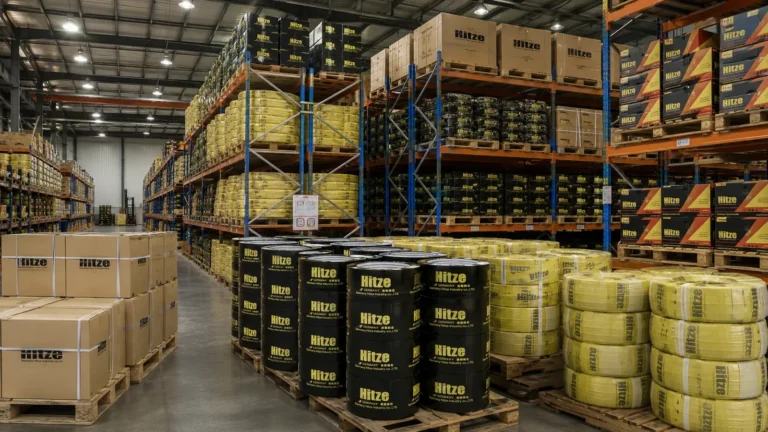
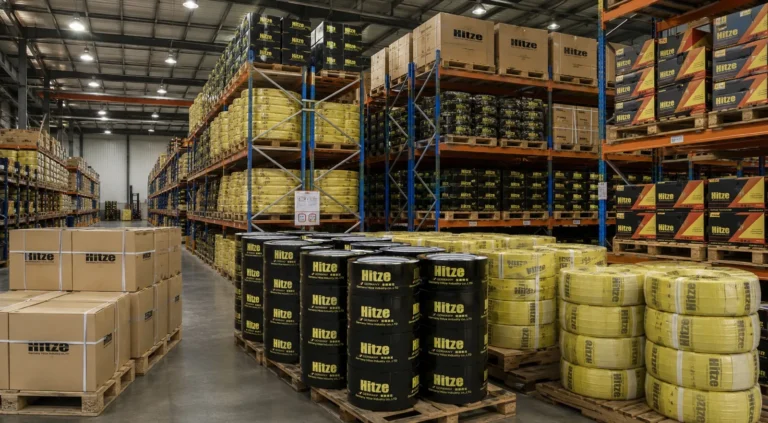
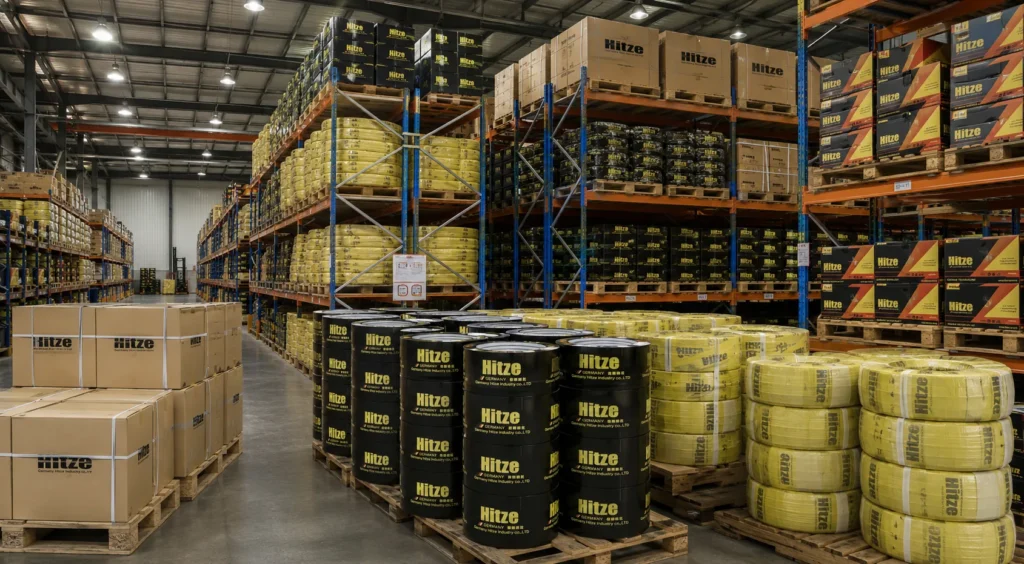
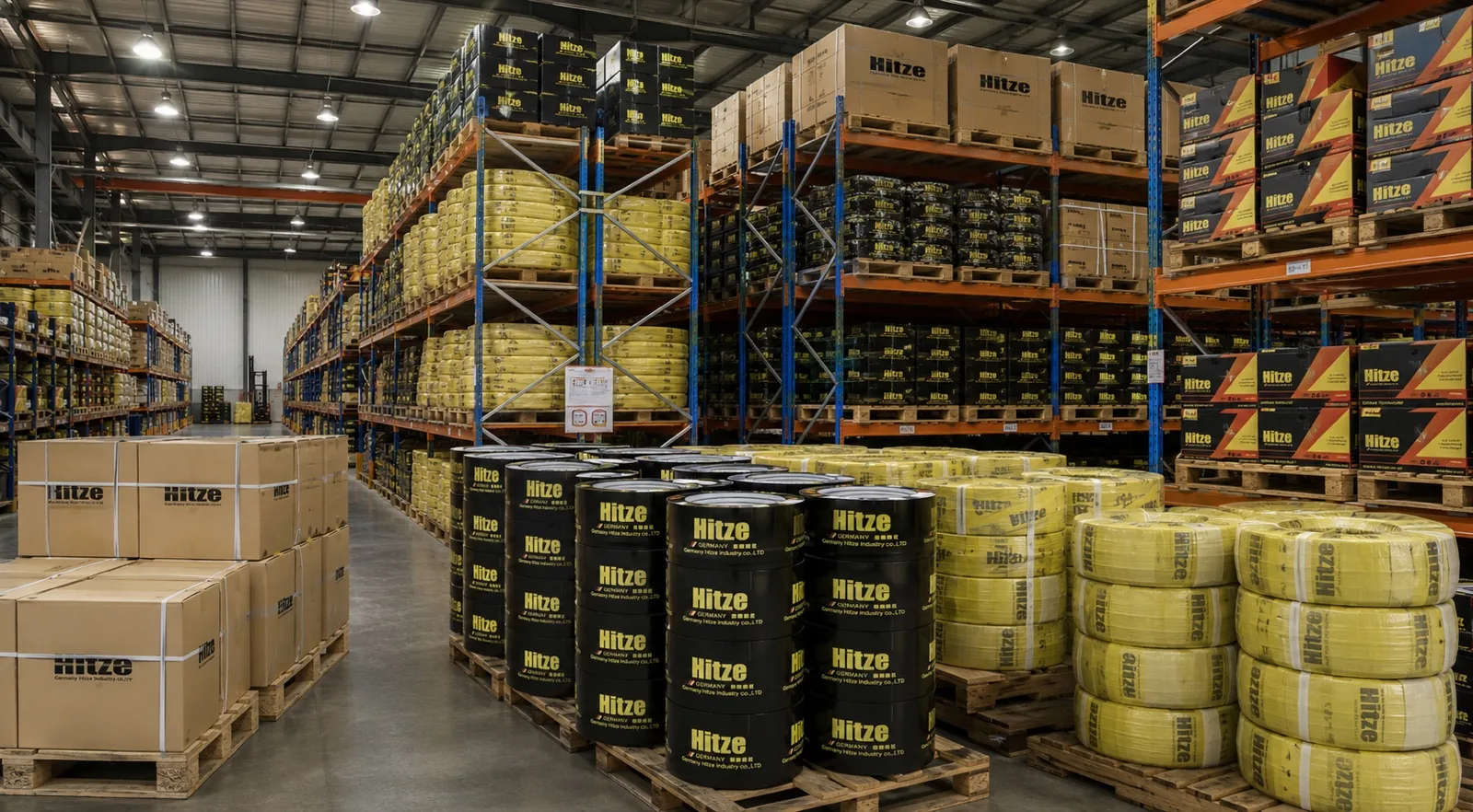
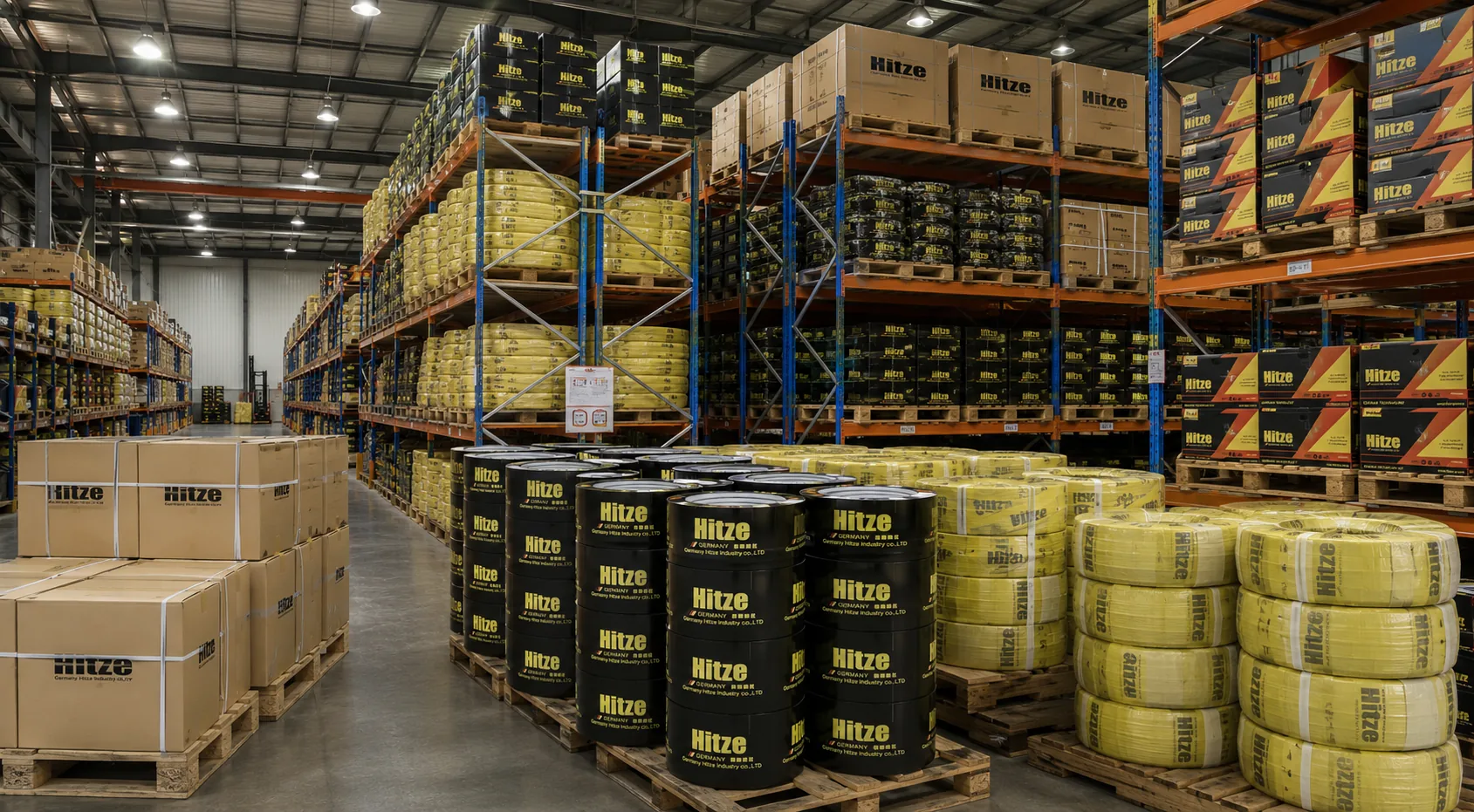
A clean clearance starts at the factory, so here is the pre-shipment discipline behind every order shipped through the Hitze importer and distributor program. Hitze is a German brand of engineered piping systems — founded 1974, a 120,000 m² production base, 1,000+ employees, exporting to 118+ countries — and the EU is home turf, so the export pack is built for European scrutiny rather than adapted to it afterwards.
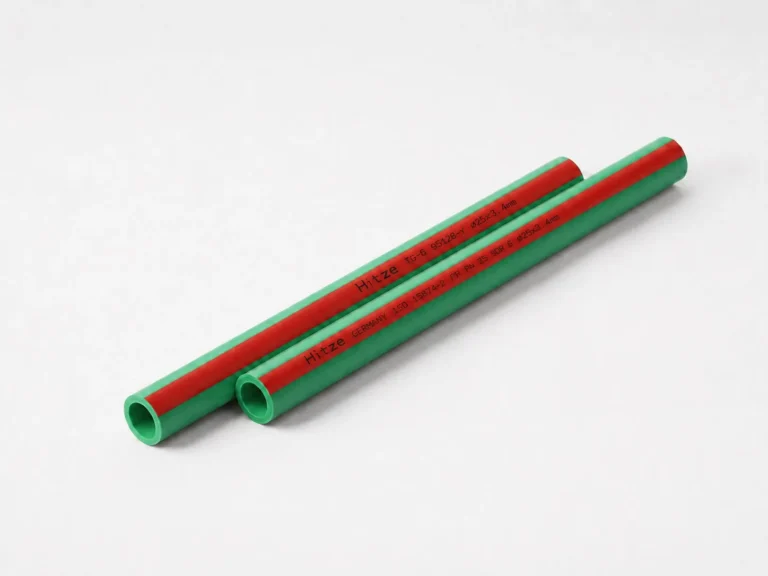
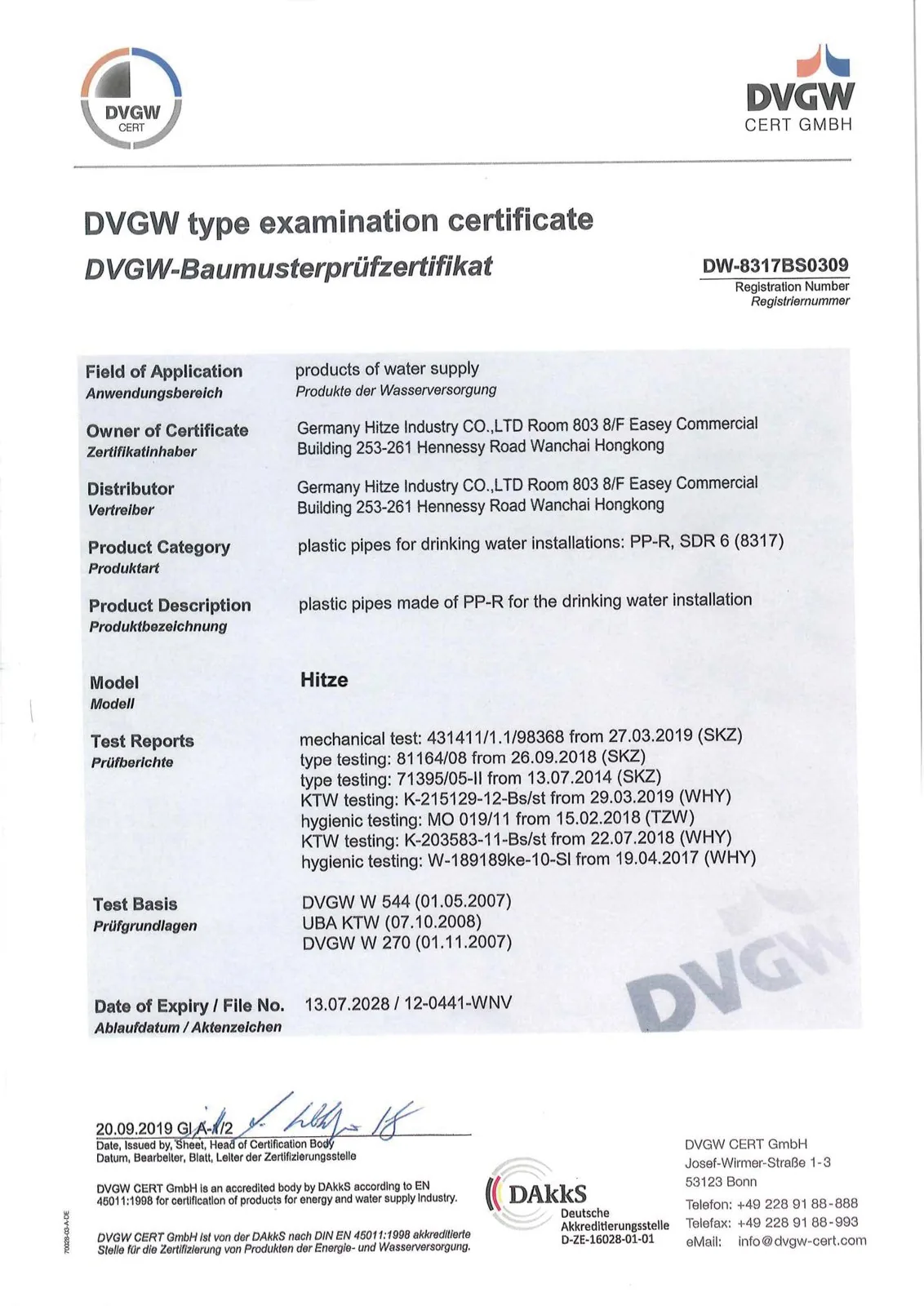
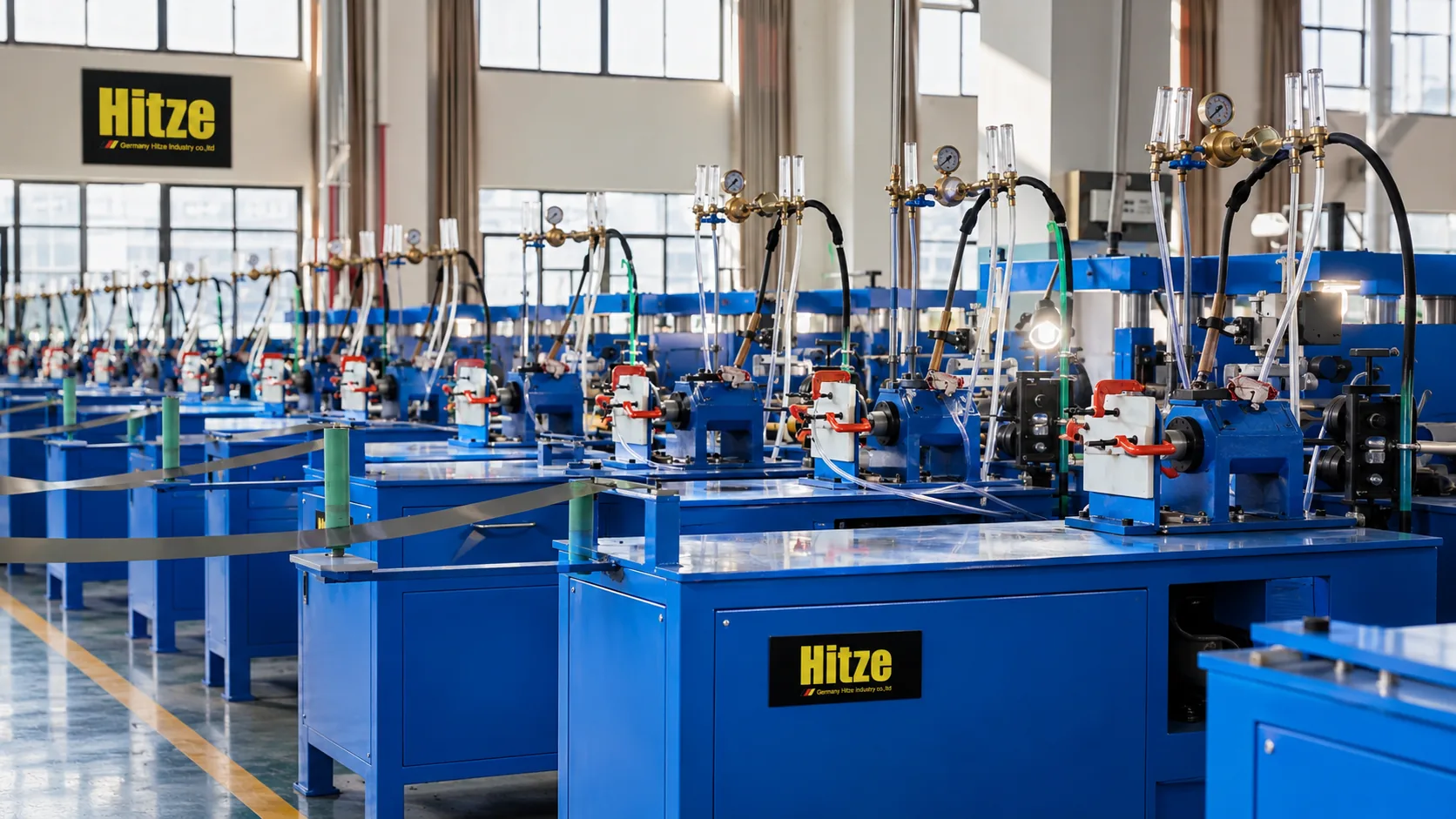
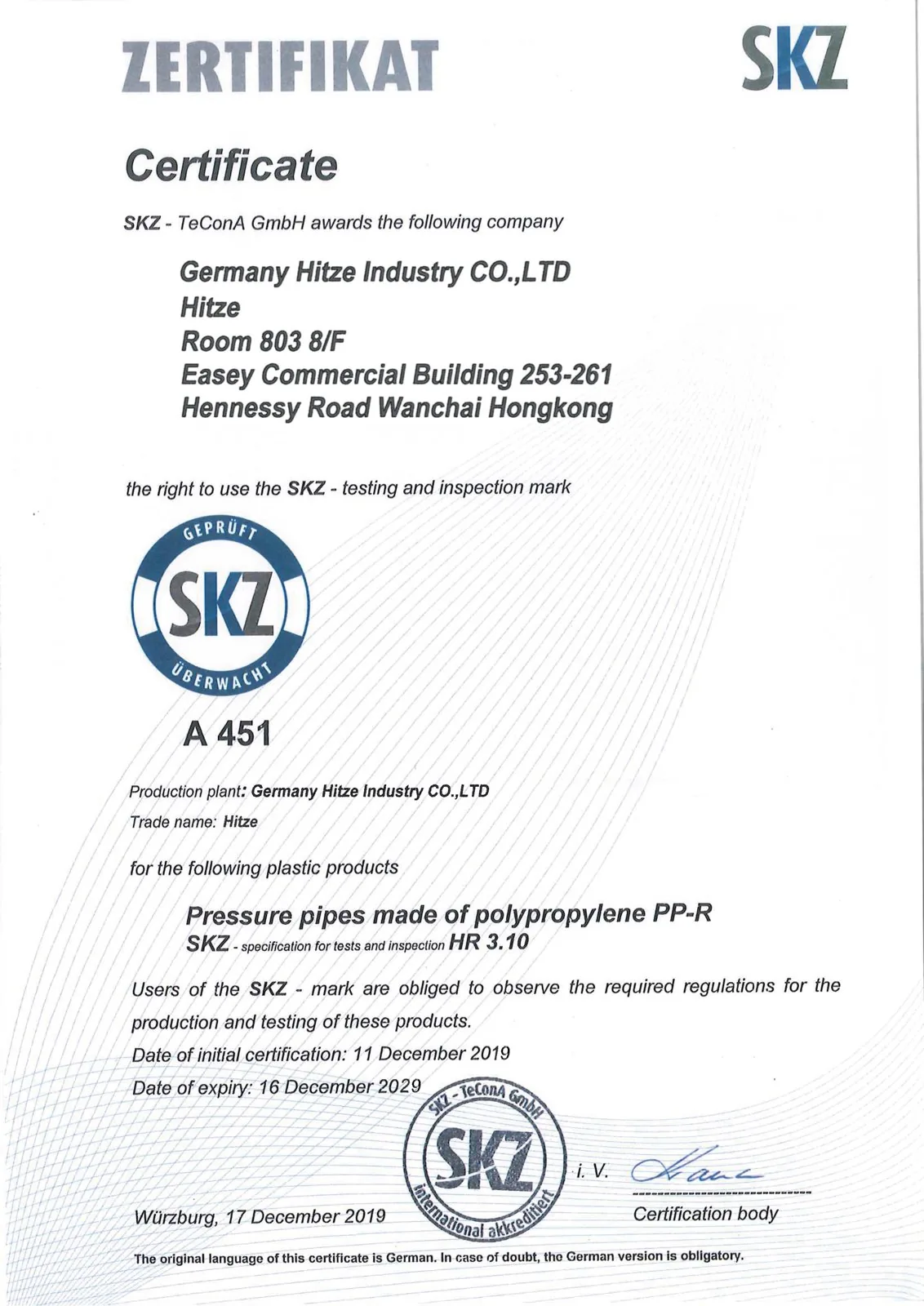
Concretely, four checks run before loading. First, documentation alignment: invoice and packing-list descriptions are written to match the product markings and the certificate pack line for line — material, standard (DIN 8077/8078 and EN ISO 15874 for PP-R, DIN 4726 for oxygen-barrier heating pipe, EN 12201 for PE100), dimension and pressure class — so the customs description and the compliance file never contradict each other. Second, the certificate pack itself: SKZ certificates for PP-R pressure pipe, fittings and PE-Xb heating pipe, the DVGW type examination for PP-R drinking-water pipe, WRAS material approval, and a BS 6920 potable-water test report from NSF International Laboratories, with certificate numbers verifiable and copies supplied before shipment on request — never a decorative “CE certificate” for a product category where the CPR does not permit one. Third, batch verification: every production lot passes hydrostatic pressure testing on dedicated test benches before release, and fittings lots are inspection-logged at the lab bench, because a rejected batch caught in the factory costs hours while one caught by an EU distributor costs a season of trust. Fourth, load engineering: coils, straight lengths and fitting cartons are palletized and mix-loaded so that one container maps cleanly onto one set of tariff lines and one warehouse receipt.
Worked Scenario: A 40HQ of PP-R From Signing to Shelf in the Netherlands
Put the whole sequence together with round numbers. A Dutch plumbing distributor orders a 40HQ of PP-R pipe and fusion fittings: FOB value €36,000, ocean freight and insurance to Rotterdam €2,800, so a customs value of €38,800 on CIF terms. Before the order was signed, the buyer did three things: confirmed an EORI (already held), split the order into its tariff lines (3917 32 00 for pipe, 3917 40 00 for fittings — both 6.5%, but declared separately), and had their fiscal setup confirmed — in this case their own Article 23 licence as a Dutch-established company.
At arrival, the broker lodges the import declaration with the matching document pack. Duty: 6.5% × €38,800 = €2,522. Import VAT base: €38,800 + €2,522 = €41,322; Dutch VAT at 21% would be €8,678 — but under Article 23 not one euro of it is paid at the border. It is self-accounted and simultaneously deducted on the quarterly return; the same shipment cleared in Germany without a deferment arrangement would have required roughly €7,900 of Einfuhrumsatzsteuer in cash at clearance (19% on the same base), recovered only through the return cycle. Total out-of-pocket at the Dutch border: €2,522 duty plus broker and terminal fees. The container strips into the warehouse the same week, with the SKZ and DVGW copies already in the distributor’s compliance file from the pre-shipment pack. Nothing in that story is heroic — it is just every step done one stage earlier than the deadline.
Who This Path Fits — and How to Start Without Betting a Container
This import route is built for a specific operator: an EU-established distributor, wholesaler or private-label brand with (or willing to obtain) an EORI and a VAT registration, buying pipe systems in container or mixed-pallet volume. It is not the path for one-off project buyers or anyone hoping to skip the compliance layer — EU market surveillance is only tightening as the 2026 drinking-water regime lands. If that operator is you, the way Hitze structures the relationship is deliberately low-risk: no minimum order quantity, so you start with samples or a small trial shipment and put the documentation pack through your own broker and your own compliance review before committing to volume, and the matched pipe-and-fitting system carries a 50-year warranty because the pipe, fittings and joints are engineered and tested as one system. Details on pricing, private-label options and territory support are on the importer and distributor program page — or write to ifanholding@gmail.com with your target market and product mix, and you will get a documentation pack to evaluate before anyone talks about a purchase order.
FAQ: Importing Pipe to the EU
What HS code do I use to import plastic plumbing pipe into the EU?
Heading 3917. In practice: CN 3917 32 00 for plain pipe without fittings (PEX, PE-RT, PP-R, HDPE), 3917 39 00 for reinforced or composite pipe such as PEX-AL-PEX, and 3917 40 00 for plastic fittings — all at a 6.5% conventional duty. Always verify the live ten-digit TARIC line before filing, and classify brass or iron components separately in the metal chapters.
Does plumbing pipe need CE marking to enter the EU?
For plastic piping systems, no — and it cannot legally carry CPR CE marking, because no harmonized standards for these products are cited in the Official Journal. Compliance is demonstrated through national schemes (DVGW, WRAS, KIWA) and test-institute certification instead. Treat a supplier’s “CPR CE certificate” for PP-R or PVC drainage pipe as a red flag.
Do I need an EORI number to import pipe into Europe?
Yes. An EORI is required before any import declaration can be lodged in your name. It is issued free by the customs authority of the member state where you are established and is valid EU-wide. Apply when you sign the purchase order — not when the vessel is a week out.
Can I avoid paying import VAT in cash at the EU border?
Often, yes — by choosing where and how you clear. The Netherlands defers import VAT to the periodic return under an Article 23 licence; France applies an automatic, mandatory reverse charge (since 1 January 2022) for holders of a French VAT number; Germany generally still collects at clearance. The rules and representative requirements vary by member state, so confirm your setup with a tax adviser first.
Is Hitze pipe made in Germany?
Hitze is a German brand — trademark registered at the DPMA in Munich — engineered in Germany and built to German DIN standards, with a 120,000 m² production base serving 118+ countries. Products are certified by German and European bodies including SKZ and DVGW, and full certificate copies are available on request before you order.