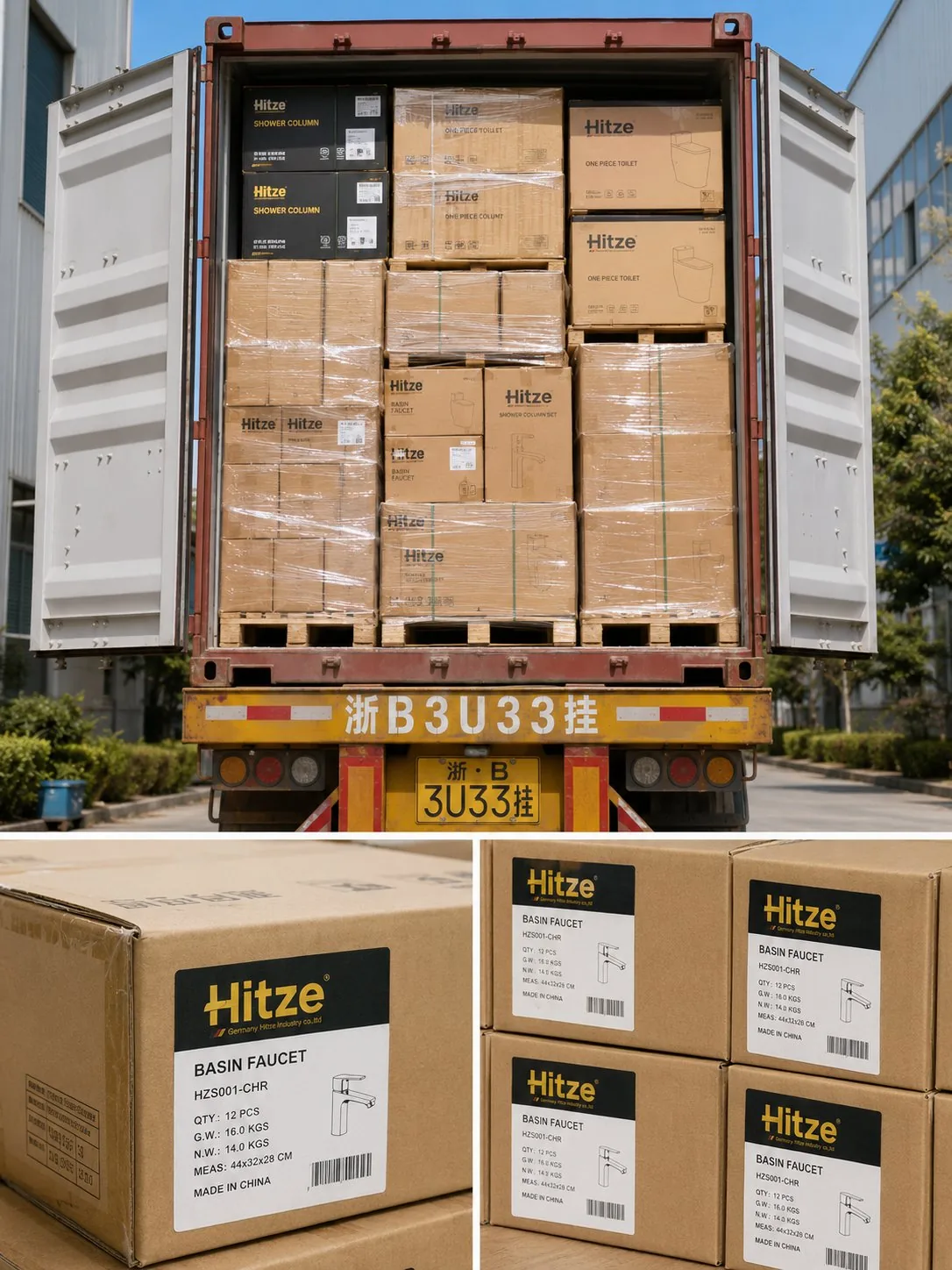
Key Takeaways
- Coil and straight-length plastic pipe (PEX, PE-RT, multilayer) usually classifies under HTS 3917.32.00 at a 3.1% general (MFN) duty; plastic fittings fall under 3917.40.00 at 5.3%; brass fittings under 7412.20.00 at 3%.
- For China-origin goods the base rate is the small number. Section 301 List 2 adds 25% on the main HTS 3917 pipe and fitting lines (Chapter 99 heading 9903.88.02) and it survived the February 2026 Supreme Court ruling — that is the line item that reprices your landed cost.
- The IEEPA “reciprocal” tariffs were struck down (effective Feb 24, 2026) and a temporary Section 122 surcharge of 10% is set to sunset July 24, 2026 (already struck down by the CIT, but still collected on appeal) — so the surcharge stack is moving. Price against Section 301, not the temporary layer.
- Clearance is procedural, not luck: ISF 10+2 filed 24 hours before loading, a customs bond, and a matching commercial invoice / packing list. Miss the ISF window and you risk up to $5,000 per violation.
- Duty follows country of manufacture, not the brand’s nationality. A “German brand” pipe is dutiable at the origin where it was actually made — verify origin and the cert pack (cUPC/NSF) before you wire a deposit.
If you have ever watched a container sit at the terminal accruing demurrage while a broker chases a missing document, you already understand the real cost of getting import compliance wrong. It is rarely the duty rate that hurts. It is the surprise duty rate, the hold for a classification query, the ISF penalty, or the certificate you did not know you needed until an inspector asked. This guide walks a US importer through the three things that actually decide whether plumbing pipe clears cleanly and at a predictable cost: the right HS/HTS code, the full duty stack in 2026, and the clearance mechanics that get the box off the port. Every number here is grounded against the official tariff schedule and current CBP/USTR guidance, and dated — because in 2026 the tariff picture is moving month to month.
Classifying plumbing pipe: the HTS codes that decide your duty
The Harmonized Tariff Schedule of the United States (HTSUS) is where classification starts, and for plastic piping the answer sits in heading 3917 — “tubes, pipes and hoses and fittings therefor, of plastics.” That single heading covers the bulk of what a wholesaler imports: PEX-a/b/c, PE-RT underfloor pipe, PP-R, and five-layer PEX-AL-PEX. The heading is the easy part. The money is in the eight-digit subheading, because that is what carries the duty rate — and getting it wrong is not a rounding error, it is a compliance exposure that can trigger a re-classification, back-duties, and interest.
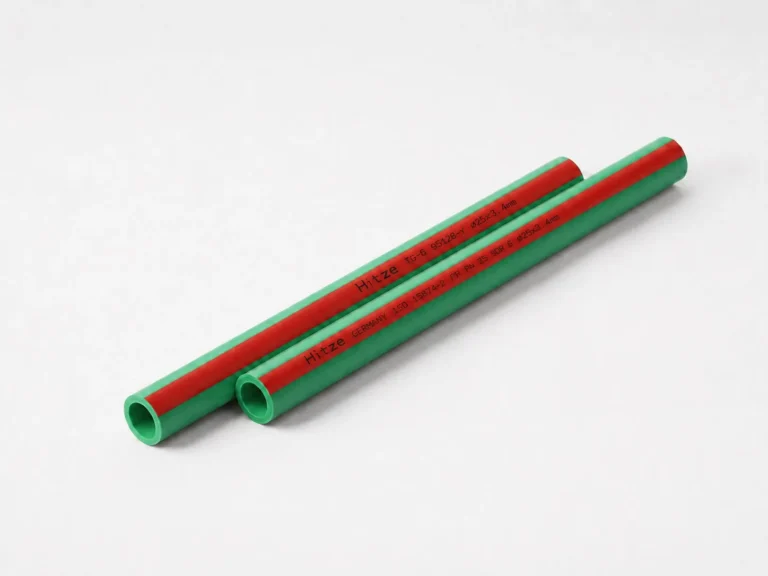
The practical split is pipe versus fittings. Bare coil or straight-length pipe with no attached fittings typically lands in 3917.32.00 (other tubes/pipes/hoses, not reinforced or combined with other materials, without fittings), dutiable at 3.1% general/MFN. The adjacent basket subheading 3917.39.00 also carries 3.1%. The moment a product has attached plastic fittings it can migrate to 3917.40.00 (plastic fittings) at 5.3%. Brass press, compression and threaded fittings are a different chapter entirely — copper-alloy fittings sit under 7412.20.00 at 3%. Rigid PVC pressure pipe has its own line (3917.23). If your packing list mixes pipe, plastic fittings and brass fittings on one invoice, you have at least three tariff lines, not one.
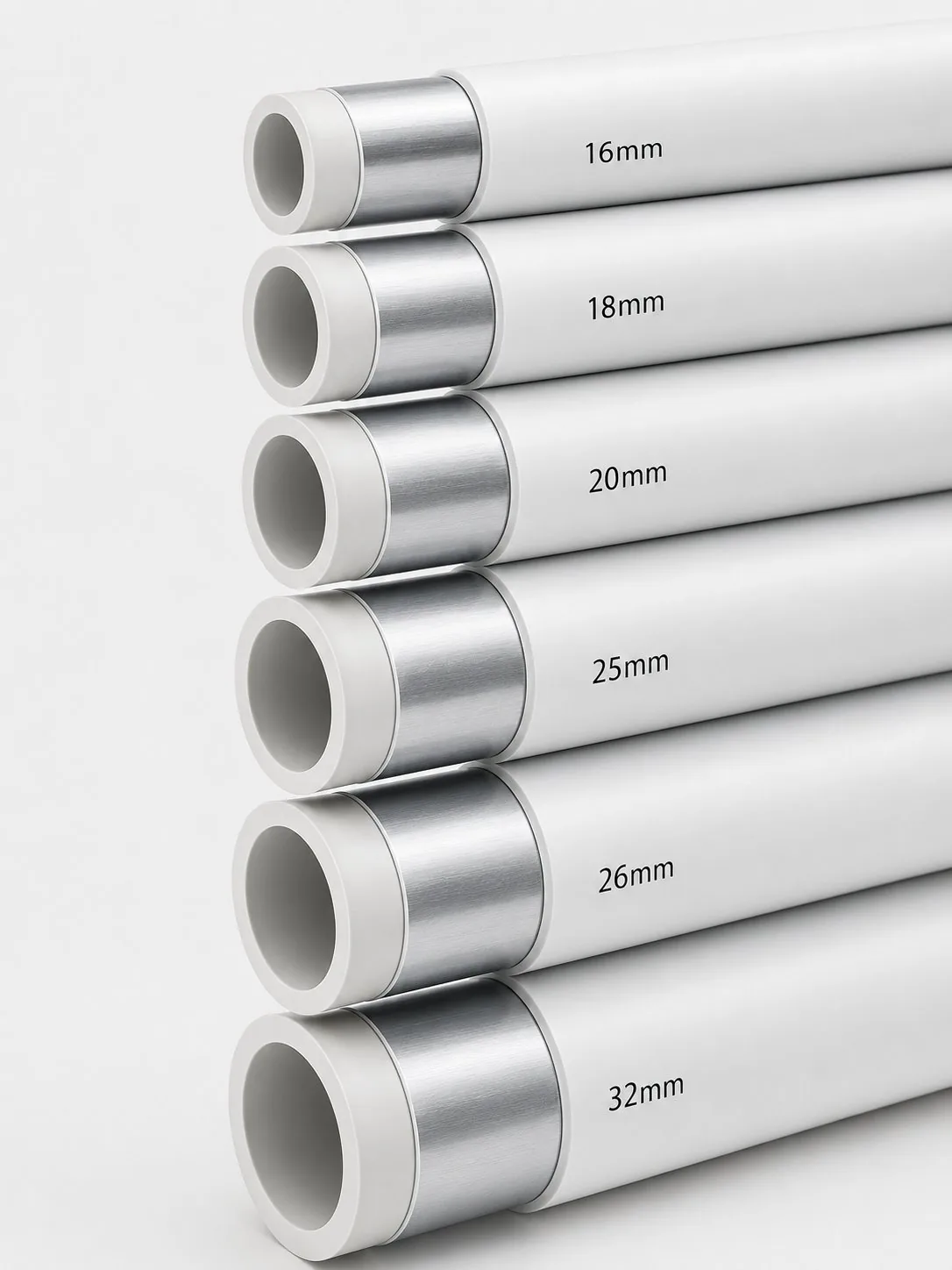
Here is the insider warning most sourcing guides skip: multilayer and reinforced constructions can be classification-ambiguous. A five-layer PEX-AL-PEX pipe has an aluminium core, and the HTS distinguishes tubes that are “reinforced or otherwise combined with other materials.” A well-run supplier will tell you exactly which subheading their product has cleared under historically; a broker will confirm it; and for a high-volume program the right move is a CBP binding ruling (eRuling) so the classification is not re-litigated at every port. Do not let a factory hand you a six-digit HS number and call it done — the US works to ten digits, and the duty lives in those last digits.
Quick reference: common plumbing-pipe HTS lines and general duty
| Product | Typical HTS | General (MFN) duty | Watch-out |
|---|---|---|---|
| PEX / PE-RT / multilayer pipe (no fittings) | 3917.32.00 | 3.1% | Reinforced/composite may shift the line — confirm. |
| Other plastic tubes/pipes (basket) | 3917.39.00 | 3.1% | Use only when a more specific line doesn’t fit. |
| Plastic fittings (elbows, tees, couplings) | 3917.40.00 | 5.3% | Higher than the pipe itself — split the invoice line. |
| Rigid PVC pressure pipe | 3917.23 | varies by line | Different subheading logic from PEX/PP-R. |
| Brass press / compression fittings | 7412.20.00 | 3% | Chapter 74, not 39 — separate tariff line. |
General/MFN rates verified July 2026 directly against the official HTSUS (USITC) schedule. These are base rates before any trade-remedy or surcharge duty — see the next section. Confirm the ten-digit statistical suffix and any origin-specific duty with your broker before entry.
The 2026 duty stack: why the base rate is the smallest number
Read the table above and you might conclude importing pipe is cheap — a few percent. That is a trap. For China-origin goods, the MFN rate is the floor, and the layers stacked on top of it are what actually move your landed cost. As of July 2026 there are three layers to understand, and they are not equally durable.
Layer one — Section 301 (the one that matters most). The two primary lines here — plastic pipe at 3917.32.00 and plastic fittings at 3917.40.00 — sit on Section 301 List 2, which carries a 25% additional duty on China-origin goods, administered through Chapter 99 heading 9903.88.02. (A CBP ruling confirms goods of China under 3917.32.0050 report the additional duty on 9903.88.02.) So a PEX coil at 3.1% MFN plus 25% Section 301 clears at roughly 28.1% total when it is made in China. This is the number to build your margin around, because Section 301 is durable: it was not disturbed by the February 2026 Supreme Court decision and remains in full force, with a limited set of product exclusions running into late 2026. Confirm the exact List and Chapter-99 heading for your specific ten-digit code — the “basket” line 3917.39.00, for instance, can fall on a different list — because your entry filing has to name the right one.
Layer two — the IEEPA reversal. On February 20, 2026 the Supreme Court held that the International Emergency Economic Powers Act does not authorize the President to impose tariffs, and the IEEPA “reciprocal” and fentanyl-related tariffs terminated at 12:00 a.m. Eastern on February 24, 2026. Duties paid under them are refundable through CBP. If you imported in 2025 and paid an IEEPA line, talk to your broker about the refund process — that is real money on last year’s containers.
Layer three — the temporary Section 122 surcharge. Hours after the IEEPA ruling, a temporary global surcharge under Section 122 of the Trade Act of 1974 took effect on February 24, 2026 at a rate of 10% ad valorem (Proclamation 11012), applied broadly to nearly all imports. An increase to 15% was announced but never implemented by proclamation, so CBP has collected 10% throughout — do not build 15% into your model. Critically, Section 122 is capped at 150 days and is set to expire by operation of law on July 24, 2026 unless Congress acts. There is also live litigation: the Court of International Trade struck the surcharge down as unlawful on May 7, 2026, but the Federal Circuit stayed that ruling on June 11, 2026, so CBP keeps collecting the 10% pending appeal. In other words, as you read this the top layer of the stack is days from a statutory sunset and under an unresolved appeal. The disciplined move is to quote and margin against the durable Section 301 duty and treat the surcharge as a dated, revisit-weekly variable — not a permanent cost baked into your shelf price.
Worked example — a 40HQ of PEX from China, mid-2026
Say the pipe classifies at 3917.32.00 (3.1% MFN) and the commercial value of the load is $30,000. Base duty ≈ $930. Section 301 List 2 at 25% adds ≈ $7,500. That is ≈ $8,430 before any temporary surcharge — a 28.1% effective rate. Add the 10% Section 122 surcharge (≈ $3,000) if it is still in force on your entry date and you are near 38.1% (≈ $11,430); drop it after July 24 and you are back to ~28.1%. Same pipe, same factory — a five-figure swing decided by when the box clears and where it was made. Model both scenarios before you commit a PO.
Antidumping, de minimis, and the two traps importers miss
Two more items round out the duty picture. First, antidumping/countervailing (AD/CVD) orders. China-origin cast-iron pipe fittings and welded stainless-steel pressure pipe carry AD/CVD orders that can run to punishing rates — but those orders do not attach to plastic PEX, PE-RT or PP-R pipe. That is genuinely good news for a plastic-pipe importer: the scary AD/CVD headlines you see are about metal products, not polymer piping. Brass fittings should still be checked case by case, but plastic pipe itself is clear of the plastic-pipe-specific AD/CVD net as of mid-2026.
Second, de minimis is gone. The old $800 Section 321 duty-free threshold was suspended for shipments from all countries on August 29, 2025, and Congress has legislated its permanent repeal effective July 1, 2027. Practically, that means you can no longer split small parcels to duck duty, and every commercial shipment — sample boxes included — now faces standard entry and duty. Budget for it; the “just send it as a sample under $800” workaround no longer exists.
Clearing the port: ISF, bonds, entry and the document pack
Classification and duty tell you the cost. Clearance mechanics decide whether the box actually moves. This is where first-time importers lose days, and it is almost always avoidable, because the requirements are procedural and known in advance.
Importer Security Filing (ISF, “10+2”) is the first hard deadline and the most common self-inflicted penalty. For ocean freight, the ISF — 10 data elements from you plus 2 from the carrier — must be filed with CBP no later than 24 hours before the cargo is laden aboard the vessel at the foreign port. Miss it, file it late, or file it wrong, and CBP can assess liquidated damages of up to $5,000 per violation. The fix is simple: give your broker the manufacturer, seller, ship-to, container-stuffing location and consolidator details before the factory hands the box to the port, not after. On a repeat program this becomes a template you reuse every reorder.
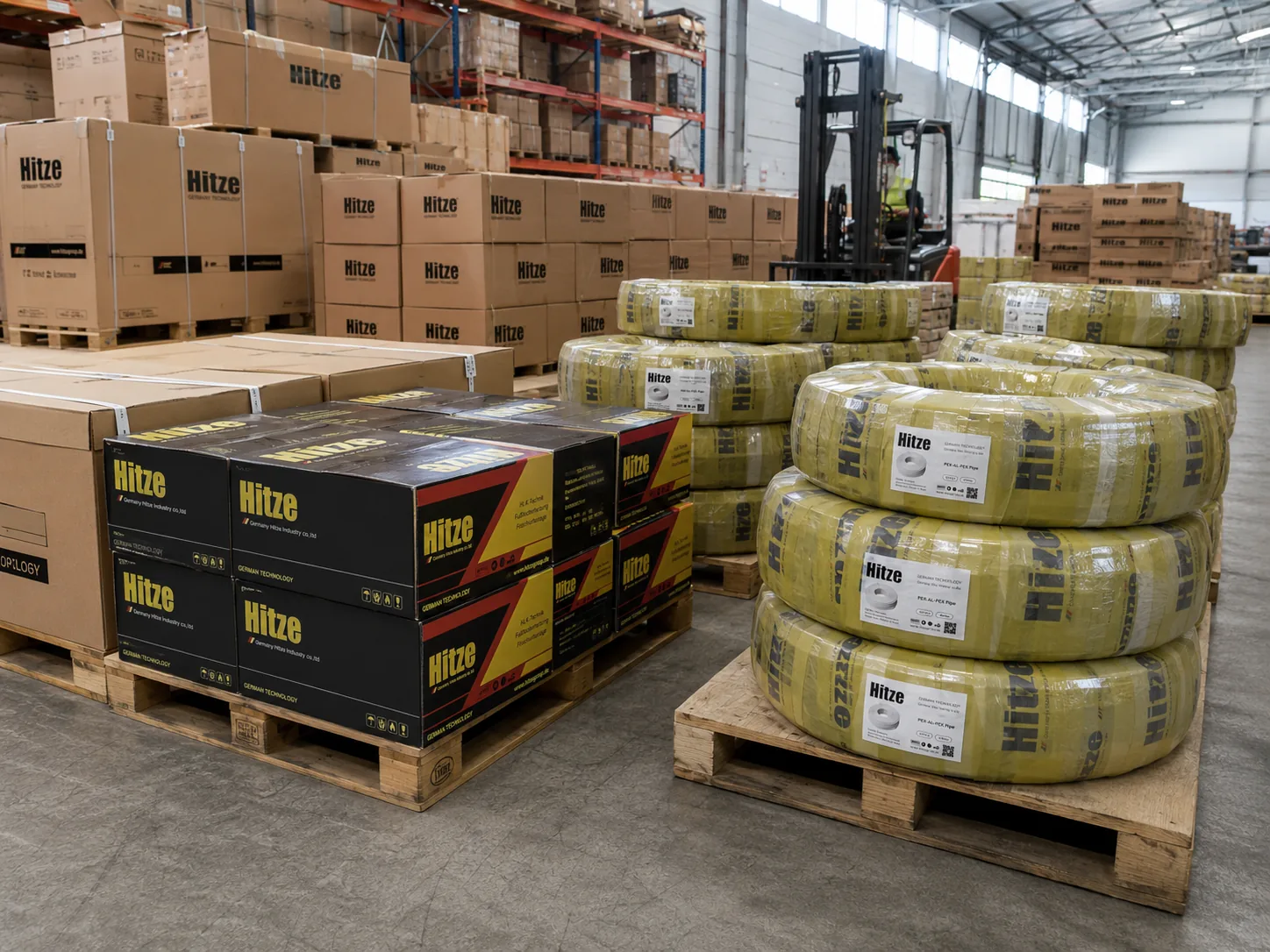
The customs bond. Any commercial shipment over $2,500 requires a formal entry, and a formal entry must be backed by a customs bond — even when the duty is zero. You have two options. A single-entry bond covers one shipment and suits an occasional importer testing a first order. A continuous bond covers unlimited entries for a year, and because a continuous Activity-1 importer bond also satisfies your ISF obligation, it is the cost-effective choice the moment you are importing more than a few times a year. If you plan a reorder program, buy the continuous bond up front — do not pay single-entry premiums container after container.
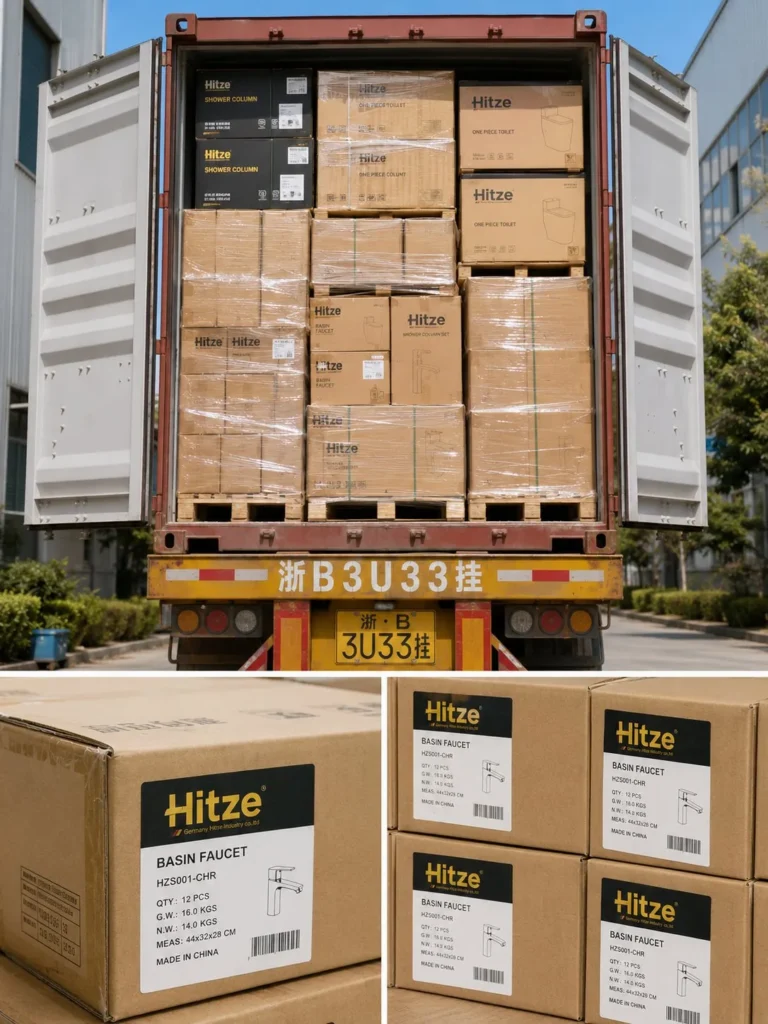
The document pack. Beyond ISF and the bond, a clean entry needs a commercial invoice (correct value, HTS lines, Incoterms), a packing list that matches it, the bill of lading, and — for plumbing products — the compliance documents that prove the goods are legal to sell. That last item is the one that separates a smooth importer from a stalled one, and it is where product certification meets customs.
Origin and certification: the two things a broker cannot fix for you
Two facts are set at the factory, not the port, and no broker can retrofit them. The first is country of origin. Duty follows where the goods were manufactured or substantially transformed — not the brand’s nationality and not where it shipped from. A pipe sold under a European brand but manufactured in China is dutiable at China rates, Section 301 included. So when a supplier markets itself on European heritage, your compliance question is precise and fair: where is this specific SKU manufactured, and what origin will appear on the entry? A credible supplier answers that in one sentence and puts it in writing.
The second is market certification. Plastic potable-water pipe and lead-free brass sold in the US market are expected to carry the right listings — commonly cUPC/UPC (IAPMO), NSF-14 and NSF/ANSI 61 for potable-water contact. These are not customs-entry documents per se, but they are what let you actually sell the pipe to a distributor or pass a jobsite inspection — and buyers increasingly ask for them before the goods land. Line this up before you order, because certifying after the container arrives is the expensive way to learn the lesson.

What Hitze checks before your pipe ships — and where we help on compliance
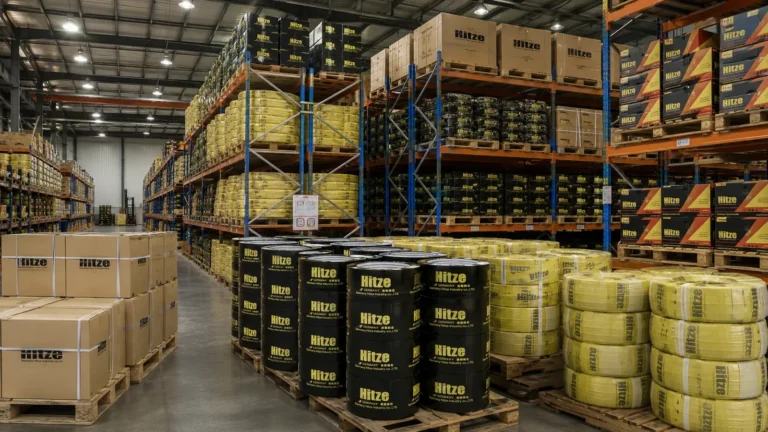
Hitze is a German brand of engineered piping systems — GERMANY Hitze INDUSTRY CO., LTD, founded 1974, running a 120,000 m² production base with 1,000+ employees and exporting to 118+ countries. Our systems are built to German DIN standards and DVGW-/SKZ-tested, and for US-bound trade buyers we treat import compliance as part of the product, not an afterthought. Here is what we prepare on the export side so your entry is boring in the best way:
- Classification-ready documentation. We provide the HTS lines our products have historically cleared under — pipe, plastic fittings and brass fittings split out — so your broker isn’t guessing, and we support a CBP binding-ruling request for high-volume programs.
- A clean, matching document pack. Commercial invoice, packing list and the container-stuffing detail your broker needs to file ISF inside the 24-hour window — structured to be reused on every reorder.
- A market-access certification pack. For US potable-water compliance we hold cUPC/UPC (IAPMO), NSF-14 and NSF/ANSI 61, alongside DVGW, SKZ and WRAS; certificate numbers are available on request and can be issued to support your own brand under our private-label program.
- A written origin statement for the exact SKUs you order, so there are no country-of-origin surprises at entry.
What we do not do is invent numbers we can’t stand behind. MOQ, lead time and freight are quoted per program because they vary by market and order — but they are quoted in writing before you commit, not improvised after.
Best for / not for
This how-to and Hitze’s export support are best for importers, trading companies and distributors bringing full or mixed containers of PEX, PE-RT, PP-R, multilayer pipe, fittings and manifolds into the US who want predictable landed cost and a supplier that carries the certification and origin paperwork. It is not the right fit if you need a domestic US-warehoused pull-and-ship supplier for next-day parcels, or if you’re a homeowner buying a few coils — this is a trade and wholesale channel, sold by the pallet and the container, not direct to the public.
Planning a container of pipe into a US port?
If you’re an importer or distributor who wants the HTS lines, origin statement and cUPC/NSF cert pack sorted before the box sails — not after it’s stuck — that’s exactly the lane we run. Send your SKU list and destination port and we’ll return the classification and document plan.
For the underlying product spec, our PEX pipe range and multilayer PEX-AL-PEX pipe pages carry the sizes and constructions most US programs order, and our certifications and compliance page details the listings that unlock the US market.
Frequently asked questions
What is the HS/HTS code for PEX pipe imported into the USA?
PEX, PE-RT and multilayer plastic pipe supplied as coils or straight lengths without attached fittings typically classifies under HTS 3917.32.00, at a 3.1% general (MFN) duty. Plastic fittings shift to 3917.40.00 (5.3%) and brass fittings to 7412.20.00 (3%). Confirm the full ten-digit code and any origin-specific duty with your customs broker, and consider a CBP binding ruling for large or composite-construction programs.
How much duty will I pay to import plastic pipe from China?
The base MFN rate is only about 3.1% for pipe, but China-origin plastic pipe on Section 301 List 2 carries an additional 25% (Chapter 99 heading 9903.88.02), for roughly 28.1% total. A temporary Section 122 surcharge of 10% applied on top for part of 2026 (pushing the worst case to about 38.1%) but is set to expire July 24, 2026 and is under appeal after a court struck it down. Margin against the durable Section 301 duty and treat the surcharge as a dated variable your broker confirms per entry.
Did the 2026 Supreme Court tariff ruling make my import cheaper?
Partly. The February 20, 2026 ruling invalidated the IEEPA “reciprocal” and fentanyl tariffs, which terminated February 24, 2026, and duties paid under them are refundable through CBP. But Section 301 and Section 232 tariffs were not affected and remain in force — so the 25% Section 301 duty on China-origin pipe still applies. Check whether any IEEPA duty you paid in 2025 is now refundable.
What documents do I need to clear plumbing pipe through US customs?
At minimum: an ISF (“10+2”) filed at least 24 hours before the vessel loads, a customs bond (single-entry or continuous), a commercial invoice with correct HTS lines and Incoterms, a matching packing list, the bill of lading, and your entry summary. For plumbing products, have your market certifications (cUPC/UPC, NSF-14, NSF/ANSI 61) and a country-of-origin statement ready — buyers and inspectors will ask.
Is a German-brand pipe made in Germany, and does that change my duty?
Hitze is a German brand of piping engineered to German DIN standards and DVGW-/SKZ-certified. For customs, though, duty follows the actual country of manufacture (substantial transformation), not the brand’s nationality — so always confirm in writing where your specific SKUs are manufactured and what origin will appear on the entry, because that determines whether Section 301 duty applies.
Do antidumping duties apply to imported PEX pipe?
Not to plastic PEX/PE-RT/PP-R pipe as of mid-2026. AD/CVD orders on Chinese pipe target cast-iron pipe fittings and welded stainless-steel pressure pipe — metal products — not polymer piping. Brass fittings should still be reviewed case by case, but your plastic pipe itself is clear of the plastic-pipe-specific AD/CVD net. Confirm current scope with your broker before each order.