Key Takeaways
- UPC and cUPC are code-listing marks; NSF is a material/health mark. They answer different questions, so a serious US plumbing import usually needs both, not one.
- UPC (IAPMO) proves your product complies with the Uniform Plumbing Code. Add the lowercase “c” and it also clears the National Plumbing Code of Canada — that single letter is the whole difference between UPC and cUPC.
- For plastic pipe, the code demands NSF/ANSI 14; for drinking water, NSF/ANSI/CAN 61. On potable pipe the two travel together — NSF 14 certification already carries the NSF 61 material-safety requirement.
- “Lead free” is federal law, not a nicety. Wetted surfaces must average ≤0.25% lead under the Safe Drinking Water Act, verified through NSF/ANSI 372.
- The wrong mark, or none, means goods rejected on inspection. Get the certification body, standard number, and listed model verified before the container ships — not at the port.
If you import plumbing pipe into the United States, the certification question is where most first-time programs quietly go wrong. A supplier sends a glossy PDF, the logo looks official, the price is good — and eight weeks later a plan reviewer or a big-box buyer asks for a listing you don’t have, and the pallet becomes dead stock. The confusion almost always comes from treating cUPC, UPC, and NSF as competing labels where you pick one. They are not competitors. They certify different things, they are issued by different bodies, and for a real potable-water pipe program you generally need more than one of them working together. This guide separates them cleanly, tells you which mark unlocks which door, and shows what a compliant certification pack actually looks like before you wire a deposit.
UPC vs cUPC: a code-listing mark, and what the little “c” buys you
Start with what UPC is not. It is not a material test and it is not a lead statement. The Uniform Plumbing Code is a model plumbing code published by IAPMO — the International Association of Plumbing and Mechanical Officials, founded in 1926 — and it is the only plumbing code developed as an ANSI American National Standard, revised on a three-year cycle (2015, 2018, 2021, 2024). When you see a “UPC” shield on a fitting or a coil, it means IAPMO R&T has listed that specific product as complying with the Uniform Plumbing Code and its governing product standard. It is a code-compliance listing: proof the item is legal to install under the UPC.
That listing matters because the US is split between two model codes. Roughly a dozen states run on UPC-based plumbing codes — California, Washington, Hawaii, Idaho, Minnesota, Oregon, South Dakota and others appear on IAPMO’s own State-Adopted Codes register — while most of the remaining states use the competing International Plumbing Code (IPC). Verify your destination state against that register rather than a secondhand list, because some states (Texas is the classic case) let municipalities choose either code. California and Washington alone are enough to make UPC listing non-negotiable for most importers: if your product isn’t UPC-listed, you have quietly written off some of the largest plumbing markets in the country. The practical read: for pipe and fittings you intend to sell nationally, a UPC listing is table stakes, not a bonus.
Now the “c.” Add a lowercase c in front — cUPC — and the same IAPMO mark also certifies compliance with the National Plumbing Code of Canada. That is the entire difference: cUPC is UPC plus Canada. It is not a “better” or “stricter” American certification, and a salesperson who tells you cUPC is required to enter the US while plain UPC is not is either confused or selling. If your buyers are US-only, UPC covers you; if you plan to move product across the border or want one SKU that ships either way, cUPC saves you a second listing exercise later. One important nuance importers miss: IAPMO R&T is the only body that issues the true UPC shield, so a “UPC-style” logo from an unnamed lab is a red flag worth stopping on.
NSF/ANSI 14 vs NSF/ANSI 61: performance versus what leaches into the water
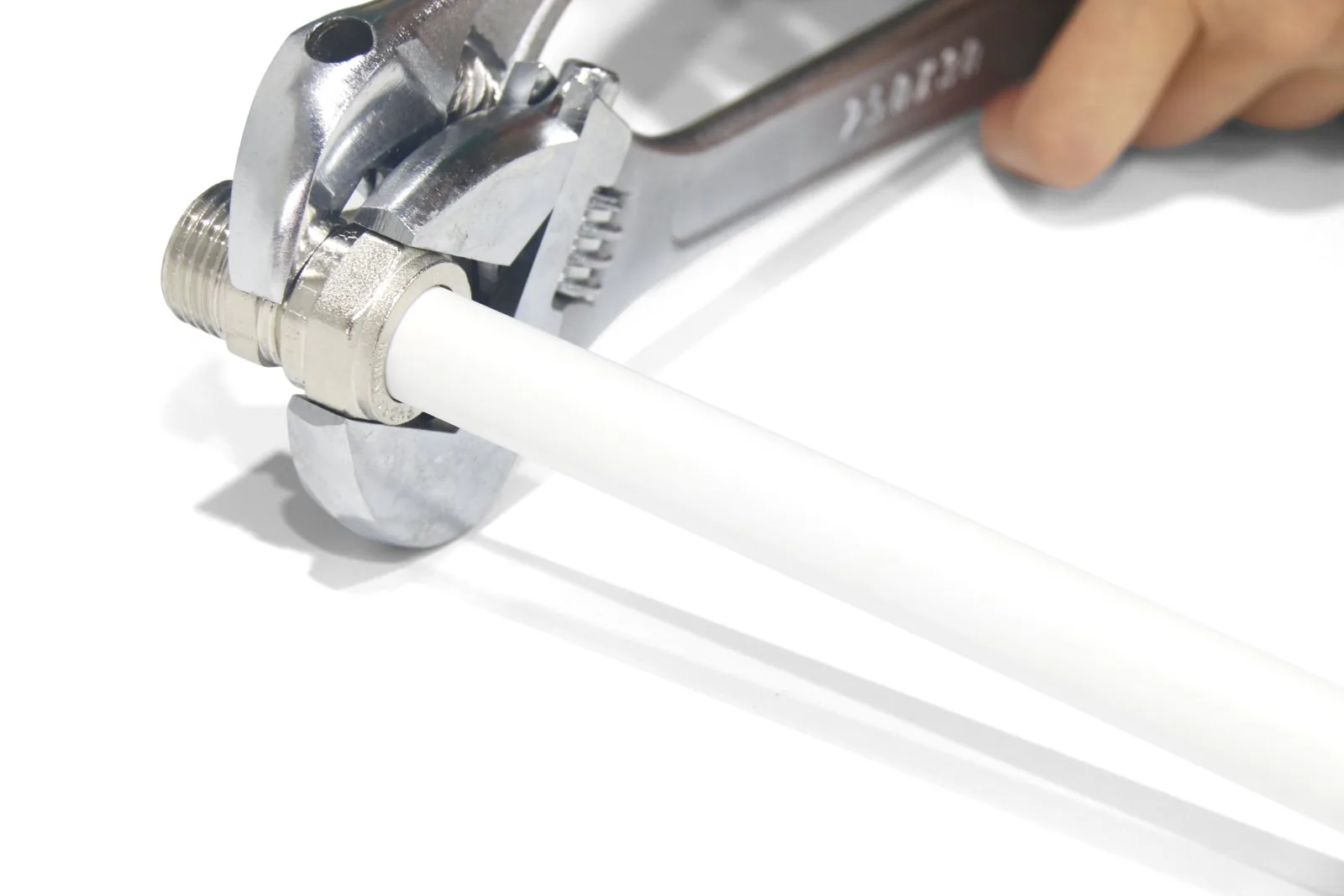
Where UPC answers “is it legal to install,” NSF answers “is the material safe and does it perform.” But NSF is not one standard — and importers routinely conflate the two that matter for pipe. NSF/ANSI 14 is the plastics piping standard: it sets the minimum physical, performance and health-effects requirements for plastic pipe, fittings and related materials. Every major US plumbing code, the UPC included, requires plastic pipe and fittings to be certified to NSF/ANSI 14. In practice, without an NSF listing a PEX or PE-RT manufacturer cannot legally sell pipe for plumbing use in the United States or Canada. It is the gatekeeper standard for the material itself.
NSF/ANSI/CAN 61 is a narrower, health-focused standard: it evaluates what contaminants — lead above all — can migrate from a water-contact material into the drinking water passing through it. State waterworks regulations require drinking-water system components to be certified to NSF/ANSI 61. Here is the relationship that resolves most of the confusion: for a potable-water product, NSF/ANSI 14 certification already incorporates the material-safety requirements of NSF/ANSI 61. So when a potable pipe is properly NSF-14 listed, the NSF-61 health evaluation is baked in — you are not choosing between them, you are getting both through one listing. Where they visibly split is on components like brass fittings and manifolds, which are typically listed to NSF/ANSI 61 (and 372) in their own right rather than to 14.
The insider warning: check the scope of the NSF listing, not just its existence. A certificate that lists a supplier’s pressure pipe to NSF 14 tells you nothing about whether their brass compression fittings are listed to NSF 61. Programs get stuck at inspection because the pipe was compliant and the fittings that joined it were never certified. When you request the listing, ask for the specific product lines and standard numbers on it — a real certification body lists them explicitly.
The lead-free law that sits underneath all of it
Before you compare marks, understand the floor everything stands on. Under Section 1417 of the US Safe Drinking Water Act — as amended by the 2011 Reduction of Lead in Drinking Water Act — any pipe, fitting or fixture in contact with drinking water must be “lead free,” defined as a weighted average of not more than 0.25% lead across the wetted surfaces (and 0.2% for solder and flux). That replaced the old 8% ceiling and it is federal, nationwide, and not optional. The procedure for calculating that weighted average lives in NSF/ANSI/CAN 372, which is why you will see brass parts marked to 372 alongside 61.
This is why lead-free brass grade selection is not a spec-sheet detail but a compliance decision. Standard brass such as CW617N is fine for many mechanical and heating uses, but for potable wetted surfaces you want a documented low-lead / dezincification-resistant grade — CW724R, CW511L or CW602N in the European nomenclature — that can actually pass the 0.25% weighted-average calculation. A supplier who cannot tell you the exact brass grade in the wetted part of a valve or fitting cannot credibly claim NSF 61/372 compliance for it. This is the single most common gap we see in “certified” import packs that fall apart under scrutiny.
Side by side: which mark answers which question
Here is the comparison in one view. Read it as a stack you assemble, not a menu you choose one item from.
| Mark / standard | What it actually certifies | Issuing body | Unlocks |
|---|---|---|---|
| UPC (shield) | Product complies with the Uniform Plumbing Code + its product standard | IAPMO R&T | UPC-based states (CA, WA, HI, etc. — see IAPMO register) |
| cUPC | Everything UPC does, plus the National Plumbing Code of Canada | IAPMO R&T | US (UPC jurisdictions) + Canada |
| NSF/ANSI 14 | Plastic pipe/fitting performance + material safety (incl. NSF 61 for potable) | NSF (or accredited lab) | Code approval for plastic pipe nationwide |
| NSF/ANSI/CAN 61 | Health effects — what leaches into drinking water | NSF (or accredited lab) | Potable-water use; state waterworks acceptance |
| NSF/ANSI/CAN 372 | Lead content ≤0.25% weighted average (SDWA “lead free”) | NSF (or accredited lab) | Legal sale of water-contact products in the US |
The pattern is clear once it’s laid out: UPC/cUPC is the code-listing layer, NSF 14/61/372 is the material-and-health layer. A PEX coil that carries a UPC shield and an NSF listing to 14 (which pulls in 61) and whose fittings are 61/372-listed has covered both layers. Drop either layer and you have a gap an inspector or a buyer’s compliance team can point at.
Best for / not for: matching the certification stack to your program
Certification is a cost and a lead-time item, so match the stack to where you actually sell rather than collecting logos. One thing that does not vary by destination: the NSF material-and-lead requirements (SDWA lead-free law, state waterworks rules, NSF/ANSI 14/61/372) apply to potable products nationwide, whether the target state runs UPC or IPC. What changes state to state is the code-listing layer (UPC vs IPC), not the water-safety floor. A few honest segmentations:
- Best for a US-national potable pipe program: UPC-listed pipe + NSF/ANSI 14 (carrying 61) + lead-free brass fittings listed to NSF 61/372. This is the default full stack and what most distributors and big-box buyers will ask for.
- Best for a US + Canada program: the same, but specify cUPC from the start so you don’t pay to re-list for the Canadian code later.
- Not the right spend for closed-loop heating only: if a run is strictly hydronic radiant heating with no potable contact, the NSF 61/372 drinking-water burden eases — but you still want the pipe’s performance standard (e.g. ASTM F876/F877 for PEX, DIN 4726 oxygen barrier) documented, and code listing still governs installation.
- Not enough on its own: a CE mark or a European DVGW/WRAS approval. They are real and valuable in their own markets, but they do not substitute for UPC/NSF listing at a US inspection. This is exactly where “we’re certified” from an EU-facing supplier quietly fails a US plan review.
How Hitze builds and documents to clear US inspection
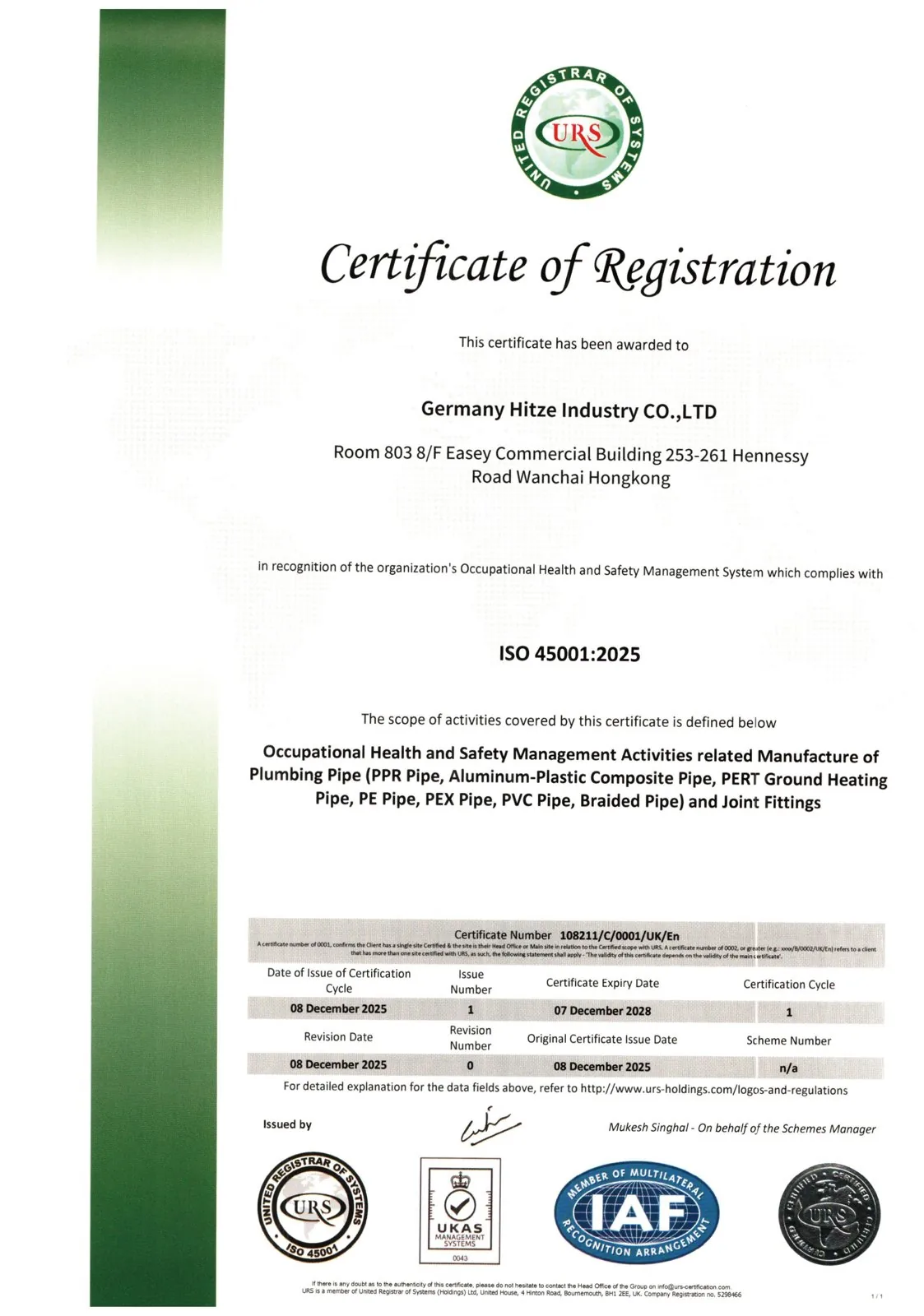
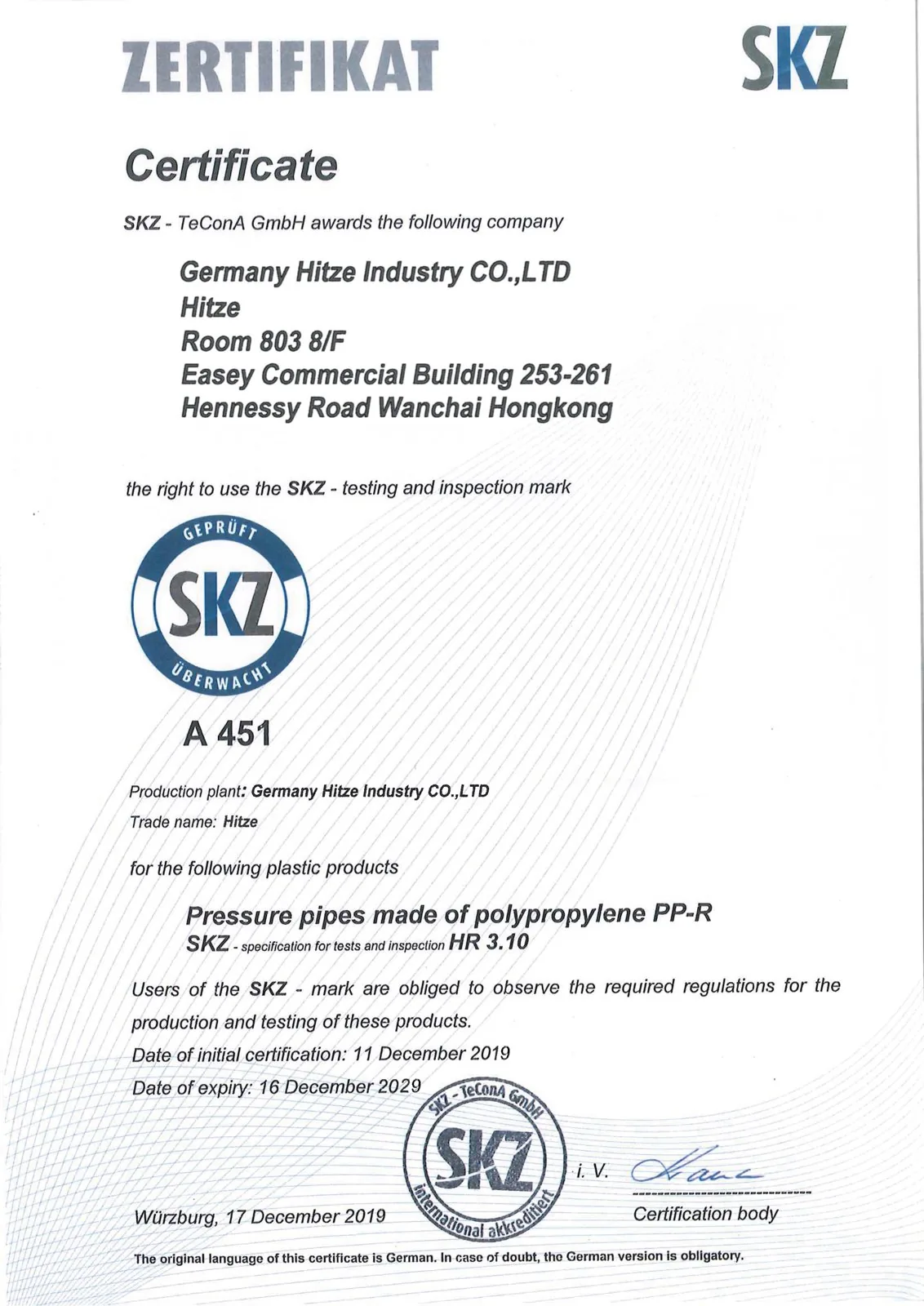
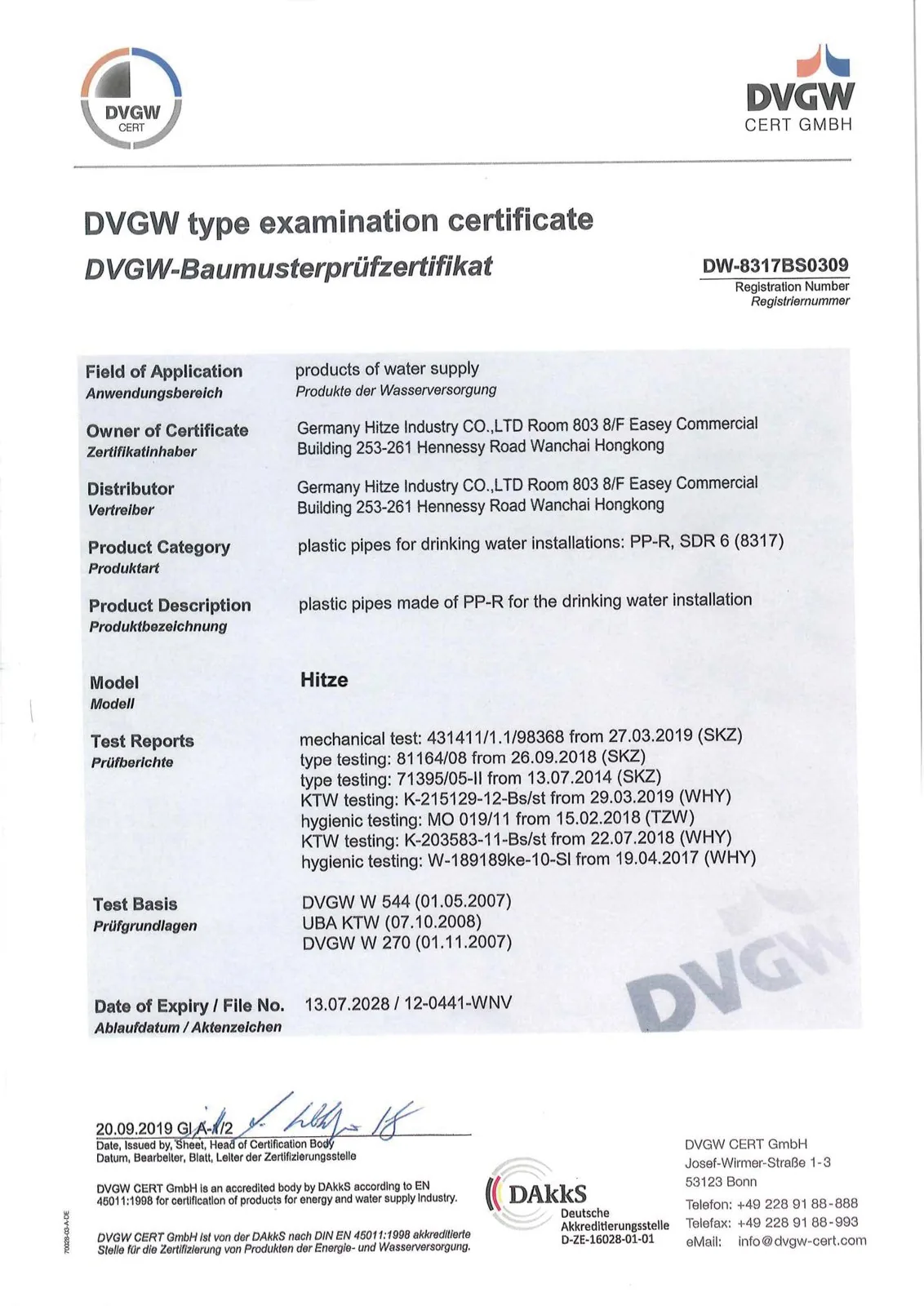
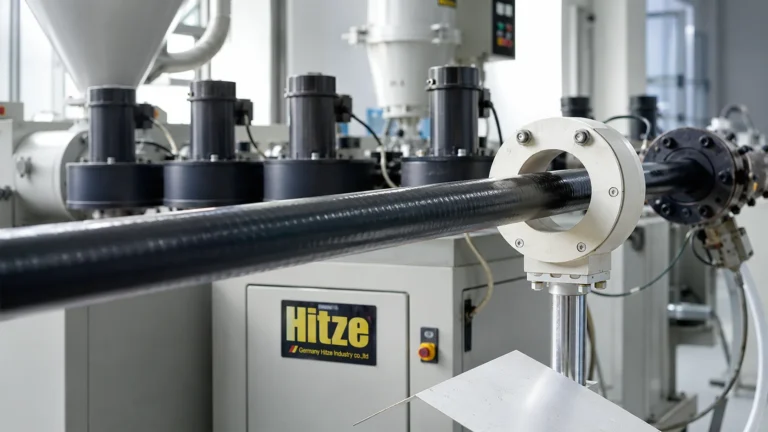
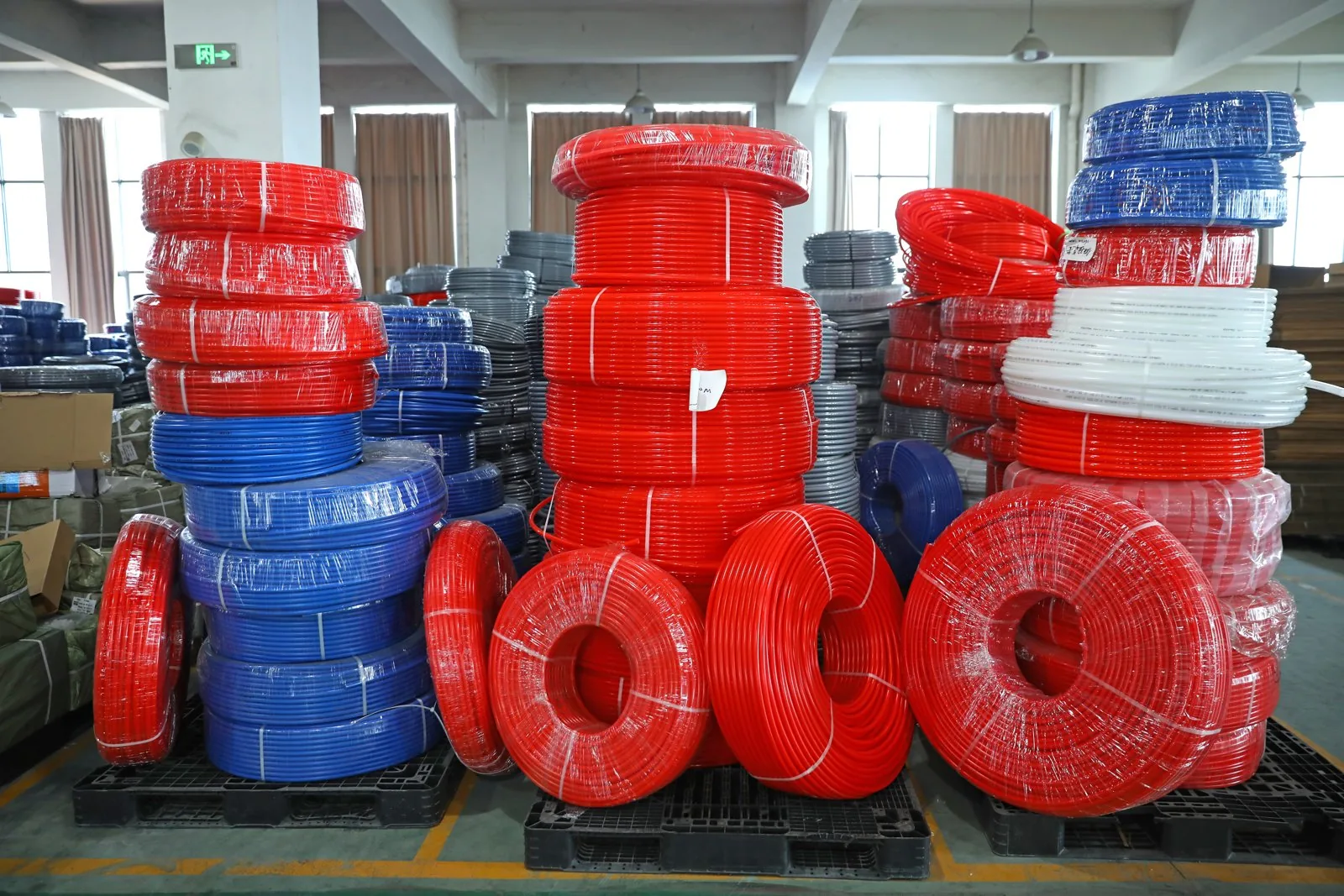
Hitze is a German brand (Germany Hitze Industry Co., Ltd., German Trademark Reg. No. 30 2020 005 484), engineered in Germany and built to German DIN standards, founded in 1974 with a 120,000 m² production base, 1,000+ employees, and exports to 118+ countries. On the compliance question specifically, the pipe is certified to cUPC / UPC through IAPMO and to NSF-14 and NSF/ANSI 61, and is built to the underlying product standards a US listing depends on — ASTM F876/F877 for PEX, DIN 8077/8078 and EN ISO 15874 for PP-R, and DIN 4726 for oxygen-barrier heating pipe. For potable wetted brass we use documented lead-free / DZR grades (CW724R, CW511L, CW602N) engineered to pass the 0.25% weighted-average lead calculation.
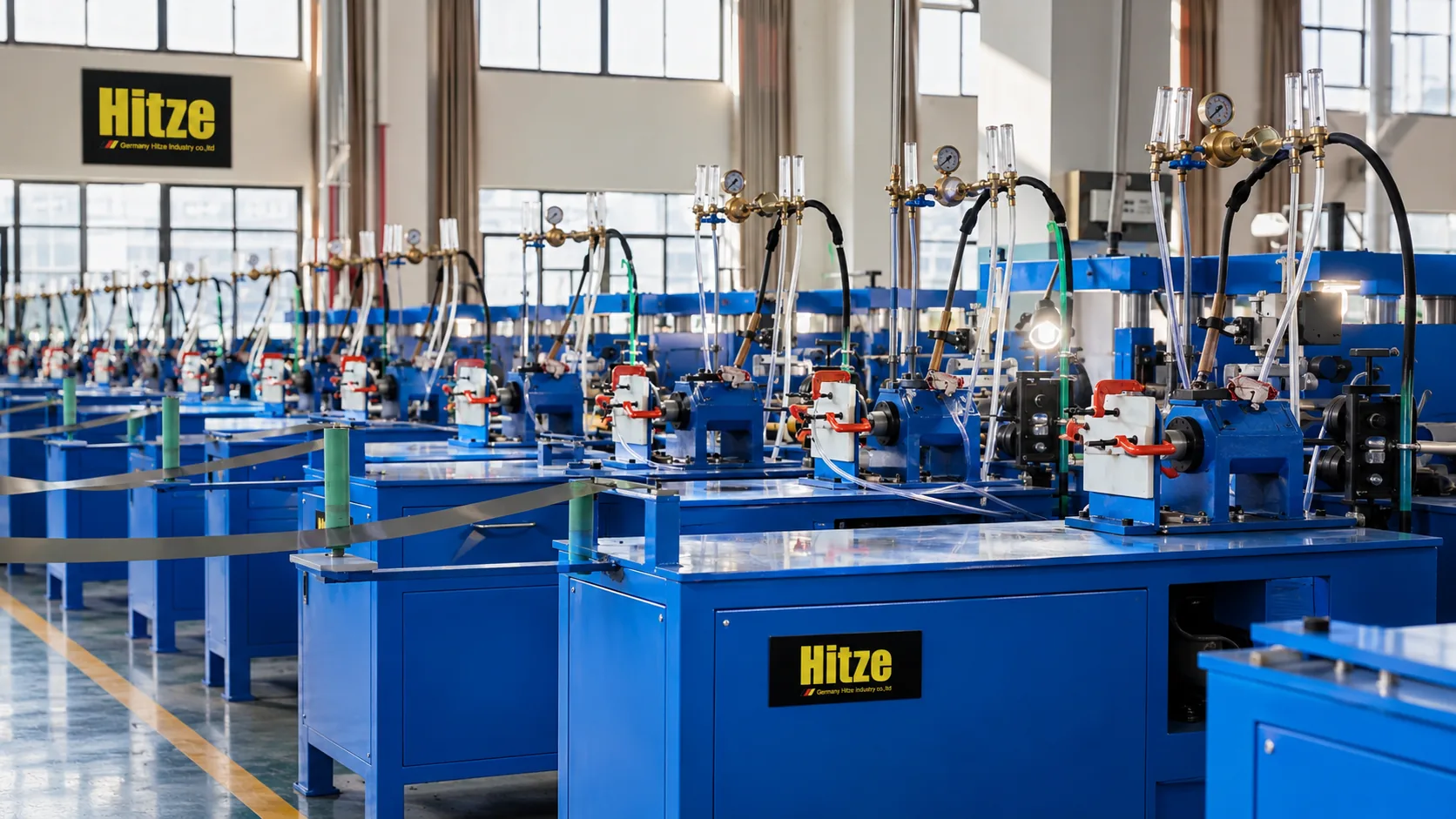
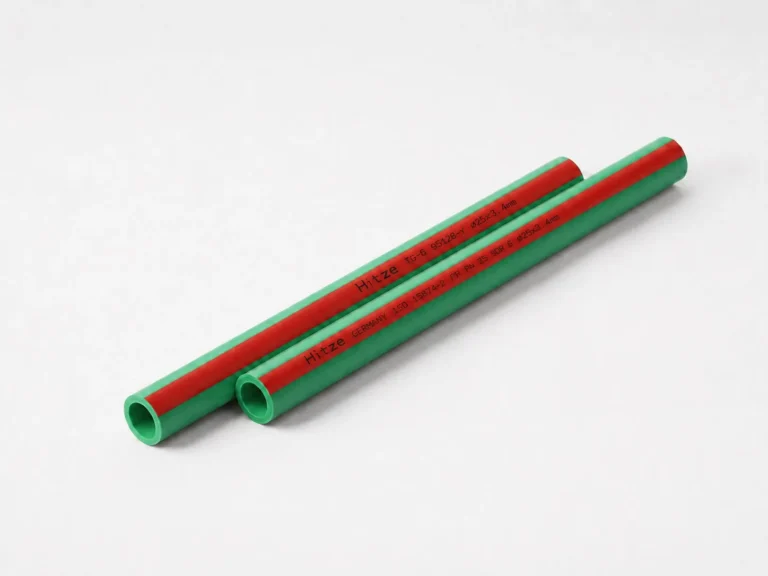
What we check before a US-bound order ships: that the listed standard and the specific product line on the certificate match what’s actually in the container; that the print stream on the pipe carries the standard reference and listing mark an inspector will look for; that fittings shipped alongside the pipe carry their own NSF 61/372 documentation, not just the pipe’s; and that the certificate holder name is one you can verify in the issuing body’s public register. Exact certificate numbers exist on the physical certificates and are available on request — we would rather you verify them directly with IAPMO and NSF than take a logo on faith. That is the whole point: a certification pack you can independently check is worth more than a certificate you can’t.
If you want the underlying documents mapped to your specific SKUs and destination code, our certifications & compliance overview lays out which listing applies to which product line, and the PEX pipe and multilayer PEX-AL-PEX pages carry the standards each line is built to.
A worked scenario: a US importer’s first PEX container
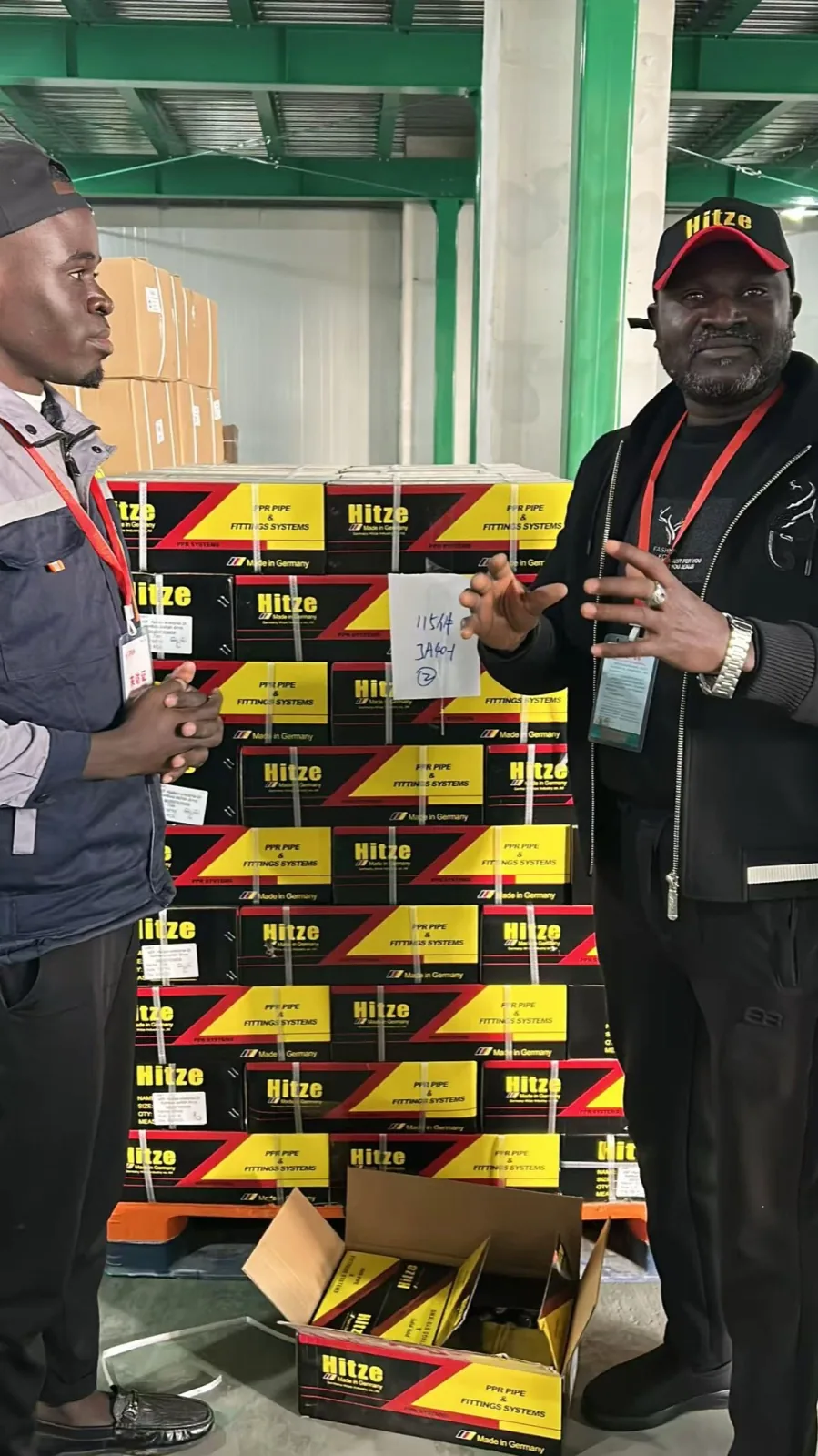
Picture a distributor bringing a first PEX plumbing container into California for resale to plumbing contractors. California is a UPC state, so step one is confirming the pipe carries a genuine IAPMO UPC (or cUPC) listing, not a look-alike mark. Step two: because this is potable water, the pipe must be NSF/ANSI 14 listed — which brings the NSF 61 health evaluation with it — and the brass compression and transition fittings in the same order must be independently listed to NSF 61/372 as lead-free. Step three, the customs mechanics: crosslinked polyethylene tubing classifies under US HTS subheading 3917.39.00, which carries a 3.1% general (MFN) ad valorem duty in the current USITC Harmonized Tariff Schedule — always confirm the live rate there, as the schedule changes. For China-origin plastic pipe under HS 3917, a Section 301 List 2 duty (Chapter 99 heading 9903.88.02, 25%) typically stacks on top of that base rate, along with any reciprocal/country-of-origin surcharge in force at entry, so landed cost, not just FOB, is what the margin math has to survive. Get the exact stack quoted by your customs broker against your specific origin before you price the program.
The failure mode this sequence prevents is the expensive one: pipe that is correctly listed, fittings that were never certified, and a plan reviewer who rejects the mixed system. Verifying both layers — code listing and material/lead — against the exact SKUs on the packing list, before the vessel sails, is the difference between a container that clears and a container that becomes a write-off. This is the same discipline that separates a real factory from a trading company reselling someone else’s certificates, which is why buyers who care about it tend to route through an importer & distributor supply relationship built to hand over verifiable documentation.
Getting the marks under your own brand
One question importers building a private label ask early: can these listings sit under my brand rather than the factory’s? In principle yes — certification schemes list a named certificate holder and a defined production location, and a capable factory can support a private-label program where the documentation reflects your identity. The practical constraints (which listings can be extended, timelines, and what has to be re-tested) vary by market and by order, and belong in a direct conversation rather than a blanket promise. If an own-brand certified line is where you’re heading, our private-label & ODM piping program is the place to scope it.
Who this is for
If you’re a US or North American importer or distributor bringing in potable-water pipe and you want a certification pack you can verify — not just trust — this is the supplier conversation to have. It’s a poor fit if you need direct-to-homeowner retail; Hitze is trade and wholesale only.
Frequently asked questions
Is cUPC required to sell plumbing pipe in the United States?
No. For the US market, a UPC listing is what proves Uniform Plumbing Code compliance. The lowercase “c” in cUPC adds compliance with the National Plumbing Code of Canada. If you sell in the US only, plain UPC is sufficient; you’d choose cUPC when you also want to sell into Canada without a separate listing.
Do I need both NSF and UPC, or does one cover the other?
You generally need both, because they certify different things. UPC/cUPC is a code-compliance listing (is it legal to install), while NSF certifies the material and its water-safety (is it safe and does it perform). For plastic potable pipe, code requires NSF/ANSI 14 certification, and NSF 14 for potable products already carries the NSF/ANSI 61 health requirement.
What’s the difference between NSF/ANSI 14 and NSF/ANSI 61?
NSF/ANSI 14 is the plastics piping standard covering performance and material safety, and plumbing codes require plastic pipe and fittings to meet it. NSF/ANSI/CAN 61 is the drinking-water health-effects standard governing what can leach into potable water. For potable pipe the two are linked — NSF 14 certification incorporates the NSF 61 material-safety requirements.
What does “lead free” legally mean for imported plumbing?
Under Section 1417 of the US Safe Drinking Water Act, “lead free” means a weighted average of no more than 0.25% lead across the wetted surfaces of pipes, fittings and fixtures (and 0.2% for solder and flux). Compliance is demonstrated through NSF/ANSI/CAN 372, which is why potable brass parts are marked to 372 as well as 61.
Is Hitze pipe made in Germany?
Hitze is a German brand — Germany Hitze Industry Co., Ltd. (German Trademark Reg. No. 30 2020 005 484) — engineered in Germany and built to German DIN standards such as DIN 8077/8078 and DIN 4726, with DVGW and SKZ testing behind it. For US market access specifically, the relevant listings are cUPC/UPC via IAPMO and NSF-14 / NSF/ANSI 61.
How do I verify a certificate is genuine and not just a logo?
Ask for the certificate holder’s exact name, the standard number, and the listed product lines, then check them directly in the issuing body’s public register — IAPMO for UPC/cUPC and NSF for NSF listings. A legitimate supplier will give you certificate numbers on request and expect you to verify them rather than take a logo on faith.
Authoritative references consulted: IAPMO R&T — UPC/cUPC certification · NSF — NSF/ANSI 14 & 61 for plastic piping · US EPA — Lead-free requirements (SDWA §1417) · IAPMO — State-Adopted Codes register · USITC — HTS 3917.39 duty rate