Ask a PP-R supplier which pipe suits a heating circuit and you will usually get a PN number back. PN20, they say, good for hot water. But EN ISO 15874 does not rate PP-R pipe by PN at all. It rates it by service class — a defined 50-year temperature-time profile — and the same physical pipe can pass one class and fail another at the identical pressure. A buyer who specifies on PN alone is not specifying the thing the standard actually certifies.

Key Takeaways
- A service class is a 50-year temperature-time profile, not a temperature limit. Class 5 means 20 °C for 14 years, then 60 °C for 25 years, 80 °C for 10 years, 90 °C for 1 year and 100 °C for 100 hours.
- The classes come from ISO 10508:2006 Table 1. EN ISO 15874 applies them to polypropylene; classes 1, 2, 4 and 5 are the ones PP-R practice uses.
- Class plus design pressure produces a maximum allowed S value. At 10 bar, PP-R gets 3,0 for class 1 and 1,9 for class 5 — and 1,9 is below every standard PP-R series, which is why plain PP-R has no class 5 / 10 bar option.
- Pipe series S 8, S 6,3 and S 5 in the ISO 15874-2 dimension table are marked valid for PP-RCT only. Material and class are not independent choices.
- SDR = 2S + 1. S 2,5 is SDR 6, commonly sold as PN20; the PN label is a 20 °C convenience name, not the class.
- A compliant pipe is marked with class and pressure together, e.g. “Class 1/10bar, 2/10bar, 4/10bar, 5/8bar” — one pipe, four separate verdicts.
- The current adopted editions are BS EN ISO 15874-1:2013+A1:2022 and BS EN ISO 15874-2:2013+A2:2022, the latter published 30 April 2024. An ISO revision of both parts is open.
What EN ISO 15874 Actually Standardises
EN ISO 15874 is the polypropylene family of the hot-and-cold-water piping standards, split across parts that each own a different question. Part 1 defines the general terms, the symbols and the classes of application. Part 2 specifies the pipes — dimensions, wall series, mechanical and physical requirements. Part 3 covers fittings. Part 5 covers fitness for purpose of the assembled system, which is the part that matters when a pipe and a fitting from different suppliers meet on site.
The classification itself is borrowed, not invented here. ISO 10508:2006 is the guidance standard that sets out the classes of service conditions, and it is deliberately material-neutral so that PP, PE-X, PB and PVC-C all get graded on the same scale. Its Clause 4 is blunt about what a class is: performance requirements are formulated for five different classes, each relating to a field of application and to a design period of 50 years. A class is a duty cycle, not a ceiling.
Three temperatures do the work inside each class. TD is the design temperature, or the combination of temperatures the system is designed around. Tmax is the highest design temperature, occurring for short periods only. Tmal is the malfunction temperature — the highest temperature reachable when the control limits are exceeded — and ISO 10508 notes that this can occur up to a total of 100 hours over a period of 50 years. That 100-hour allowance is the standard conceding that thermostats fail, and pricing that failure into the design.
The Four Service Classes, in Full
Classes 1 and 2 are hot water supply, at 60 °C and 70 °C respectively. Both run their design temperature for 49 years, then spend a year at 80 °C, with 100 hours at 95 °C held in reserve for a control failure. Classes 4 and 5 are heating circuits, and they look completely different: instead of one steady temperature they stack several, because a heating system is cold for months at a time and hot in bursts.
Class 5, for high-temperature radiators, is the severe case and the one worth memorising. ISO 10508 spells the aggregation out in its own footnote: 20 °C for 14 years, followed by 60 °C for 25 years, 80 °C for 10 years, 90 °C for 1 year and 100 °C for 100 hours. Add the design and maximum periods and you get exactly 50 years. That is the arithmetic a supplier is implicitly claiming when it prints “Class 5” on a pipe.
| Class | Design temperature profile (TD) | Tmax / Tmal | Field of application |
|---|---|---|---|
| 1 | 60 °C, 49 years | 80 °C, 1 year / 95 °C, 100 h | Hot water supply (60 °C) |
| 2 | 70 °C, 49 years | 80 °C, 1 year / 95 °C, 100 h | Hot water supply (70 °C) |
| 4 | 20 °C 2,5 y + 40 °C 20 y + 60 °C 25 y | 70 °C, 2,5 years / 100 °C, 100 h | Under-floor heating, low-temperature radiators |
| 5 | 20 °C 14 y + 60 °C 25 y + 80 °C 10 y | 90 °C, 1 year / 100 °C, 100 h | High temperature radiators |
Source: ISO 10508:2006, Table 1. Class 3 is omitted from this table for the reason given below.
Why you rarely see class 3
Class 3 does exist — 30 °C for 20 years then 40 °C for 25 years, for low-temperature under-floor heating. But it carries a footnote that quietly kills it in practice: it is only allowed when the malfunction temperature cannot rise above 65 °C. A designer has to prove a hard physical limit on how hot the circuit can ever get, and on a typical boiler-fed system that proof does not exist. So specifiers default to class 4, which assumes a 100 °C malfunction, and class 3 disappears from supplier literature. If a quotation offers you class 3 pricing, the question to ask is what mechanism guarantees the 65 °C cap.
The cold-water case nobody quotes
There is a fifth requirement hiding behind all four classes. ISO 10508 requires that any system satisfying one of the five classes must also be suitable for carrying cold water for 50 years at 20 °C and a design pressure of 10 bar, demonstrated by the ISO 9080 extrapolation method. This is why a pipe can be limited by its cold-water performance rather than its hot: the class calculation and the 20 °C calculation both have to pass, and whichever gives the thinner allowance wins. One more detail worth knowing for short-life projects — if you specify a service life below 50 years, all the Table 1 durations scale down proportionally, except the malfunction time, which stays at 100 hours regardless.
Why a PN Number Cannot Answer a Hot-Water Question
PN is a nominal pressure label tied to 20 °C water. PN20 means the pipe geometry is good for 20 bar when the water is cold, and that is genuinely useful information for a cold main. It says nothing directly about how the same geometry behaves after 25 years at 60 °C, because polypropylene loses long-term strength as temperature rises, and the class profile is precisely the accounting of that loss over time.
The naming layer sits on top of the wall series. Pipe series S is a dimensionless designation number conforming to ISO 4065, defined in ISO 15874-1:2013, and SDR relates to it by SDR = 2S + 1. So S 2,5 is SDR 6, S 3,2 is SDR 7,4, S 4 is SDR 9 and S 5 is SDR 11. The familiar market names map onto those: SDR 6 is sold as PN20, SDR 7,4 as PN16, SDR 11 as PN10. Nothing in that chain mentions temperature, which is the whole problem — it is a purely geometric ladder wearing a pressure badge.
Here is the practical consequence. A supplier who tells you “PN20, suitable for hot water up to 70 °C” has combined a real geometric fact with an invented temperature claim, because 70 °C on its own is meaningless without a duration. Class 2 is 70 °C for 49 years. A pipe that survives 70 °C for a weekend also “handles 70 °C”. The standard exists to stop that sentence from being sayable, and the way it does so is by refusing to talk about temperature without also naming years. If you want the pressure side of this in more depth, the relationship between PP-R sizes, SDR and PN ratings is worth reading alongside this page. One more thing the PN label hides: on a fused system it is often the joint rather than the pipe that sets the real limit, so a class-rated pipe fused to a lower-rated fitting is only as good as the fitting.
From Class to Wall Thickness: How Scalc,max Decides
The mechanism that turns a class into a wall thickness is worth understanding, because it explains every apparent oddity in the tables. The class profile is fed through the material’s long-term strength curves using Miner’s rule for cumulative damage, which produces a single design stress for 50 years of that duty. Safety coefficients are applied at each stage of the profile, and the European Assessment Document published in the OJEU lists them explicitly: 1.5 at the operating temperature, 1.3 at the maximum temperature, 1.0 at the malfunction temperature and 1.25 for cold water. The malfunction case gets no safety margin at all, which tells you it is treated as an already-extreme accounting entry rather than a service condition.
That design stress is then divided by the design pressure to give Scalc,max — formally the smaller of the hot-duty result and the cold-water result at 10 bar. Any pipe you choose must have a calculated value at or below it, where ISO 15874-1:2013 defines Scalc = (dn − en) / (2 × en) from the nominal outside diameter and nominal wall thickness. In plain terms: the class and the pressure jointly set a maximum allowed S, and you then pick a standard series that does not exceed it. Lower S means a thicker wall.
| Class at 10 bar | PP-R Scalc,max | PP-R series | PP-RCT Scalc,max | PP-RCT series |
|---|---|---|---|---|
| Class 1 (60 °C) | 3,0 | S 2,5 (SDR 6) | 3,6 | S 3,2 (SDR 7,4) |
| Class 2 (70 °C) | 2,1 | S 2 (SDR 5) | 3,4 | S 3,2 (SDR 7,4) |
| Class 4 (floor heating) | 3,3 | S 3,2 (SDR 7,4) | 3,7 | S 3,2 (SDR 7,4) |
| Class 5 (HT radiators) | 1,9 | No standard series | 2,9 | S 2,5 (SDR 6) |
Scalc,max values are those tabulated in ISO 15874-2 for PP-R and PP-RCT; the printed table sits behind the standard’s paywall, so the values here are taken from published manufacturer reproductions and cross-checked against two independent technical guides via the series each one selects. The derivation rule itself is grounded in the OJEU-published assessment document cited above.
Read the class 5 row again, because it contains the single most useful fact on this page. PP-R at class 5 and 10 bar needs an S value of 1,9 or lower, and no standard PP-R series is that heavy — the heaviest in the dimension table is S 2. So plain PP-R simply has no class 5 / 10 bar solution. It is not a supply gap or a catalogue omission; the material cannot get there at that pressure. Drop the design pressure to 8 bar and PP-R reaches class 5 at S 2. Or change material: PP-RCT, with its modified crystallinity, lands at 2,9 and gets there on S 2,5.
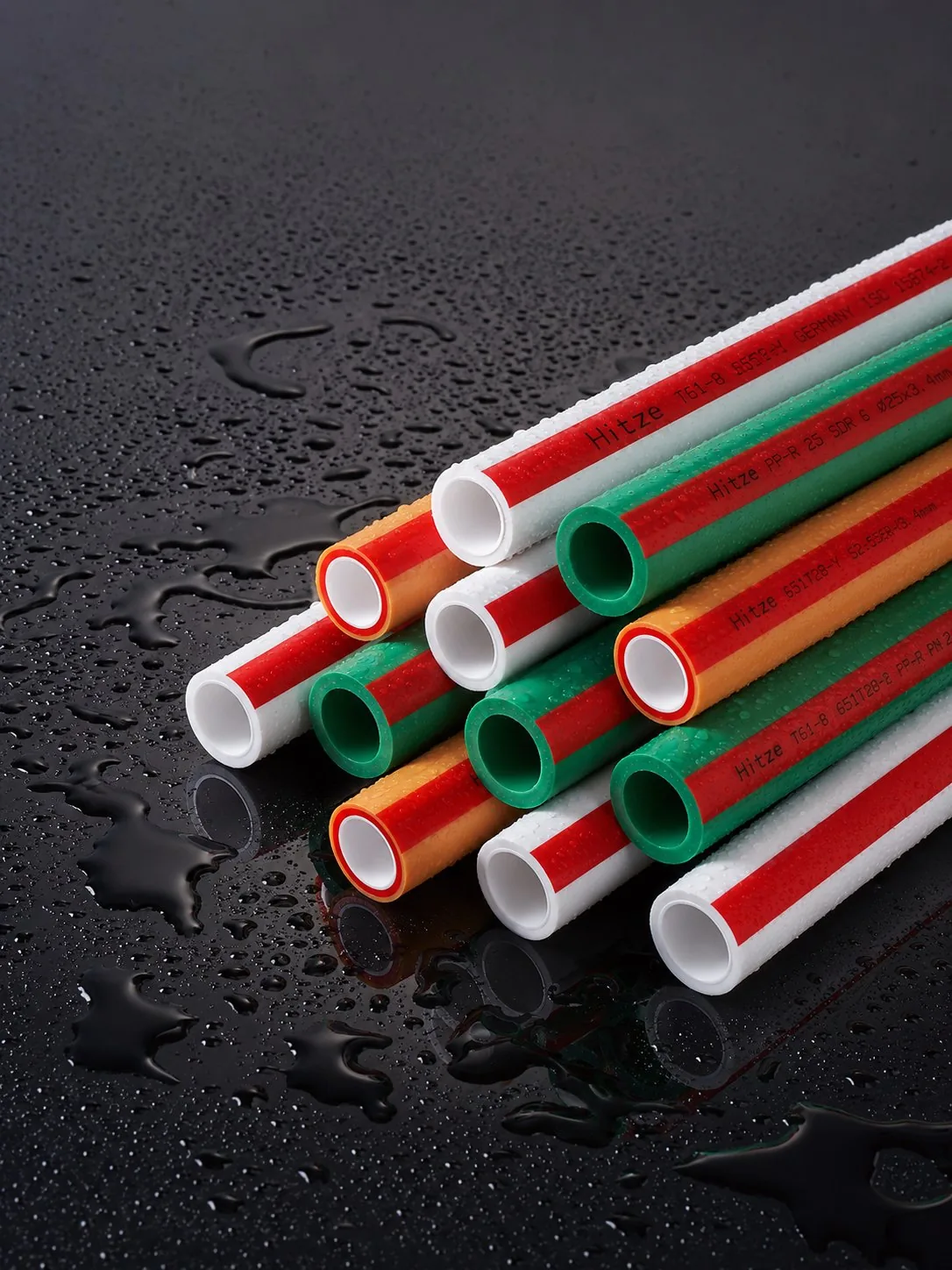
The material dependency is written into the dimension table too. In ISO 15874-2 Table 5, as replaced by Amendment 1:2018, the thin series S 8, S 6,3 and S 5 carry a footnote reading “Only valid for PP-RCT”. Amendment 1 also extended the size range up to 250 mm while leaving the 12 mm to 160 mm dimensions unchanged from the 2013 edition, so older wall tables for common sizes remain correct. A supplier offering a thin-wall PP-R pipe in one of those PP-RCT-only series is either mislabelling the material or working outside the dimension table — so put a caliper across the wall at several points around the circumference and compare the reading against the Table 5 minimum for the series claimed.
There is a hydraulic price for all this, and it is easy to underestimate. Take 32 mm pipe. At S 3,2 the minimum wall from Table 5 is 4,4 mm, leaving a 23,2 mm bore. At S 2,5 the wall is 5,4 mm and the bore falls to 21,2 mm. That is a 16,5 % loss of flow area from one step down the series ladder. Specify class 2 instead of class 1 on a 10 bar riser and you have not just bought a thicker pipe — you have shrunk the hydraulic capacity of a system that was probably sized on the thinner wall. Resize the run, or accept the pressure drop.
Reading the Class Off a Pipe and Off a Certificate
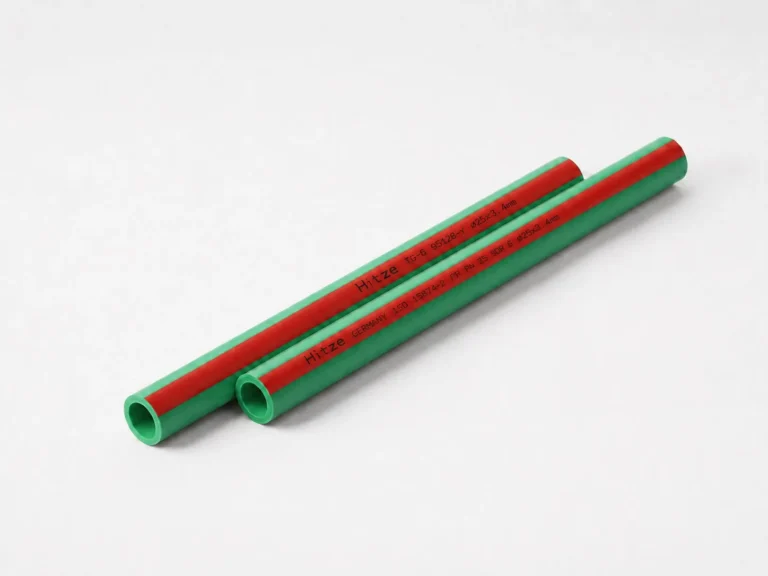
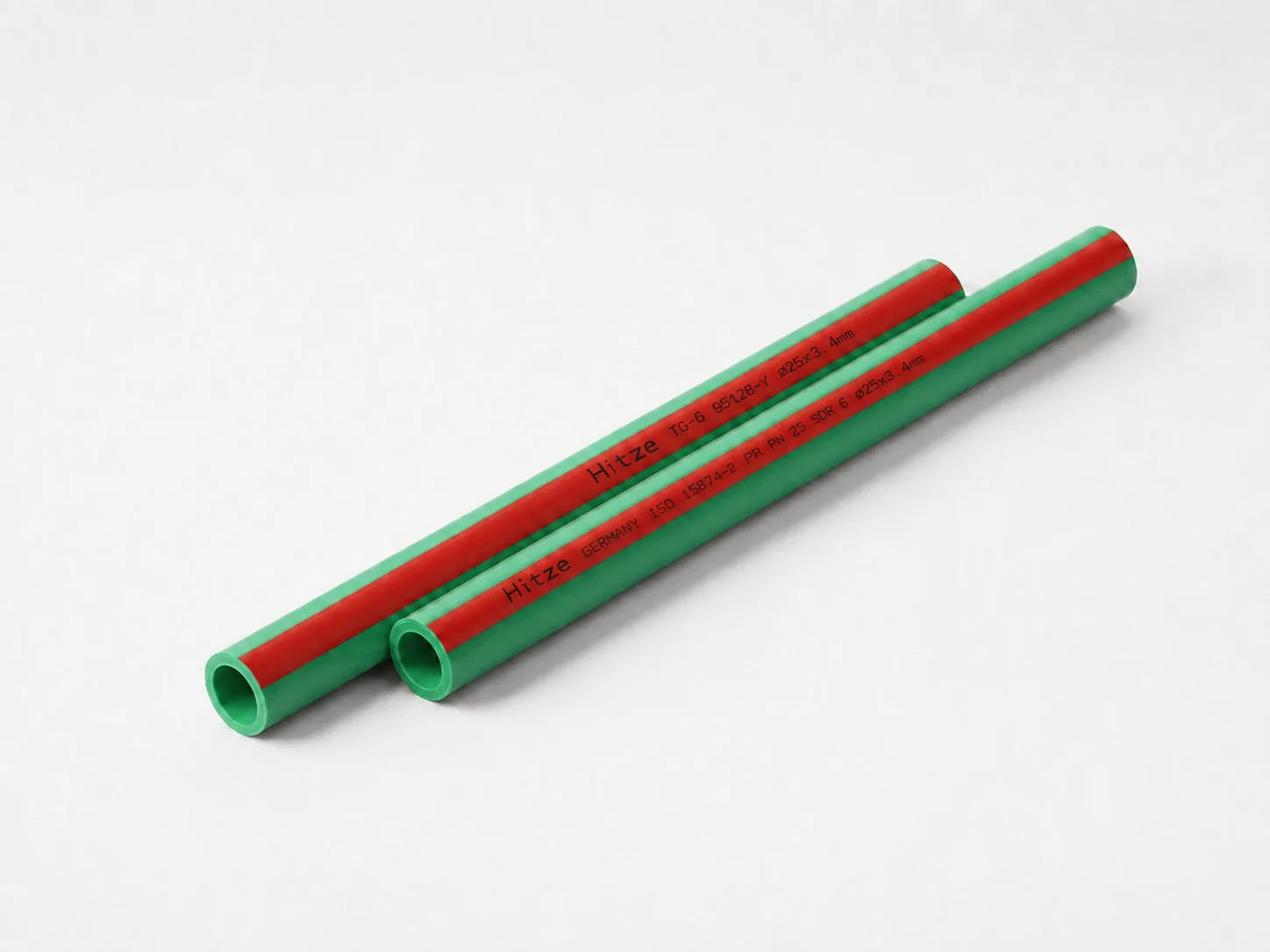
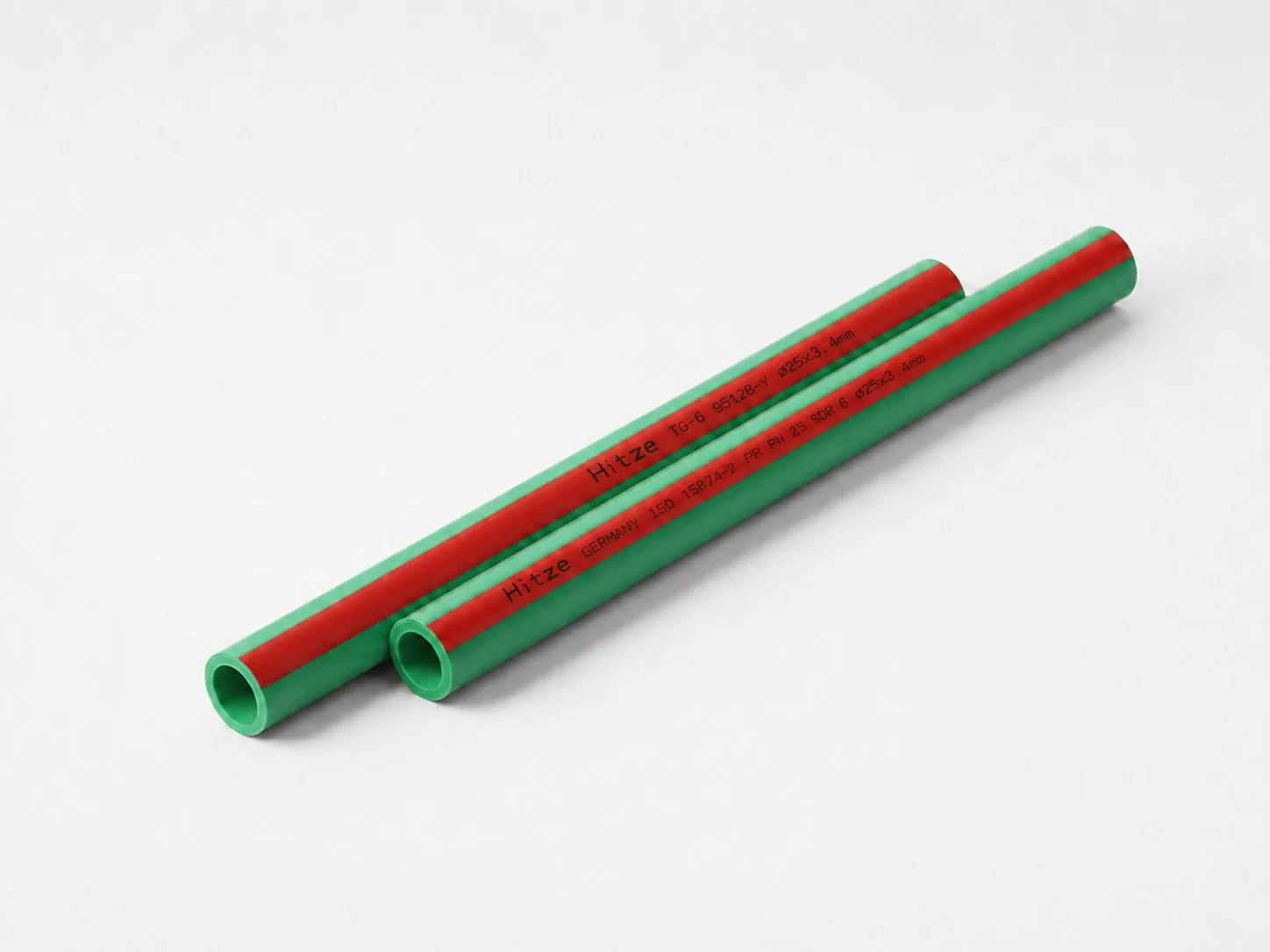
A pipe made to EN ISO 15874 must carry its intended application in the print line, and the required marking content is specified in ISO 15874-2 Table 14 — renumbered from Table 12 by Amendment 2:2022, which is a detail worth knowing if you are cross-referencing an older submittal against a current standard. The format pairs the class with the pressure it applies at. A published marking example for a PP-RCT pipe reads “Class 1/10bar, 2/10bar, 4/10bar, 5/8bar”: one pipe carrying four verdicts, with class 5 explicitly de-rated to 8 bar exactly as the Scalc,max table predicts.
That is the honest way to mark a pipe, and it is also the fastest field test of a supplier’s engineering. A print line that says only “PN20” with no class statement is not meeting the marking requirement. A print line claiming “Class 5/10 bar” on plain PP-R is claiming something the material cannot do. And a real print line usually carries both conventions side by side — one published example runs “EN15874 PPR-80 DN 40×6.7 PN20 A CLASS 1/10 bar S-2.5”, showing the PN label and the class statement coexisting on the same pipe with the wall series spelled out.
What to check on the certificate itself
A class claim is only worth the scope of the document behind it, and certificate scope is where most compliance packs fall apart. Take a published SKZ certificate as the worked example. Mark A 804 covers “Pipes made of polypropylene PP-R” under trade names FORMÜL PP-R Rohr and AQUAPA, against a named SKZ test specification, for one named production site, issued at Würzburg on 31 May 2023 — with a date of expiry of 12 February 2025. That certificate has lapsed. Anyone presenting it today as current compliance evidence is presenting an expired document, and the only reason you would catch it is by reading the expiry field rather than the letterhead.
So work through the fields in this order when a certificate lands in your inbox:
- Covered product and trade name: does it name the exact pipe you are buying, or a sibling product? A PP-R certificate does not cover a PP-RCT or fibre-composite variant.
- Production site: certificates name a plant. Pipe extruded elsewhere is outside scope even under the same brand.
- Standard and edition: against which part and which year, and does it reflect the current amendments?
- Expiry date: check it against today’s date, not against the issue date.
- Accreditation reference: the SKZ example states that its certification body is accredited by DAkkS to DIN EN ISO/IEC 17065:2013 under number D-ZE-19033-01 — a traceable identifier you can verify with the accreditation body.
- Classes actually listed: a certificate may cover fewer classes than the marketing does.
On editions: the currently adopted British and European texts are BS EN ISO 15874-1:2013+A1:2022 and BS EN ISO 15874-2:2013+A2:2022, the pipes part published on 30 April 2024. Amendment 2:2022 added a genuine new requirement — impact resistance as a new subclause 7.2, tested at 0 °C with a maximum of 10 % failures, by the Charpy method for DN ≤ 25 mm and the round-the-clock method for DN ≥ 32 mm. A pre-2022 certificate simply will not have tested that. ISO also has revisions of both parts open as approved work items, so expect the reference numbers to move; verify the current edition with the standards body or your certification consultant before you write it into a specification. If you need the wider documentation picture, our notes on what SKZ actually tests on pipe explain the German testing route in detail.
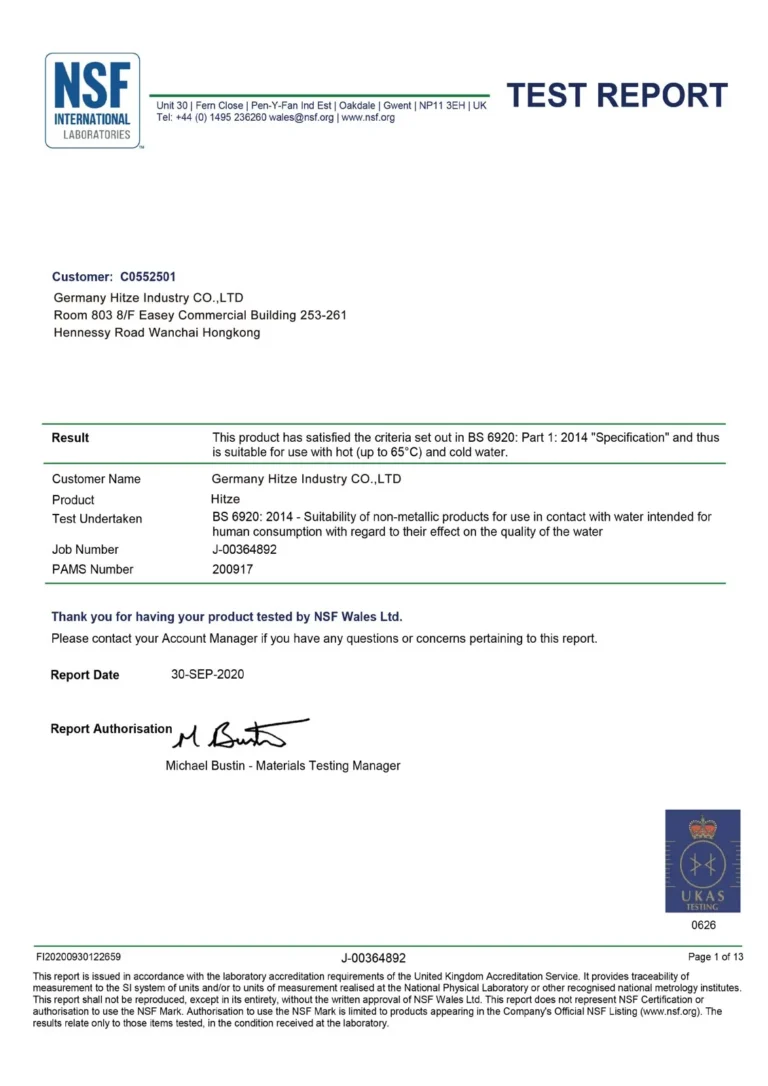
Applying that same field list to ourselves is the only fair way to write this section. GERMANY Hitze INDUSTRY CO., LTD holds SKZ testing in Germany on PP-R pressure pipe and PP-R fittings, a DVGW type examination for PP-R drinking-water pipe, WRAS material approval covering potable contact in the UK, and an NSF laboratory BS 6920 report covering hot (≤65 °C) and cold drinking-water contact; plant operations run under an ISO 45001 occupational health and safety management system. Deliberately absent from that sentence are the certificate numbers and the expiry dates, and the reason is the field list above rather than modesty. Those documents are issued per product range, per production site and per market, they carry their own validity windows, and a number transcribed into an article is a number that keeps asserting currency long after the certificate behind it has moved on — which is precisely the failure mode the lapsed example earlier in this section illustrates. So we quote them per enquiry, against the specific construction and size you intend to order, with the issue and expiry fields visible on the document itself. Ask us for exactly what you would demand of any other supplier: the current certificate for your range, not a reference to one.
Where Hitze PP-R Models Land in the Class System
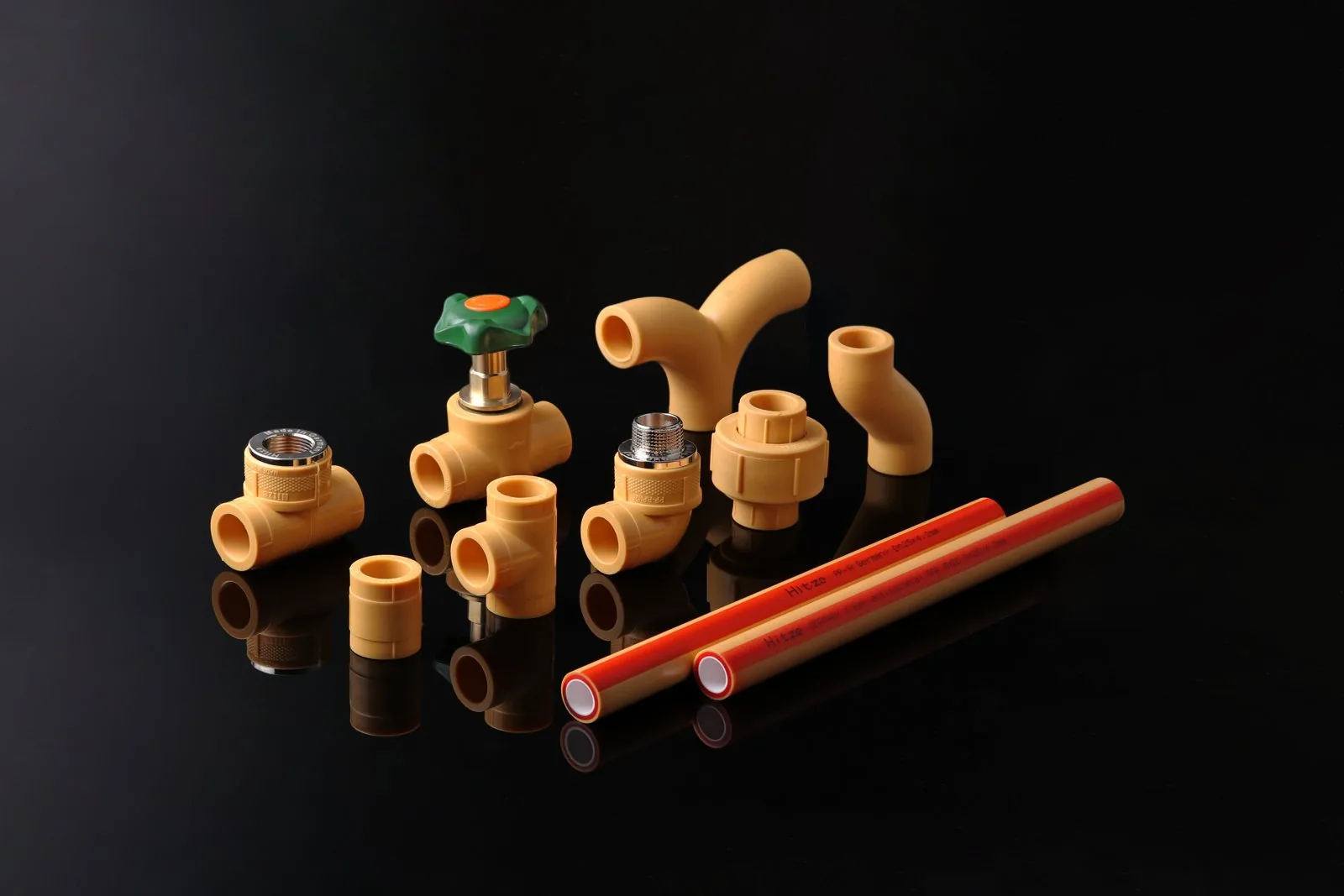
The Hitze PP-R range runs OD 20–110 mm, covering DN15–90, and the copper-lined PPR-CU range runs OD 20–63 mm. Those diameters sit inside the ISO 15874-2 dimension table comfortably, so the class question for any given order is never about size — it is about which wall series is being supplied at that size, and which classes the current certificate lists. Four constructions carry different implications here: standard ceramic-core PP-R, fibre-glass-reinforced PPR-FB-PPR for reduced thermal expansion, PPR-AL-PPR aluminium composite, and PPR-CU copper-lined pipe aimed at hygiene-sensitive potable water. A class listing earned by one construction does not transfer to another.
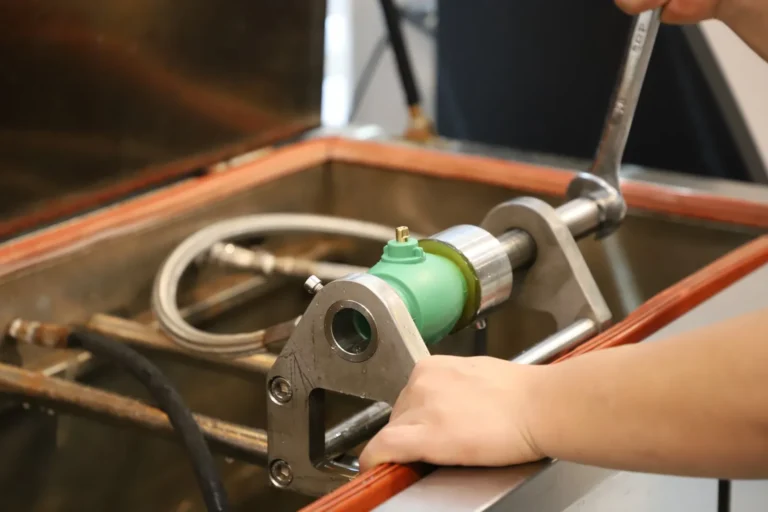
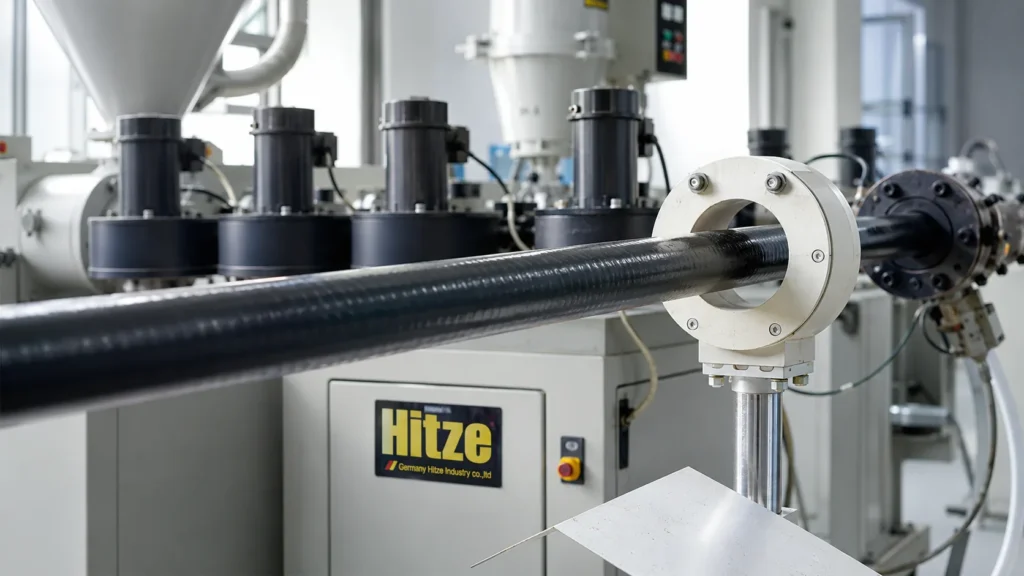
Hitze documents its PP-R range against DIN 8077/8078, EN ISO 15874 and SKZ testing. The company was founded in 1974 and produces across a 120,000 m² base, exporting to 118+ countries — which matters here for one narrow reason rather than as a credential in itself: a certificate names a production site, so a buyer checking scope needs to know that the site named on the document is the site their order is extruded at. Ask which plant, and match it to the certificate. Before pipe leaves that base, incoming PP-R resin is verified ahead of extrusion, because the class system collapses if the material under the print line is not the material behind the regression curve; outside diameter, wall thickness at multiple points and ovality are checked against the S-series tables, since a wall that is nominally S 2,5 but runs thin at one point of the circumference no longer meets its Scalc; and pipes, fittings and fused joint samples go to in-house hydrostatic benches for pressure verification against the DIN and EN ISO thresholds — Part 5 thinking applied on the production floor. What we deliberately do not publish here is a Hitze wall-thickness or class-by-class table, because the current technical data sheet governs those values and a table transcribed into an article ages badly against a live TDS. The same discipline applies to certificates: before any credential is named against a model, the covered model, current validity and certificate number get confirmed rather than assumed. For a buyer, the practical route is to ask for the current TDS and the current certificate for the exact construction and size you intend to order, then check them against the field list above. The PP-R pipe and fittings range is the starting point for that request, and because everything joins by socket heat fusion into a homogeneous joint with no O-ring inside it, the pipe and fitting need to be specified as one system rather than two purchases.
One distinction to keep clean, because it causes real confusion in tender documents. Hitze offers a 50-year product warranty, confirmed as a commercial term. The 50 years in EN ISO 15874 is a design-life calculation basis — an engineering assumption inside a stress computation. They are different objects that happen to share a number, and a specification that treats a warranty as proof of a class rating, or vice versa, is conflating a contract with a calculation.
A Worked Selection You Can Reuse
Take an illustrative case: a mid-rise residential block with a domestic hot water riser at 70 °C flow, a system design pressure of 10 bar, and a separate under-floor heating circuit off the same plant room. Two circuits, two classes, one order — and this is where most specifications go wrong, by picking a single pipe for both.
The hot water riser at 70 °C is class 2. At 10 bar the PP-R Scalc,max is 2,1, so the series must be S 2, which is SDR 5. On 32 mm that means a 6,5 mm wall and a bore of 19,0 mm — the heaviest wall in the table, and a noticeably restricted bore. The under-floor circuit is class 4, where the PP-R allowance at 10 bar is 3,3 and S 3,2 (SDR 7,4) is sufficient: 4,4 mm wall on 32 mm, 23,2 mm bore. Same material, same pressure, two different walls, because the duty cycles are different.
Now change one input. If the client later adds high-temperature radiators, that circuit becomes class 5, and at 10 bar plain PP-R has no answer at all. The options are to reduce the design pressure of that circuit to 8 bar, where PP-R at S 2 works, or move that circuit to PP-RCT, which reaches class 5 at 10 bar on S 2,5. Notice what you cannot do: keep the same PP-R pipe and simply relabel the application. The sequence to reuse is short — name the class from the duty, take the design pressure from the system, read the allowance, pick the series at or below it, then confirm the certificate lists that class for that construction. The temperature rating of PP-R in hot-water service is worth checking against your own flow temperatures before you settle on a class.
When the Class Framework Is the Right Lens
This framework is not universally the right tool, and pretending otherwise wastes a buyer’s time. It is built for pressurised hot and cold water inside buildings, under design pressures up to 10 bar, with TD, Tmax and Tmal at or below the class 5 values. Push past those numbers and ISO 10508 states plainly that it does not apply — so steam, process fluids, or a solar-thermal loop that can stagnate above the class 5 malfunction temperature are outside its remit, and need a different assessment rather than a stretched class claim.
| The class system is the right lens for | Not the right lens for |
|---|---|
| Domestic hot and cold water inside buildings, up to 10 bar design pressure | Steam, compressed air or process chemicals |
| Under-floor heating and radiator circuits with known flow temperatures | Solar-thermal loops that can stagnate above the class 5 malfunction temperature |
| EU, UK and MENA specifications written to EN ISO or DIN references | North American jobs specified to ASTM F2389-24a, which uses its own rating framework |
| Distributors deciding which wall series to stock for a market’s dominant duty | Buried mains or drainage, which sit under different standards entirely |
The North American row deserves a note, because buyers spanning both markets get caught by it. The parallel standard there is ASTM F2389, currently F2389-24a, published in July 2024. As the American Society of Plumbing Engineers reported, that revision added definitions of “design stress” and “design coefficient” and applied them in a new Section 5.6.1, and it moved oxidative-stability classification onto Classes 0, 1, 3 and 5. So a pipe can be fully compliant to EN ISO 15874 class 2 and still need separate evidence for a US or Canadian job. Where local approvals are involved, confirm the requirement with the certification body or authority having jurisdiction rather than reasoning across from the European class — our certifications and compliance overview sets out which credential families apply to which market.
Conclusion
Service class is the unit EN ISO 15874 actually works in, and it is a 50-year duty cycle rather than a temperature limit. Once the class and the design pressure are fixed, the allowed wall series follows arithmetically, and the surprises — no class 5 for plain PP-R at 10 bar, thin series reserved for PP-RCT, a 16,5 % bore penalty for one step down the ladder — stop being surprises and become predictable consequences of the profile.
If you are writing a specification or a purchase order, the practical next step is to name the class and pressure for each circuit rather than a PN number, then ask any supplier for the current data sheet and the current certificate for that exact construction and size. If you would like the class scope for a specific Hitze construction confirmed against its current documents, that is a reasonable thing to ask before you order.
About this guide. Written by the Hitze technical team. Hitze is a German brand supplying PP-R and multilayer piping systems engineered to German DIN standards through ODM manufacturing, for wholesalers, importer-distributors, private-label brands and MEP contractors. Standard-side figures on this page are taken from ISO 10508:2006, ISO 15874-1:2013, ISO 15874-2:2013 with Amendments 1:2018 and 2:2022, and the OJEU-published European Assessment Document; product-side figures are limited to what Hitze has confirmed in writing. Published 25 July 2026.
Frequently Asked Questions
Is EN ISO 15874 the same standard as ISO 15874?
Effectively yes — EN ISO 15874 is the European adoption of the ISO text, and national bodies then publish it again with their own prefix, such as BS EN ISO 15874 or DIN EN ISO 15874. The technical content is the ISO content.
Does EN ISO 15874 cover fittings and valves as well as pipe?
Part 3 covers fittings and Part 5 covers fitness for purpose of the assembled system. Pipe alone is Part 2, so a certificate naming only Part 2 says nothing about the fittings fused to it.
Can one PP-R pipe be certified for several classes at once?
Yes, and good pipe usually is. The marking states each class with the pressure it applies at, which is why a print line can read “Class 1/10bar, 2/10bar, 4/10bar, 5/8bar” — four verdicts, different pressures.
What happens if a heating system runs hotter than its class allows?
You spend design life faster than the 50-year profile assumes. Overheating is not an instant failure but a withdrawal from a fixed budget, and the malfunction allowance is only 100 hours across the whole 50 years.
Does a thicker wall always mean a better pipe?
No. A heavier series buys duty margin and costs flow area — stepping 32 mm pipe from S 3,2 to S 2,5 removes 16,5 % of the bore. Over-specifying the wall can under-deliver the hydraulics.