PPR pipe is pressure pipe made from polypropylene random copolymer, normally written PP-R in technical standards. It is widely specified for hot-water, cold-water and heating services inside buildings because compatible pipe and fittings can be heat fused into a material-to-material joint. But “PPR” is a material name, not a complete specification. A safe, buildable system still requires the correct application class, pressure and temperature basis, dimensions, approvals, fittings, fusion procedure, supports, testing and project documentation.
By the Hitze Technical Content Team · Technical review and update: 21 July 2026
Key takeaways
- PP-R identifies the polymer family; the pipe print, technical data and approvals identify the usable product.
- Heat fusion can create a strong, leak-tight joint, but only with compatible components and the approved manufacturer procedure.
- Do not select from a PN label, color or maximum-temperature headline alone. Use the project duty and the complete pressure-temperature/service-class declaration.
- Potable-water suitability is model- and market-specific. Ask for current listings covering the exact pipe and fittings proposed.
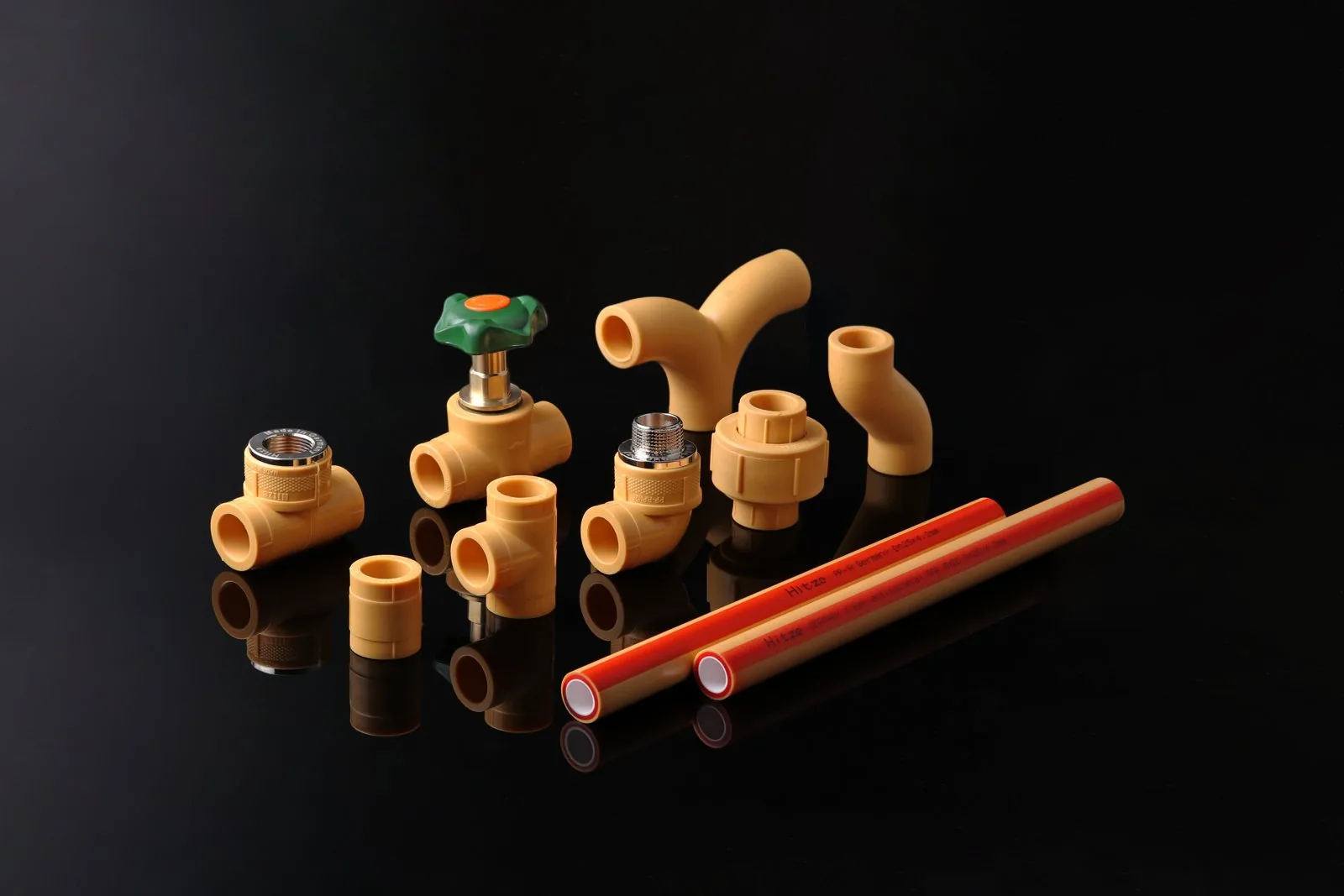
- Hitze’s listed PP-R range is OD 20–110 mm (DN15–90) in ceramic-core, fiberglass and aluminium-composite constructions. Those are supplier-specific catalog facts, not universal PPR values.
- Hitze offers no MOQ and a 50-year product warranty subject to the applicable terms. The warranty is contractual; it is not an engineering design-life calculation.
1. What does PPR pipe mean?
PPR is the trade abbreviation for polypropylene random copolymer; PP-R is the formal material notation commonly used in piping standards. The “random” part describes the copolymer structure. For a project team, the useful distinction is simpler: PP-R names a material family, while the printed product data tells you whether a particular pipe belongs in the proposed service.
This prevents one of the most expensive specification shortcuts: treating all green pipe as equivalent. Color is a brand or product identifier, not a rating. Two PP-R pipes can differ in wall series, reinforcement, declared service conditions, approvals and compatible fusion procedure. Even when their outside diameters match, that does not automatically make them an approved mixed system.
| Term on a drawing or pipe | What it tells you | What it does not tell you |
|---|---|---|
| PP-R / PPR | Polymer family | Full pressure-temperature duty or approvals |
| OD × wall | Physical pipe dimensions | Fitting approval or hydraulic result by itself |
| SDR / S | Dimension relationship | A universal service rating independent of material and temperature |
| PN or class | A declared rating within a defined basis | Permission to ignore the full service-class table |
2. How does a PPR pipe system work?
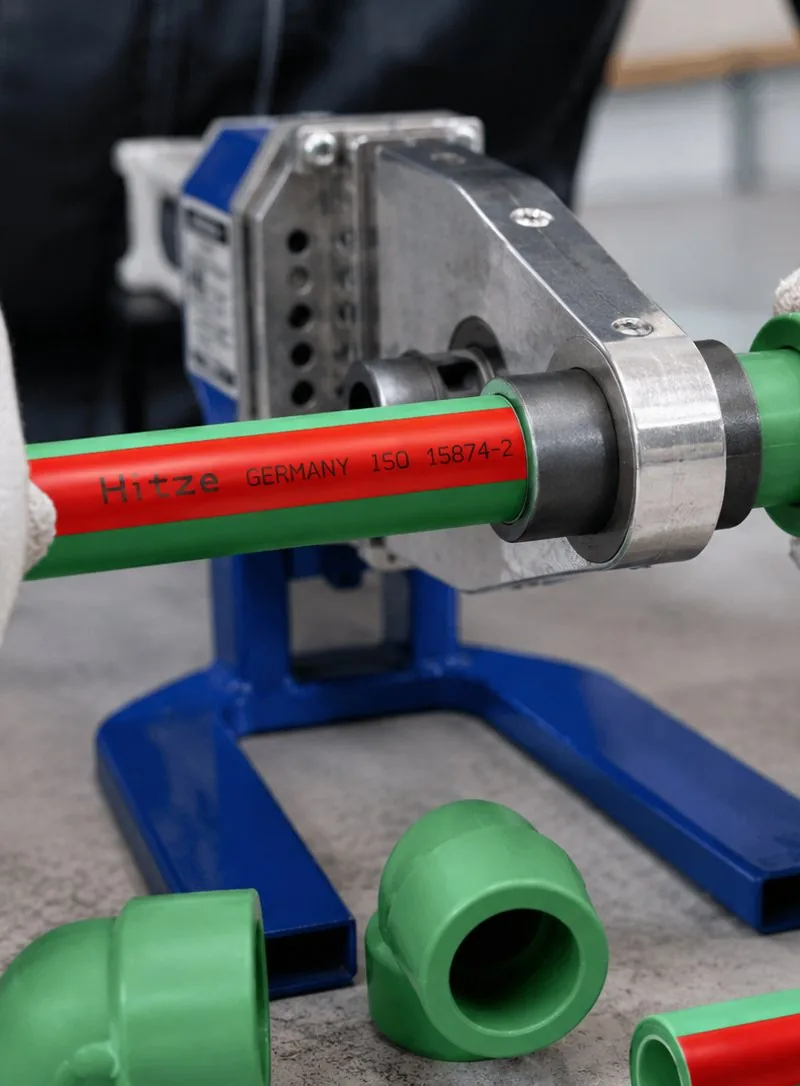
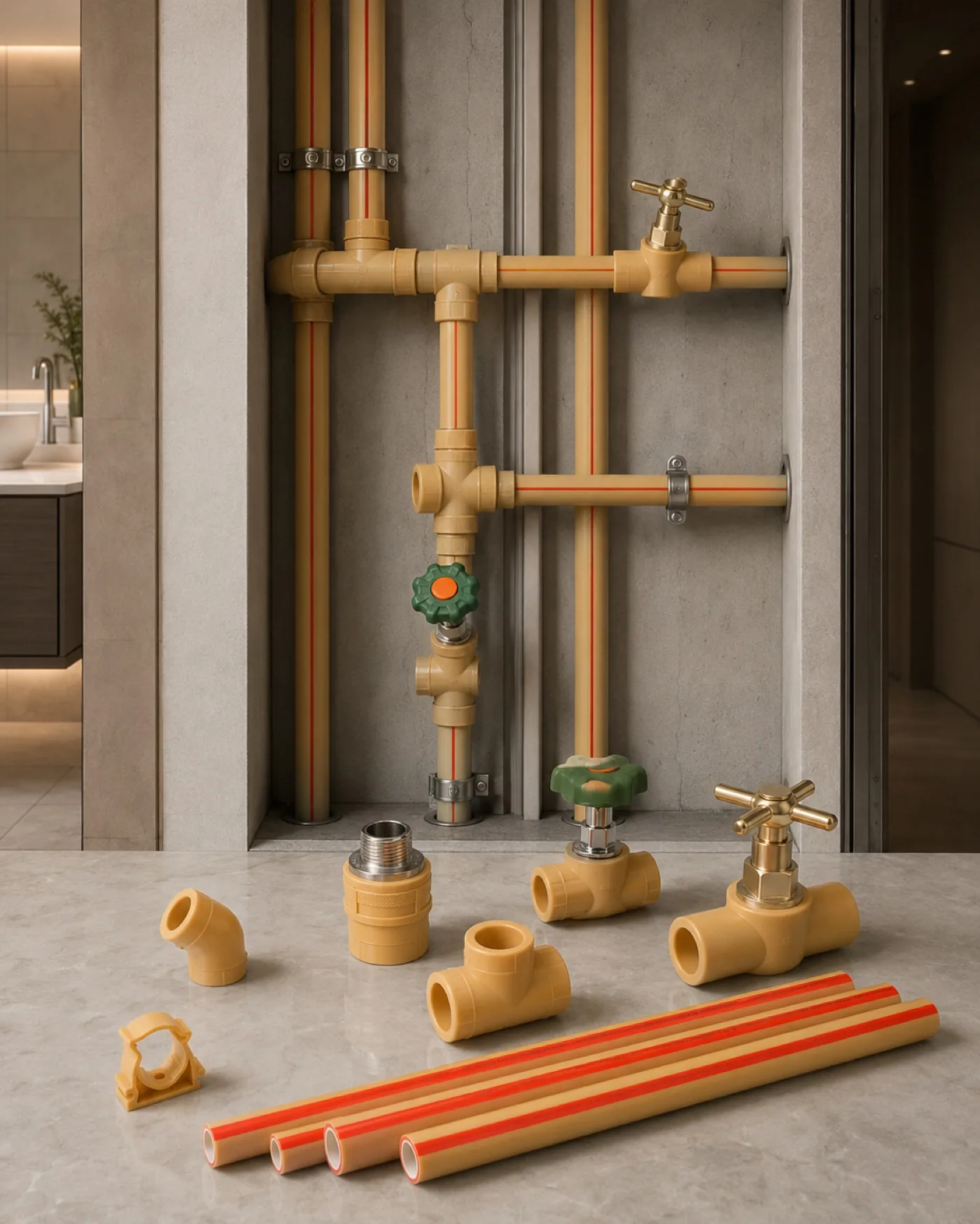
A complete PPR system includes straight pipe, sockets, elbows, tees, reducers, unions, valves, threaded transitions, supports and the joining tools. Socket heat fusion is the defining connection method for common building-service sizes. A controlled heater warms the pipe exterior and fitting socket; the parts are removed, inserted to the approved depth without twisting, aligned and held while the joint cools.
The result is not a glue line. Compatible molten surfaces fuse into a material-to-material interface. The Plastics Pipe Institute’s PP-R overview describes heat fusion as the joining basis for compatible PP-R and PP-RCT components. Compatibility remains the key word: a matching color or nominal size is not evidence that two brands share an approved joint procedure.
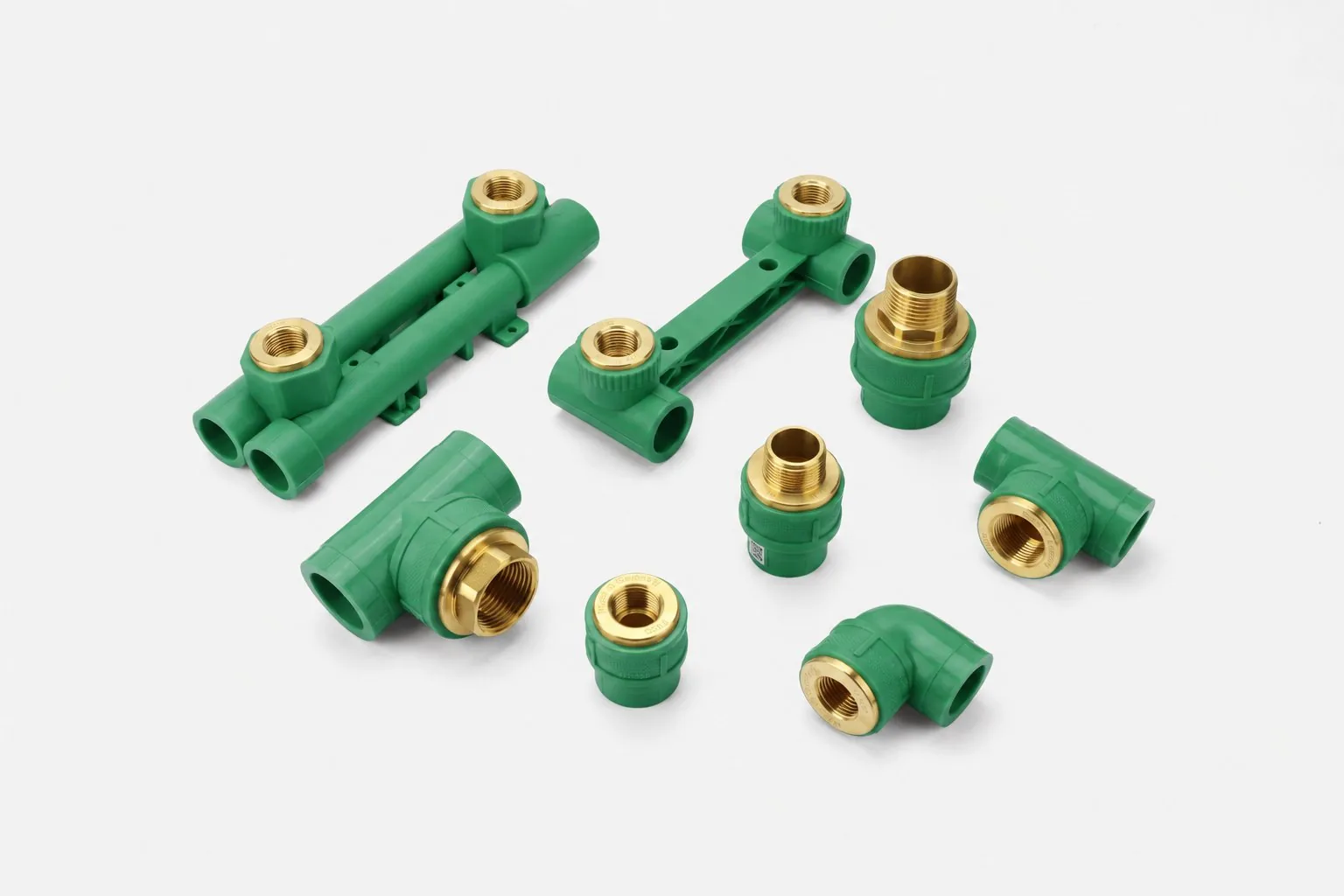
Threaded brass inserts and equipment connections behave differently from fused polymer joints. They introduce thread sealing, torque and restraint requirements. Valves introduce access and maintenance needs. Supports and anchors control movement. That is why the system should be specified as a coordinated set rather than a pipe description followed by “fittings to suit.”
3. Which PPR standards and approvals matter?
ISO 15874-1:2013, confirmed current by ISO in 2023, covers polypropylene piping systems for hot and cold water installations within buildings and for heating systems under defined application classes, design pressures and temperatures. It works with the other parts of the ISO 15874 series for pipe, fittings and system fitness.
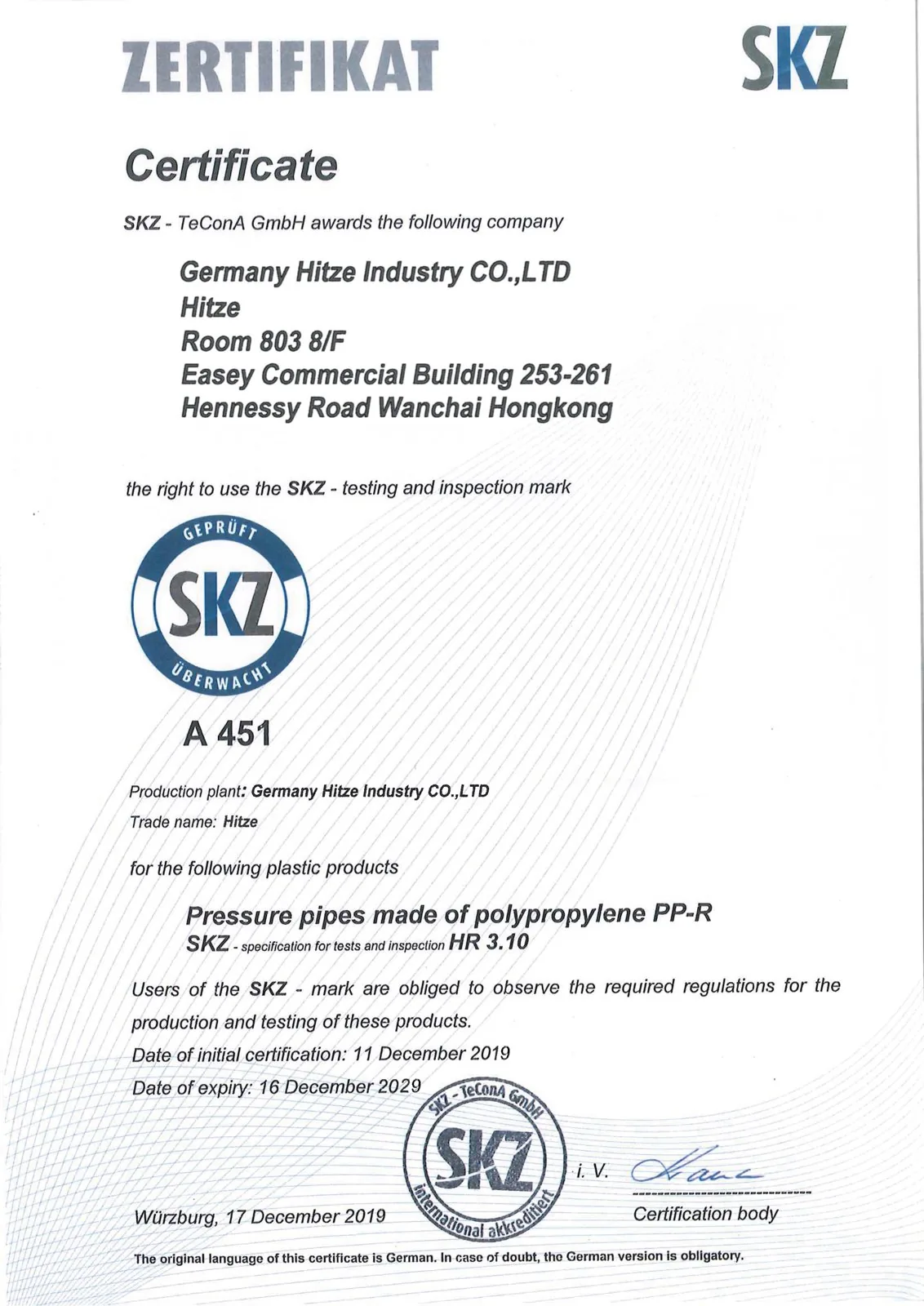
Hitze’s supplied catalog lists DIN 8077, DIN 8078, EN ISO 15874 and SKZ testing for its PP-R range. Treat that as a document request, not permission to paste the same logo onto every SKU. The submittal should connect each proposed item number to the current certificate, report or declaration that actually covers it.
| Document family | Selection role | Buyer check |
|---|---|---|
| ISO 15874 series | PP system scope, dimensions, performance and fitness framework | Part, edition, declared class and exact product |
| DIN 8077 / 8078 | Catalog-listed PP pipe reference families | Current TDS and test evidence |
| ASTM F3722-24 | Heat-fusion joining practice for PP pipe and fittings | Manufacturer approval and project applicability |
| Potable-water listing | Health-effects / market-access evidence | Listing body, current status, model and contact temperature |
4. Where is PPR pipe used?
Within the ISO 15874 scope, the main applications are hot and cold water installations inside buildings and heating systems. In practice, that can include risers, branches and equipment connections in apartments, hotels, schools, offices, hospitals and mixed-use projects—provided the proposed system is approved for the exact duty and jurisdiction.
| Application | Confirm before selection | Typical failure in the specification |
|---|---|---|
| Cold potable water | Potable listing, pressure, water chemistry and local code | Assuming the polymer name equals approval |
| Domestic hot water | Full temperature history, pressure and application class | Selecting from a room-temperature PN label |
| Heating water | System temperature, pressure, oxygen-control strategy and equipment interfaces | Ignoring system-specific requirements |
| Non-building or process service | Chemical compatibility, code, temperature cycle and dedicated approval | Extending a building-water claim to another fluid |
5. What PPR pipe constructions are available?
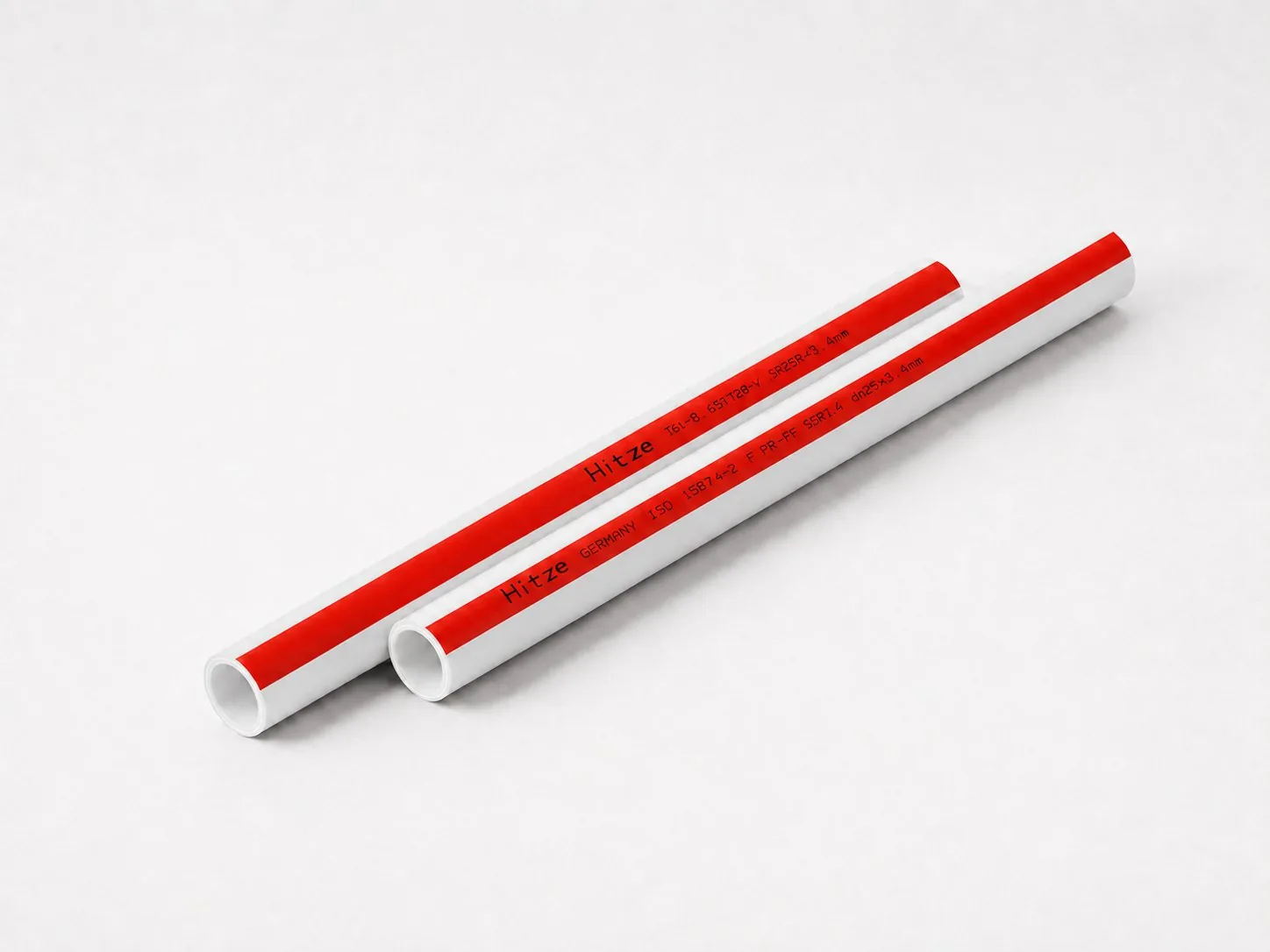
“PPR pipe” can describe solid-wall and reinforced constructions. Reinforcement changes handling and thermal-movement behavior, but it does not remove the need for project-specific design. The following values are Hitze catalog data, not market-wide ratings.
| Hitze construction | Catalog OD | Listed Class 1 / Class 2 entry | Selection focus |
|---|---|---|---|
| Ceramic-core PP-R | 20–110 mm | 10 / 8 bar | Confirm exact model, wall and declared service data |
| PPR-FB-PPR fiberglass | 20–110 mm | 10 / 8 bar | Reduced thermal expansion positioning; verify movement design |
| PPR-AL-PPR aluminium composite | 20–110 mm | 6 / 4 bar | Preparation, fittings and lower listed class entries |
The catalog wall-thickness span across the stated range is 3.4–18.3 mm. That overall span is not a selection table: the correct wall belongs to one construction, size and declared duty. Request the current TDS before turning these family-level values into a bill of materials.
6. How do PPR sizes, SDR, S series and PN relate?
PPR pipe is commonly scheduled by outside diameter and wall thickness. Hitze’s main catalog range pairs OD 20–110 mm with listed DN15–90. DN and OD are not interchangeable, so a procurement schedule should state which dimension system it uses. A DN-only line can create mismatches at valves, transitions and equipment connections.
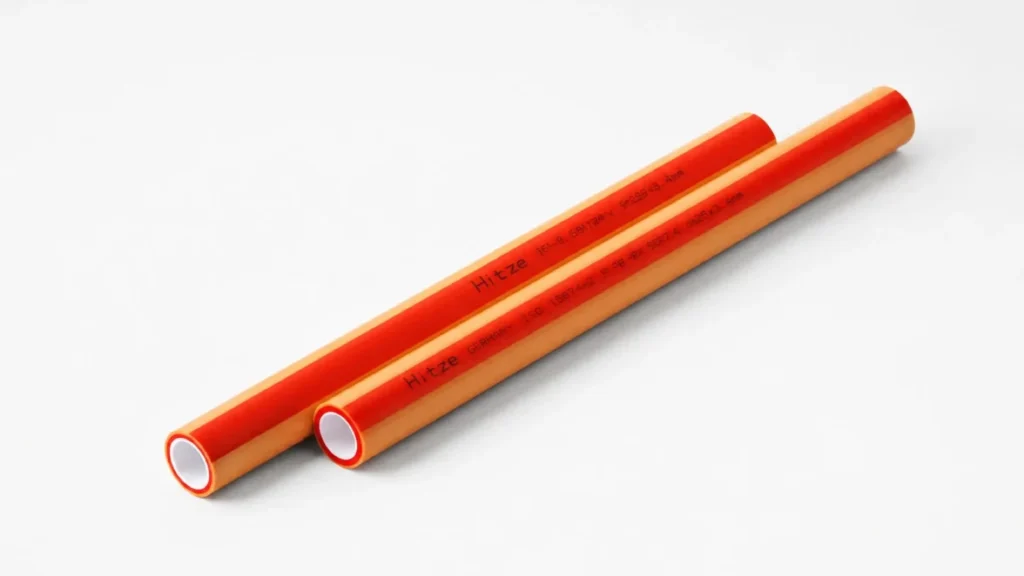
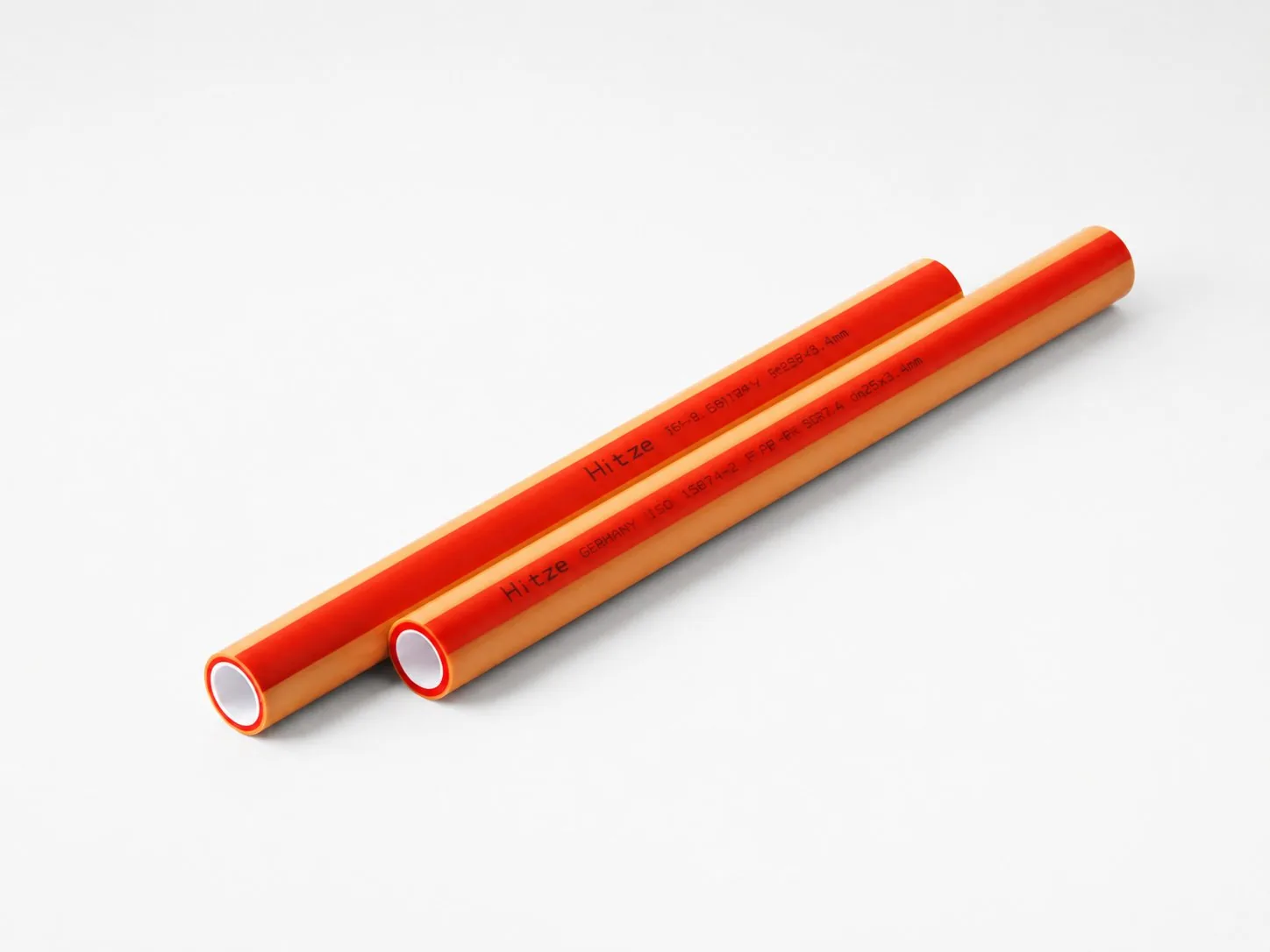
Use the continuous pipe print as an incoming-inspection record. The approved sample should show enough information to reconcile manufacturer/brand, material or construction, outside diameter and wall/series, referenced standard, production or batch traceability and any declared class marking with the purchase order. Photograph the print beside the packing label before pipe is distributed across the site. If the delivered line omits a field used in the approved submittal, quarantine the affected bundle until the supplier explains how it will be traced.
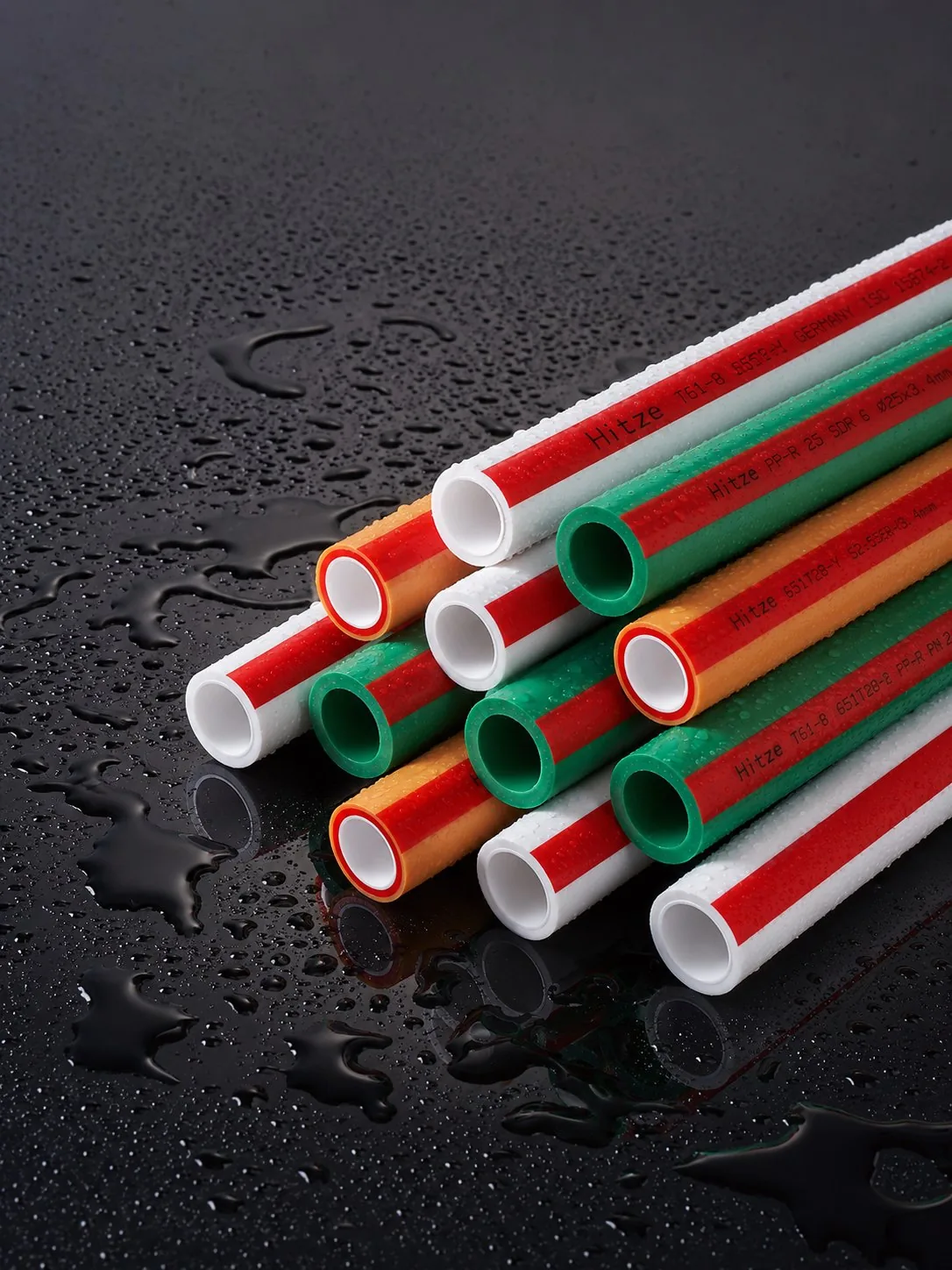
SDR expresses the ratio between outside diameter and wall thickness; S series is a related dimension-series notation. For the same outside diameter and material family, a lower SDR normally means a thicker wall and smaller bore. That changes pressure capacity, internal flow area, weight and cost. PN is a nominal pressure designation within stated reference conditions—not a promise that the same pressure applies through every elevated-temperature service cycle.
7. How should temperature and pressure be selected?
Plastic pressure capability changes with temperature and time. Ask not “What is the maximum temperature of PPR?” but “Does this exact pipe construction meet the project’s full pressure-temperature history under the applicable service-class framework?” The designer needs normal operating conditions, duration at temperature, foreseeable abnormal events, design pressure and the manufacturer’s declared data.
A PN label is particularly easy to misuse. It may be useful for product identification, but it cannot replace the application-class table. The Hitze catalog’s 10/8 bar and 6/4 bar class entries are tied to listed constructions; they must not be converted into a universal rule for every PP-R pipe or every temperature.
What to check in sequence: first identify the fluid and application; then the design temperature profile; then design pressure and transients; then the applicable class/standard; finally select the construction, wall series and fittings from the current manufacturer table. If the TDS does not resolve the duty, request a written selection instead of interpolating from marketing headlines.
8. Is PPR safe for drinking water?
The material name alone is not a potable-water approval. A drinking-water project should verify the exact product, fittings and relevant contact conditions against the destination market’s current requirements. In North America, NSF/ANSI/CAN 61 establishes health-effects criteria for contaminants and impurities imparted by drinking-water components. NSF explicitly notes that it does not establish general performance, taste and odor, or microbial-growth-support requirements.
NSF/ANSI 14 addresses physical, performance, health-effects, quality-assurance, marking and recordkeeping requirements for plastic piping components. These standards demonstrate why “food grade,” “non-toxic” or a generic logo is not enough: the submittal needs a current listing for the specific model and intended contact temperature.
Hitze’s broader documentation references NSF, DVGW and WRAS credential families across applicable ranges, but the certificate numbers and covered SKUs remain a first-party data debt. Until a current model-level document is attached, describe the approval as “available for verification” rather than assuming every product is covered.
9. When is PPR the best fit—and when is it not?
- The project wants a fused, coordinated hot/cold water or heating system.
- Approved components and trained installers are available.
- The design can accommodate thermal movement and supports.
- Current market approvals cover the proposed models.
- Concealed joints make controlled fusion and testing valuable.
- The fluid or temperature duty falls outside published data.
- UV exposure, fire strategy or environmental conditions remain unresolved.
- The jurisdiction requires an approval the product cannot document.
- The workforce lacks approved tools and fusion training.
- A different material better matches equipment, repair or access constraints.
PPR’s strongest case is system-level consistency: compatible pipe, fittings and joining under one documented basis. Its weakest case is a substitute decision made on unit price or color while the project still has unresolved approvals, movement, fire-stopping or workmanship controls. A material can be technically capable yet still be the wrong operational choice for a particular site.
10. How does PPR compare with PVC, CPVC, PEX and copper?
No material wins every project. The useful comparison is not a list of universal pros and cons; it is a comparison of joint method, temperature duty, movement, approvals, installation skills and service access under the actual project.
| Material | Common joint logic | Selection strength | Critical check |
|---|---|---|---|
| PPR | Heat fusion | Coordinated fused system | Fusion control and pressure-temperature basis |
| PVC | Often solvent cement | Cold-water and other approved duties | Temperature/application limits |
| CPVC | Often solvent cement | Hot/cold services where approved | Chemical compatibility and joining practice |
| PEX | Mechanical/expansion system fittings | Flexible routing | Fitting system, supports and local approval |
| Copper | Solder, braze or press system | Established metallic system options | Water chemistry, joining and installed cost |
Shortlist two systems only after the duty and code filters are passed. Then compare installed labor, tools, supports, transitions, commissioning, repair strategy, documentation and supply continuity—not pipe price alone.
11. A seven-step PPR selection workflow
- Define the application. Potable cold water, domestic hot water, heating or another service each creates a different approval and duty path.
- Write the design conditions. Record pressure, normal and abnormal temperatures, fluid, operating cycle and jurisdiction. Do not start with a catalog model.
- Apply the code and approval filter. Identify the required product standard, potable listing, fire-stopping approach and authority having jurisdiction.
- Choose construction and dimension series. Use the current TDS to select pipe construction, OD, wall/SDR/S series and fitting family.
- Check hydraulics and movement. Confirm bore, flow, pressure loss, expansion, anchor/support arrangement and equipment loads.
- Lock the joining system. Approve pipe, fittings, tools, fusion parameters, installer qualification and inspection method as one package.
- Close the evidence loop. Obtain model-level certificates, samples, submittal data, test plan, traceability fields and warranty terms before purchase.
The workflow is deliberately duty-first. Starting with “PN20 green PPR” encourages the team to reverse-engineer a justification around a product label. Starting with service conditions makes unsuitable products fail early, before samples, prices and schedules create momentum. Once that record is complete, the Hitze PP-R pipe and fittings range is the relevant system page for reviewing the matched pipe, fittings and tool family before a model-level selection is requested.
12. What controls make PPR fusion reliable?
ASTM F3722-24 states that suitable equipment, environmental controls and the manufacturer’s instructions matter because polymer characteristics influence fusion parameters. That is the right discipline even when another project standard governs: never copy a generic time/temperature chart into a Hitze procedure unless Hitze has approved it for the exact product.
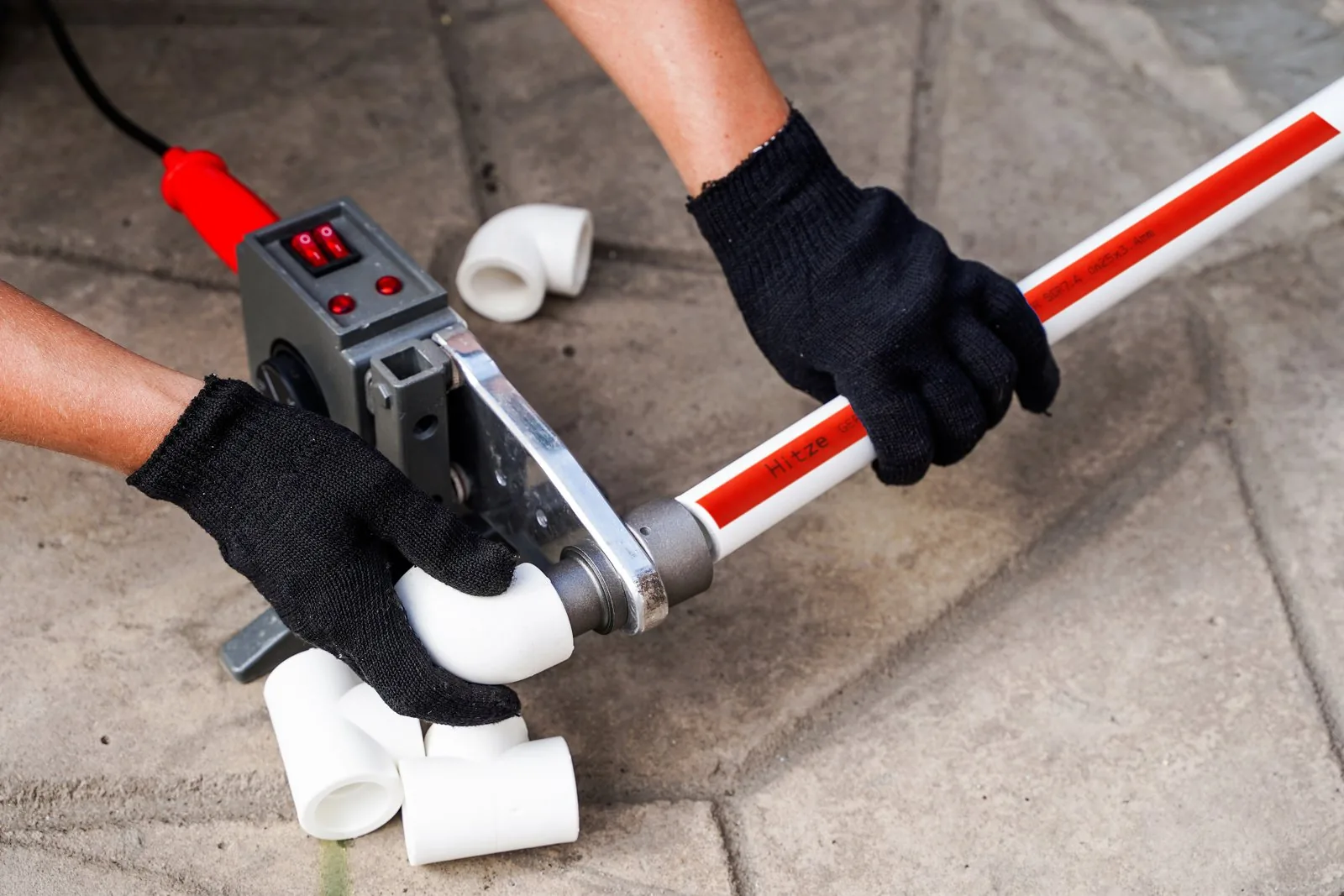
At minimum, the method statement should control incoming component identity, storage, cut squareness, cleanliness, depth marking, heater condition, approved parameter table, insertion without twisting, alignment, cooling, visual acceptance and rework. A joint should not be “corrected” after it begins cooling. If alignment or bead geometry is unacceptable, cut it out and replace it under the approved procedure.
Good supervision also protects the bore. Over-insertion can create an internal restriction even when the exterior looks neat; shallow insertion can reduce the bonded area. Use trial joints at the start of a shift or size change, then cut representative samples when the quality plan requires it. Record the tool, operator, pipe batch and location when traceability matters.
13. How should PPR systems be tested and commissioned?
Pressure testing confirms the installed network under a defined procedure; it does not rescue an incompatible design or prove every long-term condition. The project specification and manufacturer instructions should define the test medium, pressure, stabilization, duration, temperature, gauge range, segmentation, safety controls and acceptance criteria. Generic test numbers are risky because trapped air, plastic expansion and site temperature affect interpretation.
Before concealment, walk the route for joint appearance, support spacing, anchor locations, sleeves, fire stopping, valve access, transition restraint and protection from damage. Commissioning should also cover flushing, disinfection where required, labeling, record drawings and handover of certificates and warranty documents. Photograph concealed work with location references; a folder of unlabeled joint photos is not traceability.
14. What belongs in a PPR submittal and purchase order?
A strong submittal lets a reviewer trace every proposed item from duty to product to evidence. It should not be a stack of unrelated brochures. Ask for one indexed package that identifies the pipe construction, dimensional series, fittings, valves, tools, transitions and each approval.
| Package item | Required detail | Reject when |
|---|---|---|
| Technical data | OD, wall/series, construction, service declaration, standards | Only a family brochure is supplied |
| Compliance | Current certificate/listing, model coverage and validity | Logo without searchable evidence |
| Joining | Approved tools, parameters, preparation, cooling and inspection | Generic internet chart is used |
| Traceability | Print line, batch fields, packing list and sample retention | Delivered product cannot be tied to documents |
| Commercial terms | Included items, warranty scope, lead time, packaging and customization | Marketing headline replaces written terms |

15. Worked scenario: selecting PPR for a mixed-use building
This is an illustrative decision scenario, not a claimed Hitze project. A contractor is pricing a mixed-use building with cold potable-water branches, domestic hot-water distribution and a separate heating circuit. The initial schedule says only “PPR, PN20.” That description is not purchasable with confidence.
The team first separates the three duties. For potable branches, it lists the destination approval and exact contact conditions. For domestic hot water, it records the operating and abnormal temperature history plus design pressure. For heating, it checks the plant interface and any system-specific oxygen-control requirement. Only then does it screen the manufacturer’s construction and service-class tables.
The team chooses one approved pipe-and-fitting family for each duty, then checks OD, wall series and hydraulic bore. It maps riser expansion, anchors and supports; identifies threaded plant transitions; and requires access to valves. The method statement binds each product to the approved fusion table and tool. Trial joints are cut for bore and insertion review before production work.
Finally, the procurement file attaches model-level approval evidence, the indexed TDS, samples, batch-marking format, pressure-test procedure and written warranty terms. The important outcome is not that PPR “won.” It is that every selection now has an auditable reason, and the original PN20 shortcut no longer controls the design.
16. What does Hitze offer for a PPR project?
Hitze’s PP-R family includes pipe, heat-fusion fittings, brass-insert transitions, valves, fusion tools and pressure-test equipment. The listed main pipe range is OD 20–110 mm (DN15–90), with ceramic-core PP-R, fiberglass PPR-FB-PPR and PPR-AL-PPR aluminium-composite constructions. Final dimensions and duty selection must come from the current project TDS.
For wholesalers, contractors and importer-distributors, two commercial points matter. Hitze has no general MOQ, so sample and project quantities do not have to be inflated to meet a blanket order floor. Custom printing, packaging or private-label work may still have quote-specific production constraints; these should be stated before approval.
Hitze also offers a 50-year product warranty subject to the applicable product/system terms. This is a contractual promise, not a standards-based engineering calculation and not a universal claim that every installed PPR network lasts exactly 50 years. Ask for the covered products, matched-system requirements, exclusions, installation conditions and claim process in writing.
Check the complete Hitze PP-R system
For contractors, importers and distributors matching construction, fittings, tools and project documents. Review the range first; request model-level data for the final duty.
17. Conclusion and related PPR guides
This page gives the system map. Use the focused guides below when a project reaches a specific decision:
How to verify product and market approvals.
PPR vs PVC vs CPVC
Compare jointing, duty and project fit.
Hot-water temperature rating
Read the pressure-temperature basis correctly.
Sizes, SDR and PN
Build a dimensionally complete schedule.
Submittal checklist
Audit TDS, approvals and project records.
How to weld PPR pipe
Control the socket-fusion workflow.
Fusion machine guide
Choose and inspect welding equipment.
Bottom line: PPR becomes a strong specification only when the material, service duty, approvals, dimensions, fittings, fusion method and evidence agree. If any one of those remains generic, the project still has an unresolved decision—not a finished pipe specification.
18. Frequently asked questions
What is the full form of PPR pipe?
PPR commonly means polypropylene random copolymer. Technical standards normally use the notation PP-R. The name identifies the polymer family, not the complete application rating.
Can PPR pipe be used for hot and cold water?
Yes, appropriately specified PP-R systems fall within the ISO 15874 scope for hot and cold water installations inside buildings. The exact pipe must still match the service class, pressure, temperature, local code and approvals.
Is PPR pipe safe for drinking water?
It can be when the exact pipe and fitting system has the potable-water approval required in the destination market. Do not rely on material name, color or an unverified logo; check the current model-level listing.
Does PPR pipe use glue?
PPR systems commonly use heat fusion rather than solvent cement. The pipe and fitting surfaces are heated and joined under an approved procedure. Threaded transitions may use separate sealing methods.
What is the difference between PN and SDR?
SDR describes the relationship between outside diameter and wall thickness. PN is a nominal pressure designation under a defined basis. Neither should be used alone to select elevated-temperature service.
Can different PPR brands be fused together?
Do not assume so. Matching material color and dimensions do not prove system compatibility. Use components and procedures approved by the manufacturers and accepted by the project specification.
Does Hitze have a minimum order quantity?
Hitze has no general MOQ. Custom printing, packaging or private-label requirements can still introduce quote-specific constraints, so confirm them for the requested program.
Does the 50-year Hitze warranty mean a PPR system has a universal 50-year life?
No. Hitze’s 50-year product warranty is contractual and subject to its applicable terms. Engineering design life depends on the selected system, service conditions, design, installation and governing standard.