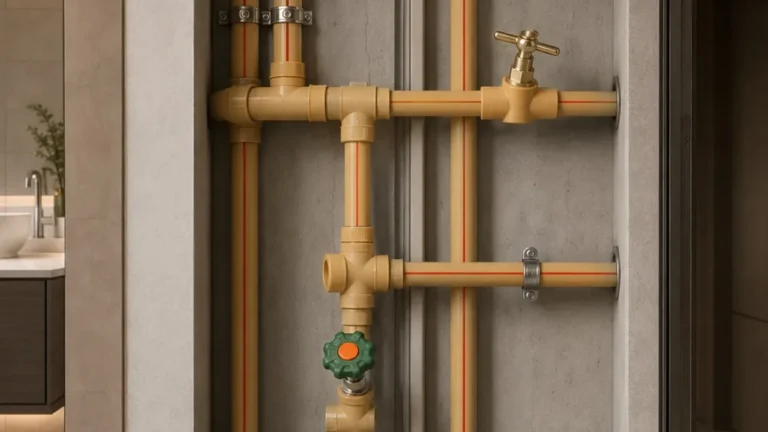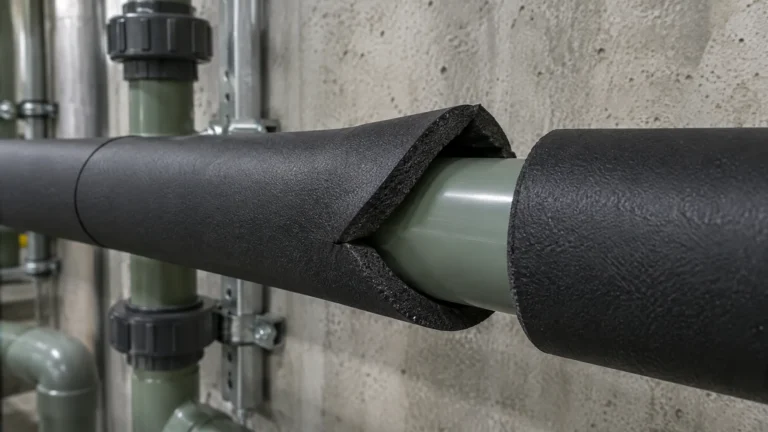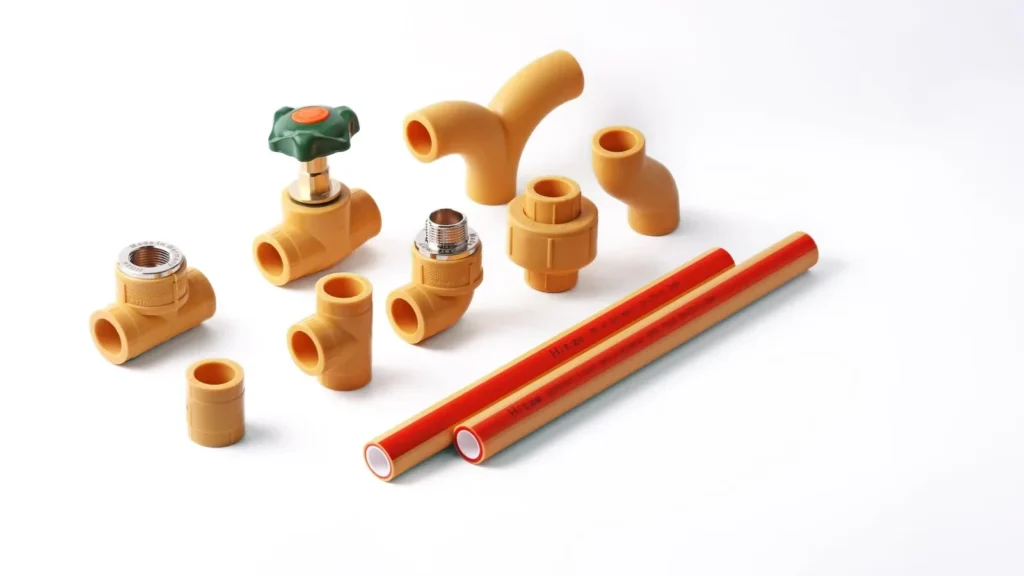
PPR can be suitable for drinking-water systems, but “PPR” on a pipe is not proof of potable-water safety. Verify third-party certification for the exact pipe, fitting, size and test temperature; confirm acceptance in the destination market; and install the matched system under controlled hygienic procedures.
By the Hitze Technical Content Team · Technical review: 21 July 2026
What the PPR name does—and does not—prove
PPR, also written PP-R, identifies polypropylene random copolymer. It tells a specifier the broad material family, not the complete formulation, manufacturing control, product geometry, permitted service temperature or regulatory status. Pigments, stabilizers, brass inserts, elastomers, valves and joining aids can all sit in the water path. That is why a material-level statement cannot qualify an entire installation.
ISO 15874-2 explicitly covers polypropylene pipes for hot and cold water installations, including systems carrying water intended for human consumption. This confirms that PP-R is a recognized material family for the application. It does not mean every item marketed as PPR conforms to ISO 15874 or satisfies a country’s drinking-water rules.
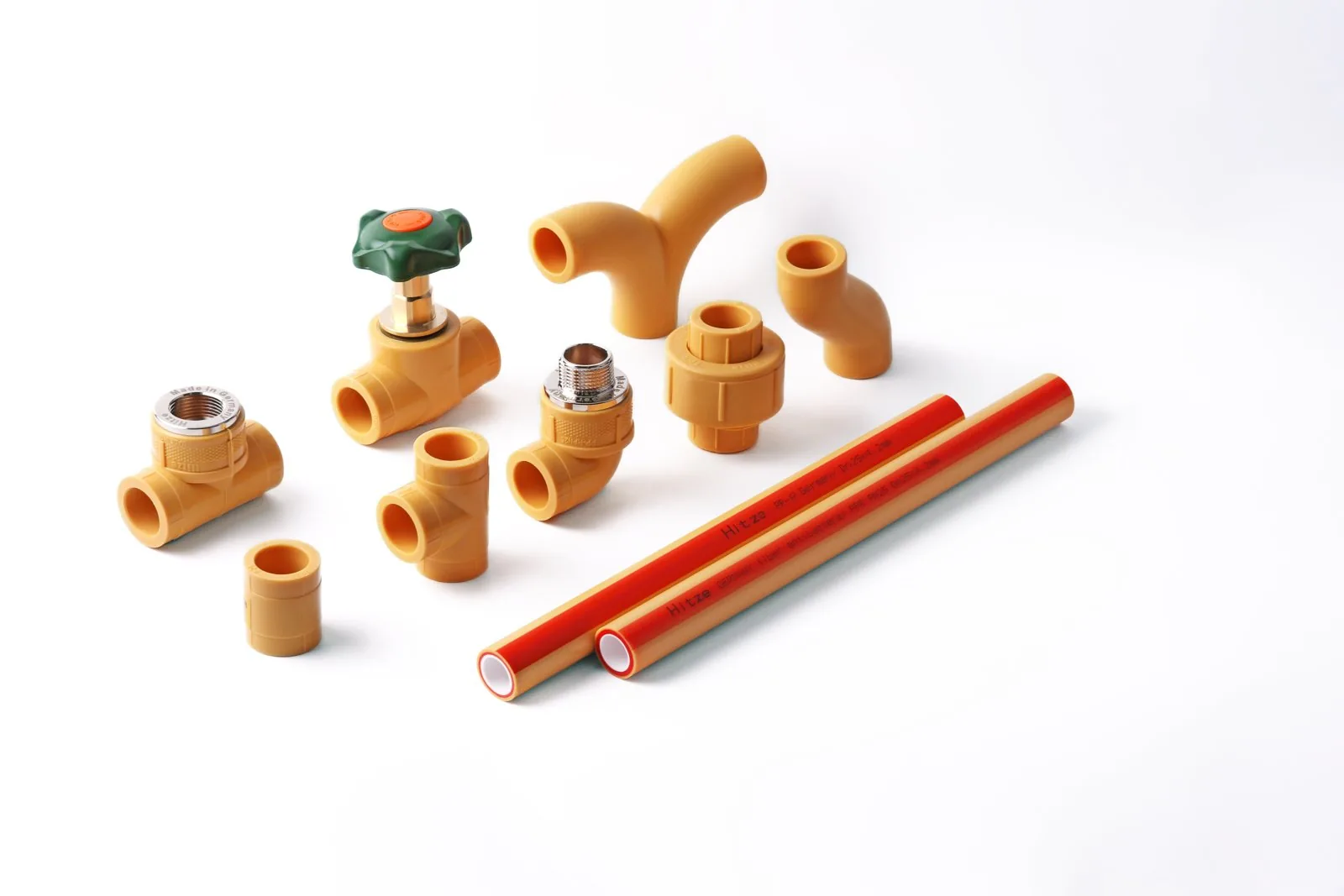
A more useful purchasing question is: Which independent listing covers this exact product code at my intended temperature, and can I verify it with the issuing body? That framing is stronger than asking for a generic “food-grade,” “non-toxic” or “European standard” declaration. The Hitze PPR pipe and fitting range is the relevant product scope to compare, while project acceptance still depends on the precise certificate and duty.
Which potable-water evidence matters
The following documents overlap, but they are not substitutes for one another. Market requirements also change, so the authority having jurisdiction and current registry should be checked before approval.
| Evidence | What it can show | What it does not prove alone | Buyer check |
|---|---|---|---|
| NSF/ANSI/CAN 61 | Minimum health-effects requirements for contaminants or impurities a product may impart to drinking water. | Hydraulic performance, taste/odor or support of microbial growth. | Confirm listing model, component, plant and test temperature. |
| NSF/ANSI 14 | Physical/performance, health-effects, quality-assurance, marking and recordkeeping requirements for plastic piping components. | Automatic acceptance for every local code, unlisted product or operating condition. | Match material, standard, size range, end use and plant in the public listing. |
| WRAS materials approval / BS 6920 evidence | Testing of non-metallic materials for their effect on water quality under the stated conditions. | Approval of every finished assembly, valve, fitting or installation. | Check material reference, contact use, temperature category, validity and product construction. |
| DVGW / national evidence | Third-party product or type evaluation against the stated German or national rules and scope. | Universal acceptance outside the issuing scheme or beyond the certificate scope. | Verify the certificate in the issuer’s directory and read its annex, not only the logo. |
Qualifying a PPR system for a potable-water project?
For importers, distributors and project teams comparing product scope, fittings and compliance evidence.
Hitze states no minimum order quantity and a 50-year product warranty. Confirm applicable warranty terms with the project quotation; a warranty is not a substitute for the standard’s 50-year design-life calculation.
NSF explains an especially important distinction: products certified under NSF/ANSI 14 for potable-water use must meet NSF/ANSI/CAN 61 material-safety requirements, while Standard 14 also covers performance and quality-control elements. A bare “NSF tested” statement is too vague. Ask whether the finished product is currently certified, to which standard, at which temperature and under which listing.
How to verify certificate scope
A genuine certificate can still be irrelevant to the shipment. The safest review starts with the public registry or the issuing body, then works backward to the packing list and pipe marking.
Begin at the issuer. Find the certificate or listing in the issuing body’s registry instead of relying only on a PDF sent by a sales contact. Our guide to verifying pipe certificates gives a registry-first workflow. Match the legal manufacturer and production location because a group logo or trading company may differ from the certified plant.
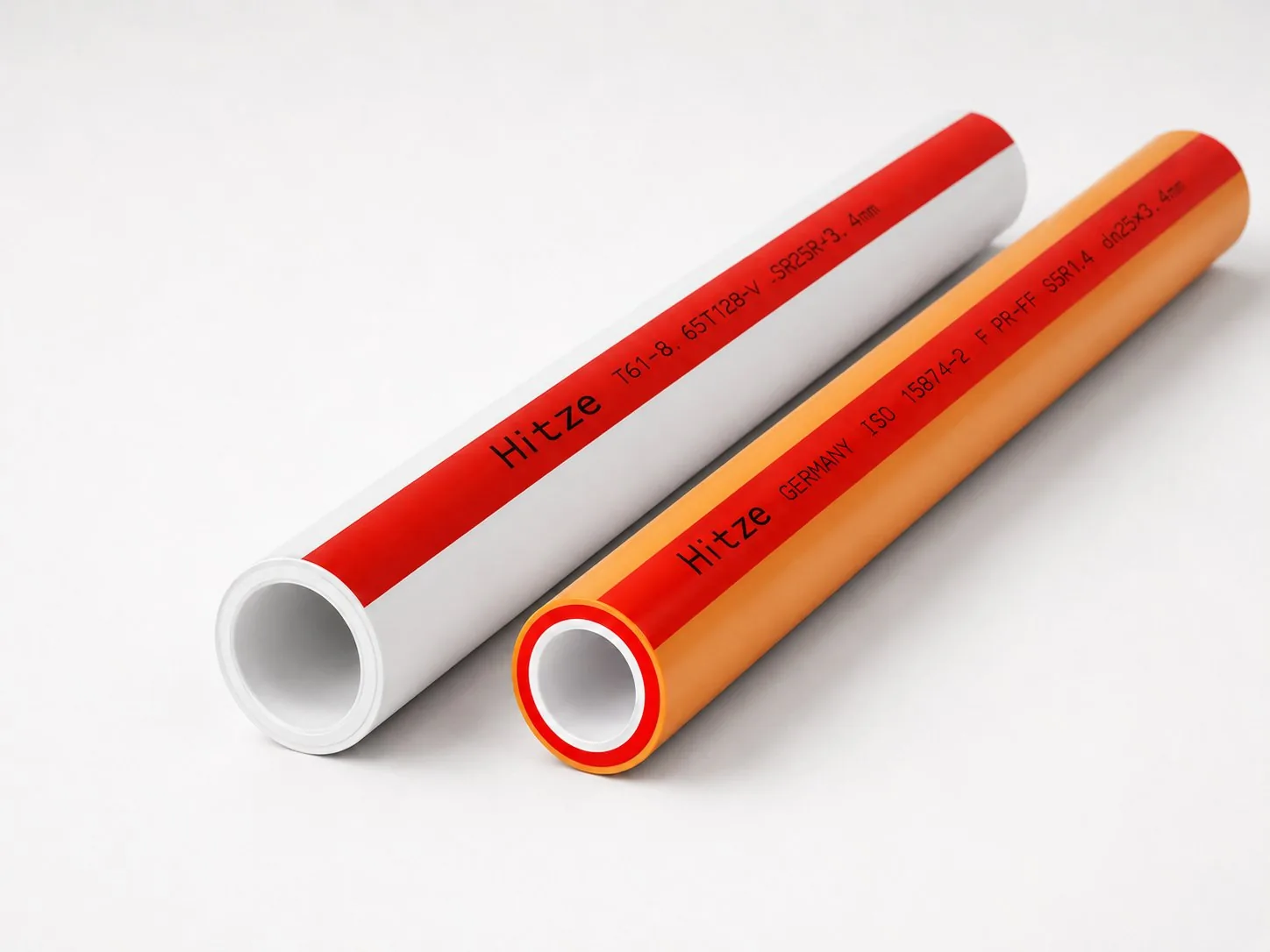
Match the product itself. PP-R, PP-RCT, solid-wall and composite constructions are not interchangeable unless the listing says so. Trace every water-contact component—pipe, fitting, brass insert, valve, seal and transition fitting—to evidence that actually names it.
Match the operating scope. A cold-water listing, a limited diameter range or one temperature category cannot be expanded by assumption. Finish by checking current validity, amendments, surveillance status and every condition in the certificate annex.
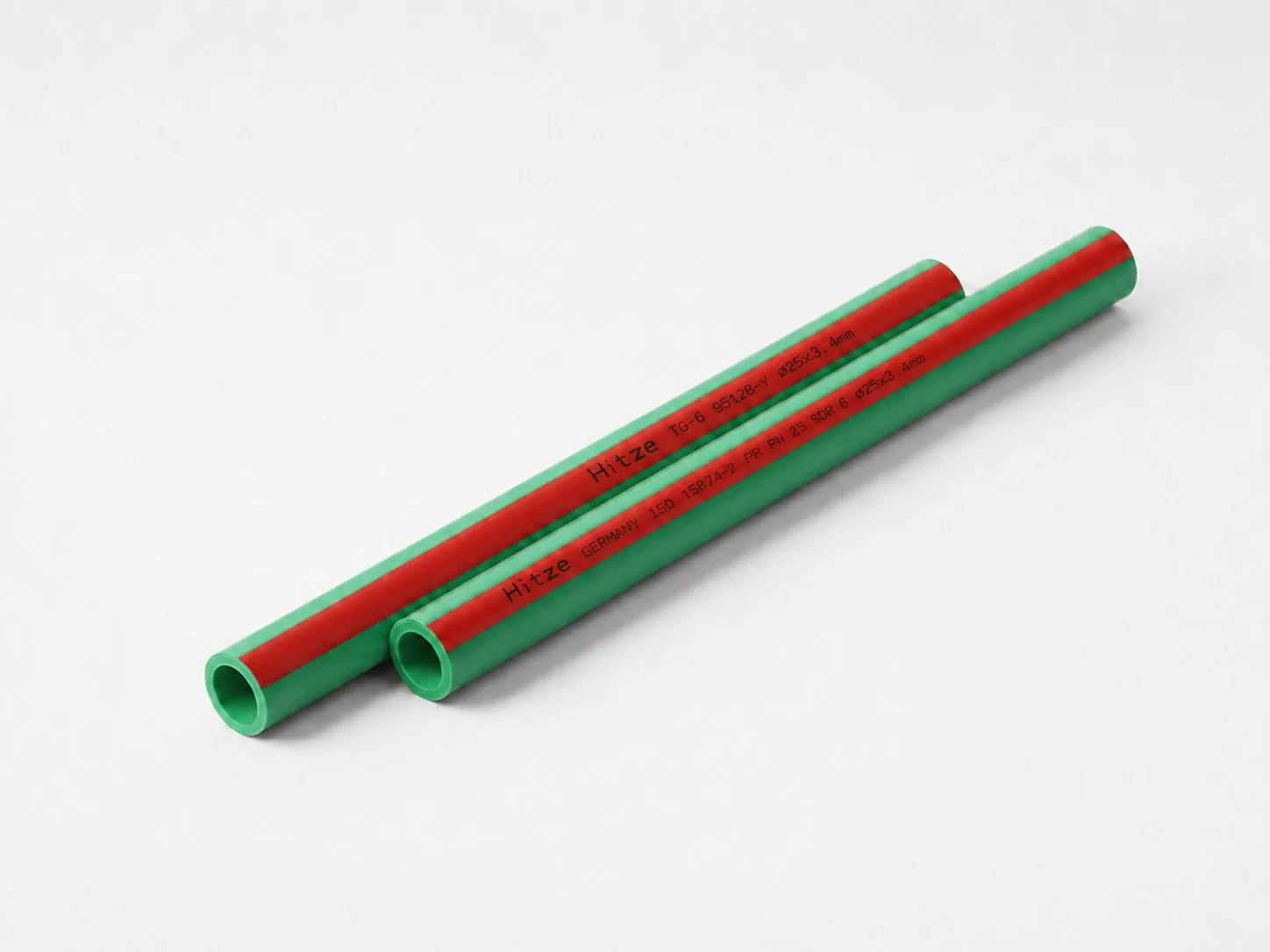
Hitze’s first-party compliance pack lists SKZ evidence for PP-R pressure pipes and fittings, DVGW type examination for PP-R drinking-water pipe, WRAS material approval and an NSF Laboratories BS 6920 test report. Those are relevant starting points, not a blanket statement for every SKU and country. The Hitze certifications and compliance hub should be paired with issuer verification and the exact project submittal.
Temperature and regional acceptance change the answer
Potable cold water and potable hot water are not automatically the same certification condition. NSF notes that listings can identify test temperatures such as 73°F, 140°F or 180°F. A buyer should inspect the listing temperature instead of inferring hot-water coverage from the presence of a mark.
Likewise, one market’s approval does not guarantee another market’s acceptance. US projects commonly reference NSF standards and plumbing-code listings. UK projects may ask for WRAS-related evidence and compliance with Water Fittings Regulations. German specifications may reference DVGW and national hygienic criteria. The WRAS, DVGW and KTW certification guide maps those roles in more detail. Each project’s authority having jurisdiction has the final say.
European requirements are also in transition. The European Commission’s drinking-water page states that EU-wide minimum hygiene requirements for materials and products contacting drinking water apply from 31 December 2026 to products used in new installations and repair or renovation work, including supply pipes and fittings. The associated European positive lists define authorised substances, compositions and constituents with conditions of use. As of July 2026, buyers planning deliveries after that date should check the transition path rather than relying solely on legacy national language.
Installation hygiene still matters
A certified pipe can be installed badly. Potable-water quality depends on keeping the system clean from warehouse to commissioning and on avoiding materials that are outside the approved water path.
Protect the water path before installation. Cap pipe ends, keep fittings bagged and isolate products from dirt, oil, chemicals and uncontrolled weathering. During fusion, use clean, correctly sized tools and the supplier’s temperature, insertion-depth and heating-time instructions. Overheating, contamination or excessive insertion can damage the joint or restrict the bore.
Control the complete system. Verify brass inserts, seals, valves, thread sealants and transitions separately because the pipe certificate does not automatically cover them. Size branches correctly, remove dead legs and commission circulation as designed; material approval cannot compensate for poor water-age control.
Close with hygienic commissioning. Follow local flushing and disinfection rules plus the manufacturer’s limits for chemical, concentration, temperature and contact time. Record those conditions so a later water-quality investigation can distinguish product scope from site handling.
Keep commissioning evidence with the handover file: delivery inspection, capped-storage records, fusion-tool checks, installer training, pressure-test results, flushing volumes, disinfectant concentration and final water-quality sampling where the project requires it. These records do not create certification, but they show that an approved product was handled and commissioned under a controlled process.
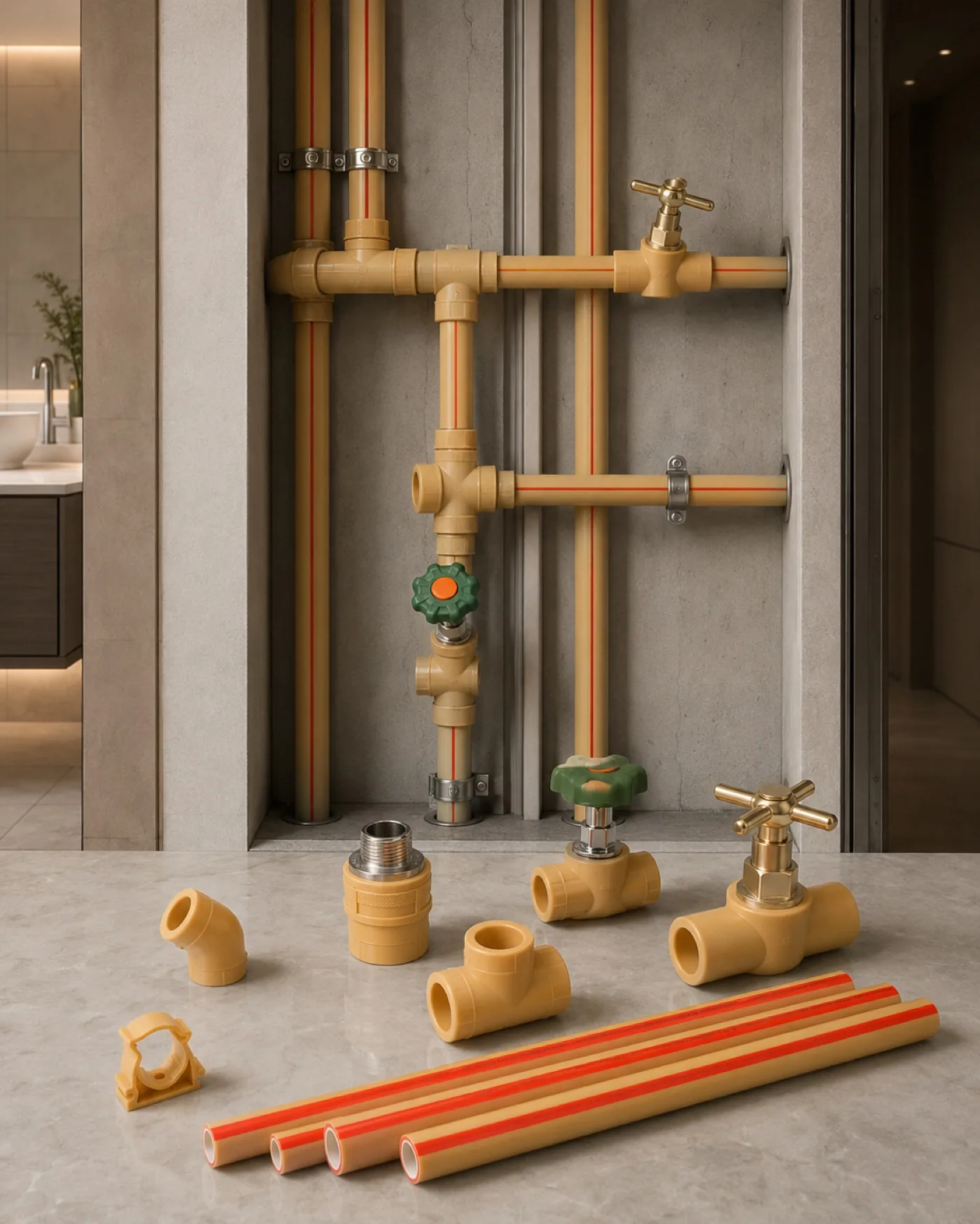
Socket fusion can create a homogeneous joint without an internal elastomer at the fused connection, but workmanship remains critical. Correctly fused cut sections show a continuous bonded wall; an overheated, misaligned or contaminated joint should not be accepted merely because it did not leak during a brief test.
Buyer’s document checklist
Before approving a PPR system for drinking water, request a coherent pack rather than isolated logos:
- product datasheet with material, construction, OD × wall, SDR or pipe series, intended use and operating limits;
- current third-party certificates or listings for pipe, fittings and water-contact accessories;
- issuer-directory links plus annexes showing models, sizes, temperatures and manufacturing sites;
- declaration of conformity to the applicable product standard and destination-market requirements;
- batch traceability and pipe-marking examples that match the proposed delivery lot;
- installation, fusion, storage, flushing and disinfection instructions;
- warranty terms identifying whether coverage requires a matched pipe-and-fitting system, approved tools or installer training.
The companion pipe-supplier certification-pack checklist can be used as a submittal index. For a technical comparison of PPR constructions and alternatives, see PP-R versus PPR-Cu antibacterial and multilayer systems.
Bottom line: potable suitability is product- and market-specific
PPR is a recognized material family for drinking-water systems, but the material name is not the approval. Accept a system only after the current issuer record matches the offered pipe, fittings, manufacturing location, sizes, temperature category and intended market. Keep hygienic storage, fusion and commissioning evidence with the final handover file.
Frequently asked questions
Is all PPR pipe safe for drinking water?
No. PPR is a material family, not a potable-water approval. Verify the exact pipe, fittings, sizes, manufacturing location and service temperature against current third-party listings and local requirements.
Does NSF 61 mean a PPR pipe is approved for potable water?
NSF/ANSI/CAN 61 addresses health effects from substances imparted to drinking water. Confirm that the finished product is actually listed at the intended temperature; the standard alone does not prove hydraulic performance or local code acceptance.
What is the difference between NSF 14 and NSF 61?
NSF/ANSI 14 covers plastic piping performance, quality assurance, marking and related requirements. NSF/ANSI/CAN 61 focuses on drinking-water health effects. Potable products certified under NSF 14 must also meet NSF 61 material-safety requirements.
Is WRAS approval the same as NSF certification?
No. WRAS materials approval and BS 6920 evidence address UK water-quality requirements under stated conditions; NSF standards serve different certification frameworks. Check the precise scope and the destination authority’s acceptance.
Can certified PPR be used for hot drinking water?
Only when the listing, application class and pressure-temperature data cover the intended hot-water duty. A cold-water listing or room-temperature PN value should not be extended to hot service by assumption.
What should I verify on a PPR certificate?
Match the issuer’s current registry entry to the legal manufacturer, factory, product designation, pipe and fitting family, diameter range, temperature category, standard, end use and shipment markings.