Key Takeaways
- SKZ is Germany’s largest plastics institute, founded in 1961 in Munich and headquartered in Würzburg since 1962. It holds three separate DAkkS accreditations — test laboratory (ISO/IEC 17025), inspection body (ISO/IEC 17020) and certification body (ISO/IEC 17065) — each with its own published register number.
- An SKZ certificate is not an SKZ test report. The certificate runs five years and normally includes semi-annual auditing of the production facility plus retesting of the certified product. A test report covers one sample on one date — and suppliers blur the two constantly.
- Verify any SKZ claim in the institute’s public register of currently valid certificates, searchable by certificate number, holder, product and guideline. SKZ even publishes forged marks it discovers.
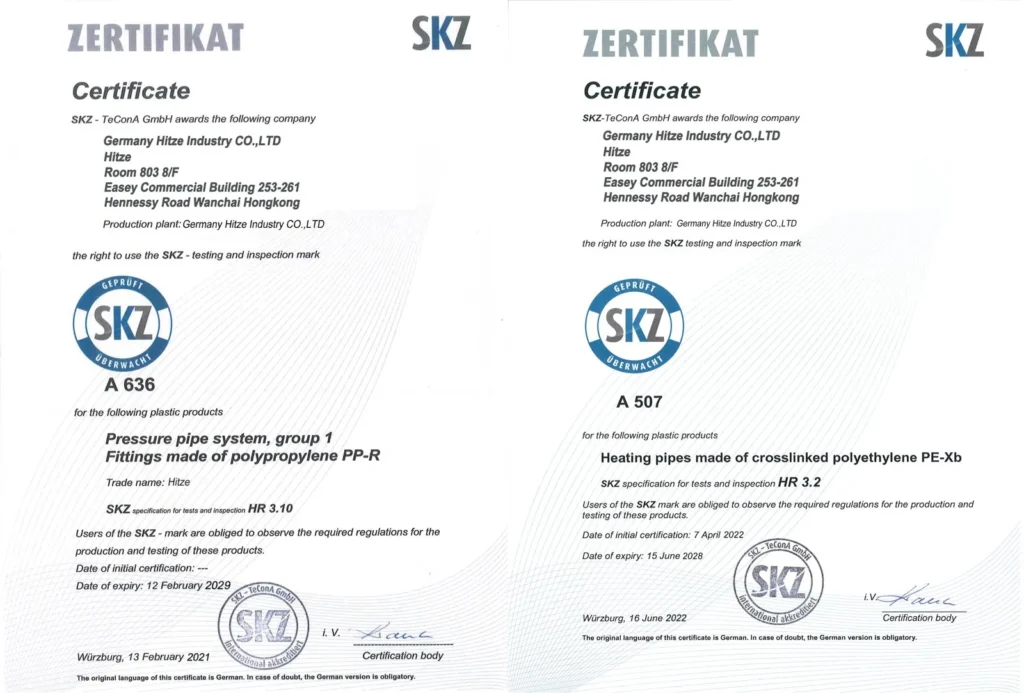
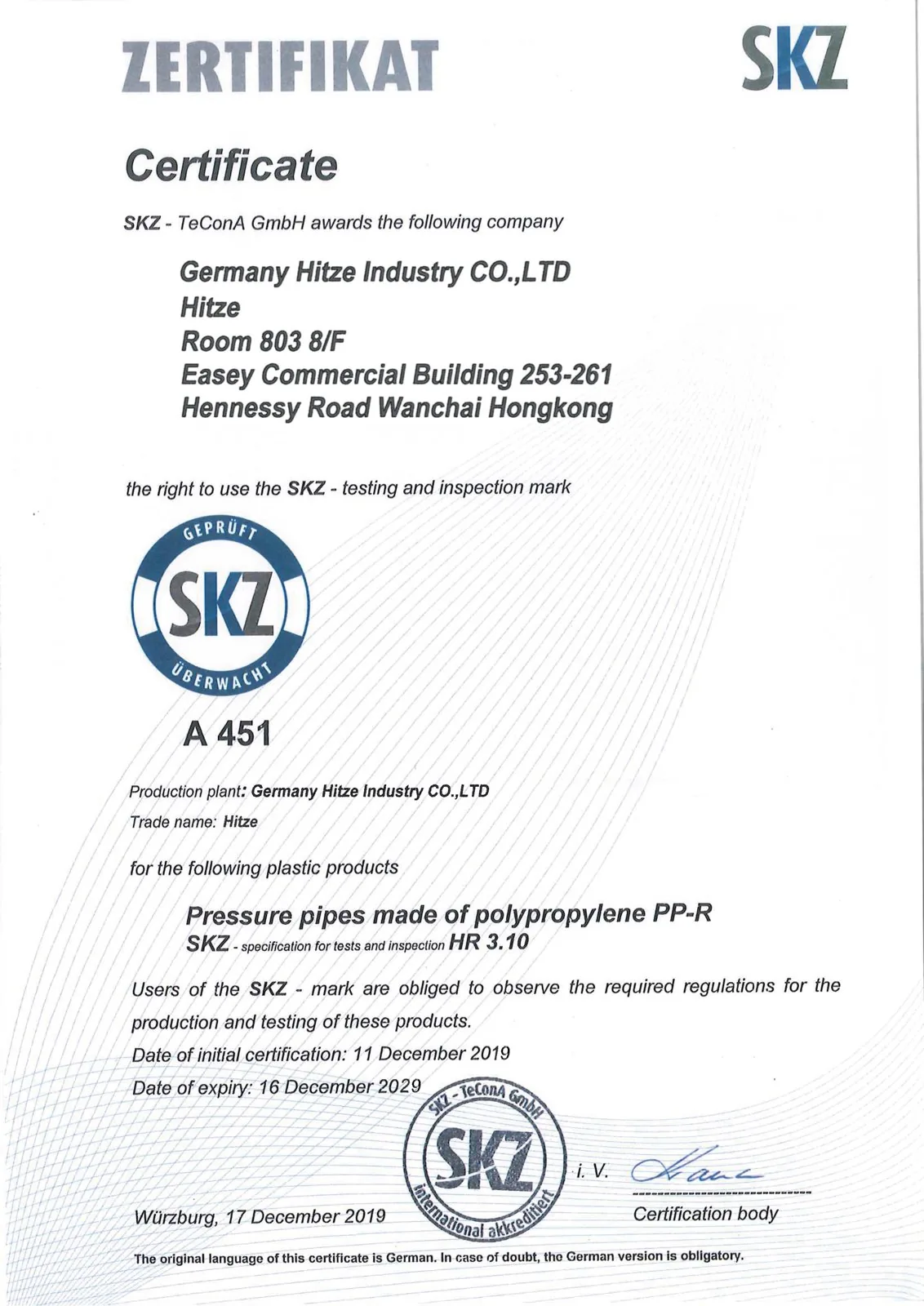
- Hitze holds numbered SKZ certificates for PP-R pressure pipes, PP-R fittings and PE-Xb heating pipes, issued against SKZ’s HR test-and-inspection specifications (HR 3.10 / HR 3.2). Certificate numbers are available on request.
- The mark proves production discipline, not market entry. For Germany’s drinking-water market you still need DVGW; for the UK, WRAS. SKZ is the layer that tells you the factory is watched between those approvals.
Every importer who spends a week collecting PP-R or PEX quotations meets the same three letters. “SKZ certified” sits in the supplier’s spec sheet somewhere between CE and ISO 9001, and most buyers wave it through without knowing whether it is a hard gate or wallpaper. That is a mistake in both directions. Treated as wallpaper, you throw away the single strongest piece of evidence a pipe factory can offer that someone independent walks its floor twice a year. Trusted blindly, you can be holding a one-time test report dressed up as a certificate — a document that proved one sample passed one test on one date, years ago. This guide explains what SKZ certification actually is, what the Würzburg laboratory tests on pipe, and how to tell a live certificate from a dead PDF in about twenty minutes.
Who SKZ actually is — and why the mark carries weight
SKZ — Das Kunststoff-Zentrum, historically the Süddeutsches Kunststoff-Zentrum — was founded on 20 January 1961 in Munich, Bavaria, by a coalition of plastics manufacturers, trade businesses and public authorities. Its operational home has been Würzburg since 1962, when the Bavarian State Trade Institute rented the former state horse shoeing school on Frankfurter Straße to the young institute. Sixty-five years later it is the largest plastics institute in Germany, and its testing operation covers more than 1,000 standards and regulations across the plastics sector. For pipework specifically, the institute tests and certifies against more than 100 different standards and guidelines — from burst-pressure tests on micro ducts for broadband cable protection up to ring-stiffness determination on DN 1000 wastewater pipe. When a piping factory anywhere in the world says “SKZ,” this is the organisation it is invoking.
The reason the mark matters to an importer is structural, not sentimental. Most quality claims in the pipe trade are self-issued: the factory writes its own datasheet, prints its own pressure class, and stamps its own QC seal. SKZ sits on the other side of that line. It is a third party whose entire business model — testing, inspection, certification, training — depends on its credibility with German utilities, insurers and regulators. A factory cannot buy the mark with a wire transfer and a sample; it has to open its production line to an outside auditor and keep it open for the life of the certificate. That difference is worth more to your risk position than any number printed on a brochure.
One insider warning before the detail: in supplier marketing, “SKZ” is used loosely to mean anything from a full product certificate to a single commissioned lab test from a decade ago. Both involve the same institute; they are not remotely the same claim. The rest of this article is largely about learning to tell them apart.
Three accreditations, three different promises
The credibility behind an SKZ document is not the logo — it is the accreditation underneath it. DAkkS, Germany’s national accreditation body, lists SKZ under three separate registrations, and each one backs a different part of the certification chain. The testing laboratory is accredited to DIN EN ISO/IEC 17025 under register number D-PL-19033-01-00, which means the measurement results themselves — the burst pressures, the creep curves, the dimensions — are produced under an audited quality system. The inspection body is accredited to DIN EN ISO/IEC 17020 as a Type A (fully independent) body under D-IS-19033-01-00, which covers the factory inspections. And the certification body is accredited to DIN EN ISO/IEC 17065 under D-ZE-19033-01-00, which governs how the certificate decision itself is made and maintained.
Why should a buyer care about three register numbers? Because each one closes a specific fraud channel. ISO/IEC 17025 accreditation means the numbers on the test report were not typed in by the sales department. ISO/IEC 17020 Type A status means the person auditing the factory has no commercial stake in the factory passing. ISO/IEC 17065 means the certificate cannot be issued, extended or quietly kept alive outside documented rules — and can be withdrawn when surveillance fails. Plenty of “certificates” circulating in the pipe trade come from commercial labs holding none of these accreditations for the scope in question. The five-second filter: ask which accreditation number stands behind the paper. A legitimate holder answers immediately; a decorative one changes the subject.
There is also a practical bonus buried in that inspection-body status. Because SKZ is an accredited inspection body, its monitoring can be combined and re-used across multiple European product approvals — the institute has publicised exactly this model with German pipe manufacturers, consolidating what would otherwise be duplicate audits and duplicate testing for different national schemes. For a factory exporting to several EU markets, one SKZ surveillance stream can feed several approvals. For you as the buyer, it means the audit evidence behind an SKZ certificate is frequently the same evidence propping up the supplier’s other European paperwork — one more reason a lapsed SKZ certificate is a louder alarm than it looks.
What the Würzburg lab actually tests on pipe
The tests that matter most on pressure pipe are the slow ones, because pipe does not fail in the showroom — it fails in year eight, inside a wall. The centrepiece is long-term hydrostatic strength classification to ISO 9080: pipe specimens held under internal pressure at elevated temperatures, with the creep-rupture data extrapolated out to 438,000 hours — 50 years — at 20 °C to confirm the material’s MRS class. This is the test discipline that separates a resin that genuinely earns its PN rating from one that merely passes a short burst test. SKZ also runs the North American equivalent, HDB classification to ASTM D2837 / PPI TR-3 — rated at 73 °F / 23 °C on 100,000-hour data, a different basis from ISO 9080 on both temperature and time — which matters if your programme spans both continents.
For polyethylene, the laboratory runs the full PE 100-RC battery: the accelerated notch pipe test to ISO 13479, the strain hardening test to ISO 18488, and the cracked round bar test to ISO 18489. These three methods target slow crack growth — the failure mode behind brittle field cracks that start at a scratch or a point load years after installation, and the single most expensive failure mode a distributor can put their name on. On the short-term side, the lab handles burst-pressure testing from micro ducts upward, ring-stiffness determination up to DN 1000, temperature-cycling programmes and precision dimensional measurement. For PP-R systems, the reference frameworks are the ones the pipe itself is built to — DIN 8077/8078 for dimensions and pressure-class requirements and EN ISO 15874 for hot-and-cold-water plastics piping systems.
| Test area | Method / standard | Field failure it screens out |
|---|---|---|
| Long-term hydrostatic strength | ISO 9080 creep-rupture classification (extrapolated to 438,000 h / 50 years at 20 °C); ASTM D2837 / PPI TR-3 HDB (73 °F / 23 °C, 100,000 h) | Pipe wall creeping to rupture years into service at rated pressure |
| Slow crack growth (PE) | ISO 13479 (ANPT), ISO 18488 (SHT), ISO 18489 (CRB) | Brittle cracks initiated by scratches, stones or point loads |
| Short-term pressure integrity | Burst-pressure testing, micro ducts to large bore | Under-dimensioned walls; off-spec resin blends |
| Geometry and stiffness | Ring stiffness up to DN 1000; precision dimensional measurement | Out-of-round pipe, thin-wall extrusion, fit-up failures at fittings |
| System conformity (PP-R) | DIN 8077/8078 dimensions and pressure classes; EN ISO 15874 system requirements | Pipe and fittings that do not behave as one matched system |
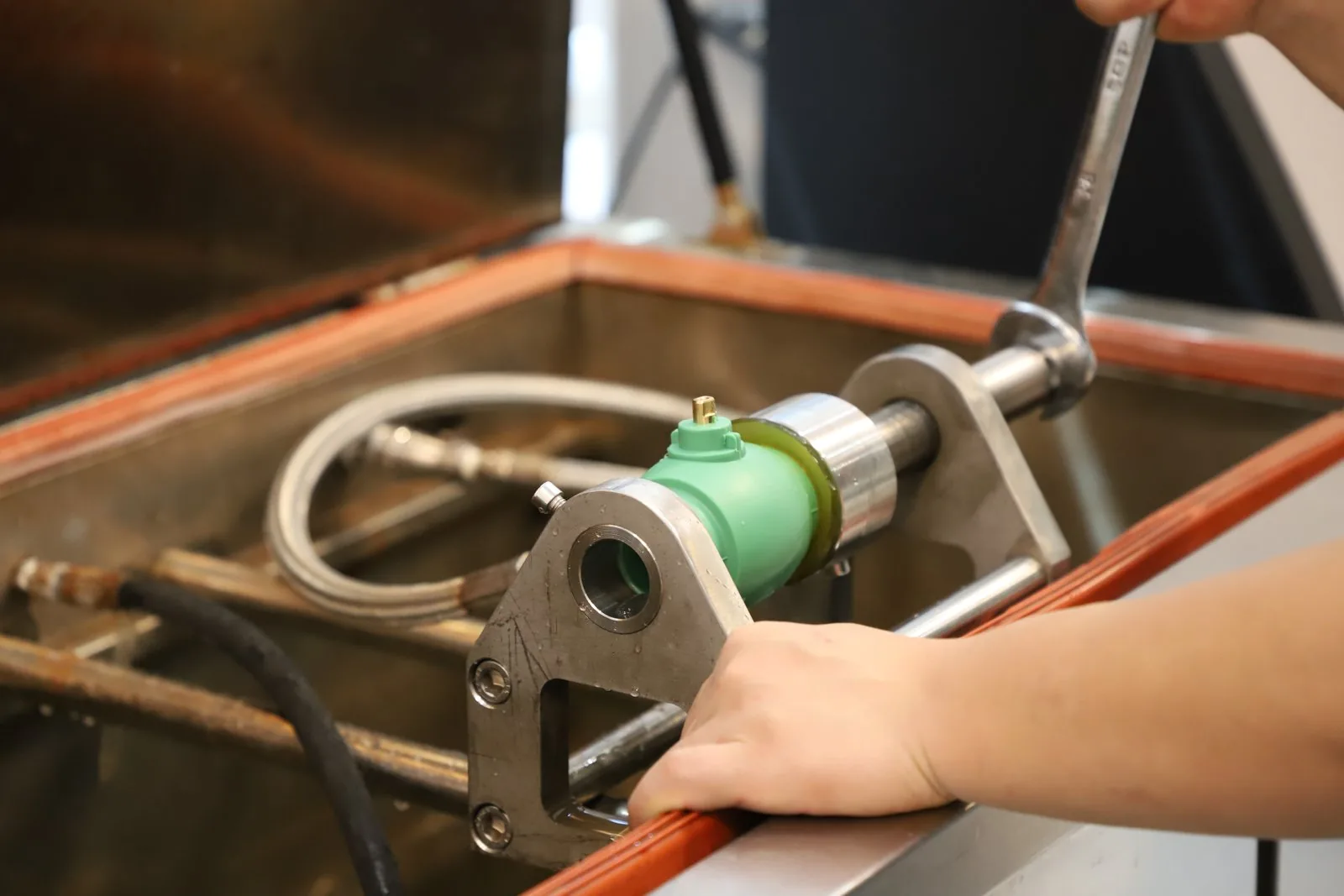
The practical takeaway for a buyer: when an SKZ document names its test basis, the failure modes above are what was actually interrogated. When a supplier’s own datasheet quotes a PN 20 rating with no independent long-term data behind it, nothing on this list was necessarily done at all. That asymmetry — 50-year extrapolated data versus a self-declared number — is the entire information gap the mark exists to close.
Type test vs. SKZ certificate: where the real value sits
Here is the distinction that saves importers real money. A type test — any one-time laboratory report, including one from SKZ itself — proves that the sample the factory chose to submit passed on the day it was tested. It says nothing about the pipe extruded last Tuesday with a different resin lot, a new operator and a price-pressured production schedule. An SKZ certificate is a different instrument entirely, because it bolts ongoing surveillance onto the initial testing.
The scheme, as SKZ publishes it, runs in nine steps, and three of them are the ones to remember. Before any certificate is issued there is an initial audit — an inspection of the manufacturer’s production processes and quality management systems by an SKZ auditor, on site. After testing in the accredited laboratory, the certification body issues the certificate together with an individual SKZ mark number, valid for five years. And then the part most buyers never hear about: normally semi-annual auditing of the production facility and testing of the certified products for as long as the certificate lives. Twice a year, someone the factory does not control shows up, and certified product goes back on the test bench.
| One-time type test / lab report | SKZ certificate (product mark) | |
|---|---|---|
| What was examined | One submitted sample, once | Initial testing plus product re-tested at surveillance intervals |
| Factory involvement | None required — samples can be couriered | Initial audit of production and QM systems; facility normally audited semi-annually |
| Validity | A dated snapshot; never expires because it never lived | Five years, extendable, withdrawable on failed surveillance |
| Public verification | None — you trust the PDF | Register of currently valid certificates; individual mark number |
| What it tells an importer | The factory once made a good sample | The factory is inspected on a cadence it cannot schedule around |
The surveillance cadence has a quiet implication worth pricing into your supplier assessment: if a certificate is live in the register today, the factory has, roughly speaking, passed an outside audit within the last six months — a freshness of evidence no self-declared ISO 9001 statement gives you. And SKZ enforces the other side of the bargain too. The institute publicly posts forged SKZ marks that come to its attention, which tells you two things at once: counterfeiting this mark happens, and the issuing body actively hunts it. Both facts argue for verifying, never assuming.
What Hitze holds — and what gets checked at our end
Hitze, a German brand of engineered piping systems, holds numbered SKZ certificates covering three product groups: PP-R pressure pipes, PP-R fittings, and PE-Xb heating pipes. The certificates are issued against SKZ’s HR test-and-inspection specifications — the HR 3.10 and HR 3.2 test bases referenced on the documents themselves. Following the rule this article preaches, we will not print certificate numbers in a blog post where they can be scraped and reused; the numbered certificates are available on request and can be cross-checked against the register. The SKZ documents sit alongside a DVGW type examination for PP-R drinking-water pipe, a WRAS material approval for potable water, and an NSF laboratory test report to BS 6920 for hot (≤65 °C) and cold drinking-water contact — the full stack is laid out on our certifications and compliance page.
Those two HR numbers are worth decoding, because they tell you the certificates map onto the right products. HR specifications are SKZ’s own “Specifications for Tests and Inspections” — the institute’s published certification test bases. HR 3.10 is the test basis SKZ cites on its published certificates for pipes made of polypropylene PP-R: the product family whose dimensional and system frameworks are DIN 8077/8078 and EN ISO 15874, the same standards in the test table above. HR 3.2 is the basis for heating pipes made of cross-linked polyethylene (PE-X). So the pairing on Hitze’s documents is exactly what the product scope demands — PP-R pressure pipes and fittings certified against the PP-R basis, PE-Xb heating pipe against the cross-linked polyethylene heating-pipe basis. If a supplier ever shows you a certificate whose HR number belongs to a different product family than the one on your purchase order, that is a scope mismatch, and the scope check in the worked example below exists to catch it.
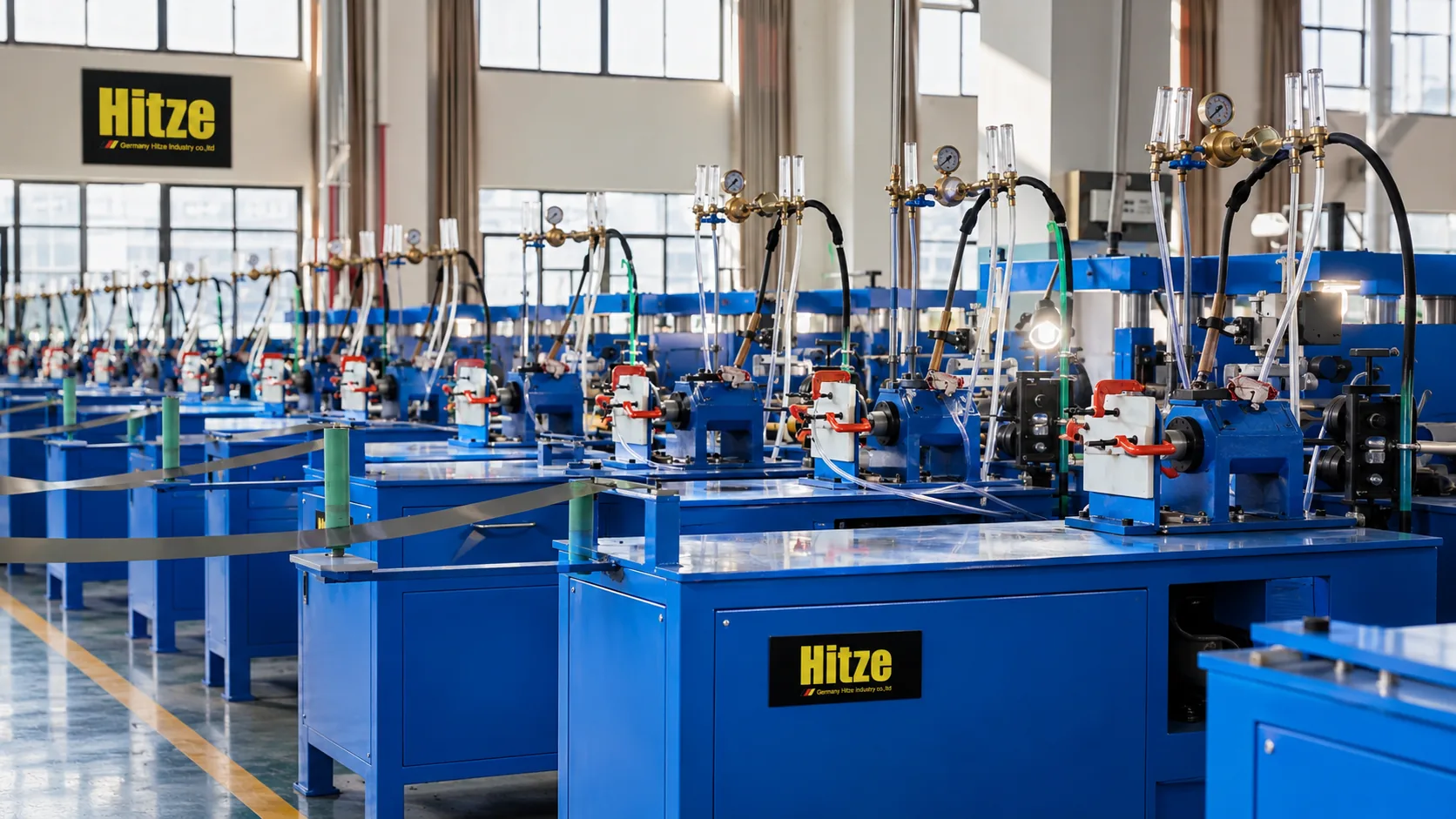
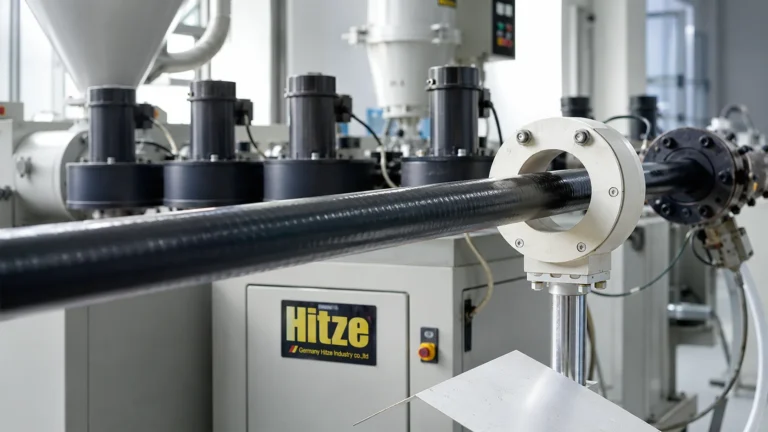
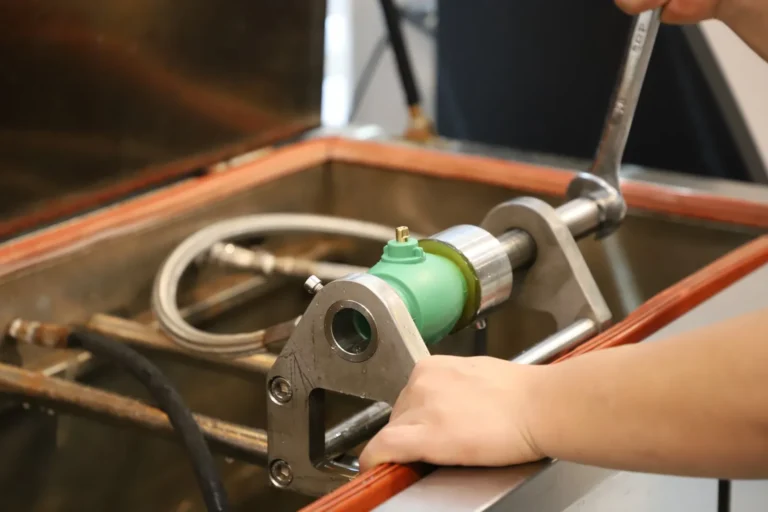
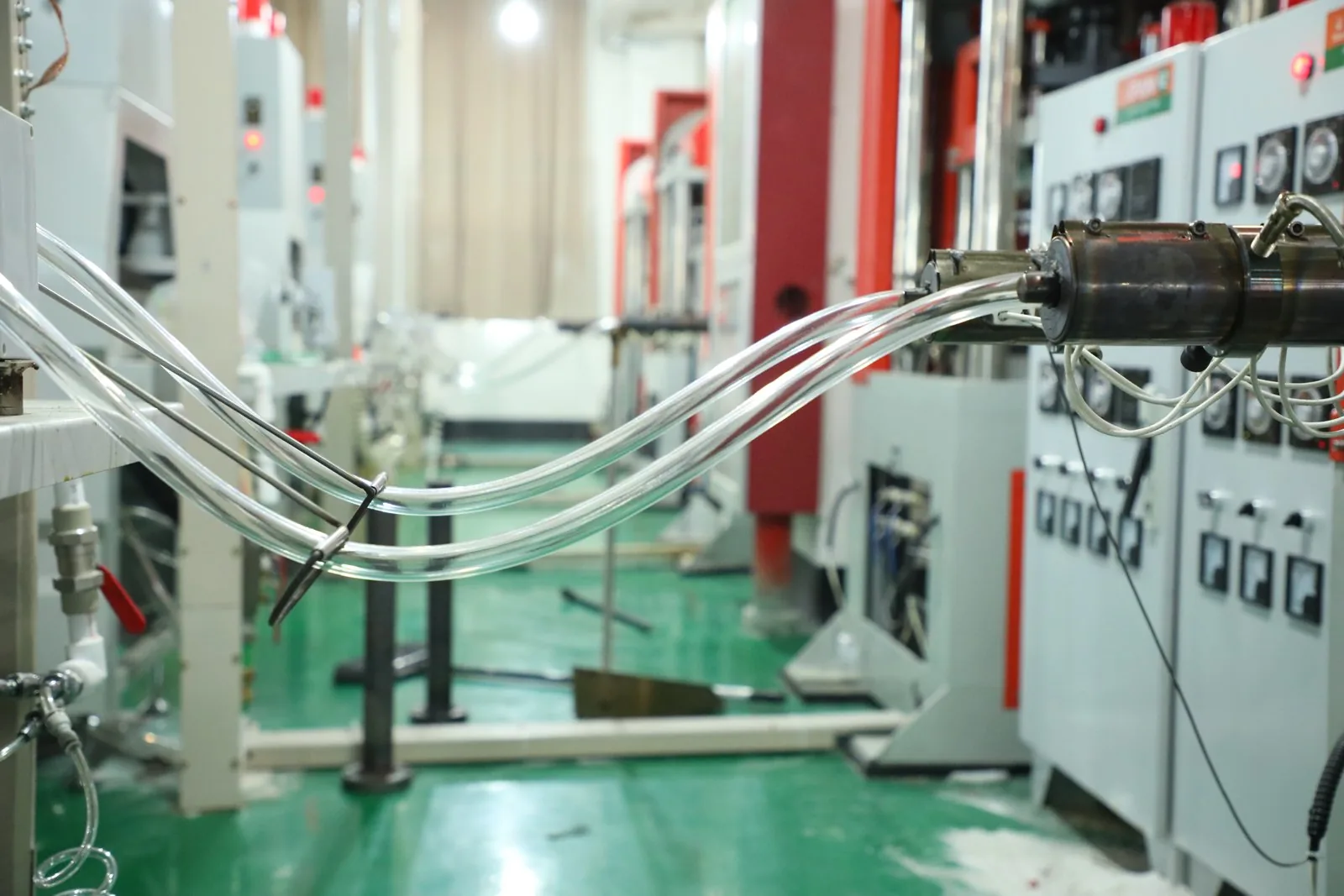
What does a factory living under that scheme actually check day to day? At the Hitze production base — 120,000 m², 1,000+ employees, running since 1974 and shipping to 118+ countries — the internal controls mirror the external ones, because surprises at a surveillance audit are careers. PP-R pipe is extruded to DIN 8077/8078 dimensions and EN ISO 15874 system requirements, with gravimetric dosing on the extrusion lines so wall thickness is not left to operator feel. Every production run feeds the in-house hydrostatic benches — rows of pressure-test stations where pipe and fittings are held under load before anything is released. Heating pipe carries the DIN 4726 oxygen-barrier requirement, because an oxygen-permeable heating loop quietly corrodes every steel component in the system it feeds. PE-Xb heating pipe is produced as a distinct certified line, not a re-labelled potable grade.
Be precise about what this does and does not claim. Hitze is a German brand — trademark registered at the DPMA in Munich, No. 30 2020 005 484 — engineered in Germany and built to German DIN standards, with production certified and surveilled under the German schemes described here. If you want the full anatomy of what that framing means and where the value genuinely sits, we wrote it up honestly in German pipe brand vs. China-made: what “engineered in Germany” actually means. The short version: the SKZ certificate is precisely the instrument that makes the claim checkable rather than decorative — it names the legal entity, the products and the test basis, and it dies publicly if surveillance fails.
Worked example: verifying a supplier’s SKZ claim in 20 minutes
Say you are an importer in Rotterdam pricing a 40HQ of 20–32 mm PP-R pipe and fittings from a new supplier whose catalogue says “SKZ certified.” Run this sequence before the deposit, not after. Step one: request the certificate itself — not the mark logo, the document — and note three fields: the certificate number, the exact legal name of the holder, and the product scope with its test basis (an HR specification number). Step two: open SKZ’s register of currently valid certificates, which is filterable by certificate number, owner, product and guideline, and confirm the entry is live. No entry means no certificate — whatever the PDF says, you are looking at a type test or a fabrication. Step three: match the legal entity. A certificate held by a trading company two provinces away from the factory that will extrude your pipe covers nothing on your purchase order.
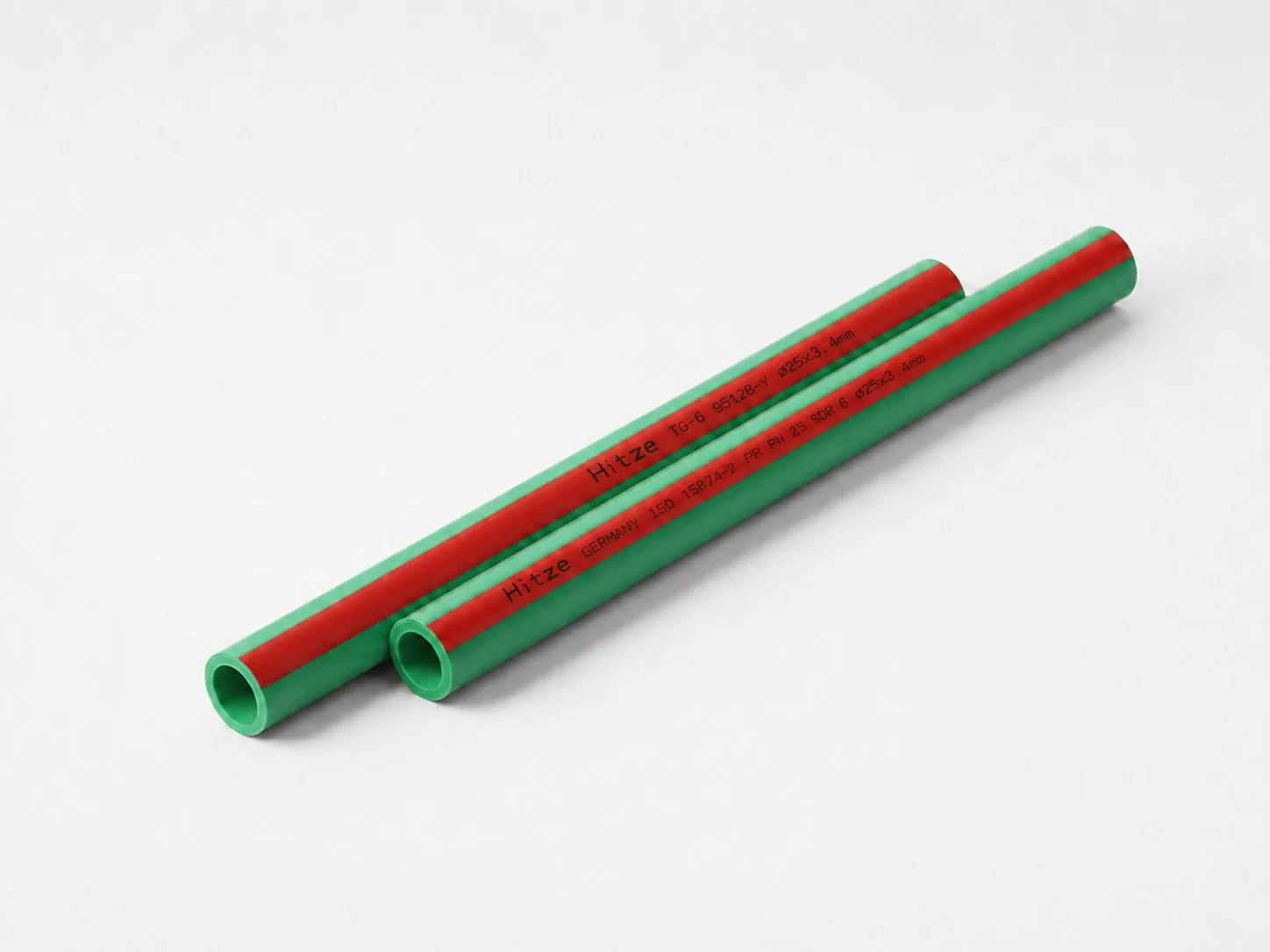
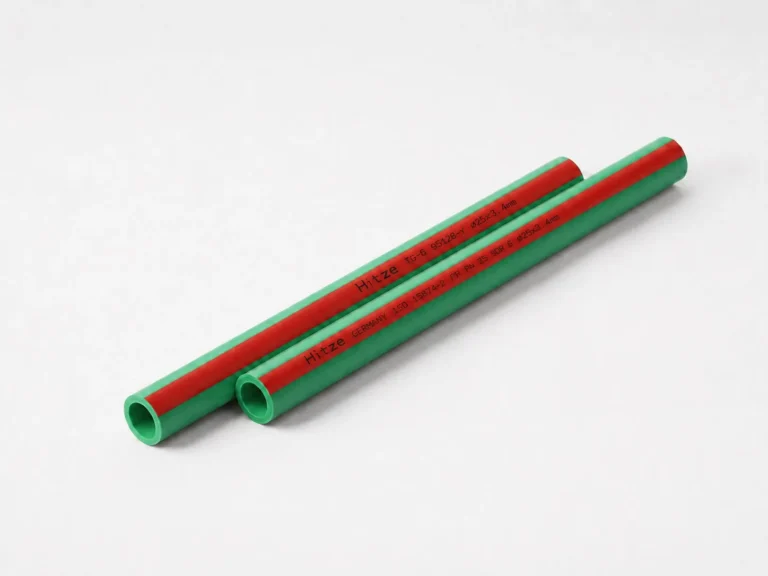
Step four: check the scope against your PO line by line. A certificate for PP-R pressure pipe does not automatically cover the fittings in the same container — which is why holding separate certificates for pipe and for fittings, as Hitze does, is the configuration you actually want to see. Step five: when production samples arrive, read the pipe print line. Certified product carries its marking on the pipe itself; a supplier whose print line shows a bare standard number but no mark, on a product they claim is certified, owes you an explanation before the container ships. The whole exercise costs twenty minutes and catches the four standard failure modes — expired, wrong entity, wrong scope, pure invention. The same directory-first method applies to every scheme worth having, and we walk through the cUPC, NSF, DVGW and WRAS versions in how to verify a pipe certification is real.
Where SKZ fits next to DVGW, WRAS and the market-entry approvals
SKZ certification answers the question “is this factory’s product quality independently tested and continuously watched?” It does not, by itself, answer “may this product legally go into a drinking-water installation in market X?” Those are separate instruments: DVGW certification for the German gas and water market, WRAS approval for the UK water regulations, KTW-based hygienic assessment for organic materials in contact with drinking water in Germany. A disciplined supplier holds the SKZ layer and the market-entry layer for each territory it serves; the combined-monitoring model described earlier is exactly how those layers share audit evidence instead of multiplying cost. If your programme touches the UK or EU drinking-water side, the companion guide on WRAS, DVGW and KTW approvals maps which body gates which market.
Best for: importers and private-label buyers who need standing evidence of production control between their own factory visits; distributors whose installer customers ask “who checks this factory?”; buyers in markets with no mandatory national scheme who still want German-grade test discipline behind their brand. Not a fit: anyone treating it as a substitute for cUPC/NSF in North America or DVGW/WRAS market approvals in Europe — it complements those, it does not replace them — and anyone who only ever intends to buy on lowest landed cost, because surveilled production is real overhead and it is priced like it.
If you are an importer or private-label buyer who needs certificates that survive a register check — not a folder of PDFs — start with the documents, not the price list. Request Hitze’s SKZ, DVGW, WRAS and NSF documentation through the certifications & compliance page and run the verification steps above against them. There is no minimum order quantity: start with samples, test them against your own market’s requirements, and scale only when the evidence holds. The matched Hitze pipe-and-fitting system carries a 50-year warranty — which is only a rational thing for a manufacturer to offer when a third party re-tests its products on a schedule it does not control.
Certificate numbers and current register entries: available on request.
FAQ: SKZ certification for pipe buyers
What does SKZ certification mean on plastic pipe?
It means the product was tested by SKZ, Germany’s largest plastics institute in Würzburg, and is covered by a certificate from SKZ’s DAkkS-accredited certification body. The scheme combines initial laboratory testing with an initial factory audit and ongoing surveillance — normally semi-annual audits of the production facility plus retesting of certified product — over a five-year certificate life.
Is an SKZ test report the same as an SKZ certificate?
No. A test report documents that one sample passed defined tests on one date. A certificate adds a surveillance contract, an individual SKZ mark number, a five-year validity and a live entry in SKZ’s public register. Suppliers routinely present the first as if it were the second; the register check exposes the difference in minutes.
How do I verify an SKZ certificate is genuine?
Search SKZ’s online register of currently valid certificates by certificate number, holder, product or guideline, and match the legal entity and product scope against your purchase order. Treat a missing entry as a failed claim. SKZ also publishes forged marks it becomes aware of, so a claim that fails the register may appear there too.
Is SKZ the same as DVGW?
No. SKZ is a plastics institute whose mark certifies tested, surveilled product quality. DVGW is the German gas and water association whose certification gates entry to the German drinking-water and gas markets. A serious supplier to Europe typically holds both — SKZ for product-quality evidence, DVGW for market access.
Which SKZ certificates does Hitze hold?
Hitze holds numbered SKZ certificates for PP-R pressure pipes, PP-R fittings and PE-Xb heating pipes, issued against SKZ HR test-and-inspection specifications (HR 3.10 / HR 3.2). Certificate numbers are available on request for register verification, alongside DVGW, WRAS and NSF BS 6920 documentation.
Does SKZ certification mean the pipe is made in Germany?
No — and no honest supplier should imply it does. SKZ certifies products and surveils factories wherever they operate. Hitze is a German brand, engineered in Germany and built to German DIN standards, with its production tested and monitored under the German schemes described here; the certification tells you the quality system is real, not where a given pipe was extruded.