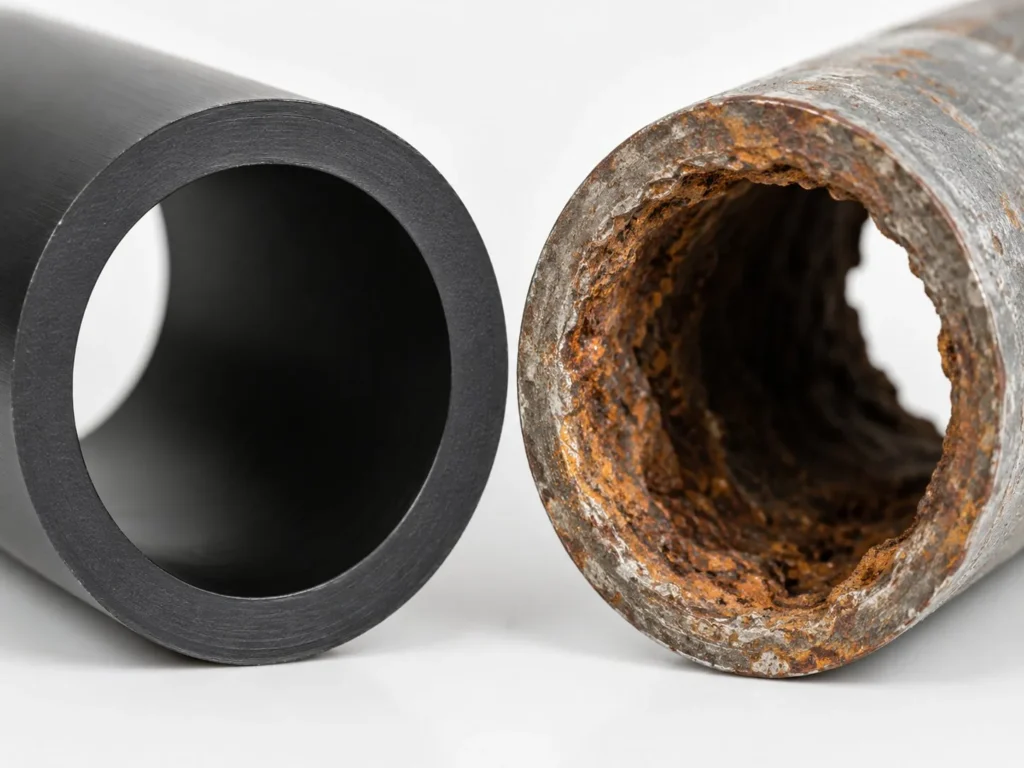
Key Takeaways
- The failure mechanism is electrochemical, not chemical. Two metals far apart on the galvanic series, bridged by conductive water, form a battery. The less noble metal (the anode) corrodes; the noble one is protected. Copper sits near the noble end, zinc (the galvanized coating) near the active end — the worst common pairing in a building.
- Copper-to-galvanized is the classic joint that eats itself. With copper roughly 0.4–0.7 V nobler than zinc (seawater SCE reference; freshwater sits in the same band), the galvanized nipple is the anode and gives up metal fast, especially downstream where dissolved copper ions plate out.
- Model codes require a dielectric break or a brass transition. The 2021 IPC (§605.23.1) accepts a copper-alloy fitting (brass is a copper alloy), a dielectric fitting, or a dielectric union to ASSE 1079 at a copper-to-galvanized joint — a copper-alloy transition is code-recognized, not just a workaround.
- Plastic systems break the circuit entirely. PEX, PP-R and multilayer runs are dielectric by construction — no metallic path, no galvanic cell. This is why an all-plastic riser with lead-free brass transition fittings is the lowest-risk mixed-metal detail on the job.
- Area ratio decides how fast it fails. A small anode wired to a large cathode concentrates all the corrosion current onto a tiny area — a stray steel fitting on a copper system can perforate in a fraction of the time a like-for-like joint would.
- Aggressive water needs DZR brass. Hot, soft, acidic or high-chloride water dezincifies standard brass above ~60 °C; DZR grades (CW602N, CW724R) resist it and are the correct spec for those systems.
Galvanic corrosion is the failure you don’t see until a ceiling stains or a nipple crumbles in your hand. It isn’t caused by bad water or bad pipe — it’s caused by the joint between two different metals, and it obeys physics you can predict before you ever cut in. For a contractor, that predictability is the whole point: every galvanic failure on a callback list traces back to a metal pairing that a five-minute check at spec time would have flagged. This piece walks the galvanic series, the copper-to-galvanized classic, what the codes actually require, why plastic systems sidestep the problem, and the area-ratio trap that turns a small mistake into a fast leak.
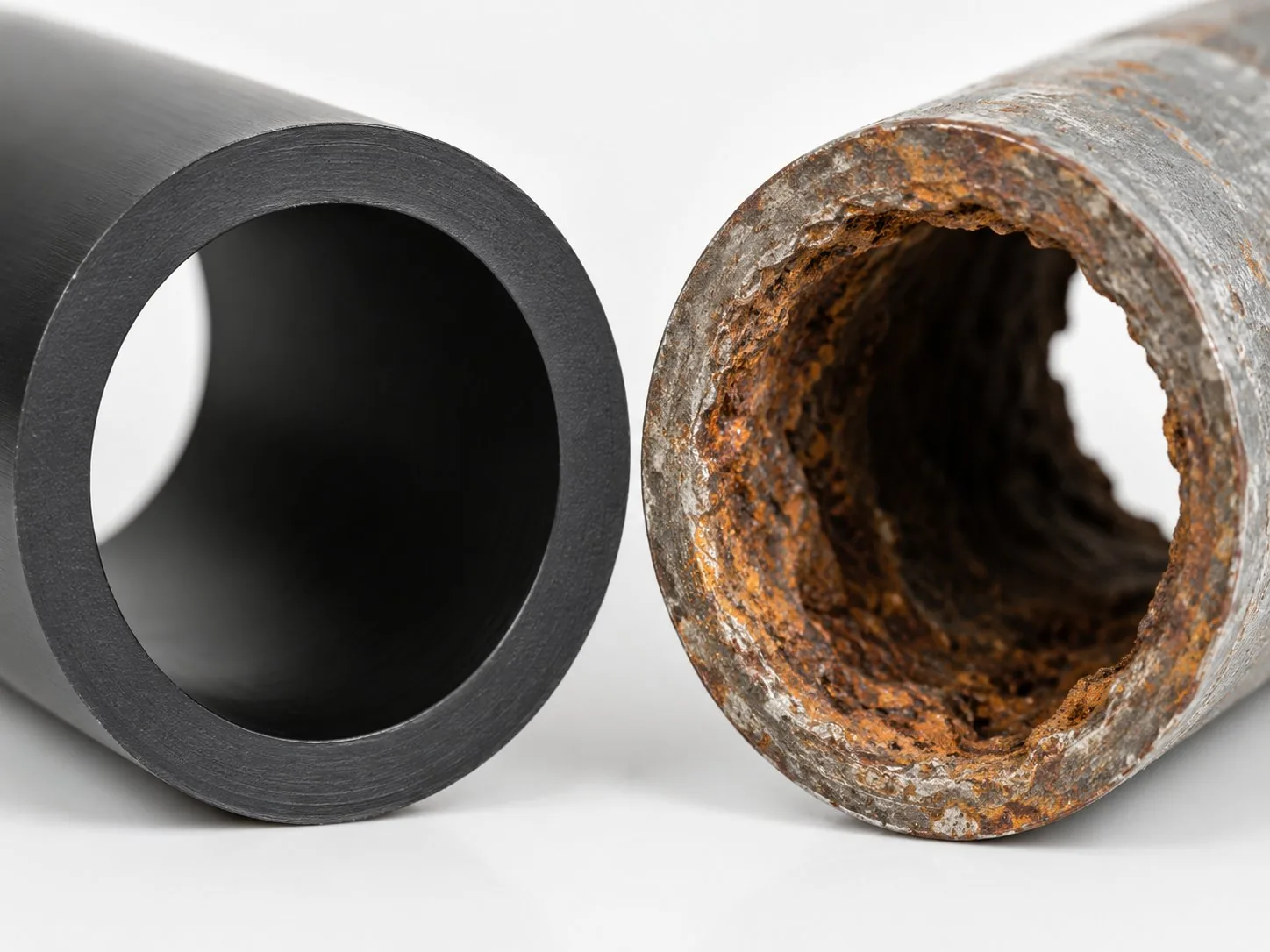
The Galvanic Series: Why Two Metals in Water Become a Battery
Every metal has an electrochemical potential — a measurable tendency to give up electrons. Rank metals by that potential in a given water and you get the galvanic series: active (anodic) metals at the top, noble (cathodic) metals at the bottom. When two metals from different points on that series touch and share an electrolyte — and ordinary tap water, with its dissolved minerals, is a perfectly good electrolyte — current flows between them. The more active metal becomes the anode and corrodes faster than it would alone; the more noble metal becomes the cathode and is actually protected. That’s not a theory to argue about; it’s the same mechanism that runs a sacrificial anode rod in a water heater on purpose.
For plumbing, four materials matter and they sit in a revealing order. Zinc — the coating on galvanized steel — is strongly anodic. Plain steel is intermediate. Brass and bronze are well down toward the noble end. Copper is nobler still. The rule contractors should carry in their head: the farther apart two metals sit on the series, the harder the couple drives corrosion. Copper to brass is a short hop — brass is a copper alloy, so the two are close and the couple is weak. Copper to galvanized steel is a long fall: on the seawater galvanic series (SCE reference) copper sits around −0.30 to −0.57 V and zinc around −0.98 to −1.03 V, so the driving voltage between them runs on the order of 0.4–0.7 V. Freshwater values shift with pH, temperature and dissolved solids but stay in the same band. That gap is why one pairing is a non-event and the other is a warranty claim — the underlying galvanic-corrosion mechanism is well documented by the corrosion-engineering literature.
The insider warning here is that potential order isn’t fixed — it shifts with water. Hot, soft, low-pH or chloride-rich water widens the effective gap and speeds everything up. So a copper-to-galvanized joint that survives for years in hard, alkaline municipal water can fail in a fraction of the time on a softened well supply. Never assume a detail that worked on one job transfers to the next building without checking the water.
| Metal / material | Position in the galvanic series | Role when coupled to copper | Practical read |
|---|---|---|---|
| Zinc (galvanized coating) | Strongly anodic (active) | Anode — corrodes fast | Worst common pairing; needs a break |
| Carbon / galvanized steel (base) | Intermediate | Anode once zinc is gone | Attack moves to steel after coating fails |
| Brass / bronze (Cu-Zn alloy) | Near noble | Close to copper — weak couple | Code-accepted transition metal |
| Copper | Noble (cathodic) | Cathode — protected | Drives corrosion in whatever it touches |
| PEX / PP-R / multilayer plastic | Non-metallic — not on the series | No metallic path — no cell | Inherent isolation, lowest risk |
The Classic Failure: Copper Straight Onto Galvanized
The single most common galvanic failure in a building is copper tube threaded or soldered straight to galvanized steel — usually where someone extended or repaired an old galvanized system with copper and didn’t isolate the joint. Here’s the sequence in the wall: water bridges the two metals, the zinc coating on the galvanized side becomes the anode and dissolves first, then the exposed steel underneath becomes the anode and rusts. Because copper is the cathode, it stays bright while the steel wastes away right at the union. You get a rust-choked bore, then a weep, then a burst — and it’s always on the steel side, which is why techs who don’t know the mechanism keep blaming “bad pipe.”
There’s a second, nastier vector: dissolved copper travels. This is deposition corrosion — the American Galvanizers Association notes that even runoff water carrying dissolved copper can drive rapid corrosion of galvanized surfaces. When copper corrodes even slightly upstream, copper ions carry downstream and plate out onto galvanized or aluminum surfaces, seeding fresh galvanic cells far from the original joint. That’s why a single unisolated copper-to-galvanized transition can pit a galvanized system in places nowhere near the actual connection — the tell reported in practice is pinholing that clusters just downstream of a copper component. If you’re diagnosing mystery pinholes on galvanized, trace upstream for copper before you touch the water chemistry.
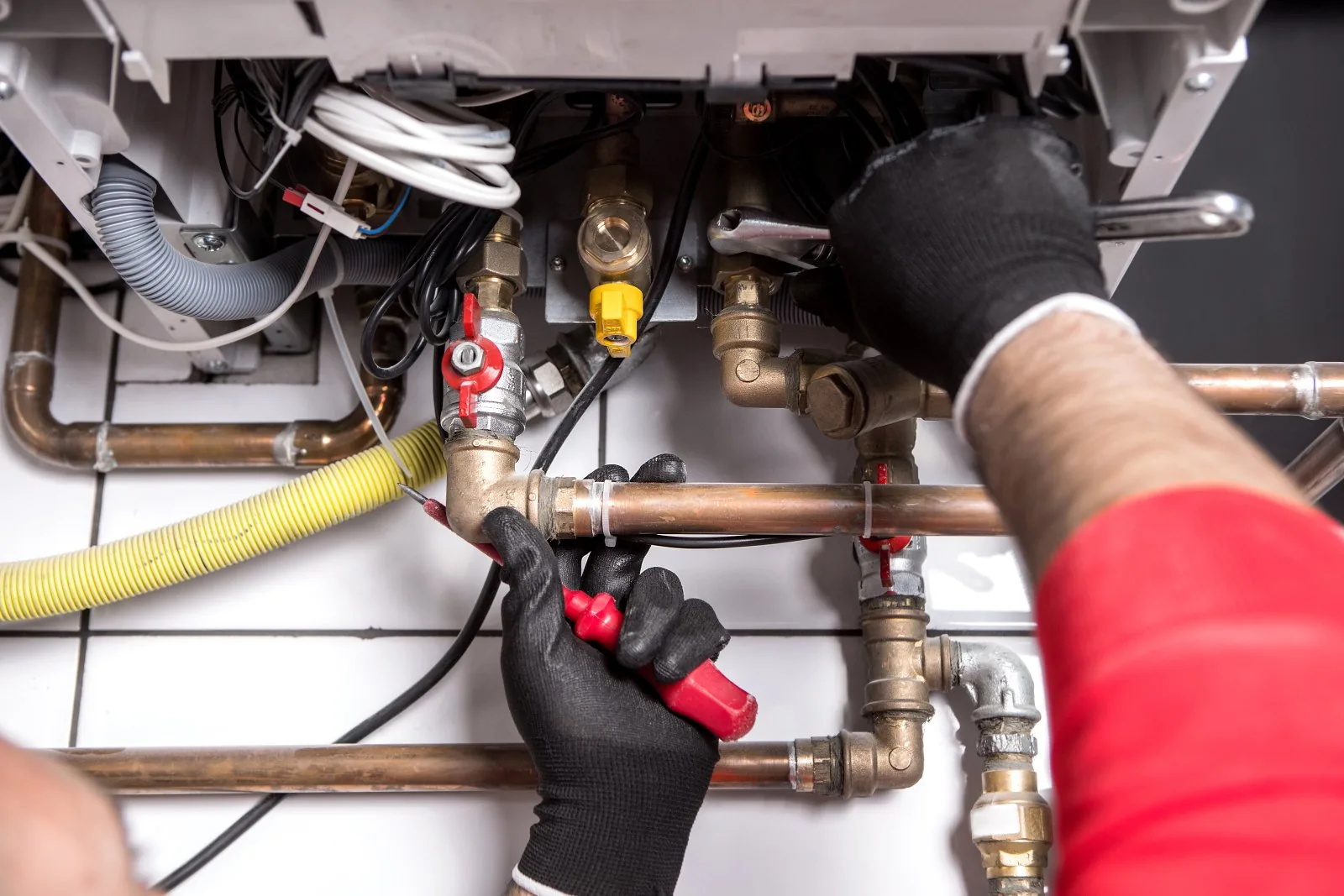
The recommendation is blunt: never let copper and galvanized steel make direct metal-to-metal contact in a wet line. Break the circuit with either a dielectric union or — the option most codes prefer in practice — a brass transition fitting long enough to separate the two metals electrochemically. Which of those to reach for is exactly what the codes address, and it’s worth reading the section rather than trusting shop habit.
What the Codes Actually Require: Dielectric Unions and the Brass Exception
Both model codes treat dissimilar-metal joints as a specific, regulated connection — not a judgment call. Under the 2021 International Plumbing Code, §605.23.1 (“Copper or copper-alloy tubing to galvanized steel pipe”), a joint between copper/copper-alloy tube and galvanized steel must be made with a copper-alloy fitting or a dielectric fitting, with any dielectric union conforming to ASSE 1079 (“Performance Requirements for Dielectric Pipe Unions”). The section number did not change from the 2018 IPC — it is §605.23.1 in both editions (in the 2021 IPC, §605.24 covers PE-RT plastic tubing, not this joint), though some local adoptions renumber it (e.g. NYC and Pennsylvania print §605.24.1) — so cite the edition your jurisdiction has adopted rather than a number from memory. The 2021 IPC also uses “copper-alloy fitting,” updated from the earlier “brass fitting” wording; brass is a copper alloy, so the two describe the same accepted transition. This mapping is laid out in the PHCP Pros review of corrosion in the model plumbing codes. The Uniform Plumbing Code handles the same requirement in its dissimilar-metals provisions and likewise points dielectric unions at ASSE 1079.
Read that carefully, because the wording is the whole trade-off: the code lists a copper-alloy fitting — brass — as an accepted solution, on equal footing with a dielectric union. A dielectric union with its plastic/rubber insert physically interrupts the metallic path, but the insert is a known weak point — it can foul, embrittle with heat over years, and it does nothing if a metal jumper (a strap, a ground clamp, a bonded gas line) reconnects the two sides electrically. Brass earns its place because it’s a copper alloy sitting close to copper on the series: the copper-to-brass step is a short hop, so the couple barely drives any current, and there’s no organic insert to age out. The insider preference among a lot of service plumbers is a brass nipple of adequate length over a dielectric union precisely for that reason — fewer failure modes over a 20-year horizon.
One warning the code language hides: dielectric isolation only works if it’s the only path. Electrical bonding and grounding practice routinely bond metal water piping, and a bonding jumper across a dielectric union re-completes the circuit and reinstates the galvanic cell while satisfying the plumbing inspector. If the system has to stay bonded, a brass transition — which doesn’t rely on an interruption to work — is the more robust detail. Spec the brass, don’t just spec “a dielectric.”
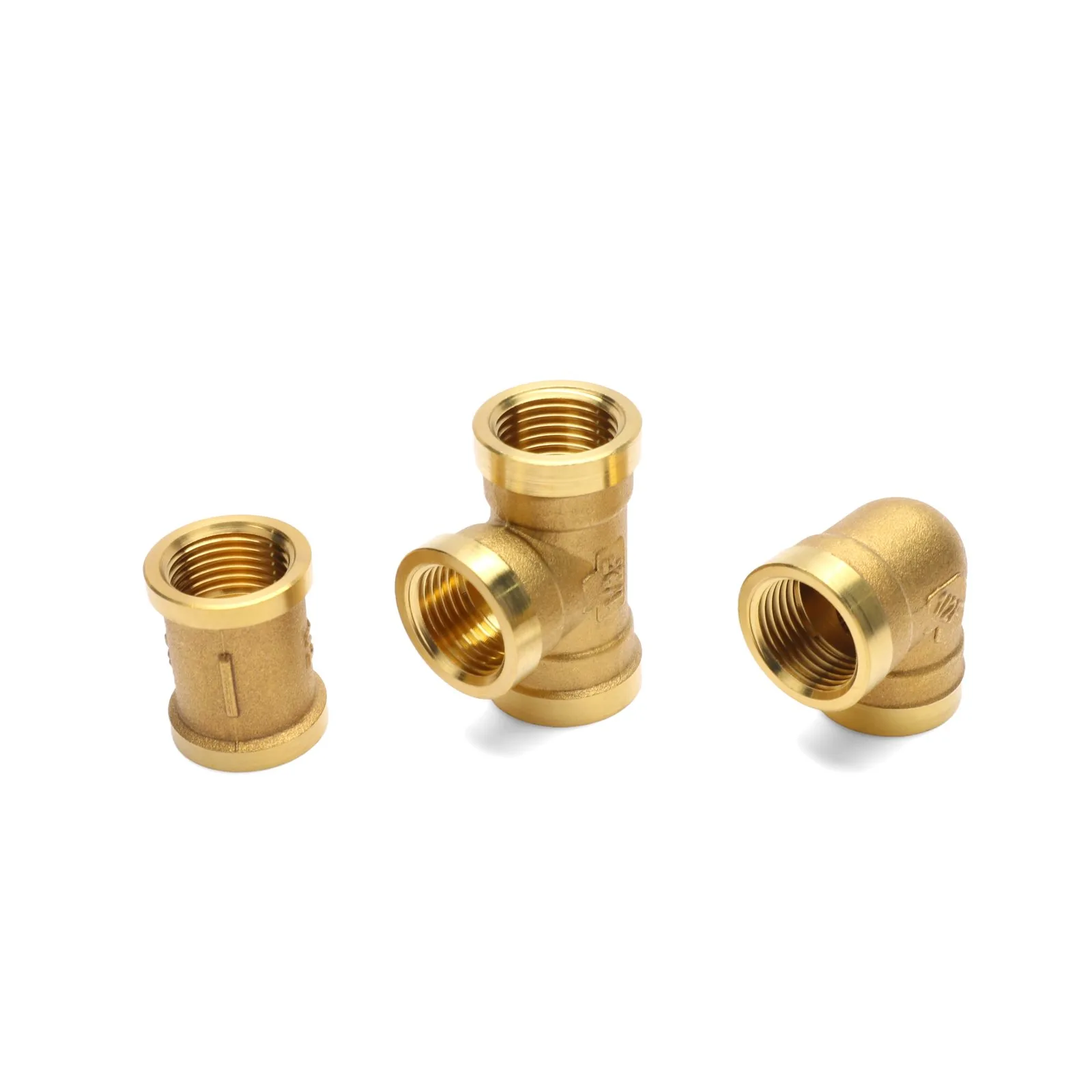
This is where fitting selection stops being generic. A transition joint is only as good as the alloy in it, and mixing unknown-grade fittings from whatever’s on the truck is how a “code-compliant” joint still fails — a theme we cover in mixing pipe and fitting brands and the warranty leak risk. For the transition itself, a controlled, traceable lead-free brass fitting range gives you a known grade and a known geometry at the one joint you cannot afford to guess on.
Brass as the Accepted Transition Metal — and Which Brass
Brass works as a transition for two reasons: its position near copper on the galvanic series makes the copper-side couple negligible, and its mass gives a long electrochemical path between the noble and active sides. But “brass” is not one material, and the wrong brass introduces a different corrosion failure — dezincification. Standard alpha-beta brass in hot, soft, acidic or high-chloride water selectively loses its zinc, leaving a porous copper skeleton that retains the shape of the fitting but a fraction of its strength; it looks intact until it splits under pressure or a fitting shears on a wrench.
That’s the case for dezincification-resistant (DZR) brass. DZR grades add a small, controlled amount of arsenic (typically around 0.02–0.15%) that stabilizes the alpha phase and blocks the selective loss of zinc. In Hitze’s fitting program the relevant grades are CW724R, CW602N and CW511L for DZR/lead-free duty, with CW617N as the standard-brass grade for less aggressive service and ball-valve bodies (PN25). Which one belongs on a job is a water-chemistry decision, and choosing lead-free grades for potable service is a separate compliance requirement worth understanding on its own — see lead-free brass grades CW617N, DZR and CW724R and what they mean for potable water and the wider picture in what NSF/ANSI 61 lead-free brass compliance requires.
| Transition detail | Best for | Not for | Watch-out |
|---|---|---|---|
| Brass transition nipple/adapter | Copper-to-galvanized where the system stays electrically bonded | Nothing structural — broadly applicable | Use DZR grade on hot/soft/high-chloride water |
| Dielectric union (ASSE 1079) | Where a hard electrical interruption is wanted | Systems with a bonding jumper across it | Insert ages with heat; jumper defeats it |
| Plastic pipe run (PEX/PP-R/multilayer) | Whole-run isolation — breaks the circuit by design | Applications demanding a metallic pipe body | Use lead-free brass transition fittings at metal interfaces |
Plastic Systems Break the Circuit — the Real Isolation Play
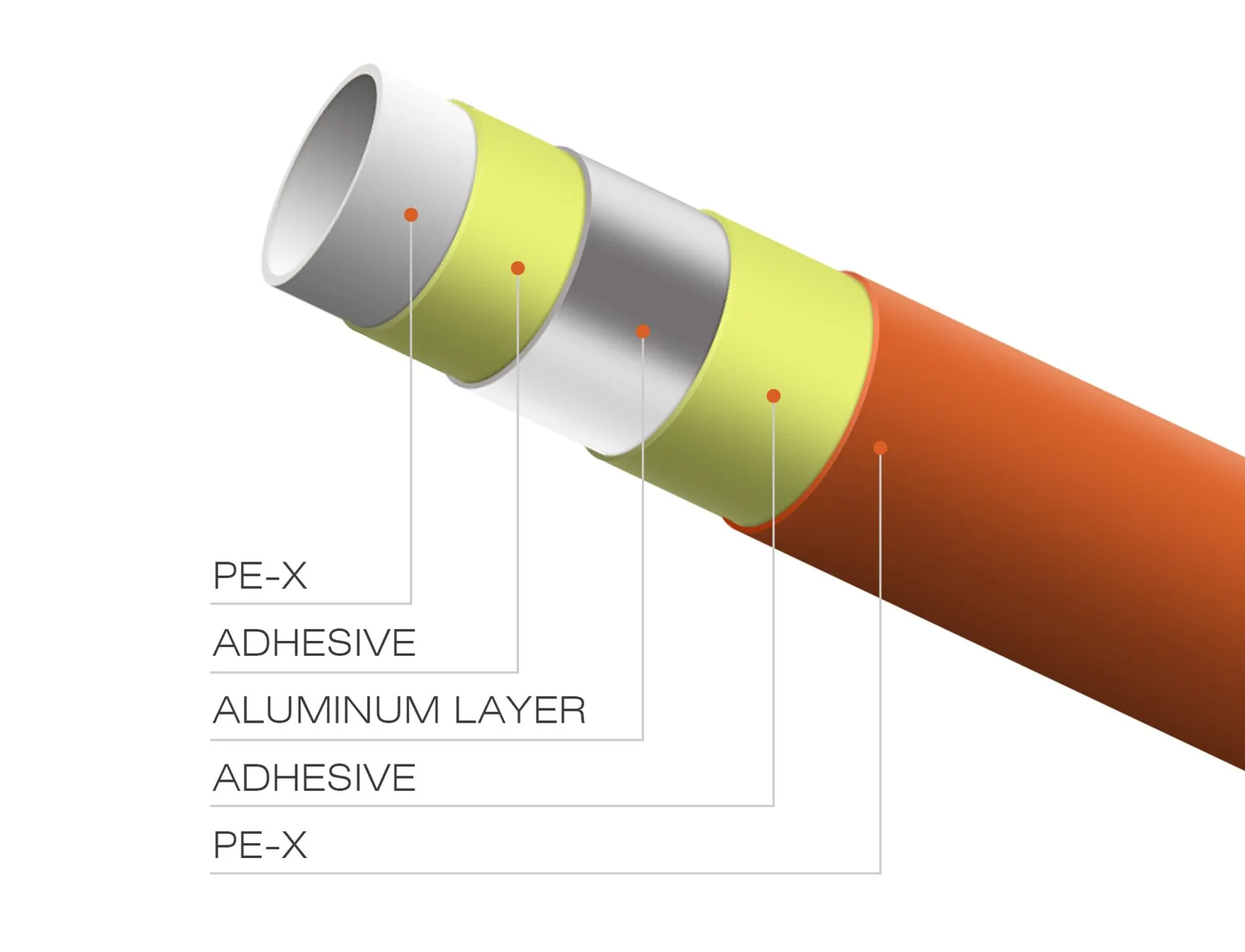
Here’s the angle most galvanic-corrosion write-ups skip because they only think in copper and steel: a non-metallic pipe body is a dielectric. PEX, PP-R and multilayer PEX-AL-PEX carry no continuous metallic path along the pipe wall, so they cannot complete a galvanic cell between two metal components joined through them. Run copper off a manifold on one side and a steel appliance on the other, connected by a PEX or PP-R length, and the two metals are electrically isolated by the pipe itself — no union insert to age, no bonding jumper to defeat it (the pipe carries no bond in the first place).
That’s why the cleanest mixed-metal detail on a modern job is often not a better union — it’s converting the run to plastic and handling every metal interface with a lead-free brass transition fitting. Hitze builds exactly for that pattern: PP-R (to DIN 8077/8078 and EN ISO 15874), PEX and PE-RT (DIN 4726 oxygen barrier for heating grades), and 5-layer multilayer PEX-AL-PEX with a butt-welded aluminium core (to EN ISO 21003; the gas grade also to AS 4176.8, SAI Global StandardsMark), all terminating in press, compression or lead-free brass fittings. The pipe isolates; the brass transition handles the joint. On the multilayer product, note one subtlety: the aluminium core is fully encased between PEX layers and not in contact with the water or with external metals, so it isn’t exposed as a galvanic anode in normal service — the pipe still reads as dielectric to the system.
The trade-off to be honest about: plastic isolates the galvanic path but you still own the transition-fitting alloy. A PP-R or PEX run with a cheap, unknown-grade brass insert at the appliance can still dezincify or leach lead. So “go plastic” doesn’t retire the metallurgy question — it moves it to the fittings, where it’s cheaper to control and where DZR/lead-free grade selection does the work. That’s the whole reason the pipe material and the fitting alloy have to be specified together, not sourced separately.
The Area-Ratio Trap: Why a Small Wrong Fitting Fails Fast
The factor that turns a minor metal mismatch into a fast, localized leak is the ratio of cathode area to anode area. Galvanic current flows between the two metals; the corrosion it drives is spread over whatever anodic surface is available. Put a large cathode on a small anode and all that current concentrates onto a tiny area — the current density on the anode goes through the roof, and it perforates fast and locally. Put a large anode on a small cathode and the same total current spreads thin, so the attack is slow and diffuse. The area effect is one of the most established rules in corrosion engineering, and it’s why identical metallurgy can be a slow nuisance in one geometry and a burst pipe in another.
Translate that to the wall. A small steel or galvanized fitting spliced into a long copper system is the disaster case: acres of copper cathode driving current into a thumb-sized steel anode. That fitting can perforate in a fraction of the time the same steel would last in a majority-steel system, because every square inch of copper upstream and downstream is feeding the attack onto one small target. Flip it — a small brass or bronze fitting (near-noble, small cathode) on a large plastic or plastic-isolated run — and there’s no meaningful anode being driven, so nothing happens. The design rule contractors should internalize: never let the anodic metal be the small part. If a dissimilar metal has to be present, make it the large-area member, not a lone fitting.
Worked Scenario: Retrofitting a Copper Riser Onto a Galvanized Stack
Take a real detail. A contractor is extending an existing galvanized cold-water stack in a mid-rise with a new copper riser to feed a renovated floor. The building is on softened water. Three ways to make the transition, three outcomes:
Option A — copper threaded straight to the galvanized stub (no isolation). Fails the code and the physics. On softened (soft, low-hardness) water the effective driving voltage is high; the galvanized stub is a small anode against a large copper cathode above it. Expect the stub to rust-choke and weep at the joint, plus copper-ion pinholing seeded downstream in the remaining galvanized. This is the callback.
Option B — dielectric union to ASSE 1079. Code-compliant and it interrupts the metallic path — unless the water piping is bonded (it usually is), in which case a bonding jumper across the union re-completes the cell. If bonding is required here, the union satisfies the plumbing inspector while the galvanic corrosion quietly continues.
Option C — DZR brass transition, or convert the riser to PP-R/multilayer with a lead-free brass transition at the stack. The brass sits close to copper (weak couple), carries no organic insert to age, and — critically — doesn’t depend on an electrical interruption, so a bonding jumper doesn’t defeat it. On this soft water, specifying a DZR grade (CW602N/CW724R) also rules out dezincification of the brass itself. Converting the new riser to plastic goes one better: the pipe body is dielectric end to end, and the only metal interface is the controlled brass transition at the stack. Option C is the one that’s still watertight at the 20-year mark. The extra cost over Option A is a few fittings and five minutes of thought — against a wall-open remediation later.
What Hitze Checks / How the Transition Fittings Are Built
Because the transition fitting is the single joint carrying the galvanic risk, the alloy behind it and the way it’s controlled matter more than the price. Here’s what sits behind Hitze’s brass and transition parts, grounded in the actual program:
- Named grades, not “brass.” Lead-free and DZR duty uses CW724R, CW602N and CW511L; standard duty and ball-valve bodies use CW617N (PN25). The grade is specified to the water chemistry and the potable/heating role — not left to whatever bar stock is nearest.
- Potable-water material verification. Hitze holds WRAS material approval for potable water and an NSF International Laboratories BS 6920 potable-water test report (hot ≤65 °C and cold), so the wetted brass and plastics are vetted for drinking-water contact — the compliance layer that sits on top of the galvanic-selection layer.
- Pipe standards that make the plastic runs genuinely dielectric. PP-R to DIN 8077/8078 and EN ISO 15874; oxygen-barrier heating grades to DIN 4726; multilayer to EN ISO 21003 (gas grade to AS 4176.8, SAI Global StandardsMark). PP-R pressure pipe, PP-R fittings and PE-Xb heating pipe are SKZ-tested; PP-R drinking-water pipe carries DVGW type examination.
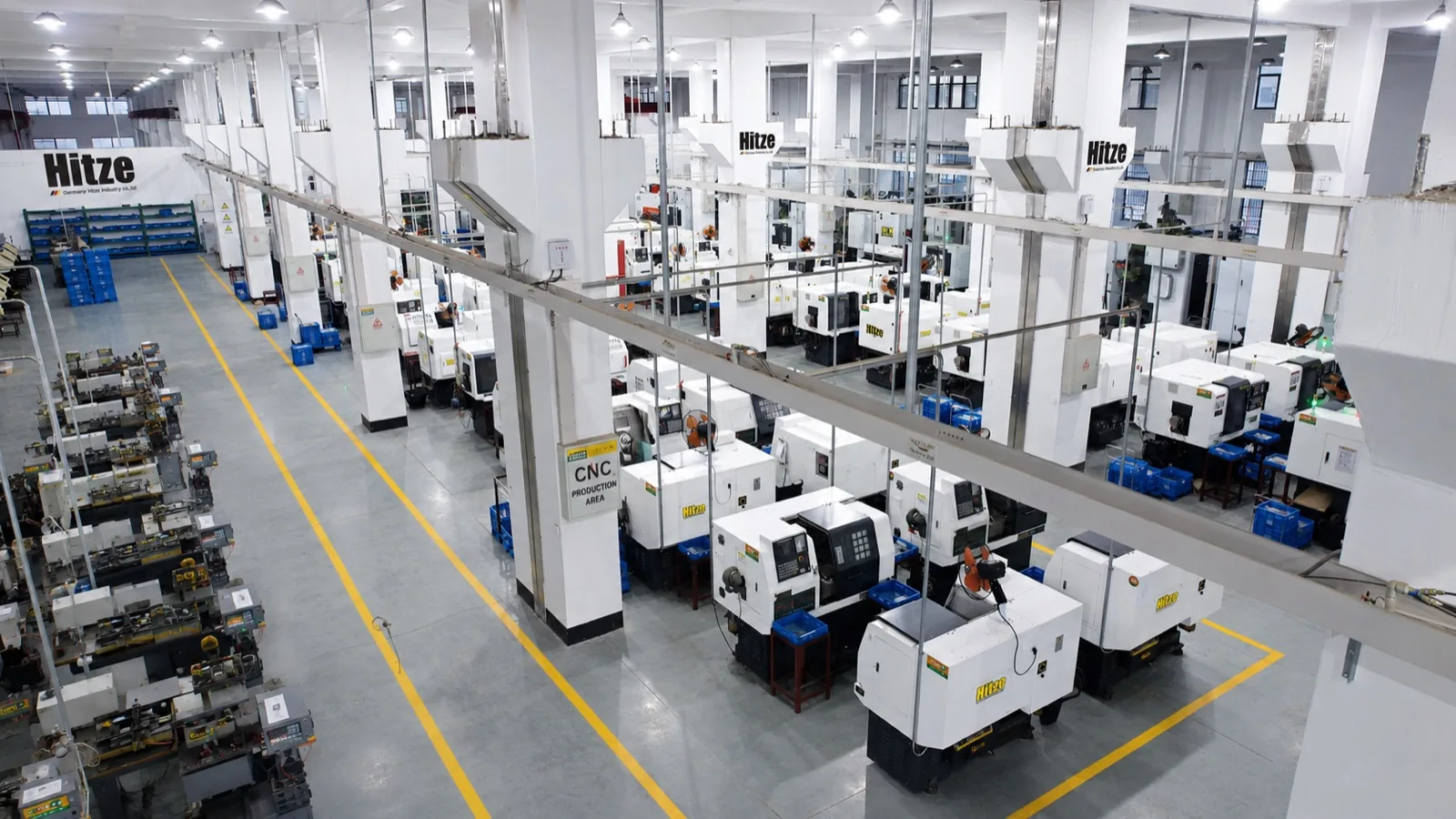
- In-house control end to end. As a German brand engineered in Germany and built to German DIN standards, Hitze runs its own CNC brass machining and hydrostatic/pressure test benches across a 120,000 m² base, so the fitting grade and geometry at your transition joint are traceable rather than assumed.
Who This Is For — and How to Spec the Transition
If you’re a contractor, installer or specifier joining copper to galvanized, terminating plastic risers at metal appliances, or trying to kill recurring pinhole callbacks on mixed-metal systems, the fix is upstream of the leak: pick the transition detail deliberately and put a known-grade brass at the joint. Hitze supplies the lead-free and DZR brass transition fittings, plus the PP-R, PEX, PE-RT and multilayer pipe that makes a run inherently dielectric — matched as one system rather than sourced piecemeal.
There’s no minimum order quantity — you can start with samples or a small trial to qualify the grade and fit before committing a project — and the matched Hitze pipe-and-fitting system carries a 50-year warranty on the system as installed. Grade selection, cert scope and pricing vary by market and order and are available on request. If you’re weighing the transition detail for a specific water chemistry, start with the lead-free brass fitting range and match it to the pipe run rather than treating the fitting as an afterthought.
Frequently Asked Questions
Is a dielectric union or a brass fitting better for a copper-to-galvanized joint? Both are code-accepted (2021 IPC §605.23.1, which lists a copper-alloy fitting or a dielectric fitting), but they fail differently. A dielectric union relies on an insert to interrupt the metallic path — which ages with heat and is defeated by any bonding jumper across it. A brass transition works because brass sits close to copper on the galvanic series, so it doesn’t depend on an interruption at all. On systems that stay electrically bonded, a brass transition is the more robust choice.
Do plastic pipes really stop galvanic corrosion? Yes — a non-metallic pipe body (PEX, PP-R, multilayer) carries no continuous metallic path, so it cannot complete the galvanic cell between two metal parts joined through it. The pipe run is dielectric by construction. You still need the right lead-free/DZR brass grade at any metal transition fitting, but the pipe itself removes the whole-run galvanic risk.
Why does a small steel fitting on a copper system fail so fast? Area ratio. Galvanic current from a large copper cathode concentrates onto the small steel anode, driving the current density — and the corrosion rate — sky-high at that one fitting. The same steel in a mostly-steel system would last far longer. The rule: never let the anodic metal be the small part.
What is DZR brass and when do I need it? Dezincification-resistant brass (grades like CW602N and CW724R) contains a small controlled arsenic addition that stops the selective loss of zinc that hollows out standard brass in hot, soft, acidic or high-chloride water. Spec DZR wherever the water is aggressive or runs hot (above roughly 60 °C); standard CW617N is fine for milder service.
Is Hitze brass made in Germany? Hitze is a German brand, engineered in Germany and built to German DIN standards, with material approvals including WRAS (potable water) and an NSF Laboratories BS 6920 potable-water test report. Manufacturing and cert scope details are available on request.
Can bonding or grounding cause galvanic corrosion even with a dielectric union? Yes. Electrical bonding of metal water piping is routine, and a bonding jumper across a dielectric union re-completes the metallic circuit and reinstates the galvanic cell — while still passing a plumbing inspection. If the piping must remain bonded, use a brass transition, which works without relying on an electrical break.


