Key takeaways
- Two standards, two jobs. NSF/ANSI 61 tests what leaches into the water; NSF/ANSI 372 verifies the lead content of the material. A brass fitting for US drinking water needs to satisfy both — 61 does not replace 372.
- The legal number is 0.25%. Under Section 1417 of the Safe Drinking Water Act, “lead free” means a weighted average of no more than 0.25% lead across the wetted surfaces (0.2% for solder and flux). That has been federal law since 4 January 2014.
- Content-compliant is not the same as safe. A fitting can hit 0.25% lead and still fail the NSF 61 leaching test if another contaminant migrates. You want both boxes ticked, in writing.
- Alloy grade is the tell. Ask which brass: DZR grades like CW724R (silicon brass) and CW511L resist dezincification and carry ≤0.1% lead; standard CW617N is fine for many jobs but is not a low-lead grade.
- Verify, don’t trust the marking. “NL”/”LF” stamps and NSF logos can be copied. The real proof is a current listing you can find in the certifier’s public directory.
If you install potable-water systems in North America, “lead-free brass” is not a marketing phrase — it is a legal threshold that an inspector, a plans examiner, or a plaintiff’s attorney can hold you to. The confusion that gets contractors in trouble is treating NSF/ANSI 61 and NSF/ANSI 372 as one badge. They are two different tests answering two different questions, and a fitting that satisfies one can quietly fail the other. This guide untangles the standards, the actual 0.25% math, the brass grades that get you there, and the paperwork you should demand before a single fitting goes behind a wall.
NSF/ANSI 61 vs 372: leaching versus content, and why you need both
Start with the split, because everything downstream depends on it. NSF/ANSI 61 is a health-effects standard: a laboratory exposes the product to test water under controlled conditions and measures what actually migrates out of the wetted surface — lead, but also other regulated contaminants. It answers, “Does water sitting in this fitting pick up anything harmful?” NSF/ANSI 372 is a material-content standard: it verifies, by calculation and analysis, that the lead content of the wetted surfaces stays at or below the 0.25% weighted average. It answers, “Is there too much lead in the metal to begin with?”
Here is the trap. A supplier tells you a fitting is “NSF 61 certified” and you assume that covers the lead law. It does not, on its own. NSF 61 measures migration; NSF 372 measures the 0.25% content limit that the Safe Drinking Water Act actually enforces. In practice reputable manufacturers certify to both — the combined listing is often written as NSF/ANSI 61 & NSF/ANSI 372 or “NSF/ANSI 61-G,” where the “G” annex historically bundled the content requirement. If a data sheet cites 61 only, that is your cue to ask for the 372 line specifically, in writing, before you spec it into a potable job. The reverse gap matters too: a fitting can be content-compliant at 0.25% and still fail a leaching threshold, which is exactly why the two standards exist side by side rather than one absorbing the other.
One more moving part worth knowing so you are not surprised at a submittal review: NSF tightened the lead-extraction bar. The Q criterion — the statistical lead dose allowed to leach from endpoint devices under Section 9 of NSF/ANSI/CAN 61 — dropped to 1 µg for faucets and 0.5 µg for other endpoint devices (valves, connectors) effective 1 January 2024, down from the previous 5 µg and 3 µg. If you are looking at an older listing, confirm it has been re-evaluated to the current criteria. For inline fittings behind the wall this matters less than for endpoint devices at the tap, but on a project spec you want listings that reflect the current edition.
The 0.25% rule: what “lead free” legally means and where it doesn’t apply
The number contractors have to internalize comes from Section 1417 of the Safe Drinking Water Act, as amended by the Reduction of Lead in Drinking Water Act (RLDWA) of 2011. Before that amendment, “lead free” tolerated a weighted average of up to 8% lead in brass — which is why so much older red-brass plumbing is, by today’s rule, non-compliant. The RLDWA cut that to a weighted average of 0.25% lead across the wetted surfaces of pipes, pipe fittings, plumbing fittings and fixtures, plus 0.2% for solder and flux. It became federal law on 4 January 2014.
“Weighted average across wetted surfaces” is the phrase that trips people. It does not mean every square millimeter is under 0.25%; it means the lead content is averaged over the surface areas of each wetted component, weighted by how much of the total wetted surface each one contributes. A small high-lead seat in an otherwise low-lead body can still blow the average if its wetted area is large. This is precisely the calculation NSF/ANSI 372 formalizes (its Annex G methodology), and it is why you cannot eyeball compliance from an alloy name alone — the geometry matters.
Two practical wrinkles. First, several states enforced this earlier and stricter than the feds: California (AB 1953) and Vermont both took effect 1 January 2010, with Maryland (2012) and Louisiana (2013) following before the federal rule landed. If you sell or install into California, “we meet the federal rule” is table stakes, not a differentiator. Second, the law carves out exemptions — products used exclusively for non-potable service (industrial, irrigation, outdoor hose bibbs), plus toilets, bidets, urinals, fill and flushometer valves, tub fillers, shower valves, service saddles, and water-distribution main gate valves 2 inches and larger. A shower valve does not legally need to be low-lead. That is a genuine loophole, not a reason to spec high-lead brass where drinking water flows — but it explains why some fittings in the same catalog carry the “NL” mark and others don’t.
Brass grades that actually get you there: DZR, silicon brass, and the dezincification problem
Lead does two jobs in traditional brass: it makes the alloy machine cleanly and it lubricates the cut. Strip the lead out to hit 0.25% and you have to solve machinability another way — which is where alloy selection stops being a spec-sheet formality and starts being an engineering decision. There are two families worth knowing by name.
DZR (dezincification-resistant) brass — grades like CW511L (CuZn38As, arsenic-inhibited) and CW602N — is engineered against a specific failure mode: dezincification, where aggressive water leaches zinc out of the alloy and leaves behind a porous, weak copper skeleton that eventually cracks or blocks. In soft or chloride-rich water, standard brass can dezincify in years; DZR brass resists it. CW511L and CW724R carry lead at ≤0.1%, comfortably under the 0.25% content ceiling. CW724R is the newer answer — a silicon brass (CuZn21Si3P) whose hard kappa-phase microstructure both breaks machining chips and blocks dezincification without arsenic, positioning it as the lead-free replacement for older CW602N in demanding potable applications.
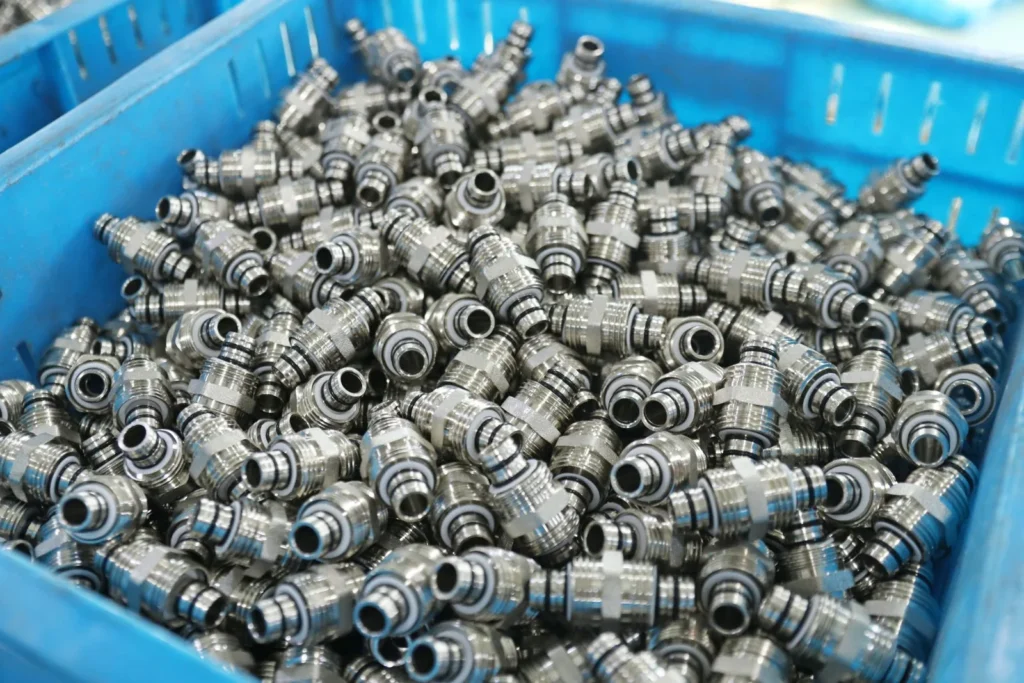
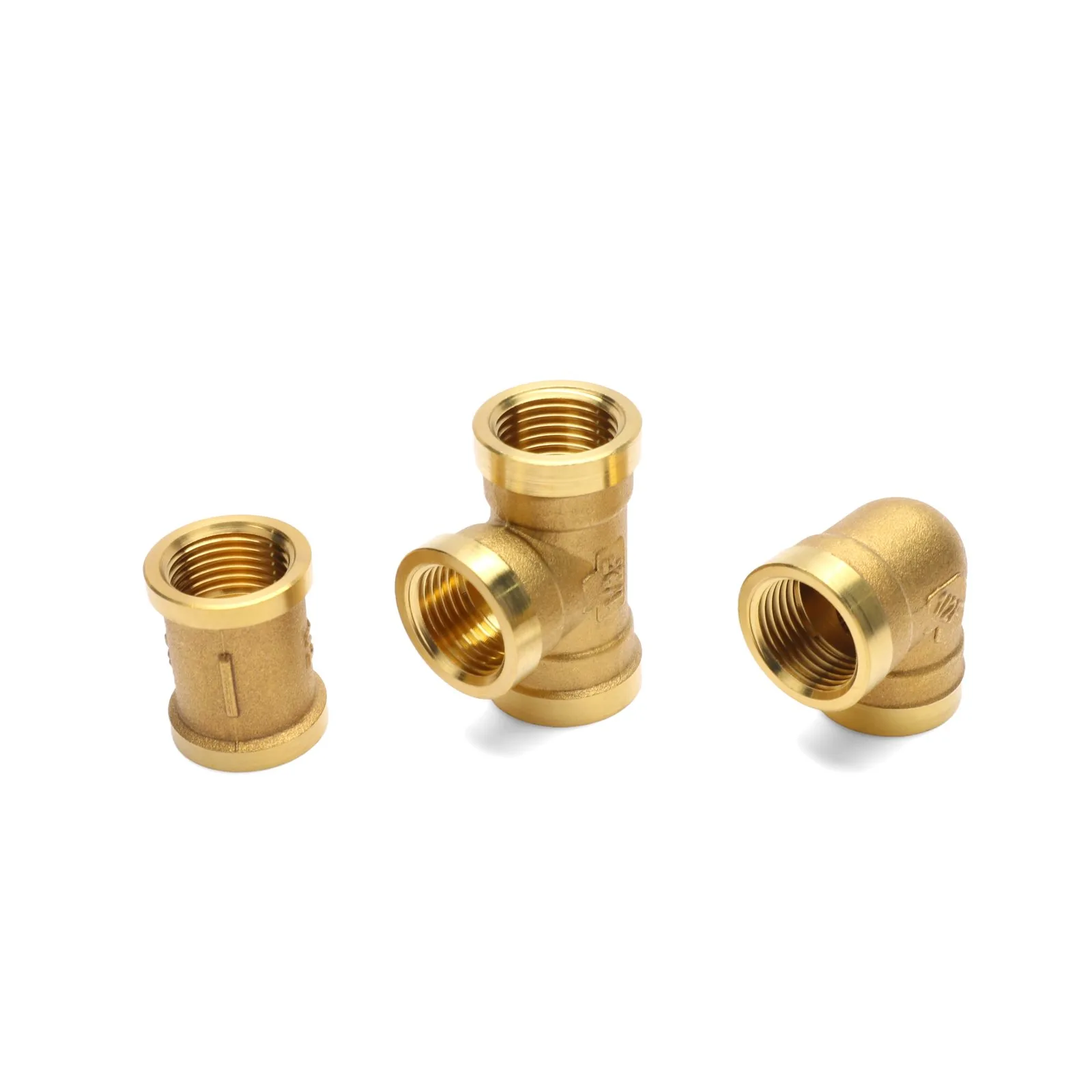
Then there is CW617N — the workhorse standard brass. It machines beautifully and is entirely appropriate for many fittings and for CW617N PN25 ball valves, but it is not a low-lead grade and is not automatically dezincification-resistant. Using CW617N where the law requires 0.25% lead-free, or where the water chemistry demands DZR, is the single most common way a “brass fitting” ends up non-compliant on paper while looking identical on the shelf. The lesson for a contractor: don’t ask “is it brass?” Ask “which grade, and is that grade certified for this water?” On a spec sheet you want the grade named explicitly — our lead-free brass fittings are machined from the DZR and low-lead grades above precisely so the wetted path clears the content rule by design rather than by luck.
| Brass grade | Lead content | Dezincification resistance | Best for |
|---|---|---|---|
| CW724R (silicon brass) | ≤0.1% (low-lead) | High (intrinsic, no arsenic) | Potable fittings in aggressive water; premium spec |
| CW511L (DZR) | ≤0.1% (low-lead) | High (arsenic-inhibited) | Potable valves & fittings, sanitary systems |
| CW602N (DZR) | Low-lead grade | High | Established DZR potable fittings |
| CW617N (standard) | Standard (not low-lead) | Not inherently DZR | General fittings, PN25 ball valves, non-potable/exempt uses |
How to verify a lead-free claim is real (and not a copied logo)
An “NL” stamp on a fitting and an NSF logo on a carton are the easiest things in the world to counterfeit, and imported plumbing has been caught carrying both without a live certification behind them. Treat the marking as a claim to be checked, not proof. The chain of evidence you actually want looks like this:
First, get the certifier and the listing number, not just a logo. Legitimate lead-free products carry the certification mark plus the standard designation (“NSF/ANSI 61,” “NSF/ANSI/CAN 372”) on the product, packaging, or instruction sheet — but the mark is only as good as the listing behind it. Second, look the product up in the certifier’s public online directory by manufacturer and model. If it is a real certification (NSF, IAPMO/cUPC, WRAS, and equivalents all publish searchable listings), the current listing will be there with the exact models and standards it covers. If you can’t find it, the badge means nothing. Third, for a container-scale order, request the current certificate plus the underlying test report — the leaching report for 61, the content calculation for 372 — and check that the models, sizes, and alloy on the report match what you were quoted. Certificates expire and get re-scoped; a PDF from three years ago is not the same as an active listing.
A quick end-to-end example. A contractor in California is asked to re-pipe a multifamily domestic-water riser and the wholesaler offers two lines of brass press fittings at very different prices. The cheaper line’s data sheet says “NSF 61 certified” and nothing else. The contractor asks two questions: (1) which brass grade, and (2) is it also listed to NSF/ANSI 372? The answers come back “CW617N” and “we’ll check.” That is a stop sign — CW617N is standard brass, and a 61-only claim leaves the 0.25% content rule unproven, which fails California’s AB 1953 outright. The dearer line lists to NSF/ANSI 61 & 372 with a DZR/low-lead grade, verifiable in the certifier’s directory. On a potable riser that will be inspected, the second line is the only one that survives a plans check — and the price gap is trivial next to the cost of ripping out a non-compliant riser.
What Hitze checks — and how our brass is built for potable water
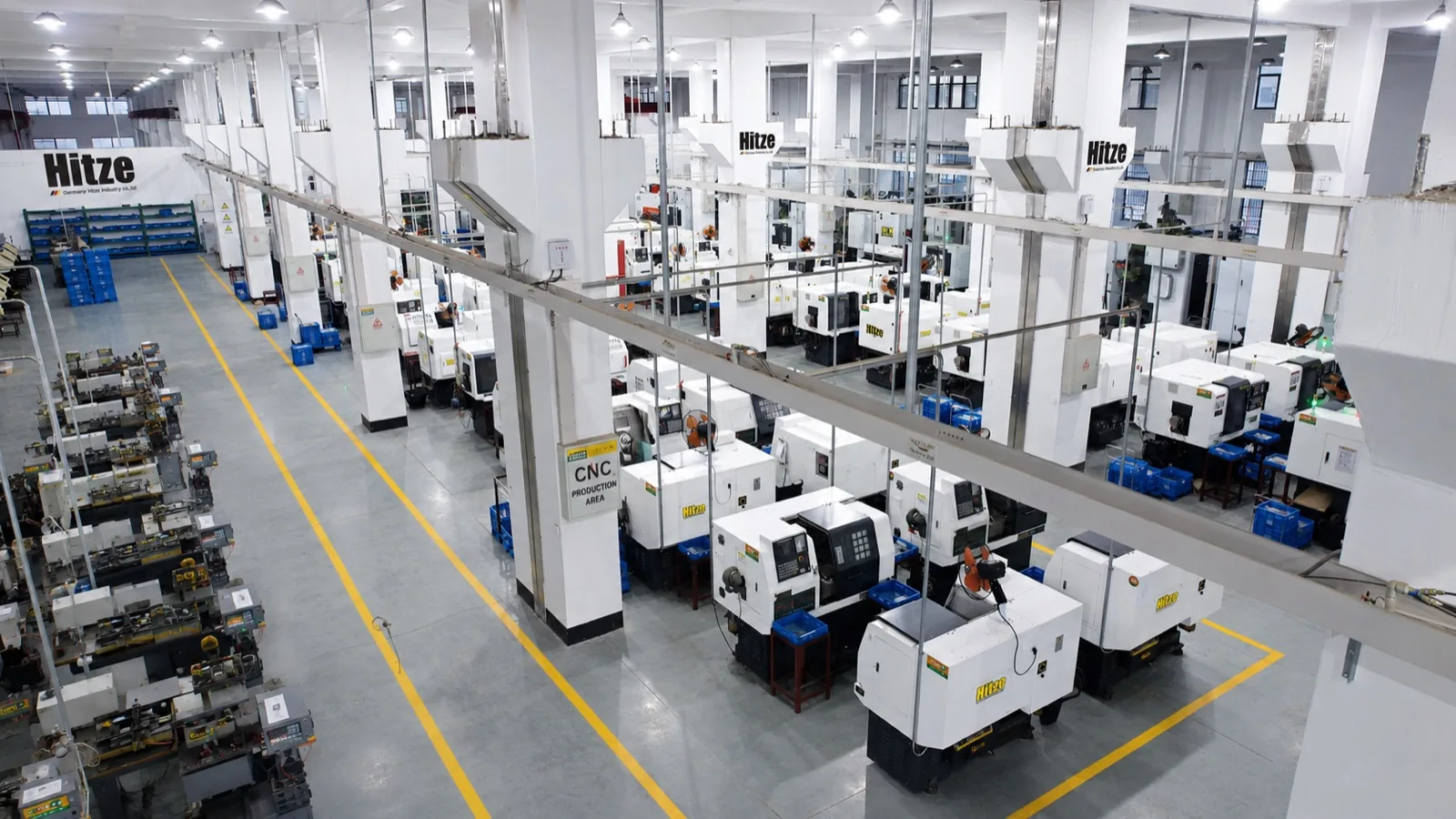
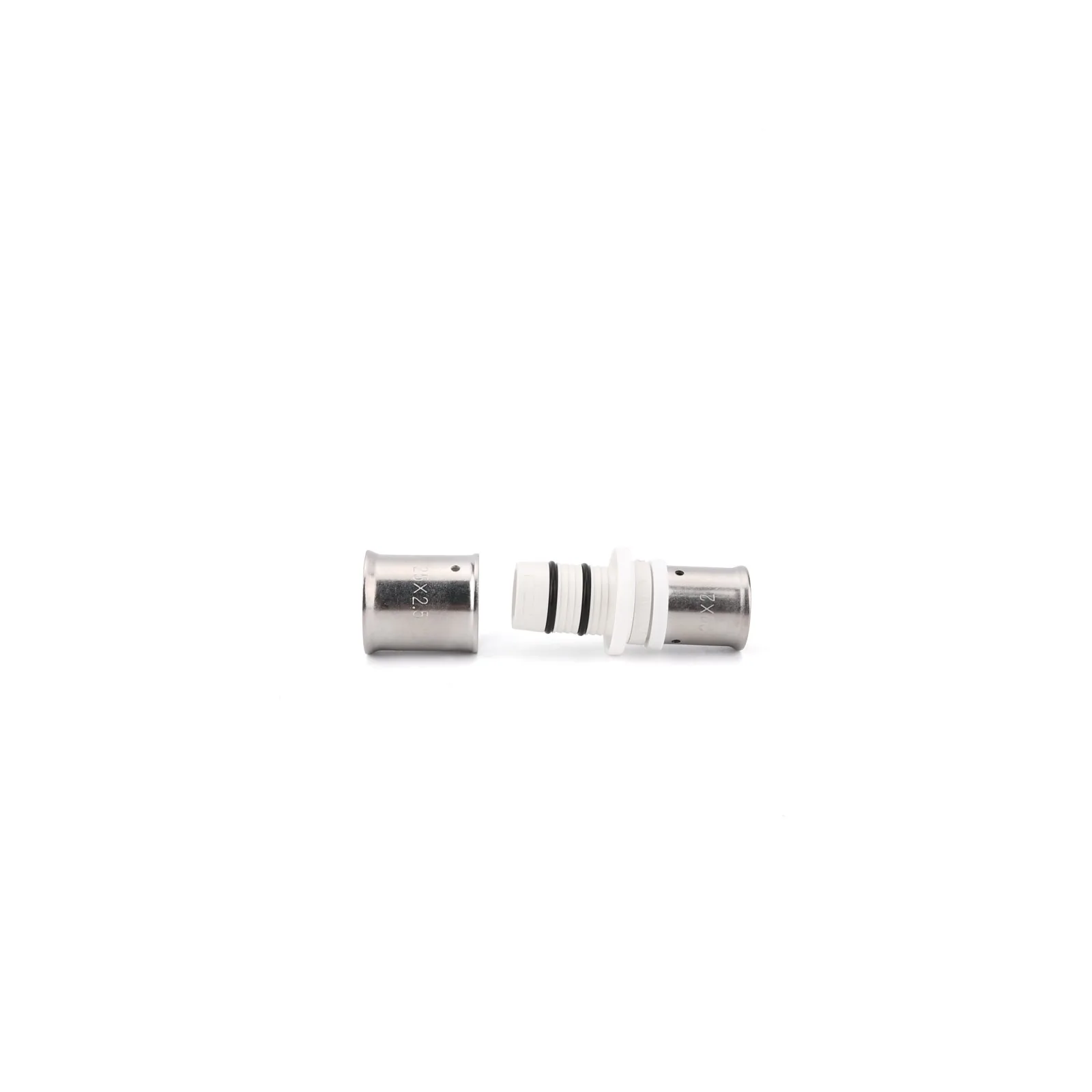
Hitze is a German brand engineered in Germany and built to German DIN standards, with a production base of 120,000 m² and exports to 118+ countries since 1974. On the brass side, that translates into a few concrete controls rather than slogans. We machine our wetted brass from lead-free / DZR grades — CW724R, CW511L and CW602N — and reserve standard CW617N for fittings and PN25 ball valves where it is appropriate or where the application is exempt. Grade is verified at incoming bar stock, so a potable fitting cannot quietly become standard brass on the line. On the pressed side, the wetted part is the lead-free brass insert; the stainless sleeve that grips the pipe never touches water, which keeps the compliance calculation clean.
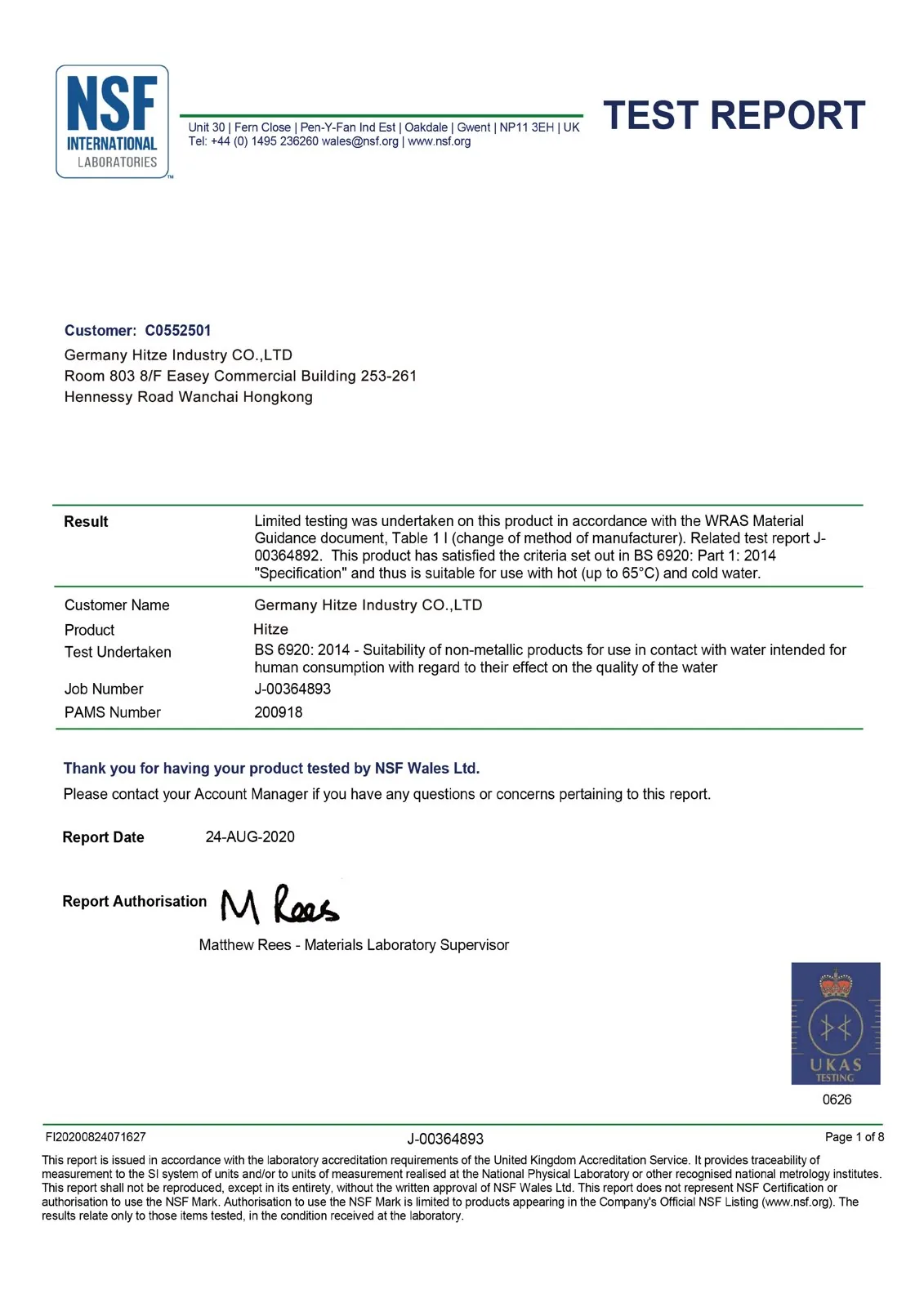
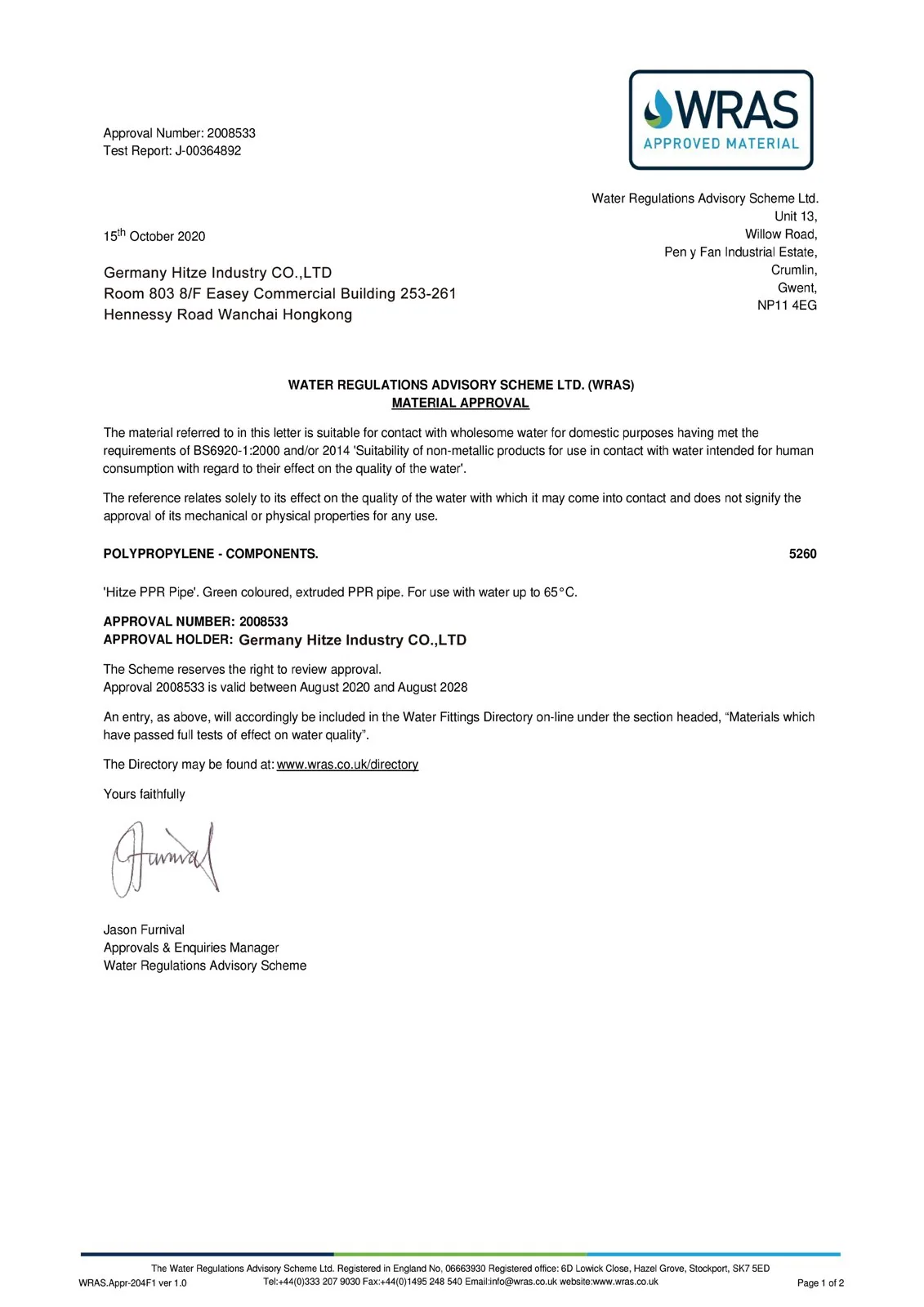
On documentation, Hitze holds an NSF International Laboratories BS 6920 potable-water test report (hot ≤65°C and cold) and references cUPC/UPC (IAPMO), NSF-14 and NSF/ANSI 61 among its schemes, alongside a WRAS material approval and DVGW type examination for drinking-water product on the European side. We describe our brass as “certified to” these schemes and provide the specific certificate numbers and matching test reports on request, per project and market — because the honest answer to “which listing covers this exact model in my market?” is one you should be able to pull from the certifier’s directory, not take on faith.
Best for / not for: matching brass to the job
Low-lead / DZR brass (CW724R, CW511L, CW602N) is the right call for: any wetted fitting on a domestic cold- or hot-water line in the US or Canada; projects in California, Vermont, Maryland or Louisiana where state law bites first; aggressive, soft, or chloride-heavy water where dezincification is a real corrosion risk; and any job where the product will face a plans-examiner or inspector who can pull the listing.
Standard CW617N brass is acceptable for: legally exempt applications (non-potable, irrigation, outdoor hose bibbs, and the enumerated fixture exemptions), general-purpose valves like PN25 ball valves where potable low-lead rules don’t apply, and markets that don’t mandate the 0.25% content limit. It is not for potable drinking-water contact in a regulated US/Canada install — using it there is how a technically fine fitting becomes a compliance failure and a callback.
Who this is for
If you are a contractor, importer, or distributor supplying potable-water systems into North America or Europe and you need brass fittings whose lead-free and DZR grades come with certificates you can actually verify in a directory, Hitze can supply the grade, the listing reference, and the matching test report per market. Explore the lead-free brass fittings range, review what we hold on our certifications & compliance page, and see how the same grades carry through to our press fittings and compression fittings so a single-brand system keeps the whole wetted path compliant. Hitze has no MOQ — you can start with samples or a small trial order — and certificate numbers and lead times are available on request per market.
Frequently asked questions
Is NSF/ANSI 61 the same as lead-free certification?
No. NSF/ANSI 61 is a health-effects standard that tests what leaches out of the wetted surface, including lead but not only lead. The lead-content limit — the 0.25% weighted average that the Safe Drinking Water Act enforces — is verified under NSF/ANSI 372. A potable brass fitting should carry both; a “61 only” claim leaves the content rule unproven.
What does “lead free” actually mean by law?
Under Section 1417 of the Safe Drinking Water Act, as amended by the Reduction of Lead in Drinking Water Act of 2011, “lead free” means a weighted average of no more than 0.25% lead across the wetted surfaces of pipes, fittings and fixtures (and 0.2% for solder and flux). It has been federal law since 4 January 2014, and California and Vermont enforced it from 2010.
Is CW617N brass lead-free and safe for drinking water?
CW617N is standard brass, not a low-lead grade, and it is not inherently dezincification-resistant. It is fine for general fittings, PN25 ball valves, and legally exempt or non-potable uses. For regulated potable-water contact in the US or Canada, you want a low-lead / DZR grade such as CW724R, CW511L or CW602N, certified to NSF/ANSI 61 & 372.
Does Hitze brass meet US and European potable-water rules?
Hitze machines wetted brass from lead-free / DZR grades (CW724R, CW511L, CW602N) and holds an NSF International Laboratories BS 6920 potable-water test report, WRAS material approval and DVGW type examination, and references cUPC/UPC (IAPMO), NSF-14 and NSF/ANSI 61 among its schemes. Certificate numbers and the matching test reports for a specific model and market are available on request.
How do I verify a lead-free certification is genuine?
Don’t rely on the “NL”/”LF” stamp or logo — look the manufacturer and model up in the certifier’s public online listing directory (NSF, IAPMO, WRAS and equivalents all publish them). Confirm the standards, models and sizes on the active listing match your quote, and for large orders request the current certificate plus the underlying leaching and content test reports.
Which products are exempt from the lead-free rule?
The Safe Drinking Water Act exempts plumbing used exclusively for non-potable service (industrial, irrigation, outdoor watering), plus toilets, bidets, urinals, fill and flushometer valves, tub fillers, shower valves, service saddles, and water-distribution main gate valves 2 inches and larger. Fire hydrants were exempted separately in 2013. Everything else on a potable line must be lead-free.
Authoritative references: US EPA — Use of Lead Free Pipes, Fittings, Fixtures, Solder and Flux; NSF — Safe Drinking Water Act Requirements (61 vs 372); NSF — Lowering the Q criterion for endpoint devices; US EPA — How to Identify Lead-Free Certification Marks. This article is general guidance, not legal advice; confirm current requirements for your jurisdiction and project.