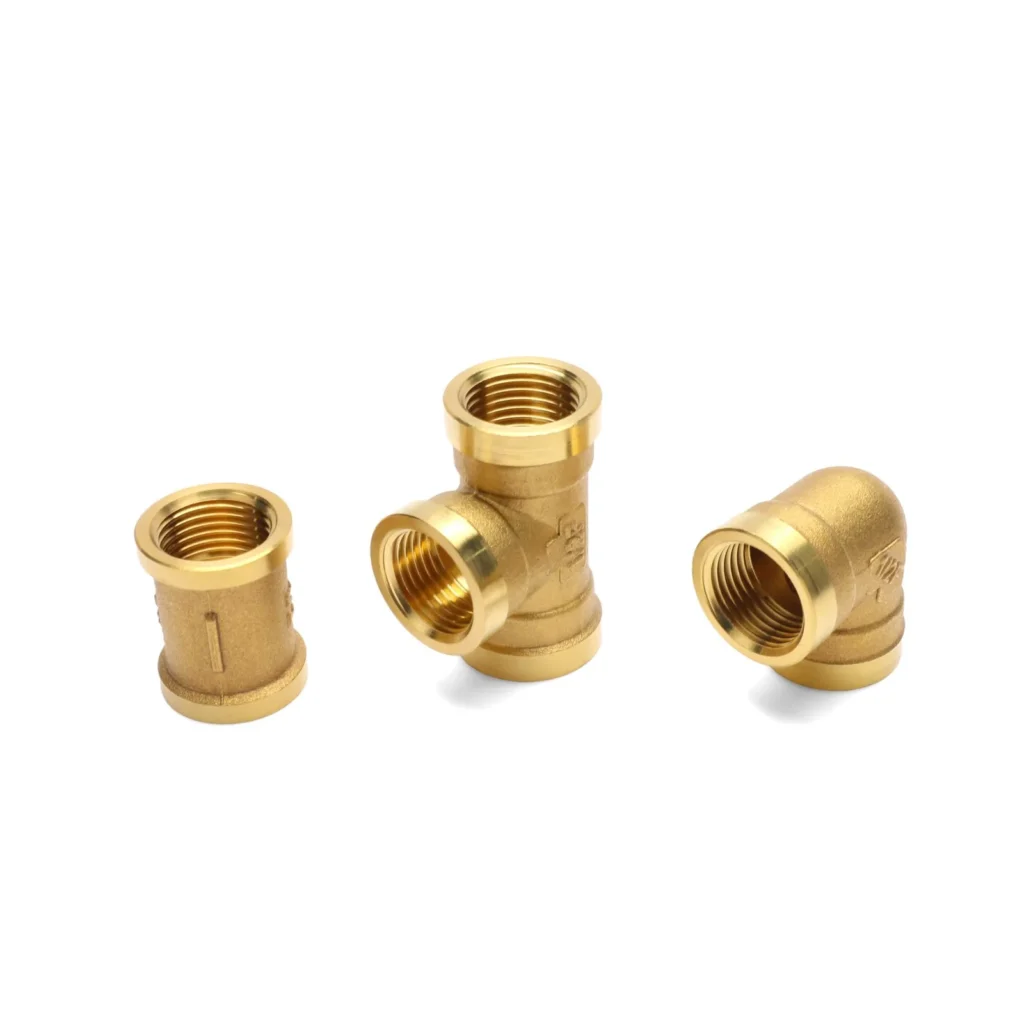
If you stock plumbing brass for resale, the alloy stamped on the fitting is not a metallurgy footnote — it is the line between a fitting your customer can legally install in a potable-water line and one that gets a job red-tagged, dezincifies inside a year, or fails a lead audit. Three families of designations sit behind almost every spec sheet you will read: standard leaded brass (CW617N), dezincification-resistant or DZR grades (CW602N, CW511L), and the newer low-lead silicon brass (CW724R). This guide explains what each one actually resists, which markets each unlocks, and how to avoid stocking a “lead-free” fitting that isn’t legal where your buyer is selling.
Key Takeaways
- “Lead-free” and “dezincification-resistant” are two different problems. Lead is a health limit (US: ≤0.25% weighted average of lead across wetted surfaces); dezincification is a durability failure where zinc leaches out and leaves porous, weak copper.
- CW617N is standard leaded brass (Pb ~1.6–2.5%) — excellent machinability, but not dezincification-resistant and not “lead-free” for potable wetted surfaces on its own.
- DZR grades (CW602N, CW511L) add a trace of arsenic to stop dezincification; qualifying parts pass BS EN ISO 6509 (≤200 µm attack) and are stamped DZR.
- CW724R is a low-lead silicon brass (Pb ≤0.10%) that is dezincification-resistant intrinsically — it clears both the lead limit and the corrosion test without arsenic.
- For resale, the fitting’s alloy must match the destination market’s rule: NSF/ANSI 372 + 61 for the US, WRAS + DZR for the UK, and the EU Drinking Water Directive positive list (Pb ≤0.1% w/w) from 31 December 2026.
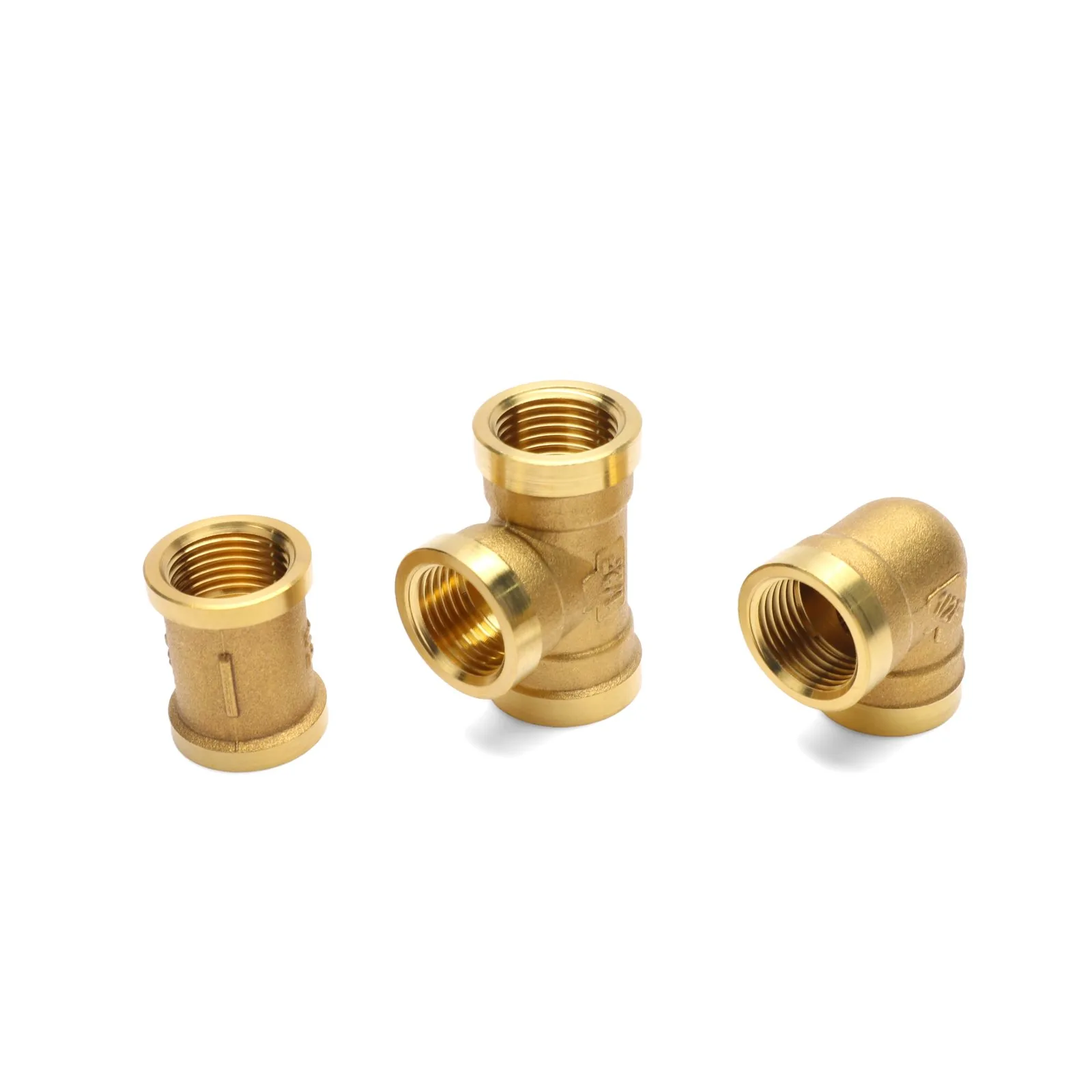
Two Problems Hiding Under One Word: Lead and Dezincification
The single most expensive mistake a distributor makes with brass is treating “lead-free” and “dezincification-resistant” as the same claim. They solve different failures, they are governed by different documents, and a fitting can pass one and flunk the other. Confuse them and you either ship a product that leaches lead where that is illegal, or one that corrodes from the inside in aggressive water — and your customer sends the callback to you.
Lead is a health and legal problem. Traditional brass carries 1.6–2.5% lead precisely because lead makes brass machine cleanly at speed. But under the US Safe Drinking Water Act, Section 1417 — as amended by the Reduction of Lead in Drinking Water Act — anything sold as “lead-free” for potable use must hold a weighted average of no more than 0.25% lead across its wetted surfaces (0.2% for solder and flux). That threshold has been enforceable since 4 January 2014, dropping the old 8% ceiling by a factor of 32. So a standard leaded fitting is not automatically illegal — it is illegal to sell it as potable, lead-free plumbing in the US.
Dezincification is a durability problem. In soft, warm, chlorinated or acidic water, ordinary duplex brass loses zinc selectively. The zinc dissolves and leaves behind a spongy, mechanically weak copper skeleton — you see a white or pinkish plug, then a weep, then a split fitting under pressure. This is the failure that strands a fitting behind a finished wall. A DZR grade is one that has been shown to resist this attack, verified to BS EN ISO 6509 (ISO 6509-1): the sample sits in a 1% copper(II) chloride bath at 75°C for 24 hours, and to pass, the dezincification must not penetrate deeper than 200 micrometres. Parts that qualify carry a forged “DZR” or “DR” mark (older stock may read “CR”).
Here is the insider point most spec sheets bury: a fitting can be low-lead but still dezincify, and it can be DZR but still exceed a lead limit. CW724R happens to solve both at once; the arsenic-inhibited DZR grades solve corrosion but you must still check their lead status for the destination market. Never assume one certificate covers the other axis.
The Four Grades You Will Actually See on a Spec Sheet
Across European-style plumbing brass, four EN designations do most of the work. Understanding what each one is for tells you which one belongs in which SKU — and stops you paying a silicon-brass premium on a part that never touches drinking water.
CW617N — the workhorse, but know its limits
CW617N (CuZn40Pb2) is the default machining brass: roughly 57–59% copper, 1.6–2.5% lead, the balance zinc. It hot-stamps and machines beautifully, which is why the vast majority of valve bodies and threaded fittings worldwide are made from it. What it is not: it is not inherently dezincification-resistant, and its lead content puts it above the “lead-free” potable threshold on its own. That does not make it a bad grade — it makes it a grade for the right job. Heating circuits, radiator valves, compressed air, industrial and non-potable service are all entirely legitimate homes for CW617N. Hitze rates its CW617N ball valves to PN25. The error is selling a CW617N part into a US or UK potable line and calling it lead-free or DZR.
CW602N and CW511L — the arsenic-inhibited DZR grades
These are the classic answer to dezincification. CW602N (CuZn36Pb2As) and CW511L (CuZn38As, roughly 61.5–63.5% copper) both carry a small, deliberate arsenic addition — on the order of 0.02–0.15% — which suppresses the selective loss of zinc. Both pass EN ISO 6509 and earn the DZR stamp. CW511L keeps lead low (≤0.2% at the material level), which matters when you are chasing tighter potable limits. These grades are the mainstay of DZR fittings in the UK and much of Europe, where the water fittings regulations expect DZR brass for buried and concealed potable connections. If your buyer’s market says “DZR required,” an arsenic-inhibited grade is usually what satisfies the inspector.
CW724R — low-lead silicon brass that solves both axes
CW724R (CuZn21Si3P) is the grade written for the modern potable rulebook. It is a silicon brass: about 75–77% copper, ~3% silicon, only ~21% zinc, and lead held to ≤0.10%. Because it carries so little zinc and a hard silicon (kappa) phase, it resists dezincification intrinsically — no arsenic inhibitor required — and its lead content comfortably satisfies the NSF/ANSI 372 weighted-average limit and the tighter EU positive-list direction. When a buyer needs one alloy that clears both the lead audit and the corrosion test with a single certificate, CW724R is the grade that does it, at a higher material cost. Hitze specifies CW724R alongside CW511L and CW602N precisely so the right SKU can carry the right alloy rather than over-speccing every part.
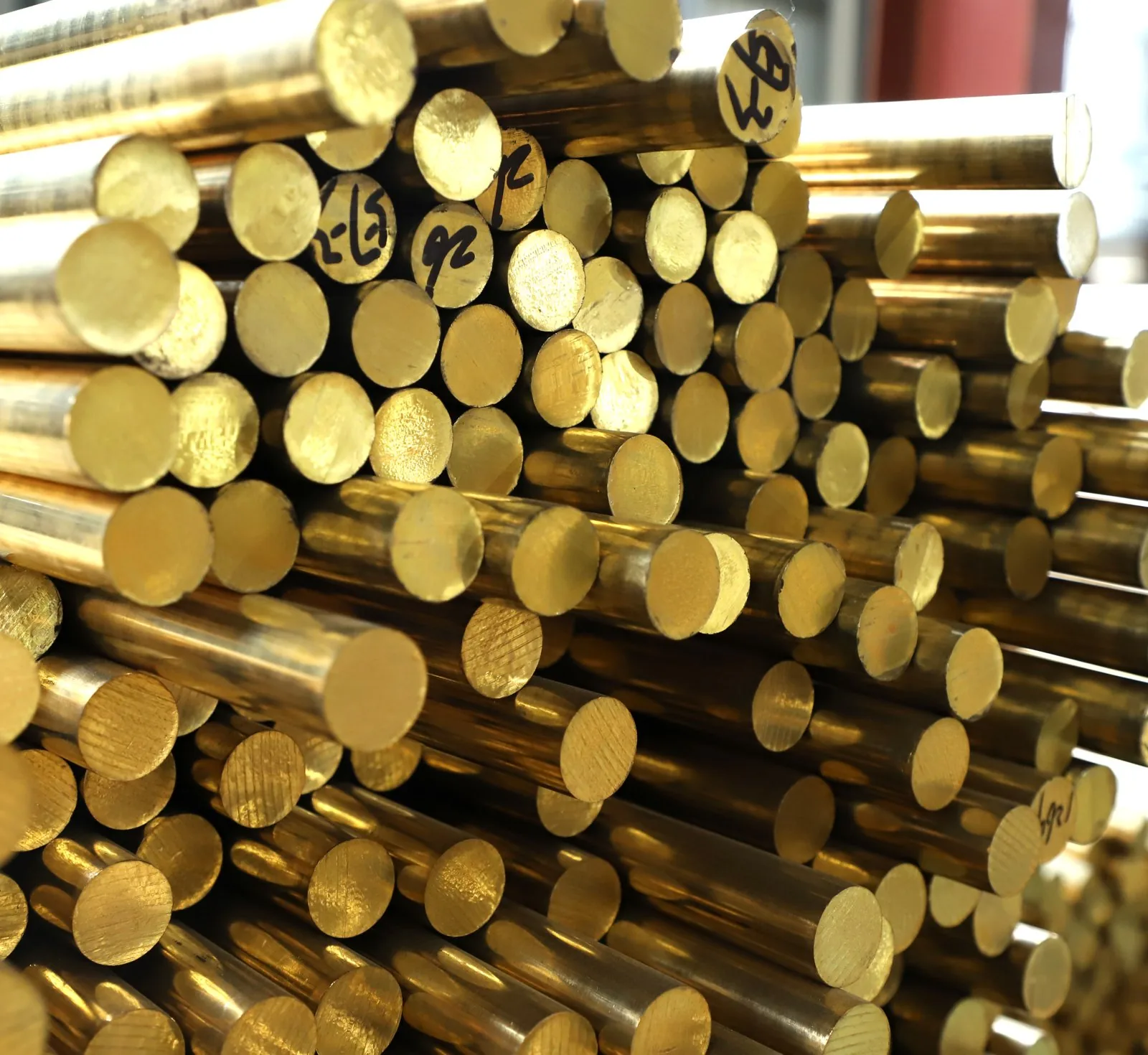
Grade-by-Grade Comparison for Resale Decisions
The table below is the version to keep next to your purchasing sheet. Read it by column: pick the market rule your buyer faces, then the alloy that clears it, not the other way around.
| Grade | Type | Approx. lead | Dezincification-resistant? | Best resale fit |
|---|---|---|---|---|
| CW617N | Standard leaded brass | ~1.6–2.5% | No | Heating, radiator valves, non-potable & industrial |
| CW602N | DZR (arsenic-inhibited) | low, leaded | Yes (EN ISO 6509) | UK/EU potable where DZR is specified |
| CW511L | DZR (arsenic-inhibited) | ≤0.2% | Yes (EN ISO 6509) | EU potable, tighter-lead markets |
| CW724R | Low-lead silicon brass | ≤0.10% | Yes (intrinsic, no arsenic) | US NSF 372/61, EU DWD 2026, single-cert potable |
Notice what the table does not do: it does not tell you a single grade is “best.” A distributor who buries CW724R into a heating-only radiator valve is paying a silicon-brass premium for a corrosion margin the application never uses; a distributor who ships CW617N into a US potable range is one audit away from a recall. The discipline is matching grade to duty and to the destination rule — which is exactly why a full-range supplier who can furnish all four alloys under one roof beats stitching a system together from four vendors with four certificate packs. For the fittings themselves, our lead-free and DZR brass fittings range is built around that grade-to-duty logic so you stock the correct alloy per SKU rather than over-speccing the whole line.
Which Certificate Unlocks Which Market
The alloy is only half the resale story; the paperwork is the other half, and it is market-specific. A wholesaler’s real fear — a cert gap that blocks resale — almost always traces back to confusing a material certificate with a market approval.
United States & Canada. Two standards travel together. NSF/ANSI/CAN 372 verifies the lead content of the wetted material meets the 0.25% weighted average — it is the “is this lead-free by law” test. NSF/ANSI 61 is separate: it limits how much lead and other contaminants may leach into the water from the finished part. You generally need both, plus a plumbing-code listing (cUPC/UPC through IAPMO) to actually install. A grade like CW724R is written to clear 372; the finished-part testing to 61 still has to be done and held by the maker.
United Kingdom. Potable fittings are expected to hold WRAS material approval, and the water fittings regulations call for DZR brass in buried and concealed potable connections — which is why the arsenic-inhibited grades and their DZR stamp matter so much in this market.
European Union. The direction of travel is set by the Drinking Water Directive (EU) 2020/2184: a maximum lead level of 5 micrograms per litre at the tap, and an EU positive list of materials that caps lead in the material itself at 0.1% by weight. The key applicability date is 31 December 2026. If your buyer is placing product on the EU market from 2027 onward, silicon brass such as CW724R is the grade most obviously aligned with that positive list.
What Hitze Checks Before a Brass Fitting Ships
Because the wrong alloy in the wrong SKU is a resale liability, the control starts at the raw bar, not at final packing. Here is how Hitze — a German brand engineered to German DIN standards — builds and verifies its brass so the grade on the certificate is the grade in the box:
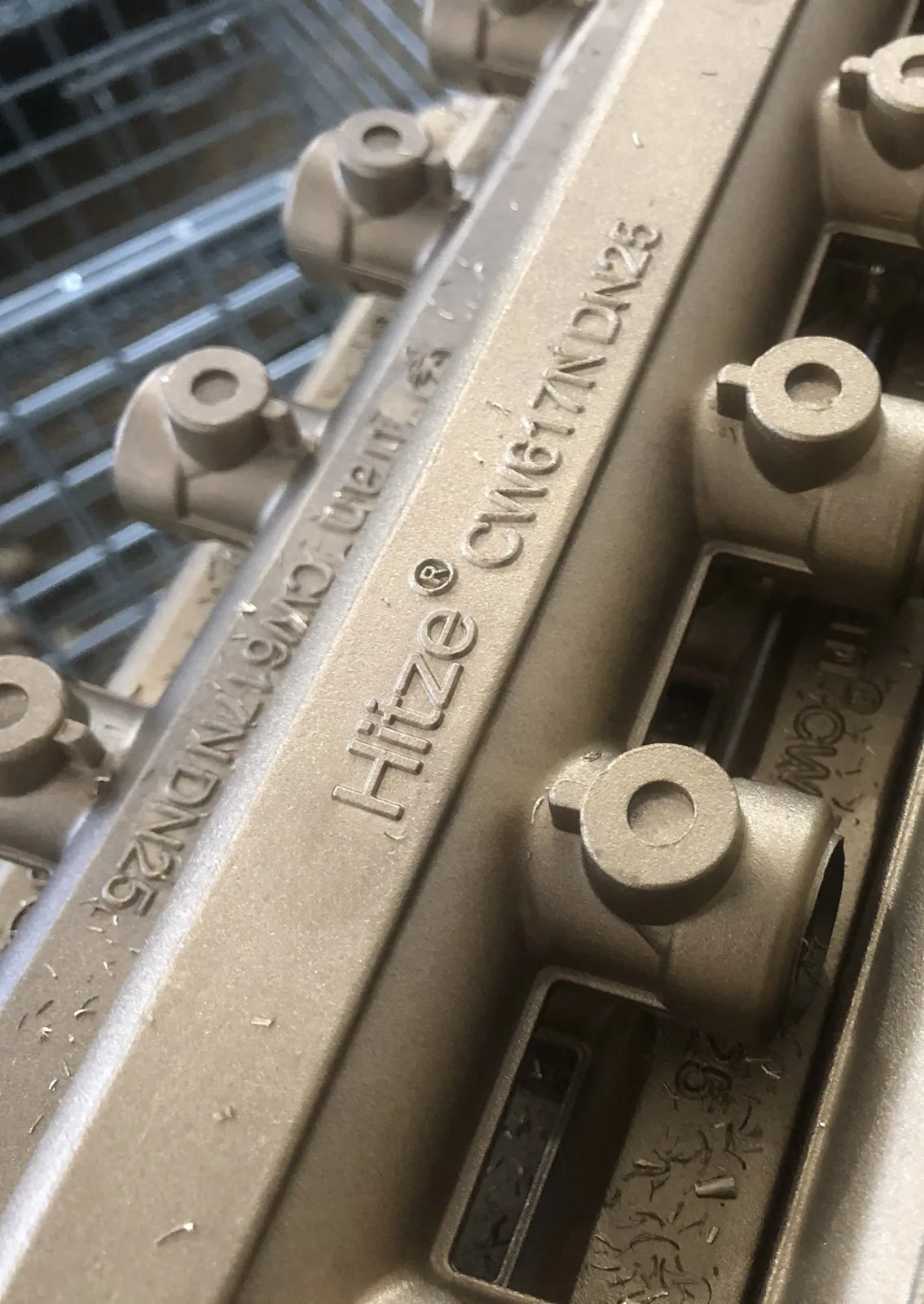
- Grade is fixed at intake. Lead-free and DZR grades — CW724R, CW511L, CW602N (DZR) and CW617N (standard) — are segregated by alloy from bar stock, so a potable SKU is machined from the certified rod and never cross-contaminated with leaded stock.
- Dezincification is verified to method. DZR grades are qualified against the EN ISO 6509 test regime (1% CuCl₂, 75°C, 24 h, ≤200 µm attack) rather than assumed from the alloy name.
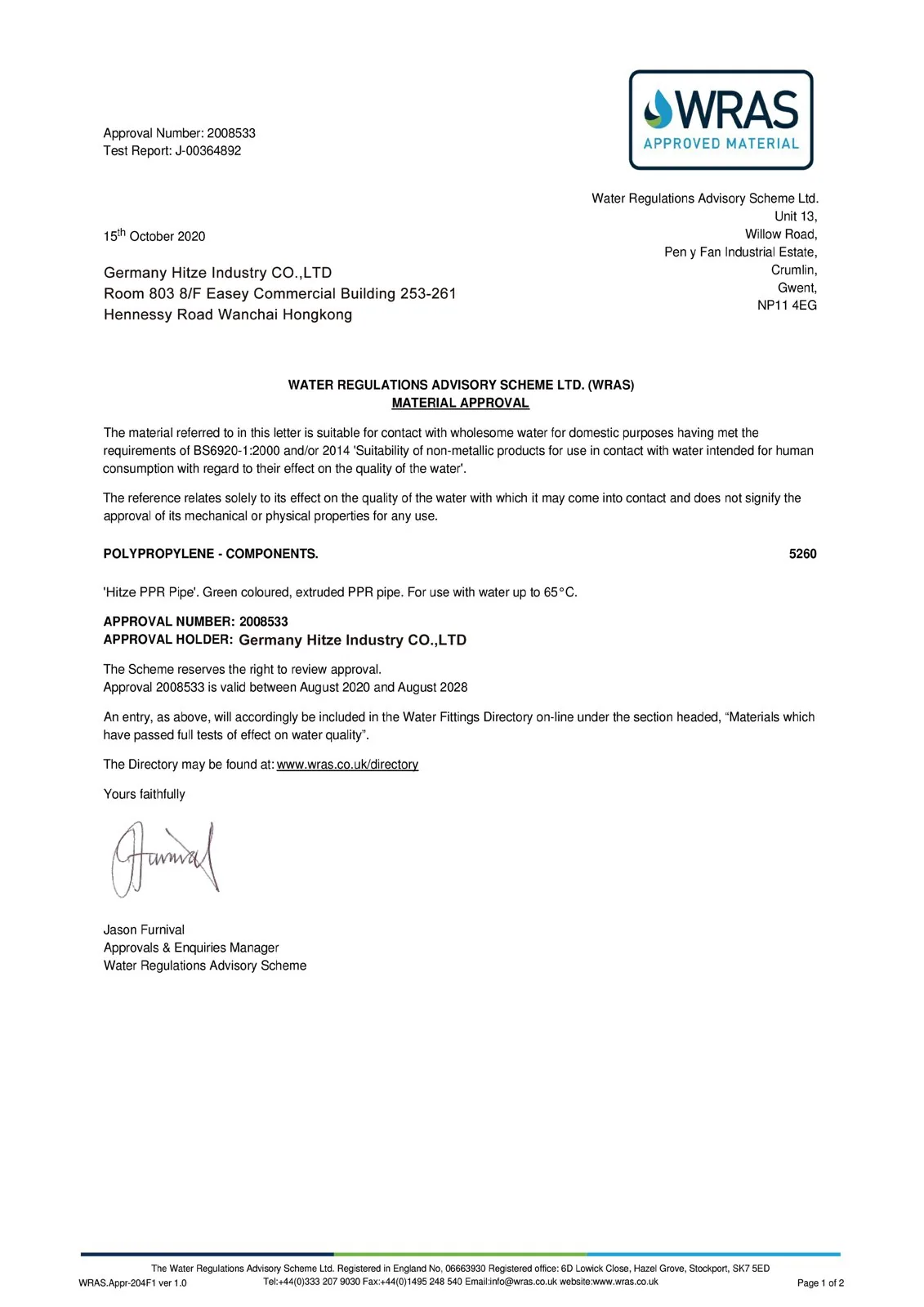
- Potable compliance is documented, not implied. Hitze holds WRAS material approval, an NSF International Laboratories BS 6920 potable-water test report, and DVGW type examination, and certifies to cUPC/UPC (IAPMO) and NSF/ANSI 61 — with certificate numbers available on request for the specific range.
- Marking matches the paperwork. Where a fitting is DZR, the body carries the corresponding mark so an inspector on your customer’s site can read the grade off the part, not just the box.
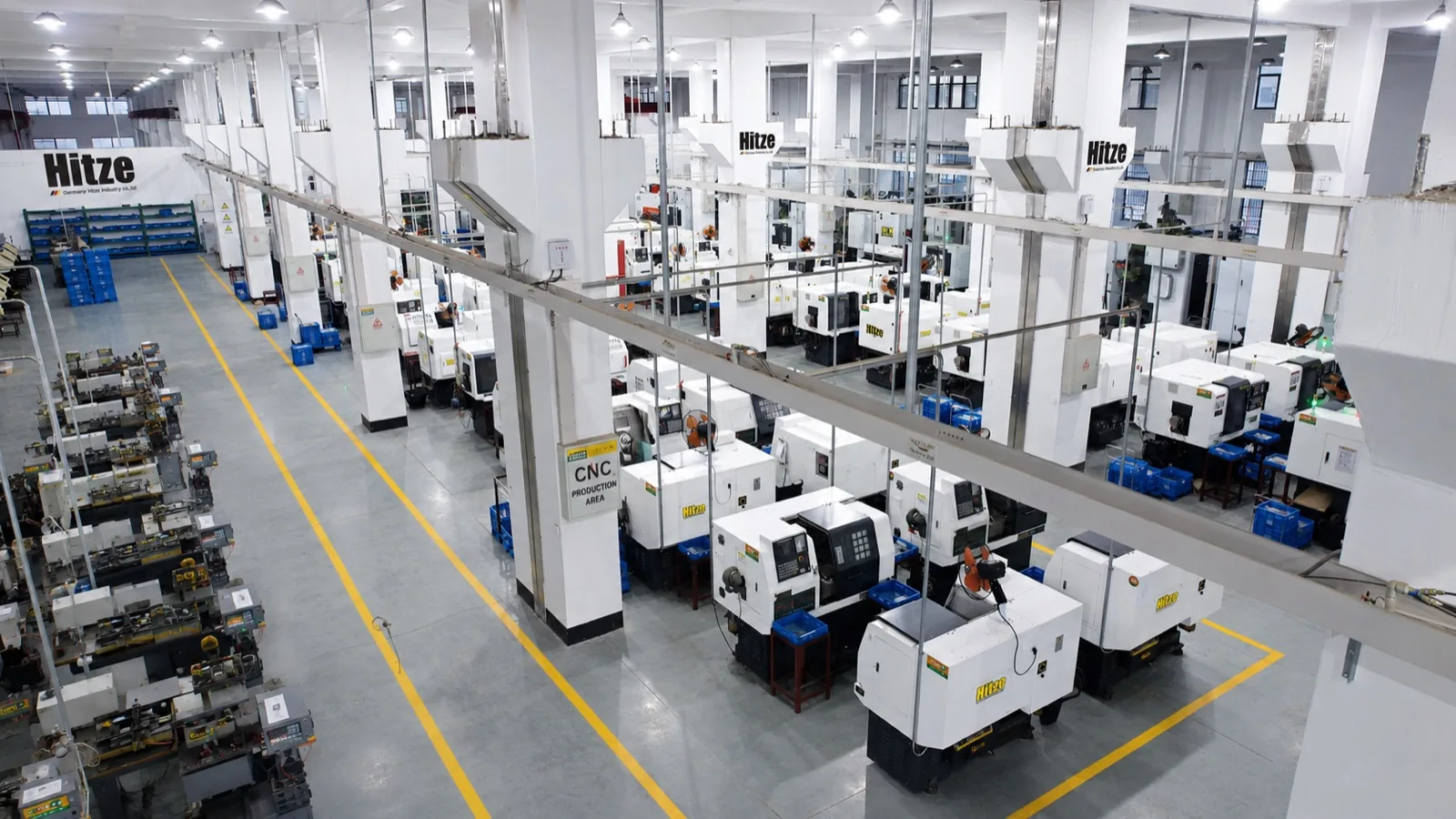
That process is engineered by our German engineering team and run across a production base founded in 1974, spanning 120,000 m² with 1,000+ employees, exporting to 118+ countries — the scale that lets a single supplier hold every grade rather than forcing you to source lead-free potable brass and standard heating brass from separate factories.
A Worked Scenario: Stocking One Range for Two Markets
Picture a distributor who sells into both the UK trade counter and a US contractor base, and wants a single brass fittings range on the shelf to avoid double inventory. Here is how the grade logic plays out end to end.
For the US potable line — supply stops, adapters, manifold connections that touch drinking water — the distributor specs CW724R so each part clears NSF/ANSI 372 on lead content, backs it with NSF/ANSI 61 leaching data on the finished fitting, and confirms the range carries a cUPC/UPC listing for the plumbing code. For the UK potable connections, especially anything buried or concealed, the distributor specs a DZR grade — CW511L or CW602N — with WRAS material approval and the DZR mark forged on the body, so it satisfies the water fittings regulations at inspection. For the heating side shared across both markets — radiator valves, boiler-room brass that never sees potable water — the distributor stays on CW617N and pockets the machinability and cost advantage without over-speccing.
The payoff: one supplier, one certificate pack that maps grade to market, and no line item where the wrong alloy silently voids a resale claim. The failure mode this avoids is the common one — a “lead-free” carton that turns out to be DZR-but-leaded, or a “DZR” carton that quietly exceeds the US lead limit — either of which lands on the distributor, not the factory, when an inspector pulls a part. When the range spans potable and heating, our lead-free-bore press fittings and brass and stainless underfloor-heating manifolds use the same grade discipline, so the whole system carries a coherent alloy story rather than a patchwork.
Best For / Not For: Matching Grade to the Job
Choose CW724R (low-lead silicon brass) when the part touches drinking water and must clear a strict lead limit and a corrosion test on one certificate — US NSF 372/61 ranges, or EU product aimed at the 2026 positive list. Not for heating-only or non-potable duty where you would simply be paying for corrosion margin you never use.
Choose CW511L or CW602N (DZR) when your buyer’s market specifies dezincification resistance for potable connections — typically UK/EU, buried or concealed — and you want the recognised DZR stamp at inspection. Not for a US “lead-free” claim unless the specific grade’s lead content and finished-part NSF data have been confirmed for that SKU.
Choose CW617N (standard leaded brass) when the fitting serves heating, radiator, compressed-air, industrial or otherwise non-potable duty and you want the best machinability and cost. Not for any part sold as lead-free or DZR for drinking water — that is the one place CW617N does not belong.
Sourcing brass across potable and heating lines?
This guide is written for wholesalers and importers who need the alloy story to hold up under audit and want one supplier to carry CW617N, the DZR grades and CW724R rather than four. If that is you, the fastest next step is to review the range and request the certificate pack for your destination market — grade-mapped, with numbers available on request.
Explore Hitze lead-free & DZR brass fittings →
Trade and wholesale only. Certification scope and available grades vary by market and order.
Frequently Asked Questions
Is DZR brass the same as lead-free brass?
No. DZR (dezincification-resistant) means the brass resists losing zinc in aggressive water, verified to BS EN ISO 6509. Lead-free is a separate limit on lead content — in the US, a weighted average of ≤0.25% across wetted surfaces. Some DZR grades still contain lead. Only a grade like CW724R, or a DZR grade whose lead is confirmed low enough, satisfies both at once, so always check the two claims independently.
What does the “DZR” or “CR” stamp on a fitting mean?
It means the alloy has been qualified as dezincification-resistant against EN ISO 6509 — a 24-hour immersion in 1% copper(II) chloride at 75°C, with corrosion attack limited to 200 micrometres. “DZR” and “DR” are the current marks; “CR” (corrosion-resistant) appears on older stock. The mark lets an inspector confirm the grade directly from the part.
Can I use CW617N for drinking water?
Not as a “lead-free” potable fitting in markets governed by the US lead rule or the EU Drinking Water Directive, because its lead content (~1.6–2.5%) exceeds those limits and it is not dezincification-resistant. CW617N is well suited to heating, radiator valves and non-potable service. For potable lines, move to a DZR grade or to low-lead CW724R.
Which brass grade do I need to sell fittings in the US versus Europe?
For the US, the wetted material must meet NSF/ANSI 372 (lead content ≤0.25% weighted average) and the finished part should hold NSF/ANSI 61, plus a cUPC/UPC listing to install — CW724R is written for this. For the UK, expect WRAS approval and DZR brass on potable connections. For the EU, the Drinking Water Directive positive list caps lead at 0.1% by weight from 31 December 2026, again pointing to low-lead silicon brass.
Does Hitze make its brass in Germany?
Hitze is a German brand, engineered by our German engineering team and built to German DIN standards, with potable-water approvals including WRAS and an NSF International Laboratories BS 6920 test report. It supplies the lead-free and DZR grades — CW724R, CW511L, CW602N and standard CW617N — as a single-source range, with certificate numbers available on request for your market.
Is silicon brass (CW724R) worth the higher cost over DZR brass?
It depends on the duty. For potable parts that must clear both a strict lead limit and a corrosion test on one certificate — especially US ranges and EU product for 2026 — CW724R often simplifies compliance and is worth the premium. For heating-only or non-potable fittings, an arsenic-inhibited DZR grade or standard CW617N is the more economical, correct choice. Match the grade to the job rather than over-speccing the whole range.


