A contractor ties a new copper riser into a building’s galvanized main, and the inspector asks where the dielectric union is. The code answer is narrower than the question. The 2024 IPC names two joints: copper to galvanized steel (605.23.1) and stainless steel to other materials (605.23.3).
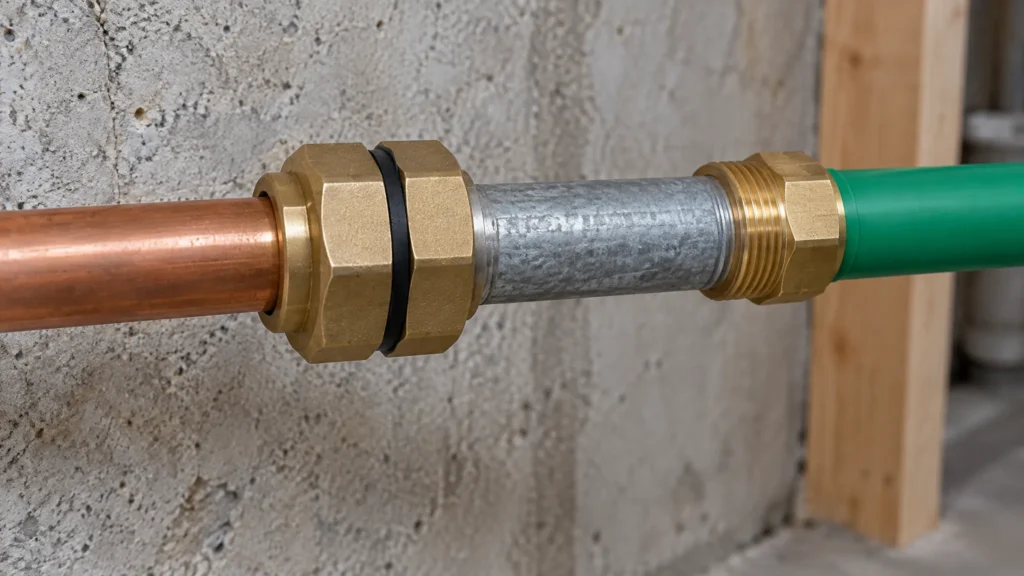
At the first, a copper-alloy (brass) fitting complies exactly as a dielectric union conforming to ASSE 1079 does. The 2021 UPC covers copper joined to any threaded pipe (605.16.1) and also accepts a copper alloy nipple of minimum 6 inches, while UPC 605.15 only says that a dielectric union, where installed, must meet ASSE 1079.
A plastic-to-metal joint sits under a different clause in all three US model codes: an approved adapter or transition fitting, with no dielectric requirement.
Key takeaways
- Two named joints in the IPC. 2024 IPC 605.23.1 (copper to galvanized) and 605.23.3 (stainless to other materials); each allows an alternative to the union.
- UPC 605.15 is a product clause. It applies where a dielectric union is installed; the mandate for copper to threaded pipe sits in 605.16.1.
- ASSE 1079-2012 minimum: 125 psi at 180 °F, sizes 3/8 inch through 6 inches. The 2024 edition was ANSI approved in October 2024.
- Most failures are installation failures: heat on the insulating sleeve, a second metal path across the joint, or a seat run past its rating.
- Plastic removes the metal path along the run, but each brass-insert transition still touches the metal pipe, so the insert grade matters.
On this page

Which code clause names your metal pair
Read the clause for the two materials that actually touch, because each code draws the line in a different place. The 2024 IPC starts from a general rule in 605.23: joints between different piping materials are made with a mechanical joint of the compression or mechanical-sealing type, or under one of three named subsections. Any connector or adapter carries an elastomeric seal to ASTM F477.
Only two of those subsections are metal pairs. The 2024 IRC mirrors them in P2906.18.1 and P2906.18.4 but accepts a copper alloy fitting or dielectric fitting without citing ASSE 1079.
| Joint | IPC 2024 | UPC 2021 | IRC 2024 | Verdict |
|---|---|---|---|---|
| Copper to galvanized steel | 605.23.1: copper-alloy fitting, dielectric fitting or ASSE 1079 union | 605.16.1: copper alloy adapter, 6-inch nipple, dielectric fitting or union | P2906.18.1: copper alloy fitting or dielectric fitting | Brass or dielectric; both comply |
| Copper to other threaded steel | General rule 605.23 | 605.16.1 applies | Not named | Check the UPC clause first |
| Stainless steel to other materials | 605.23.3: compression or mechanical-sealing joint, dielectric fitting or union | 605.16.3: compression joint, dielectric fitting or union | P2906.18.4: mechanical joint or dielectric fitting | Dielectric or mechanical joint |
| Plastic to metal | 605.23.2: approved adapters or transition fittings | 605.16.2: approved adapter or transition fitting | P2906.18.3: approved adapter fitting | No dielectric clause |
Source: IPC 2024 sections 605.23 to 605.23.3 and IRC 2024 P2906.18.1 to P2906.18.4 (GSA adoption, UpCodes viewer); UPC 2021 sections 605.15 to 605.16.3 as quoted in PHCP Pros, “Corrosion in the Model Plumbing Codes, Part 1”.
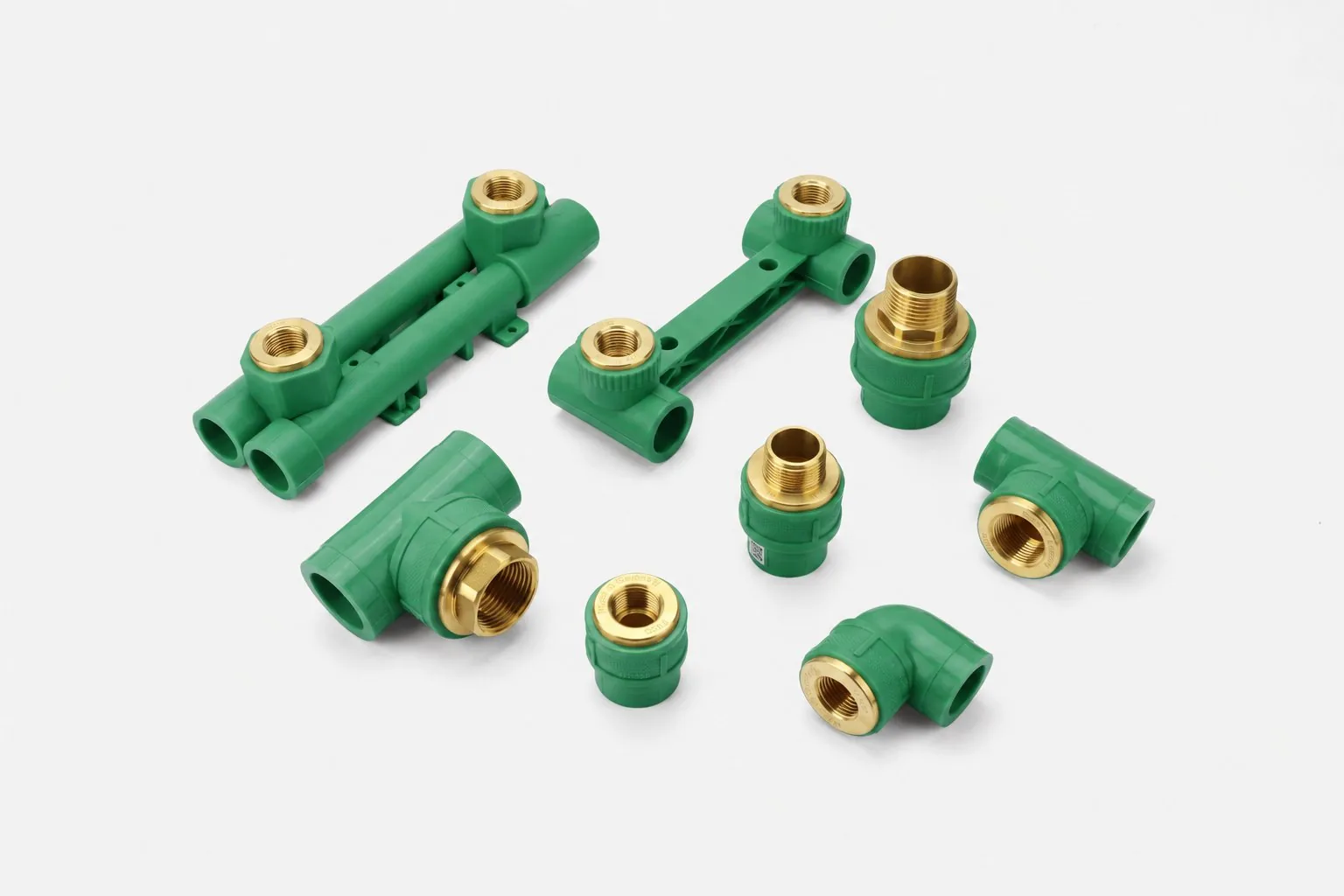
For a PP-R run, the last row is the one that applies. Hitze’s PP-R fittings range lists brass-insert threaded fittings from 1/2 inch to 2 inch, male and female, for that transition.
The most common misreading sits in the UPC. Section 605.15 reads: “Dielectric unions, where installed at points of connection where there is a dissimilarity of metals, shall be in accordance with ASSE 1079.” That is a product-standard clause, and it does not order anyone to install a union. The requirement for copper sits in 605.16.1.
These numbers are from the 2021 edition, so check the edition your jurisdiction adopted before you quote a section on a submittal. Why these pairs corrode is covered in our galvanic corrosion guide; this page stays on the hardware.
What ASSE 1079 certifies, and what it leaves to you
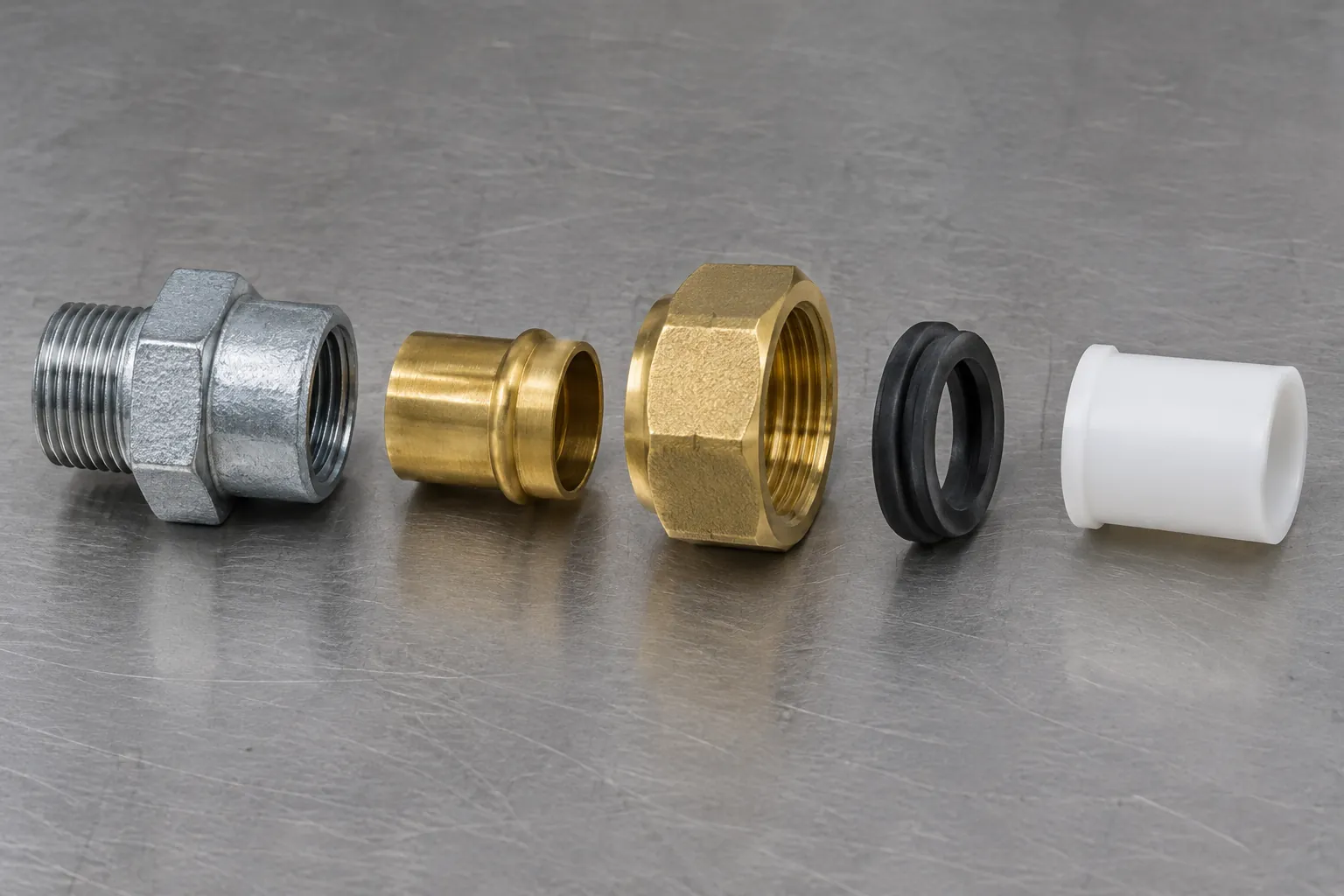
ASSE 1079 covers devices that are metallic and join metallic pipe like standard unions and flanges, with the added ability to electrically insulate one pipe section from another. The 2012 edition, reaffirmed in 2021 and the one the 2024 IPC references in Chapter 15, covers iron and copper pipe sizes 3/8 inch through 6 inches (clause 1.2.2) and sets a minimum of 125 psi at 180 °F (clause 1.2.4).
A newer edition, ASSE/IAPMO/ANSI/CAN 1079-2024, was ANSI approved in October 2024. Its rating table was not publicly readable when this page was written, so ask the supplier which edition the listing was tested to.
The minimum is a floor, and catalogue ratings sit above it. One manufacturer’s lead-free brass union, FIP by galvanized FIP, is catalogued at 250 PSI with Buna seats rated -20 °F to 180 °F. On that product the seat elastomer, rather than the brass body, sets the temperature ceiling, so a union on a line that runs close to 180 °F is working at its seal’s limit.
On a drinking-water line the union is also a fitting under IPC 605.2.1, which requires compliance with NSF 372 and a weighted average lead content of 0.25 percent or less. The ASSE listing does not prove that, so ask for the NSF 372 certification separately.
Why dielectric unions fail in service
A dielectric union works only while one condition stays broken. The NIH Office of Research Facilities technical bulletin (Issue 80, September 2018) lists three conditions that must all be present for galvanic corrosion: metals with dissimilar electrochemical characteristics, direct electrical contact between the metals, and an electrolyte in contact with the metals.
The union removes the second. Any other metal path across the joint, such as a shared hanger, a strap or a conductor clamped to both sides, restores the contact, and the union is left doing the work of an ordinary union with a gasket.
The electrical code can require that path. Where the metal water pipe is part of the grounding system, City of Bellevue guidance (Note 1) reads NEC 250.52(A)(1) as requiring bonding around dielectric unions, sized per NEC 250.66 and installed per NEC 250.68(B). Agree the bonding route with the electrician before the union goes in.
| Failure mode | Cause | What to check | Fix |
|---|---|---|---|
| Insulator damaged at install | Weld or solder heat reaches the sleeve | Was hot work done after assembly? | Finish hot joints first, then fit the union |
| Circuit bypassed | Another metal path bridges the joint | Hangers, straps or conductors on both sides | Isolate the path, or change the fitting type |
| Seat or gasket leak | Elastomer run near or past its rating | Weeps or rust at the nut | Match seat rating to service temperature |
| Flange kit shorted | Bolt gasket shifted or split while tightening | Sleeves and gaskets separating every part | Replace sleeves; tighten evenly |
| Hidden corrosion | Moisture trapped under pipe insulation | Joints under insulation during surveys | Open the insulation at each union |
Source: NIH Office of Research Facilities, Technical Bulletin Issue 80, “Dielectric Fitting” (September 2018); seat rating from one manufacturer’s lead-free brass dielectric union catalogue.
The NIH bulletin also warns that dielectric unions can leak, and that corrosion can run inside a pipe that looks normal outside. The case often quoted by code officials runs opposite to the textbook pairing. A PHCP Pros code column reports copper tied directly to stainless-steel water mains, where the copper became the sacrificial anode and showed up as green water at the sinks.
Under IPC 605.23.3 and UPC 605.16.3 that joint needed a compression-type mechanical joint, a dielectric fitting or a dielectric union.
Union, brass nipple or flange kit: picking the hardware
The NIH bulletin says to select the dielectric fitting by the ferrous and non-ferrous metals involved and the fluid or atmosphere exposure, and to weigh location, vibration and movement.
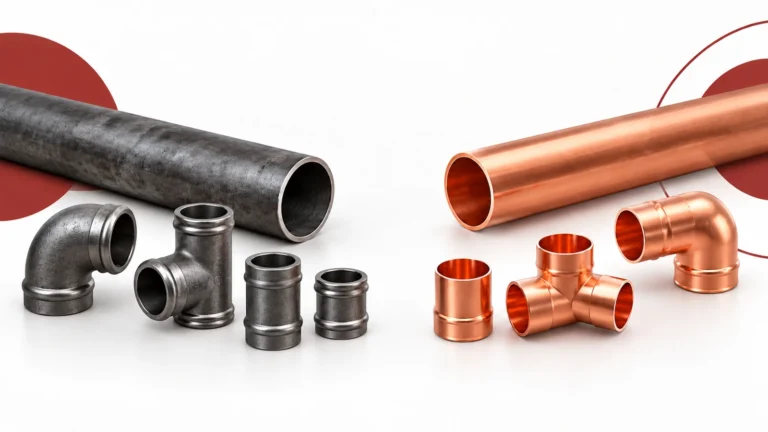
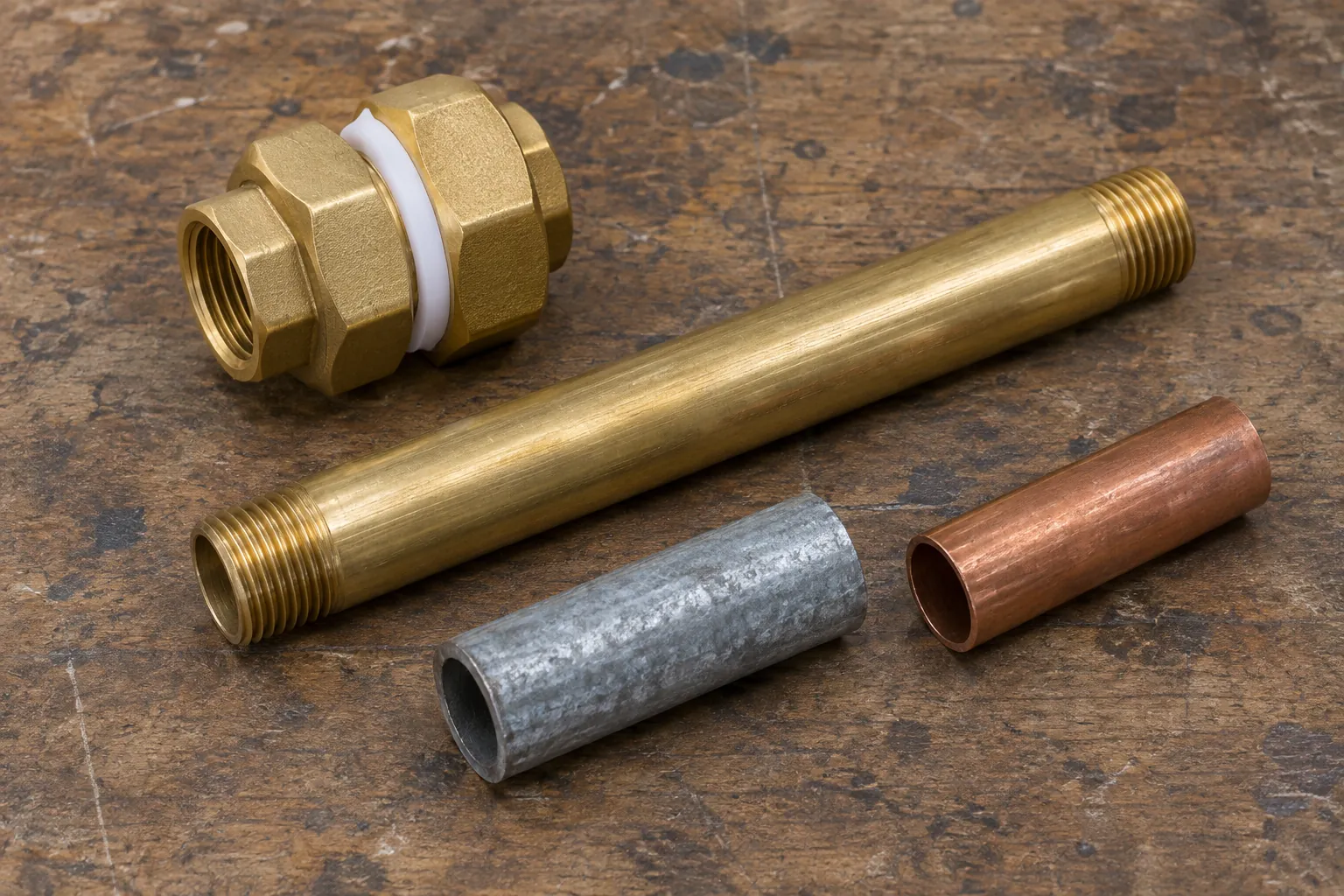
- Copper-alloy adapter or nipple. Under UPC 2021 605.16.1 a copper alloy nipple of minimum 6 inches is a listed option with no seat to age. Specify dezincification-resistant brass on soft or chlorinated water; our brass grades guide compares CW617N, CW724R and DZR alloys.
- Dielectric union. Serviceable and named in every code above; fit it after all hot work.
- Dielectric flange kit. ASSE 1079 covers sizes up to 6 inches. On flanged joints, the NIH bulletin calls for gaskets separating every component, plastic sleeves through the bolt holes and bolt gaskets, which add parts that can shift.
- Water-heater connector. Some water-heater connector makers describe a gasketed swivel-nut connector as a dielectric connection. Whether that satisfies the clause is your inspector’s decision.
What a plastic run changes at its metal ends
Replace the metal run with PP-R or PEX and the electrical path along the pipe disappears, because the pipe wall does not conduct. A socket-fused PP-R joint is homogeneous, with no O-ring seal inside a correctly fused joint, so the run has nothing to insulate. The codes treat the ends separately: IPC 605.23.2, UPC 605.16.2 and IRC P2906.18.3 call for an approved adapter or transition fitting and say nothing about dielectric separation.
The plastic does not change the thread: each brass insert still screws straight into the steel or copper, so the choice moves from the union to the insert alloy, as our galvanic corrosion guide explains.

Hitze’s brass fittings cover lead-free brass certified to NSF/ANSI 61 and DZR brass in CW724R, CW511L and CW602N, and our guide to connecting PP-R to metal pipe covers thread, sealant and tightening at that joint.
One consequence belongs to the electrician. Under NEC 250.52(A)(1), a metal underground water pipe in direct contact with the earth for 10 ft (3.0 m) or more can serve as a grounding electrode, so replacing that service with plastic removes the electrode.
The City of Bellevue, Washington, for example, requires 10 feet of new metallic water pipe from the foundation out, the grounding clamp reattached to it, and a #18 AWG or larger blue insulated tracer wire beside the plastic pipe. Tell the electrical contractor before the repipe, not after the inspection.
Where we stop: lead time and what to put on the order
Hitze does not list dielectric unions. We supply the brass-insert transition fittings that replace one on a plastic run, and this page prints no lead-time figure for them because none is confirmed per order. Three things set the date: whether the size and thread are in stock, whether the thread designation (BSP, NPT or G) matches a standard insert or needs a new insert batch, and whether the brass grade is standard lead-free or DZR.
Put four items on the order: the size range, the thread designation per size, the brass grade, and a delivery date per SKU in writing. Ask for the price per SKU and size, since thread and brass grade change the part. Hitze has no MOQ and supplies samples, so thread fit can be checked before a full order.
Conclusion
Before you specify a dielectric union, find the clause that names your metal pair and check whether a brass fitting satisfies it with less to go wrong. If a union stays, confirm the ASSE 1079 edition, the seat rating against the service temperature and NSF 372 on drinking water, and fit it after all hot work.
If the run goes plastic, list the insert grade and thread per size, and warn the electrician about the grounding electrode. Send those details with your enquiry.
Frequently asked questions
Is a dielectric union required by code?
Only at the joints a code names. The 2024 IPC names copper to galvanized steel (605.23.1) and stainless steel to other materials (605.23.3), and both allow an alternative: a copper-alloy fitting at the first, a compression or mechanical-sealing joint at the second. UPC 2021 605.15 applies only where a dielectric union is installed.
Can I use a brass nipple instead of a dielectric union?
Yes, where the 2021 UPC applies to copper joined to threaded pipe: 605.16.1 lists a copper alloy nipple of minimum 6 inches alongside dielectric fittings and unions. The 2024 IPC 605.23.1 accepts a copper-alloy fitting at copper-to-galvanized joints.
Do I need a dielectric union between PP-R or PEX and steel pipe?
No model code clause requires one. IPC 605.23.2, UPC 605.16.2 and IRC P2906.18.3 require an approved adapter or transition fitting. The brass insert still touches the steel, so specify a DZR or lead-free insert grade.
What pressure and temperature is an ASSE 1079 dielectric union rated for?
ASSE 1079-2012 sets a minimum of 125 psi at 180 °F for sizes 3/8 inch through 6 inches. Products are often rated higher: one lead-free brass union is catalogued at 250 PSI with Buna seats rated -20 °F to 180 °F.