Key Takeaways
- Printing your logo makes you liable. Under the EU’s new Product Liability Directive (2024/2853), putting your trademark on a product presents you as its manufacturer — with strict liability to match. In the US, the Magnuson-Moss Warranty Act treats anyone who gives a written warranty as the warrantor. Your brand is on the hook either way.
- There are three ways a private label warranty gets backed: manufacturer-backed (a back-to-back document from the factory), brand-backed (your promise, your balance sheet), and insurance-backed (a liability policy that covers damage caused by the product — usually not the product itself).
- The matched-system condition is non-negotiable. Hitze’s 50-year warranty — like the 25-year terms from Uponor and Viega — applies only when pipe and fittings from the same system are installed together. Mixing brands quietly converts long cover into no cover.
- Claims are won on records, not chemistry. A pipe print line carries the batch and date code; ASTM F876 requires legible marking at intervals of no more than 5 ft (1.5 m). If you can’t map a failed joint back to a production batch, the claim stalls before any lab work starts.
- Demand the pass-through pack before launch: a factory-issued warranty certificate naming your brand and SKUs, the matched-system condition in writing, a claims-procedure annex, and batch-traceability commitments. A verbal “don’t worry, we cover it” is worth exactly nothing in year 12.
Here is the scenario every private-label pipe buyer should war-game before signing anything. It is year 12. A fitting on a hot-water riser weeps behind a tiled wall in a house your distributor supplied a decade ago. The installer cuts out the joint, the homeowner’s insurer sends a subrogation letter, and everyone in the chain asks the same question: whose name is on the pipe? The answer is yours — because that was the whole point of the private-label program. What happens in the following 90 days depends entirely on a decision you made before the first container shipped: who actually backs the private label warranty printed on your carton.
This guide walks through the three structures a private label warranty can take, the documents that make a 50-year promise real rather than decorative, why the matched-system condition exists, and how a claims process should be designed so that a year-12 failure is an administrative event instead of an existential one.
The Year-12 Question: Your Trademark Puts You in the Liability Chain
Start with the legal reality, because it removes any illusion that private labeling is a low-commitment branding exercise. In the European Union, Directive (EU) 2024/2853 — the revised Product Liability Directive, which member states must transpose into national law by 9 December 2026 — defines a “manufacturer” to include any person who, “by putting their name, trademark or other distinguishing features on that product, presents themselves as its manufacturer.” Read that twice. You did not extrude the pipe, you did not machine the fitting, but the moment your logo goes on the print line, EU product liability law treats you as the manufacturer, with strict liability for defects.
The United States gets to a similar place through warranty law. Under the Magnuson-Moss Warranty Act (15 U.S.C. § 2301), a “warrantor” is any supplier or other person who gives or offers a written warranty. If your brand publishes a 50-year warranty card, your brand is the warrantor of record for that consumer-facing promise — regardless of what your supply agreement with the factory says. Several US states also apply strict product liability to sellers who market goods as their own, though the details vary by state and are worth a conversation with counsel in your specific market.
So the question is never whether you are exposed. You are. The question is who stands behind you when the exposure crystallises — and that is a documentation question, decided at contract time, not a goodwill question decided at claim time. The insider warning here: a surprising number of private-label programs launch with a warranty term chosen by the marketing department (“competitors say 25, let’s say 30”) and no written instrument from the factory backing a single year of it. That is not a warranty. That is an unpriced liability sitting on your balance sheet with your logo on it.
Manufacturer-Backed vs Brand-Backed vs Insurance-Backed: The Three Structures
Manufacturer-backed (back-to-back pass-through). The factory issues a written warranty instrument to you, the brand owner, covering the products it made for your label — identified by SKU list and batch scope — on terms that mirror what you publish downstream. When a claim arrives, you pass it through: your customer deals with you, you deal with the factory, and the factory’s obligation is contractual, not charitable. This is the structure Hitze uses for its 50-year warranty on the matched pipe-and-fitting system: the cover attaches to the engineered system itself, so it travels with the product whether the print line says Hitze or your brand. The documentation naming your company and your SKUs is issued as part of the private-label / ODM program — and it is the single most important piece of paper in the entire relationship.
Brand-backed (you carry it alone). The factory sells you goods under ordinary commercial terms — typically a short defects warranty on delivered product, often one to two years in standard sale contracts — and you publish a multi-decade warranty on top. The gap between the factory’s two years and your published thirty is yours. This structure is not automatically wrong: large retailers with strong balance sheets and actuarial pricing do it deliberately. But it must be a decision, priced into margin, not an accident discovered during the first serious claim. If your factory’s standard terms sheet is silent past 24 months and your carton says “lifetime,” you are brand-backed whether you meant to be or not.
Insurance-backed (a policy responds). Product liability insurance protects against liability for bodily injury or property damage arising from a product — the flooded floor, the ruined kitchen, the hotel room below. What it typically does not do is pay to replace the defective pipe itself or re-plumb the wall; industry references such as IRMI’s product liability definitions place this exposure under the products-completed operations hazard: damage occurring away from the insured’s premises, arising out of “your product.” Insurance is therefore a complement to a warranty, never a substitute for one. A useful, standard mechanism to ask about: whether the manufacturer’s insurer will add you as an additional insured under a vendors endorsement (the ISO form is CG 20 15), so the factory’s policy responds to product claims made against you as the reseller. Never accept a vague “we are insured” — ask for a current certificate of insurance, confirm the policy territory includes your market, and have your broker read the exclusions. Specific limits and terms vary by market and order; anything a supplier cannot show you on paper does not exist.
| Structure | Who pays in year 12 | Key document | Main weakness |
|---|---|---|---|
| Manufacturer-backed | Factory, via back-to-back warranty naming your brand and SKUs | Factory-issued warranty certificate + claims annex | Only as strong as the factory’s longevity and records |
| Brand-backed | You, from margin — factory owes only its short commercial terms | Your own published warranty; supply contract defect clause | Decades of unfunded liability if not priced deliberately |
| Insurance-backed | Insurer — but only for injury/damage the product causes, subject to policy terms | Certificate of insurance; vendors endorsement (CG 20 15) | Does not replace the product; exclusions and territory limits apply |
The recommendation, if you want it straight: run manufacturer-backed as the spine, verify the factory’s product liability insurance as the safety net for consequential damage, and treat any residual gap as brand-backed exposure you consciously price. A program with all three layers documented survives a bad year-12 claim. A program with none of them documented becomes a legal bill with a plumbing problem attached.
The Pass-Through Pack: Documents That Make a 50-Year Promise Real
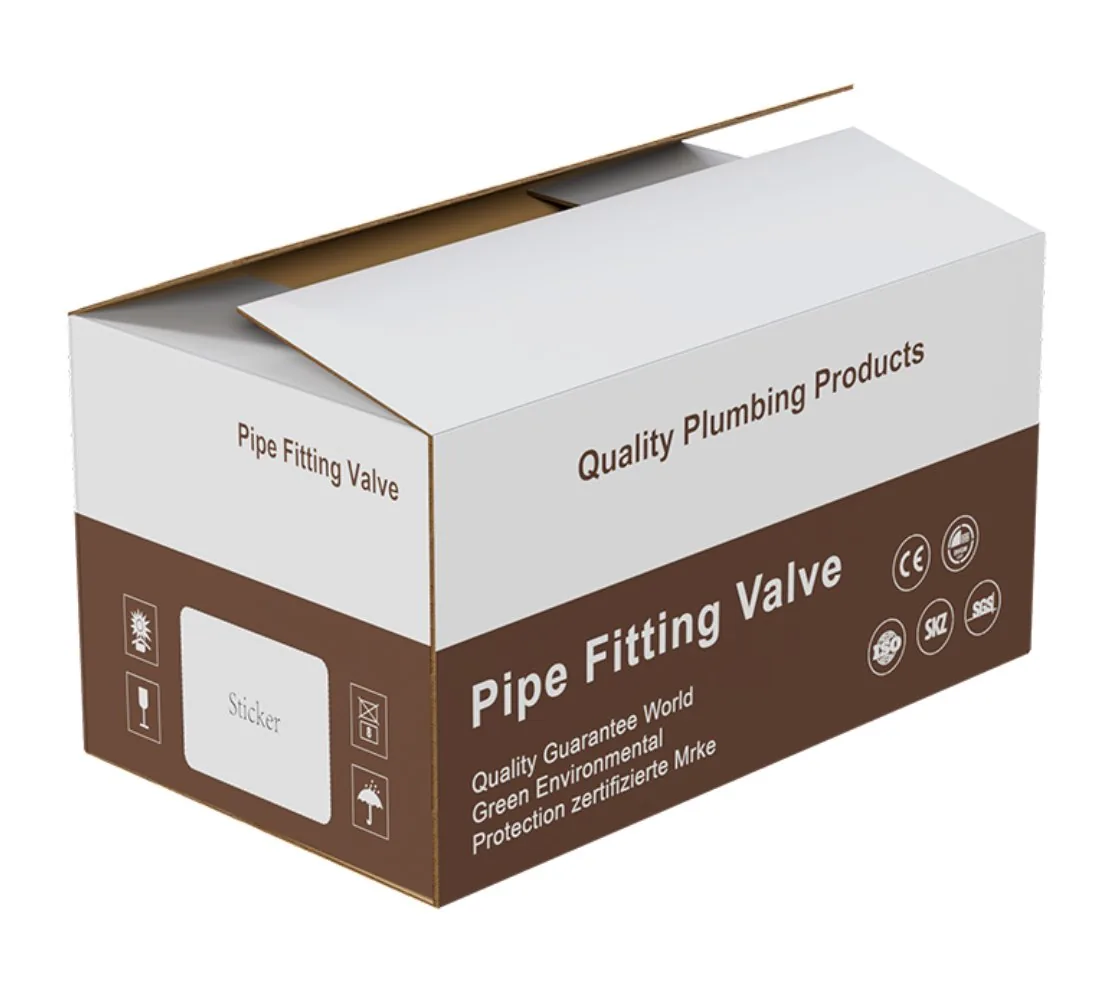
A warranty pass-through is only as good as its paperwork. Before your first branded container ships, the file should contain five things. First, a factory-issued warranty certificate that names your legal entity and lists the branded SKUs it covers — not a generic marketing statement about “our products.” Watch for the classic trap: a warranty document that references the factory’s own branded product line does not automatically cover the same pipe running under your print. The SKU schedule closes that gap. Second, the matched-system condition in writing: exactly which pipe families and which fitting families constitute “the system” whose joints are covered. Third, the batch and date-code scope — cover attaches to identified production, which is what makes traceability enforceable rather than aspirational. Fourth, a claims-procedure annex: who receives the claim, what evidence is required, who pays for lab analysis, and target response times. Fifth, an assignment or transferability clause covering what happens if either company is sold, because 50 years is longer than most ownership structures last.
| Question to ask the factory | Answer that protects you | Answer that should worry you |
|---|---|---|
| Will you issue a written warranty naming my company and my SKUs? | Yes — certificate with SKU schedule, issued before first shipment | “Our standard warranty covers everything we make” |
| What exactly is “the system” the warranty covers? | Named pipe families + named fitting families, listed in the instrument | A verbal “pipe and fittings together” with nothing in writing |
| How do I trace a failed joint back to production? | Print-line batch code → your PO → factory production and test records, retention period stated | “Send us a photo and we’ll see” |
| Who pays for lab analysis in a disputed claim? | Defined in the claims annex before launch | Silence — meaning you pay, every time |
| Can you show current product liability insurance for my market? | Certificate of insurance on request, territory confirmed | “We are fully insured” with no paper |
Two adjacent documents belong in the same folder. Your certification file — because in a claim dispute, the first thing the other side’s expert checks is whether the product was actually certified for the application; the process of getting your own brand certified (cUPC, NSF, WRAS) via your factory is a separate workstream with its own timeline, and it should run in parallel with the warranty negotiation, not after it. And the technical file: datasheets, installation instructions, and the pressure/temperature class of every SKU, because warranties are conditioned on installation within spec, and you cannot enforce a condition you never communicated downstream.
Why Mixing Components Voids the Cover — and Why That’s Not a Trick
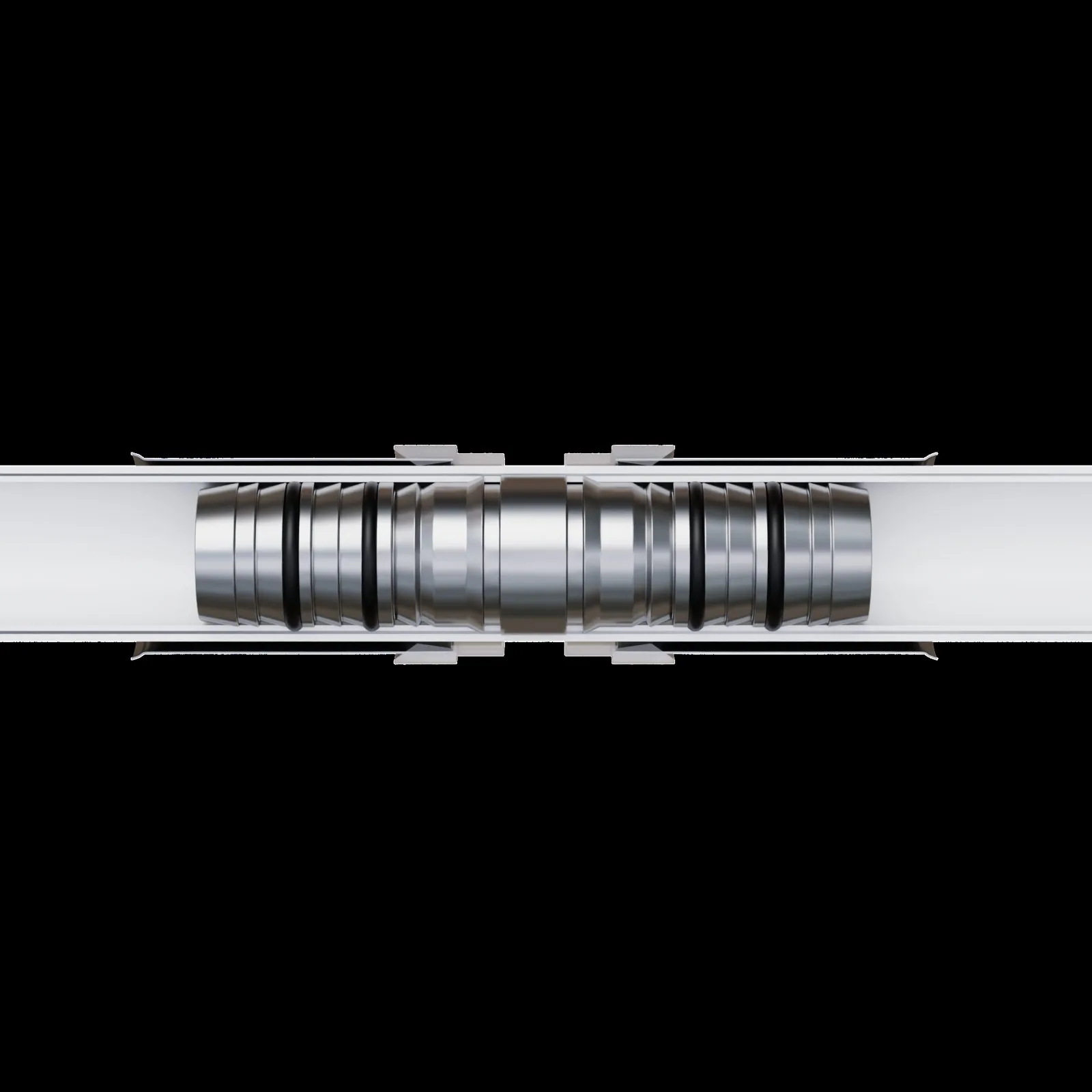
Every serious system warranty in this industry carries the same condition, and private-label buyers sometimes read it as fine print designed to dodge claims. It isn’t. Uponor’s 25-year transferable warranty applies when its PEX is installed with its ProPEX fittings as a system; Viega’s 25-year cover likewise requires Viega pipe with Viega press fittings, and its warranty language states it is not liable for components it did not manufacture or sell. Hitze’s 50-year warranty on the matched pipe-and-fitting system follows the same logic at double the term: one manufacturer makes both halves of every joint to the same drawings, tests them as an assembly, and therefore can stand behind the assembly. The moment a third-party fitting enters the wall, nobody on earth has ever tested that exact combination as a system — which is precisely the point of the European approach, where EN ISO 15874 defines pipe (Part 2), fittings (Part 3), and fitness for purpose of the system (Part 5) as one standard family.
The engineering reason is tolerance stack-up: pipe wall, insert diameter, and sleeve dimensions each carry a legal tolerance band, and mixing brands can stack the extremes toward the failure edge while every individual component still measures “in spec.” We’ve covered the mechanics in detail in mixing pipe and fitting brands: the warranty leak risk, and the commercial case for one-brand sourcing in building a warrantable pipe-fitting system. For a private-label owner the takeaway is operational, not theoretical: your downstream channel must be told, in your installation literature and your distributor agreements, that the warranty is conditional on the matched system. If your distributors quietly substitute cheaper generic fittings to win jobs, they are converting your 50-year cover into zero-year cover under your brand name — and you will only find out in year 12.
Claims Process Design: Decide It Before You Print the Carton
A well-designed claims process has six stages, and each one should have an owner before launch. Intake: a single email address or portal on your side, so claims don’t scatter across sales reps’ inboxes. Evidence: the failed joint cut out intact (never just the pipe — the fitting and sleeve are half the story), photos in place before removal, and the print line legible in at least one photo. Batch trace: the print line’s date and batch code mapped to your purchase order, then to the factory’s production run. Analysis: who examines the joint — the factory’s lab first, an independent lab if disputed, and the annex should say who pays for which. Determination: manufacturing defect, installation error, chemical attack, or out-of-spec operation — each with a different payer. Remedy: what the warranty actually provides, in writing, because “we’ll take care of it” means different things to a brand manager and a claims adjuster.
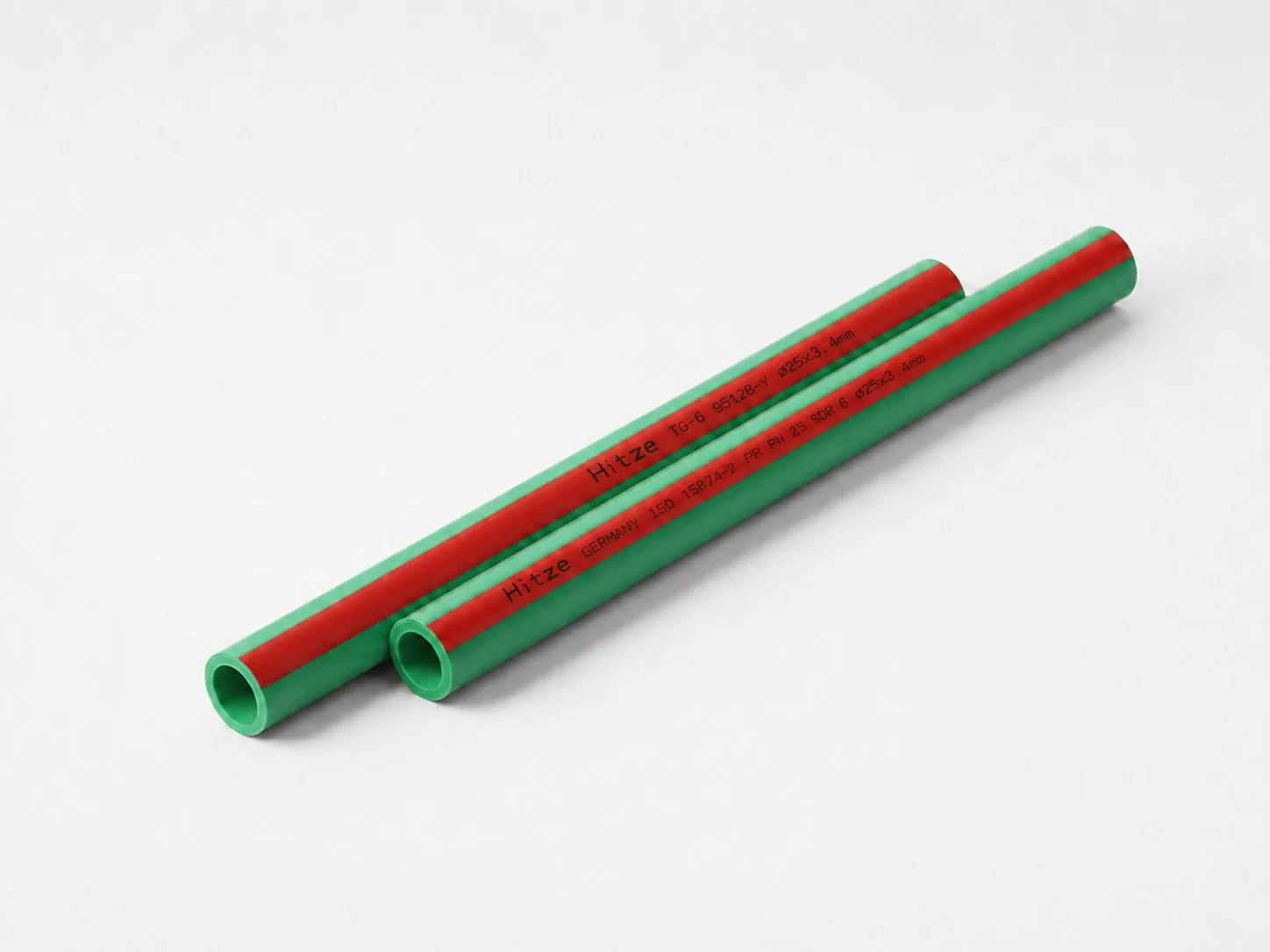
Batch traceability is the hinge the whole process swings on. Product standards build it in at the pipe surface: ASTM F876, for example, requires PEX tubing to be legibly marked at intervals not exceeding 5 ft (1.5 m), and a manufacturer’s print line carries the name or trade name, standard designations, and a production/date code. That code is only useful if the paper trail behind it survives. Practical record-keeping discipline for a private-label owner: archive every packing list with its batch codes against the PO; ask the factory to confirm in the warranty annex how long it retains production and test records for your batches; and keep your own records for the life of the published warranty, not the life of your ERP subscription. The uncomfortable insider truth is that far more warranty claims die from unmappable batches and missing paperwork than from genuinely disputed metallurgy. A factory can only stand behind production it can identify.
What Hitze Checks and How the 50-Year Cover Transfers Under Your Label
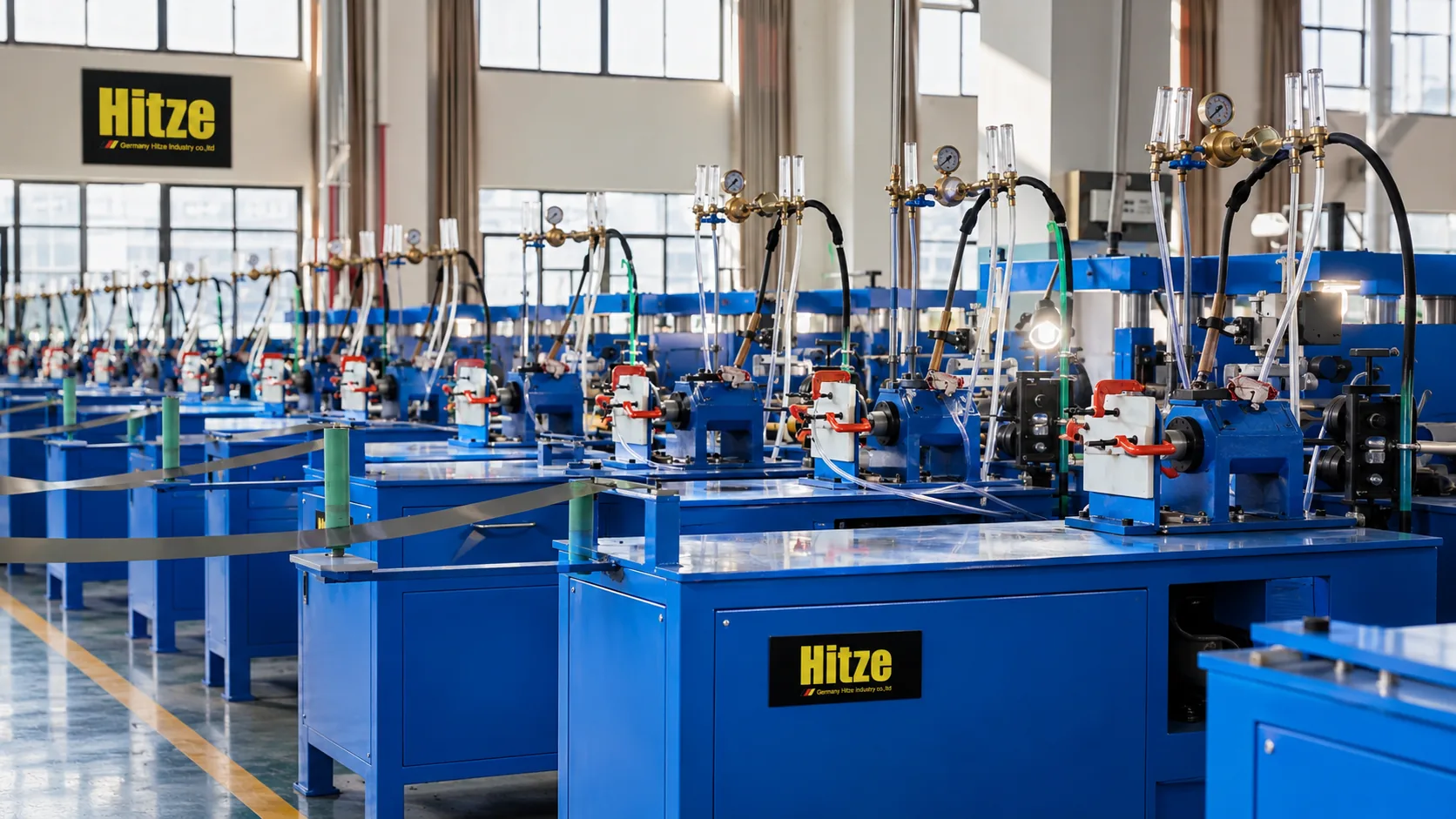
The reason a 50-year term is offerable at all is that the system is manufactured and verified as one program. Hitze — a German brand of engineered piping systems, founded 1974, with a 120,000 m² production base, 1,000+ employees, and exports to 118+ countries — makes both halves of the joint: pipe lines building multilayer PEX-AL-PEX, PEX, PE-RT, and PP-R to DIN 8077/8078, EN ISO 15874, and DIN 4726, and its own press, compression, and push-fit fittings in lead-free and DZR brass grades (CW724R, CW511L, CW602N; CW617N for standard duty). Because one factory holds both sets of drawings, joints are verified as assemblies: hydrostatic pressure benches test pipe-plus-fitting combinations, press joints are checked against the TH/U/F/M jaw profiles they will actually meet on site, and each production batch carries its code onto the print line. Third-party oversight sits on top — SKZ test certificates for PP-R pressure pipe, fittings, and PE-Xb heating pipe, DVGW type examination for PP-R drinking-water pipe, WRAS material approval, and NSF laboratory BS 6920 potable-water testing — so the claims file for any batch includes independent evidence, not just internal QC.
Under private label, the transfer works like this: the 50-year warranty attaches to the matched Hitze pipe-and-fitting system, so the cover follows the engineered product regardless of whose logo the print line carries. What changes is the documentation — the warranty instrument for a private-label program is issued naming the brand owner and the branded SKU schedule, with the matched-system condition and batch scope stated in writing, so your pass-through pack is complete before the first container leaves. Specific documentation formats and market-by-market arrangements are agreed per program and available on request. What does not change: the condition. The 50 years covers the matched system — your brand’s pipe with your brand’s fittings from the same program — for exactly the reasons covered above.
Worked Scenario: A Fitting Weeps in Year 12 — Two Endings
Take a hypothetical distributor brand — call it NordFlow — that launched a private-label multilayer pipe program and, twelve years in, receives that riser claim from the opening of this article. Ending one, the documented program: the installer ships the cut-out joint with photos; NordFlow’s claims inbox logs it within a day; the print line shows the batch code, which NordFlow’s archived packing lists map to a specific PO and the factory’s production run. The factory pulls the batch’s production and hydrostatic test records, examines the joint, and issues a determination under the claims annex both sides signed years earlier. Whether the finding is a covered defect or an installation issue, the process ends in a written answer with evidence behind it, and the homeowner’s insurer gets a documented response instead of silence. Total elapsed time is measured in weeks, and NordFlow’s brand survives intact — arguably strengthened, because a warranty that visibly works is a sales asset.
Ending two, the undocumented program: NordFlow published “30-year warranty” on the carton because a competitor did. The factory’s sale terms covered defects for 24 months, long expired. The joint turns out to contain a third-party fitting a sub-distributor substituted in year 3 — but NordFlow never communicated a matched-system condition downstream, so it cannot cleanly deny the claim either. No batch mapping exists because packing lists were discarded after the accounting retention period. NordFlow is now the warrantor of record under its own published promise, the strict-liability “manufacturer” in the eyes of EU law if this is a European market, and its only leverage with the factory is relationship goodwill. The claim gets paid out of margin, the legal review costs more than the plumbing, and the real damage is the distributor network watching how it was handled. Same pipe, same failure, same year — the difference was entirely decided at contract time.
If you are building a private-label pipe program with genuine long-term cover behind it — a distributor or brand owner who intends to be answering warranty calls in year 12 and wants a factory contractually standing behind you when you do — the Hitze private-label / ODM program is built for exactly that conversation. There is no MOQ: you can start with samples or a small trial order, qualify the matched system and the documentation pack in parallel, and scale only when both hold up to your own scrutiny. The 50-year warranty on the matched pipe-and-fitting system is the spine of the offer; the paperwork that passes it through to your brand is part of the program, not an afterthought. If you are shopping purely on cent-per-meter price and plan to mix fittings from whoever is cheapest each quarter, this program — candidly — is not the fit, because the cover you would be buying is the cover you would be voiding.
FAQ: Private Label Warranty on Pipe Systems
Who is legally responsible if private-label pipe fails?
In the EU, Directive 2024/2853 treats anyone who puts their name or trademark on a product as its manufacturer, with strict liability for defects. In the US, whoever gives the written warranty is the warrantor under the Magnuson-Moss Warranty Act. The brand owner is in the liability chain in both regimes — the practical question is whether a back-to-back factory warranty and liability insurance stand behind the brand.
Does Hitze’s 50-year warranty apply to pipe sold under my own brand?
Yes — the 50-year warranty attaches to the matched Hitze pipe-and-fitting system, and under a private-label program the warranty documentation is issued naming the brand owner and the branded SKUs. The matched-system condition applies identically: branded pipe with branded fittings from the same program. Program-specific documentation is available on request.
Is product liability insurance a substitute for a warranty?
No. Product liability insurance responds to bodily injury or property damage a defective product causes — the flooded floor, not the pipe itself. A warranty governs repair or replacement of the product. A sound private-label program documents both, and asks the factory’s insurer about additional-insured status under a vendors endorsement.
What most commonly voids a private-label pipe warranty?
Mixing third-party fittings into the system is the leading cause, followed by installation outside the published pressure/temperature class and claims that cannot be mapped to a production batch. All three are controllable: enforce the matched-system condition downstream, ship installation literature with the product, and archive batch codes against every PO.
What records should I keep, and for how long?
Packing lists with batch codes mapped to purchase orders, the factory warranty certificate and claims annex, certification documents, and your published warranty terms by version and date. Keep them for the full life of the published warranty — and confirm in writing how long the factory retains production and test records for your batches.