Key Takeaways
- A private label launch is five phases, not one lead time: sample evaluation → brand assets and print approval → certification path → pilot order → container and transit. Only two of those five are controlled by the factory.
- The certification decision is the single biggest timeline variable. Selling under the factory’s existing listings can be a document exercise; a fresh own-name NSF certification typically runs 4–18 months per NSF’s own published guidance.
- Third-party durations are groundable; factory durations are quoted per order. WRAS publishes that a Material Approval is issued within 10 working days of a complete application (the BS 6920 testing behind it can take up to ~9 weeks). Hitze production slots are confirmed at order — no honest supplier promises calendar days in a blog post.
- Ocean transit is the one phase you can roughly pencil in: freight-marketplace data puts Shanghai–Los Angeles FCL at roughly 27–36 days and Shanghai–Rotterdam at roughly 51–66 days on current routings — estimates that move with carrier schedules.
- The launches that finish fastest run phases in parallel: lock artwork while samples are in test, and start the certification conversation before — not after — the pilot order. Hitze’s no-MOQ, sample-first program exists precisely so phase 1 starts this week, not next quarter.
“How long until my brand is on shelves?” is the first question every private-label buyer asks, and the answer most factories give — a single confident number of days — is the least trustworthy sentence in the quotation. A pipe launch is a chain of five phases with different owners: you own the sample verdict and the artwork sign-off, a certification body owns the approvals calendar, a shipping line owns the transit, and the factory owns exactly one link — production. Any “45-day launch” promise that pretends otherwise is either ignoring certification entirely or assuming you will approve everything on the first pass. This guide breaks the private label launch into those five phases, tells you what actually determines the duration of each, and cites the only durations that can honestly be cited: the ones published by certification bodies and carrier data — not invented factory calendars.
Why Nobody Can Honestly Quote You One Number
The total calendar time of a private label launch is not a sum — it is a critical path. Two of the five phases (sample evaluation and print approval) can and should run in parallel. One phase (certification) can either be near-zero or dominate everything else by a factor of ten, depending on a decision you make in week one. So before any timeline discussion, you have to answer the question that sets the critical path: whose name goes on the compliance paperwork?
There are three routes, and they are not interchangeable. Route one: your brand goes on the pipe, cartons and documents, while compliance rides on the factory’s existing certificates — under IAPMO’s UPC/cUPC rules, for example, a private-labeled unit carries the customer’s name and model number against the factory’s audited listing. Route two: your company name is formally added to the factory’s certification file — NSF calls this the “Another Name For” (ANF) option, and it requires the private labeling to happen at the certified manufacturer’s plant. Route three: you pursue approvals in your own name from scratch, which means the certification body’s full testing and review cycle sits inside your launch. Route one is largely a documentation and artwork exercise; route three puts a 4–18-month NSF-published range on your critical path. A factory that holds the base listings already — as Hitze does with SKZ, DVGW, WRAS material approval, an NSF laboratory BS 6920 test report, and certification to cUPC/UPC, NSF-14 and NSF/ANSI 61 (certificate numbers available on request) — is what makes routes one and two available at all. That is the real reason to scrutinise a supplier’s private-label and ODM program before you scrutinise its price list: the certificates the factory already holds determine which timeline you are allowed to have.
One insider warning before the phases: distrust any supplier who quotes certification time as if they controlled it. IAPMO R&T, for instance, publishes no fixed duration at all — its own position is that it “tailors turnaround times to meet almost any deadline.” That is a statement about flexibility, not a promise of days, and a factory that converts it into “cUPC in three weeks, guaranteed” is selling you someone else’s calendar.
Phase 1 — Sample Evaluation: The Phase You Control

Phase 1 starts the day samples ship and ends the day you sign off a specification — and its duration is almost entirely yours. Hitze operates sample-first with no minimum order quantity, so the factory side of this phase is courier time, not a production queue. What stretches phase 1 in practice is the buyer’s own evaluation plan: a visual check takes an afternoon; a proper evaluation — wall-thickness and OD measurement against the marked class, a crush and reversion look at cut ends, a fitting-compatibility trial with your intended jaw profile (TH, U, F or M for press systems), and ideally a third-party lab verification of one or two headline properties — takes as long as your lab’s booking calendar says it takes. Budget for the second version. A brand launch is exactly the wrong moment to discover in a warranty claim what you declined to discover in a sample.
The trade-off worth naming: some buyers try to compress phase 1 by ordering a small paid trial batch instead of samples, reasoning that they will “test the real production.” That works only if you can afford to reject the batch. The cheaper sequencing — and the one the no-MOQ model exists for — is to burn calendar time on free-to-cheap samples and burn zero calendar time on regret. The arithmetic of small first orders and why sample-first beats MOQ-first is covered in detail in our guide to realistic MOQs and the sample-first strategy; the short version is that the sample phase is the only phase in the entire launch where a failure costs you a week instead of a container.
Insider warning: the properties that matter most for potable-water pipe — taste, odour, microbial growth support, metal leaching — are invisible in a hand inspection. That is what schemes like BS 6920 test for, and it is why you should ask for the factory’s existing water-contact test reports during phase 1 rather than treating paperwork as a phase-3 problem. If the reports exist (Hitze’s NSF laboratory BS 6920 report covers hot ≤65°C and cold contact), reading them costs a day. If they do not exist, you have just learned in week two what would otherwise have ambushed you in month four.
Phase 2 — Brand Assets and Print Approval: Run It in Parallel
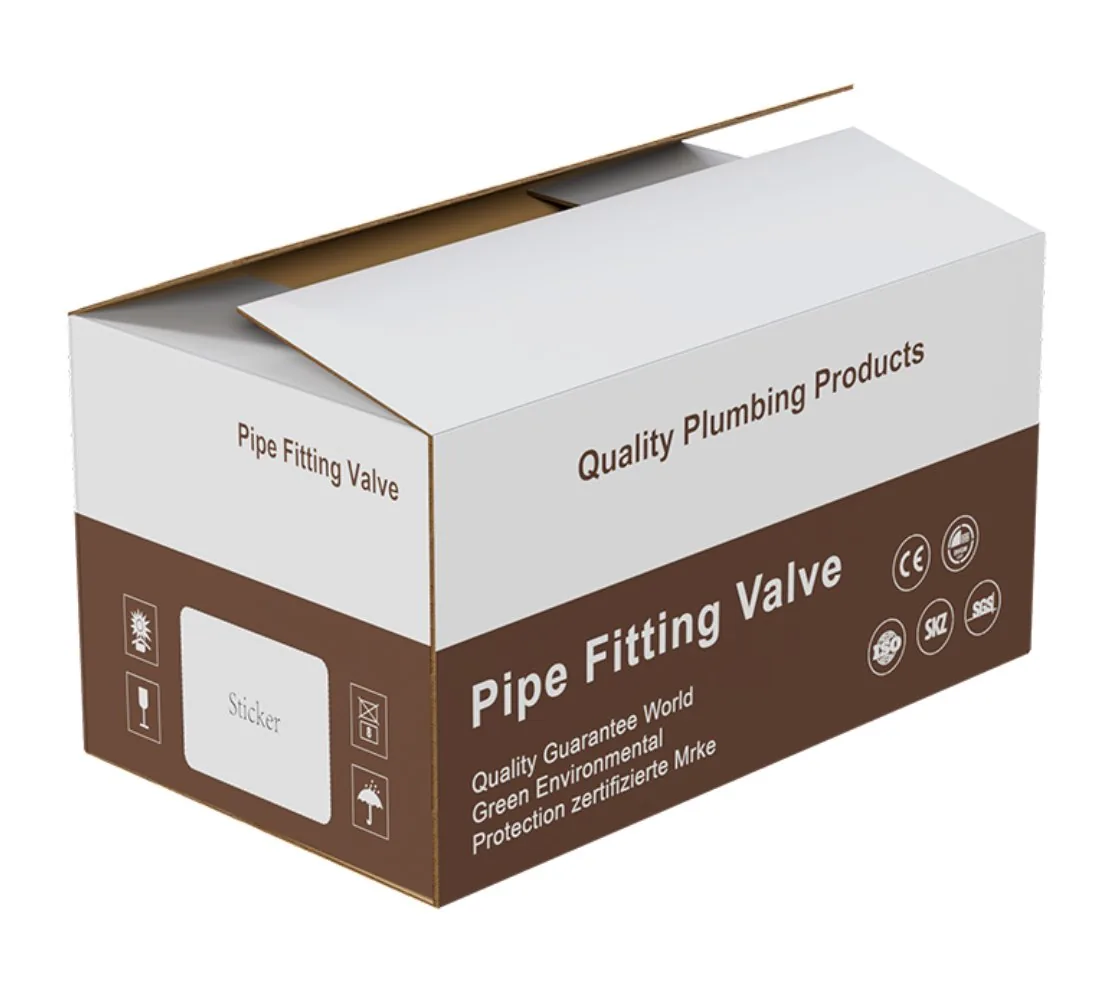
Phase 2 covers everything printed: the line print on the pipe itself (your brand, OD × wall, material class, standard reference, production traceability), carton and coil-wrap artwork, labels, installation leaflets and the document set — datasheets, warranty text, declarations — issued under your name. Hitze prints pipe marking and packaging under the buyer’s brand as standard, so the factory-side work here is plate setup and proofing. What actually consumes calendar time is revision rounds: a buyer who arrives with a logo file, a Pantone reference and a signed-off label layout clears proofing in one pass; a buyer who is still debating brand colours generates three or four proof cycles, and each cycle is a round trip you cannot delegate.
Two compliance details hide inside this “creative” phase and both can torpedo a launch if left late. First, marking content is regulated, not decorative: under the UPC/cUPC scheme, a private-labeled product must carry the name of the customer for whom it was manufactured together with the model number — so your artwork must be checked against the listing requirements, not just against your brand book. Second, for NSF-certified product, where the labeling physically happens matters: NSF’s rules require private labeling to take place at the certified manufacturer’s location; relabel or repackage off-site in your own warehouse and the certification no longer covers the product. Both facts argue for the same operational decision — have everything printed and packed at the factory — and both are reasons the complete artwork-and-documents checklist deserves its own pass, which we walk through item by item in the ODM print, packaging and documents checklist.
The recommendation is unambiguous: run phase 2 fully inside phase 1’s calendar. Artwork does not need approved samples to begin; it needs your logo and a decision-maker. Buyers who treat print approval as a sequential step after sample sign-off add weeks of pure waiting to their own launch for no risk reduction whatsoever.
Phase 3 — The Certification Fork: Where Timelines Diverge by 10×
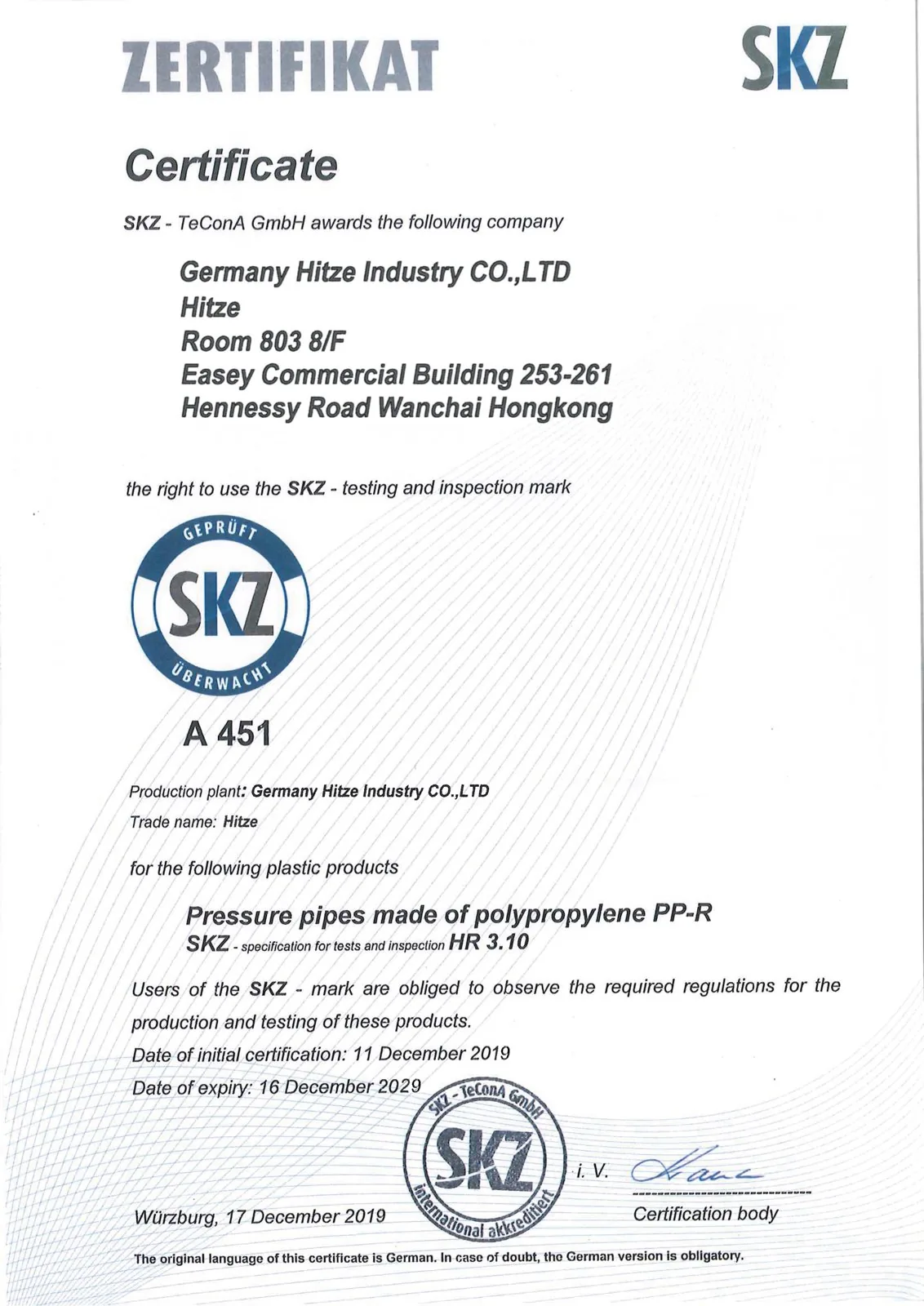
This is the fork in the road, so treat the published numbers with care — they describe the certification bodies’ processes, not any factory’s promise. If you sell under the factory’s existing listings with private-label marking (route one), phase 3 is a compliance-marking review that can run concurrently with phase 2. If you want your name added to the certification file (route two, e.g. NSF’s ANF option), you are into an application-and-agreement process between you, the factory and the certifier. If you want approvals in your own name on a product not yet certified (route three), you inherit the full cycle: NSF describes a seven-step certification process — application, formulation disclosure, technical review, facility audit, laboratory testing, findings review, certification — and states that it typically lasts 4 to 18 months depending on product complexity and documentation completeness.
The UK path has the most transparently published clock. WRAS states it will issue a Material Approval within 10 working days of receiving a complete and correct application — but that clock starts after testing, and the BS 6920 test suite behind a material approval can take up to roughly 9 weeks, the microbial-growth (MDOD) test being the long pole. For full Product Approvals, applications are reviewed at approvals meetings held on a roughly 6–8-week cycle, which means missing one meeting costs you the gap to the next one — a scheduling reality no supplier can negotiate away. A WRAS Approval then lasts a maximum of five years before re-approval, which matters for your relaunch planning, not just your launch. IAPMO R&T, by contrast, publishes no fixed timeline and says it tailors turnaround to the applicant’s deadline — genuinely fast in practice for listing amendments, but not a number you should write into a retail commitment.
| Certification route | What happens | Published duration signal (issuing body) |
|---|---|---|
| Sell under factory listings, private-label marking | Your name + model number marked against the factory’s audited listing (e.g. UPC/cUPC rules) | No separate certification cycle; marking/document review runs parallel to print approval |
| Name added to factory’s file (e.g. NSF “ANF”) | Tri-party agreement; labeling must occur at the certified plant; your name appears in the public listing | Administrative review; NSF publishes no fixed ANF duration — confirm per application |
| Own-name WRAS Material Approval (UK) | BS 6920 water-quality testing, then WRAS review; approval valid max. 5 years | Testing up to ~9 weeks; approval issued within 10 working days of a complete application (WRAS) |
| Own-name NSF certification (US/Canada) | Seven steps: application, formulation review, facility audit, lab testing, review, certification | Typically 4–18 months (NSF-published range) |
| Own-name IAPMO UPC/cUPC listing | Testing to the applicable standard + listing; unannounced factory inspections maintain it | No published fixed duration — IAPMO states it tailors turnaround per deadline |
Position to take: unless your retail channel contractually requires certificates in your own name, launch on route one or two and pursue route three — if you still want it — with revenue already flowing. The full mechanics of whose name appears where, what ANF actually looks like in the NSF database, and who should hold a WRAS approval are covered in getting your own brand certified via your factory. The one-sentence summary: certification transfers fastest when the factory’s file is already thick, and it transfers not at all when the labeling leaves the certified site.
Phase 4 — Pilot Order and Production: What Hitze Checks Before Your Brand Ships
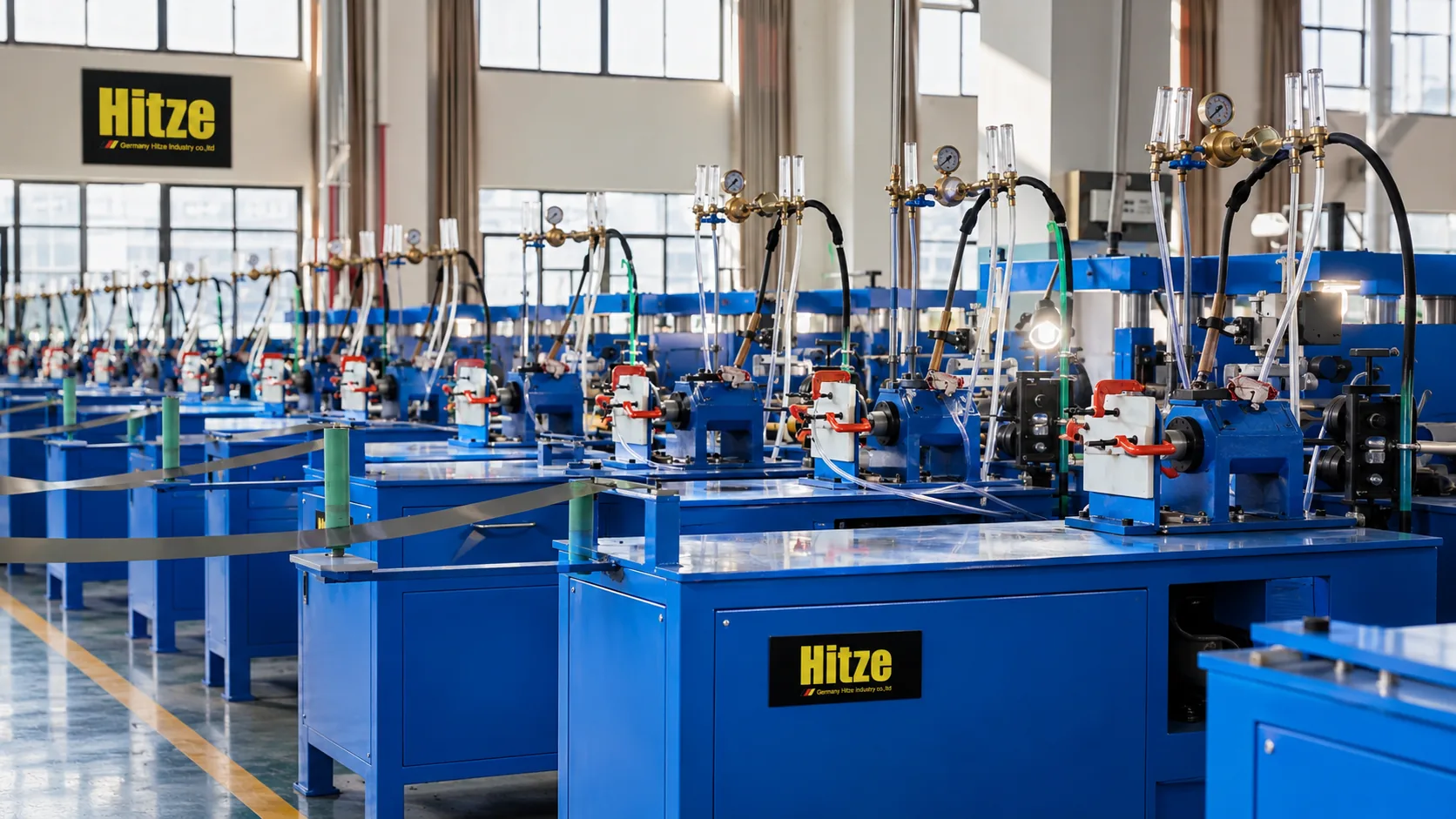
Phase 4 is the one phase whose duration a factory genuinely owns — and the one where this article will not give you a number, because Hitze production slots are confirmed per order, and they vary with the size mix (a 16–32 mm coil program schedules differently from PP-R straight lengths up to OD 110), the fitting content, and the order book at confirmation. What can be described precisely is what happens inside the slot, because it is the same regime whether your pilot order is two pallets or twenty.
What Hitze checks on a private-label pilot run: raw material is dosed through gravimetric hoppers at the extrusion crosshead, and pipe is produced to the declared standard — DIN 8077/8078 and EN ISO 15874 for PP-R, DIN 4726 oxygen-barrier construction for heating pipe, ASTM F876/F877 where PEX is specified for North American programs. On multilayer pipe, the aluminium core is butt-welded into a continuous seam and the five-layer wall is verified at cut cross-sections. Finished pipe and fittings go to hydrostatic pressure benches; brass components (lead-free and DZR grades CW724R, CW511L, CW602N; CW617N standard) are machined in-house in the CNC halls of the 120,000 m² production base. On a first private-label run there is an additional gate that repeat orders skip: first-article print verification — your line print and carton artwork checked against the approved proofs and against the marking rules of whichever listing route you chose in phase 3. Quality documentation for the batch is compiled under your brand as agreed in phase 2. The operation is run under an ISO 45001-certified management system, and the matched pipe-and-fitting system you are putting your name on carries Hitze’s 50-year system warranty.
Insider warning for this phase: the pilot order is your last cheap chance to change anything. Alter the print layout, the coil length or the carton count per pallet after the pilot and you are re-approving artwork and possibly re-checking marking compliance. Smart buyers treat the pilot as a full dress rehearsal — same coil lengths, same cartons, same document pack as the intended container program — and accept that a pilot that is deliberately “quick and dirty” only postpones the slow-and-clean version to a point where it costs more.
Phase 5 — Container, Documents and Ocean Transit
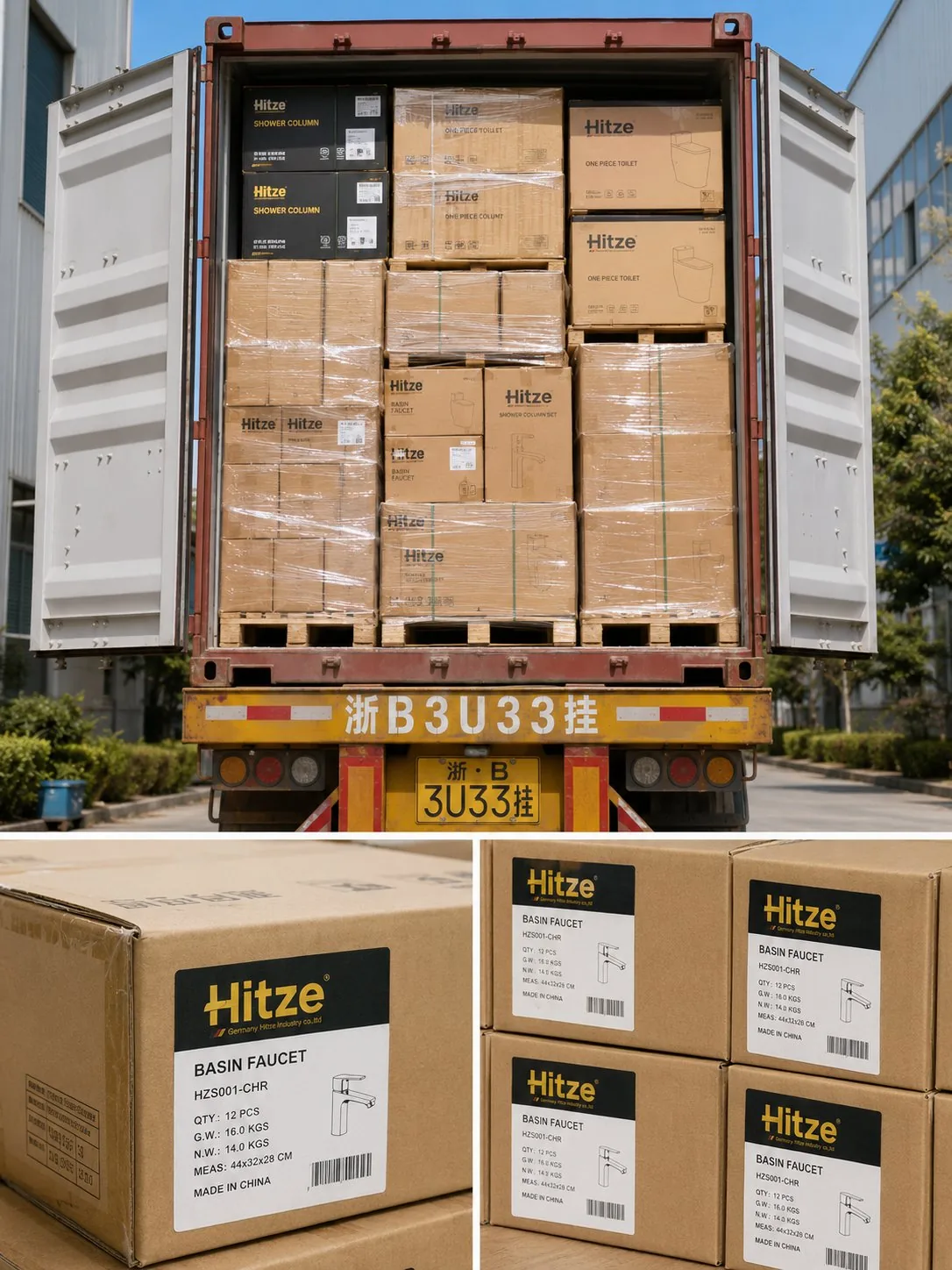
Once the pilot converts into a container order, the remaining calendar belongs to logistics. Two dates gate the departure before the ship even moves: the Verified Gross Mass declaration — mandatory worldwide under IMO SOLAS since 1 July 2016; no VGM, no loading — and the carrier’s cut-off for your booked sailing, which, like a WRAS approvals meeting, punishes a one-day miss with a wait for the next cycle. Your brand’s document pack travels in parallel: commercial invoice and packing list in your name per the agreed Incoterm, certificates or listing references from phase 3, and the test documentation compiled at the factory.
Transit itself is the one phase where ranges can be honestly pencilled in, provided they are labelled as what they are — marketplace estimates that move with routings and season. Current freight-marketplace data (Freightos route data, checked July 2026) puts Shanghai–Los Angeles FCL at roughly 27–36 days and Shanghai–Rotterdam FCL at roughly 51–66 days — the Europe lane reflecting Cape of Good Hope routings on current schedules. Add customs clearance and inland delivery on your side, which varies by port and broker. The planning consequence is asymmetric by market: a North American launch can realistically think in weeks for this phase; a North European launch on current routings must think in two months and should time its marketing launch date accordingly, not off the factory’s ex-works date.
A Worked Launch: UK Wholesaler, Own-Brand Multilayer and PP-R Program
Put the phases together for a concrete case: a UK plumbing wholesaler launching an own-brand range of multilayer pipe, PP-R and press fittings, selling to merchants who ask for WRAS-recognisable paperwork. Week 1: samples requested — no MOQ, so this is a courier event, not a negotiation. The buyer simultaneously sends logo files and opens the artwork thread (phase 2 starts inside phase 1) and asks for the factory’s existing WRAS material approval and BS 6920 report, which arrive as PDFs within days because they already exist. Weeks 2–5, indicative: the buyer’s evaluation — dimensional checks in-house, one third-party verification test, a press-jaw compatibility trial — runs at the pace of the buyer’s own lab booking; artwork clears in two proof rounds because the brand book was ready. Certification fork: the buyer launches on the factory’s existing approvals with private-label marking (route one) and only later files an own-name application — knowing from WRAS’s published process that fresh BS 6920 testing can take up to ~9 weeks with the approval issued within 10 working days of a complete application, they deliberately keep it off the launch’s critical path. Pilot: a small mixed order — possible precisely because there is no MOQ — produced in a slot confirmed at order, with first-article print verification against the approved proofs. Container: pilot findings (one carton-label correction, caught for the price of a pallet instead of a container) are folded into the first 40HQ; on current marketplace data the Europe leg is roughly 51–66 days port to port, so the buyer sets the merchant launch date off the ETA, plus clearance buffer — not off the sailing date. Total calendar: dominated by the buyer’s own evaluation pace and the ocean, not by the factory. That is the shape of every well-run launch we see: the factory phases are the short links; the launches that drag are the ones that ran the buyer-owned phases in series.
Who This Timeline Works For
This launch model fits importers, wholesalers and brand builders who want their own name on a certified-grade piping system without carrying a certification project or a container-sized first bet: you start with samples (no MOQ), print pipe, packaging and documents under your brand at the certified site, and scale from a pilot to container programs on a system backed by Hitze’s 50-year matched-system warranty — a German brand, founded 1974, engineered to German DIN standards and shipping to 118+ countries. It is not the right model for buyers who need certificates issued solely in their own name before the first invoice: that is a legitimate strategy, but it puts a certification body’s calendar — not a factory’s — at the front of your launch, and you should plan it as such. If the first profile is you, the place to start is the Hitze private-label / ODM program: send the products you want to brand, and get a phase-by-phase plan with the durations that can be committed to in writing — confirmed per order, not promised in a blog post.
FAQ: Private Label Launch Timelines
How long does a private label pipe launch take from first sample to first container?
There is no honest single number, because the total is a critical path across five phases with three different owners. The buyer-owned phases (sample evaluation, artwork approval) run at your pace; certification ranges from a parallel document review (selling under the factory’s existing listings) to an NSF-published 4–18 months (own-name certification); production slots are confirmed per order; and ocean transit is roughly 27–36 days Shanghai–Los Angeles or 51–66 days Shanghai–Rotterdam on current marketplace estimates. Well-run launches compress the total by running sampling, artwork and the certification conversation in parallel.
What is the single biggest variable in the timeline?
The certification route. Launching under the factory’s existing certificates with private-label marking adds close to zero calendar time; adding your name to the factory’s file (e.g. NSF’s “Another Name For” option) is an administrative process; pursuing certificates in your own name from scratch puts the certification body’s full testing cycle — months, not weeks — on your critical path. Decide this in week one, not after the pilot order.
Does Hitze have a minimum order quantity for a private label launch?
No. Hitze runs a sample-first program with no MOQ — you can start with samples or a small trial order, verify the product and the printed branding on a pilot, and scale to container volumes when the evidence supports it. Prices and production lead times are quoted per enquiry and confirmed per order, because they vary with the size mix and order book.
Is Hitze pipe made in Germany?
Hitze is a German brand — trademark registered with the DPMA in Munich — engineered in Germany and built to German DIN standards, with products certified by German bodies including SKZ and DVGW. Production runs at the group’s 120,000 m² base with 1,000+ employees, and the matched pipe-and-fitting system carries a 50-year warranty. Certificates and factory documentation are shared openly during sampling, so you can verify exactly what you are branding before you commit.
Can I relabel certified pipe in my own warehouse to save time?
For NSF-certified product, no — NSF states that relabeling or repackaging off-site from the certified production location voids the certification unless your facility undergoes its own certification and audits. The faster and safer sequence is to have your brand printed and packed at the certified factory during production, which is standard practice in the Hitze private-label program and costs you nothing in calendar time.