Key Takeaways
- A serious pipe factory hands over a full support stack — datasheets, certification pack, installation guides, training, photography, sample kits, warranty documents, exhibition co-op and case references — without you having to chase each item twice.
- Every request on this list doubles as a diagnostic: how the factory responds tells you whether you will be left alone to sell the product after your deposit clears.
- Anything you will republish under your own brand (spec tables, Declaration of Performance, warranty terms) must arrive editable AND traceable to a real, numbered certificate — never as a flattened JPEG.
- BIM/CAD objects are not a universal deliverable in the pipe trade. Ask whether they are available before you promise them to specifying engineers.
- Hitze runs a sample-first program with no minimum order quantity and backs the matched pipe-and-fitting system with a 50-year warranty — the two anchors any private-label marketing story hangs on.
The quiet fear behind every private-label pipe deal is not the product. It is the Tuesday, eight months in, when a mechanical contractor asks your salesperson for a pressure-loss table at 60°C and nobody on your side has one — because the factory sent you a price list, a proforma invoice, and silence. You paid for branded coils. You did not pay for the machinery that sells them: documents, training, media, proof. That machinery is what separates a manufacturer from a shipper of plastic.
This is a working checklist of ten support items a factory serious about your brand provides, in the rough order you will need them. For each one: why it matters commercially, and — just as useful — what the factory’s answer reveals about how the next five years will go. Use it in your first serious call. A factory that has these items ready has done private label before. A factory that improvises answers is about to learn on your budget.
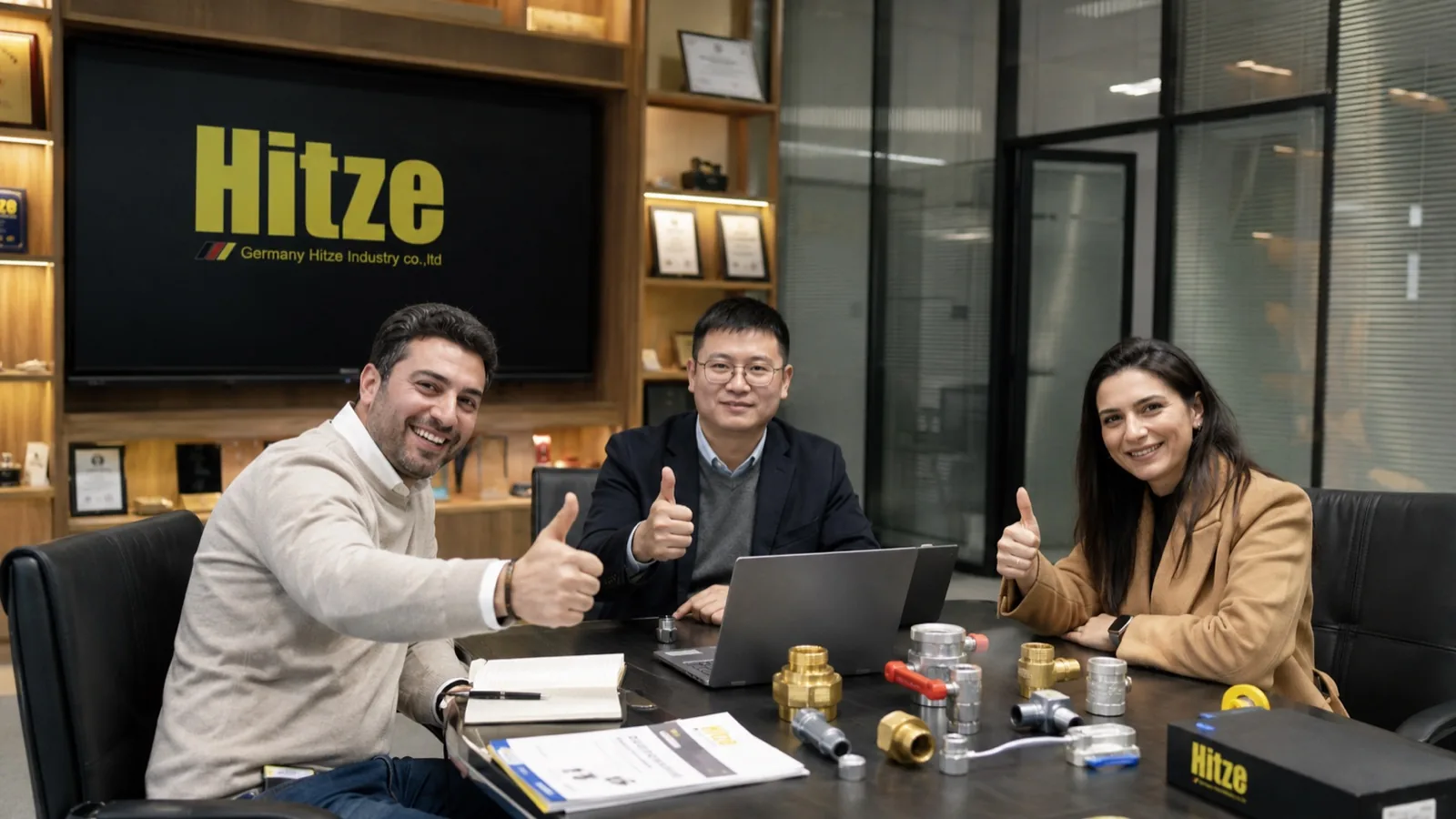
1. Product datasheets and spec tables — editable, not screenshots
The datasheet is the one document every downstream buyer — merchant, installer, consulting engineer — will judge your brand by. A real one states the standard the pipe is built to (for PP-R that means DIN 8077/8078 and EN ISO 15874; for oxygen-barrier heating pipe, DIN 4726; for PEX in North American projects, ASTM F876/F877), the size range with wall thicknesses, pressure and temperature classes, and the fitting system it pairs with. If the “datasheet” you receive is a marketing flyer with a photo and the word “high quality,” you have learned something important early and cheaply.
Demand two formats: a print-ready PDF and an editable source file you can rebadge. Then run one test that takes thirty seconds and exposes more than a factory audit: pick a single SKU — say 25 mm PP-R — and check that the wall thickness on the datasheet matches the print line on the physical pipe sample. Factories that maintain their documentation match. Factories that bought a template do not. The insider warning: a supplier who will not release editable spec tables usually cannot, because the numbers were copied from someone else’s catalogue and they are afraid you will check.
2. The certification document pack — numbered, current, verifiable
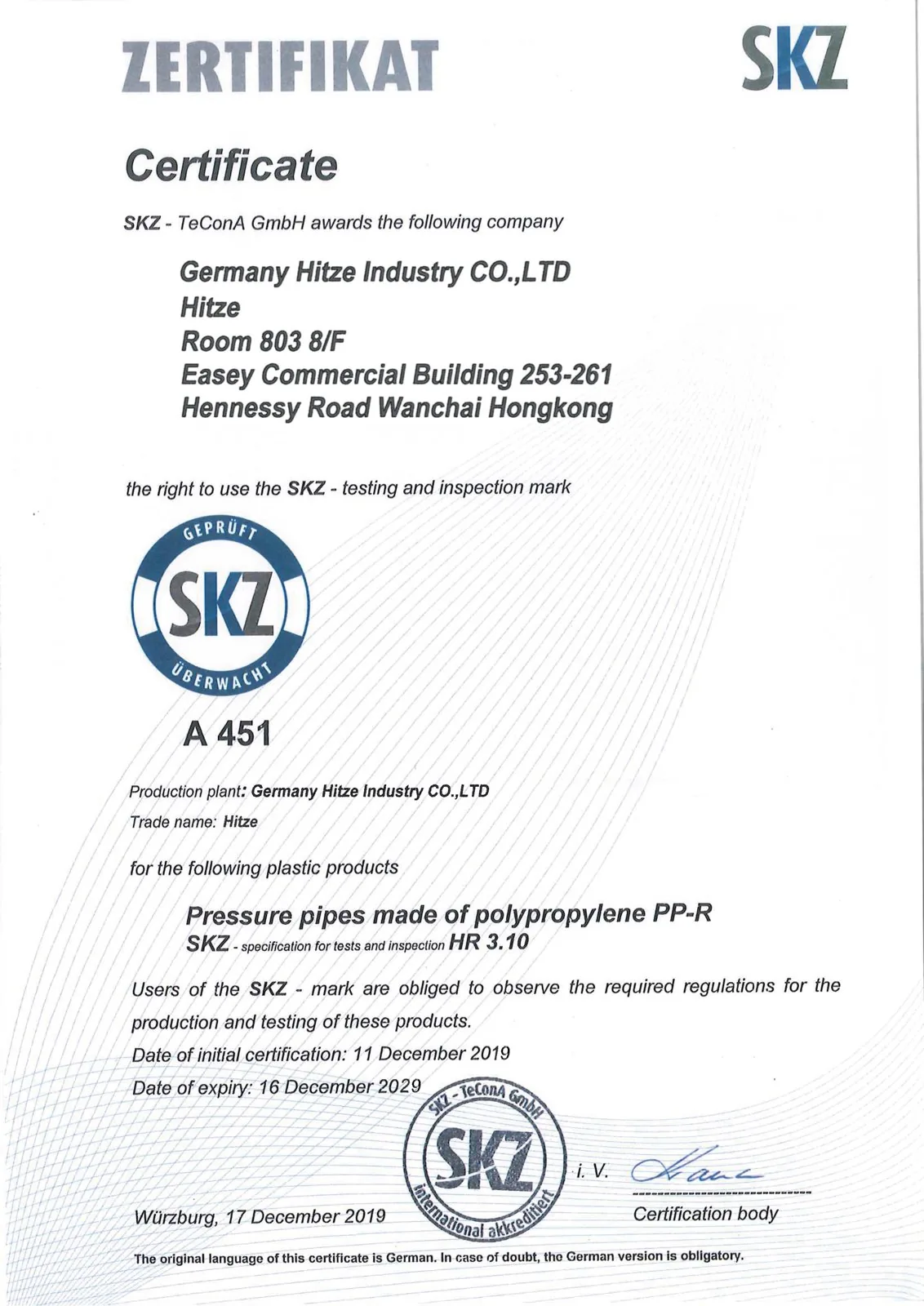
Marketing claims about potable-water safety are worthless without the paper behind them, and in most of your target markets they are illegal without it. The pack you want on file before you print a single carton: the third-party test certificates for the exact product family you are buying, the CE Declaration of Performance where a harmonised European standard applies — under the EU Construction Products Regulation the manufacturer must draw up a DoP for each covered product, and your import file needs a copy — plus any market-specific approvals for where you actually sell.
Here is what asking reveals. Certificates from bodies like SKZ, DVGW or WRAS carry registration numbers and sit in public or verifiable registers; WRAS material approvals, for instance, are valid for a maximum of five years, maintained by retesting, and expired listings are removed from the public directory. So ask for the number and the expiry date, not just the PDF. A factory that answers with both inside a day maintains its approvals as a living system. A factory that sends a certificate dated seven years ago, or one issued to a different company name, is handing you someone else’s paper — and the liability stays with you, the importer. We covered the document-by-document detail in the ODM print, packaging and documents checklist; the short version is that every claim on your future packaging must trace to a numbered certificate you have actually seen.
3. Installation guides — because your warranty exposure starts on site
Most field failures in plastic piping are installation failures: wrong fusion temperature on PP-R, an unpressed press fitting, a compression joint over-tightened onto PEX. When it happens, the installer blames the pipe, the merchant blames you, and your brand takes the hit. Installation guides are therefore not an after-sales courtesy — they are your first line of warranty defence, because a documented, published installation procedure is what lets you distinguish a product defect from a workmanship defect.
Ask for guides that are tool-specific, not generic. For a press-fitting system that means naming the jaw profiles the fittings are validated for — Hitze press fittings, for example, are specified against TH, U, F and M profiles — because “use a press tool” is exactly the vagueness that produces leaks. For heat-fusion PP-R, the guide should state heating times per diameter across the 16 to 32 mm range. What the answer reveals: a factory with real installer-facing documentation has processed real field claims and closed the loop. A factory offering a one-page leaflet has never had to defend a joint in a dispute — or worse, has, and lost.
4. Training — video library first, on-site when the volume justifies it
Your salespeople will be asked questions they cannot answer in month one: why oxygen barrier matters in a heating loop, when multilayer beats plain PEX, what DZR brass is for. Every unanswered question is a lost line on a quotation. Training is how a factory transfers twenty years of application knowledge into your team in twenty hours, and the format matters: recorded video modules scale to every new hire you make in year three; a single on-site session does not.
The trade-off to negotiate: on-site training is expensive for everyone, so a reasonable factory ties it to milestones — a launch event, a first-year volume threshold, a distributor conference — rather than promising unlimited visits it will quietly stop honouring. Our recommendation is to ask for the video and document library unconditionally, and put one on-site or live-remote session per year into the agreement text. What asking reveals: a factory that can share an existing training library has trained other partners before you. One that says “our engineers will explain everything” is describing a dependency, not a program — and dependencies break when the engineer changes jobs.
5. Photography and renders — the asset pack that saves you a five-figure shoot
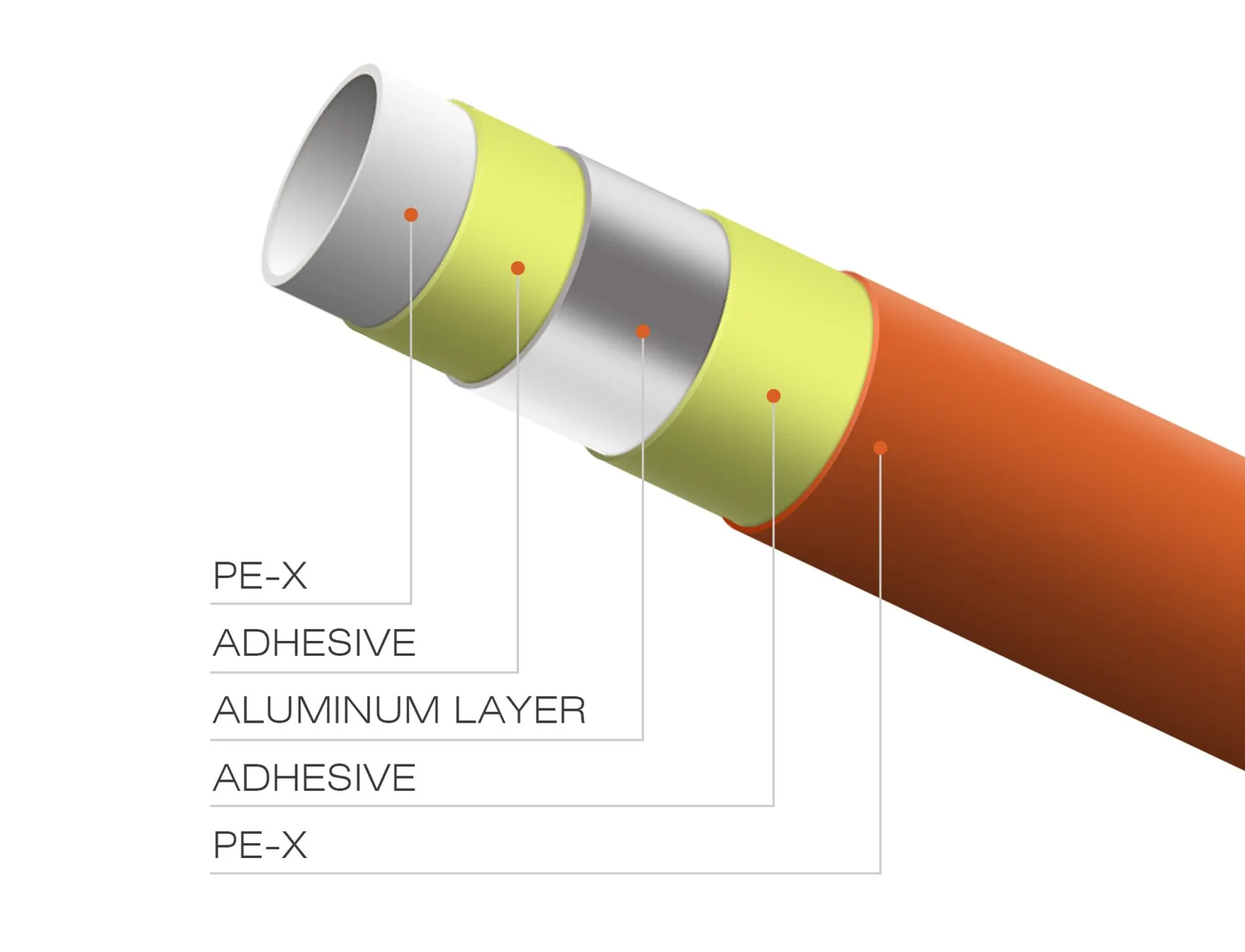
You cannot photograph what you do not warehouse yet. In the launch window — website, catalogue, first trade ads — you are entirely dependent on the factory’s media library: white-background product shots of every fitting geometry, cross-section and cutaway images that explain the construction (a five-layer multilayer wall means nothing in words and everything in a cut sample photo), production-line and warehouse imagery, and installation scenes. A complete pack replaces a studio shoot you would otherwise commission before you have revenue to pay for it.
Two things to specify. First, resolution and licence: you need print-resolution originals and written permission to use them under your own brand — an email saying “feel free to use our pictures” does not survive a dispute with a stock-image troll. Second, neutrality: for private label you want imagery where the factory’s own logo is absent or removable, otherwise every asset advertises someone else’s name. What the answer reveals is blunt: a factory that maintains a structured, current image library treats marketing as part of the product. One that sends you eleven WhatsApp photos taken on the warehouse floor treats your brand as an afterthought.
6. Sample kits for your sales team — the cheapest closing tool in the trade
Pipe is a tactile product sold to sceptical people. A cut cross-section of multilayer pipe with the aluminium core visible, a sectioned press fitting showing the stainless sleeve and O-rings, a fused PP-R joint cut lengthwise to show the continuous wall — these end arguments that datasheets only start. Your reps need boxed sample kits they can leave on a merchant’s counter, and you need them in quantity, not as a one-off favour.
This is also where minimum order policies show their teeth. A factory that demands a container commitment before releasing samples has inverted the logic of trust: it asks you to bet six figures before it will spend fifty dollars proving the product. The sample-first model — evaluate, test, then scale — is the honest sequence, and it is the one Hitze’s private-label and ODM program is built around: no minimum order quantity, samples and small trial orders first, so your sales team is holding physical product before your capital is committed. What asking reveals: a factory generous with samples expects the product to survive inspection. Sample reluctance is, in our experience, the single most reliable early red flag in this industry.
7. Warranty documentation — the transferable kind, in writing
A warranty you cannot show a customer does not exist. What you need from the factory is the actual warranty document: term, what is covered, what conditions apply (matched pipe-and-fitting system, documented installation per the guides — see item 3), and the claims procedure with a named contact. Then the question that sorts factories into two piles: how does this warranty back my brand? Because your customers buy from you, not from the factory, and the paper trail has to work when a claim arrives at your desk with your logo on the carton.
Hitze’s position here is straightforward and unusual in its length: a 50-year warranty on the matched Hitze pipe-and-fitting system. Note the word “matched” — it is not marketing hedging, it is engineering honesty, because no manufacturer can warrant a joint made between its pipe and an unknown third-party fitting. For your marketing, a long system warranty is the strongest single claim you can print, and it is precisely the claim you must have the underlying document for. A factory that quotes a big number verbally but stalls on the written terms is lending you a slogan, not a warranty.
8. Co-op exhibition presence — shared booths, shared credibility
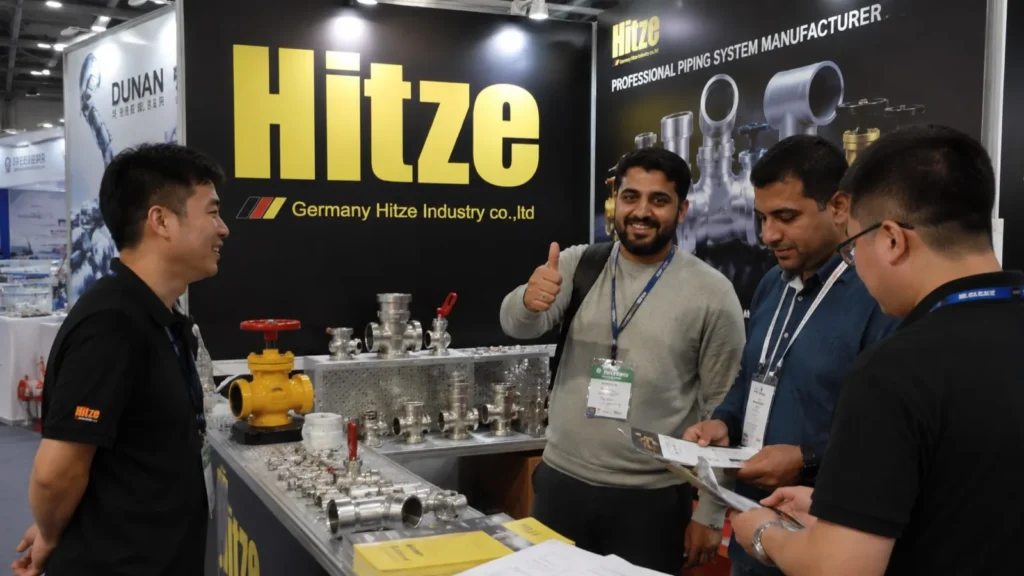
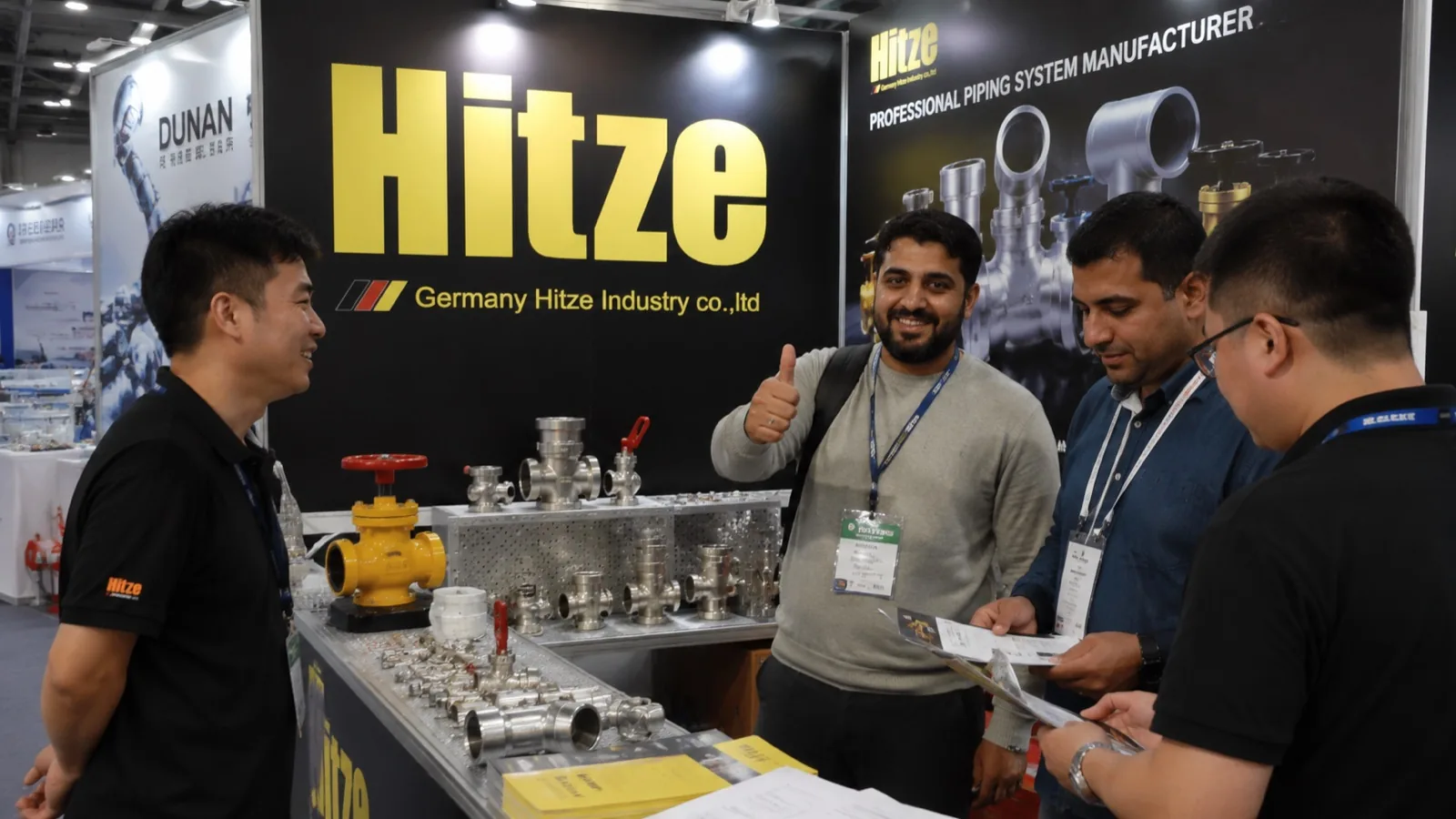
Trade fairs are where the plumbing trade still decides who is real. ISH in Frankfurt — the world’s leading trade fair for HVAC and water, next running 15–19 March 2027 — is the reference event for this industry, and a booth there costs more than most first-year private-label marketing budgets. The realistic ask is not “pay for my booth.” It is co-op: factory personnel at your stand to field technical questions, demo equipment and cutaway displays on loan, sample product for the wall, and — often overlooked — the right to bring your key customers to the factory’s own booth and be introduced as a partner.
What asking reveals: whether the factory exhibits at all, and where. A manufacturer that shows at serious international fairs is spending its own money to stand next to its product in public — the opposite behaviour of a trading company reselling anonymous stock, a distinction we unpack in the context of exclusive territory agreements with a pipe factory, where exhibition conduct inside your territory should be contractually defined. Put it in writing: who exhibits under which brand, in which countries. A factory that exhibits under its own name in the territory it granted you exclusively is competing with you at your own trade show.
9. BIM/CAD objects — ask whether available, before you promise them
If you sell into commercial and institutional projects, specification is won inside design software: consulting engineers drop manufacturer objects into their models, and the brand in the model tends to be the brand on the purchase order. BIM and CAD objects are therefore genuinely valuable — and genuinely not universal in the pipe trade, where plenty of competent factories serving residential and merchant channels have never produced them. Treat this item differently from the rest of the list: it is an “ask whether available” item, not a pass/fail demand.
The reasonable sequence: ask what design-file formats exist today (even 2D CAD drawings of fittings help an engineer detail a riser), ask whether object libraries are on the roadmap, and if your market strategy depends on spec-driven projects, negotiate who funds their creation — building a library is real money, and a factory may fairly propose sharing the cost with the partner who benefits. What the answer reveals is orientation: a factory that at least understands the question knows how projects get specified. One that has never heard of BIM is not disqualified — but you now know your project-market ambitions will be self-funded, and you should price that into the deal.
10. Case references — proof someone bought before you
The last item is the one factories find hardest to fake: evidence of existing partners and shipped programs. You are not asking for confidential client lists — no serious manufacturer will name its private-label customers, because discretion is half of what those customers pay for. You are asking for anonymised proof: photos of branded production runs (with the partner’s marks obscured), export records to markets like yours, the number of countries served, and ideally a reference call with one existing partner who consents.
Scale signals are checkable even when names are not. A factory founded in 1974, running a 120,000 m² production base with 1,000+ employees and exports to 118+ countries — Hitze’s numbers — implies decades of surviving other people’s quality inspections, and pieces of it are independently verifiable: Hitze’s German trademark, Reg. No. 30 2020 005 484, sits in the DPMA register in Munich for anyone to look up. The insider warning cuts the other way, too: a factory that freely names its private-label clients to impress you will name you to impress the next prospect. In this niche, the discreet factory is the trustworthy one.
The checklist at a glance
| Support item | First thing to request | Green flag | Red flag |
|---|---|---|---|
| Datasheets & spec tables | Editable files + PDF, per SKU | Data matches the print line on the physical pipe | Marketing flyer with no standard number cited |
| Certification pack | Cert numbers + expiry dates | Verifiable in issuer registers | Certs in another company’s name |
| Installation guides | Tool- and size-specific procedures | Named jaw profiles, fusion times | One generic leaflet |
| Training | Existing video/document library | Scalable modules + annual session | “Our engineer will explain” |
| Photography & renders | Print-res originals + written licence | Structured, logo-neutral library | Low-res WhatsApp photos |
| Sample kits | Cutaways + boxed kits in quantity | Sample-first policy, no MOQ gate before evaluation | Samples released only after an order commitment |
| Warranty documentation | Written terms + claims procedure | System warranty, conditions clear | Big number, verbal only |
| Exhibition co-op | Staff, demo gear, booth intros | Exhibits at major fairs itself | Competes under own brand in your territory |
| BIM/CAD objects | Ask whether available; formats today | Understands spec-driven sales | Promises a library “next month” |
| Case references | Anonymised proof + scale facts | Discreet but verifiable (registers) | Names its private-label clients freely |
What Hitze puts behind a partner brand — and how it’s built
Since this article doubles as our own scorecard, here is how Hitze — a German brand of engineered piping systems, trademark registered at the DPMA in Munich — answers its own checklist. The documentation stack starts with the certificates: SKZ test certificates for PP-R pressure pipes, PP-R fittings and PE-Xb heating pipes; a DVGW type examination for PP-R drinking-water pipe; WRAS material approval for potable use in the UK; an NSF International Laboratories BS 6920 potable-water test report covering hot and cold service; ISO 45001 certification for occupational health and safety management under UKAS accreditation; and the SAI Global StandardsMark for AS 4176.8 (the Australian consumer-gas multilayer standard, ISO 17484-1). Products are additionally certified to cUPC/UPC, NSF-14, NSF/ANSI 61 and CE with Declaration of Performance — specific certificate numbers available on request, against the exact product family you are buying.
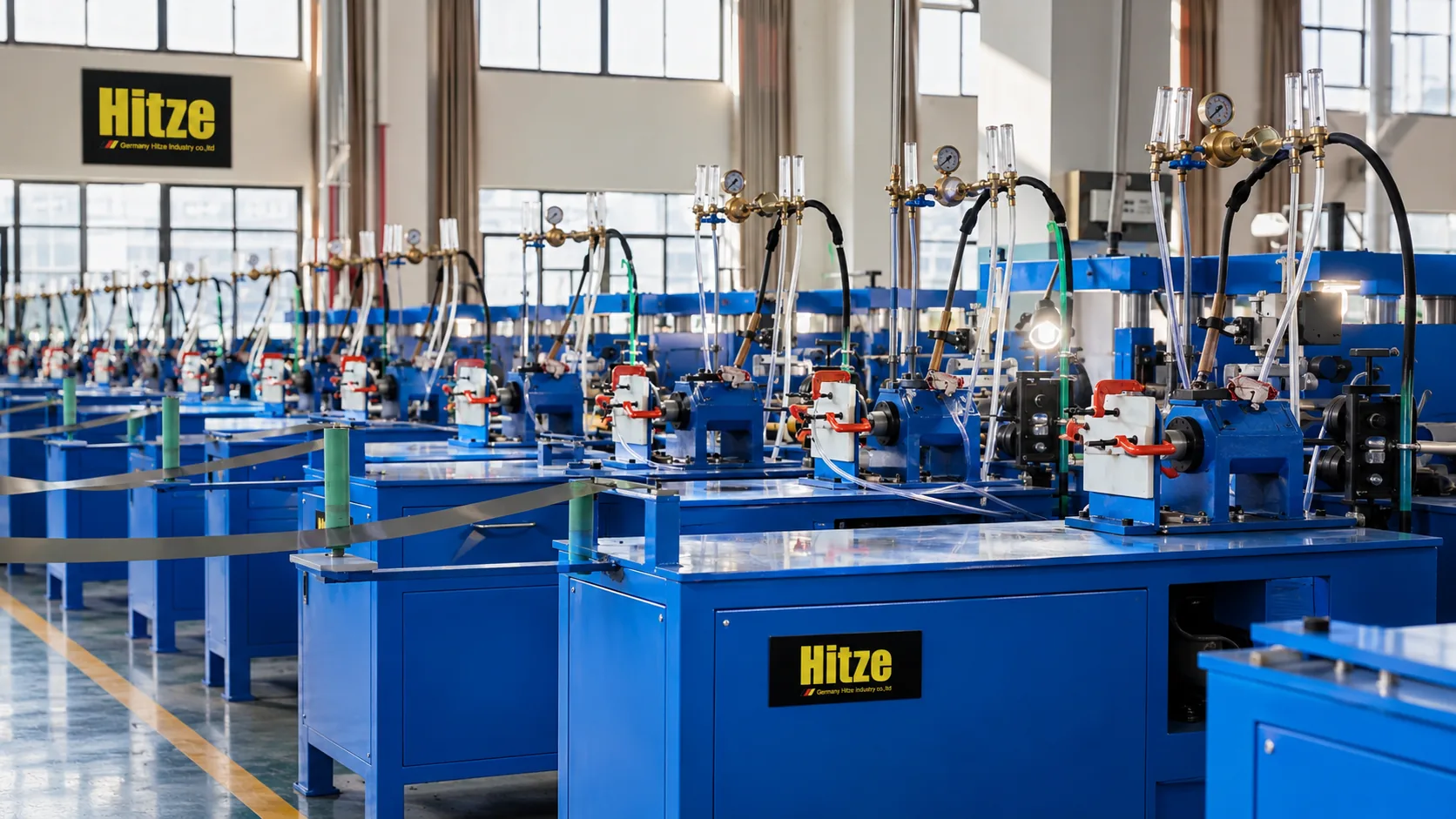
Behind the paper is the process the paper describes. Every production batch runs through pressure-test benches before release; press fittings are specified against TH, U, F and M jaw profiles so installation guidance names real tools; brass components for potable service are machined from lead-free and dezincification-resistant grades — CW724R, CW511L, CW602N — rather than repurposed standard alloy. The commercial architecture mirrors the engineering: sample-first with no minimum order quantity, so your team evaluates cutaways and test lengths before capital is committed, and the 50-year warranty applies to the matched pipe-and-fitting system your brand will actually ship. Media, spec documentation and rebrandable packaging artwork are part of the ODM program, not a paid extra.
Worked scenario: a distributor’s 90-day support run-up
Concrete version. A heating-products distributor in the Netherlands decides to launch an own-brand multilayer and PP-R range for the installer channel — the classic play we walk through end to end in how to launch your own pipe brand. Weeks 1–2: she requests the full checklist above in one email, item-numbered. The factory returns editable datasheets, the certification pack with registration numbers, and dispatches a sample kit — cut multilayer cross-sections in 16, 20, 25 and 32 mm, sectioned press fittings, a fused PP-R joint. Cost to her so far: freight on a sample box.
Weeks 3–6: her team checks certificate numbers against the issuers’ registers, confirms the DoP covers the exact pipe series she will import, and verifies the datasheet wall thicknesses against the physical samples. Her designer starts the catalogue directly from the factory’s image library — no studio shoot in the launch budget. Weeks 7–10: two salespeople complete the video training modules; the warranty document and claims procedure go to her lawyer alongside the draft territory agreement. Week 12: she places a small trial order — no MOQ means the first purchase order is sized to her pilot customers, roughly one pallet mix rather than a container. By the time real volume ships, every selling tool exists, every claim on her packaging traces to a numbered certificate, and no step required her to bet the company. The factory spent perhaps two working days of staff time across those 90 days. That asymmetry — trivial cost to a prepared factory, existential value to a launching brand — is exactly why the checklist works as a filter: only prepared factories can afford to say yes to all of it.
Who this program is for
If you are a distributor, importer or merchant group with a real sales channel and the ambition to own the brand equity you are currently building for someone else, the support stack above is the difference between launching and drifting. If you are hunting for the cheapest possible coil with no interest in documentation, this program — and frankly this article — is not for you. For everyone in the first group: Hitze’s private-label and ODM program starts sample-first with no minimum order quantity, carries a 50-year warranty on the matched system, and ships the marketing machinery alongside the pipe. Send the ten-item checklist as your first email; we would rather be measured against it than talked around it.
FAQ
What marketing support should a pipe manufacturer provide for a private-label brand?
At minimum: editable product datasheets, a verifiable certification pack, installation guides, sales training, a licensed photography library, sample kits, written warranty documentation and anonymised case references. Exhibition co-op and BIM/CAD objects are negotiated extras — valuable, but availability varies by factory.
Should the factory pay for my marketing?
Not in cash, usually. The realistic model is contribution in kind — documents, media, samples, training and staff time at exhibitions — plus co-op arrangements tied to volume milestones. A factory promising unconditional marketing money is either pricing it into your pipe or planning not to honour it.
Are BIM and CAD objects standard from pipe manufacturers?
No. They are common among project-focused system brands and rare elsewhere. Ask what design-file formats exist today and whether object libraries are planned; if your strategy depends on specification-driven projects, negotiate who funds their creation before signing.
Does Hitze provide this support without a minimum order commitment?
Yes. The program is sample-first with no minimum order quantity: documentation, sample kits and evaluation come before any volume commitment, and the 50-year warranty on the matched pipe-and-fitting system applies to the branded product you ship.
Is Hitze pipe made in Germany?
Hitze is a German brand — trademark registered with the DPMA in Munich — engineered in Germany and built to German DIN standards such as DIN 8077/8078 and DIN 4726, with third-party verification from German bodies including SKZ and DVGW. Ask us for the certificate pack; we would rather show the paper than lean on a slogan.