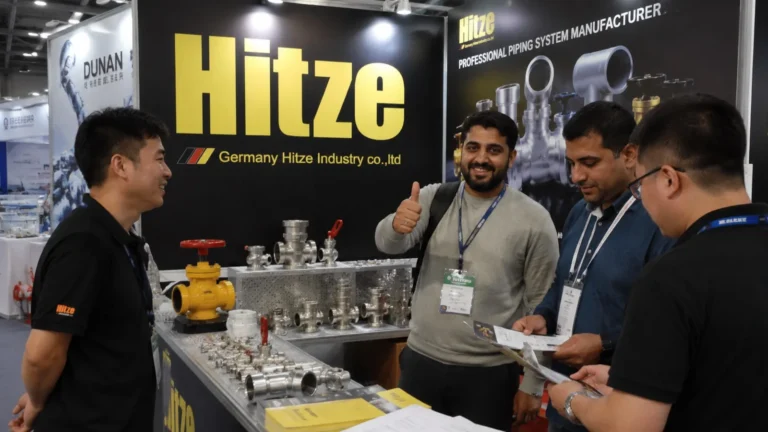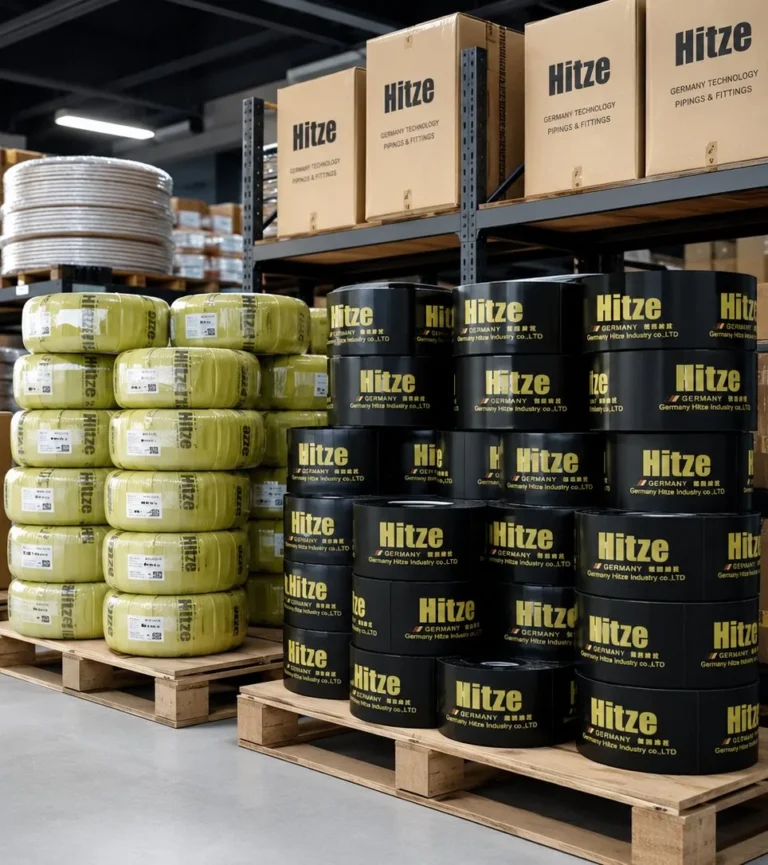
Key Takeaways
- Your pipe certifications do not cover faucets. A basin mixer sold in the US needs NSF/ANSI/CAN 61 (Q ≤ 1 µg lead since January 2024) and NSF/ANSI/CAN 372 lead content; in the UK the route is WRAS approval under the Water Supply (Water Fittings) Regulations 1999. None of that is inherited from your pipe range.
- The wetted path is where mixer quality lives. Brass grade, cartridge maker and plating spec decide whether the tap still works in year eight — and all three are invisible in a product photo.
- The economics run through one container. A 40HQ holds roughly 76.3 CBM nominal (60–68 CBM realistically usable); light, bulky pipe coils and dense faucet cartons balance each other, so a mixed load ships fuller than either alone.
- Packaging consistency is the brand. A distributor’s customer never sees your factory — they see whether the faucet box, the pipe coil label and the accessory blister look like one company.
- Start with samples, not a container. Hitze runs the bathroom range under the same no-MOQ, sample-first private-label program as the pipe lines, so you can validate a mixer in hand before a single carton is printed.

If you run a private-label pipe brand, this conversation has already happened to you. A plumbing merchant who stocks your PEX and fittings asks, almost in passing: “Do you do taps?” And you hesitate — because you know the honest answer is that a faucet is a different product category with different failure modes, different certifications and a different way of embarrassing you. A pipe that passes hydrostatic testing will quietly do its job inside a wall for decades. A basin mixer sits in the customer’s hand fifty times a day, and a gritty cartridge or peeling chrome is a brand complaint with your logo on it.
This guide is for the distributor or brand owner weighing exactly that extension: what actually changes when you add private label bathroom products — faucets, mixers, showers, sanitary ware and accessories — to a pipe catalog. The short version: the commercial logic is strong, the certification map is genuinely different, and the quality checkpoints are learnable. Hitze makes all of it under one roof, which is why we can walk you through the specifics rather than the brochure version.
Why Pipe Distributors Extend into the Bathroom at All
The first reason is share of wallet, and it is not abstract. The installer who buys your 20 mm multilayer pipe and press fittings for a bathroom renovation also buys a basin mixer, a shower set, an angle valve, two braided connectors and a towel rail — on the same job, often on the same purchase order. If your catalog stops at the wall, every one of those line items goes to someone else’s brand, and your merchant customer learns to keep a second supplier relationship alive. That second relationship is the door your competitor walks through. The strategic case is the same one we lay out in our comparison of single-source versus multi-supplier procurement: every additional supplier is another audit, another payment term, another quality standard to police.
The second reason is the container. Pipe coils are light and bulky — they cube out a container long before they weigh it out. Faucets and ceramics are the opposite: dense cartons that stack tight and add weight fast. Mixed loading lets the two cargo profiles compensate for each other, which we will put numbers on further down. A distributor who can fill one 40HQ with pipe, fittings, mixers and accessory sets gets a lower landed cost per SKU than one shipping a half-empty pipe container and buying taps locally at wholesale-plus.
The third reason is the brand story, and it is the one most often underrated. A plumber trusts a brand that behaves like a system: the pipe, the fitting, the valve and the tap that all arrive in matching boxes signal an engineering organisation, not a trading company that relabels whatever was cheap that month. Hitze’s own catalog spans multilayer PEX-AL-PEX, PEX, PE-RT, PP-R, fittings, manifolds — and faucets, mixers, showers, sanitary ware and bathroom accessories. That breadth exists precisely because the brand-extension play works. If you are still building the pipe side of the brand, start with our guide on launching your own private-label pipe brand; the bathroom range is the second chapter of the same book, and the whole program runs through Hitze’s private-label / ODM piping program as a single supplier relationship.
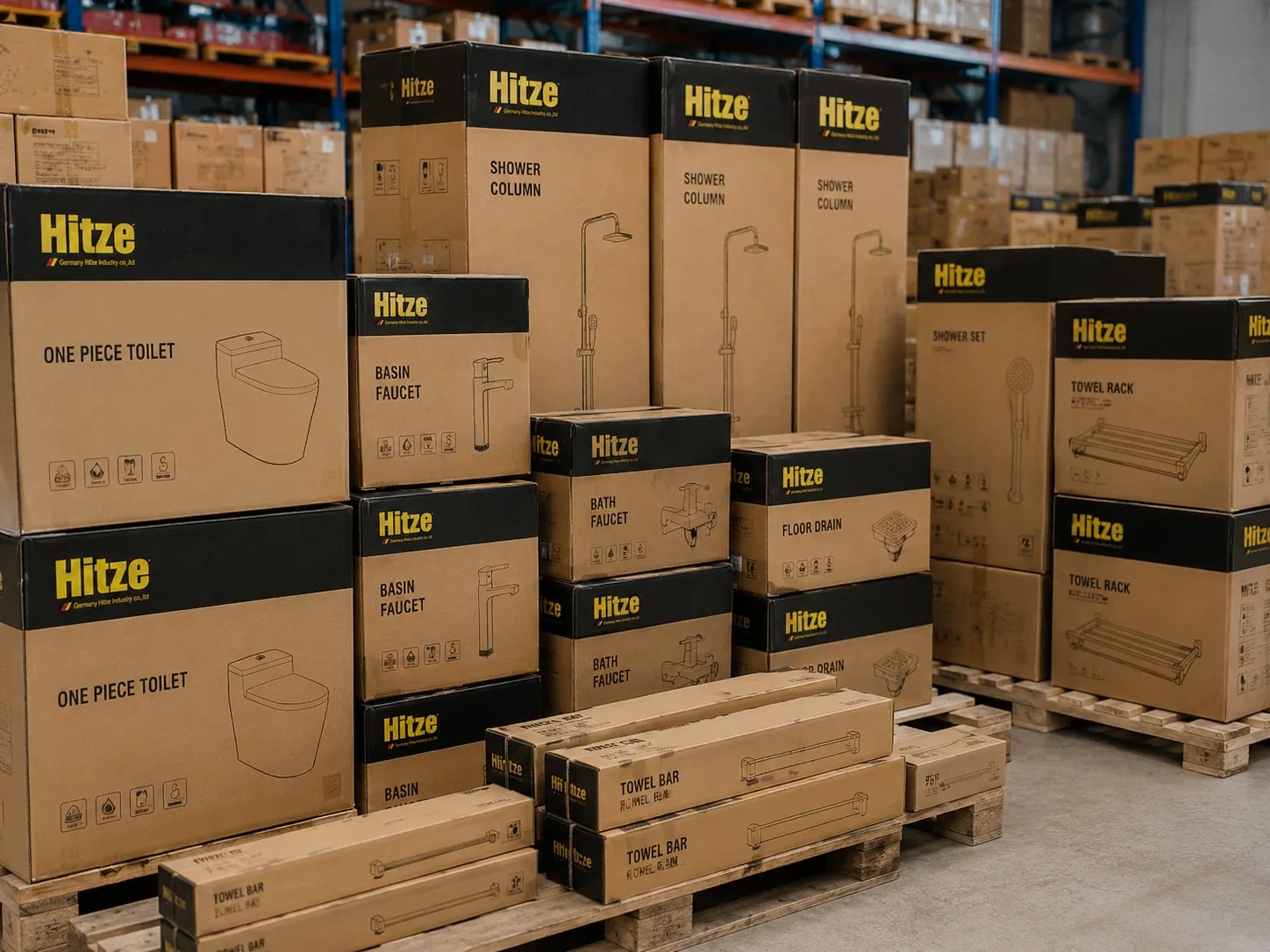
One insider warning before the enthusiasm runs away: the bathroom category punishes brands faster than pipe does. A defective pipe batch is a logistics problem — caught at goods-in, replaced, forgotten. A defective faucet batch is a retail problem: it reaches end customers, generates returns at the counter, and teaches your merchant to distrust the whole catalog, pipe included. That asymmetry is why the middle sections of this guide are about certification and quality checkpoints, not marketing.
The Certification Map Changes: What Faucets Need That Pipe Certs Don’t Cover
Here is the mistake we see most often from pipe distributors entering the category: assuming that because the factory’s pipe carries potable-water approvals, the taps ride along. They do not. Faucets are “endpoint devices” in regulatory language, and every major market regulates them under separate schemes with their own test protocols and their own listings. Your brand name has to appear on the faucet listing, not just the pipe listing — the mechanics of that are the same brand-listing process we describe for pipe, but the standards underneath are different.
In the United States and Canada, a drinking-water faucet needs two distinct things. First, lead content: the Safe Drinking Water Act’s Section 1417 definition of “lead free” caps the weighted average lead across wetted surfaces at 0.25% — demonstrated in practice through NSF/ANSI/CAN 372 (EPA’s summary of the rule is here). Second, lead leaching: NSF/ANSI/CAN 61 tests what actually migrates into the water, and its Q criterion for faucets was cut from 5 µg to 1 µg (0.5 µg for supply stops and connectors) with mandatory effect from January 1, 2024, per NSF’s own guidance. A faucet certified against the old 5 µg criterion is no longer sellable as compliant new certification — ask your supplier which edition their listing was tested to, and expect a specific answer. On top of the health-effects side, the mechanical performance standard is the binational ASME A112.18.1/CSA B125.1, which covers supply fittings from the supply stop to the terminal fitting — basin and kitchen mixers, shower fittings, hand showers and supply stops all fall inside its scope.
In the United Kingdom, the legal instrument is Regulation 4 of the Water Supply (Water Fittings) Regulations 1999: every water fitting must be of “appropriate quality and standard” and must not cause waste, misuse or contamination. WRAS approval is not legally mandatory — NSF and Kiwa run equivalent UK schemes — but it remains the recognition merchants and water undertakers actually ask for by name. Hitze holds WRAS material approval for potable water on the piping side; for a faucet program aimed at the UK, the tap itself goes through the fittings-approval route, and that is a project you scope with your supplier before committing to the SKU list, not after.
In the EU, mechanical mixing valves are covered by EN 817 (leaktightness, pressure resistance, hydraulic performance, mechanical strength, endurance and acoustics for PN 10 mixers), and the visible finish by EN 248, the standard governing electrodeposited nickel-chrome coatings — corrosion resistance and adhesion, verified by type tests. Potable-water material approval remains national (German KTW/DVGW logic, French ACS, and so on), which is why “CE marked” alone tells you almost nothing about whether a tap can legally touch drinking water in a given member state.
| Market | Health / material requirement | Mechanical / performance standard | Watch out for |
|---|---|---|---|
| USA / Canada | NSF/ANSI/CAN 61 (Q ≤ 1 µg for faucets since Jan 2024) + NSF/ANSI/CAN 372 (0.25% wetted-surface lead) | ASME A112.18.1 / CSA B125.1 | Listings tested to the pre-2024 Q criterion; verify the edition |
| United Kingdom | Water Supply (Water Fittings) Regulations 1999, Reg 4 — via WRAS, NSF or Kiwa approval | Relevant BS EN tapware standards (EN 817 / EN 200 family) | Material approval on brass ≠ fittings approval on the finished tap |
| EU | National potable schemes (KTW/DVGW, ACS…) — varies by member state | EN 817 (mixers), EN 248 (Ni-Cr finish) | “CE” alone is not a drinking-water approval |
One genuinely useful nuance hides in the US exemption list: the EPA’s lead-free requirement does not apply to fixtures used exclusively for non-potable purposes — and the statutory exemptions explicitly include toilets, bidets, tub fillers and shower valves. That means your shower column faces a lighter lead-compliance burden than your kitchen mixer, even in the same bathroom. A supplier who knows this will spec the wetted-path materials differently by SKU and price accordingly; a supplier who quotes one blanket “lead-free brass” answer for the whole range either doesn’t know the rule or isn’t reading it — both are information.
Quality Checkpoints for Mixers: What to Inspect Before Your Name Goes On
Checkpoint one: the brass, by grade name. A mixer body is a brass casting or forging, and the alloy determines both compliance and lifespan. For general European markets, CW617N is the standard workhorse; for aggressive or chlorinated water, dezincification-resistant grades like CW602N matter; for US potable compliance, genuinely low-lead grades such as CW724R or CW511L keep the wetted-path lead content inside the 0.25% weighted-average rule with room to spare. These are the same grades Hitze machines for its fittings and valve range — we published a full breakdown of what you can and cannot customize in an ODM program, and alloy selection by destination market is squarely in the “can” column. The test question for any supplier: “Which EN alloy designation is the mixer body, and does it change for the US version?” A factory that answers with a grade number is a factory with a materials department. A factory that answers “lead-free brass” and nothing else is reading its own brochure to you.
Checkpoint two: the cartridge, by maker. The ceramic-disc cartridge is the moving heart of a single-lever mixer, and it is the component most factories quietly economise on. Ask who makes it. Established European cartridge names — Sedal of Spain, Kerox of Hungary — are the reference points the sanitary trade recognises, and several Asian makers now build to comparable quality; the point is not the passport but the traceability. A named cartridge maker means a documented endurance spec, a consistent supply source, and a spare-parts answer for your merchant five years from now. An unnamed “standard cartridge” means the component can change between your sample and your production run without anyone telling you. When you evaluate samples, operate the lever a few hundred times over a week: a quality cartridge stays smooth with light, even resistance; a cheap one develops a gritty spot or a loose top arc within days.
Checkpoint three: the plating, against EN 248 logic. Chrome finish is where end customers judge the product in the first ten seconds, and where corner-cutting is invisible until month six. The governing framework is EN 248 — electrodeposited nickel-chrome coatings verified for corrosion resistance and adhesion. You will not measure coating layers yourself, but you can demand the type-test evidence and run practical checks on samples: look across the body at a low angle under strong light for micro-pitting and orange-peel texture, check inside edges and under the spout where thin plating hides, and ask specifically for the factory’s salt-spray test duration on this product family. Qualitatively, a heavier nickel build under the chrome is what separates a tap that still looks new after years of cleaning chemicals from one that clouds and peels; the salt-spray certificate is the paper trail for that claim.
Checkpoint four: flow and efficiency numbers for your market. In the US, the EPA WaterSense label caps lavatory faucets at 1.5 gallons per minute at 60 psi — roughly 30% below the standard 2.2 gpm — with a minimum of 0.8 gpm at 20 psi so the tap still performs on weak supply, and a draft Version 2.0 specification has proposed tightening the ceiling to 1.2 gpm (EPA WaterSense). If you sell into US retail or spec markets, decide up front whether your range chases the label, because it changes the aerator and sometimes the cartridge spec. In Europe the pressure regime differs and flow-class marking follows the EN tapware standards instead — another reason a “same tap, every market” catalog is a false economy.
Checkpoint five: everything flexible. The braided connectors and angle valves that ship with or alongside faucets fail more often than the faucets themselves, and a burst connector floods a bathroom regardless of how good the mixer above it was. Check the brass ends (same grade logic as the body), the EPDM inner hose, and the braid density on samples. This is also the category where mixing suppliers hurts most: a premium mixer packed with a bargain connector inherits the connector’s failure rate in your customer’s memory.
| Checkpoint | The question to ask | Red flag answer |
|---|---|---|
| Brass grade | “Which EN alloy is the body — and the US version?” | “Lead-free brass” with no grade number |
| Cartridge | “Who makes it, and what is the endurance spec?” | “Standard cartridge”, maker unnamed |
| Plating | “Show me EN 248 type-test and salt-spray results” | Photos offered instead of test reports |
| Flow rate | “Which aerator spec for WaterSense / EN markets?” | One flow spec quoted for every market |
| Connectors & stops | “Same brass grades as the mixer body?” | Bundled accessories from an unnamed third factory |
Sanitary Ware and Accessories: The Easier Half — If You Keep the Finishes Honest
Ceramics and accessories carry less regulatory weight than faucets — a WC is exempt from the US lead-free rule entirely, as noted above — but they carry more visual weight, because they are the largest branded objects in the room. For sanitary ware, the quality questions are glaze integrity (look for pinholes and glaze thinning on the hidden rim surfaces of samples, where cheap ware saves material), consistent whiteness between pieces made months apart, and functional hardware: soft-close seat hinges and dual-flush valves are the two components that generate service calls, so treat them like the cartridge question — named, documented, replaceable.
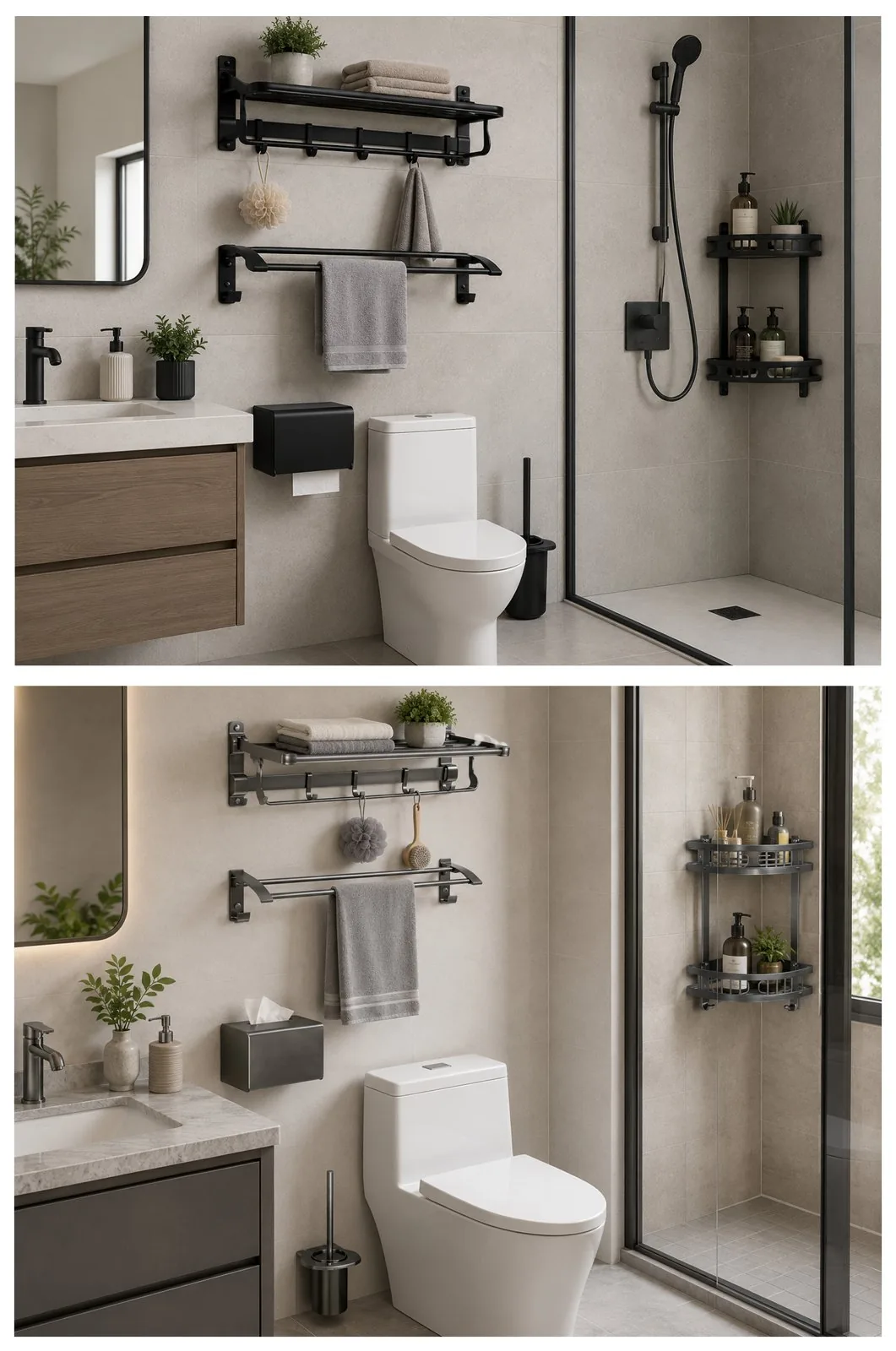
Accessories are the highest-margin, lowest-drama entry point into the category, and the discipline they demand is finish consistency. If your catalog offers a matte-black towel rail, a matte-black paper holder and a matte-black shower basket, all three must be the same matte black — sourced as one suite, not assembled from three vendors whose “black” differs by a shade that photographs identically and installs visibly differently on the same wall. Hitze produces accessory suites as coordinated sets in matched finishes (matte black and brushed space-aluminium, among others) precisely because mixed-vendor finish drift is the number-one complaint in the accessory trade. The insider rule: approve finishes as a set, on one wall, under one light — never SKU by SKU from separate sample shipments.
Commercially, accessories also solve a real container problem: they are dense, cheap to ship, and fill the odd volumes between faucet cartons and pipe coils. Distributors who start the bathroom extension with accessory sets plus two or three faucet models consistently report an easier sell-in than those who lead with ceramics, simply because the merchant’s shelf commitment is smaller. That staged approach — accessories and mixers first, showers second, ceramics once reorder data justifies the warehouse space — is the pattern we recommend, and it varies by market and order profile.
Packaging and Brand Consistency Across the Whole Catalog
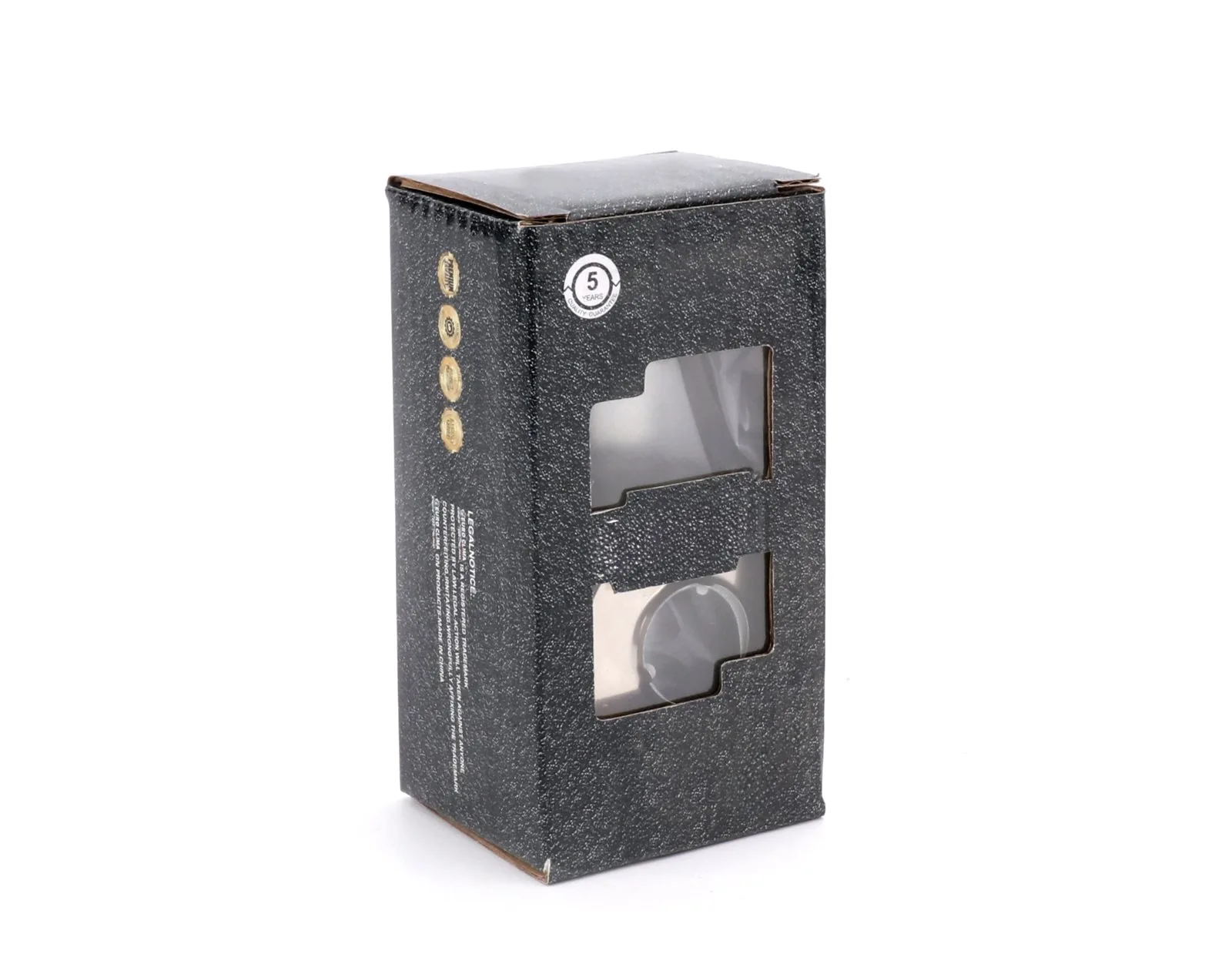
A pipe brand lives on coil print and carton labels. A bathroom brand lives on retail-grade colour boxes with die-cut windows, blister cards, installation leaflets and finish-matched product photography — a genuinely different packaging discipline. When you extend the brand, the packaging system has to extend with it: same logo lockup, same brand colours, same typography on a faucet gift box as on a fittings carton. This is exactly the work an ODM program does for you when the whole catalog sits with one manufacturer — one artwork approval cycle, one Pantone reference file, one packaging engineer who knows your brand guide — versus re-briefing three factories and hoping their printers agree on your blue.
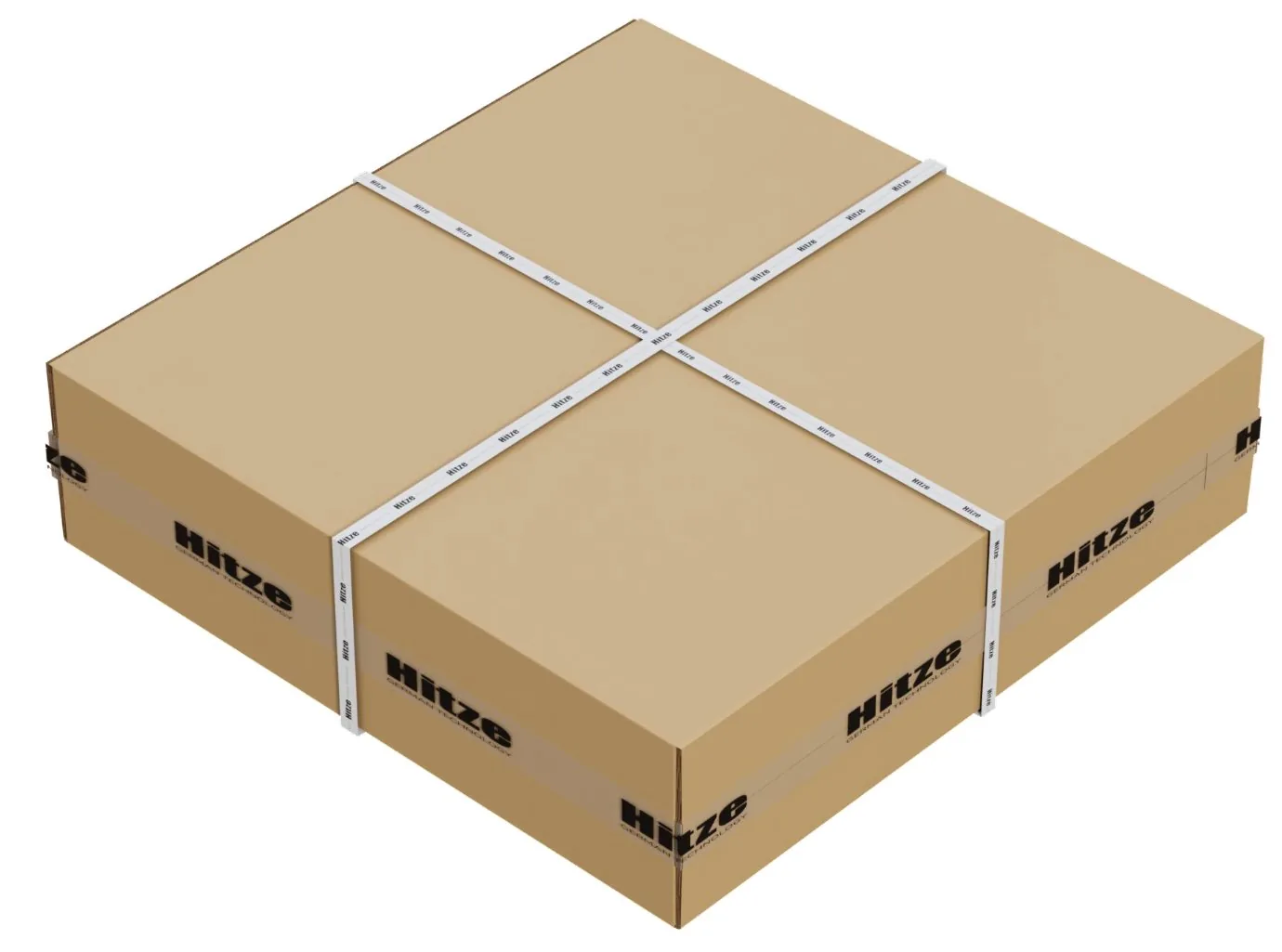
Two practical warnings from the packaging side. First, faucet boxes do structural work that pipe cartons don’t: a chrome-plated mixer that ships loose in an oversized box arrives with plating scuffs that count as defects at retail, so insist on moulded pulp or foam inserts and drop-test evidence, not just pretty artwork. Second, keep one element deliberately constant across every product line — most brands use the logo panel layout — so a merchant unpacking a mixed pallet sees one brand, not a family resemblance. The retail box is doing silent sales work on a shelf you will never visit; treat its artwork approval with the same seriousness as a pressure test.
The Mixed-Container Play: A Worked Example
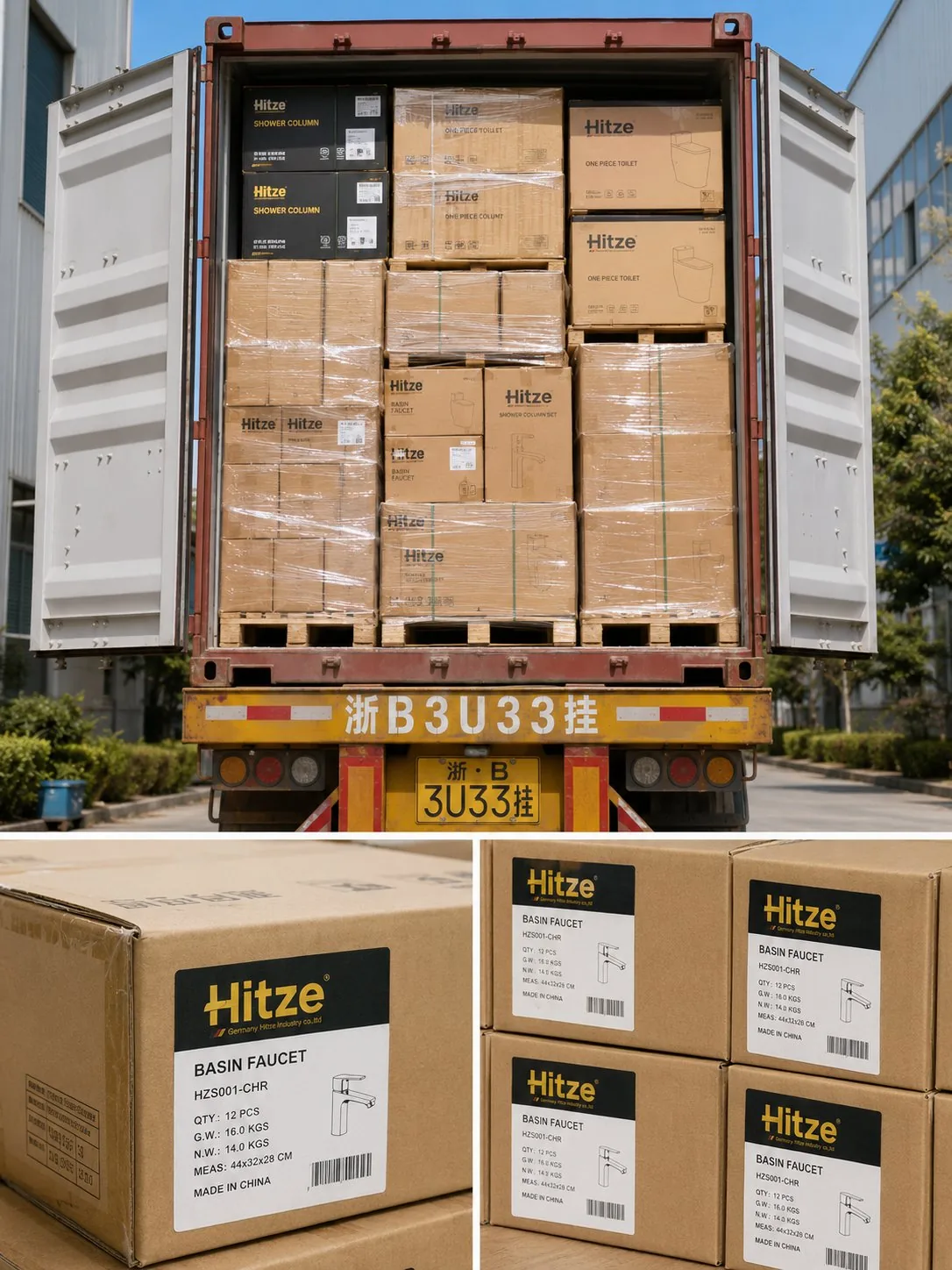
Here is the scenario that makes the whole extension concrete. A UK plumbing distributor has been reordering Hitze multilayer pipe and press fittings under its own brand for a year. The reorder is healthy but the container is not: pipe coils and fittings cartons cube out a 40HQ — nominal internal capacity roughly 76.3 CBM, of which about 60–68 CBM is realistically usable once dunnage and irregular stacking are accounted for — while using only a fraction of the container’s 30,480 kg maximum gross weight. The distributor is effectively shipping air at sea-freight rates.
The extension order changes the load plan rather than adding a second container. The pipe coils and light fittings cartons go high and fill the awkward volumes; palletised faucet cartons, shower columns and accessory sets — dense, regular, stackable — go low and bring the weight utilisation up toward the payload limit instead of the volume limit. Same container, same freight invoice, materially more invoice value and margin inside it. The distributor’s first bathroom order in this scenario is deliberately conservative: three basin-mixer models, one shower column, one thermostatic bath-shower mixer, and two accessory suites in two finishes — sampled and approved months earlier, because Hitze’s sample-first program meant the mixers had been on a test rig and in the showroom before any carton was printed. Per-market certification for the faucet SKUs was scoped at the sampling stage, not discovered at customs.
Notice what this scenario does not require: a second supplier audit, a second payment relationship, a second brand-artwork cycle, or a minimum order that forces the distributor to bet a season’s cash on an unproven category. That is the practical meaning of catalog extension with one manufacturer — the fixed costs of the relationship are already paid.
What Hitze Checks: How the Bathroom Range Is Built
Hitze is a German brand of engineered piping systems — founded 1974, a 120,000 m² production base, 1,000+ employees, exporting to 118+ countries — and the bathroom range is manufactured inside the same quality system as the pipe, not bought in and re-boxed. Concretely, that system means:
- Brass by named grade. The same alloy discipline as the fittings range — CW617N standard, CW602N DZR, and low-lead CW724R / CW511L where the destination market’s potable rules demand it — machined in-house in the brass and CNC workshops.
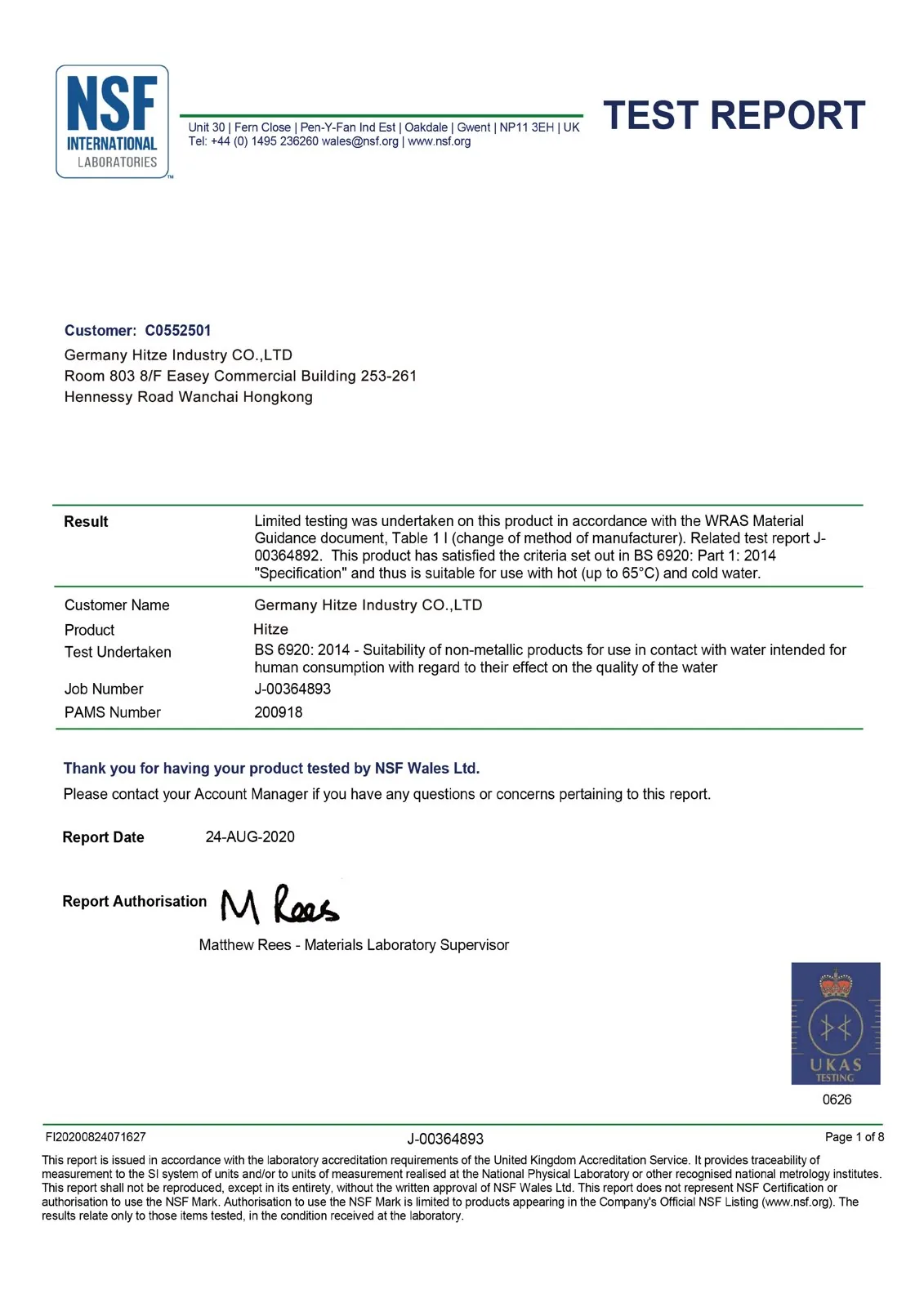
- Wetted-path verification. Potable-water material evidence on file, including WRAS material approval and an NSF International Laboratories BS 6920 test report covering hot (≤65°C) and cold water contact; scheme listings such as cUPC/UPC and NSF/ANSI 61 are referenced with certificate numbers available on request.
- Pressure and function testing. Mixer bodies and valves are verified on in-house pressure-test benches before packing — the same bench discipline applied to fittings, where a leak found in the factory costs cents and a leak found in a customer’s bathroom costs the brand.
- Finish and suite consistency. Plating inspected against EN 248 logic (adhesion, corrosion resistance), and accessory suites finish-matched as sets so a private-label catalog reads as one brand on the wall.
- Management system. Production operates under ISO 45001-certified occupational health and safety management, with SKZ- and DVGW-documented quality culture carried over from the piping side.
And the honest boundary: Hitze’s 50-year warranty applies to the matched pipe-and-fitting system, where the engineering case for it is proven. Bathroom hardware carries its own commercial warranty terms — available on request, and stated plainly rather than blurred into the pipe warranty, because a brand extension built on an overclaim is a liability, not an asset.
Who This Extension Is For — and Who Should Wait
Best for: distributors and brand owners who already have a working private-label pipe program, an established merchant or installer customer base that buys bathroom product from someone else today, and the patience to sample and certify before scaling. Not for: buyers hunting a one-off container of cheap taps with no brand program behind them — the category’s margin lives in the reorder, not the first order — or brands whose pipe-side quality reputation is still unproven, because the bathroom range amplifies whatever reputation you already have, in both directions.
If you are in the first group, the practical next step is small: request samples of two or three mixer models and an accessory suite in your target finish through Hitze’s private-label / ODM program. There is no MOQ — the program is sample-first by design — so you can put a cartridge through a week of cycling, a finish under your showroom lights and a certification scope on paper before committing a single pallet position. One supplier, one brand story, one container.
Frequently Asked Questions
Do my existing pipe certifications cover private-label faucets?
No. Faucets are regulated as endpoint devices under separate schemes: NSF/ANSI/CAN 61 and 372 plus ASME A112.18.1/CSA B125.1 in North America, WRAS/NSF/Kiwa approval under the Water Supply (Water Fittings) Regulations 1999 in the UK, and EN 817/EN 248 with national potable approvals in the EU. Each faucet SKU needs its own compliance path and its own brand listing.
Can I use one brand name across pipe, faucets and sanitary ware?
Yes, and that is the point of the extension — but the packaging system, finish standards and certification listings all have to carry the brand consistently. Running the whole catalog through one ODM manufacturer keeps artwork, alloys and approvals under a single quality system instead of three.
Is the Hitze bathroom range made in Germany?
Hitze is a German brand — trademark registered at the DPMA in Munich — engineered in Germany and built to German DIN-standard quality discipline at its 120,000 m² production base, with certifications from German bodies including SKZ and DVGW on the piping side. Certificates and factory documentation are shared openly during sampling.
What is the minimum order to add bathroom SKUs to my pipe program?
There is no MOQ. Hitze’s program is sample-first: validate mixers, finishes and packaging with samples or a small trial order, then scale bathroom SKUs into your existing container schedule as reorder data justifies it.
Does the 50-year warranty cover faucets and sanitary ware?
The 50-year warranty applies to the matched Hitze pipe-and-fitting system. Bathroom hardware carries its own commercial warranty terms, available on request — stated separately because honest warranty boundaries protect your brand as much as ours.