If you distribute hot- and cold-water pipe, the question is not “which pipe is best” in the abstract — it is which SKU earns its shelf space across the jobs your customers actually run. PP-R, PPR-CU (copper-lined antibacterial), and multilayer PEX-AL-PEX each win a different corner of the market. Stock the wrong one for your region’s install habits and you carry dead inventory; stock all three without a logic and you tie up cash. This guide is the stocking logic, grounded in the standards each pipe is built to and the trade-offs that show up on a real jobsite.
KEY TAKEAWAYS
- PP-R is your volume workhorse for building risers and hot/cold supply where fusion welding is the norm — built to EN ISO 15874 and DIN 8077/8078, jointed by heat fusion so there is no O-ring or brass in the wall to fail.
- PPR-CU (copper-lined) is your premium potable line. A bonded inner copper layer gives PP-R an oxygen-tight, smooth copper bore that leverages copper’s recognised antimicrobial and biofilm-suppressing properties — a real differentiator for hospitals, hotels and health-conscious residential.
- Multilayer PEX-AL-PEX is your flexible, low-expansion choice — five bonded layers with a butt-welded aluminium core, built to EN ISO 21003, with a linear dilatation of only ≈0.025 mm/m·K (manufacturer datasheets rate it at the level of metal pipe, far below all-plastic pipe) and holding its bent shape without a fusion iron.
- The deciding factor is install method, not just the water. Fusion-tool regions pull PP-R and PPR-CU; press/compression regions and retrofit pull multilayer. Match the pipe to how your customers already work.
- Hitze carries all three as one certified system — SKZ-tested, DVGW-type-examined and WRAS-approved on the potable side — so a wholesaler can single-source the range and the fittings that join it.
The three pipes, side by side — and what each one is really for
All three carry hot and cold potable water, and all three will pass a pressure test on day one. The difference that matters to a distributor is where each one fails to be the obvious choice, because that is where a customer returns product or asks for the alternative you should have stocked. Start from the material and the joint, because those two facts drive everything downstream — labour, tooling, warranty exposure and the price you can defend.
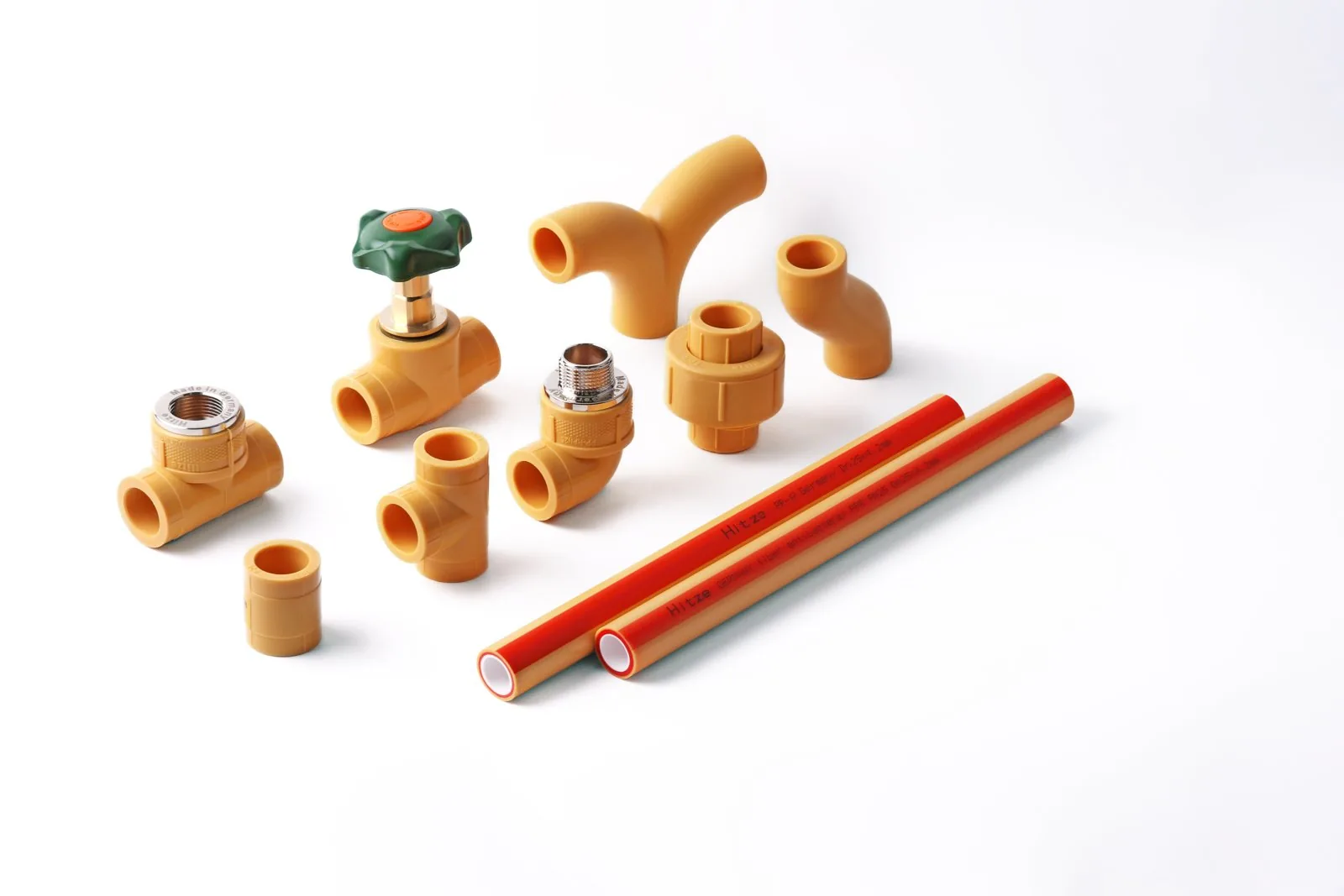
PP-R (polypropylene random copolymer) is a single-material thermoplastic jointed by heat fusion: the pipe and fitting are heated and pushed together so they melt into one continuous wall. There is no elastomer seal and no metal in the joint, which is why a correctly fused PP-R line is effectively monolithic. Hitze builds PP-R to EN ISO 15874 and DIN 8077/8078, in three constructions — ceramic-core, fiber-glass reinforced (PPR-FB-PPR) and aluminium-composite (PPR-AL-PPR) — the reinforced versions existing specifically to cut PP-R’s biggest weakness, thermal expansion.
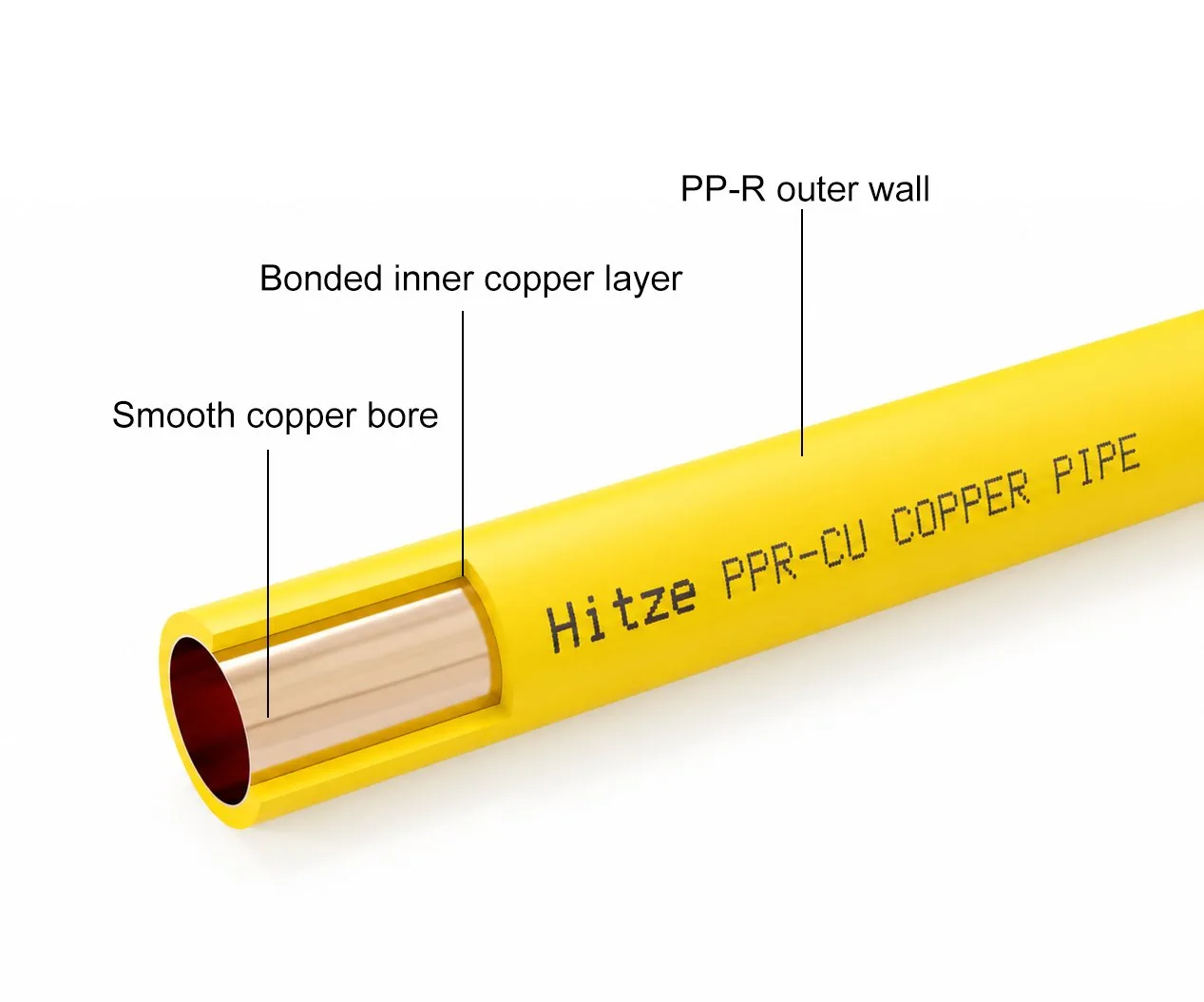
PPR-CU is that same PP-R system with a bonded inner copper layer, so the water only ever touches a copper bore. You keep PP-R’s fusion jointing, corrosion resistance and quiet flow, and you add copper’s two well-documented properties: it is oxygen-tight (relevant the moment the pipe feeds a mixed heating loop), and copper is an EPA-registered antimicrobial material — under laboratory conditions, regularly-cleaned copper surfaces kill more than 99.9% of common bacteria within two hours. That registration is for touch surfaces, so we frame PPR-CU honestly: it brings copper’s antimicrobial and biofilm-suppressing behaviour to the bore, not a disinfection guarantee for the water leaving the tap.
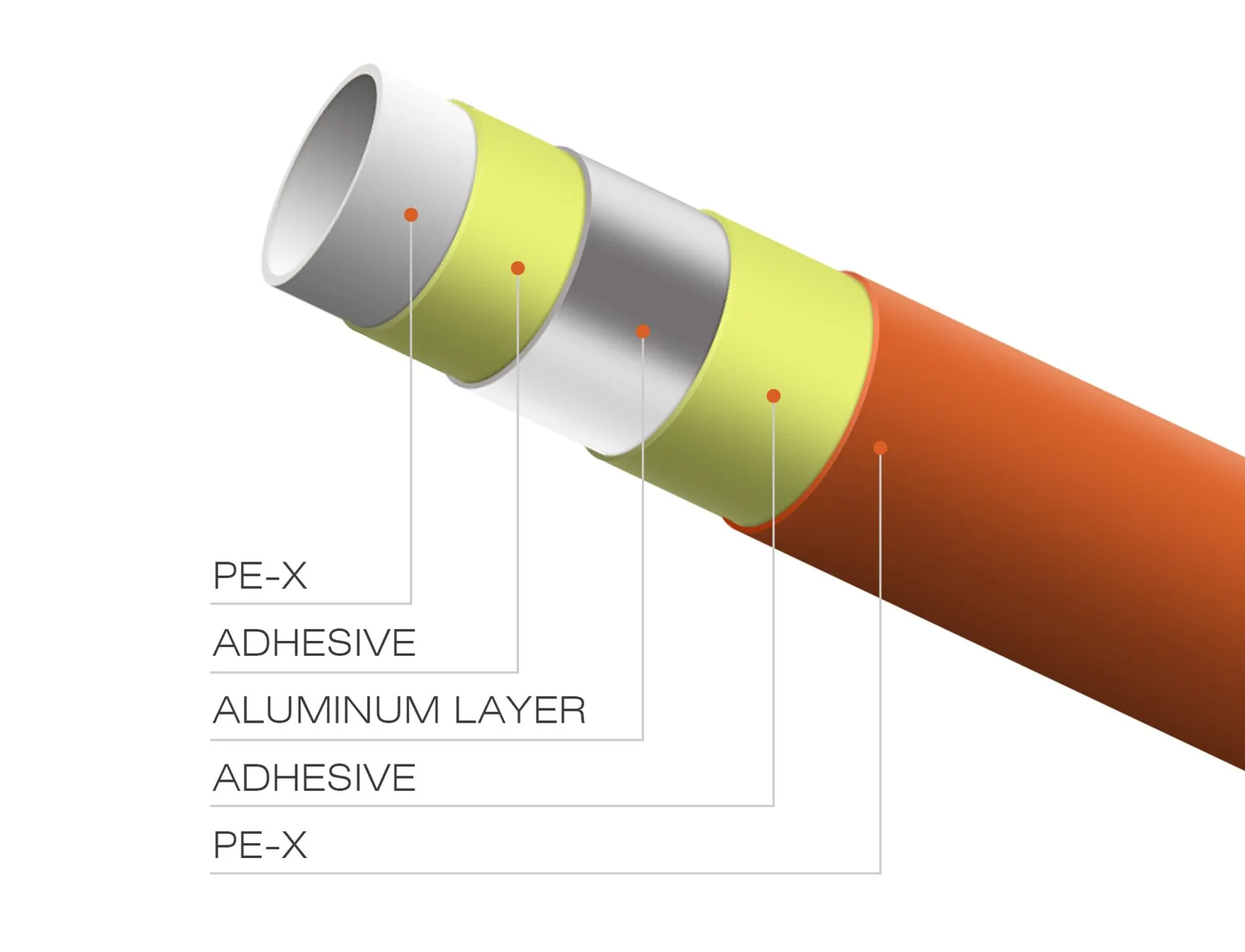
Multilayer PEX-AL-PEX is a different animal entirely: five bonded layers — PEX, adhesive, a butt-welded aluminium core, adhesive, PEX — built to EN ISO 21003. It is jointed mechanically (press or compression), it bends by hand and stays bent, and the aluminium core makes it oxygen-tight and dimensionally rigid: manufacturer datasheets rate its linear dilatation at only about 0.025 mm/m·K (per ASTM D-696, at the level of metal pipe), so a hot run does not visibly grow, sag or need the expansion loops PP-R demands.
| Property | PP-R | PPR-CU (antibacterial) | Multilayer PEX-AL-PEX |
|---|---|---|---|
| Core standard | EN ISO 15874 / DIN 8077/8078 | EN ISO 15874 base + copper liner | EN ISO 21003 |
| Joint method | Heat fusion (welded) | Heat fusion (welded) | Press / compression (mechanical) |
| Thermal expansion | High (~0.15 mm/m·K); reduced by FB / AL versions | Reduced vs plain PP-R (copper core) | Very low (~0.025 mm/m·K) |
| Oxygen-tight | No (bare PP-R); yes for AL-composite | Yes (copper liner) | Yes (aluminium core) |
| Flexibility / routing | Rigid — elbows and fittings | Rigid — elbows and fittings | Bends by hand, holds shape |
| Hygiene edge | Smooth inert bore | Copper bore — antimicrobial / anti-biofilm | Smooth PEX bore |
| Best-fit buyer | Volume plumbing, fusion regions | Premium potable, healthcare/hospitality | Retrofit, radiant, press-tool trades |
Values are indicative for stocking decisions; exact class ratings and dimensions vary by size and PN class and are on each product datasheet.
Hot water is where the standards separate them
Every one of these pipes is rated for hot water, but “rated for hot water” hides the detail that decides callbacks. EN ISO 15874 classifies PP-R by application class, each with its own design temperature: Class 1 assumes a 60°C hot-water design temperature, Class 2 assumes 70°C, and the higher radiator classes push the design temperature to 80°C. Each class also carries a short-duration malfunction rating (Tmal): 95°C for the hot-water Classes 1 and 2, and 100°C for the higher-temperature radiator/underfloor Classes 4 and 5. The practical takeaway for a wholesaler: PP-R’s pressure rating is not one number — a PN20 pipe carrying 70°C water has a very different long-term working pressure than the same pipe carrying cold water. Stock the PN class your market’s water temperatures actually demand, and make sure your counter staff can explain why a customer cannot run 80°C radiator water through a thin-wall cold-rated coil.
This is exactly where PP-R’s expansion becomes a real cost, not a spec-sheet footnote. Unreinforced PP-R moves about 0.15 mm per metre per degree — a 4-metre hot riser swinging from 20°C to 70°C grows roughly 30 mm. Left unmanaged that expansion buckles pipe between fixed clips or stresses fittings. The fix is either expansion loops and correct clip spacing (labour and skill), or a reinforced construction. Hitze’s fiber-glass PPR-FB-PPR and aluminium PPR-AL-PPR versions exist precisely to shrink that movement, and the copper liner in PPR-CU does the same job while adding the hygiene story. Multilayer sidesteps the problem: at ≈0.025 mm/m·K, the same 4-metre hot run moves about 5 mm — invisible, and part of why press-fit multilayer is the default for exposed and in-slab hot runs in many European and North-American installs.
The other separator is the closed heating loop. Bare PP-R is oxygen-permeable, and oxygen diffusing through the wall corrodes any steel or cast-iron boiler component, pump or radiator on the loop. For potable hot/cold that is irrelevant; the moment the same pipe feeds a mixed heating circuit, you need an oxygen barrier — exactly what the aluminium core (multilayer, PPR-AL-PPR) and the copper liner (PPR-CU) provide inherently. Selling a bare PP-R coil into a heating job is a warranty problem waiting to happen, so knowing which SKUs are oxygen-tight is counter-level competence that protects your reputation.
The PPR-CU antibacterial story — real, but sell it honestly
PPR-CU is the SKU that lets a distributor escape a price war, so it is worth getting the claim exactly right — overstate it and you invite a challenge you cannot win. Here is the defensible version. Copper was the first solid metal the US EPA registered as an antimicrobial public-health material, back in 2008, and under controlled laboratory conditions regularly-cleaned copper surfaces kill more than 99.9% of bacteria such as MRSA, E. coli O157:H7 and Pseudomonas aeruginosa within two hours. That registration was written for touch surfaces, and the EPA is explicit that copper is a supplement to — not a substitute for — standard hygiene practice.
So when a PPR-CU pipe puts a continuous copper bore between the water and the plastic, the honest positioning is: the wetted surface is copper, which is inherently hostile to biofilm formation and carries copper’s recognised antimicrobial behaviour, rather than “this pipe sterilises your water.” That distinction is what keeps you credible with a hospital’s facilities engineer or a hotel’s compliance officer — the exact buyers who pay the premium. The tangible, non-controversial benefits are just as sellable: a copper bore is smooth and does not support the scale-and-biofilm buildup that plagues stagnant plastic dead-legs, and it is fully oxygen-tight. Sell PPR-CU as the premium potable line for buildings where water hygiene is a specified requirement, and let the copper do the differentiating without you having to make a medical claim.
One inventory note that protects margin: PPR-CU joins with the same heat-fusion fittings as standard PP-R, so a customer already tooled for PP-R can adopt PPR-CU with zero new equipment. That is a genuinely easy up-sell — same iron, same technique, higher-value pipe — and it is worth training your sales floor to lead with it. If your customers are on Hitze PP-R pipe and fittings already, PPR-CU is the natural trade-up rather than a whole new system to learn.
What Hitze checks before any of these pipes ships
A distributor’s real exposure is not the pipe that fails on the bench — it is the pipe that passes install and fails in year three, after the invoice is long paid and your name is on the delivery. That is a manufacturing-consistency problem, and it is where a certified line earns its price over a commodity coil. Across the PP-R, PPR-CU and multilayer lines, Hitze’s process controls target the failure modes that actually generate distributor callbacks.
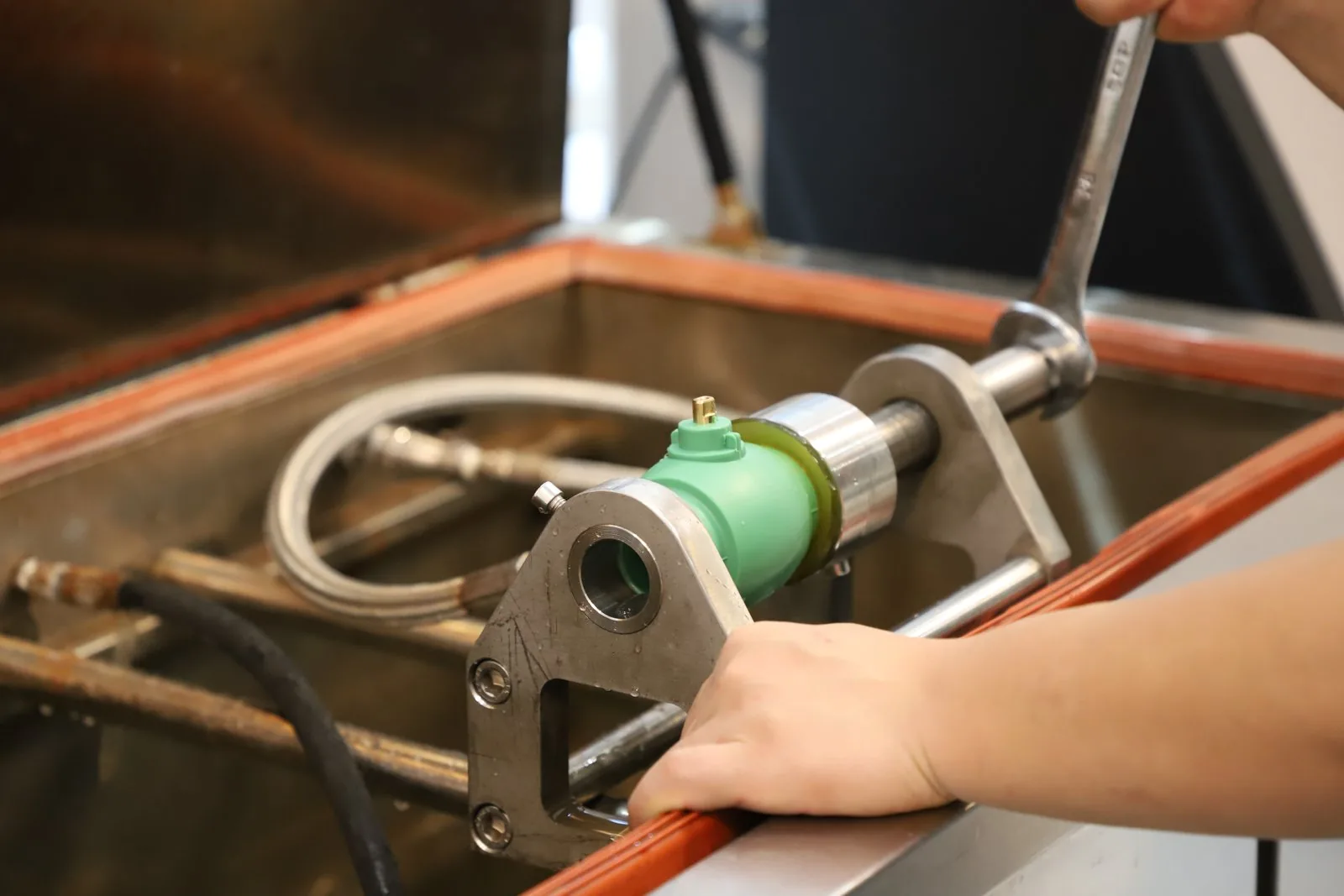
- Hydrostatic pressure verification against DIN and EN ISO. PP-R and PPR-CU fittings are clamped and pressure-tested on the bench to confirm the fused joint and wall hold to the class rating — the joint is the pipe’s weakest point, so it is the one we prove.
- Continuous aluminium-core weld on multilayer. The aluminium layer is butt-welded into one full-length seam on the line; a gap in that seam is a gap in the oxygen barrier, so the weld is monitored as it runs rather than sampled after.
- Copper-liner bond on PPR-CU. The inner copper layer is bonded to the PP-R wall so it cannot delaminate under thermal cycling — the whole antibacterial and oxygen-barrier benefit depends on that bond staying intact.
- Dimensional consistency across the coil/length. OD and wall are gauged on the sizing line so fittings seat identically from the first metre to the last — the dimensional drift that causes press-joint leaks is a batch problem, and it is checked as a batch.
- Documented certification behind the potable range. The potable side is backed by SKZ test certificates (Germany), DVGW type examination for PP-R drinking-water pipe, and WRAS material approval (UK), with an NSF International BS 6920 potable-water test report on record. Cert numbers are on the physical certificates and available on request.
Hitze is a German brand engineered to German DIN standards, founded in 1974, with a 120,000 m² production base, 1,000+ employees and exports to 118+ countries. For a wholesaler, the point of that scale is boring in the best way: the coil you reorder in eighteen months seats on the same fitting as the one you sell today.
A stocking scenario: one distributor, three markets
Take a regional wholesaler supplying three customer types from one warehouse — new-build residential plumbers, a mechanical contractor doing hospital and hotel fit-outs, and a renovation crew doing apartment retrofits. Stocking one pipe for all three is how you end up with returns and lost sales. Here is the logic that clears inventory.
The residential plumbers weld PP-R all day; they own fusion irons and want the cheapest compliant hot/cold pipe. Stock them PP-R in the PN class their code demands, in the two or three sizes that cover 90% of domestic supply (typically 20 and 25 mm), plus the fittings and valves. This is your volume line — thin margin, high turns.
The hospital/hotel contractor is specified on water hygiene and will pay for it. Offer PPR-CU as the premium potable line; it uses the same fusion tooling the contractor already owns, so adoption is frictionless, and the copper bore gives their compliance team a real story. This is your margin line — lower volume, high value, and it locks in a customer a commodity supplier cannot serve.
The retrofit crew is working in occupied buildings, threading pipe through finished walls where a fusion iron is impractical and every joint must be reliable behind plaster. Stock them multilayer PEX-AL-PEX with press fittings — it bends around obstructions, holds shape, barely expands, and presses in seconds. Three customer types, three pipes, one supplier, and no SKU sitting dead because you matched pipe to install method rather than guessing.
Best for / not for — the quick stocking filter
PP-R
Best for: high-volume hot/cold building supply and risers in fusion-tool markets; cost-sensitive new-build; where a monolithic welded joint with no seal is the priority.
Not for: retrofit through finished walls; closed heating loops if the pipe is bare (non-oxygen-barrier); jobs demanding minimal visible expansion without loops.
PPR-CU (antibacterial)
Best for: premium potable systems in healthcare, hospitality, schools and hygiene-conscious residential; an easy trade-up for customers already fusing PP-R.
Not for: lowest-price commodity jobs where the hygiene story carries no value; buyers who want a literal water-sterilisation claim (that is not what it is).
Multilayer PEX-AL-PEX
Best for: retrofit, exposed and in-slab hot runs, radiant-adjacent work, and any press/compression-tooled trade wanting flexibility and near-zero expansion.
Not for: customers with no press or compression tooling and no interest in buying it; the very lowest price point where PP-R wins on raw cost.
Deciding which of the three to carry?
This guide is written for wholesalers and distributors building a hot/cold water range they can reorder consistently — not for one-off residential buyers. If that is you, Hitze supplies all three lines as one certified, single-source system with fittings that match, each backed by a 50-year warranty on the matched pipe-and-fitting system, so you stock a range rather than stitching brands together. Certification packs (SKZ, DVGW, WRAS) and datasheets ship with the quote. No MOQ — start with a sample order; pricing on request.
Talk to the trade team through Hitze wholesale plumbing & heating pipe supply, or compare the multilayer PEX-AL-PEX range and the PP-R pipe & fittings system directly.
Frequently asked questions
Which pipe should a wholesaler stock for hot water — PP-R or multilayer?
Stock to your customers’ install method. In markets where the trade owns fusion irons, PP-R (and its trade-up, PPR-CU) is the volume hot-water pipe — welded joints, low cost, EN ISO 15874 rated. Where the trade uses press or compression tools, or does retrofit through finished walls, multilayer PEX-AL-PEX wins on flexibility and its very low ≈0.025 mm/m·K expansion. Most distributors carry both because their customer base is mixed.
Is PPR-CU antibacterial pipe genuinely antibacterial, or is it marketing?
The copper is real and copper’s antimicrobial behaviour is EPA-registered — regularly-cleaned copper surfaces kill more than 99.9% of common bacteria within two hours under laboratory conditions. The honest framing is that PPR-CU gives the water a continuous copper bore that resists biofilm and carries copper’s recognised antimicrobial properties; it is not a device that sterilises the water leaving the tap. Sell it as the premium potable line for hygiene-specified buildings, not as water treatment.
Can PP-R be used for closed heating systems?
Only if it is oxygen-barrier. Bare PP-R is oxygen-permeable, and diffused oxygen corrodes steel and cast-iron components on a closed loop. For heating, choose an oxygen-tight construction — Hitze’s aluminium-composite PPR-AL-PPR, the copper-lined PPR-CU, or multilayer PEX-AL-PEX — all of which block oxygen diffusion inherently. For potable hot/cold supply only, standard PP-R is fine.
Do PP-R and PPR-CU use the same fittings and tools?
Yes. PPR-CU joins with the same heat-fusion fittings and the same fusion iron as standard PP-R, so a customer already tooled for PP-R adopts PPR-CU with no new equipment. Multilayer is different — it is jointed mechanically with press or compression fittings and needs the matching tool.
Which certifications back Hitze’s hot/cold water pipe?
The potable range is supported by SKZ test certificates (Germany), DVGW type examination for PP-R drinking-water pipe, and WRAS material approval (UK), with an NSF International BS 6920 potable-water test report on record; the multilayer line is built to EN ISO 21003 for hot- and cold-water use. Certificate numbers are on the physical certificates and available on request; the applicable set varies by target market.
Is Hitze pipe made in Germany?
Hitze is a German brand, engineered in Germany to German DIN standards and DVGW-certified, founded in 1974 (German Trademark Reg. No. 30 2020 005 484, DPMA Munich). Production runs across a 120,000 m² base serving 118+ countries. The engineering, standards and quality system are German; ask the trade team for the certification pack specific to your market.


