If you are launching your own pipe line, “ODM vs OEM” is not a vocabulary quiz — it decides who owns your design, whose name goes on the certificate, and how far your logo actually travels down the product. Get the model wrong and you either overpay for tooling you did not need or discover, six weeks before a container ships, that the “custom” pipe you paid for cannot legally carry your brand into your market. Here is what each model really lets you change on plumbing and heating pipe, and where the hard limits sit.
Key Takeaways
- ODM = the factory’s proven design, your brand on it. You customize print, color, packaging, documentation and often the size mix — not the pipe’s material recipe or wall structure. Fastest and cheapest route to shelf.
- OEM = your specification, built to order. You control geometry, layer construction, alloy, tolerances and dimensions — but you fund tooling, testing and certification, and you own the design IP.
- Most private-label pipe brands are ODM and don’t know it. “Add my logo and my color” is an ODM change on an existing extrusion, not an OEM redesign. That is good news for your budget.
- Certification does not travel for free. WRAS approval covers only the exact model and brand name tested — a re-branded pipe needs a secondary approval. cUPC/UPC listings carry a listee file number and can add your brand as the additional (private-label) company, with the exact marking placement (product versus packaging) confirmed on the IAPMO R&T application.
- The right question isn’t “OEM or ODM” — it’s “which parts of this pipe do I actually need to change?” The answer is usually 80% ODM with a couple of OEM-grade tweaks.
ODM vs OEM, defined for pipe — not for gadgets
Every generic OEM-vs-ODM explainer online was written about electronics or apparel, and the definitions bend when you apply them to extruded pipe and machined fittings. So let’s fix them to this product. In an OEM (Original Equipment Manufacturer) arrangement, you bring the design: the wall construction, the layer stack, the outside diameters, the wall-thickness class, the alloy, the tolerances. The factory is your contract production line. In an ODM (Original Design Manufacturer) arrangement, the factory brings a design it already builds and certifies, and you rebrand it — logo, color, print, packaging, documentation — and sell it as yours. The trade press calls ODM “private labeling” for exactly this reason: you are labeling a proven product as your own rather than commissioning a new one.
The distinction that matters for your money is who carries the risk of the design. Under OEM, the extrusion recipe and the geometry are your problem: if the wall class is wrong for the pressure rating, that is on your spec. Under ODM, the design is the factory’s problem — it has already been through hydrostatic testing, oxygen-diffusion testing and third-party listing, and you inherit that pedigree. In most OEM models the brand owner keeps the design IP and can, in principle, move production elsewhere; in ODM the design stays with the factory, so ten of its customers may sell a near-identical pipe under ten different logos. That single fact drives everything downstream: differentiation, margin, tooling cost, and certification.
Here is the honest reality for a first pipe brand: the split you actually want is almost never pure. You want the factory’s certified extrusion (ODM) with two or three surgical changes that feel OEM — your color, your print line, maybe a size not in the standard catalogue. The skill is knowing which lever is a cheap ODM tweak and which one quietly triggers OEM-grade cost.
What you can actually customize — lever by lever
Abstract definitions don’t help you write a quote request. What you need is a lever-by-lever map: for each thing you might want to change, is it a cheap ODM tweak, or does it push you into OEM territory with tooling and re-certification? The table below is how we triage a private-label brief before quoting.
| What you want to change | Model | Cost & lead-time impact |
|---|---|---|
| Brand name & logo printed on the pipe | ODM | Low — a print-line/marking-wheel change. No tooling. |
| Pipe color / stripe color (e.g. your house red) | ODM | Low–moderate — masterbatch change; may set a per-color run size. |
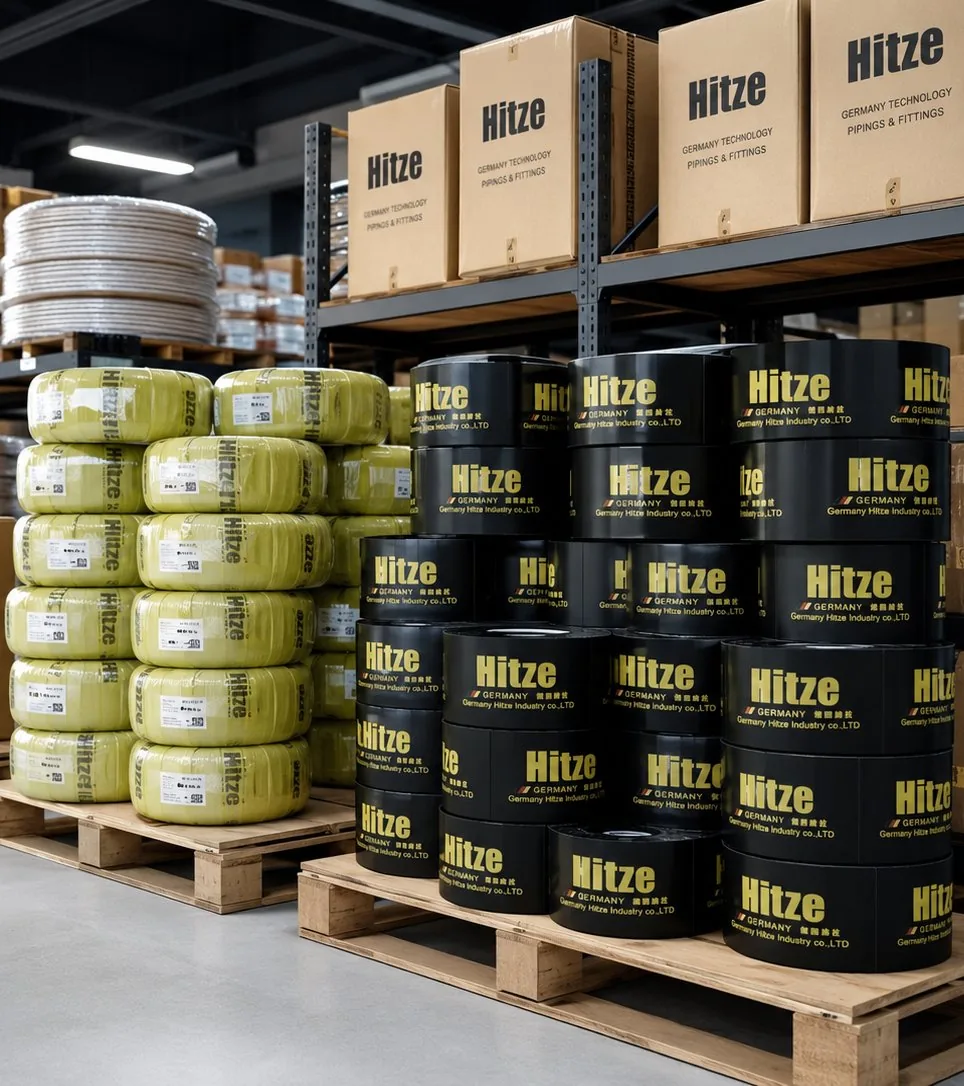
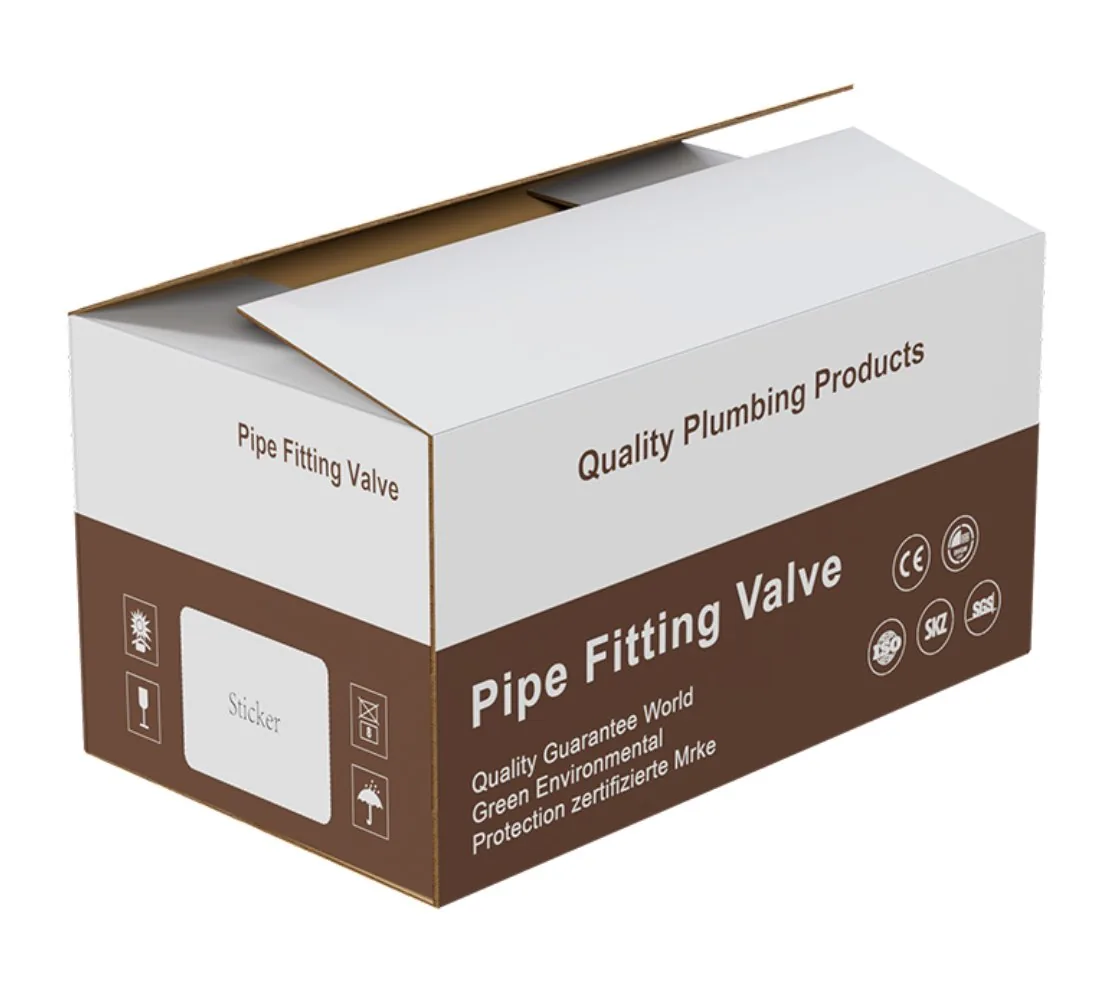
| Coil length, bundling, labels, cartons | ODM | Low — packaging line change; artwork lead time only. |
| Size mix from the standard range (16/20/25/32 mm) | ODM | Low — existing dies; just a production-schedule choice. |
| Documentation, DoP & test-report branding | ODM | Low — paperwork, but see the certification section for limits. |
| Wall-thickness class / pressure rating (PN) | OEM-ish | Moderate — often a die/calibration change + re-test if outside listed range. |
| A non-standard OD or a bespoke fitting body | OEM | High — new tooling/mould (a one-time cost that can run into tens of thousands for steel fitting moulds) + re-certification. |
| Layer construction / material recipe (e.g. change the barrier or alloy) | OEM | High — new type test, new listing; treat as a new product. |
Rule of thumb: anything you can change with ink, plastic pellets or a box is ODM. Anything that changes the shape of steel or the chemistry of the wall is OEM.
Read that table again through a margin lens. The first five rows — your name, your color, your carton, your size mix, your paperwork — are exactly the levers that make a pipe feel like your own brand to a distributor unboxing it. And every one of them is ODM. That is the quiet good news of private-label pipe: the changes that build brand equity are the cheap ones. The expensive OEM levers — new tooling, new alloy, new barrier — rarely change what a buyer perceives; they change what an engineer specifies. If you are not selling into a spec-driven project that demands a bespoke dimension, you almost never need to pay for them.
Where brand owners burn money is misreading the color and PN lines. “Just make it in my color” sounds like an ODM tweak, and it is — until you want a low volume of six colors, at which point each masterbatch changeover fragments your run and the per-meter cost climbs. Similarly, nudging the pressure class up one notch can quietly cross the boundary of the existing listing and trigger a re-test. Neither is a reason to avoid the change; both are reasons to raise them at the quote stage, not after tooling is cut.
The certification trap that most private-label brands hit
This is the section nobody warns you about, and it is where an otherwise smooth ODM program can stall at the border. Certifications are not stickers you inherit — they are tied to a specific product and, often, a specific brand name. Rebrand the pipe and you can quietly step outside the certificate you thought you were buying.
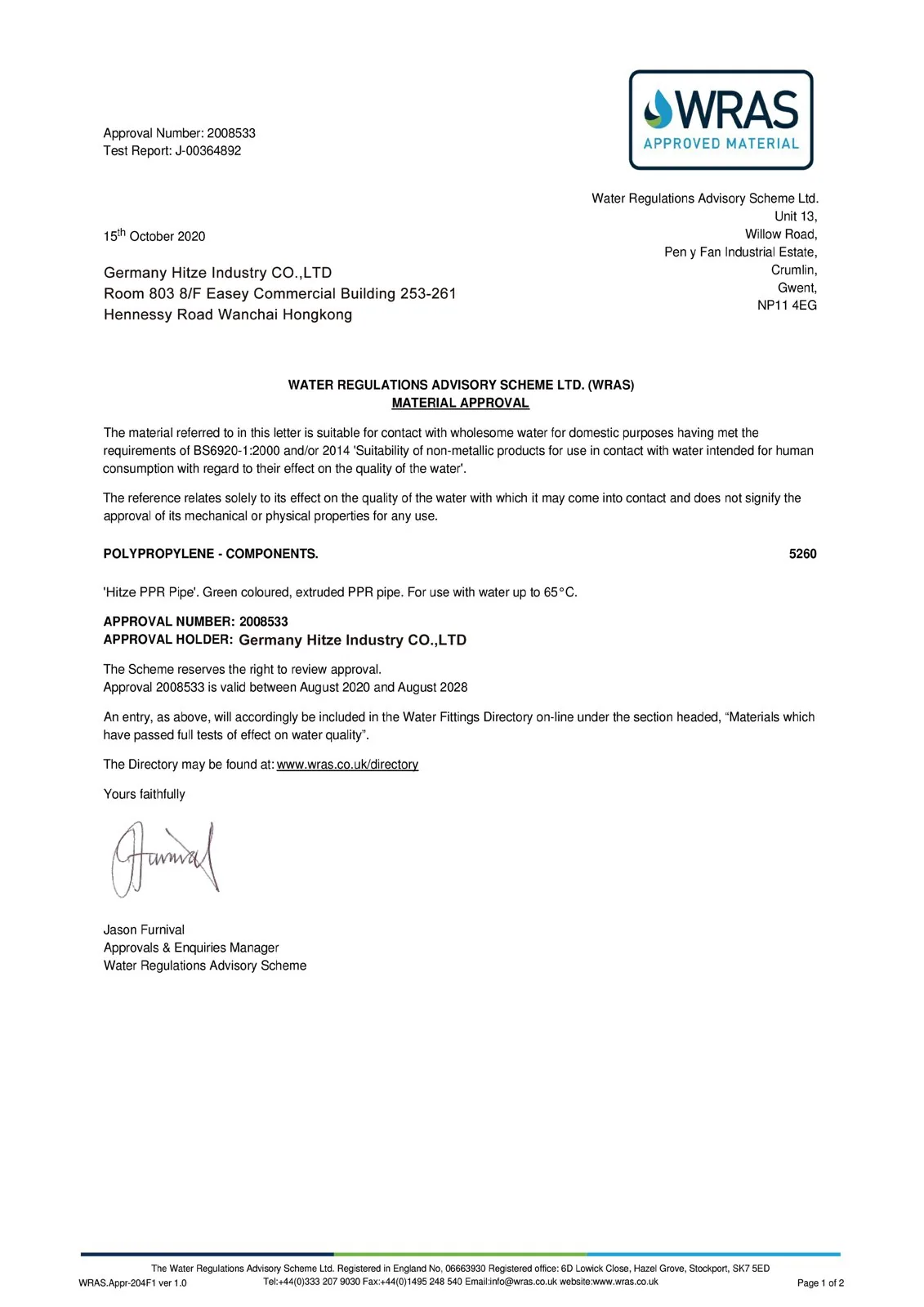
Take WRAS, the UK potable-water approval. WRAS Product Approval covers only the models named on the approval documentation; per WRAS’s own guidance, the approval does not cover re-branded products, and once a product is re-branded the Certification Mark may not be claimed — a re-branded product needs a secondary product approval. So a pipe that is genuinely WRAS-approved under the factory’s name is not automatically WRAS-approved under your name until that secondary listing is arranged. If your UK distributor demands a WRAS listing showing your brand, that is a real workstream, not a paperwork swap.
North America behaves differently but has its own rule. cUPC / UPC listings from IAPMO R&T are held under a listee name and file number, and the listee’s (manufacturer’s) name or trademark is permanently marked on the product alongside the cUPC mark. In the case of private labeling, an additional company can be added to the listing — via IAPMO’s additional-company/cross-reference process — so your brand appears in the public IAPMO R&T Product Listing Directory, though exactly where your name is carried (on the product, on the packaging, or both) is set by the listing’s marking requirements and should be confirmed on your R&T application, not assumed. The upside: your brand can appear on a checkable public listing. The catch: it has to be set up correctly, and it is verifiable, so a fabricated claim is trivially exposed.
The practical lesson: decide your target markets before you finalize the ODM print, because the market dictates which certification path your brand name has to follow. A pipe can be technically identical across three markets and still need three different certification arrangements to wear your logo legally in each. Hitze holds the underlying scheme approvals — SKZ testing, DVGW type examination for PP-R drinking-water pipe, WRAS material approval, an independent NSF/BS 6920 potable-water test report, and it is certified to cUPC/UPC and NSF/ANSI 61 — but how those extend to your brand name depends on the scheme and the market, and we scope that per order rather than promise a blanket transfer.
How Hitze runs an ODM/OEM pipe program — what we check and how it’s built
Because the models blur in practice, we don’t ask a brand to self-classify. We run the brief through a fixed sequence and let the answers place each line where it belongs — ODM where it can be, OEM only where it must be.
1. Product and standard fit first. Before print or packaging, we confirm the base pipe is the right proven platform for your market: multilayer PEX-AL-PEX and PERT-AL-PERT with a butt-welded, oxygen-tight aluminium core; PEX-a/b/c; PE-RT for underfloor heating; or PP-R in ceramic-core, fiber-glass and PPR-AL-PPR constructions. These are built to recognized standards — DIN 8077/8078 and EN ISO 15874 for PP-R, and DIN 4726 for oxygen-barrier heating pipe, whose barrier grades cap oxygen diffusion at roughly 0.32 mg/(m²·day) at 40°C (and about 3.6 mg/(m²·day) at 80°C), the threshold major heating-pipe makers such as publish for DIN 4726 barrier pipe. Hitze also holds a SAI Global StandardsMark to AS 4176.8 for its multilayer pipe — note that AS 4176.8 is the Australian standard for the consumer-gas multilayer configuration (the ISO 17484-1 family, max 5 bar gas), so it credentials the gas variant rather than the potable-water line. Choosing an in-catalogue platform is what keeps your program on the fast ODM track.
2. Sort your change list into ink, pellets, steel and chemistry. Logo and print — ink, ODM. Color and stripe — pellets, ODM. Coil length, cartons, labels — ODM. A non-standard OD or a bespoke fitting body — steel, OEM: a new mould is a one-time investment (a real steel fitting mould is not a trivial line item) and we quote it as such with ownership terms written down. A different barrier or alloy — chemistry, OEM, treated as a new product with its own type test.
3. Lock the compliance path to the destination. We map each target market to the scheme your brand name must satisfy — secondary WRAS approval for a re-branded UK potable line, the correct listee/additional-company setup for cUPC in North America — and we build the documentation pack, Declaration of Performance and CE marking where they apply, so the brand you print is the brand the paperwork supports.
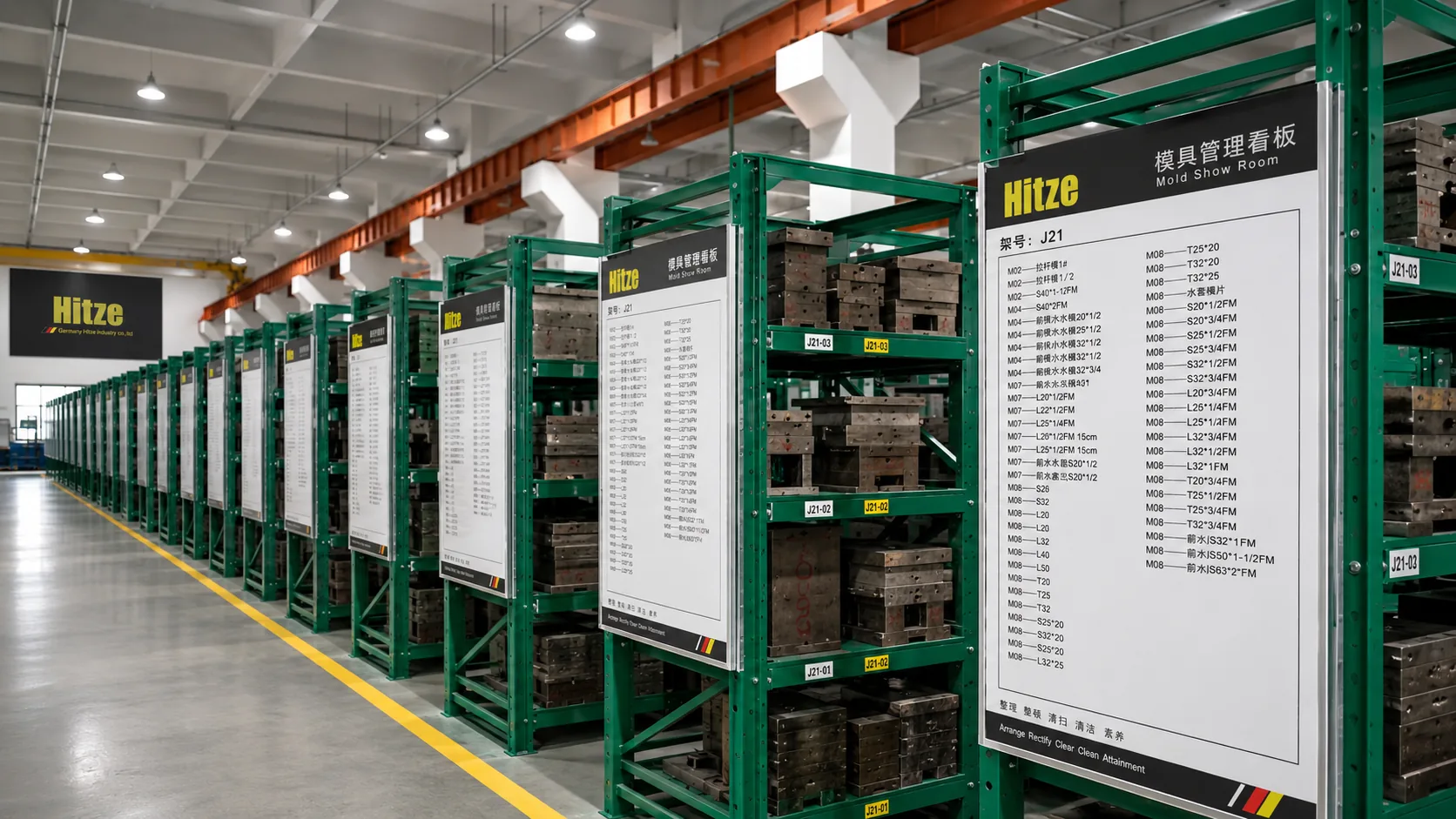
4. Verify before the run scales. Every pipe platform is checked on our own pressure-test benches against its DIN/EN ISO reference before a private-label run is committed, and fittings are inspected off the machining and moulding lines — the same checks whether the coil ends up under the Hitze brand or yours.
The output of that sequence is usually the same shape: a program that is 80–90% ODM — a certified platform wearing your brand, color, carton and size mix — with one or two genuinely OEM elements only where your market or your differentiation truly requires them. That is the cheapest defensible way to put a real brand on the shelf.
A worked example: launching a multilayer heating line under your brand
Say you are a European heating wholesaler who wants an own-brand PEX-AL-PEX line for underfloor and radiator work — something to protect margin against the commodity coils your competitors resell. Walk it through the model.
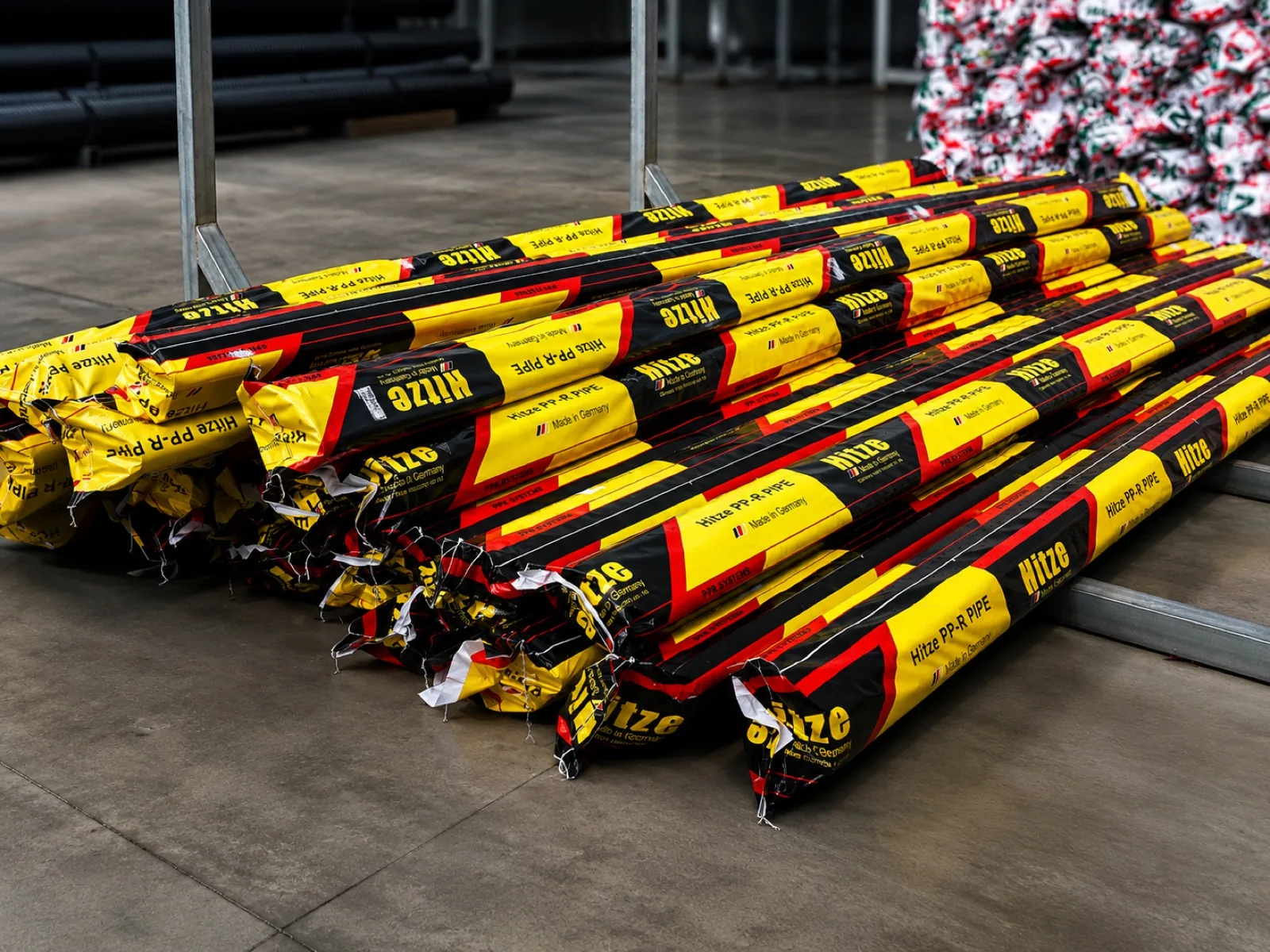
You start with the certified multilayer platform: five bonded layers, butt-welded aluminium core, oxygen-tight to DIN 4726. That is entirely ODM — you are buying a proven, tested extrusion. You ask for your brand line and part number printed along the pipe: ODM, a marking change. You want your house orange for the heating coils and blue for cold: ODM, two masterbatches, and because you commit meaningful volume per color the changeover cost stays sensible. You want 16 mm and 20 mm on 200 m and 500 m coils in your own cartons: ODM, a packaging and scheduling choice. At this point you have a fully branded line and you have spent nothing on tooling.
Now the two decisions that could cross into OEM. First, you consider a proprietary OD that no competitor stocks, to lock installers into your fittings. That is OEM — new dies, new fitting moulds, re-certification — and unless you have the volume and the exclusivity strategy to justify it, we would talk you out of it: it multiplies cost and slows launch for differentiation your customers won’t perceive. Second, your target is the UK, so you need the potable and heating claims to stand under your brand. That routes into the certification workstream — a secondary WRAS approval for the re-branded potable items — which is real work with its own timeline, but a known path, not a surprise at the port.
Net result: a launch that is ~85% ODM (fast, low tooling risk), with the only OEM-grade spend being certification arrangement rather than a speculative bespoke dimension. That is the pattern that repeats across almost every successful first pipe brand we have built.
Best for / not for: which model fits your situation
ODM (private-label a certified platform) is best for distributors and importers launching a first own-brand line, brands that compete on service, availability and margin rather than a unique dimension, and anyone who needs to be on the shelf in a quarter, not a year. It is the right call when your differentiation is your brand, your range curation and your certification pack — not the millimetres of the pipe itself.
ODM is not for a brand whose whole pitch is a patented or proprietary connection, dimension or material, or a spec-engineering play that must own an exclusive geometry no competitor can source. If a rival can buy the identical extrusion and undercut you, and you have no other moat, pure ODM will leave your margin exposed.
OEM (build to your spec) is best for established brands with the volume to amortize tooling, projects that mandate a non-standard OD or bespoke fitting, and buyers who need to own the design IP outright and keep the freedom to move production. It is not for a first launch testing market demand: paying for tooling, type tests and listings before you know the line will sell is how promising pipe brands run out of cash before their second order. Start ODM, prove the demand, and graduate the winning SKUs to OEM once the volume earns the tooling.
Thinking about your own pipe brand?
If you are a distributor, importer or trade brand who wants a certified platform wearing your name — without paying OEM tooling for changes you don’t need — the fastest first step is to send us your target markets and your must-change list. We will sort it into ODM and OEM levers, flag the certification path for each market, and quote only what your brand actually requires. Our private-label / ODM program runs with no MOQ — you can start with samples or a small trial order — and the matched Hitze pipe-and-fitting system carries a 50-year warranty, so the line you put your name on is one you can stand behind. It is a fit for trade buyers, not a direct-to-homeowner service.
See how the program is structured on our private-label & ODM piping page, or review what carries across markets on our certifications & compliance overview.
One last framing to carry into your first quote request. Don’t ask a factory “do you do OEM or ODM?” — every serious one does both. Ask instead: “Here are the eight things I want to change; tell me which are print-and-packaging tweaks on your certified line, which need tooling, and which need a new certificate under my name.” A factory that answers that cleanly, line by line, is one that has run real private-label programs. For the platform itself, our multilayer PEX-AL-PEX pipe and PP-R pipe & fittings ranges are the two most common ODM starting points for a new brand.
Frequently asked questions
Is private-label pipe the same as ODM?
Effectively, yes. In pipe, “private label” almost always means ODM: you take a design the factory already produces and certifies, put your brand, color and packaging on it, and sell it as your own. It becomes OEM only when you commission a design change the factory did not previously make — a bespoke dimension, a different layer construction or a custom fitting body that needs new tooling.
Can I get my own brand on the certification, or just the factory’s?
It depends on the scheme and market. For North American cUPC/UPC, a private-label brand can be added to the IAPMO listing as the additional company and appears in the public IAPMO R&T directory; exactly where your name is carried (on the product, on the packaging, or both) follows the listing’s marking requirements, so confirm placement on the R&T application rather than assume it. For WRAS in the UK, a re-branded product needs a secondary approval before it can carry your name and the mark. So a genuine yes is possible, but it is a defined step per market, not an automatic transfer of the factory’s certificate.
Does OEM cost a lot more than ODM for pipe?
The gap is almost entirely tooling and testing. ODM changes — print, color, packaging, size mix — add little to the per-meter cost. OEM changes that require a new mould or die carry a one-time tooling cost (steel fitting moulds in particular are a significant investment) plus re-certification for the new design. If your changes don’t touch the shape of steel or the chemistry of the wall, you are paying ODM economics even if you call the project “custom.”
Is this genuinely a German product, or just a German name?
Hitze is a German brand — Germany Hitze Industry, holding German Trademark Reg. No. 30 2020 005 484 with the DPMA — engineered in Germany and built to German DIN standards such as DIN 8077/8078 and DIN 4726, and DVGW-certified for PP-R drinking-water pipe. The company was founded in 1974, operates a 120,000 m² production base with 1,000+ employees, and exports to 118+ countries. When a distributor asks “is it German,” the honest, defensible answer is: a German brand, engineered in Germany, built to German standards.
What’s the minimum order to start an ODM pipe line?
There is no MOQ — you can start with samples or a small trial order so a new brand can test the market before committing to volume. What actually drives your entry cost is color and size fragmentation, not a headline minimum: one color and a tight size range keeps the setup light; six colors and every size raises it. Send your list and we will quote the practical starting point for your mix.
Should my first pipe brand be ODM or OEM?
For a first launch, start ODM. It puts a certified, branded line on the shelf in the shortest time and the lowest capital, and it lets the market tell you which SKUs deserve investment. Once a line proves out and the volume can amortize tooling — or a project demands a dimension nobody else stocks — graduate those specific SKUs to OEM. Paying for OEM tooling before you have demand is the most common way a new pipe brand runs out of runway.