Cover: AI-generated conceptual illustration of a document review. It depicts no actual Hitze product, tested penetration or project.
A firestop submission can name the right sealant and still describe the wrong opening. A coupling inside a rated wall, an added sleeve or a different pipe construction can change the condition the selected system covers. Before approving the package, match the actual penetration to the complete tested-system listing—not just the product brochure.
For US and Canadian projects, that review starts with the required assembly and the listing accepted for the project. This guide explains how a pipe buyer or contractor builds the condition record, checks the match and returns changed work for review. It is a submittal workflow, not a collar installation manual. Sealant depths, fasteners, supports and ratings must come from the applicable system and installation documents.
Keep the pipe technical sheet, the penetration schedule and the selected system together. If one describes a different material, assembly or field condition, record the discrepancy before releasing the work.
The International Firestop Council’s neutral demonstration compares proper and improper firestopping. It does not select the system for this project.
Start with the rated assembly, not the collar
Record the wall or floor construction and its required fire resistance before searching for a device. A drawing reference identifies the location; the supporting assembly documents establish the construction to be matched. “Concrete wall” without its relevant thickness and rating leaves a selection input unresolved. The same applies when a framed wall is substituted for the construction originally submitted.
STI’s explanation of plastic-pipe firestopping shows why the surrounding construction matters: intumescent action depends on heat reaching the material. The practical consequence is to compare the assembly described in the listing with the assembly being built. Do not assume a thicker barrier automatically makes an unlisted arrangement acceptable.
Separate this record from the pipe’s pressure or potable-water documentation. Those documents identify a different performance question. Likewise, the pipe-sleeve guide addresses movement at ordinary penetrations; its clearance advice does not select a rated firestop system. On a mixed project, identify which openings require this separate review rather than applying one sleeve detail to every opening.
Record the pipe condition the listing must actually cover
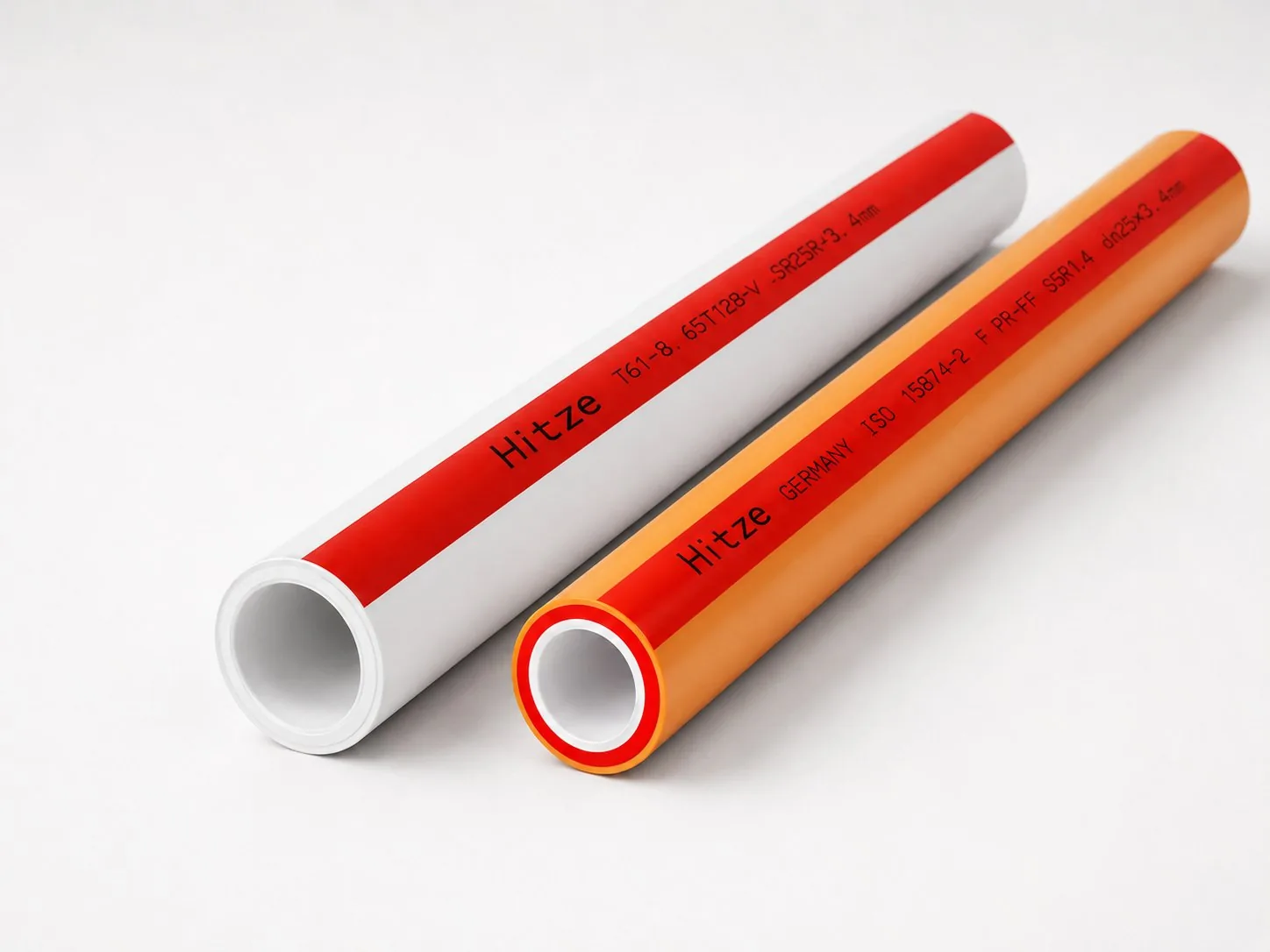
Use the offered pipe’s current technical sheet to identify its material, outside diameter and wall construction. Preserve the model and document revision in the penetration schedule. The word “plastic” cannot resolve whether a listing covers PP-R, PVC or another material. A nominal trade size also cannot replace the dimensions and construction the system document calls for.
Then record what occupies the opening: bare or insulated pipe, sleeve where present, the position of a coupling, other services sharing the opening, and the accessible faces of the assembly. Measure the actual opening and annular space against the listing’s permitted conditions. Keep the location photograph with that record; a photograph supplements the dimensions rather than supplying them by itself.
A coupling is a separate condition to check. ASPE’s published coupler example describes how a coupling within a rated wall changed the firestop arrangement needed for a larger PVC pipe. The useful lesson is the extra plastic in the wall plane, not a size rule to copy onto another project. Record the coupling’s actual location before selecting the system.
Filter the system and compare every listed condition
Search with the recorded conditions, then open the complete candidate system. STI’s system-search instructions describe filtering by application properties and contacting engineering when the exact condition cannot be found. A search result is a candidate, not confirmation that the actual opening is covered. Attach the complete system document and its identifier to the location record.
| Selection input | Record to compare |
|---|---|
| Assembly | Construction, thickness and required rating |
| Penetrant | Material, dimensions, wall construction and coupling position |
| Opening | Dimensions, annular space, sleeve and other services |
| System detail | Permitted components, access, installation conditions and document revision |
Use one review sequence for each penetration type. Group identical locations only after confirming that their relevant conditions match; a single catalogue name does not make different openings identical.
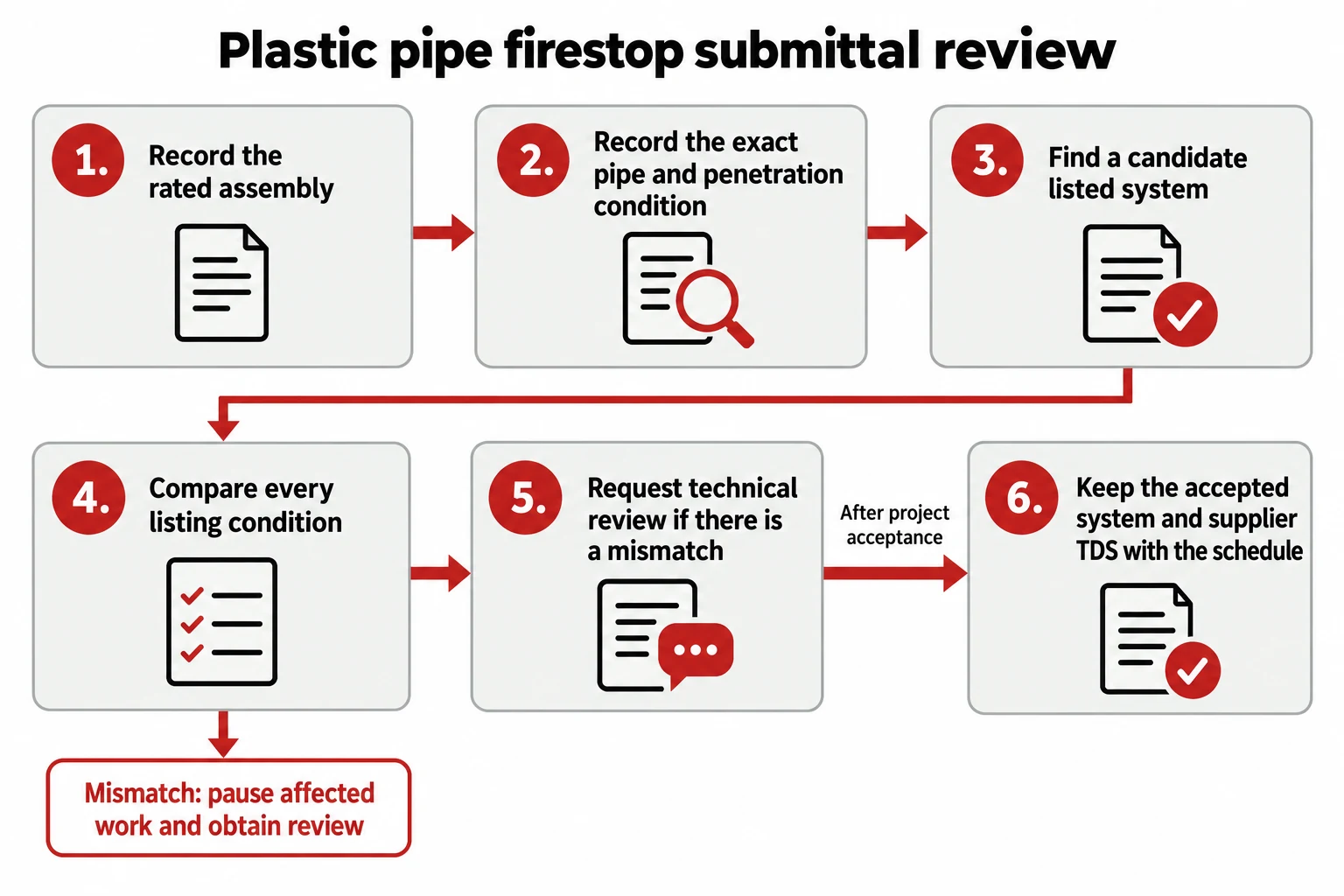
- Record the rated assembly.
- Record the exact pipe and penetration condition.
- Find a candidate listed system.
- Compare every listing condition.
- Request technical review if there is a mismatch.
- Keep the accepted system and supplier TDS with the schedule.
Stop the submittal when the field condition changes
An accepted package must stay connected to what is built. If a sleeve is added, a coupling moves into the wall, insulation changes or the opening is enlarged, flag the affected location and pause the affected work until the changed condition is reviewed. Reusing the old system identifier without comparing the revised condition leaves the discrepancy unresolved.
UL’s discussion of passive-fire-protection compliance identifies deviations such as opening size, annular space, penetrant grouping and substrate changes. A suitable conforming system may resolve the mismatch. Where the proposed condition needs an engineering judgment, obtain the appropriate technical evaluation and project acceptance; an engineering judgment is not a replacement label that automatically authorizes the change.
The review outcome should identify the affected opening, revised condition, supporting detail and accepting party. Keep the superseded document distinguishable from the accepted revision. This makes a later inspection a comparison with the approved condition rather than a search through unrelated product sheets.
Keep the pipe TDS and approval record together
The pipe supplier contributes the exact product information; the firestop system documentation addresses the penetration arrangement. Ask for a current model-specific TDS and retain it with the accepted detail. STI’s collar product data also advises checking pipe sensitivities with the pipe manufacturer. A general PP-R catalogue cannot answer every compatibility question for a specific firestop material.
For a PP-R purchasing package, use the Hitze PP-R pipe and fittings range to identify the proposed family, then request the offered model’s documents. This article does not establish Hitze firestop-system approval or a tested penetration configuration. Confirm product-specific supply timing and order terms separately; neither is supplied by a system listing.
Before release, the action is simple: keep the actual condition, accepted system and current pipe TDS together. Reopen the review whenever one changes. The resulting record gives purchasing, site staff and the inspection team the same condition to verify.
Frequently Asked Questions
Can a collar datasheet select the firestop system?
No. Compare the complete tested-system listing with the actual assembly, pipe and penetration conditions. A product datasheet alone does not establish that match.
What if a coupling moves into the rated wall?
Record the changed condition, pause the affected work and obtain technical review and project acceptance before completing the revised acceptance record.
Does pipe pressure documentation approve the penetration?
No. The pipe documentation and the firestop system address different performance questions. Keep both with the location record.