Key takeaways
- These are three business models, not three products. White label = you resell a generic catalog product with no brand investment. Private label = your brand goes on the factory’s standard, already-certified product. Custom ODM = you commission changes the factory does not currently make, and pay for tooling and re-testing.
- Margin follows differentiation. White label competes on price alone; private label earns a brand premium on a shared base product; custom ODM is the only model where the product itself can be exclusive.
- Certification ownership is the trap most buyers miss. A rebranded pipe does not automatically carry the factory’s approvals — WRAS requires a secondary approval for rebranded products, and IAPMO adds your company to a listing through a formal cross-reference process.
- The US private-label economy hit $282.8 billion in 2025 and grew nearly three times faster than national brands — the model works, but only when the brand owner controls quality and documents.
- You can test before you commit. Hitze runs its private-label and ODM program with no MOQ — start with samples or a small trial order and scale only after the product proves itself.
Every importer who has sat across a table from a pipe factory has heard the three terms used interchangeably: white label, private label, ODM. They are not interchangeable. They are three different commercial contracts with three different risk profiles, and the one you sign determines your margin structure, your certification paperwork, and whether a competitor can buy the identical product next quarter. This article separates the business models. If you want the technical side — which physical attributes of a pipe you can actually change, and which trigger tooling and re-testing — that lives in our companion piece on ODM vs OEM for plumbing pipe. Here, we answer the commercial question: which arrangement fits the brand you are trying to build?
White label vs private label vs custom ODM: the three models defined
White label is generic catalog resale. The factory makes a standard product — say, a 20 mm PP-R pipe to EN ISO 15874 — and sells the identical item to any buyer who asks. It ships either unbranded, under a neutral house label, or under the factory’s own brand. You add nothing but your invoice. Multiple distributors in the same city can stock the exact same SKU, and your customers can price-shop it in an afternoon. The upside is real: zero brand investment, no artwork approvals, no listing paperwork, and the fastest possible route from purchase order to warehouse shelf.
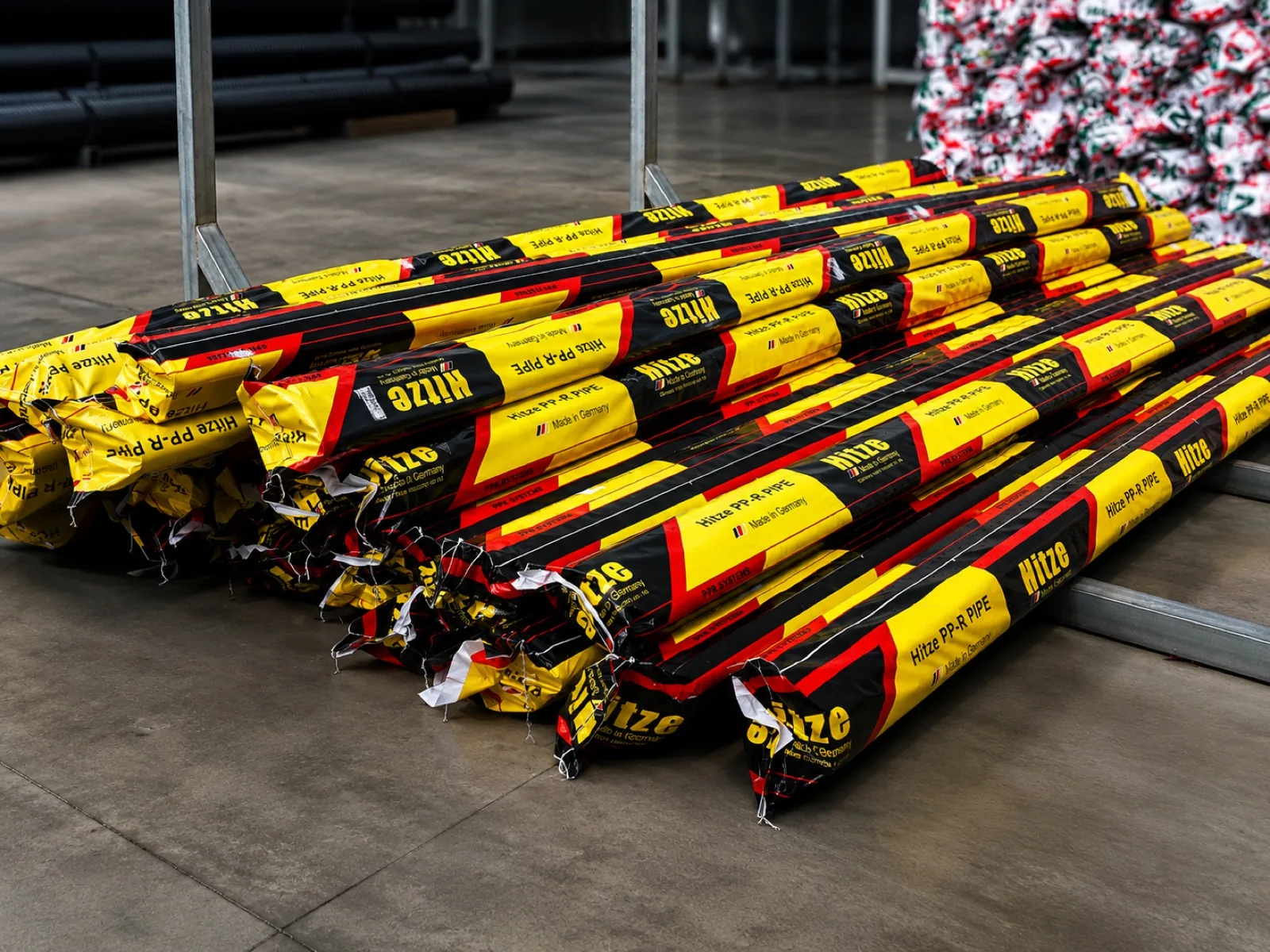
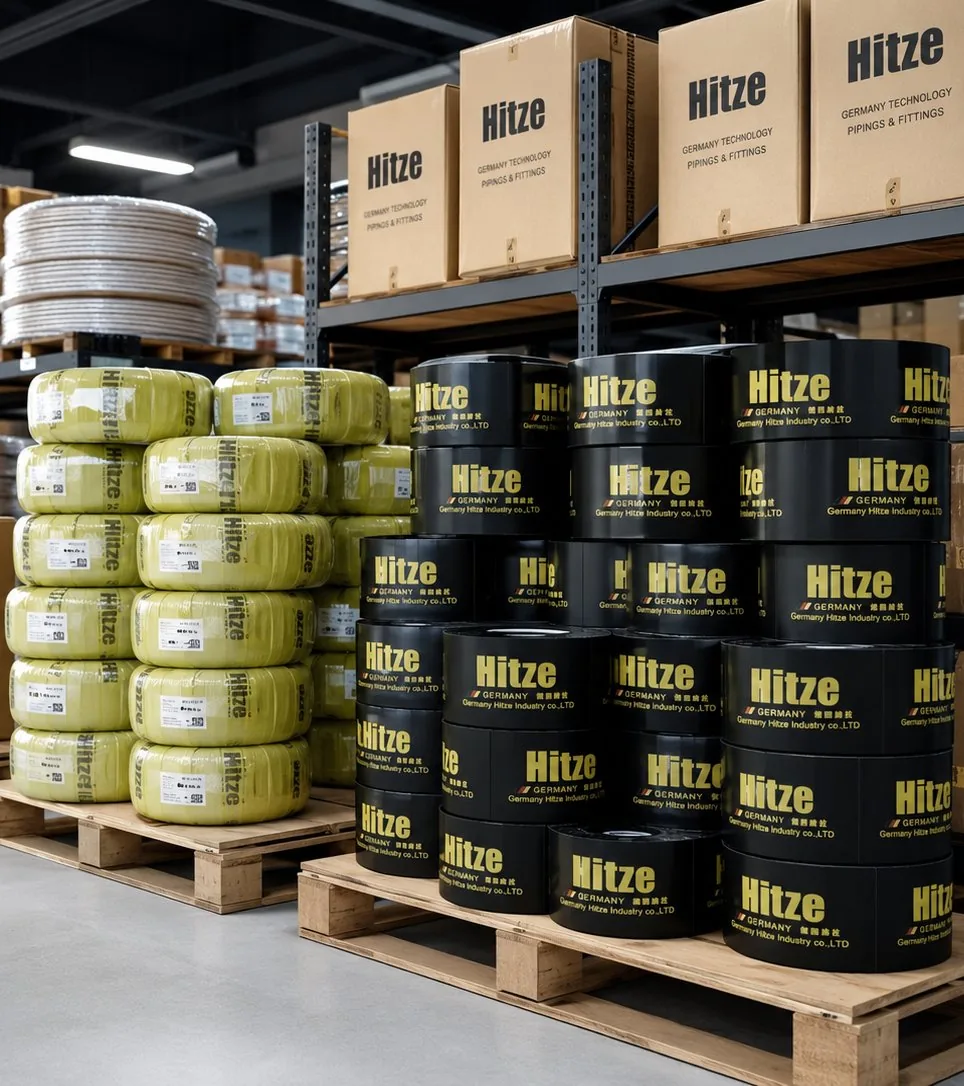
Private label puts your brand on the factory’s standard product. The pipe itself is unchanged — same extrusion recipe, same wall construction, same dimensions the factory already certifies — but the print stream on the pipe carries your name, the coil wrap and cartons carry your artwork, and the datasheets are issued under your identity. The design still belongs to the factory, and other buyers can private-label the same base product in other markets. What you own is the brand, and that ownership is worth defending: a US federal trademark application costs $350 per class at the USPTO (plus a $200-per-class surcharge if your goods description strays from the ID Manual) — trivial money against a container of pipe, and it is the only asset in this model a competitor cannot copy.
Custom ODM is where you commission development the factory does not currently offer: a proprietary color and print scheme, a size ladder built for your market, a custom fitting body, or a layer construction to your specification. Now you are paying for engineering hours, mould tooling — a hardened-steel injection mould for a fitting family typically runs into the tens of thousands of dollars and can exceed $100,000 for complex multi-cavity tools — and, critically, a fresh testing cycle, because a product configuration that did not exist before has no certificate behind it. In exchange, you can negotiate genuine exclusivity: if you paid for the mould, you can contract that no one else’s product comes off it.
One vocabulary warning before the comparison: in the piping trade, “private label” and “ODM” overlap heavily, because most private-label programs are technically ODM — the factory’s design, your brand. When we say custom ODM in this article, we mean the arrangement where you fund actual product development. That distinction, not the label, is what changes the economics.
Side-by-side: investment, exclusivity, certification, margin and IP
The table below is the comparison most buyers actually need. Read the margin row carefully: figures are deliberately qualitative, because absolute margins vary by market and order — but the structure of the margin is fixed by the model you choose, and no negotiation skill changes that.
| Dimension | White label (catalog resale) | Private label (your brand, standard product) | Custom ODM (developed for you) |
|---|---|---|---|
| Upfront investment | Inventory only | Inventory + artwork, print setup, trademark (from $350/class in the US), listing paperwork | All of the previous + tooling (typically tens of thousands per steel mould) + testing/certification fees |
| Exclusivity | None — anyone can buy the same SKU | Brand is exclusive; base product is shared. Territory exclusivity negotiable | Product exclusivity contractible via tooling ownership |
| Certification ownership | Factory’s certs, factory’s name — you just forward documents | Inherited via formal rebrand routes (IAPMO additional-company listing; WRAS secondary approval) | New product = new testing cycle; listing name negotiable |
| Time to market | Fastest — stock transfer | Adds artwork, print and listing lead time | Slowest — adds tooling build plus a full certification cycle |
| Margin structure | Thinnest — commodity, price-comparable | Mid — brand premium and customer stickiness on a shared base | Highest potential — differentiated spec, no direct comparison |
| IP position | None | You own the trademark; factory owns the design | Design rights and mould ownership negotiable — put them in the contract |
Two rows deserve expansion because they are where deals go wrong. First, certification ownership. Buyers routinely assume that because the factory’s pipe is certified, their rebranded version is too. It is not automatic. WRAS is explicit that approval covers only the models named on the approval documentation, that it does not extend to rebranded products, and that a secondary approval is required before a rebranded product may carry the mark. IAPMO handles the same situation for cUPC/UPC through an additional-company cross-reference process, and the resulting listing is publicly searchable in the IAPMO R&T Product Listing Directory — which means your customers, and your competitors, can check whether your brand’s paperwork is real. A private-label program that skips these steps is selling uncertified product in a certified market, and the liability sits with the brand on the coil: yours.
Second, IP position. In white label you own nothing, which is honest and fine. In private label you own the trademark and nothing else — accept that, and register the mark before your first container, not after your first copycat. In custom ODM, ownership of the design and the physical mould is whatever the contract says, and factories default to keeping both unless you negotiate. If you fund tooling, the contract should name you as the mould’s owner or exclusive beneficiary, define what happens to it if the relationship ends, and bar the factory from running third-party product off it. Skip that clause and you have paid to develop a product your supplier can sell to your competitor.
Which model is best for which buyer
White label is best for wholesalers filling out a range, contractors buying for their own installs, and importers testing a market where they have no brand ambition — situations where speed and price matter more than identity. It is wrong for anyone building repeat business on their own name, because the moment a customer reorders, they can reorder from anyone. There is no switching cost, so there is no defensible margin. Distributors who stay white-label for years typically watch their gross margin compress every renewal cycle as buyers quote the identical SKU against them.
Private label is best for distributors and importers with an existing customer base who want that base buying their brand, regional players assembling a full pipe-and-fitting range under one name, and contractors-turned-suppliers converting installation reputation into product margin. The evidence that the model works is not theoretical: US private-label sales reached $282.8 billion in 2025, growing 3.3% — nearly three times the 1.2% growth of national brands, per PLMA. That is grocery-led data, but the mechanism transfers directly to building materials: when the brand owner controls quality and documentation, customers stop paying the national-brand premium and start paying yours. Private label is wrong for a buyer with no route to market who hopes the logo itself will create demand. It will not. A specification and a certificate sell pipe; a logo only keeps the customer you already won.
Custom ODM is best for established brands that have already proven demand under private label and now need separation — their own color scheme, a market-specific size ladder, a fitting detail their installers asked for. It is the graduation step, not the entry step. It is wrong as a first move for almost everyone, because you would be spending tooling and certification money to differentiate a product no one has yet bought from you. The disciplined path runs white label or private label first, custom ODM once reorder data tells you which SKUs deserve the investment. If you want to see exactly which customizations are cheap and which trigger tooling, the ODM vs OEM customization guide maps every lever.
The money mechanics: how each model earns (and leaks) margin
In white label, your margin is the spread between factory price and street price on a product with public comparables. Every competitor with the factory’s catalog can see your cost basis to within a few percent. The margin leak is structural, not operational — you cannot service or negotiate your way out of selling the same item as the next buyer. What white label does give you is inventory velocity: no artwork cycle means you can respond to a spot shortage faster than any branded competitor, and in commodity plumbing that agility is occasionally worth more than margin.
In private label, the premium comes from three places: the brand itself, the switching cost of respecifying (once a merchant lists your brand and installers know it, changing suppliers costs them shelf resets and requalification), and range coherence — a matched pipe-and-fitting system under one name is worth more than the sum of its parts, which is why launching a full own-brand range beats rebranding a single SKU. The leak in this model is documentation drift: brands that let datasheets, declarations and installation guides stay in the factory’s name undermine their own premium, because sophisticated buyers trace the paperwork. Getting print, packaging and documents fully under your brand is not cosmetic — it is where the margin actually lives.
In custom ODM, margin potential is highest because there is no direct comparable — but the tooling and testing investment must be amortized across real volume. The insider arithmetic: a steel mould in the tens of thousands of dollars amortized over a healthy production run adds little per fitting; the same mould amortized over one hesitant trial order can erase the entire differentiation premium. Which is why factories that push new customers straight into custom tooling are optimizing for their tooling invoice, not your business. Sequencing matters more than ambition.
What Hitze checks before any label goes on: how the program is built
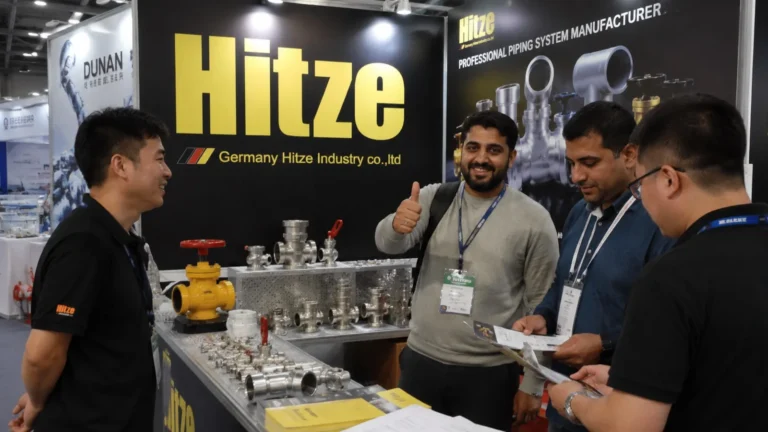
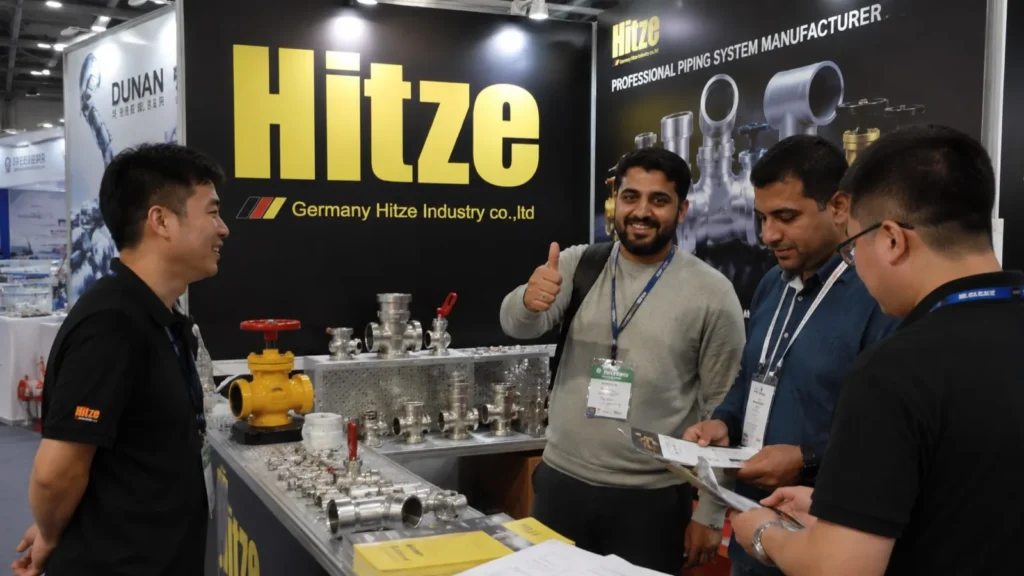
Hitze — a German brand of engineered piping systems, founded 1974, with a 120,000 m² production base, 1,000+ employees and exports to 118+ countries — runs all three arrangements through one private-label and ODM program, and the gate sequence is the same regardless of model. First, the base product must already hold its credentials: PP-R built to DIN 8077/8078 and EN ISO 15874, oxygen-barrier heating pipe to DIN 4726, PEX referenced to ASTM F876/F877, with SKZ test certification on PP-R pressure pipe and PE-Xb heating pipe, DVGW type examination on PP-R drinking-water pipe, and WRAS material approval on the potable side. No brand — ours or yours — goes onto a configuration that has not passed its standard.
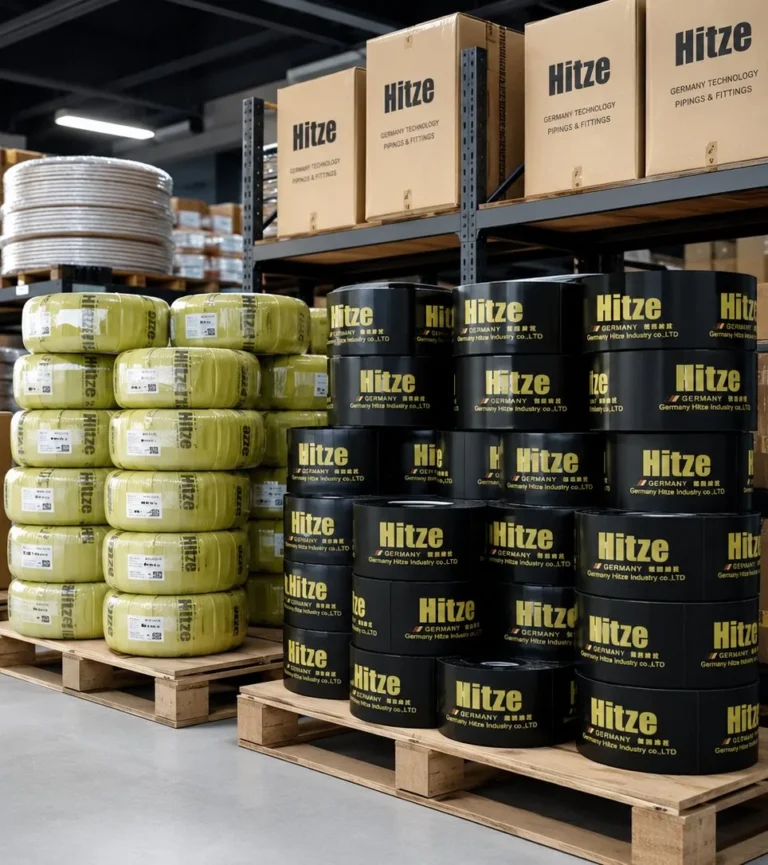
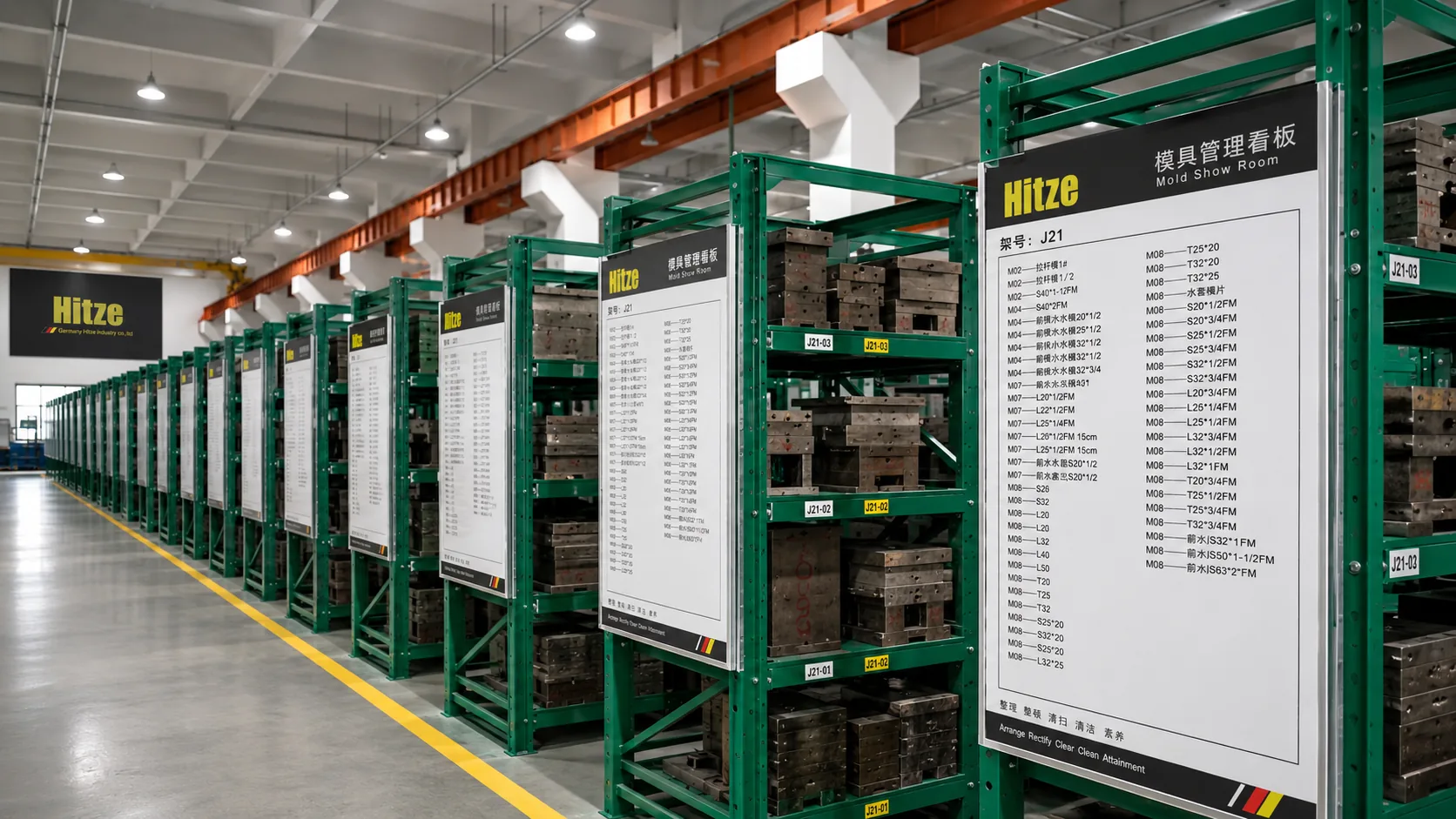
Second, the branding layer is engineered, not improvised: print-stream text is proofed against the standard’s marking requirements before it touches an extrusion line, coil wrap and carton artwork go through physical proof approval, and rebrand certification routes (IAPMO additional-company listing, WRAS secondary approval, CE Declaration of Performance under the correct name) are scoped per target market — with certificate numbers available on request rather than promised loosely. Third, for custom ODM work, moulds are cut, stored and inventoried in a managed mould store, so tooling ownership and separation between customers’ projects is physical, not just contractual. Occupational safety across the plant is managed under ISO 45001. And because the program has no MOQ, every arrangement starts the same way: samples first, then a trial order sized to your risk appetite, not to our production schedule.
Worked scenario: one distributor, three years, all three models
Consider a plumbing distributor in the UK Midlands with 400 trade accounts, currently reselling two national pipe brands. Year one — white label. She adds a generic PP-R line from a certified factory to protect margin on price-driven jobs. Investment: inventory only. It works — until two competitors list the identical product and the line’s gross margin thins with every quote cycle. The white-label phase was not a mistake; it proved her accounts would buy a non-national brand at all. That is exactly what the model is for.
Year two — private label. She registers her own mark, requests samples of the factory’s standard PP-R and multilayer range, and inspects print quality, dimensions and fitting fit before committing — a sample-first sequence that costs weeks, not seasons. The factory scopes the WRAS secondary approval for the rebranded potable line so the brand can legitimately carry the mark in the UK market. Her artwork goes on pipe print, coils and cartons; datasheets are reissued under her name. The base product is unchanged — which means the certification story is inherited, not rebuilt — but now a competitor quoting against her must displace a brand her installers already trust, not merely undercut a SKU.
Year three — selective custom ODM. Reorder data shows two SKUs carrying the range. For those two only, she commissions a proprietary color-and-stripe scheme and a market-specific coil length, contracts exclusivity on the configuration, and leaves the other thirty SKUs as standard private label. The tooling and setup investment lands only where volume already justifies it. Total sequence: three years from commodity reseller to a brand with a defensible, partly exclusive range — with capital committed in the same order that evidence arrived. Run the sequence backwards — custom tooling first, market proof later — and the same distributor would have spent her differentiation budget guessing.

Choosing your model: a 60-second decision guide
Ask three questions in order. Do repeat customers buy on your name? If no, stay white label until they do — brand investment without a customer base is decoration. Do you have proof they will reorder under your brand? If yes, private label: register the trademark, run the rebrand certification route for each target market, and put your name on the factory’s proven standard range. Do you have reorder data identifying which SKUs deserve exclusivity? Only then fund custom ODM, and only on those SKUs, with mould ownership in writing. Most healthy pipe brands live permanently in the middle model, with a handful of custom configurations on top — full-custom ranges are rarer, and rarely necessary.
If you are a distributor, importer or contractor-supplier with a real route to market and you are weighing the private-label step, the practical next move is small: request samples of the range you would brand. Hitze’s private-label and ODM program has no minimum order quantity — you start with samples or a trial order, prove the product against your market, and scale from evidence. Every matched Hitze pipe-and-fitting system ships with a 50-year system warranty, which becomes part of your brand’s promise the day your name goes on the coil. If your ambition is bigger than reselling someone else’s catalog, that is the lowest-risk way to find out.
FAQ: white label vs private label vs custom ODM
What is the difference between white label and private label?
White label is generic resale: the factory’s standard product, sold unbranded or under a neutral/factory label, available identically to any buyer. Private label puts your registered brand on that standard product — print stream, packaging and datasheets under your name — so the brand is exclusive to you even though the underlying design is shared.
Is private label the same as ODM?
In piping, mostly yes: standard private label is ODM in the strict sense — the factory’s design, your brand. The meaningful line is between that and custom ODM, where you fund development of a configuration the factory did not previously make, which adds tooling cost and a fresh certification cycle.
Can my private-label pipe use the factory’s certifications?
Not automatically. WRAS states that approval covers only the named models and that rebranded products need a secondary approval; IAPMO adds a private-label company to a cUPC/UPC listing through its additional-company cross-reference process. The routes exist and are routine — but they are formal steps, not assumptions.
How much does it cost to start a private-label pipe brand?
The brand layer is cheap relative to inventory: a US trademark application is $350 per class at the USPTO, and artwork/print setup is modest. Product and rebrand-certification costs vary by market and order. Custom ODM is the step that adds real capital, since steel mould tooling typically runs into the tens of thousands of dollars.
Do I need a minimum order quantity to start?
With Hitze, no — the private-label and ODM program has no MOQ. The intended sequence is samples first, then a trial order sized to your market test, then scheduled reorders once the product proves itself.
Does custom ODM guarantee exclusivity?
Only if the contract says so. Exclusivity follows tooling and design ownership: if you fund the mould, contract that it runs only for you and define what happens to it if the relationship ends. Without that clause, you may have paid to develop a product your supplier can sell to others.