Key Takeaways
- A quotation is a confession. Every spec a supplier leaves off the page — crosslinking method, application class, wall thickness, brass grade — is a degree of freedom they are keeping for themselves.
- “PEX” is not a grade and “brass” is not an alloy. A serious quote reads “PEX-a to ASTM F876” or “CW617N to EN 12165” — words you can test a sample against.
- Numbers beat adjectives. “PN20, SDR 6, 20 × 3.4 mm” is checkable with a €30 micrometer; “high-quality thick-wall pipe” is checkable with nothing.
- Real certificates come with numbers you can look up in the issuing body’s own register — IAPMO, NSF, WRAS, DVGW. A supplier who volunteers the number has nothing to hide.
- The last line item is the warranty. A pipe-only warranty that dies at the fitting is worth a fraction of a written system warranty covering pipe and fitting as one.
Two quotations land in your inbox for “the same” 16 mm heating pipe and the same half-inch fittings. One is 12 percent cheaper. If you sell pipe for a living, you already know the uncomfortable truth: the two documents almost never describe the same product. The gap is hiding somewhere — in a wall that is 0.4 mm thinner, in a barrier layer that quietly isn’t there, in a brass alloy nobody will name in writing. And by the time the difference surfaces, it surfaces as a leak claim with your company’s name on the delivery note, not the factory’s.
The good news is that a pipe supplier quotation is also the cheapest audit you will ever run. Before you pay for a factory visit or a third-party inspection, the quote itself tells you — by what it includes and what it omits — how the supplier thinks about quality. This article walks the nine line items that separate an engineering document from a sales flyer. For each one: what a complete entry looks like, and what its absence usually signals. None of this requires a lab. It requires reading the page the way an auditor would, and asking one precise follow-up question per gap.
Why the quietest quotation is usually the most expensive one
Here is the operating principle: in piping, silence is a specification. When a quotation says “PPR pipe 20mm PN20, green” and nothing else, the supplier has not forgotten the standard, the SDR, the raw-material grade and the test regime. They have reserved the right to decide those later — usually in whichever direction the margin points that month. A factory that controls its inputs writes them down, because written specs are how it disciplines its own purchasing. A trader reselling whatever line is cheapest this quarter cannot write them down, because next quarter’s container may not match.
This is why the nine items below are not a wish list — they are a filter. In our experience on the supply side, buyers who send a one-line RFQ get a one-line quote, and the race goes straight to the bottom. Buyers who ask for these nine entries watch a third of their supplier shortlist go quiet within a week, which is the cheapest supplier elimination you will ever do. The rest of this article is the checklist, in the order the items appear on a typical quotation.
1. The raw material is named — “PEX-a”, not just “PEX”
Crosslinked polyethylene comes in three manufacturing routes — PEX-a (peroxide, crosslinked in the melt), PEX-b (silane, moisture-cured after extrusion) and PEX-c (electron beam). All three can be excellent; they differ in process control, flexibility and cost, and a factory knows exactly which one it runs. Under ASTM F876, the governing North American spec, PEX tubing must reach a minimum degree of crosslinking of 65 percent — a property that is tested, not assumed. F876 also requires a four-digit material designation code printed on the tube, encoding chlorine resistance, UV resistance and hydrostatic design stress.
What absence signals: a quote that says only “PEX pipe” is telling you the seller either does not know which crosslinking route the extruder uses — which means they are not the extruder — or wants the freedom to switch resin lots without telling you. The same logic applies across materials: “PE-RT Type II” beats “PERT”, “PP-R to DIN 8077/8078” beats “PPR”. Ask one question: “Which crosslinking method, and what designation code is printed on the pipe?” A factory answers in one email. A middleman goes quiet or answers a different question.
2. The standard AND the application class are both cited
“Conforms to international standards” is the single most common phrase on weak quotations, and it means nothing. A real entry cites the standard and the class within it, because the class is where the money is. Under EN ISO 15874 (PP-R for hot and cold water), the application classes come from ISO 10508: class 1 covers 60 °C hot-water supply, class 2 covers 70 °C hot-water supply over a 50-year design life, class 4 covers underfloor heating and low-temperature radiators, and class 5 covers high-temperature radiator circuits — a duty profile that includes years at 80 °C and excursions to 90 °C. A pipe quoted for class 2 duty and installed on a class 5 radiator circuit is a warranty claim on a timer.
What absence signals: a supplier who quotes a standard without a class either doesn’t run the class-specific regression testing, or is quoting the cheapest class and letting you assume the best one. The one-line follow-up: “Class 2 or class 5, and at which design pressure — 4, 6, 8 or 10 bar?” If the answer is “all of them, same price,” be suspicious — physics does not price that way.
3. Wall thickness or SDR is on the line, in millimetres
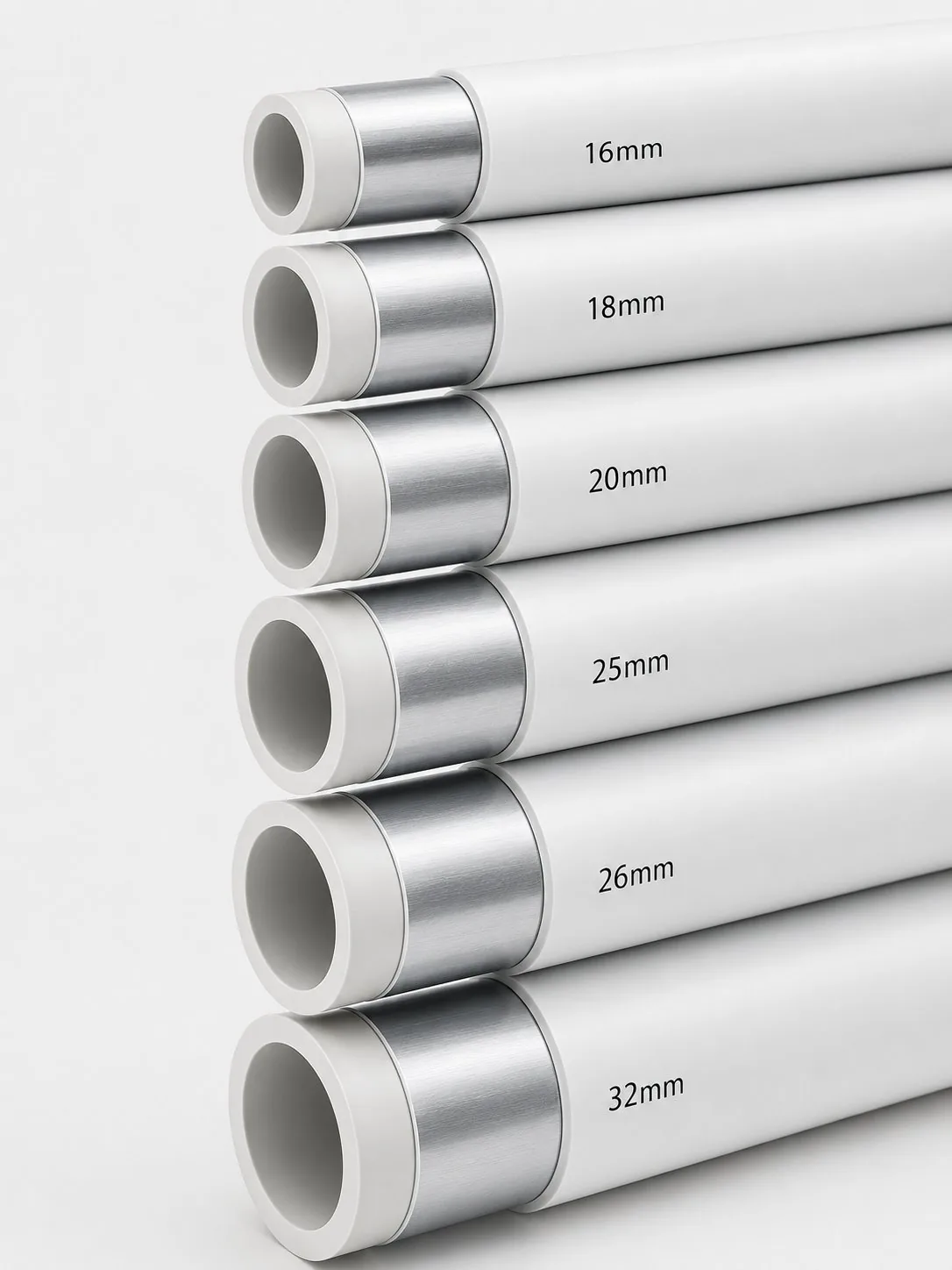
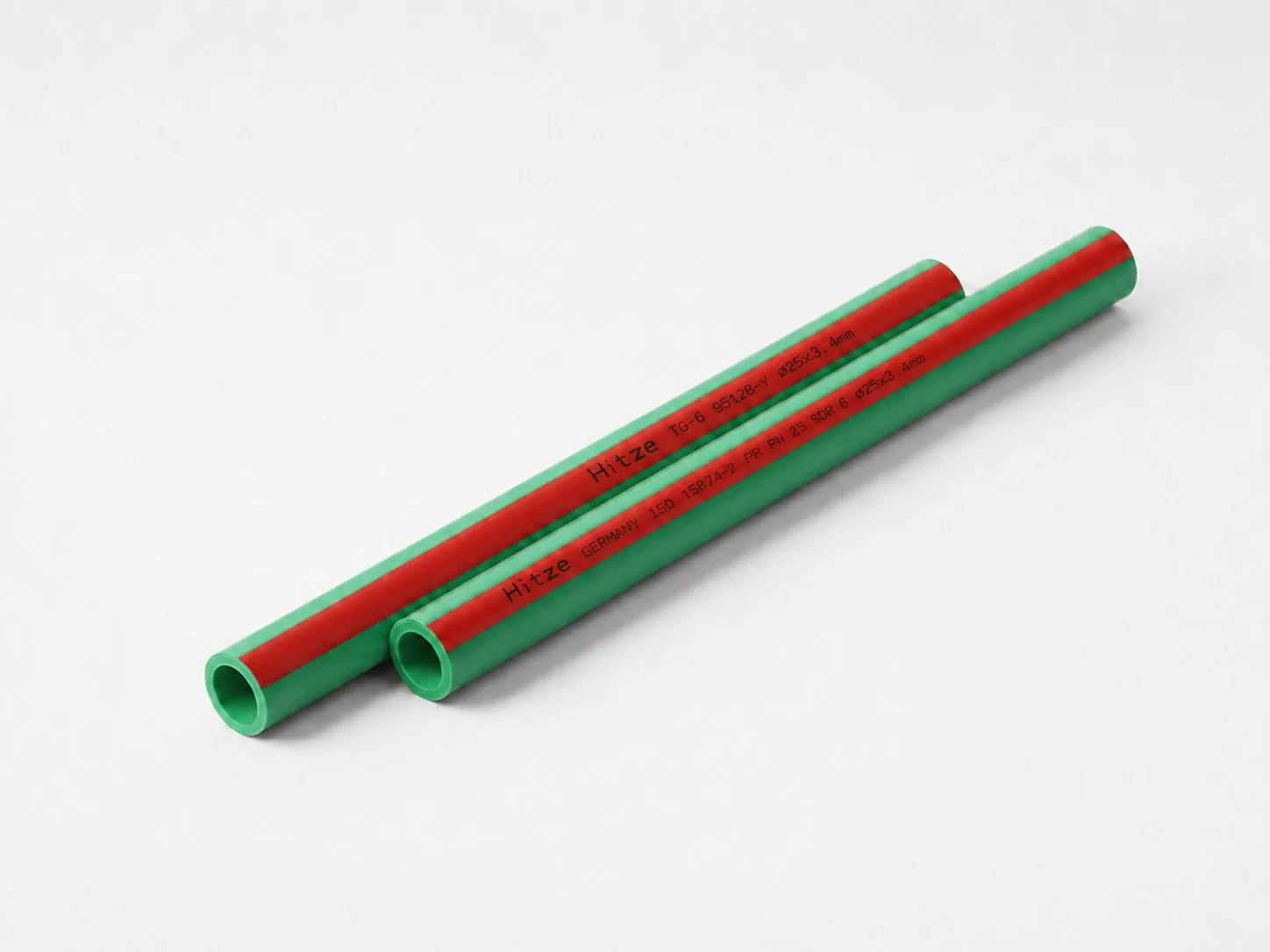
Wall thickness is where cut corners physically live, because polymer is the cost. SDR — standard dimension ratio — is simply outside diameter divided by minimum wall. For PP-R, PN20 pipe corresponds to SDR 6 (series S 2.5) under DIN 8077: a 20 mm pipe must carry a 3.4 mm wall. For PEX, ASTM F876 tubing is built to SDR 9. These are not decorative numbers; they are the direct input to the pressure rating. Shave a 20 × 3.4 mm PP-R wall down to 3.0 mm and — at a typical PP-R density of roughly 0.9 g/cm³ — you remove roughly 16 grams of polymer per metre, about a 10 percent material saving that is invisible to the eye and absent from the invoice description. Multiply by 40,000 metres and you have found the discount.
What absence signals: a quote listing only diameter and PN class, with no wall or SDR, is pricing you a diameter and reserving the wall. This is also the easiest line item to verify on arrival: a micrometer on ten sample cut-ends takes five minutes and settles the question before the goods hit your landed-cost calculation — because a per-metre price that looks 8 percent better on FOB and hides a thin wall is not a saving, it is an unpriced liability travelling at ocean-freight speed.
4. The brass has a grade: CW617N is a fact, “brass” is a shrug
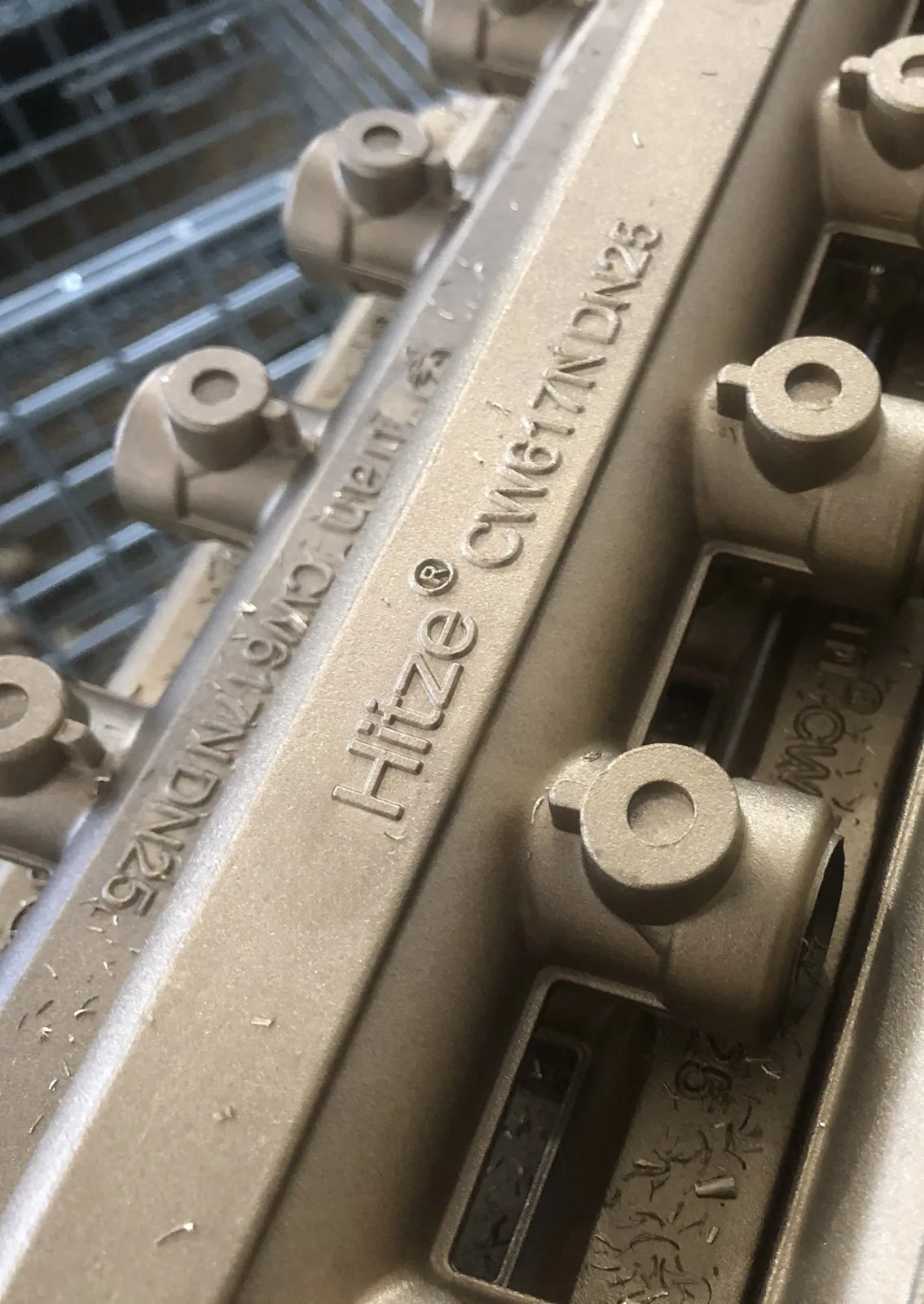
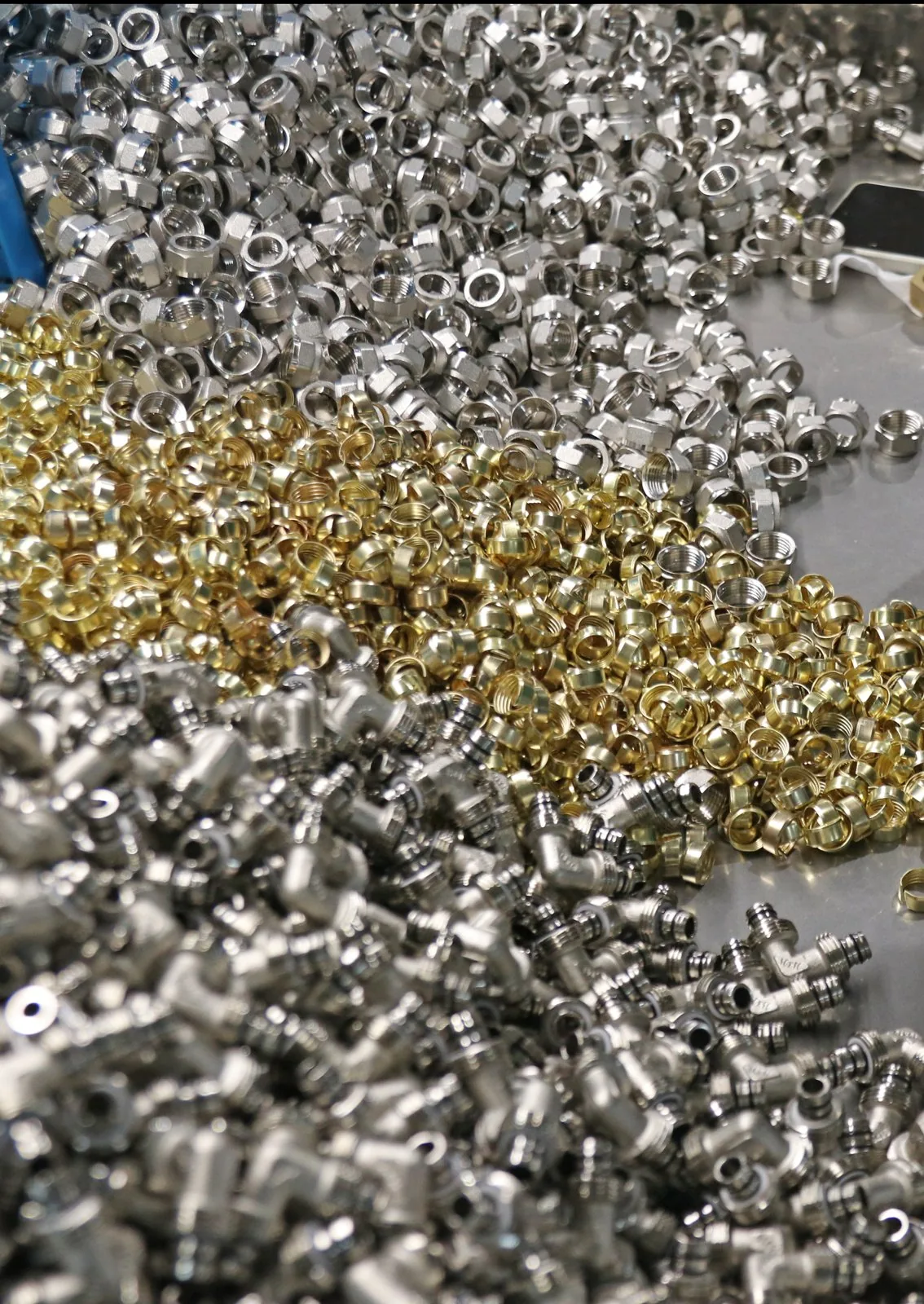
Brass grades are public, precise and cheap to name. CW617N (CuZn40Pb2 under EN 12165) is the European workhorse: 57–59 percent copper, 1.6–2.5 percent lead, the balance zinc. CW602N (CuZn36Pb2As) adds 0.02–0.15 percent arsenic to resist dezincification — the failure mode where aggressive water leaches zinc out of the alloy and leaves a porous, brittle fitting. And for the US potable market, the grade question has legal teeth: under Section 1417 of the Safe Drinking Water Act, “lead free” means a weighted average of no more than 0.25 percent lead across wetted surfaces — a bar a standard CW617N wetted body cannot meet, which is why genuine low-lead grades like CW724R exist and cost more.
What absence signals: “brass fittings” with no grade almost always means a regional near-equivalent alloy chosen by the foundry, with looser composition control — and it leaves you no contractual hook when an XRF gun later reads high zinc. The follow-up costs one line: “State the alloy per EN 12165/12164 on the quotation and the invoice.” A supplier who machines its own bar stock writes CW617N without blinking. One who buys mystery forgings cannot.
5. The oxygen barrier is named — and tied to DIN 4726
Plain polymer pipe breathes. Oxygen diffuses through the wall, into the heating water, and goes to work on every steel and cast-iron component in the circuit — boiler heat exchangers, pumps, radiators. That is why heating pipe carries an EVOH barrier layer and why DIN 4726 exists: the long-standing benchmark caps oxygen ingress at 0.1 g per cubic metre of water per day at 40 °C, and the 2008 edition frames the design threshold per pipe surface — above 0.32 mg/(m²·d) at 40 °C the system designer must add corrosion protection (see Rehau’s technical bulletin on oxygen diffusion for the mechanism). A complete quotation for heating pipe therefore reads “PE-RT with EVOH oxygen barrier per DIN 4726” — barrier material, standard, both named.
What absence signals: “16 mm heating pipe, red” with no barrier claim is very often potable-grade non-barrier pipe wearing a heating colour. It will pass every pressure test you run on arrival — the damage is electrochemical and takes two or three heating seasons to present, at which point it presents as your customer’s sludged boiler, not the supplier’s problem. If the barrier is not on the quote, it is not in the pipe.
6. The certification scheme comes with a number you can look up
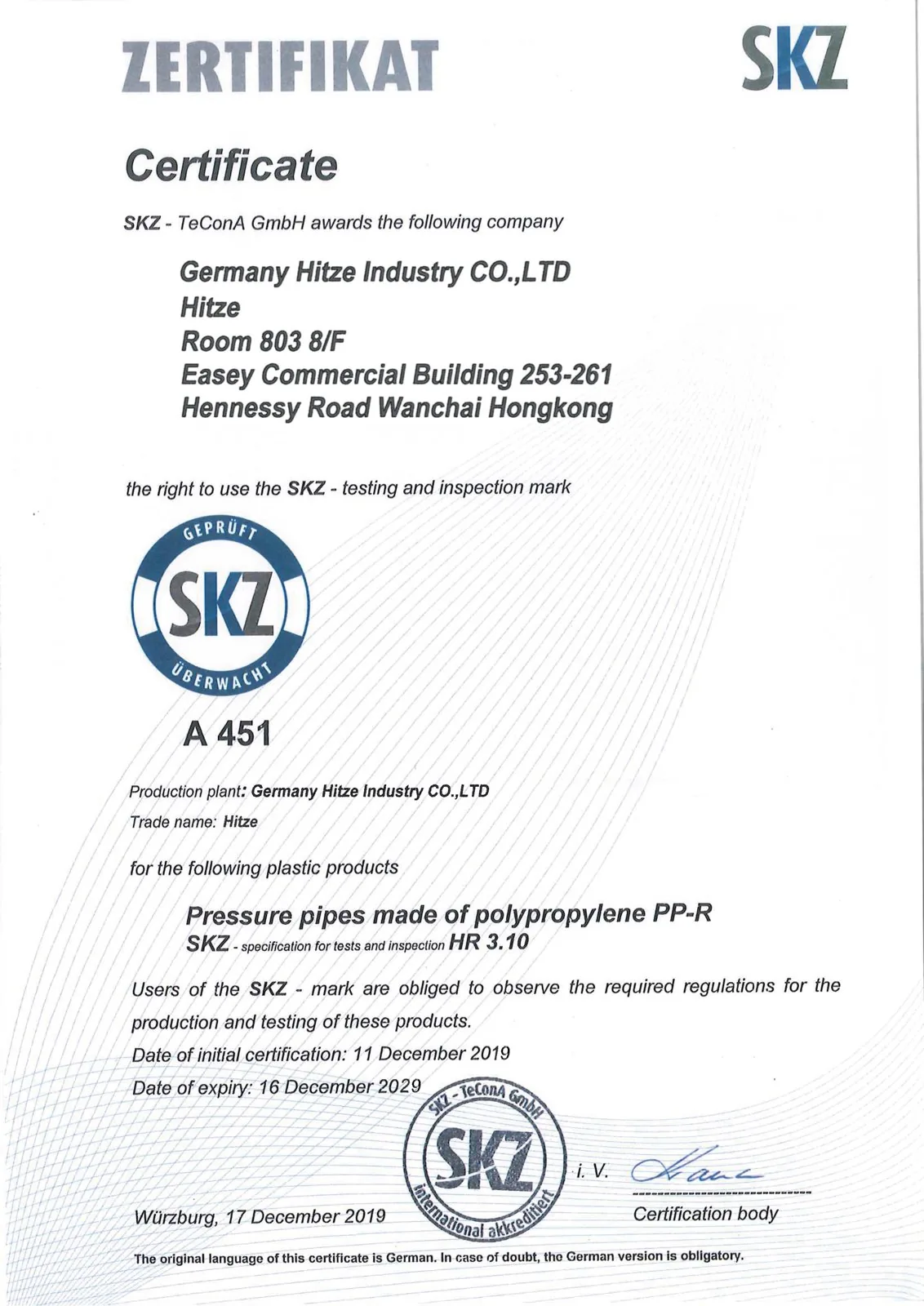
There is a hierarchy of certification claims. At the bottom: a logo pasted in the quotation footer. In the middle: a PDF certificate attached on request. At the top: a scheme name plus a certificate number offered unprompted, because every real scheme runs a public register — UPC/cUPC listings at IAPMO’s product listing directory, NSF marks in the official NSF listings database, UK approvals in the WRAS directory, DVGW registrations with the German gas and water association. Thirty seconds in the register either confirms the certificate covers this factory, this material, this size range — or shows you it covers a different company entirely, which happens more often than anyone in this industry likes to admit.
What absence signals: a quotation that lists scheme logos but resists giving numbers is usually borrowing certification gravity from documents that will not survive a register lookup. The tell is behavioural: suppliers with real certificates treat the number as a sales asset and lead with it. Suppliers with borrowed ones treat the number as a security risk. You do not need to guess which you are dealing with — the register decides.
7. The tolerance and testing regime is spelled out
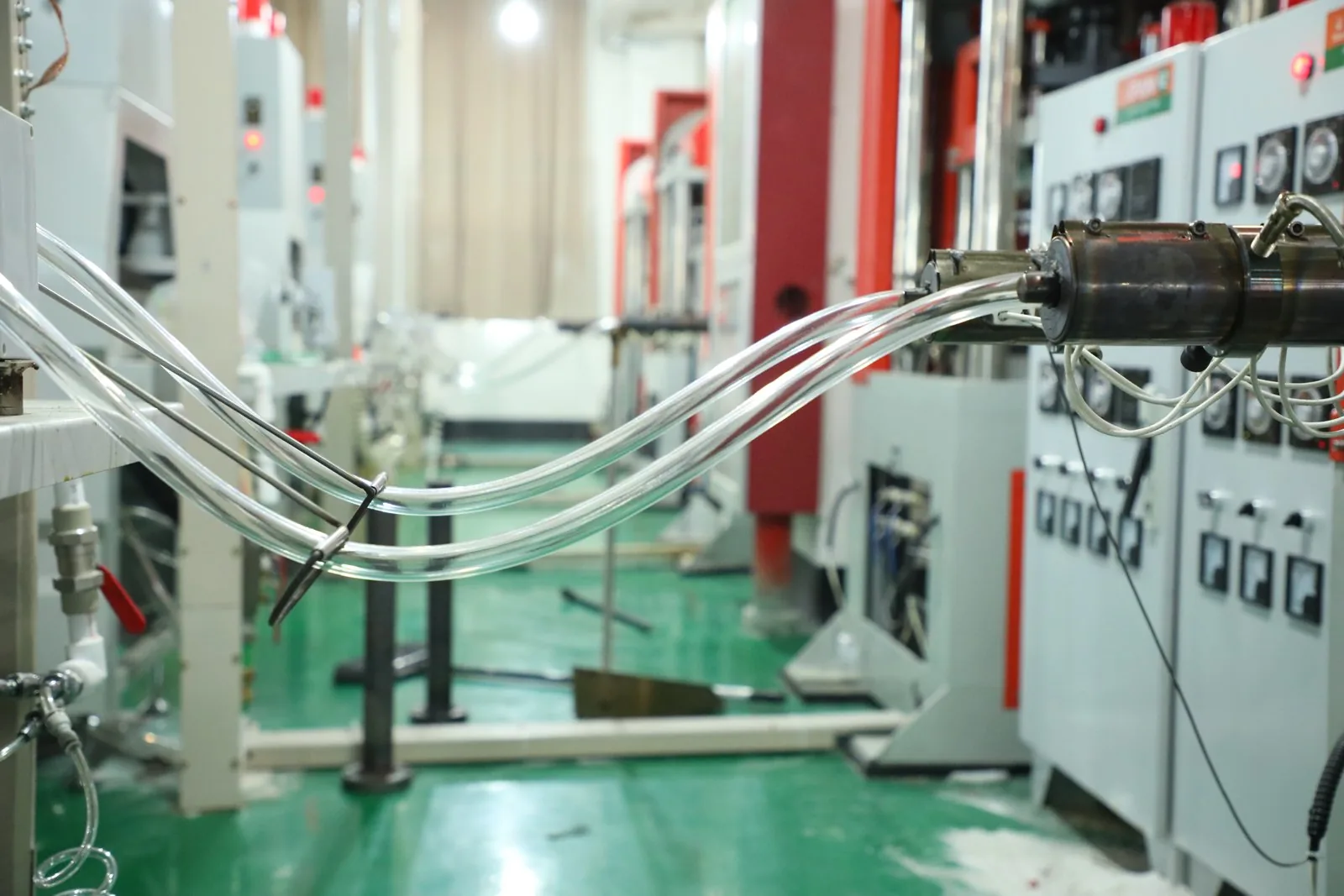
Standards are not just dimension tables — they are torture schedules. EN ISO 15874-2 ties PP-R pipe to hydrostatic pressure testing under ISO 1167, with test points running up to 1,000 hours at 95 °C: pipe clamped on a bench, filled, pressurised and held at near-boiling temperature for six weeks without bursting. A factory that actually runs this regime can say so in the quotation: which tests are run per batch (dimensions, 20 °C short-term hydrostatic), which per period (elevated-temperature long-term), and what document you receive with each shipment. A batch test report tied to the production lot number on your cartons is the difference between quality control and quality theatre.
What absence signals: no mention of testing usually means testing happens only when a customer complains. The practical question to send back: “Attach a sample batch test report from a recent production lot — any lot, any customer name redacted.” Factories with working labs return one within a day because the reports already exist. The absence of a fast answer is itself the answer.
8. The packaging is specified like it matters — because it does
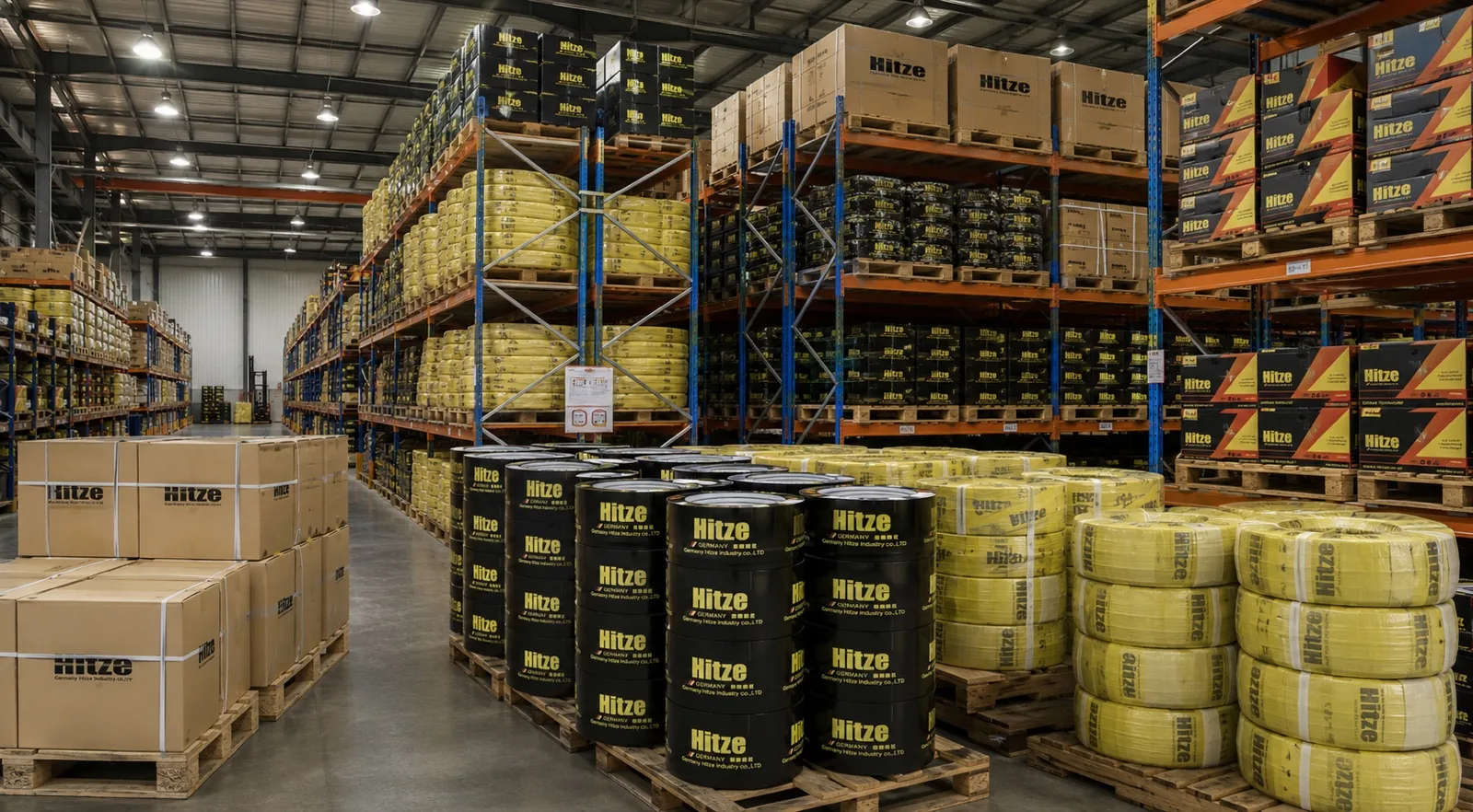
PEX has a documented enemy: sunlight. ASTM F876’s designation code devotes an entire digit to UV resistance under ASTM F2657 — a “1” certifies one month of UV exposure tolerance, “2” three months, “3” six months, and “0” means untested. That digit is why packaging belongs on a quotation and not in a footnote: opaque coil wrap, sealed end caps to keep grit out of the bore, carton and pallet spec, coil lengths and print interval. Pipe that ships shrink-wrapped in clear film, sits dockside for six weeks and then spends a season on a jobsite rack can burn through its entire certified UV budget before water ever touches it.
What absence signals: a supplier who has never had to answer for coils that arrived ovalised, contaminated or chalky from UV exposure. Packaging language is experience made visible — it appears on quotations only after a factory has eaten claims for its absence. If the quote is silent, assume the packaging decision will be made by whoever loads the container, at whatever cost level clears that day.
9. The warranty is written down — with a scope, not a slogan
The last line item is the one that pays for all the others. Three questions define a pipe warranty: how long, covering what, and backed by whom. “Quality guaranteed” answers none of them. A real entry states the term in years, states whether it covers the pipe alone or the pipe and fittings as one installed system, and names the entity that stands behind it. The system point is the one wholesalers learn the hard way: when a joint weeps, a pipe-only supplier blames the fitting, the fitting supplier blames the pipe, and the claim dies in the gap between two invoices — the core argument for single-sourcing the system instead of mixing suppliers at the joint.
What absence signals: a supplier who prices product, not consequences. A written long-term system warranty is expensive to offer — it forces the factory to control resin, tooling, testing and traceability for decades — which is exactly why its presence on a quotation is such an efficient quality signal. Nobody underwrites 50 years of somebody else’s extrusion.
The nine line items at a glance
Use this as a scoring sheet against any pipe supplier quotation on your desk. Seven or more complete entries: engineering document. Four or fewer: sales flyer — price accordingly.
| Line item | Complete entry looks like | Absence usually signals |
|---|---|---|
| 1. Material grade | “PEX-a per ASTM F876, designation code printed on pipe” | Seller is a trader, or resin gets swapped lot by lot |
| 2. Standard + class | “EN ISO 15874, application class 2, design pressure 10 bar” | You assume class 5; they ship the cheapest class |
| 3. Wall / SDR | “20 × 3.4 mm, SDR 6 / series S 2.5 per DIN 8077” | Wall thickness held back as a margin-recovery lever |
| 4. Brass grade | “CW617N per EN 12165”; DZR or low-lead grade named where duty needs it | Foundry’s choice of alloy; no recourse when XRF reads high zinc |
| 5. Oxygen barrier | “EVOH oxygen barrier per DIN 4726” on every heating position | Non-barrier potable pipe shipped in heating colours |
| 6. Cert scheme + number | Scheme named, certificate number volunteered, register checkable | Borrowed, expired or wrong-entity certificates |
| 7. QC / test regime | Per-batch tests named; test report tied to lot number per shipment | Testing happens only when a customer complains |
| 8. Packaging spec | Opaque coil wrap, sealed end caps, carton and pallet spec stated | UV exposure budget spent dockside before installation |
| 9. Warranty terms | Term in years, pipe-and-fitting system scope, backing entity named | Claims die in the gap between two suppliers’ invoices |
What a Hitze quotation includes — and how the product behind it is built
We hold ourselves to the same nine lines, so here is the first-party version. A Hitze quotation names the material route on every pipe position — PEX-a, PEX-b or PEX-c; PE-RT; PP-R in its three constructions (ceramic-core, fiber-glass PPR-FB-PPR, PPR-AL-PPR); PE100 — and cites the governing standard next to it: DIN 8077/8078 and EN ISO 15874 for PP-R, DIN 4726 for oxygen-barrier heating pipe, ASTM F876/F877 where PEX is quoted for North America, EN 12201/ISO 4427 for PE100 water pipe. Dimensions are stated as OD × wall. Brass positions carry the alloy: CW617N as the standard grade (ball valves in CW617N are rated PN25), with CW724R, CW511L and CW602N (DZR) quoted where low-lead or dezincification-resistant duty demands them.
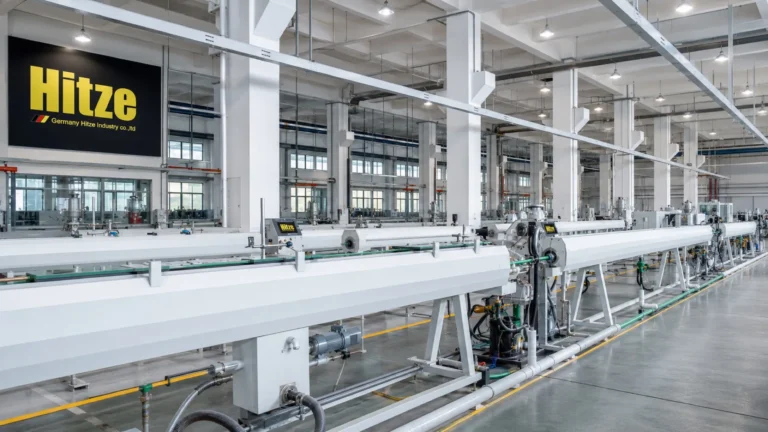
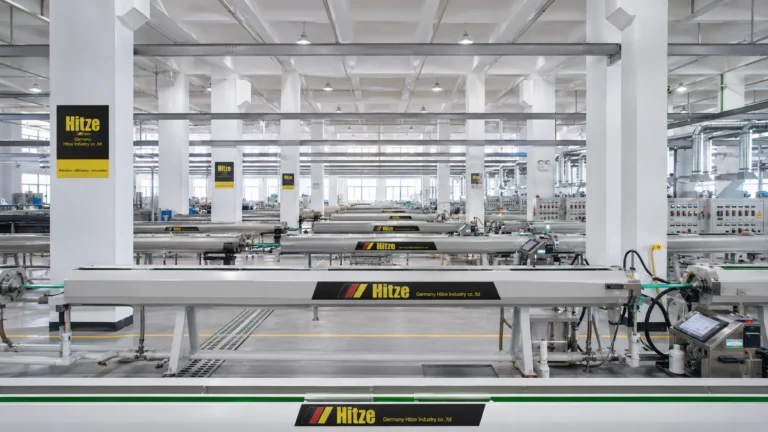
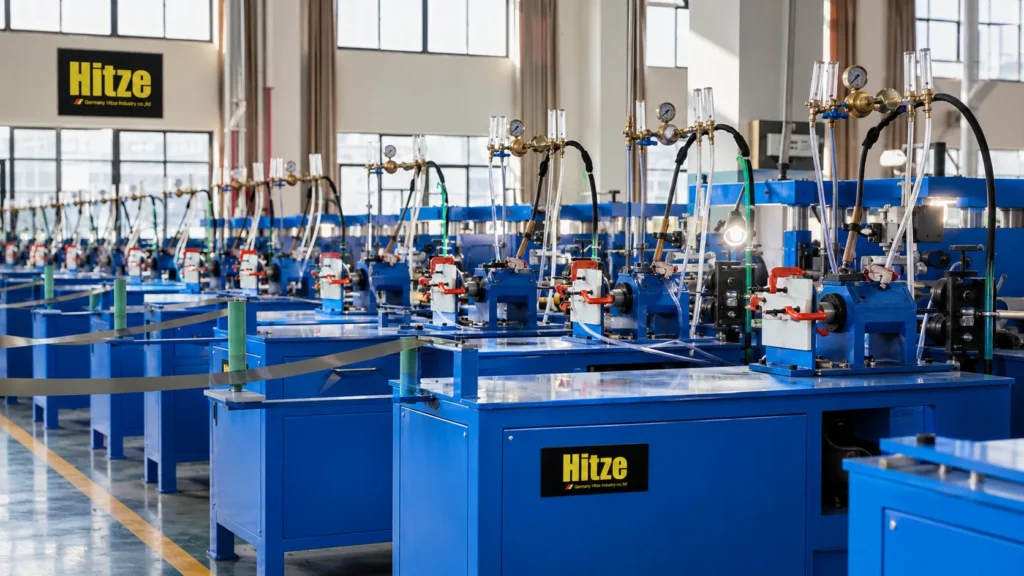
Behind the paper: Hitze is a German brand of engineered piping systems, founded in 1974, producing on a 120,000 m² base with 1,000+ employees and exports to 118+ countries. The certification line on our quotations references numbered certificates that exist on paper and in registers — SKZ test marks for PP-R pressure pipe, PP-R fittings and PE-Xb heating pipe; DVGW type examination for PP-R drinking-water pipe; WRAS material approval for the UK; NSF laboratory testing to BS 6920 for hot and cold potable contact; ISO 45001 for occupational health and safety management; SAI Global StandardsMark to AS 4176.8 (Australian consumer-gas multilayer, ISO 17484-1); plus cUPC/UPC, NSF-14, NSF/ANSI 61 and CE with Declaration of Performance, certificate numbers available on request. In-house, every production lot runs through dimensional checks and hydrostatic pressure benches before release — the same discipline that lets our wholesale plumbing and heating pipe program put a batch test report in the carton rather than a promise in the footer. And the ninth line item is the one we consider the real product: a 50-year warranty on the matched Hitze pipe-and-fitting system, in writing, because the pipe and the fitting come from the same engineering chain.
A worked example: two quotations, 12 percent apart
Take a realistic wholesaler’s RFQ: 40,000 m of 20 mm PP-R PN20, 24,000 m of 16 mm heating pipe in coils, 5,000 half-inch brass tees. Quote A prices the list with full spec lines. Quote B arrives 12 percent cheaper — illustrative numbers, but the pattern is one we see weekly. Now run the nine-item filter instead of the price column.
Quote B’s PP-R line reads “PPR pipe 20mm PN20” — no standard, no SDR, no wall. Item 3 says: check. A PN20 label with a 3.0 mm wall instead of the 3.4 mm that SDR 6 requires quietly deletes roughly 10 percent of the polymer per metre, which on 40,000 m is the bulk of that position’s discount, bought with your future pressure rating. The heating-pipe line says “16mm red heating pipe” — items 1 and 5 both fail: no material route, no barrier claim, no DIN 4726, so budget for oxygen-driven corrosion in every ferrous component downstream. The brass line says “brass tee 1/2"” — item 4 fails, and with it any contractual recourse when the alloy disappoints. Certificates: logos, no numbers — item 6 fails at the register. No test regime, no packaging language, and a warranty line reading “quality guaranteed” complete the sweep: Quote B scores two of nine.
Decision logic, not outrage: Quote B’s 12 percent is not a price advantage, it is an information gap priced as one. If B will re-quote with all nine lines completed in writing — grades, classes, walls, numbers — and the gap holds at even 5 percent, that is a real negotiation. If the gap evaporates when the spec is pinned down, you have learned where the 12 percent lived. And remember the denominator: after freight, duty and fees, an FOB discount shrinks as a share of the per-unit landed figure, while a thin wall or a missing barrier compounds. The full arithmetic is in our landed-cost breakdown — read the two articles together and the cheap quote rarely survives.
Who this checklist is for
If you are a wholesaler, importer or distributor buying container quantities of pressure pipe and fittings — and the thing that keeps you up at night is a quotation that hides a corner you will not find until it leaks under your brand — this filter is for you. It is not for one-off retail purchases, and it will not rescue a deal where price is the only criterion allowed in the room. If you want to see how a nine-line-complete quotation reads in practice, request one through our wholesale plumbing & heating pipe page: there is no minimum order quantity, so the normal path is samples first — put the micrometer, the register lookup and the batch report to work on our paperwork before any volume commitment, exactly as a real factory’s sample-first process should allow. Every quoted system position carries the 50-year matched pipe-and-fitting warranty in writing. Pricing varies by market and order; the nine line items never do.
FAQ: reading a pipe supplier quotation
What should a pipe supplier quotation always specify for PEX pipe?
The crosslinking route (PEX-a, PEX-b or PEX-c), the governing standard (ASTM F876/F877 for North America, EN ISO 15875 for Europe), the dimension as OD × wall or SDR, the printed designation code, and — for heating duty — whether an oxygen barrier per DIN 4726 is included. If any of those five is missing, ask before you compare prices.
Is a cheaper pipe quotation always hiding cut corners?
No — scale, resin timing and freight position create honest gaps. The test is whether the discount survives specification: ask the cheaper supplier to complete all nine line items in writing. An honest discount holds with the spec pinned down; a manufactured one evaporates or the supplier stops replying.
How do I verify a certificate number from a quotation?
In the issuing body’s own public register, never from the supplier’s PDF alone: IAPMO’s product listing directory for UPC/cUPC, the NSF official listings database for NSF marks, the WRAS approvals directory for the UK, and the DVGW register for Germany. Confirm the listing names the same legal entity, material and size range you are buying.
What does “PN20” actually commit a PP-R supplier to?
PN20 corresponds to SDR 6 (series S 2.5) under DIN 8077 — for a 20 mm pipe, a 3.4 mm minimum wall. If the quotation states PN20 but not the wall, measure samples on arrival: a 3.0 mm wall is a different, cheaper pipe wearing the PN20 label.
Does Hitze publish prices and minimum order quantities?
Prices vary by market and order and are quoted on request. There is no MOQ — Hitze works sample-first, so a wholesaler can verify grades, walls, certificates and batch documentation on real product before committing to volume. The matched pipe-and-fitting system carries a 50-year written warranty.