Key Takeaways
- Push-fit wins on retrofit speed. A joint is made in seconds by hand — no torch, no fire watch, no draining a wet system. On occupied-property repairs that single fact often justifies the fitting premium in one visit.
- They are code-legal, including behind walls. In North America push-fit fittings must conform to ASSE 1061 and be installed per the manufacturer’s instructions (IRC P2906.21 / UPC). Concealed use is allowed when done that way — but check local accessibility rules first.
- Where they don’t belong: high-temperature continuous hydronic (80–90 °C), vibrating plant rooms, and any run where a de-rated O-ring joint sits inaccessible for 20 years. Those are compression or press-fit jobs.
- The failure mode is almost always the install, not the fitting — an out-of-square cut, an un-deburred end, or partial insertion. Cut square, chamfer, insert to the depth mark, pressure-test before you close the wall.
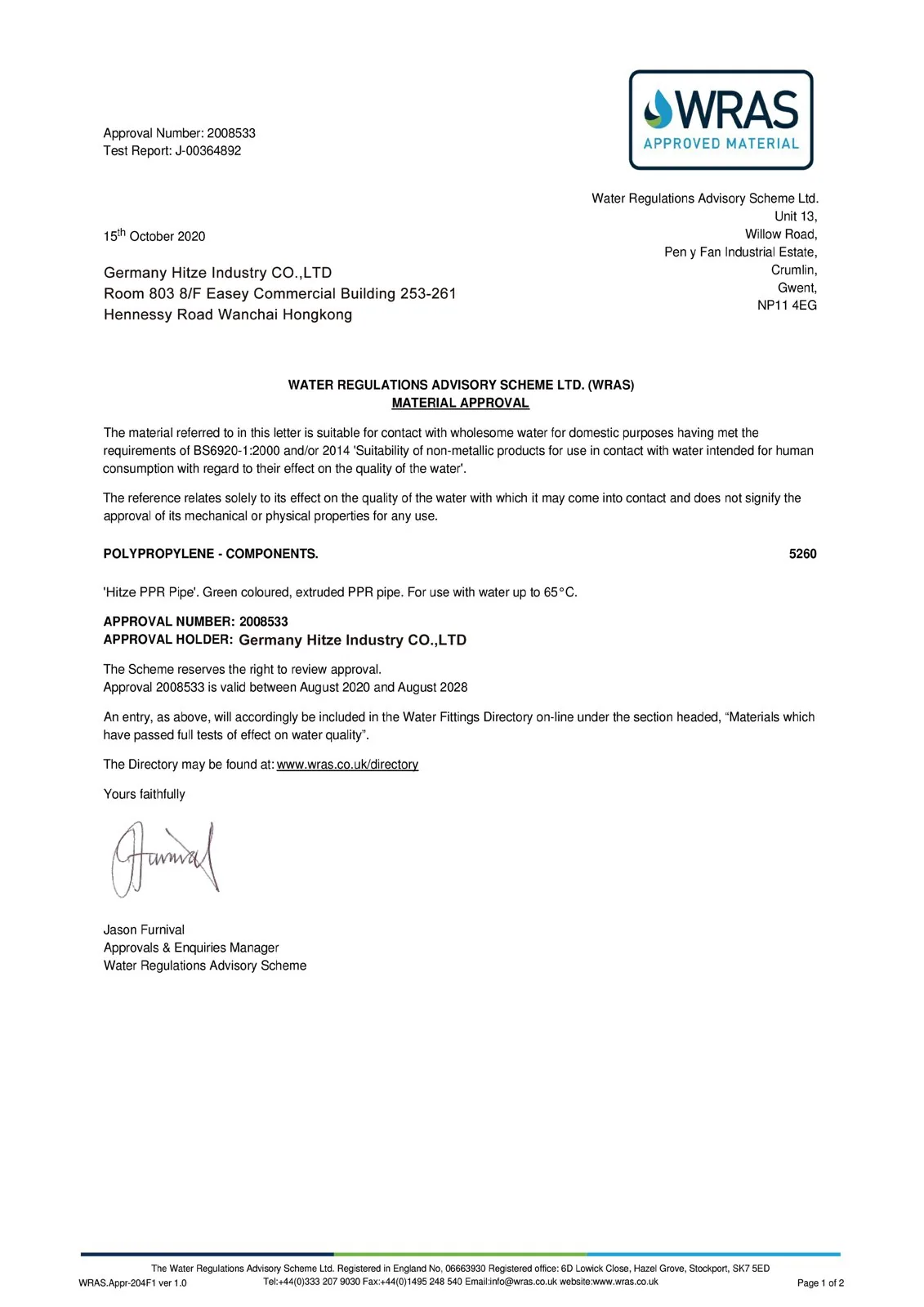
- Hitze builds push-fit in PPSU and lead-free brass to potable-water grades (WRAS material approval, DVGW type examination on the drinking-water range), sized 16–32 mm and CTS, with cert numbers available on request.
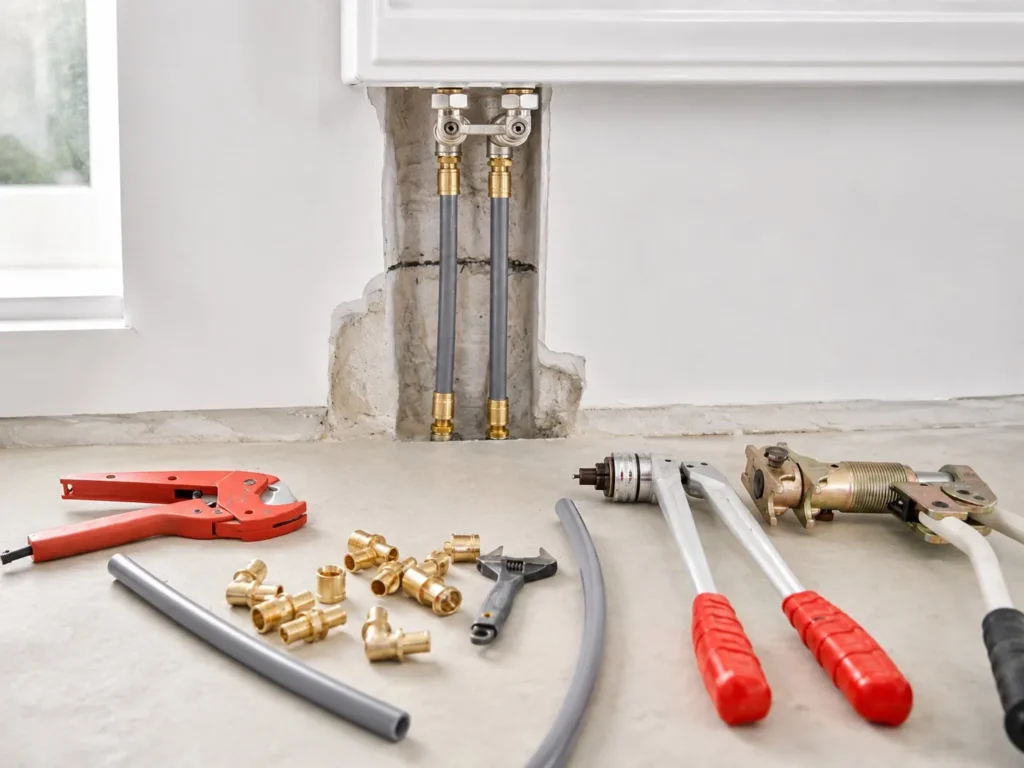
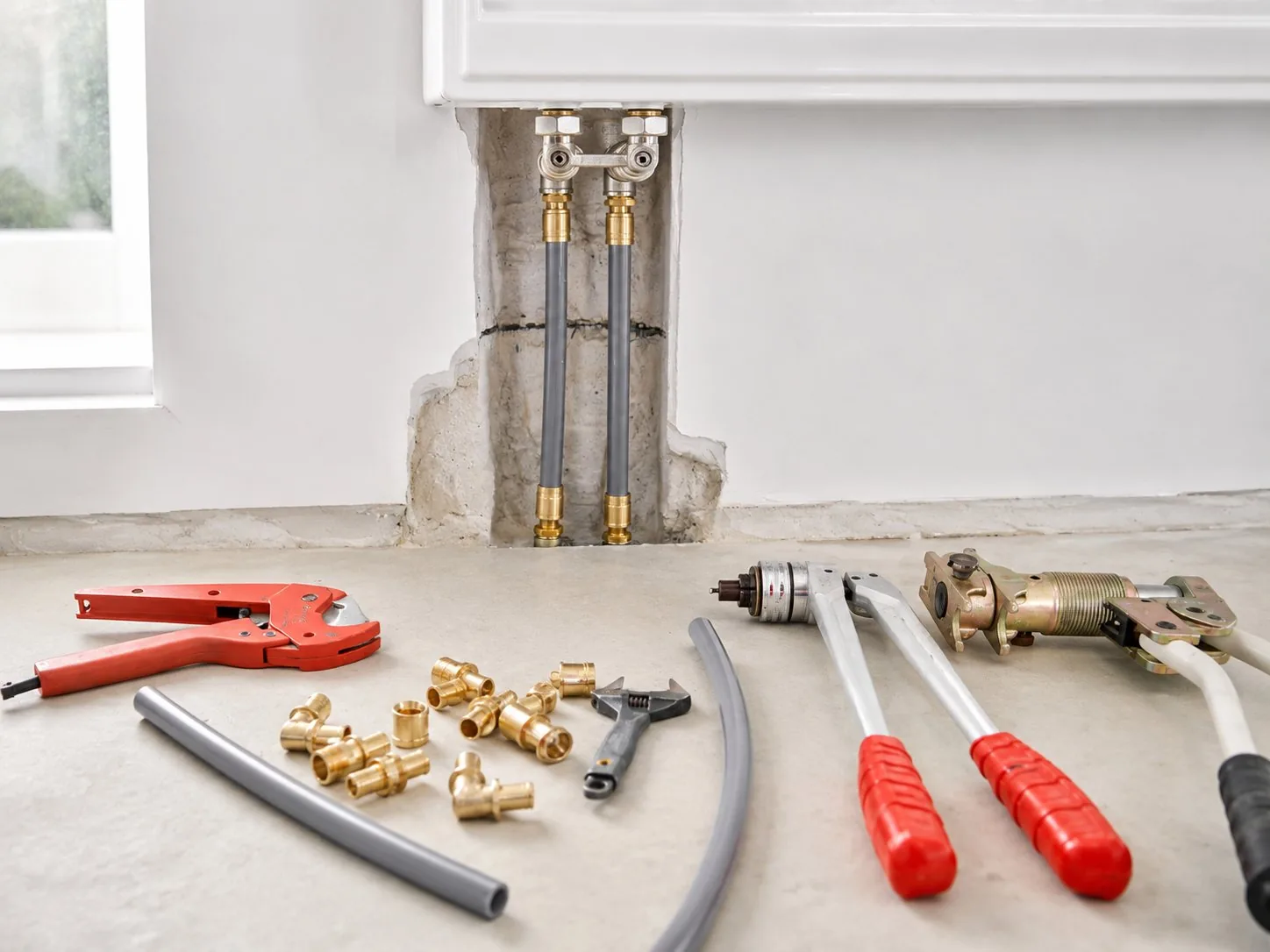
Every contractor who has re-piped an occupied house knows the real cost of a copper repair isn’t the fitting — it’s the fire watch, the hot-work permit, the furniture you moved, and the two hours you spent draining a system that wouldn’t stop weeping onto your flux. Push-fit fittings exist to delete that overhead. Push a de-burred pipe end into the fitting until it seats, and the joint is made — rated, in most residential systems, for the same 100 psi service you’d expect from a soldered joint. That is a genuine, defensible advantage, and it is why push-fit has become the default for repairs and small retrofits.
But “fast and easy” is exactly the reputation that gets a fitting misused. The same properties that make push-fit brilliant for a pinhole repair in a crawlspace make it the wrong choice for a boiler-room header running at 85 °C for twenty years. This guide is the honest version: the five places push-fit genuinely saves you time and money, the four places it will quietly cost you a callback, and the install discipline that separates a 30-year joint from a weep behind fresh drywall. Everything about standards and temperature ratings below is grounded against the issuing bodies, not marketing.
First, what a push-fit joint actually is — and what it is rated to do
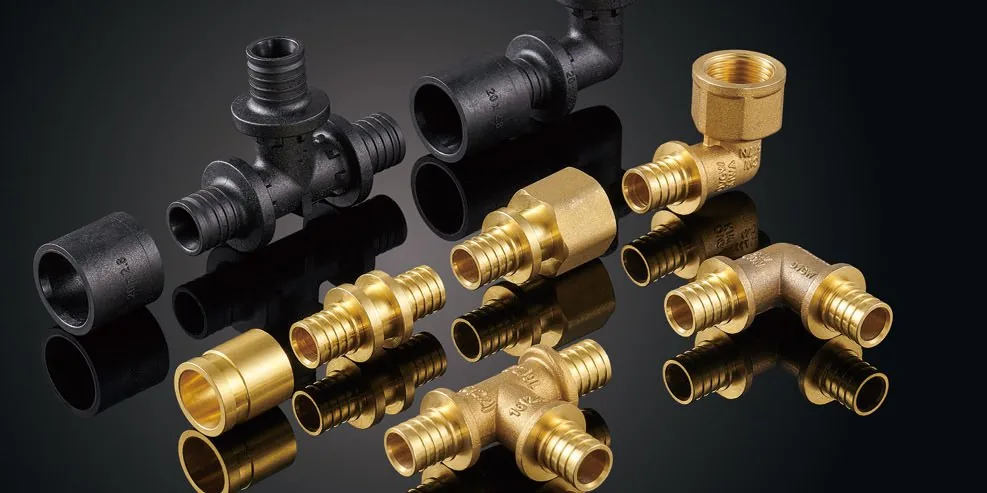
Strip away the brand names and a push-fit fitting is three parts doing three jobs: a stainless-steel grip ring (a toothed collet) that bites the outside diameter of the pipe and stops it pulling back out, an EPDM O-ring that makes the water seal, and a body — PPSU engineering polymer or lead-free brass — that holds the geometry. You insert the pipe past the grip ring and through the O-ring to a marked depth; the ring holds, the O-ring seals, done. On a demountable design a release collar or tool retracts the grip ring so you can pull the pipe back out and reuse the fitting — which is why push-fit is the only mechanical joint you can genuinely take apart and re-make on site without cutting.
The number that matters for spec is the rating envelope, and here is where you must be precise rather than optimistic. In North America the governing standard is ASSE 1061, Performance Requirements for Push-Fit Fittings. It rates conforming fittings for continuous water service up to 100 psi at 180 °F (82 °C), in nominal sizes up to 2″ CTS, across PEX (ASTM F876), copper (ASTM B88), CPVC (ASTM D2846) and PE-RT (ASTM F2769) tubing. That envelope covers essentially every domestic hot-and-cold potable system and low-temperature hydronic loop. It does not cover a continuously hot commercial heating main — and the standard is explicit that push-fit is not for temperature/pressure-relief drain lines unless separately rated. Know the ceiling before you sell the job.
5 places push-fit genuinely saves you time and money
These are the jobs where reaching for push-fit is not a shortcut — it is the correct professional decision, and the labour maths back it up.
1. Emergency and repair work in occupied buildings. A burst pipe over a tenant’s ceiling at 9pm is the canonical push-fit job. There is no draining the whole riser, no torch near old joists, no fire watch, no hot-work permit. You cut out the failed section, deburr, and push. A soldered repair in the same spot can turn a 15-minute fix into a 90-minute production because you first have to get the pipe bone-dry — solder will not take on a weeping joint. Push-fit makes up wet. That alone is why it dominates service-and-repair vans.
2. Mixed-material transitions. Retrofits are rarely one material. You inherit a copper stub, need to run PEX to the new fixture, and the last owner used CPVC somewhere in between. A single push-fit coupling that accepts copper, PEX, CPVC and PE-RT to the same OD lets you bridge materials without a shelf full of dedicated transition adapters or a second tool. This is the one place push-fit removes complexity that press-fit and solder simply can’t.
3. Tight, blind, or awkward-access repairs. Under a vanity, inside a joist bay, behind a boiler — anywhere you can’t get a torch flame or a press-tool jaw squarely onto the joint. A push-fit joint needs only enough room to slide the pipe home. On a single confined joint the tool-free method routinely beats every alternative on time, because the alternative is often “cut a bigger access hole first.”
4. Low-volume and one-off work where tooling doesn’t amortise. A press system is the fastest method on a big new-build with hundreds of joints — but the tool and jaw set is a four-figure outlay, and on a five-joint service call it never pays back. Push-fit needs a pipe cutter and a deburring tool: near-zero tooling cost. For a maintenance plumber or a GC doing occasional water work, that changes the economics entirely.
5. Temporary, test, and phased work you’ll take apart later. Because a demountable push-fit fitting releases with a collar, it is the right joint for a temporary bypass, a pressure-test rig, or a phased fit-out where a run will be re-routed next week. You reclaim the fitting instead of hacksawing a soldered joint out of the wall.
4 places push-fit will quietly cost you a callback
Position-taking, because vague hedging here gets contractors in trouble. These are the jobs where the time you save on install you pay back — with interest — in a warranty return.
1. Continuous high-temperature hydronic. The push-fit seal is an EPDM O-ring. EPDM is genuinely tough — its continuous service range comfortably covers the 82 °C ceiling that ASSE 1061 rates. But a commercial heating main sitting at 80–90 °C day and night, year after year, ages any elastomer faster than a domestic system that cycles. Over 15–20 years of that duty an O-ring can lose elasticity and start to weep. For a plant-room heating header that will run hot and stay hidden, spec a compression or press joint with a purpose-rated seal — not push-fit.
2. Vibration and mechanical movement. Boiler rooms, pump skids, and equipment connections generate constant low-amplitude vibration. An all-metal compression joint absorbs that; a grip-ring joint can, over a few years, work looser than one made rigid. If the pipe will shake, don’t rely on a collet.
3. Inaccessible joints on a critical run. This is the real judgment call — not “can push-fit go behind a wall?” (it can) but “should this joint go behind a wall?” A push-fit joint is code-legal concealed, but every mechanical seal has a longer-term duty life than a fused one. On a run that would flood a finished basement if it ever weeped, a heat-fused PP-R or PEX cold-expansion joint — which becomes one continuous material — is the lower-lifetime-risk choice. Reserve concealed push-fit for accessible-enough locations and lower-consequence runs.
4. Big new-build volume where a press tool amortises. On a 400-joint commercial fit-out, a press system’s few-second cycle and its permanent crimp beat push-fit on both speed and long-term joint count. Push-fit’s advantage is confined jobs and low joint counts; at high volume the tooling pays for itself and the maths flips. Use the right tool for the scale.
Push-fit vs compression vs press: an honest side-by-side
No single joint wins everywhere. Here is how the three mechanical/tool-free options actually compare on the criteria a contractor prices a job against. Read it as “which tool for which job,” not “which is best.”
| Criterion | Push-fit | Compression | Press-fit |
|---|---|---|---|
| Time per joint | Seconds, by hand | Slower — tighten by wrench | ~Seconds once tooled |
| Tooling cost | Near-zero (cutter + deburr) | Low (wrenches) | High (press tool + jaws) |
| Demountable / reusable | Yes (release collar) | Partly (re-usable body) | No — permanent crimp |
| Best duty | Repairs, retrofit, transitions, temp work | Vibration, exposed valve/pipe connections | High-volume new-build, permanent hidden runs |
| Sealing element | EPDM O-ring + grip ring | Compressed olive/ferrule | O-ring, mechanically deformed |
| Governing standard (US) | ASSE 1061 | Fitting/tube ASTM + local code | Fitting-specific listing + code |
The pattern is clear: push-fit owns the low-volume, awkward-access, take-it-apart end; press-fit owns the high-volume permanent end; compression sits between them for vibration-prone and serviceable exposed connections. If you want the full breakdown of the mechanical joint alongside these, our lead-free brass compression fittings and press-fitting system pages carry the size and spec data for the same pipe ranges.
The install discipline that decides whether a push-fit joint lasts 30 years or leaks in a week
Here is the truth that gets buried under the “so easy anyone can do it” marketing: when a push-fit joint fails, it is almost never the fitting. It is the pipe prep. The grip ring and O-ring can only do their job if the pipe end is presented to them correctly, and there are exactly three ways contractors get that wrong.
- Out-of-square cut. A pipe cut at an angle presents an oval face to a round O-ring. The seal loads unevenly and weeps. Use a proper tube cutter, not a hacksaw, and check the face is square.
- No deburr / no chamfer. A burr or sharp edge on the pipe end shaves or nicks the O-ring as the pipe slides past it. That nick is your future leak. Deburr the inside and chamfer the outside every time — this is the single most-skipped step.
- Partial insertion. If the pipe doesn’t go fully home past both the grip ring and the O-ring, it may hold pressure on a test and let go later. Mark the insertion depth on the pipe before you push, then confirm the mark disappears into the fitting.
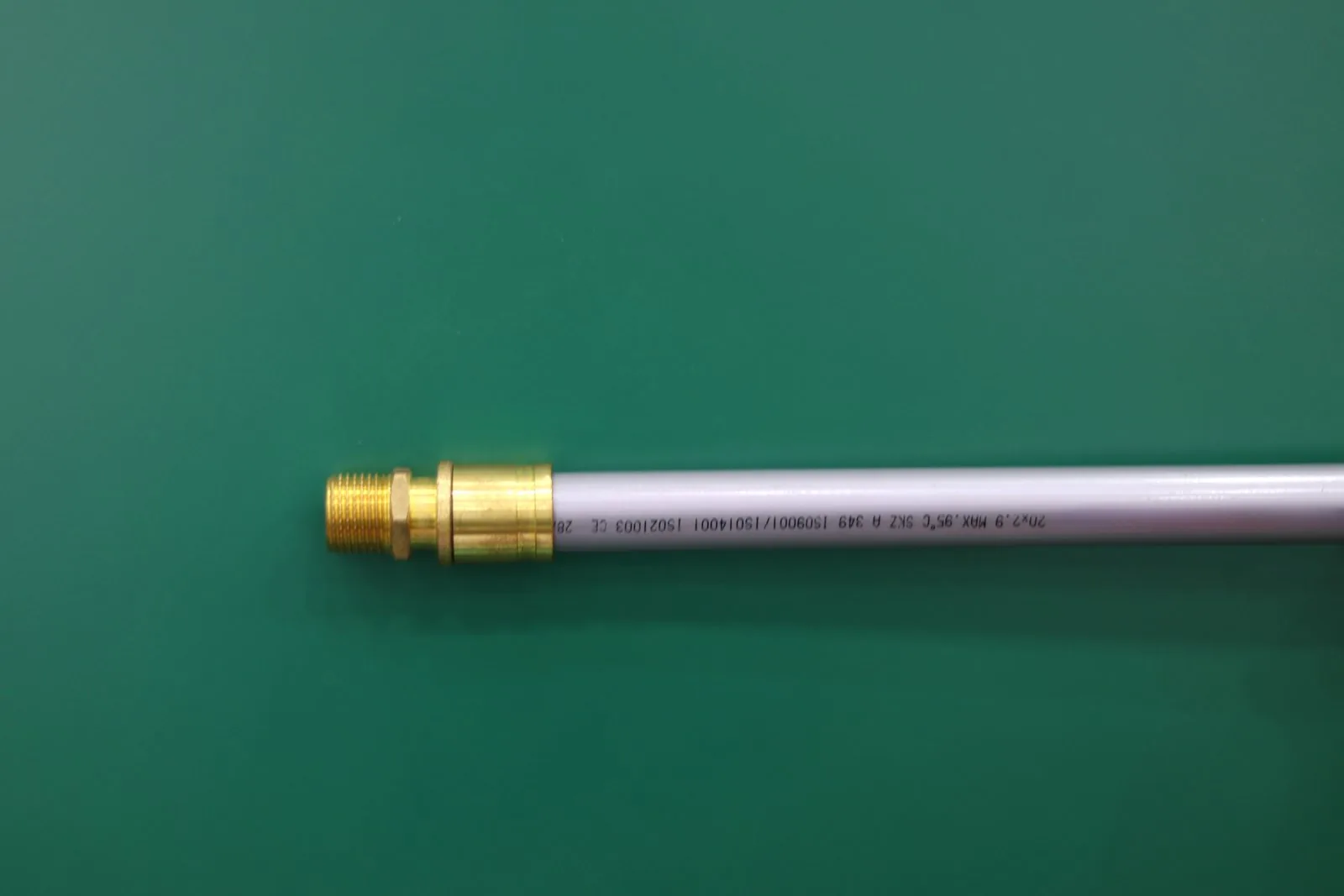
And the non-negotiable that protects you legally and financially: pressure-test before you close the wall. Concealed push-fit is code-legal under IRC P2906.21 and the UPC — provided it conforms to ASSE 1061 and is installed to the manufacturer’s instructions — but “legal” is not the same as “tested.” A ten-minute pressure hold on the exposed run turns an invisible install error into a fixable one instead of a drywall-removal callback.
A worked scenario: re-piping an occupied 1970s bathroom
Concrete end-to-end, because that is where the trade-offs stop being abstract. You’re replacing corroded galvanised supply to a second-floor bathroom in a house the family still lives in. The cold feed is copper up to the floor; you’re running new PEX to the vanity and WC; there’s an old CPVC branch to a laundry tap you’re keeping.
You isolate and drain what you can, but the copper stub keeps weeping — normal for an old system. A soldered transition here means fighting that moisture for an hour. Instead you cut the copper square, deburr, and make a push-fit copper-to-PEX transition wet. The PEX runs to the fixtures. Where you meet the retained CPVC laundry branch, one more push-fit coupling bridges CPVC to PEX — no dedicated adapter, no second tool. Every joint that will end up behind the new tile board, you pressure-test on a ten-minute hold before you board over it; the two joints that sit inside the accessible vanity cabinet you leave as serviceable push-fit. The exposed shut-off at the wall, which will see hand-loading every time someone services the tap, you make in compression for its all-metal robustness.
That is the whole philosophy in one bathroom: push-fit for the fast wet transitions and the mixed-material bridge, a pressure test before anything gets concealed, and compression reserved for the exposed serviceable point. Nobody moved out, nobody lit a torch, and the job closed in a single visit.
What Hitze checks before a push-fit fitting ships
Hitze is a German brand of engineered piping systems, engineered in Germany and built to German DIN standards, founded in 1974 and running a 120,000 m² production base with 1,000+ employees, exporting to 118+ countries. Push-fit is a small part with an outsized failure cost, so it gets checked as a sealing system, not a moulding:
- Body material. Bodies are PPSU engineering polymer or lead-free brass (DZR grades CW724R, CW511L, CW602N; standard CW617N where dezincification resistance isn’t required), so the fitting matches the potable-water duty of the pipe it joins.
- O-ring and grip-ring geometry. The seal and the stainless grip ring are the whole reliability story, so bore dimensions and insertion depth are verified against the CTS/metric OD they’re specified for — the joint only works if the pipe seats consistently.
- Potable-water compliance. Hitze’s drinking-water range carries WRAS material approval (UK) and DVGW type examination (Germany), with an independent NSF/BS 6920 potable-water test report on record. For the North American market the range is certified to cUPC/UPC (IAPMO), NSF-14 and NSF/ANSI 61; specific certificate numbers are available on request and vary by product and market.
- Pressure verification. Fittings are hydrostatically pressure-tested on dedicated benches before packing — the same discipline applied across the PP-R, PEX and multilayer lines.
Best for / not for — the one-line spec
Best for: service and repair, occupied-building retrofits, mixed-material transitions, confined or blind joints, low-joint-count jobs, temporary/test rigs, and accessible serviceable runs — all within the ASSE 1061 envelope of ≤2″ CTS, ≤100 psi, ≤82 °C.
Not for: continuous high-temperature commercial hydronic (80–90 °C sustained), vibration-heavy plant rooms and pump connections, high-consequence concealed runs where a fused joint lowers lifetime risk, and high-volume new-build where a press tool amortises and a permanent crimp is preferable.
Sourcing push-fit for a retrofit-heavy range?
If you’re a contractor, wholesaler or importer stocking fittings for repair and retrofit work — where potable-water approvals and dimensional consistency across mixed pipe materials are the whole ballgame — Hitze’s PPSU and lead-free brass push-fit range is built to the certifications those markets require, with numbers verifiable on request. This is a fit for trade and wholesale buyers, not direct-to-homeowner orders.
Speccing a full radiant or supply system rather than a single fitting? Start with our contractor radiant-heating supply overview, or review the full documentation set on the certifications & compliance page before you build a submittal.
Frequently asked questions
Are push-fit fittings reliable enough to trust behind a wall?
Yes, when they conform to ASSE 1061 and are installed to the manufacturer’s instructions — that is exactly the condition the IRC (P2906.21) and UPC set for concealed use. The reliability caveat is judgment, not legality: reserve concealed push-fit for lower-consequence, reasonably accessible runs, use a fused joint where a leak would flood a finished space, and always pressure-test before you close the wall.
What temperature and pressure can a push-fit fitting handle?
ASSE 1061 rates conforming push-fit fittings for continuous water service up to 100 psi at 180 °F (82 °C), in sizes up to 2″ CTS. That covers domestic hot-and-cold and low-temperature hydronic. It does not cover continuously hot commercial heating mains or relief-valve drain lines — those need a different joint.
Can one push-fit fitting join copper to PEX to CPVC?
Yes — that cross-material capability is push-fit’s signature retrofit advantage. ASSE 1061 fittings are designed to work with copper, PEX, CPVC and PE-RT of the same outside diameter, so one coupling can bridge inherited materials without a dedicated transition adapter. Always confirm the specific fitting is rated for each material you’re joining.
Why do push-fit joints leak, and how do I prevent it?
Almost every push-fit leak traces to pipe prep, not the fitting: an out-of-square cut, an un-deburred edge that nicks the O-ring, or partial insertion that fails later. Prevent all three by cutting square with a tube cutter, deburring and chamfering the end, and pushing the pipe fully to the marked insertion depth — then pressure-testing before concealment.
Can push-fit fittings be removed and reused?
Demountable push-fit fittings can. A release collar or tool retracts the grip ring so the pipe pulls free and the fitting is reusable — which is why push-fit is ideal for temporary bypasses, test rigs and phased work. Non-removable designs are permanent; check which type you’re buying.
Are Hitze push-fit fittings certified for drinking water?
Hitze is a German brand engineered in Germany and built to German DIN standards. Its drinking-water range carries WRAS material approval and DVGW type examination, with an independent NSF/BS 6920 potable-water test report on record, and is certified to cUPC/UPC (IAPMO), NSF-14 and NSF/ANSI 61 for North America. Specific certificate numbers are available on request and vary by product and market.


