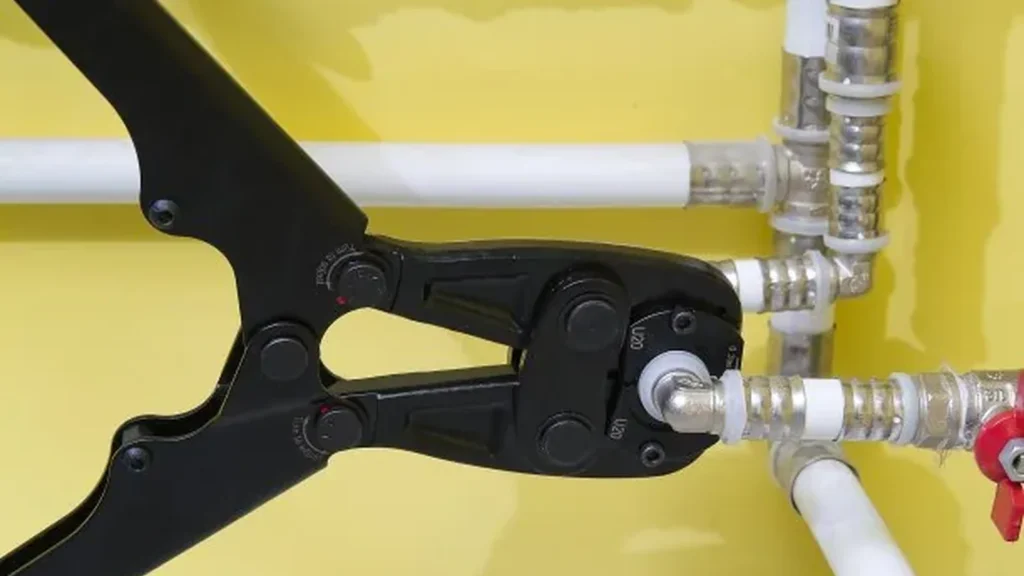
For a press fitting, use the insertion check specified for that exact series: a measured depth mark on some systems, a pipe-viewing window on others. A missing pen line does not automatically condemn a window-based multilayer connection. A visible pipe or an aligned line confirms only the relevant insertion observation; it does not prove that pressing and testing are complete. Hold a completed joint with unresolved evidence for the responsible installer and system manufacturer before it is concealed.
Wavin distinguishes two window locations in its Tigris instructions: K5/M5 use the fix-ring window; K1/M1 use the cap window. Its installation guide checks insertion before pressing and treats leak testing, pressure testing and flushing as later work. That sequence is more useful than asking whether every connection has a black line. First establish what the line or window was meant to show.
Related installation video
IFAN group installation context. It does not establish the insertion or acceptance method for an unidentified fitting; use the exact series instructions cited below. Watch on YouTube.
Identify the fitting before choosing the insertion check
A stainless-steel sleeve does not make a fitting a steel-pipe connection. A radial press fitting for PEX or multilayer composite pipe grips a different pipe construction from a steel press system. Start with the pipe marking and fitting reference, rather than the sleeve’s colour or the shape left by the jaw. Multilayer here means a pipe with bonded plastic and metal layers, such as PEX-AL-PEX.
The Hitze press-fitting category describes PEX and PEX-AL-PEX connections with brass or PPSU bodies and stainless sleeves. That identifies a relevant product family; it does not supply the insertion instructions for an unnamed fitting already on site. Obtain the exact series, size and applicable instructions before treating its window or a measured line as a check.
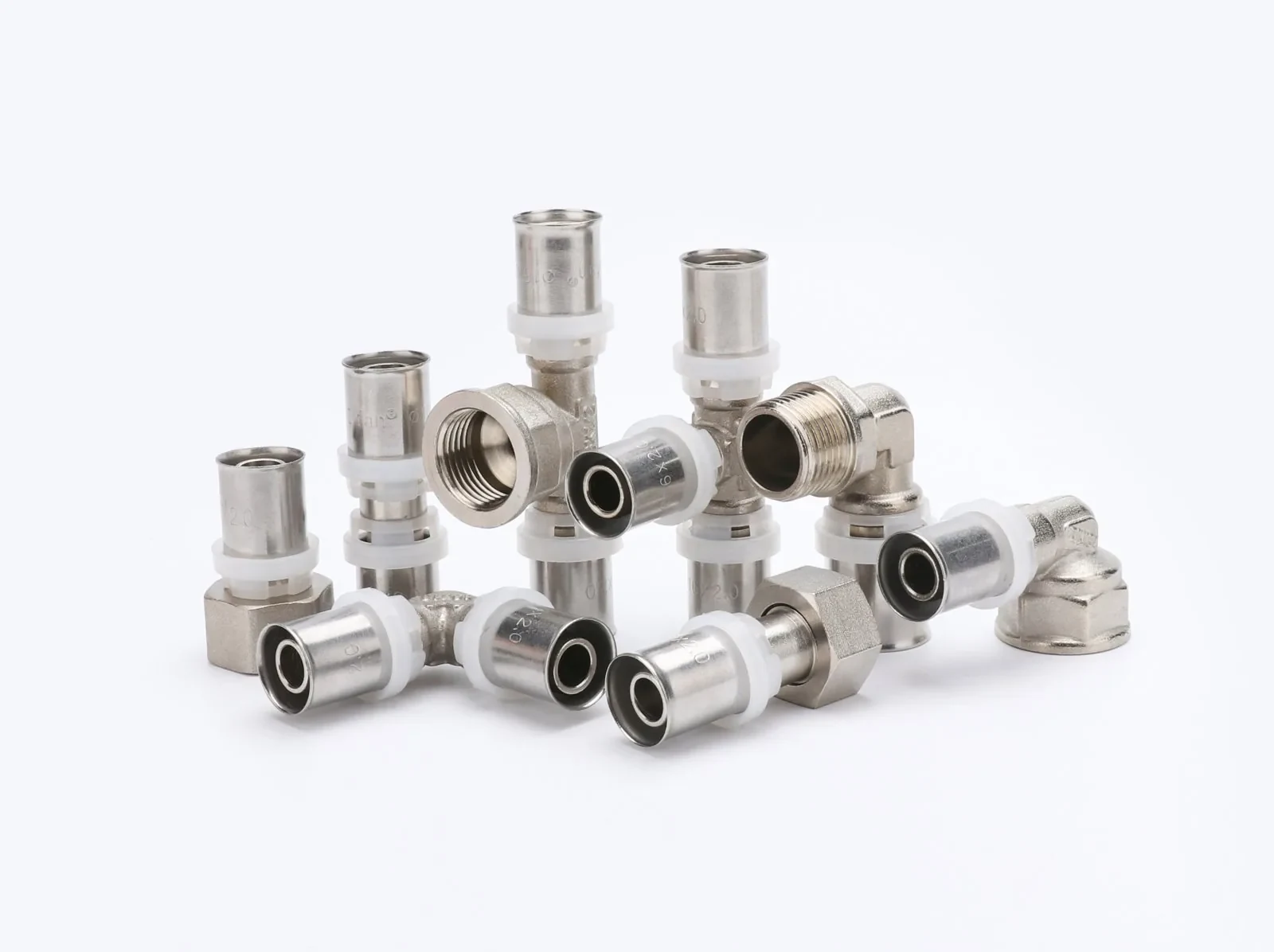
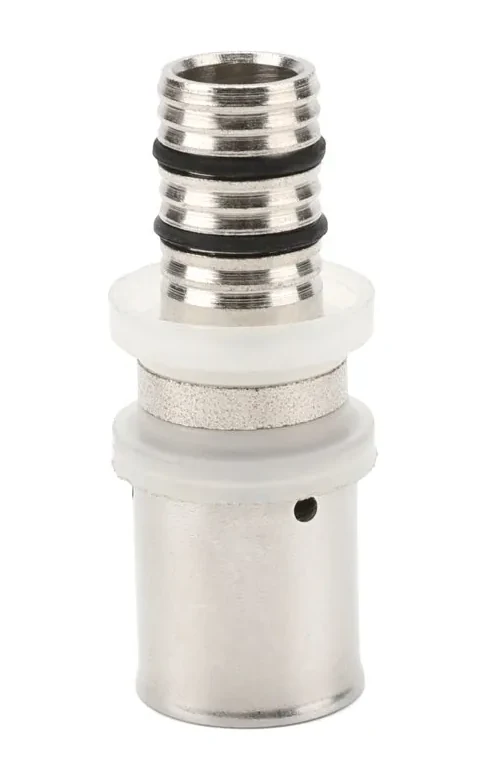
Two named examples explain why the distinction matters. Wavin tells installers to push Tigris K5/M5 pipe to the stop visible in the fix-ring window. For K1/M1, the stop is visible in the cap window. The observation concerns the pipe’s position. It is not an instruction to see a pen line through a sleeve.
By contrast, the Brymec stainless-steel press manual, installation pages 40–41, requires a depth mark before assembly and checks its position at the fitting edge after pressing. That is a named steel system’s procedure. Its dimensions and marking method do not become instructions for a PEX sleeve because both connections use a press tool.
If the fitting cannot be identified, the missing input is the applicable method, not merely a number to measure. Record the pipe marking, fitting markings and size, then obtain the matching instructions. Once identified, compare the actual observation with that method. Until then, a neat-looking joint has no established insertion criterion.
Keep insertion, pressing and testing as separate checks
There are three questions to keep apart: did the pipe reach its specified position, did the correct pressing operation finish, and did the assembly complete the required system test and handover process? A positive answer to one does not fill the other fields in the record.
| Check | Evidence to retain | What it cannot establish alone |
|---|---|---|
| Insertion | Exact series’ specified window view or original depth-mark position | Approved tool combination or completed pressing |
| Pressing | Applicable tool/jaw references and completion checks from the instructions | An unrecorded earlier seating check or the system test result |
| Test and handover | Required test record, inspection findings and responsible sign-off | Permission to ignore a known installation departure |
The table is an inspection-record framework, not a substitute test specification. Wavin’s published sequence provides the reason for separating these stages. A window check precedes pressing; the system still needs the subsequent work. Follow the project’s approved procedure for test medium, pressure, duration and safety controls. This article gives no universal test recipe.
A press impression is also different from an insertion witness mark. The tool leaves evidence of contact with the sleeve; a line placed at a measured depth provides a reference for pipe position. Neither should be relabelled as the other. If tool compatibility is the unresolved issue, use the separate jaw-profile and tool-combination guide. A matching profile letter alone does not complete that check.
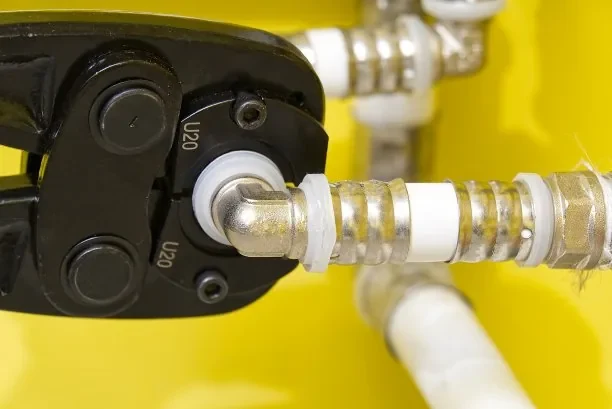
The same separation prevents misuse of a copper-ring GO/NO-GO gauge. That gauge checks a different joining method’s ring dimensions under its own instructions. It does not establish the insertion depth of a multilayer press sleeve. Keep the component and check method together.
Decide what the missing or unclear evidence changes
The stage of work changes the next action. Before pressing, an unresolved insertion observation prevents the crew from advancing to pressing. After pressing, the question becomes how the responsible installer and system manufacturer will resolve the completed joint’s uncertainty. Do not pretend that the earlier opportunity to inspect still exists unchanged.
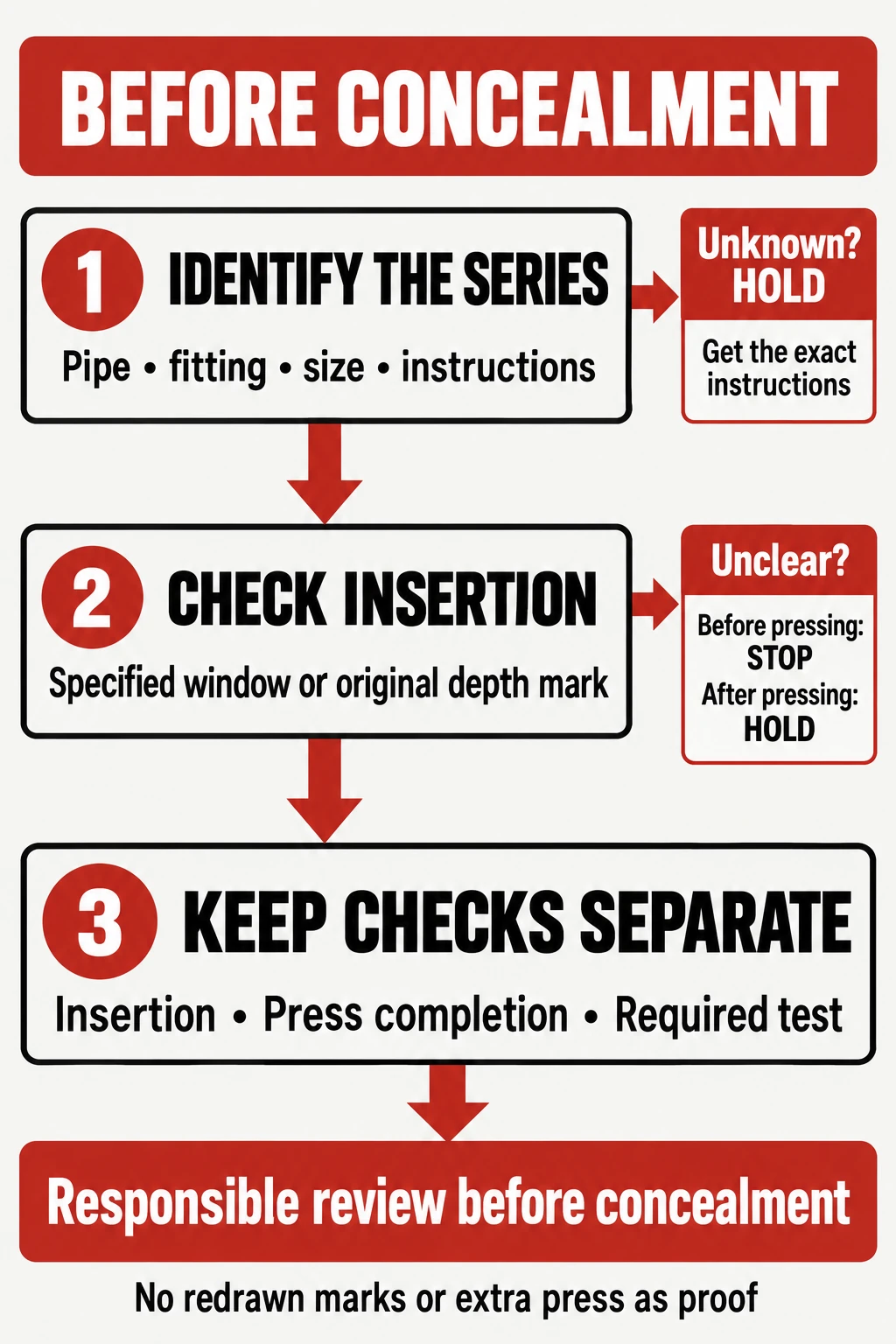
The following cases are teaching examples, not reported Hitze projects or field tests. They apply the named instructions and a conservative hold point; they do not diagnose the hidden condition of a real joint.
| Illustrative observation | Reasoning | Next action |
|---|---|---|
| Unpressed Tigris K5; the installer cannot confirm the pipe at the specified stop/window | The named insertion check is unresolved while assembly is still before pressing. | Do not press. Have the installer resolve preparation, seating or visibility under the applicable instructions, then repeat the insertion check. |
| Named Tigris K5/M5 insertion check was completed and recorded; no separate pen line was drawn | The cited manufacturer method uses the fix-ring window. Absence of an additional line alone does not negate that recorded check. | Retain the window-check evidence. Evaluate pressing and testing separately; this row grants no final concealment approval. |
| Already-pressed, unidentified fitting; no original mark or traceable seating observation | Neither the applicable criterion nor its earlier fulfilment has been established. | Hold before concealment. Identify the system and obtain a documented inspection/remediation decision; do not redraw a line or press again as proof. |
An obscured window is not itself proof of shallow insertion. It may mean the check cannot be made from that viewpoint. The distinction matters: “not visible to the inspector” and “observed short of the specified position” are different findings. Record which one occurred. If the instructions require a view you cannot obtain, leave the insertion result unresolved rather than replacing it with a guess.
Likewise, an unclear or moved original mark after pressing needs review against that system’s instructions. There is no generic acceptable gap in this article. A replacement pen line cannot show where the pipe stood before the tool operated. Preserve the original observation and let the responsible party decide the appropriate inspection or replacement method.
Do not use a second squeeze as an investigation. Wavin’s cited guide says pressing should occur only once per sleeve. Brymec’s named steel procedure also prohibits pressing a fitting more than once and requires replacement after an incomplete cycle. Those instructions belong to their respective systems; they are not permission to invent a repair for an unidentified connection. Record an incomplete cycle as a separate unresolved pressing issue.
Record the check before the joint becomes inaccessible
A useful record links a requirement to an observation. “Looks good” does neither. Use the following sequence while the joint remains accessible, and keep unresolved items open until the responsible person records their decision.
- Identify: location or joint ID; pipe marking and dimensions; fitting maker, series and size; instruction title and revision.
- State the insertion requirement: named window and stop view, or the specified depth-mark method. Record the source, not an assumed universal depth.
- Record the observation: what was seen, at which stage, by whom, and any photograph that actually shows the check. Label a later photo as later evidence.
- Complete the remaining fields: approved tool/attachment references, pressing completion findings, and the applicable test-record reference.
- Close or hold: responsible reviewer, outstanding question, documented action and permission for the next project stage.
For example: “Joint J-07; Tigris K5; manufacturer window check recorded before pressing; no added pen line; pressing completion and system-test references pending.” That is a useful partial record. It does not say “passed” while two later checks remain open. If the fitting series changes, the applicable insertion requirement must be checked again; the previous row cannot be copied forward.
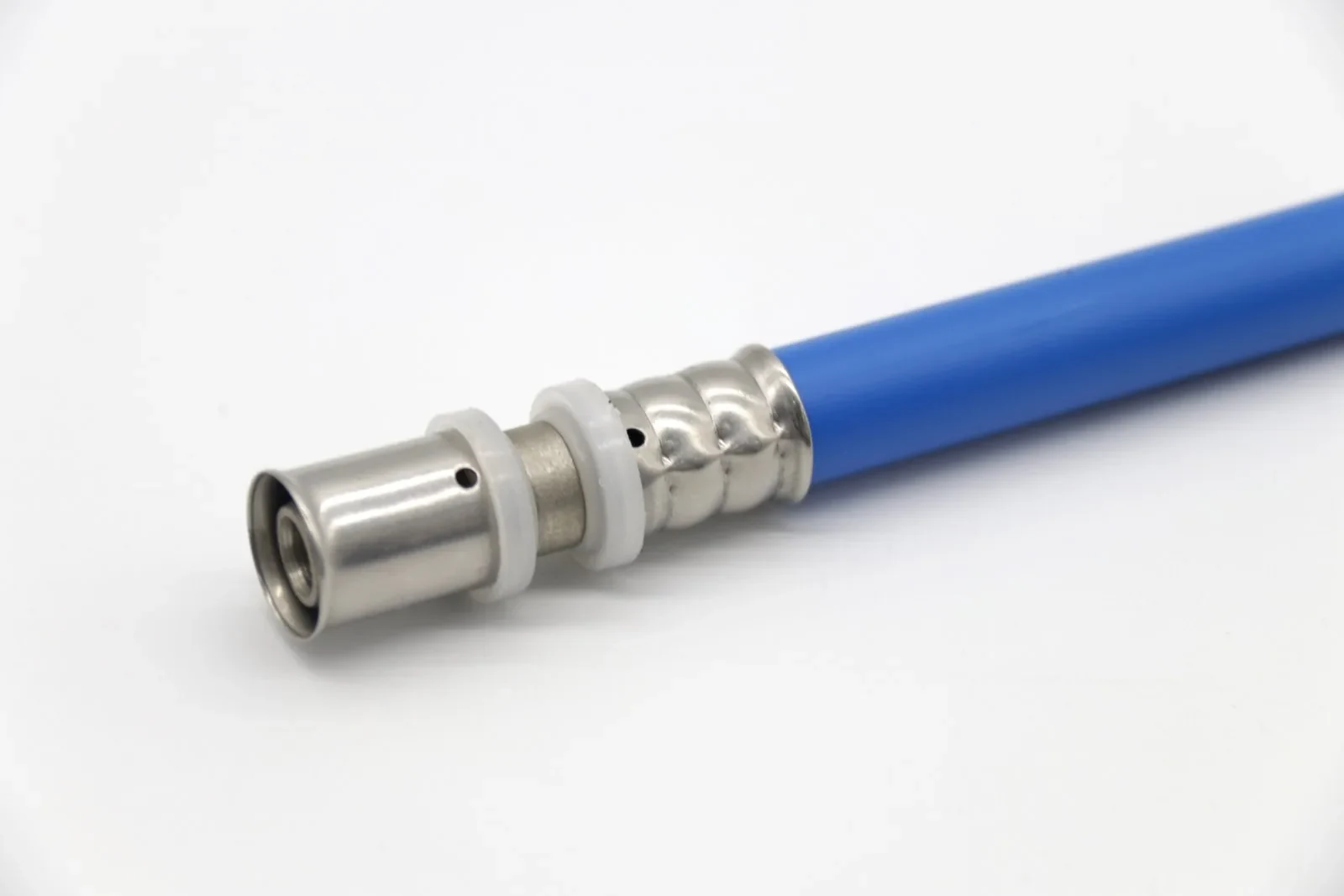
For a new fitting enquiry, use the same identification discipline. Send the project country and service, pipe marking and dimensions, required fitting series or connection type, tool/jaw references and quantities. Ask whether the specified press-fitting system is available. Hitze’s category page is relevant to PEX and multilayer fittings; this article confirms no exact matching SKU, tool approval, certification, stock or remedy for an installed joint.
Conclusion
Prepare the evidence before asking for acceptance or replacement parts: exact system, applicable insertion method, original observation, press-completion record and test reference. An enquiry missing the series cannot establish the right check. A handover missing a required stage cannot be completed by adding a line to the pipe. Keep the unresolved item visible in the record and obtain the responsible decision while the connection remains accessible.
FAQ
Must every press fitting have a pen depth mark?
Use the exact series’ instructions. The cited Tigris systems use a specified window check; the named Brymec steel system requires an original depth mark. Do not transfer one method to another.
Does pipe visible in the window prove that the joint is pressed?
No. It is an insertion observation under the applicable instructions. Pressing completion and the required system tests remain separate checks.
Can a missing original mark be added after pressing?
A new line cannot reconstruct the original seating observation. Record the missing evidence and obtain the system-specific inspection or remediation decision before concealment.
Compiled by the Hitze editorial team from the named public manufacturer instructions. The examples are illustrative, not a site inspection or product test.