Fusion pipe welding is not one process with three brand names. It is three genuinely different physics problems, and the standards treat them that way: socket fusion pushes a pipe into a heated female die, butt fusion melts two square-faced ends against a plate and squeezes them together, and electrofusion runs current through a wire coil moulded into a coupler. Pick the wrong one for the diameter in front of you and you do not get a weaker joint — you often get no valid procedure at all, because the parameter table you would need simply stops.

Key Takeaways
- Socket fusion is the PP-R method to 63 mm. DVS 2207-11 as published by SIMONA tabulates PP-R socket parameters to 125 mm, but the Hitze PP-R fitting range is concentrated at OD 20–63 mm, and above 63 mm the fusion force needed stops being a hand operation.
- Heater plate setpoints differ by material and method: PP-R socket fusion runs 260 ± 10 °C, PP butt fusion 210 ± 10 °C, PE socket fusion 250–270 °C, PE butt fusion 200–220 °C to DVS 2207-1 and 225 ± 10 °C to ISO 21307.
- Butt fusion is timed by wall thickness, not diameter. DVS 2207-1 sets heating time at 10 × wall thickness in seconds, so a 630 mm PE main with a 57.3 mm wall needs 688–860 s of heat soak and 42 minutes of cooling in the machine.
- Electrofusion is the only method that tolerates a trench. A 110 mm coupler fuses in 160 s and cools 10 minutes, and it is the route PIPA POP003 recommends when wall thicknesses do not match.
- Consumable cost per joint is where the methods separate hardest: a butt-fused PE joint consumes no fitting at all, while a 4-inch IPS electrofusion coupling lists at 41.80 USD and an 8-inch at 162.00 USD.
- Cooling time is not padding. ISO 21307 quotes it at 23 ± 2 °C ambient and tells you to lengthen it roughly 1 % per 1 °C — a 5 °C winter morning adds about 18 % to every butt joint on site.
- Butt fusion needs matched diameter and wall thickness. Different SDRs meeting at a joint is a specification error, not a site problem to weld through.
The three fusion methods and what actually separates them
Every fusion method does the same chemistry — it takes two polyolefin surfaces above their melt temperature and holds them together while the polymer chains re-entangle across the interface. What differs is how heat gets in, where the melt goes, and what is holding the joint while it cools. Those three differences are what decide the method for you, and they map onto three completely separate parameter regimes.
Socket fusion heats the outside of the pipe and the inside of a fitting socket at the same time, using a two-sided die. The pipe is then pushed into the socket to a controlled depth. The joint is an overlap — the fitting stays on the pipe permanently and carries the load. Because heat travels inward from the pipe surface, the process is fast and diameter-driven: Aquatherm publishes 5 s of heating at 20 mm and 50 s at 110 mm, with welding depth rising from 14.5 mm to 37.0 mm across that same span. That short cycle is exactly why socket fusion dominates interior PP-R plumbing.
Butt fusion is the opposite. It faces both pipe ends square, heats them against a flat plate, then forces them together so molten material is extruded outward into a bead. There is no fitting. The joint is the pipe, which is why a correctly butt-fused main has no internal restriction and nothing to leak around. The price is that heat must travel through the full wall, so time scales with wall thickness rather than diameter. DVS 2207-1 puts this plainly: heating time is 10 × wall thickness in seconds, and joining pressure is held at 0.15 N/mm² ± 0.01 through the cool-down.
Electrofusion moves the heat source into the fitting
Electrofusion abandons the external heater entirely. The coupler arrives with a resistance wire moulded into its bore; a control unit reads the fitting’s barcode and drives a defined current for a defined time. Nothing has to be clamped in alignment by a machine frame, and nothing has to be pushed. That single property is why electrofusion survives in a trench, against a wall, or on a live tie-in where you physically cannot get a butt-fusion carriage around the pipe. The trade is that you buy a fitting for every joint, and the fitting is not cheap.
There is a fourth distinction that catches specifiers out. Butt fusion and socket fusion are procedures you control; electrofusion is a procedure the fitting controls. An electrofusion coupler will run its programmed cycle regardless of whether the pipe underneath was scraped properly, which moves the entire failure risk into surface preparation. Butt fusion, by contrast, shows you its bead — you can see whether the weld took.
The selection matrix: which method is valid for which material and diameter
This is the decision the rest of the article serves. Read it as a validity map, not a preference list — where a cell says a method is out of scope, it means the published parameter table does not extend there, and welding anyway means welding without a procedure.
| Material and size | Method to specify | Governing parameter set |
|---|---|---|
| PP-R, OD 20–63 mm | Socket fusion | DVS 2207-11, 260 ± 10 °C |
| PP-R, OD 75–125 mm | Socket fusion with a guided jig, or butt fusion | DVS 2207-11 socket table, or PP butt at 210 ± 10 °C |
| PP-R above 125 mm | Butt fusion | DVS 2207-11 butt, wall-thickness driven |
| PE / HDPE, below 63 mm | Electrofusion preferred; socket possible | DVS 2207-1 socket table, 250–270 °C |
| PE / HDPE, 63–1000 mm, open cut | Butt fusion | ISO 21307:2017 or ASTM F2620 |
| PE / HDPE, in-trench, repairs and tie-ins | Electrofusion | Fitting barcode; control unit to ISO 12176-2 |
| Any PE joint with mismatched wall thickness | Electrofusion or mechanical fitting | PIPA POP003 Issue 8.1, March 2025 |
The logic behind those rows is consistent. PP-R to 63 mm goes socket because it is the fastest cycle, runs on hand tools, and is the range where PP-R fittings actually exist as a catalogue item. HDPE from 63 mm upward in open cut goes butt because no fitting is consumed and the joint is full-bore. Anything in a trench goes electrofusion because a butt carriage needs clearance around the pipe and travel to pull the ends together, and a trench gives you neither.
Small-bore PE deserves its own note. DVS 2207-1 flags thin-wall SDR 17 and SDR 17.6 socket welds as not recommended outright, because the wall is too thin to carry a socket weld. That is why electrofusion, not socket fusion, is the sensible default below 63 mm on PE.
Two rows in that table are the ones people argue with. The first is the PP-R 63 mm line. Nothing in DVS 2207-11 forbids socket welding a 110 mm PP-R pipe — SIMONA’s reproduction of the table runs to 125 mm with a 50 s heat and 8 min cool at 110 mm. The constraint is mechanical, not thermal: pushing a 110 mm pipe into a 37 mm-deep molten socket squarely, in one continuous motion, is not something a hand tool does repeatably.
That is why the Hitze PP-R pipe and fitting range concentrates its fittings at OD 20–63 mm even though the pipe itself runs to OD 110 mm. The full PP-R socket table, including the note that thin-wall sizes are not recommended, is reproduced in SIMONA’s welding manual.
The second is the mismatched-wall row. PIPA POP003 states that as a default only pipes and fittings of the same diameter and wall thickness should be butt welded together, and directs wall-thickness variation toward electrofusion, mechanical fittings, or the manufacturer. If your submittal has SDR 11 meeting SDR 17 at a butt joint, that is a design error to fix at the drawing, not a welding problem to solve in the trench. Getting the SDR and PN classes right across the size schedule is what prevents the situation arising.
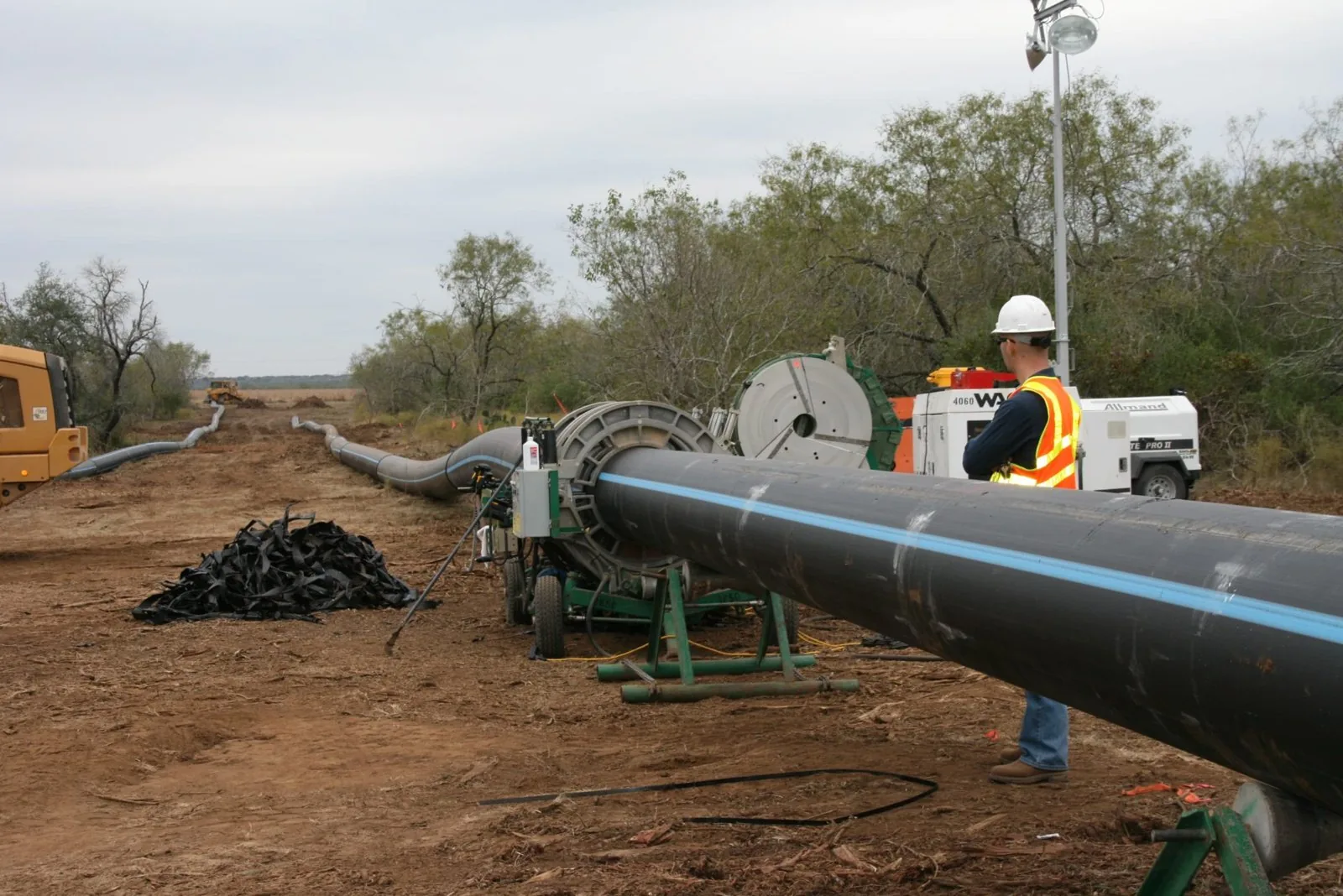
Heater plate setpoints: the number most specifications get wrong
There is no single “fusion temperature”. There are four, and they are far enough apart that using the wrong one degrades the joint rather than simply slowing it down. A crew that carries one heater setting from a PP-R riser job to an HDPE main will be running roughly 50 °C hot.
| Material and method | Heater setpoint |
|---|---|
| PP-R / PP-H socket fusion | 260 ± 10 °C |
| PP butt fusion | 210 ± 10 °C (410 ± 18 °F) |
| PE-HD socket fusion | 250–270 °C |
| PE-HD butt fusion (German practice) | 200–220 °C |
| PE butt fusion (ISO practice) | 225 ± 10 °C |
| PE butt fusion (North American practice) | 400–450 °F (204–232 °C) |
Those six figures come from four documents, and it is worth knowing which, because they are what a submittal reviewer will ask for. The PP-R socket and PP butt figures are DVS 2207-11, reproduced respectively in SIMONA’s 10/2023 welding manual and Aquatherm’s bulletin 202008A. Both PE-HD figures are DVS 2207-1 — the socket value from Table 5, the butt value from clause 4.1.3. The 225 ± 10 °C is ISO 21307:2017 Table 1, and the Fahrenheit band is ASTM F2620 practice as published in Dura-Line’s heat fusion joining procedures.
Notice the direction of the gap. PP-R socket fusion runs the hottest plate of the six at 260 °C, and PE butt fusion the coolest at 200 °C. That is not inconsistency between standards — it reflects that a socket weld heats a thin surface layer for a few seconds while a butt weld soaks heat through a full wall for minutes. Hold a butt plate at socket temperature and you degrade the melt surface before the core is warm.
DVS 2207-1 adds a rule that rarely makes it onto a method statement: within the 200–220 °C butt band, use the upper limit for thinner walls and the lower limit for thicker ones, and choose the upper temperature for PE 100 as well. So a specification that prints a single butt-fusion temperature for a project running 90 mm through 400 mm has already lost half the standard’s instruction.
Cold weather is a parameter, not an inconvenience
ISO 21307 quotes its cooling times at an ambient of 23 ± 2 °C and instructs that they be lengthened by approximately 1 % per 1 °C in colder conditions. On a 5 °C winter morning that is about 18 % added to every butt joint — on a 110 mm main whose in-machine cooling is 13 minutes, roughly two and a half minutes per joint that no programme allowed for. Aquatherm handles the same problem from the socket side by publishing separate longer heating times for ambients below +5 °C: 36 s at 63 mm against the DVS figure of 24 s, a 50 % increase.
These figures also move when a standard is revised. The same manufacturer’s technical bulletin on the 2017 DVS 2207-11 revision records butt-fusion heat time at 4.5 mm wall falling from 135 s to 53 s, a 61 % reduction. If your method statement was written against the 2008 edition, it is costing you time per joint that the current standard no longer asks for.
Crews under schedule pressure compress cooling before they compress heating, because heating is visibly enforced by the tool and cooling is not. That is the single most common way a correctly-parameterised fusion joint still fails.
What each joint costs in time, labour and consumables
Cycle time is the part of fusion cost that estimators consistently underprice, because catalogue heating times look trivial and the cooling times sit in a footnote. The table below is built from the published parameter sets — heating plus changeover plus cooling to the point the joint may be handled — so the figures are machine-cycle minimums, not crew productivity. Add facing, scraping, clamping and alignment on top.
| Joint | Heat time | Cool before handling | Consumable per joint |
|---|---|---|---|
| PP-R socket, 20 mm | 5 s | 2 min | One PP-R fitting; no separate weld consumable |
| PP-R socket, 63 mm | 24 s | 6 min | One PP-R fitting; no separate weld consumable |
| PP-R socket, 110 mm | 50 s | 8 min | One PP-R fitting, plus a guided jig on hire or owned |
| PE butt, 110 mm (10.0 mm wall) | 120–150 s | 13 min in machine | None — no fitting is consumed |
| PE butt, 315 mm (28.6 mm wall) | 343–429 s | 18 min in machine | None — no fitting is consumed |
| PE butt, 630 mm (57.3 mm wall) | 688–860 s | 42 min in machine | None — no fitting is consumed |
| PE electrofusion, 63 mm | 35 s | 3 min | Coupler: 20.00 USD at 2 in IPS list, 2026-07-26 |
| PE electrofusion, 110 mm | 160 s | 10 min | Coupler: 41.80 USD at 4 in IPS list, 2026-07-26 |
| PE electrofusion, 180 mm | 360 s | 20 min | Coupler: 103.70 USD at 6 in IPS list, 2026-07-26 |
| PE electrofusion, 250 mm | 900 s | 30 min | Coupler: 162.00 USD at 8 in IPS list, 2026-07-26 |
Read the consumable column and the economic logic of the three methods falls out immediately. Butt fusion has a consumable cost of zero per joint — you are welding pipe to pipe and buying nothing. Electrofusion charges you between 20.00 and 162.00 USD in fitting cost for every single joint, at published US list prices checked on 26 July 2026, before any labour. On a 400-joint HDPE distribution run, choosing electrofusion by default rather than by necessity is a five-figure consumable decision.
Machine cost runs the other way and partly cancels it. An electrofusion control unit is a box you carry; a butt-fusion machine for 630 mm pipe is plant that needs transport, a generator, and a crew trained on it. One honest gap: none of the major certified rental fleets publishes a daily rate for butt-fusion machines — ISCO, IMSCO, SECOR and Coastal Resource Group all quote on request only. We have deliberately left that as a stated gap rather than printing an invented figure; get it quoted for your actual size range and duration, because it is the input that decides the crossover.
The labour line nobody budgets
Butt fusion carries a competence cost that socket fusion does not. PIPA POP003 recommends that welding supervisors and operators be qualified and regularly recertified to PMBWELD301E, typically every 2–3 years, and that a project welding supervisor be trained by a registered training organisation with at least three years of relevant experience on pipe of similar or larger size. Budget recertification as a recurring line, not a one-off induction — a lapsed certificate can stop a joint being accepted on a water-authority job regardless of how good the weld is.
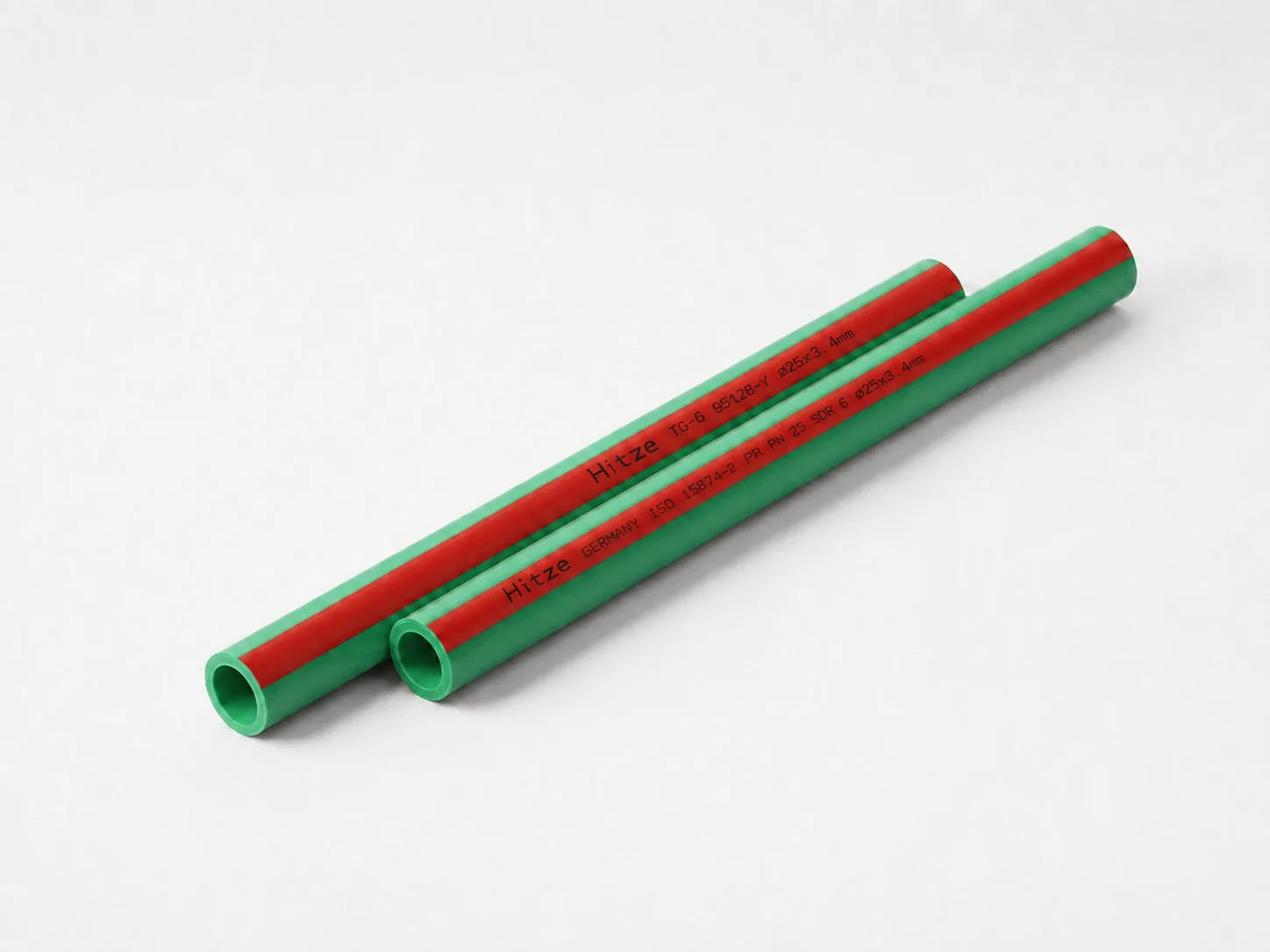
HDPE pipe fusion welding: why the trench decides the method
On HDPE the material question is settled — it fuses well by every method — so the decision moves entirely to access and geometry. A butt-fusion machine needs to get its carriage around the pipe and needs travel to pull the ends together. In a 900 mm-wide trench against an existing main, neither is available. That is the whole reason electrofusion exists as a parallel method rather than a cheaper alternative.
The efficient pattern on a distribution job is to butt-fuse long strings above ground where the machine works freely, lower them in, then electrofuse the tie-ins and the closure joints where the machine cannot follow. That keeps the expensive couplers on the handful of joints that genuinely need them rather than on all four hundred. If you are stocking for both duties, our HDPE and PP pipeline range sits alongside the PP-R system so a single order can cover the buried main and the building above it.
Three butt-fusion procedures, not one
Buyers reading an ISO-referenced spec are often surprised that ISO 21307:2017 defines three distinct butt fusion jointing procedures rather than one: single low-pressure, dual low-pressure and single high-pressure. They are not interchangeable paperwork variants — they run at materially different pressures. PIPA POP003 Issue 8.1 records single low-pressure holding 0.15 MPa through fusion and cooling; dual low-pressure fusing at the same pressure but dropping to 0.025 MPa during cooling, used chiefly by the UK water industry above 22 mm wall; and single high-pressure running 0.517 MPa, roughly three times the low-pressure figure.
The higher pressure extrudes more molten material out of the weld zone, which is what allows single high-pressure to claim a reduced cooling time. There is a documented caveat worth carrying into a specification decision: PIPA cites the 2008–2011 European evaluation reported at Plastics Pipes XVI in Barcelona, which concluded that good welds are obtainable by all three procedures up to 70 mm wall thickness, but that single high-pressure weld test samples are less ductile in appearance. If your project’s acceptance regime leans on visual assessment of test specimens, that finding matters before you nominate the procedure.
Our position: on European or ISO-referenced work, specify single low-pressure unless the client’s own standard says otherwise. It is the procedure with the widest installed base of trained operators and the least ambiguity in visual weld assessment, and the cooling time it costs you is a known quantity you can programme around.
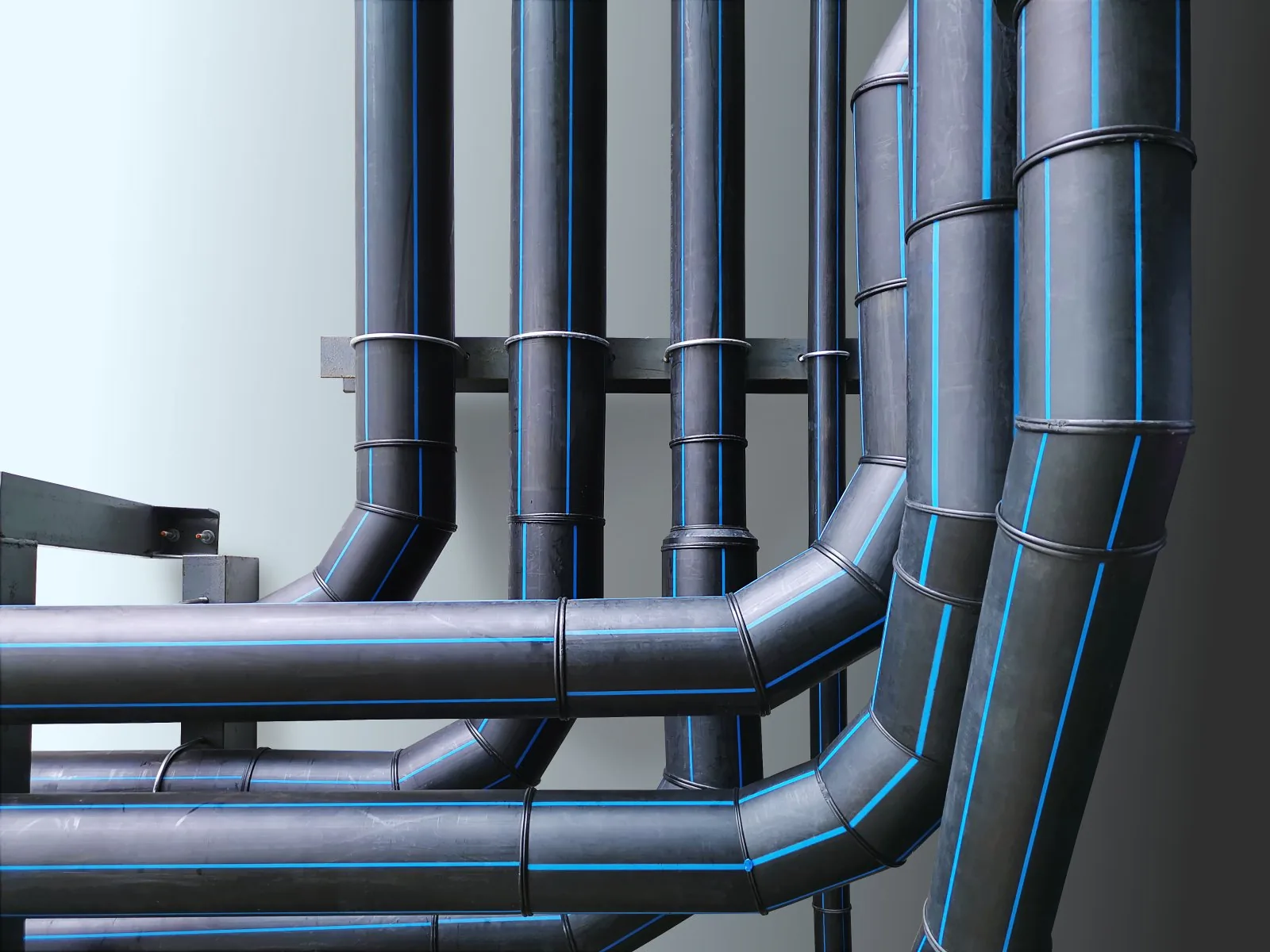
Where electrofusion quietly fails
Electrofusion’s convenience hides its one real weakness: the control unit cannot see the pipe surface. It reads the coupler’s barcode, delivers the programmed energy, and reports a successful cycle whether or not the oxidised skin was scraped off the pipe first. Aquatherm’s published peeling-depth figures give the scale of preparation required — 39 mm at 20 mm diameter rising to 85 mm at 110 mm for electro-socket welding, roughly double the socket-fusion peel depth at the same size.
If a supplier or subcontractor tells you electrofusion is the low-skill option, treat that as a warning rather than a reassurance. It is the low-*force* option. The skill simply moved from operating a machine to preparing a surface, and unlike a butt weld, a bad electrofusion joint produces no visible bead to inspect.
Which fusion method should you choose?
Three rules resolve the great majority of real projects, and they are worth stating as positions rather than options.
For PP-R plumbing to 63 mm, socket fusion wins and nothing else is close. A 20 mm joint takes 5 s of heat and 2 min of cooling, needs one operator and a hand tool, and consumes no dedicated weld consumable beyond the fitting you were buying anyway. Specifying electrofusion for interior PP-R risers adds a coupler cost per joint to solve an access problem you do not have.
For HDPE above 63 mm in open cut, butt fusion wins on consumable cost alone. Zero fitting cost per joint against 41.80 USD for a 4-inch coupler compounds fast across a distribution run, and the resulting joint is full-bore with no internal step. Accept the cooling time as the price and programme it honestly.
For anything in a trench, any repair, any tie-in, and any joint where wall thicknesses do not match, electrofusion wins by default. Not because it is better, but because the alternatives are not physically available. Paying 162.00 USD for an 8-inch coupler on a closure joint is cheap compared with excavating enough room to swing a butt carriage.
| Method | Best for | Not ideal for |
|---|---|---|
| Socket fusion | PP-R interior plumbing and risers to 63 mm; high joint counts; small crews | Buried mains; thin-wall SDR 17 PE; anything needing full bore |
| Butt fusion | HDPE mains 63 mm and up in open cut; long strings; consumable-sensitive budgets | Confined trenches; mismatched walls; jobs without certified operators |
| Electrofusion | In-trench joints, repairs, tie-ins, wall-thickness mismatch, tight access | High-count runs where consumable cost dominates; poorly supervised surface prep |
One caveat that applies across all three: a fused joint is only as compatible as the components meeting inside it. Mixing pipe from one producer with fittings from another puts two different resin formulations and two different dimensional tolerance regimes into the same melt, which is a documented route to warranty disputes when a joint later leaks.
What we check before a fused system leaves the plant
A fusion method is only as good as the dimensional consistency of what goes into it. Socket fusion in particular is unforgiving of ovality, because an out-of-round pipe cannot seat evenly in a die that was machined round. Our in-house sequence targets exactly the properties that fusion depends on.
- Resin verified before extrusion: the material is confirmed at intake, because fusion parameter tables are material-specific and a substituted grade invalidates the schedule the installer is working to.
- OD, wall thickness at multiple points, and ovality: checked against the S-series tables. Wall thickness is the direct input to every butt-fusion time, and ovality is what decides whether a socket seats.
- Fused joint assemblies pressure-tested, not just pipe: pipes, fittings and fused joint assemblies go onto in-house hydrostatic benches against DIN and EN ISO thresholds — the joint is tested as a joint, which is where fusion problems actually show.
- Declared standards held per range: the PP-R lines are declared to DIN 8077/8078 and EN ISO 15874 with SKZ testing, and the drinking-water scope is supported by DVGW type examination, WRAS material approval and an NSF laboratory BS 6920 report for hot (≤65 °C) and cold contact.
Two numbers from the catalogue change a contractor’s jointing decision directly, and they are the reason the selection matrix above puts PP-R socket fusion where it does. The PP-R pipe range spans OD 20–110 mm with wall thickness from 3.4 mm to 18.3 mm and internal diameter from 13.2 mm to 73.4 mm. That 18.3 mm wall at the top of the range is what makes a butt weld there a multi-minute cooling operation rather than a socket push.
The second number is pressure class. Three PP-R constructions survive the same fusion process but do not carry the same rating: self-cleaning ceramic-core PP-R and glass-fibre-reinforced PPR-FB-PPR sit at class 1 10 bar / class 2 8 bar, while PPR-AL-PPR aluminium composite sits at class 1 6 bar / class 2 4 bar. Specifying a jointing method without checking which construction is under it is how a 10 bar assumption ends up on a 6 bar line.
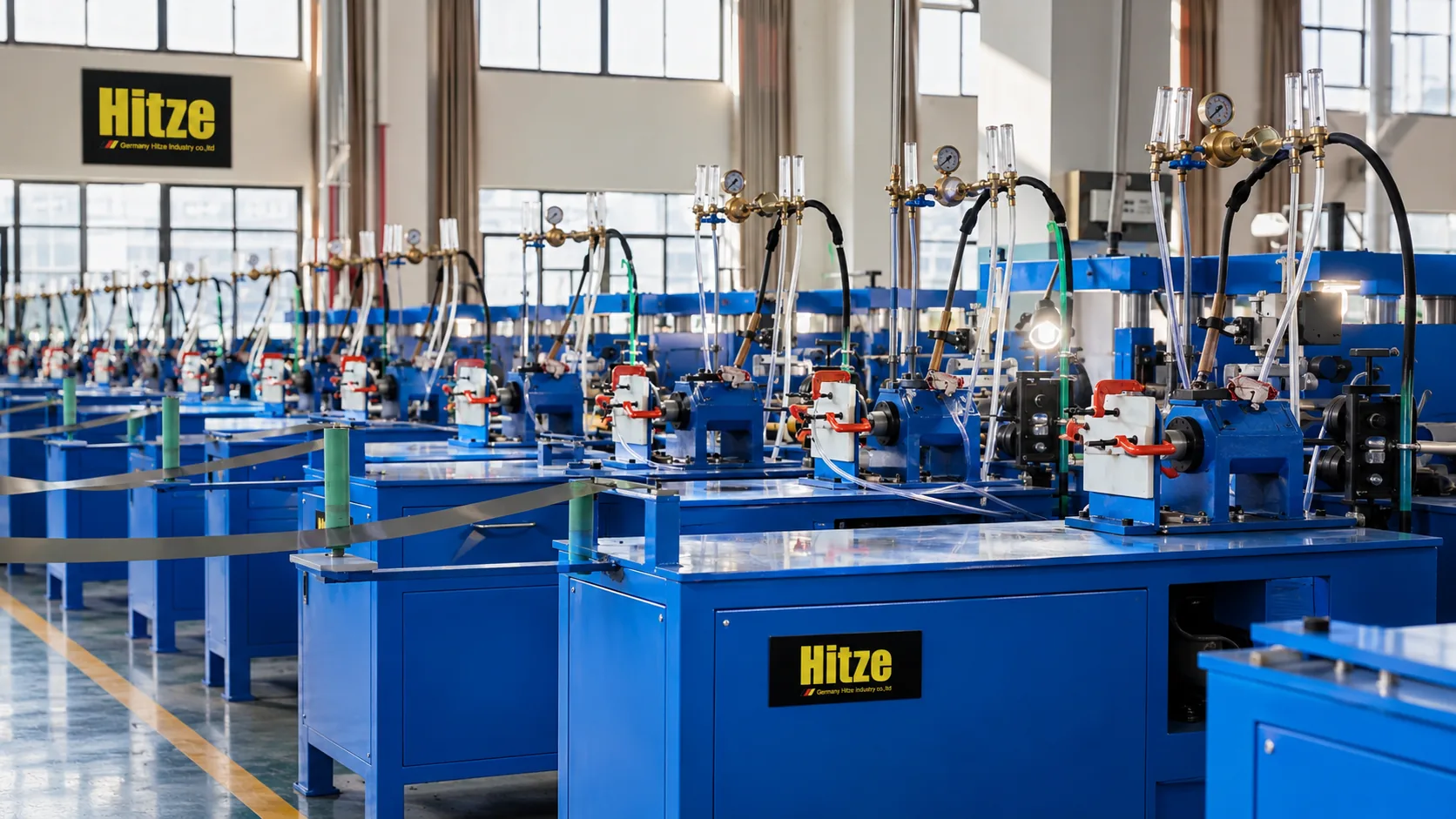
On credentials, we state scope rather than serial numbers. No expiry date exists in our first-party documentation for the certifications above, so certificate numbers are issued per enquiry against the specific models a project covers rather than printed on a web page where they could imply a currency we have not evidenced. If a supplier prints a certificate number with no covered-model list and no expiry beside it, ask for both before you rely on it. Our full quality control procedure sets out the bench sequence in more detail.
A worked scenario: a mixed PP-R and HDPE site
Take an illustrative mid-rise residential job: a buried 180 mm HDPE incoming main, a plant room, and PP-R risers and branches through the building at 63 mm down to 20 mm. Three methods appear on one site, and the method statement has to justify each.
The 180 mm HDPE main gets butt fused above ground in long strings. Wall thickness drives the cycle, so the crew works to heat-soak and cooling times from the wall dimension rather than the 180 mm label.
Where the main ties into the existing network in the trench, butt fusion is not available — there is no travel and no room for the carriage. Those joints go electrofusion, at 360 s of fusion and 20 min of cooling per 180 mm coupler, with a consumable cost around the 103.70 USD list level for a 6-inch fitting. Four tie-in joints is roughly 415 USD in couplers, and it is money well spent because the alternative is excavation.
Inside the building every PP-R joint is socket fusion at 260 ± 10 °C. A 63 mm branch takes 24 s of heat and 6 min before handling; a 20 mm final connection takes 5 s and 2 min. Assume 300 PP-R joints across the risers and branches — at those cycle times the machine-cycle burden is minutes per joint, and the schedule risk is not the welding but whether the crew respects cooling when the programme tightens. That is the line to police on site.
The one decision that costs money if you get it wrong is the plant-room transition. PP-R at 110 mm can be socket fused with a guided jig, but the insertion force is beyond hand tooling, so either the jig is on the equipment list from day one or the joints get made badly by a crew improvising. Put it in the tender. A jig that shows up in week six has already produced a fortnight of joints nobody wants to guarantee. Before that point, confirm the fitting pressure rating rather than the pipe rating sets the system limit — on a fused system the joint is the governing component.
For the step-by-step socket procedure itself — preparation, insertion depth, the eight controlled steps and the inspection that follows — the dedicated guide to welding PP-R pipe correctly on site covers the execution this article deliberately does not repeat. If the question is which machine to put in the crew’s hands, the PP-R welding machine comparison covers handheld, bench and guided-jig equipment.
Conclusion
The method is decided by material, diameter and access, in that order, and the published parameter tables tell you where each one stops. Socket fusion owns PP-R to 63 mm, butt fusion owns HDPE above it wherever a machine can be rigged, and electrofusion owns everything a machine cannot reach. Getting this right at specification stage costs nothing; getting it wrong shows up as either a five-figure coupler bill or a joint made outside any procedure.
If you are specifying or stocking a PP-R system and want the size, class and fitting schedule checked against the jointing method your crews actually use, you can review the range and raise the specifics that matter for your market.
Frequently Asked Questions
Can you butt fuse PP-R to HDPE?
No. Fusion requires compatible polymers, and polypropylene and polyethylene do not form a reliable homogeneous weld with each other. Join dissimilar materials with a mechanical or flanged transition fitting instead.
Does socket fusion reduce the internal bore?
Yes. The pipe seats inside the fitting socket, so the fitting’s bore governs. Butt fusion produces no internal step, which is why full-bore hydraulic designs on larger diameters favour it.
How long before a fused joint can be pressure tested?
Cooling times in the tables are minimums before handling, not before testing. Follow the pipe manufacturer’s stated interval before applying test pressure, and lengthen it in cold ambient conditions.
Is electrofusion stronger than butt fusion?
Neither is inherently stronger when both are made correctly to procedure. They fail differently: butt fusion shows a visible bead you can assess, while an electrofusion joint hides its interface inside the coupler.
Can fusion welding be done in the rain?
Not without shelter. Water on a heated face quenches the melt and wind strips heat during changeover. Tent the fusion area and follow the manufacturer’s cold and wet weather guidance.
Which standards govern fusion welding of plastic pipe?
DVS 2207-1 covers PE, DVS 2207-11 covers PP including PP-R, ISO 21307:2017 defines three PE butt fusion procedures, and ASTM F2620 is the common North American practice for polyolefin heat fusion.