Key Takeaways
- DIN 4726 is the German heating-pipe standard that caps how much oxygen may diffuse through a plastic pipe wall — no more than 0.32 mg/(m²·day) at 40 °C (or 3.60 mg/(m²·day) at 80 °C) to be classed oxygen-tight.
- Non-barrier pipe corrodes ferrous parts. Oxygen diffuses through the wall by concentration gradient — pressure doesn’t stop it — and rusts your cast-iron pump, boiler heat exchanger and steel expansion tank from the inside out.
- The rule is closed-loop, not “all heating pipe.” Sealed hydronic loops with iron/steel components need a barrier; open-loop and potable runs don’t — and barrier heating pipe is not the potable grade.
- Two ways to comply: an EVOH barrier layer co-extruded into PE-RT/PEX, or a welded aluminium core (PEX-AL-PEX). Both meet DIN 4726; they behave differently on the coil.
- Hitze builds both — PE-RT with a DIN 4726 oxygen barrier and 5-layer PEX-AL-PEX with a butt-welded aluminium core — and its PE-Xb heating pipe is SKZ-tested in Germany.
Here is the failure nobody photographs: a radiant floor that heats perfectly for three winters, then a circulator pump seizes, the boiler heat exchanger starts weeping rust, and the system water comes out looking like weak tea. The installer gets the callback. The pipe looks fine — it is fine. What killed the metal was oxygen that walked straight through the pipe wall, molecule by molecule, the entire time. That is oxygen-diffusion corrosion, and DIN 4726 exists specifically to stop it.
If you install hydronic radiant heating, this is the one spec you cannot get wrong, because the consequence shows up years after you’ve been paid and long after the pipe is buried in screed. This explainer covers what the standard actually requires, why the barrier matters at a physics level, where you genuinely don’t need one, and how to read the pipe print so you never staple down the wrong coil.
What DIN 4726 actually is (and the number that matters)
DIN 4726 is the German standard titled “Warm water surface heating systems and radiator connecting systems.” Its job is to define the requirements for plastic pipes used in hydronic heating — dimensions, temperature/pressure classes, and, most importantly for this discussion, oxygen tightness. When a pipe is described as “DIN 4726 oxygen barrier,” it means the wall has been engineered and verified to keep oxygen out of the circulating water.
The number to remember: to be classed oxygen-tight, a pipe’s oxygen permeation must not exceed 0.32 mg per m² per day at 40 °C (application class 4), or 3.60 mg per m² per day at 80 °C, as verified under the DIN CERTCO / DIN-Geprüft scheme run by the TÜV Rheinland Group. You’ll also see the older, plainer framing of the same intent — no more than roughly one-tenth of a milligram of oxygen per litre of water per day at 40 °C. Both describe the same target: keep the loop close to airtight so the ferrous metal inside it never gets fed a fresh supply of oxygen.
That threshold isn’t arbitrary. It was set at roughly the level where a hydronic system with iron in it can tolerate the corrosion — think of it as budgeting the tiny amount of oxygen the system can neutralise without accumulating rust faster than it can cope. Cross that line with a non-barrier pipe and you’re no longer inside the budget; you’re on a slow, permanent corrosion clock.
Why oxygen gets in — and why pressure won’t stop it
The counter-intuitive part is that oxygen ingress has nothing to do with your system pressure or whether the loop is “sealed.” Oxygen crosses a plain plastic pipe wall by diffusion: molecules move from the high-concentration side (the air in your plant room, roughly 21% oxygen) to the low-concentration side (heating water that has already given up its dissolved oxygen to the first round of corrosion). The plastic behaves like a semi-permeable membrane. You can hold 1.5 bar in the loop all day; the oxygen doesn’t care about pressure, only about the concentration gradient.
Two things make it worse. First, temperature: hotter water accelerates diffusion, so an 80 °C baseboard or snowmelt loop pulls oxygen through the wall far faster than a low-temperature 35 °C slab — which is exactly why the standard specifies a stricter absolute limit at 40 °C and a proportionally higher one at 80 °C. Second, the corrosion is self-sustaining: every molecule of oxygen that gets in is consumed by rusting iron, which lowers the in-water concentration again, which keeps the gradient — and the diffusion — running indefinitely. It never reaches equilibrium and stops. It just keeps eating metal.
The victims are always the ferrous components, never the plastic. Cast-iron circulator pump bodies, steel boiler heat exchangers, diaphragm expansion tanks, air separators and iron fill valves corrode preferentially — as the old hydronic hands put it, “iron gets the worst of it.” The rust doesn’t stay put; it circulates as magnetite sludge that scours pump impellers, jams zone-valve tolerances and settles in the lowest, slowest parts of the system. By the time the water is discoloured, the damage has been accumulating for years.
Where you need a barrier — and where you honestly don’t
This is where a lot of field confusion lives, so let’s be precise. The barrier matters when the same water recirculates past ferrous metal in a closed loop. It does nothing useful when the water is constantly replaced with fresh, already-oxygenated mains water. Getting this wrong in either direction costs money: skip the barrier where you need it and you rust the plant; specify it where you don’t and you’ve paid for a feature that does nothing, sometimes in a grade that isn’t even potable-approved.
| Application | Barrier needed? | Why |
|---|---|---|
| Radiant floor / slab heating | Yes | Closed loop feeding a boiler + iron pump; DIN 4726 barrier required. |
| Hydronic baseboard / fan-coil | Yes | Hot recirculating water past ferrous parts — highest diffusion rate. |
| Snowmelt / ice-rink loops | Yes | Long buried runs, ferrous mechanical room; barrier + glycol. |
| Potable hot & cold supply | No | Mains water is always fresh & oxygenated — barrier is pointless; use potable-grade pipe. |
| Open-loop / DHW-shared systems | No | Continuous make-up water; barrier adds no protection. |
| All-plastic + stainless loop (no iron) | Optional | No ferrous metal to corrode — but most real systems have some iron. |
The practical rule: if there is any cast iron or steel in the heating loop — and there almost always is, in the pump or the boiler — specify a DIN 4726 barrier pipe. If it’s drinking water coming off the main, don’t; reach for the potable grade instead, because barrier heating pipe is generally not certified for potable contact. When you’re sourcing for a mixed job, this is the single most useful reason to buy from a supplier who stocks a full radiant-heating and potable range from one brand — you pull the right coil for each loop without hunting two vendors, and the fittings match across both.
EVOH layer vs aluminium core: two roads to DIN 4726
There are two mainstream ways to make a pipe oxygen-tight, and the difference matters on site, not just on the spec sheet.
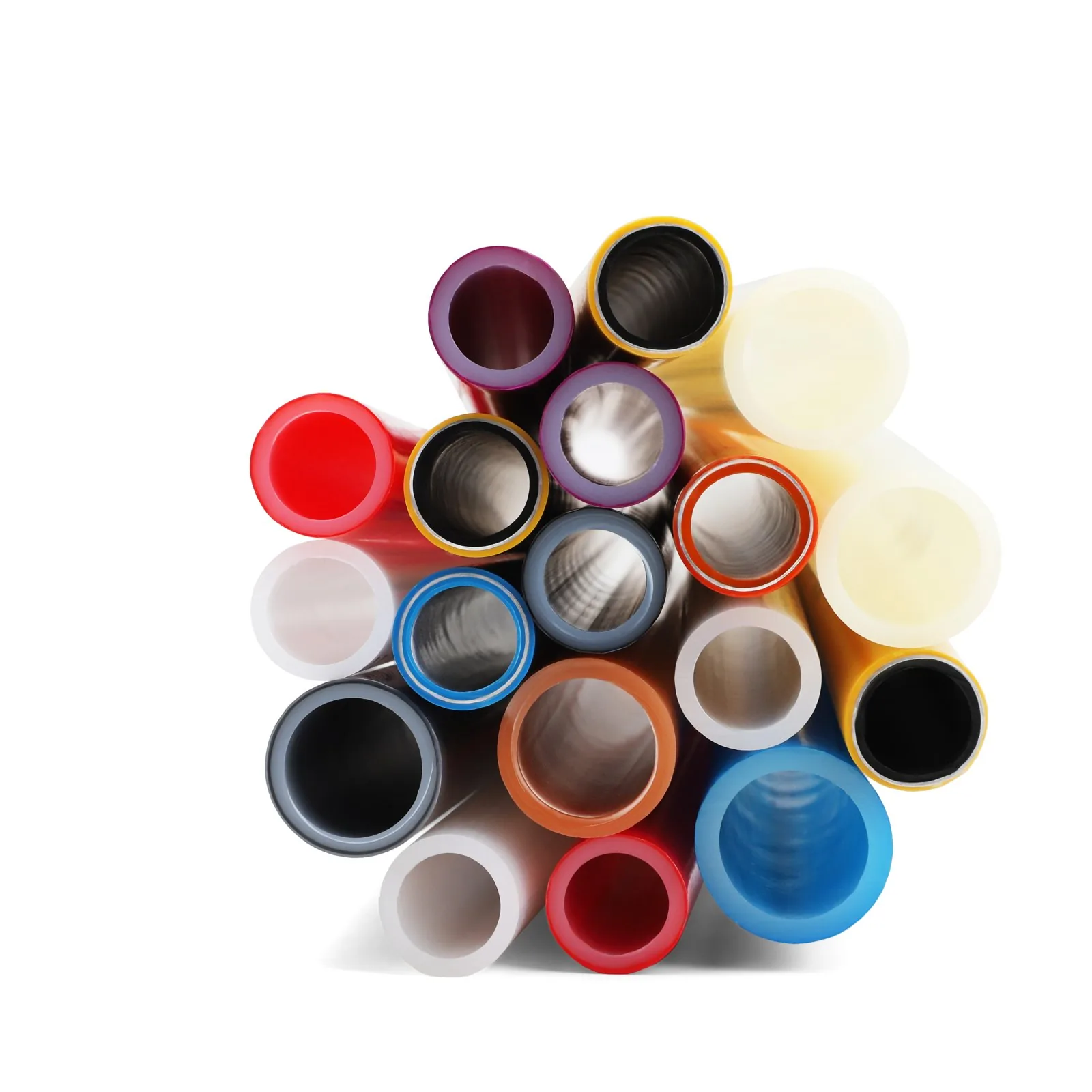
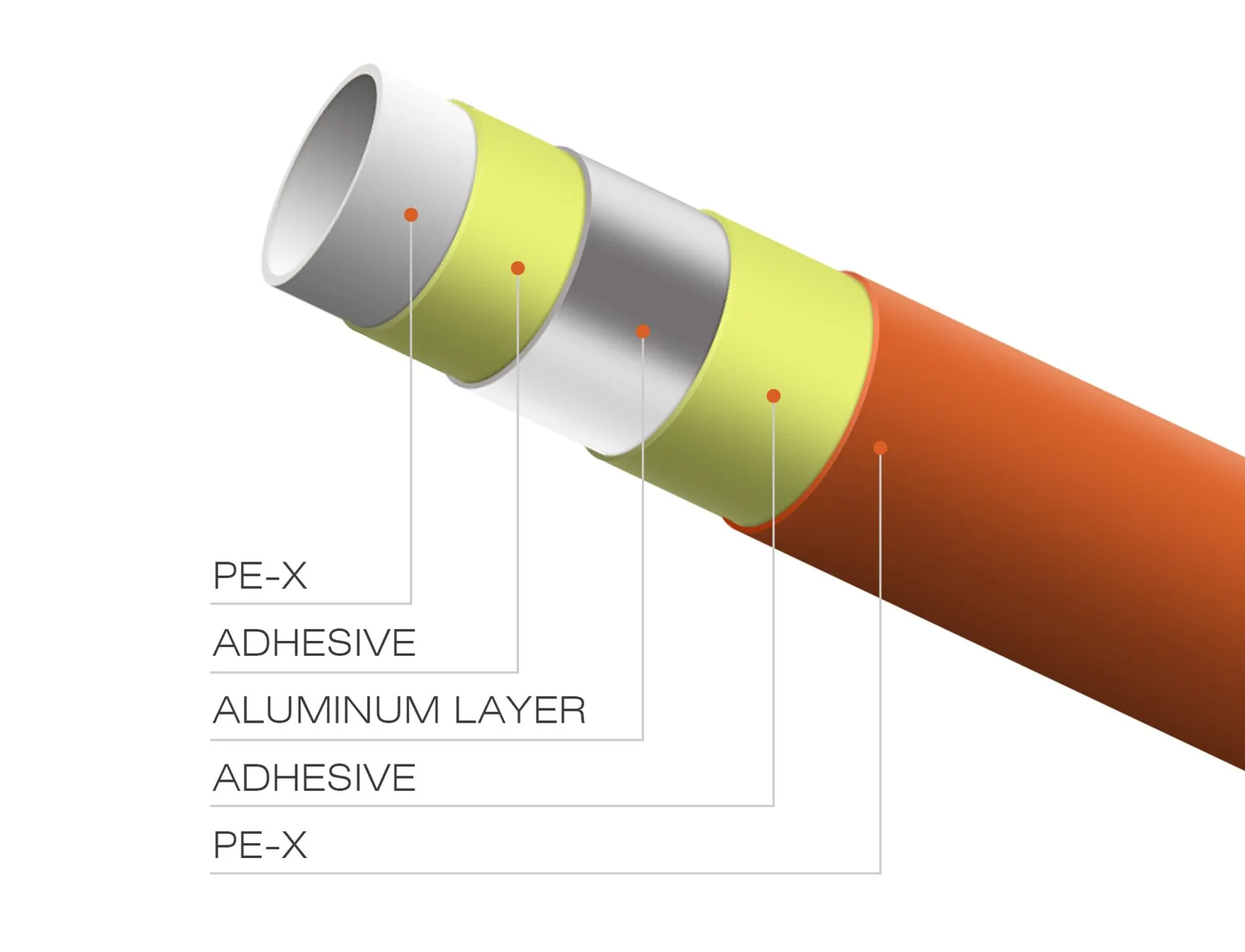
EVOH barrier (co-extruded). A thin layer of ethylene-vinyl-alcohol copolymer is built into the pipe wall during extrusion — typically a 5-layer PE-RT or PEX construction of two polymer layers, two adhesive tie layers, and the central EVOH barrier. EVOH is an outstanding oxygen blocker, keeping permeation well under the DIN 4726 limit. The pipe stays fully flexible, coils tight for long radiant runs, and is light to handle. This is the workhorse for underfloor heating where you’re pulling hundreds of metres per manifold.
Aluminium core (PEX-AL-PEX / PERT-AL-PERT). A butt-welded aluminium tube is sandwiched between plastic layers. Metal is completely oxygen-impermeable, so the barrier is absolute rather than statistical — nothing diffuses through solid aluminium. The aluminium also gives the pipe two field advantages: it holds its shape after bending (no fittings needed to keep a bend), and it roughly halves thermal expansion versus straight plastic. The trade-off is a slightly stiffer coil and the need to ream and calibrate the end before pressing.
Best for / not for. Reach for EVOH-barrier PE-RT when flexibility and coil length dominate — big underfloor jobs, tight loop spacing, fast stapling. Reach for PEX-AL-PEX when you want form-stable risers, exposed runs that must look neat, or lower expansion on long straight distribution — for example the 20 mm supply lines feeding manifolds. Neither is “better”; they’re different tools. What you never want is a plain non-barrier pipe on a closed heating loop, in either family.
How Hitze builds and verifies its barrier heating pipe
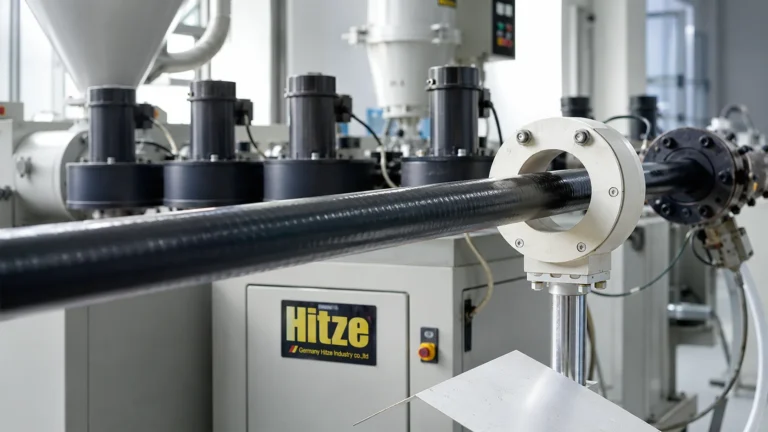
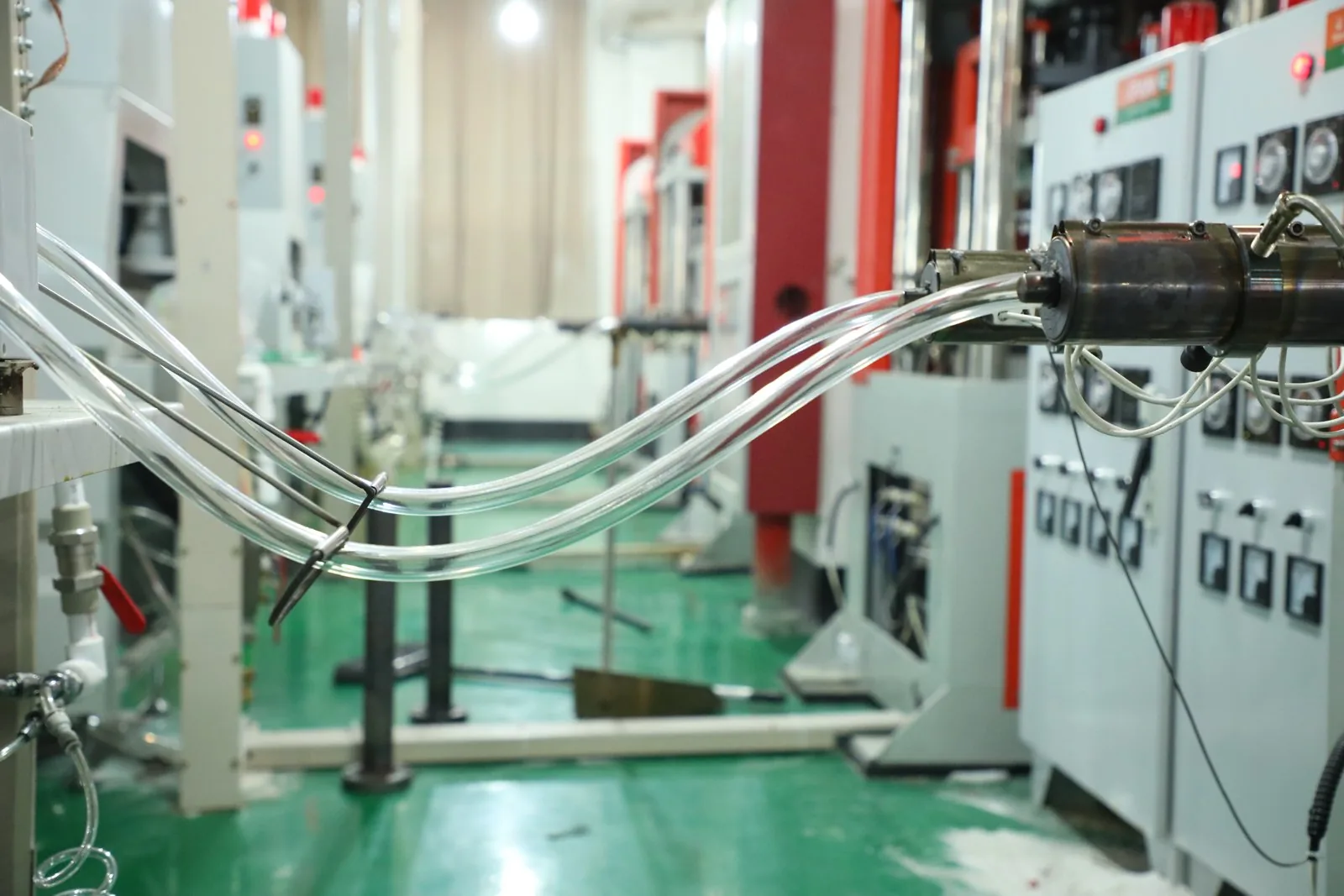
Hitze — a German brand founded in 1974, engineered in Germany and built to German DIN standards — produces both barrier constructions from a 120,000 m² production base. The PE-RT underfloor-heating pipe is made with a DIN 4726 oxygen barrier for closed hydronic loops, and the 5-layer PEX-AL-PEX / PERT-AL-PERT uses a butt-welded aluminium core that is inherently oxygen-tight. On the barrier-critical PE-Xb heating grade, Hitze holds SKZ (Süddeutsches Kunststoff-Zentrum, Germany) test certificates — an independent German verification of the heating-pipe spec, not a self-declaration.
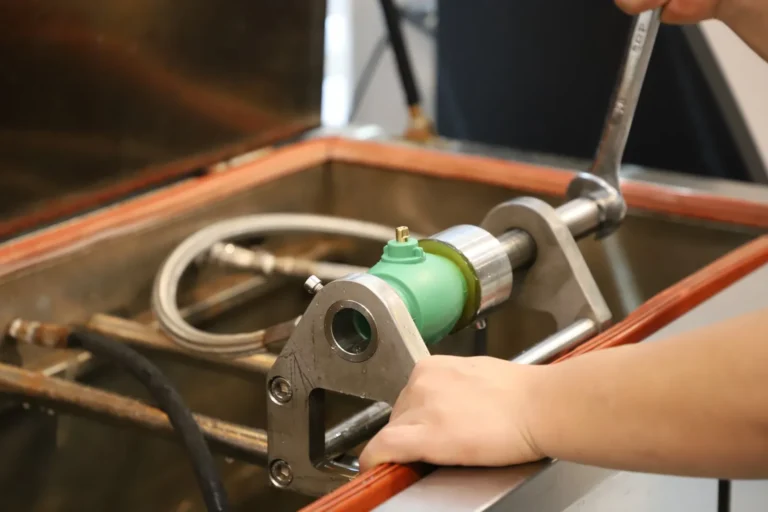
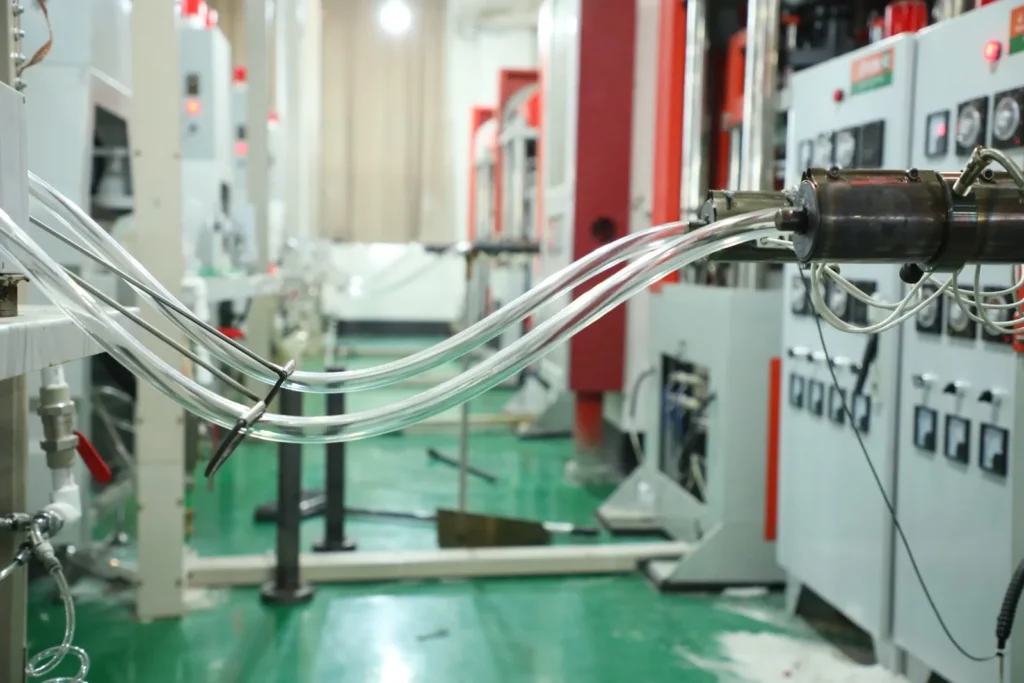
What actually gets checked on the line: the aluminium core is butt-welded into a continuous full-length seam and the weld is monitored so there’s no gap for oxygen to sneak through; the EVOH and tie layers are extruded to a controlled thickness so the barrier is uniform along the whole coil, not just at the ends; and finished pipe is pressure-tested against DIN/EN ISO requirements. PE-RT is built to DIN EN ISO 22391, PEX to DIN EN ISO 15875, and multilayer systems to DIN EN ISO 21003 — the material standards that sit underneath the DIN 4726 oxygen-barrier application. For buyers who need to hand documentation to an inspector, the relevant test reports and scheme details are summarised on the certifications & compliance page, with specific certificate numbers available on request.
A worked scenario: the callback you avoid
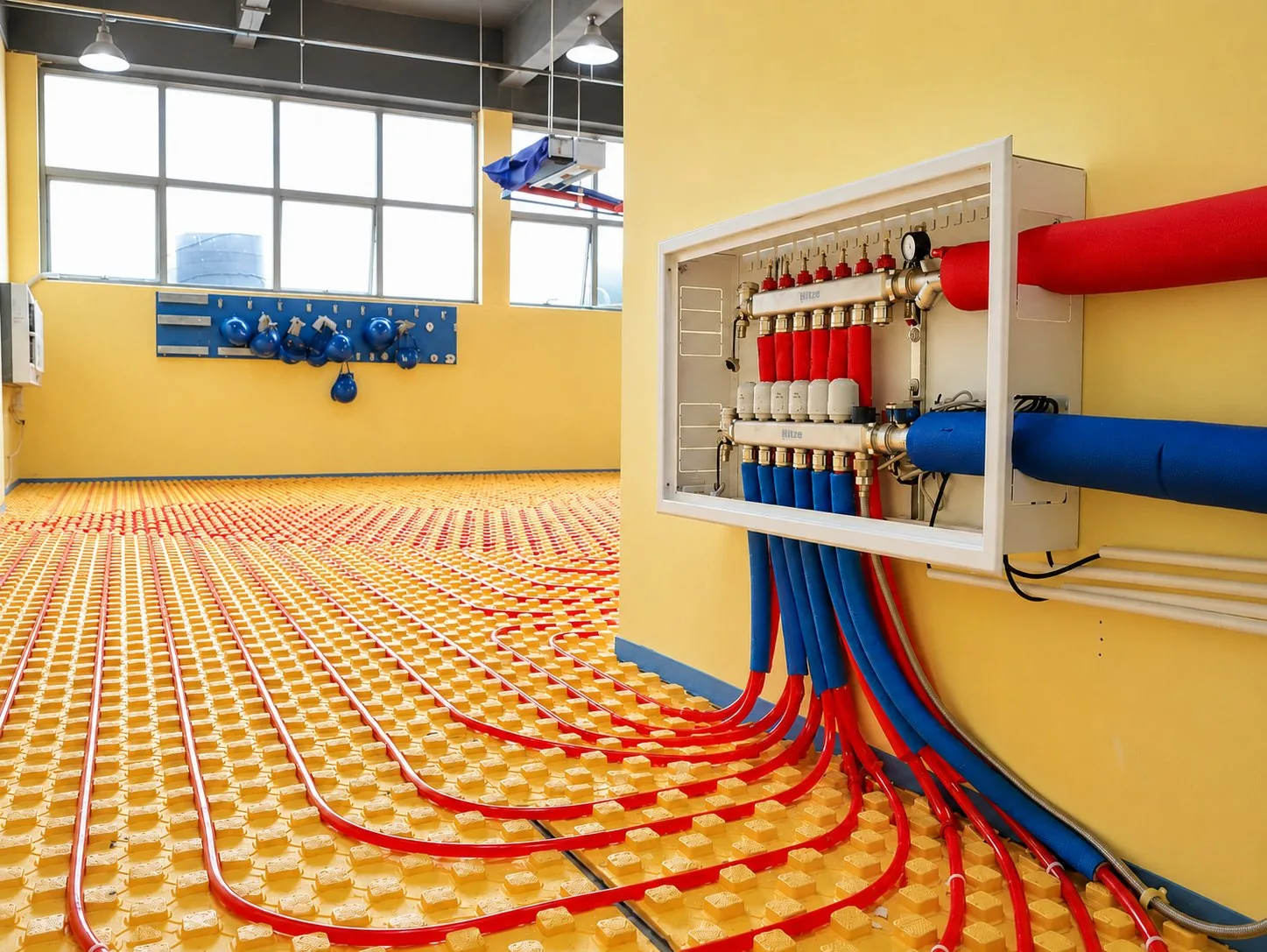
Picture a 180 m² residential slab job. The installer buys the cheapest coil on the shelf — a plain non-barrier PEX marked only “ASTM F876” with no oxygen-barrier callout — because it’s a few percent cheaper per metre and “pipe is pipe.” It’s stapled down and screeded. Year one: flawless. Year two: the homeowner mentions the boiler is a touch noisier. Year three: the cast-iron circulator fails; the plumber who replaces it finds black sludge in the strainer and a heat exchanger showing rust. The pump warranty is declined because the manufacturer’s terms exclude non-barrier tubing on a closed loop. Now someone is paying for a pump, a flush, an inhibitor dose, and possibly a heat exchanger — on a system where the pipe itself is buried and can’t be swapped.
The entire failure was designed in at the coil-selection moment. Had the same installer pulled a DIN 4726 barrier PE-RT — a marginal cost difference on the pipe line item — none of it happens. That asymmetry, a tiny upfront premium against a multi-component failure years later, is the whole reason the standard exists and the whole reason experienced radiant installers never treat the barrier as optional.
How to read the pipe so you never mix them up
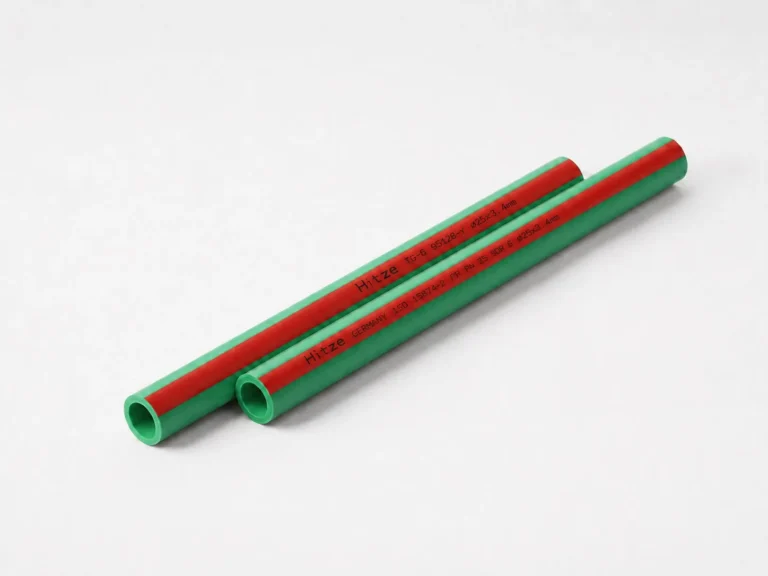
Every quality heating pipe is print-marked along its length. Before you staple anything, read the print and confirm three things: the material and dimension (e.g. PE-RT 16×2.0), the oxygen-barrier / DIN 4726 callout, and the relevant material standard (DIN EN ISO 22391 for PE-RT, 15875 for PEX). A barrier pipe says so on the print; if you can’t find an oxygen-barrier or DIN 4726 reference anywhere on the marking, treat it as non-barrier and keep it off closed heating loops. A useful field tell on multilayer: cut a clean end and look for the bright aluminium ring — solid metal is an unambiguous barrier. On EVOH pipe you’re trusting the print and the certificate, which is exactly why buying from a supplier with third-party German testing behind the claim matters.
Sourcing barrier pipe for a radiant job?
This is written for contractors and radiant-heating installers — and the wholesalers who supply them — who need DIN 4726 barrier pipe they can stand behind, matched to fittings that press cleanly. If that’s you, Hitze supplies PE-RT barrier pipe, PEX-AL-PEX, and the manifolds and press/compression fittings to complete the loop from one German brand, with samples available before you commit a container. It is not a fit for direct-to-homeowner retail — Hitze is trade and wholesale only.
Compliance note: standards, thresholds and certification scope described here reflect published requirements verified against the issuing bodies at the time of writing; specific certificate numbers and current test reports are available on request and vary by product line and market. Always confirm the marking on the coil you receive against your project specification.
Frequently asked questions
Will non-barrier PEX really corrode my heating system?
Yes, if the loop is closed and contains any ferrous metal — which almost every system does, in the circulator pump or boiler. Oxygen diffuses through the non-barrier wall by concentration gradient regardless of pressure, continuously feeding corrosion of cast iron and steel. It’s slow and invisible for the first year or two, then shows up as sludge, a failed pump, or a rusting heat exchanger. On potable or open-loop systems it’s a non-issue because the water is constantly refreshed.
What exactly does DIN 4726 require for oxygen permeation?
To be classed oxygen-tight, a pipe must not exceed 0.32 mg of oxygen per m² per day at 40 °C (application class 4), or 3.60 mg/(m²·day) at 80 °C, verified under the German DIN CERTCO / DIN-Geprüft scheme. The older shorthand for the same target is roughly 0.1 mg of oxygen per litre of water per day at 40 °C. Both describe a near-airtight loop.
Can I use oxygen-barrier heating pipe for drinking water?
Generally no — barrier heating pipe is engineered and certified for closed hydronic loops, not potable contact, and the barrier does nothing useful in a potable line that’s always fresh and oxygenated. Use a potable-approved grade for drinking-water supply. Keep the two clearly separated on site and read the pipe print before you install.
EVOH barrier or aluminium-core (PEX-AL-PEX) — which should I choose?
Both meet DIN 4726. Choose EVOH-barrier PE-RT when you want maximum flexibility and long tight coils for underfloor loops. Choose PEX-AL-PEX when you want form stability after bending, neat exposed runs, and lower thermal expansion on long straight distribution. Aluminium is a total oxygen barrier because metal is impermeable; EVOH is an excellent barrier verified by test.
How do I tell a barrier pipe from a non-barrier one on site?
Read the print marking: a barrier pipe references an oxygen barrier or DIN 4726 alongside its material and dimension. If there’s no such callout, assume it’s non-barrier and keep it off closed heating loops. On multilayer pipe, cut a clean end and look for the bright aluminium ring — solid metal confirms the barrier. For EVOH pipe, rely on the print plus a third-party test certificate.
Is Hitze pipe made in Germany?
Hitze is a German brand, engineered in Germany and built to German DIN standards, with independent German testing behind its heating grades — its PE-Xb heating pipe carries SKZ test certificates. It produces DIN 4726 oxygen-barrier PE-RT and welded-aluminium-core PEX-AL-PEX for closed hydronic systems, and supplies trade and wholesale buyers across 118+ countries.