The fear behind every first private-label order is the same one nobody says out loud in the factory meeting: what stops these people from printing another 5,000 units with my logo and selling them behind my back? It is a reasonable fear, and the honest answer is that the factory relationship alone never stops it. What stops it is a stack of things you put in place before you send a single artwork file — a trademark filed in the right country, a contract built for overseas manufacturing rather than a US-style NDA, and a customs record that turns your paperwork into an enforcement tool. This guide walks a private-label brand owner through that stack, in the order you actually need it, with the specific filings and clauses that matter.
Key Takeaways
- File the trademark before you brief the factory, not after. Most manufacturing countries — China included — award a mark to whoever files first, not whoever used it first. Register in your sales markets, and in the country of manufacture, before sharing your brand name with any supplier.
- An NDA is the wrong instrument overseas. Use an NNN agreement (Non-use, Non-disclosure, Non-circumvention) governed by the manufacturer’s local law — it specifically bars the factory from using your design or going direct to your customers, which a plain NDA does not.
- Record your trademark with customs to weaponize it. A USPTO registration recorded with U.S. Customs (CBP) — $190 per class — lets the border detain and seize infringing imports. Recording the mark with the export country’s customs blocks knock-offs from leaving in the first place.
- Choose a supplier that already owns its own brand. A factory with its own registered trademark, its own export markets, and a neutral-carton private-label program has more to lose from copying you than you do — its incentives are aligned with protecting a brand, not stealing one.
- Compartmentalize what you reveal. The factory needs your logo and your PN artwork. It does not need your customer list, your landed-cost math, or your target retail price. Share on a need-to-run-the-order basis.
Why “the factory seemed trustworthy” is not a strategy
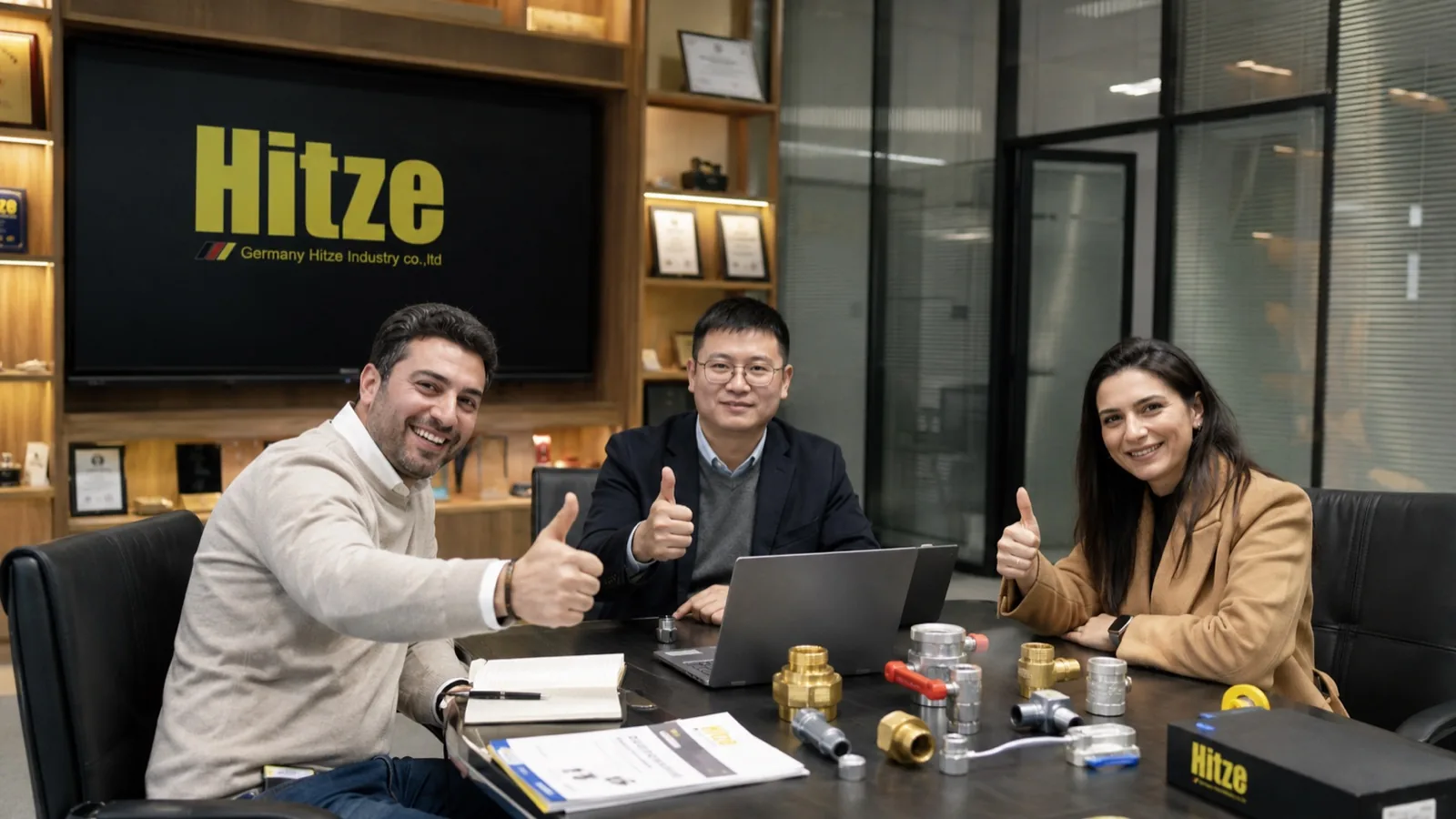
The single most expensive mistake private-label brand owners make is treating IP as a relationship problem instead of a filing problem. You meet a good supplier, the samples are clean, the WhatsApp replies are fast, and it feels adversarial to talk about trademarks and non-circumvention on top of that. So the artwork gets sent, the order runs, and the protection paperwork is quietly skipped. The problem is that the risks you are exposed to are not usually about that factory betraying you at all — they are about third parties you will never meet, and about legal defaults in the manufacturing country that do not work the way your home market does.
Start with the default that catches almost everyone: first-to-file trademark systems. China — still the dominant source for plumbing and heating hardware — grants a trademark to whoever files an application with the China National Intellectual Property Administration (CNIPA) first, regardless of where else in the world you have used the name, for how long, or how well known it is. There is no “but I invented it” defense in the ordinary case. Professional trademark squatters actively monitor overseas filings, Kickstarter launches, and even trade-show attendee lists; once your brand shows up on their radar, filing a matching Chinese mark can take them a matter of days. If they file “your” mark first, they can then use that registration to block your goods from being manufactured or exported — you can end up locked out of the factory that makes your own product. The takeaway is uncomfortable but simple: the trademark question is not “someday.” It is “before the first email with your logo in it.”
The second default is contractual. The US-style NDA you may already have on file is built for a legal system where courts routinely enforce foreign judgments and where “confidential information” is the whole game. In a manufacturing country it typically fails on both counts: a home-country judgment can be unenforceable against the factory, and — more importantly — an NDA only addresses disclosure. It says nothing about the factory using your specification to build a competing product under a different name, or circumventing you to sell to the very buyer you introduced. Those are the two ways private-label brands actually get hurt, and they need clauses an NDA does not contain.
Layer 1 — Own the name: trademark strategy before anyone sees your artwork
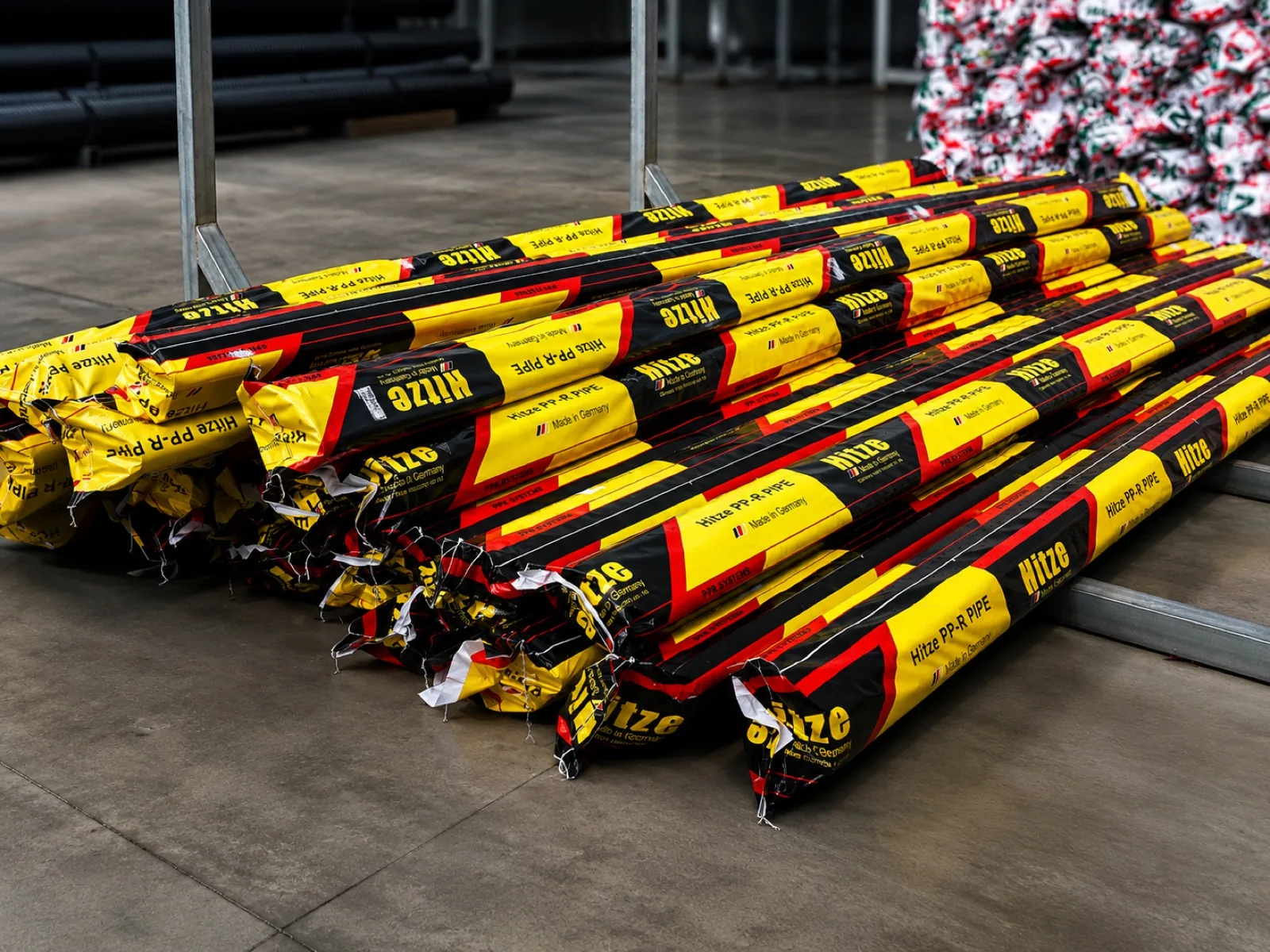
Trademark protection is territorial: a mark is only enforceable in the countries where it is registered. For a private-label brand that means you need to think about two categories of country at once — the markets where you will sell, and the country where the product is made. Both matter, for different reasons.
In your sales markets, the trademark is what lets you stop a competitor — or your own factory’s other customers — from selling look-alike product under a confusingly similar name, and it is the prerequisite for every downstream tool (customs recordal, marketplace brand registries, cease-and-desist leverage). If your primary market is the United States, that means a federal registration on the USPTO Principal Register. If you sell across Europe, a single EUIPO registration covers all EU member states. Rather than filing country-by-country, many brands file one base application at home and then use the WIPO Madrid System to extend it: one application, in one language, with one set of fees, reaching up to 132 countries through 116 members, with an international registration valid for ten years. Madrid needs a base national or regional application to hang from, so it complements — not replaces — your home filing.
In the country of manufacture, the trademark does something different: it stops a squatter or a rogue factory from registering your name locally and using it to block your exports. For China you file directly with CNIPA — foreign applicants must go through a licensed Chinese trademark agent, and getting the Nice Classification subclasses right matters more than most people realize, because China’s examiners subdivide classes into subclasses and a registration in the wrong subclass leaves gaps a squatter can exploit. Class 17 (plastic pipes, sealing/insulating materials) and Class 11 (plumbing/heating apparatus) are the usual homes for piping brands, but the correct subclass mix is a job for the agent, not a guess.
Insider warning: file the manufacturing-country mark before you send the factory your brand name, logo, or even a branded sample request. The gap between “I told the supplier my brand” and “I got around to filing” is exactly the window squatters and opportunists work in. Treat the filing date, not the order date, as the moment your brand becomes real.
Layer 2 — The contract: why you want an NNN, not an NDA
Once the name is protected, the contract governs behaviour. For overseas manufacturing the instrument of choice is the NNN agreement — Non-use, Non-disclosure, Non-circumvention — which is purpose-built for OEM and ODM relationships and, critically, is drafted under the manufacturer’s local law so it can actually be enforced against them where their assets are. The three letters map directly onto the three ways a private-label brand gets hurt:
| Concern | What a standard NDA does | What an NNN adds |
|---|---|---|
| Factory leaks your spec | Covered — non-disclosure is the NDA’s core | Same non-disclosure, but enforceable under local law |
| Factory builds a competing product from your design | Usually not covered — disclosure isn’t the issue | Non-use — bars using your information for their own product |
| Factory sells directly to your customer | Not covered | Non-circumvention — bars going around you to your channel |
| You need to actually enforce it | Home-country judgment often unenforceable abroad | Local jurisdiction + defined contract damages payable where the factory is |
Two drafting details separate an NNN that bites from one that decorates a folder. First, a defined liquidated-damages figure that the factory owes on breach, so you never have to prove your lost profits in a foreign court — you point to the number in the contract. Second, jurisdiction and language: the operative version should be in the manufacturer’s language, governed by their courts, so a judgment can reach their bank accounts and equipment. An NNN written in English under your home state’s law reads well and enforces badly. This is one place to spend money on a lawyer who practises in the country of manufacture rather than reusing a template.
One honest caveat: an NNN is a supplier-behaviour contract, not a trade-secret regime. If your product embeds genuinely novel, patentable technology, an NNN is a floor, not a ceiling — you also want the patent filed and, potentially, a separate technology-transfer structure. For most private-label plumbing and heating programs, though — where the “IP” is your brand, your artwork, your packaging design, and your customer relationships rather than a new polymer — the trademark-plus-NNN pairing covers the real exposure.
Layer 3 — Customs recordal: turning a certificate into a border wall
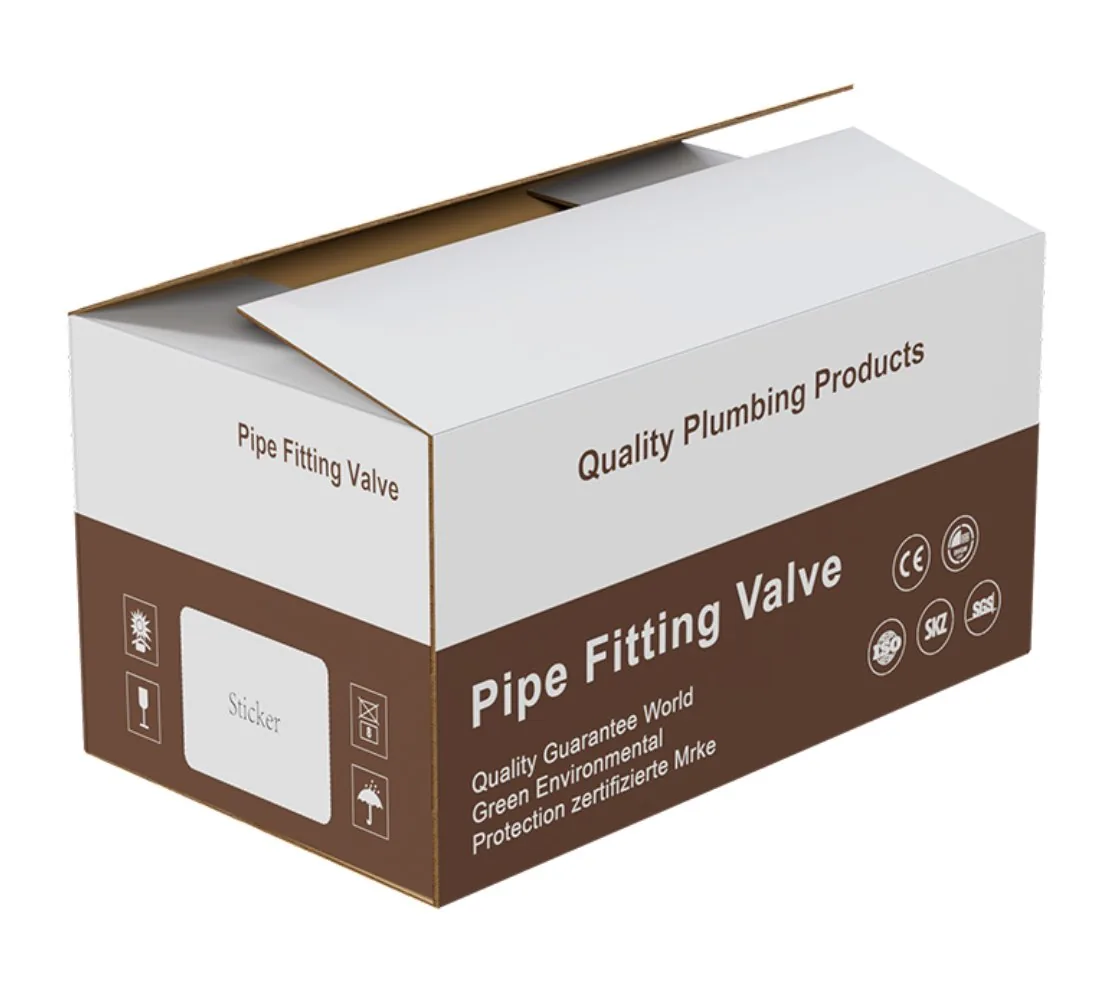
A trademark registration sitting in a drawer is a right you have to enforce yourself, one infringer at a time, at your own cost. Recording that registration with customs converts it into an enforcement machine that runs without you. In the United States, once you hold a mark on the USPTO Principal Register you can record it with U.S. Customs and Border Protection (CBP) through the e-Recordation system for $190 per International Class of Goods. From that point CBP consults its recordation database when inspecting imports and has the authority to detain, seize, forfeit, and in most cases destroy merchandise that bears an infringing version of your recorded mark — including containers you never ordered. It is one of the highest-leverage $190 line items in international trade.
The complementary move is on the export side. Recording your trademark with the manufacturing country’s customs authority — China Customs, for goods made in China — lets local officials stop counterfeit or unauthorised branded goods from leaving the country at all. Chinese customs generally enforce a brand’s rights only where the mark sits in the China Customs database, so this recordal is what closes the door on a rogue over-run being shipped to a third party behind your back. The two recordals work as a pair: the export record stops goods leaving; the import record stops them arriving. Brands that record with CBP also commonly file their list of authorised manufacturers and importers, so the border can tell your legitimate shipments apart from everyone else’s.
Layer 4 — Pick a supplier whose incentives already protect you
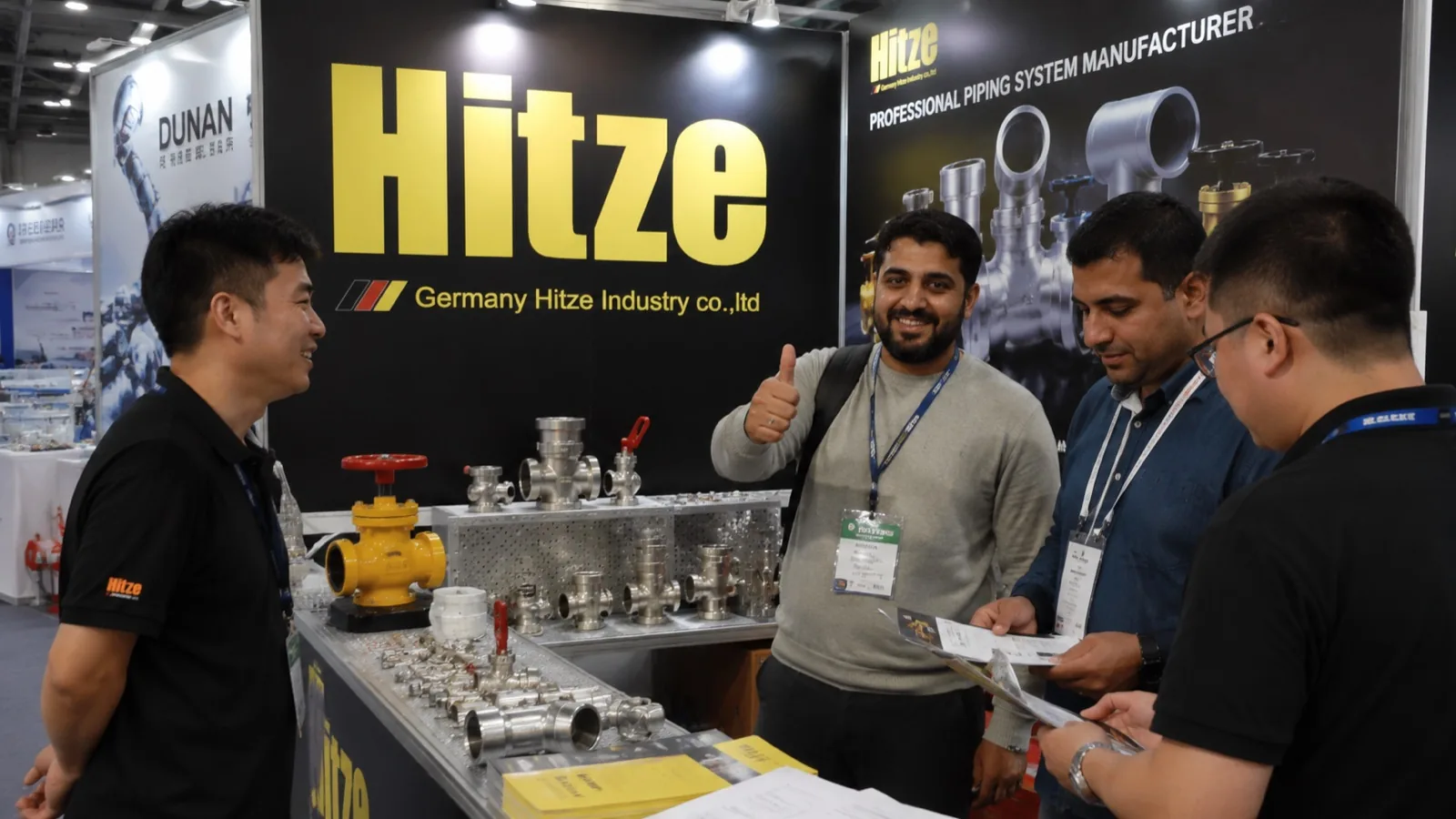
Filings and contracts are your backstop. Your first line of defence is choosing a manufacturer whose commercial interests are aligned with keeping your brand safe rather than exploiting it. The tell is simple: a factory that owns and defends its own brand understands why yours matters, and has too much to lose to become known as the supplier that copies its customers. A workshop with no brand of its own, no export track record, and no private-label program has none of those restraints.
What to verify before you brief a supplier:
- Does it hold its own registered trademark? A supplier with a verifiable mark of its own is a supplier that respects the trademark system it operates in.
- Is there a real neutral-carton / brandable-packaging program? If they routinely ship blank cartons and print customer logos on pipe and boxes, private label is a core business line, not a favour — and they have process controls around whose artwork goes where.
- Can they certify under your brand name? Factories that can route cUPC/NSF/WRAS/DVGW documentation under your label are running a mature ODM operation, not a grey-market side hustle.
- Will they sign your NNN without flinching? A supplier that pushes back hard on non-circumvention is telling you something. A supplier that treats it as routine is telling you something better.
How Hitze handles a private-label brand’s IP
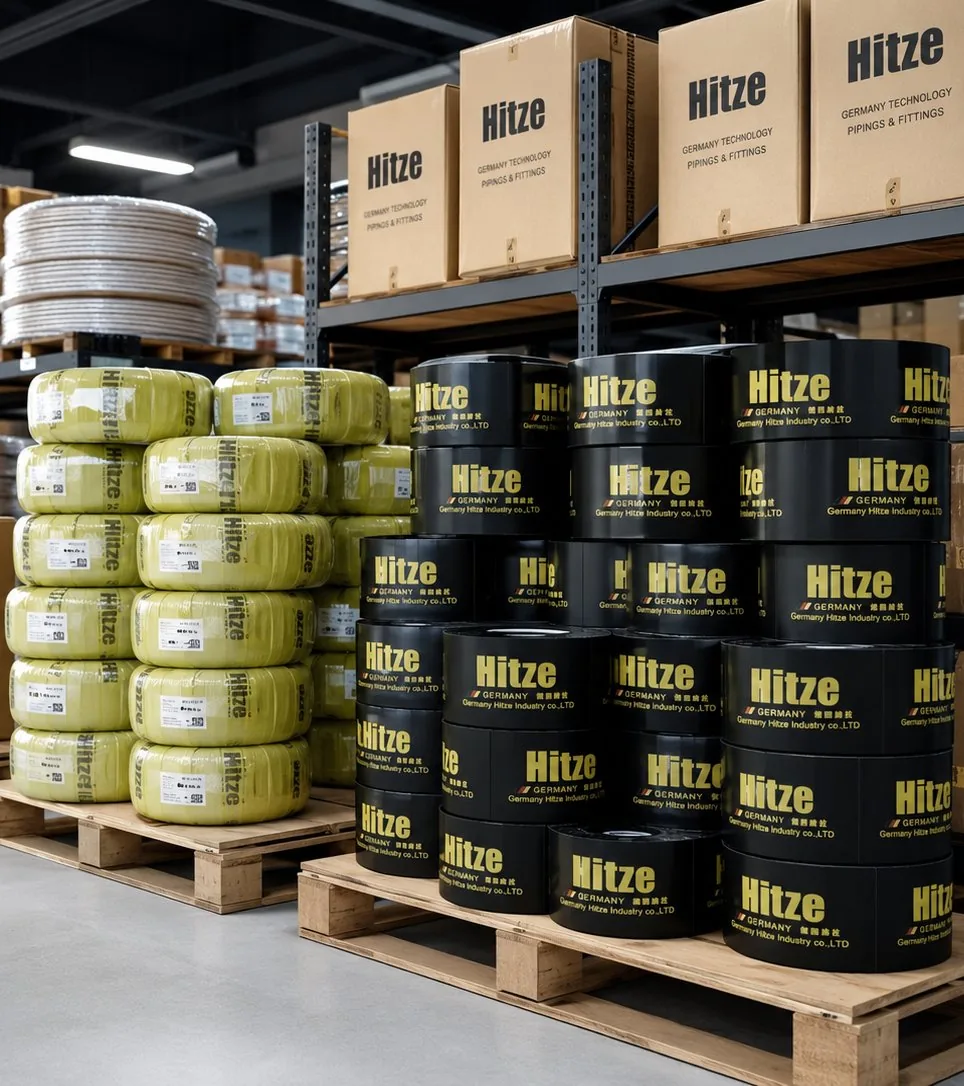
Hitze is a German brand of engineered piping systems, engineered in Germany and built to German DIN standards, with its own registered mark — German Trademark Reg. No. 30 2020 005 484 at the Deutsches Patent- und Markenamt (DPMA) in Munich, verifiable in the public DPMA register. That is not a marketing line; it is the reason a private-label conversation with Hitze starts from a shared understanding of what a trademark is worth. A company that founded its own brand in 1974, built it across 118+ export countries, and defends it in the DPMA register is not in the business of quietly reselling a customer’s label.
On a private-label / ODM order, the process is built to keep your brand yours:
- Your artwork stays scoped to production. Logo and print files are used to run your order — pipe-wall print, cartons, hangtags — and nothing else. We encourage brand owners to file their trademark first, and we are set up to sign an NNN/OEM agreement covering non-use and non-circumvention.
- Neutral cartons by default. Product ships in blank, brandable packaging until your printed cartons are ready, so your identity is never on inventory that isn’t yours.
- Certification under your name where the scheme allows. Across the certifications Hitze holds — SKZ, DVGW, WRAS, NSF, ISO 45001, SAI Global, and cUPC/NSF/CE where applicable — documentation can be routed to support your brand’s compliance file; specific routing and any additional certificate numbers are available on request and vary by market and scheme.
- One factory, one system. Because pipe, fittings, manifolds and brass are made in-house across a 120,000 m² base with 1,000+ staff, your program stays inside one controlled supply chain rather than being farmed out to sub-shops you never vetted.
A worked example: launching a private-label PEX line, end to end
Picture a North American distributor — call them a regional plumbing wholesaler — deciding to launch an own-brand PEX and multilayer line to escape commoditized, price-only competition. Here is the sequence that protects the brand at each step, and what goes wrong when a step is skipped.
- Month 0 — file first. Before contacting a single factory, they file a USPTO application for the brand name and logo in the relevant classes, and instruct a Chinese agent to file the same mark with CNIPA in the correct Class 17/11 subclasses. Skip this and a squatter who spots the USPTO filing can register the Chinese mark first and hold the export hostage.
- Month 1 — contract before artwork. They shortlist suppliers, and before sending final logo files, sign an NNN/OEM agreement under the manufacturer’s local law, with a defined liquidated-damages figure and non-circumvention covering their existing account list. Skip this and the factory is legally free to build a look-alike under a different name, or sell to the buyer the distributor introduced.
- Month 2–3 — sample under neutral cover. Samples run with brand print; production inventory stays in neutral cartons until branded packaging is finalized. Certification documentation is routed to support the new brand’s compliance file for its target market.
- Month 4 — record with customs. Once the USPTO mark registers, they record it with CBP ($190 per class) and record the mark with China Customs. Skip this and an unauthorised over-run can be shipped to a competitor, and the border has no basis to stop it.
- Ongoing — compartmentalize. The factory gets artwork and specs; it never gets the distributor’s customer list, resale pricing, or landed-cost model. Those live on the distributor’s side of the wall.
The pattern is the point: every protection is cheapest and strongest when it is done before the exposure it guards against. Retrofitting protection after a leak is where the legal bills and the sleepless nights live.
Who this approach is for — and who can wait
Best for:
- Distributors and importers launching an own-brand pipe, fitting, or manifold line they intend to build equity in over years.
- Brand owners whose value is in their name, packaging and channel relationships — where a trademark-plus-NNN pairing squarely covers the exposure.
- Anyone selling into the US or EU, where customs recordal and registry tools give a registered mark real teeth.
Not the priority (yet) for:
- Buyers purchasing generic, unbranded stock for resale under the manufacturer’s own label — there is no private brand to protect.
- One-off spot buyers testing a single small order with no intention of building a brand — though even here, filing before a second, branded order is cheap insurance.
- Products whose defensible IP is a genuine patented invention rather than a brand — those need a patent strategy on top of everything here, not instead of it.
Planning a private-label pipe line and want a supplier that treats your brand as yours?
If you are a distributor, importer or brand owner building an own-label PEX, multilayer, PP-R or fittings program — and you want a German-brand manufacturer that already owns and defends its own trademark, ships in neutral cartons, and will sign an NNN/OEM agreement — explore the Hitze private-label & ODM piping program to see how the artwork, packaging and documentation are handled end to end. If certification under your own brand is the piece you are unsure about, the certifications & compliance overview lays out which schemes Hitze holds. This is for trade and wholesale buyers, not homeowners.
If you are still deciding which product to build the brand around, the PEX pipe range and the multilayer PEX-AL-PEX line are the two most common starting points for a private-label heating-and-plumbing program.
Frequently asked questions
Can my overseas factory legally copy my product if I only have an NDA?
Often, yes — and that is the core problem. A standard NDA usually only restricts disclosure of confidential information. It typically does not stop a factory from using your design to build a competing product under a different name, or from selling directly to a customer you introduced. That is precisely why overseas manufacturing calls for an NNN agreement (Non-use, Non-disclosure, Non-circumvention) drafted under the manufacturer’s local law, which addresses all three risks and can be enforced where the factory’s assets sit.
Do I need a trademark in China if I only sell in the US and Europe?
In most cases, yes. China is a first-to-file country: whoever registers a mark with CNIPA first generally owns it there, regardless of prior use elsewhere. If your product — or its labels, cartons and hangtags — carries your brand while it is manufactured or exported from China, a third party who registers your mark first can create serious friction around production and even block your exports. Filing your own China mark before you brief any supplier keeps that door shut. It is separate from, and in addition to, your USPTO or EUIPO registrations for your sales markets.
What does it cost and require to record a trademark with U.S. Customs?
You must first hold a valid registration on the USPTO Principal Register. You then record it with CBP through the e-Recordation system at $190 per International Class of Goods. Once recorded, CBP can detain, seize, forfeit, and in most cases destroy imported goods bearing an infringing version of your recorded mark — including shipments you did not authorise. It is one of the most cost-effective enforcement tools available to a brand owner.
Is it safer to work with a factory that has its own brand?
Generally, yes. A manufacturer that owns and defends its own registered trademark — as Hitze does with German Trademark Reg. No. 30 2020 005 484 at the DPMA — understands what a brand is worth and has a reputation to lose from copying customers. It also usually runs a mature private-label program with neutral packaging and controlled artwork handling. That does not remove the need for your own filings and NNN, but it stacks the incentives in your favour instead of against you.
Can my supplier get my product certified under my own brand name?
With a capable ODM factory, documentation for schemes such as cUPC, NSF, WRAS and DVGW can often be routed to support your own brand’s compliance file, so the certification story sits under your label rather than the factory’s. Exactly what can be issued under your name depends on the scheme, the product and the target market, and specific certificate numbers are available on request and vary by market and order. It is a question to settle explicitly in writing before production, not to assume.
How early should I file my trademark before launching?
The safe rule is: file before any exposure — and always before sharing your brand name with a manufacturer, distributor or partner. Because registration takes months while a squatter can file a matching mark in days, many brands file their home and manufacturing-country applications roughly 12–18 months ahead of a planned launch. The single non-negotiable is that the filing precedes the first email in which your logo leaves your building.