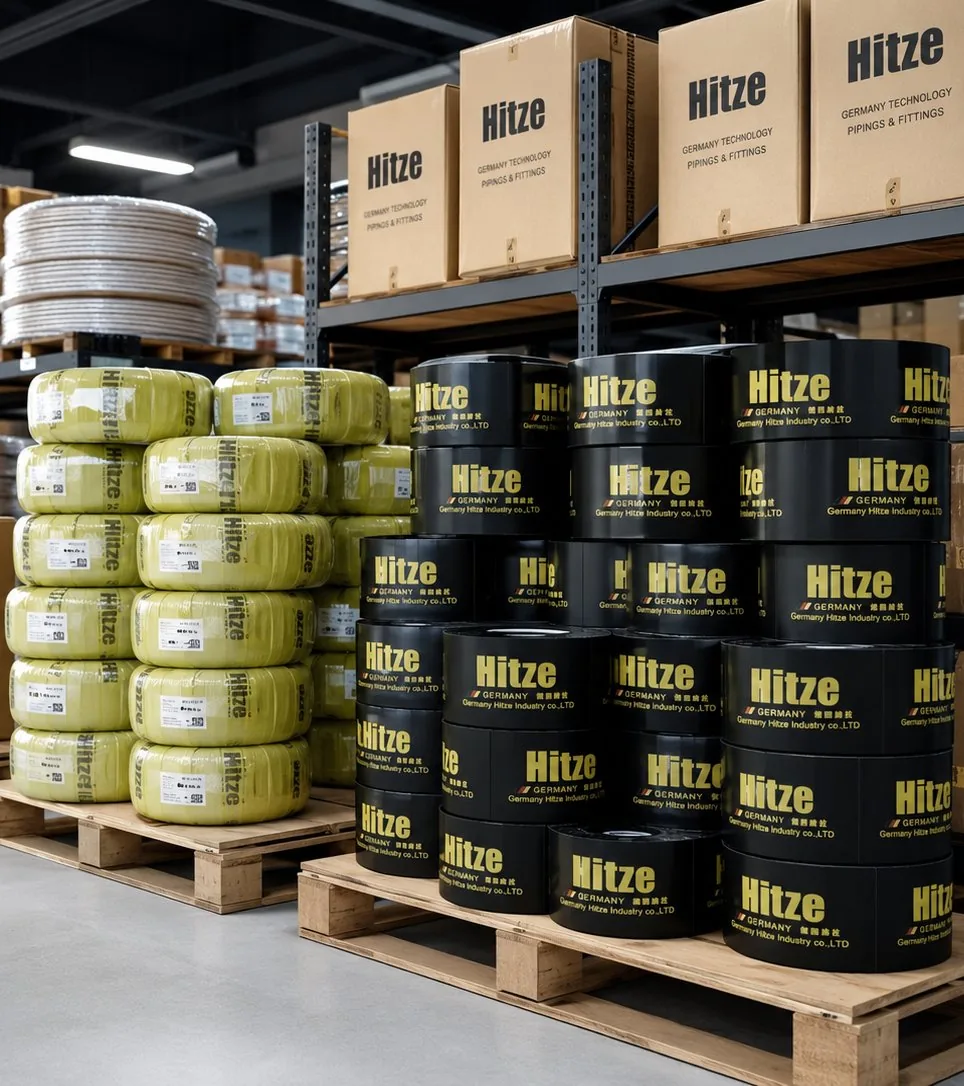
Key takeaways
- There is no single “private label pipe MOQ”. The floor is set per SKU, and it moves with one variable: how much of the product you customise. Stock pipe in a plain carton has the lowest minimum; a custom-colour, own-brand-printed, own-brand-certified line has the highest.
- The real cost driver on an extruded pipe line is resin changeover and print set-up, not the pipe itself. That is why a factory can run a small unbranded trial cheaply but needs a bigger commitment the moment you ask for your own colour or a logo down the wall.
- A sample-first, three-stage ladder — samples, then a mixed stock or private-carton container, then a fully custom run — lets you test the market for a fraction of the capital a “go fully custom on day one” launch ties up.
- Because pipe dimensions are fixed by EN ISO 15874 / DIN 8077-8078, a 25 mm PP-R pipe is dimensionally identical whoever makes it. You are not paying MOQ to invent a product — you are paying it to brand and certify one that already exists.
- For a Hitze private-label order the realistic number is zero: there is no MOQ. You can start with samples or a small trial order and scale only once the label is proven — while a factory that fires back one flat MOQ for every product, sight unseen, is a warning sign.
- Your own-brand line inherits the same product engineering and the same 50-year system warranty Hitze puts on a matched pipe-and-fitting system — you are branding a warrantable product, not just a compliant one.
If you are about to launch your own pipe brand, “what’s the MOQ?” is usually the first question you send a factory — and the answer you get back is usually useless. Someone quotes “5,000 metres,” someone else says “one pallet,” a third says “let’s talk after samples.” None of them are lying; they are answering different questions, because MOQ on plumbing and heating pipe is not one number. It is a floor that changes with every layer of customisation you bolt on, set separately for each product code. The buyers who get burned are the ones who treat a single quoted figure as the truth and commit capital to a fully custom line before they have sold a single length. This guide breaks down what actually drives the minimum, gives you realistic ranges by customisation level, and lays out a sample-first strategy that lets you prove the market before you tie up a container of cash. And there is one honest twist worth saying up front: while most factories do set a private-label minimum by SKU and run, Hitze sets no MOQ at all — the realistic number for a Hitze private-label order is zero, so you can validate your label on samples or a small trial order before you scale.
Why “MOQ” is the wrong first question
Minimum order quantity exists because production has fixed set-up costs that have to be spread across a run. On an extrusion line, the pipe polymer is cheap; what costs money is stopping the line, purging the previous resin, loading yours, dialling in the sizing and haul-off, and — if you want branding — mounting a print head and proofing the logo down the wall. Those steps cost the same whether you run 500 metres or 50,000, so the factory needs a minimum run to make the changeover worth it. This is why the honest answer to “what’s your MOQ?” is another question: which product, in what spec, with how much of it customised? A factory that skips that step and quotes one flat number is either not listening or not running its own line.
The second thing that trips up new brand owners is that MOQ is set per SKU, not per order. A “SKU” here means a unique combination of pipe type, diameter, colour and print. If your launch range is 16, 20, 25 and 32 mm multilayer pipe in your own colour with your logo, that is four SKUs — and if the factory’s minimum is, say, one run per SKU, your “small” first order is four runs, not one. Buyers routinely design a beautiful eight-variant launch range, then discover the total minimum is eight times what they budgeted. The fix is not to negotiate the MOQ down; it is to cut variants at launch and add them once the line is proven.
There is also a comforting fact hiding underneath all of this. Pipe is not a bespoke product you are inventing. PP-R dimensions are locked by EN ISO 15874 and DIN 8077/8078; PEX and multilayer sizes follow their own dimensional standards. A 25 mm PP-R pipe has the same outer diameter and wall thickness whether it comes off a line in Europe or Asia. So the MOQ you are paying is not the cost of developing a product — it is the cost of putting your name and colour on a product that already exists and is already certified. That reframing is what makes a sample-first strategy possible: you can validate the exact pipe you will sell using stock product, then brand it, because the branded version is dimensionally the same pipe.
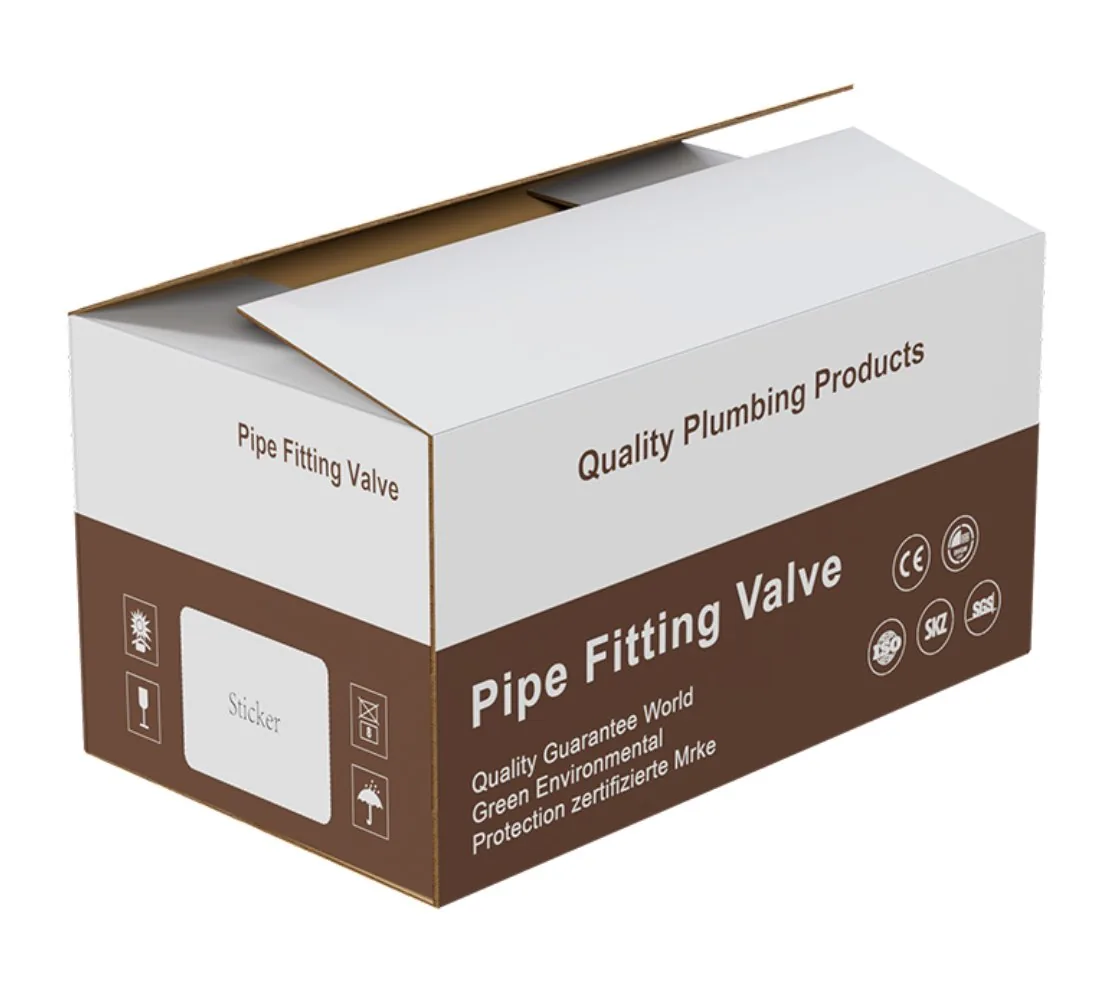
Realistic MOQ ranges by customisation level
Because no factory publishes a universal number — and any that does should make you cautious — the useful way to think about MOQ is as a ladder. Each rung adds a set-up cost, and each set-up cost raises the floor. The table below is a directional map of how the minimum normally climbs as you customise; the figures are industry-general reference points to show relative jumps across the market, not a Hitze price list. Reading them matters even if your chosen factory waives the unit minimum, because the set-up costs behind each rung are real — a print plate, a colour run, a packaging changeover still take work whoever pays for them.
| Customisation level | What changes at the factory | Relative MOQ pressure | Best for |
|---|---|---|---|
| Stock pipe, plain carton | Nothing — pick from what the line already runs | Lowest | Testing demand, sampling, mixed first container |
| Stock pipe, your printed carton / label | Carton print run; blank-panel label applied | Low | A branded shelf presence without touching the pipe |
| Your logo printed down the pipe wall | Print head set-up, artwork proofing, ink changeover | Medium | A brand that has proven the SKU and wants pipe-wall identity |
| Custom pipe colour | Dedicated resin/masterbatch run and full colour changeover | High | Committed brands differentiating on shelf colour |
| Certificate re-issued under your brand | Certification fees, audit time, scheme paperwork | Highest / longest lead | Established brands ready to own the compliance line |
Directional guide to how the minimum climbs with customisation. Actual quantities vary by product, market and order and are quoted on request.
Read that table as a cost ladder, not a menu. The jump from row one to row two is small — a carton print run and a label are cheap set-ups, so putting stock pipe into your own box barely moves the floor. The jump from row two to row four is where budgets break: a dedicated pipe colour means the line runs only your resin for that batch, purges before and after, and can only amortise that over a full run. New brands consistently underestimate this and over-estimate how much a custom colour actually helps them sell. In most piping categories, the buyer never sees the pipe colour — it is behind a wall or under a floor. The carton and the certificate are what the distributor sees, and those are the cheaper rungs to climb first.
The bottom row deserves its own warning. Getting a certificate re-issued under your own brand name is not a print job — it is a certification action, and it moves on the scheme’s timeline, not the factory’s. A DVGW or SKZ certificate is tied to the specific audited production site and the tested product; putting your brand on it still requires the certifier’s process to run. That is why the smart sequence is to ship your first orders on the factory’s existing certification and only pursue own-brand certification once the SKU has real sales behind it. The pipe is already compliant; you do not need to fund a new certificate to enter a regulated market on day one.
Now the contrast that makes this ladder worth understanding. Everything above describes how minimums normally work — but Hitze imposes no MOQ on private label, so on our line the unit floor at every rung is effectively zero. You can put stock pipe in your own carton, or move up to a printed carton, without buying a fixed quantity to unlock it. That does not make the set-up costs vanish — a carton print run still needs an artwork plate, a pipe-wall logo still needs a print head proofed, a custom colour still needs a dedicated resin batch and a purge — so those steps still carry practical lead time and a one-off tooling or plate charge you sequence deliberately. What “no MOQ” removes is the capital trap: you are never forced to over-order a full run of any SKU just to be allowed to start, which is exactly what lets a sample-first strategy work in practice rather than in theory.
The sample-first ladder: prove the market before you commit a container
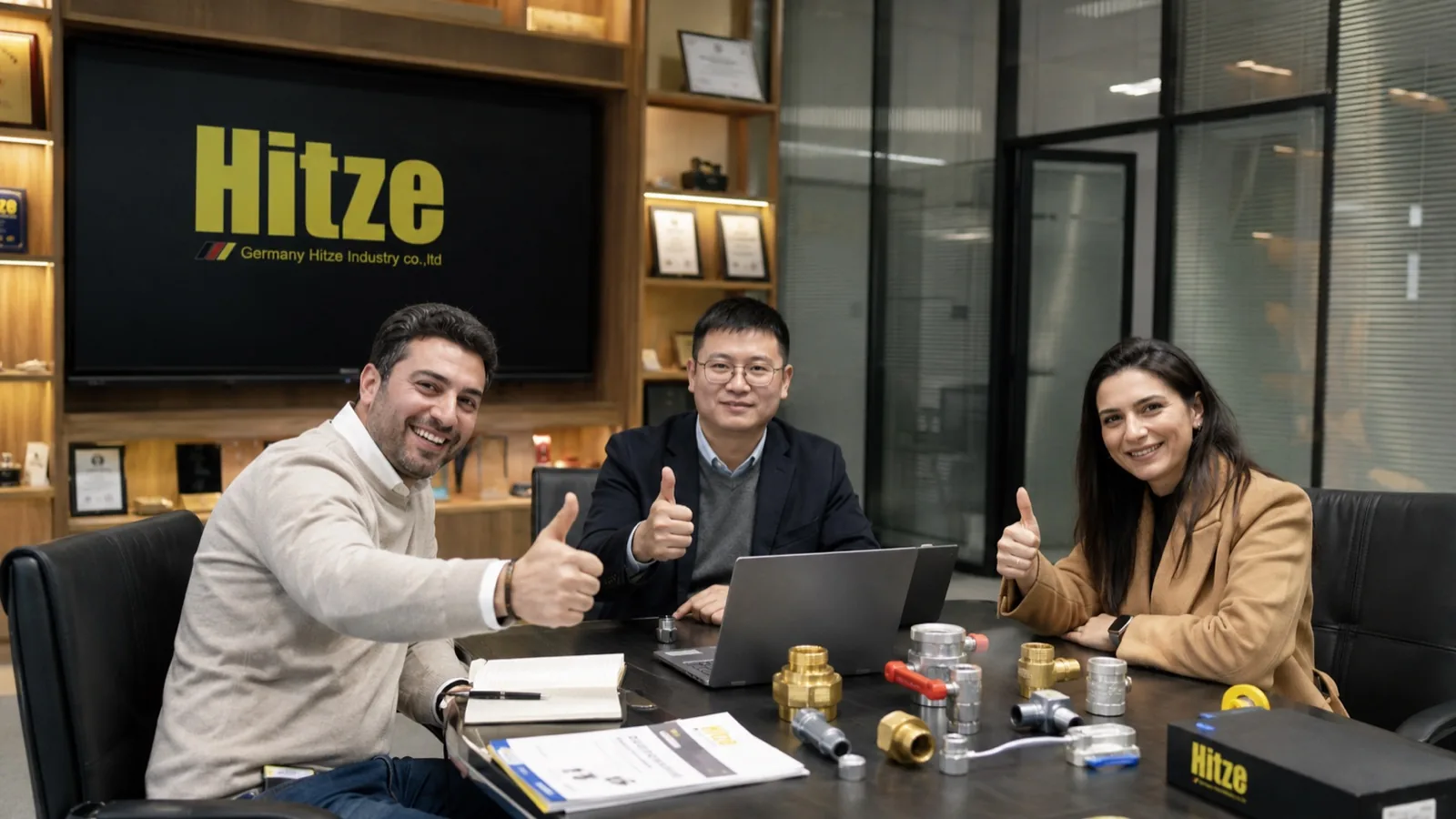
A sample-first strategy is simply refusing to commit to a customisation run until you have earned the right to. It runs in three stages, and each one de-risks the next. The point is not to be cheap; it is to make sure the capital you eventually commit to a custom line is backed by evidence, not optimism. The strategy is easiest to execute against a supplier that does not gate the early stages behind a minimum: because Hitze sets no MOQ, the concrete recommendation is to start at Stage 1 with samples and, if the numbers hold, place a genuinely small first order rather than the container a fixed minimum would otherwise force on you. You climb the ladder on your own schedule, not the factory’s minimum.
Stage 1 — Samples and a test protocol. Before any order, request samples of the exact pipe types and diameters you plan to sell. A real factory expects this and will often price a small trial above the per-unit production rate but below the full minimum. Always ask whether the sample cost can be credited against your first production order — many manufacturers will do it. Then treat the samples as a test, not a souvenir: cut the pipe and inspect the wall and, on multilayer, the aluminium core; press or fuse a fitting the way your installers will on site; confirm the printed markings and the certification paperwork match what you were promised. If the sample does not survive your bench, no MOQ conversation matters.
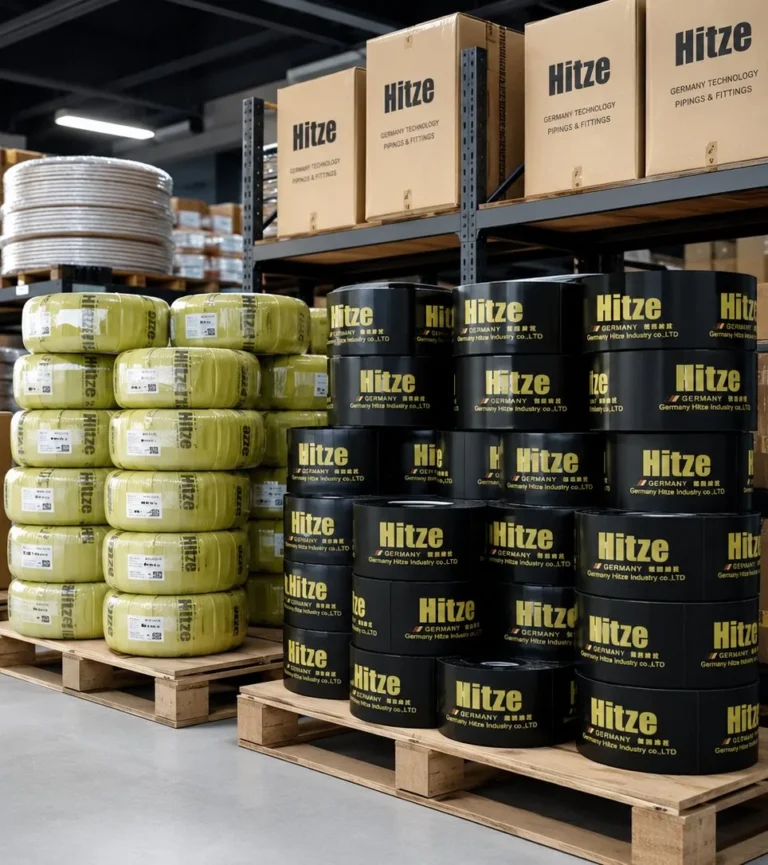
Stage 2 — A small mixed stock or private-carton first order. Once samples pass, your first paid order should be stock product — either fully unbranded or in your own printed carton — and ideally mixed across the SKUs you want to test, so one order proves several products at once. With no MOQ on the Hitze line, this stage is not about scraping together enough units to clear a per-SKU floor; it is simply about buying only as much as you can realistically sell while you gather data. Order the two or three sizes you are most confident in, in quantities small enough to de-risk but large enough to load a container efficiently (freight, covered below, still rewards a full box). You get sellable, already-certified product, in your own box, and you find out which sizes actually move — without a minimum dictating the size of the bet.
Stage 3 — The custom run, on proven SKUs only. Now — and only now — you climb into pipe-wall printing, custom colour or own-brand certification, and you do it only for the SKUs that sold in Stage 2. Even without a unit MOQ, this is the rung where real commitment appears: a custom colour ties up a dedicated resin batch, and each of these steps carries a one-off set-up or plate charge and its own lead time, so you want them backed by demand you have measured, not guessed. Most brands that fail do so by inverting this ladder: they spend Stage 3 money on Stage 1 confidence, order a fully custom eight-SKU range, and then sit on the five variants nobody wanted. The ladder is not slower — it is the same destination with the losing bets removed.
A worked launch: from first email to first custom run
Picture a distributor in the US Midwest who wants to launch an own-brand PEX and multilayer line for radiant-heating installers. The instinct is to design the full range — five sizes, custom red-and-blue colours, logo down the wall, certificate under their brand — and ask three factories for the MOQ. Every quote comes back different and every one looks expensive, because they are all pricing the fully custom, five-SKU, own-certificate version at once. That is the trap.
Run it as a ladder instead. Stage 1: they request samples of 16 and 20 mm oxygen-barrier PEX and 16 mm multilayer, cut them open, press fittings with their installers’ tools, and confirm the pipe carries the markings and the certification pack they will need to sell into their state’s plumbing code. Two weeks, minimal cash, and now they know the product is real. Stage 2: they place a small first order of stock oxygen-barrier PEX and multilayer, mixed across the three sizes that matter most, in their own printed carton — already certified, ready to sell, and sized to their real forecast rather than to a minimum, because there is none to clear. Six months later the data is in: 16 mm dominates, 20 mm sells, the third size barely moves. Stage 3: they commit to a custom run — logo down the wall and their own carton — on the two sizes that proved out, and begin the separate, longer process of getting a certificate re-issued under their brand. They reach the exact same fully branded line they first imagined, but they never bought the dead SKU, and they funded each rung with revenue from the one below it.
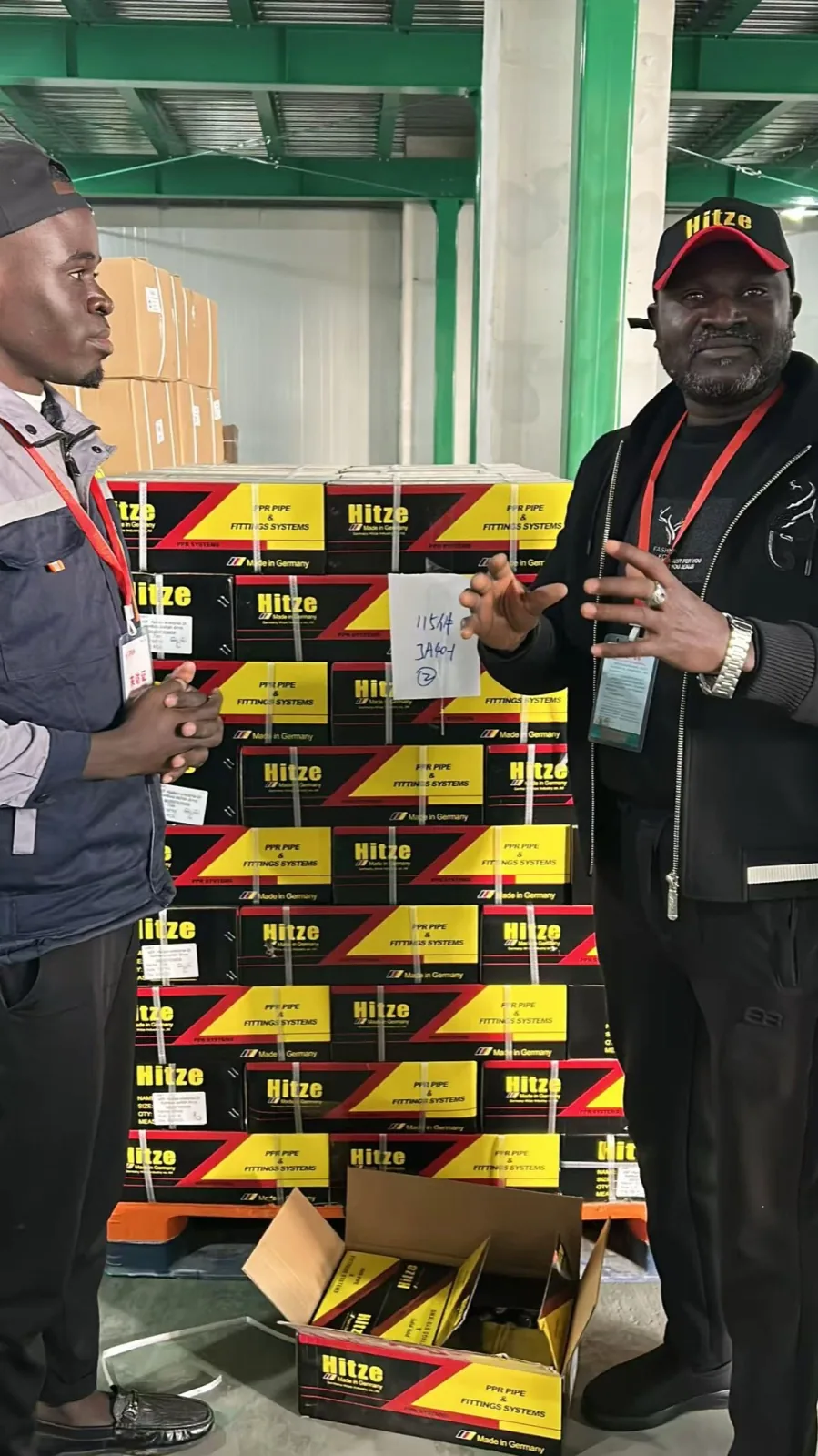
How Hitze structures a private-label first order
Hitze is a German brand of engineered piping systems, founded in 1974, built on a 120,000 m² production base with 1,000+ employees and exporting to 118+ countries. That scale matters to an MOQ conversation for a specific reason: a factory that already runs high volume across many SKUs can absorb a small, mixed private-label first order into an existing production schedule, rather than treating it as a disruptive special. It is what lets us do the thing most factories cannot — set no MOQ on private label at all, so a new brand can start with samples or a small trial order and scale on its own evidence. Here is what the process looks like on our side of a first order:
- There is no MOQ — you start as small as samples or a trial order. We do not gate a first order behind a per-SKU or per-run unit minimum, so you are never forced to over-buy to be allowed to begin. Custom print, colour and packaging still carry their own practical set-up — an artwork plate, a proofed print head, a dedicated resin batch and its lead time — and we quote those one-off steps up front so you can sequence them; but the unit floor to place an order is zero. Pricing, freight and lead times vary by market and order and are confirmed on request.
- Samples come first, and are testable. We expect a sample request and support the cut-inspect-press protocol above. Pipe is built to the standards on the spec sheet — PP-R to DIN 8077/8078 and EN ISO 15874, oxygen-barrier heating pipe to DIN 4726, multilayer PEX-AL-PEX with a butt-welded aluminium core — so what you test is what you receive.
- The base products are already certified. The range carries SKZ, DVGW and WRAS approvals and NSF-laboratory potable-water testing to BS 6920, and is stated as certified to cUPC/UPC (IAPMO), NSF-14, NSF/ANSI 61 and CE with a Declaration of Performance. That means a stock or private-carton first order can enter a regulated market on existing certification, without you funding a new certificate to start. Specific certificate numbers are available on request.
- Your label inherits a 50-year system warranty. Hitze warrants a matched pipe-and-fitting system for 50 years, and that warranty follows the product into your private-label programme — so the pipe you brand on a no-MOQ trial order is not just certified, it is warrantable for the long term. That is the backing your distributors and specifiers actually ask about, and it is the same on a small first order as on a full custom run.
- Branding scales in the order the ladder recommends. Neutral cartons and blank-panel labels first, then printed cartons, then pipe-wall print and custom colour, then own-brand certification — each step quoted so you can decide when the demand justifies the set-up cost, never a unit minimum.
Don’t forget the landed cost around the MOQ
Here is the catch when there is no MOQ to force your hand: freight quietly sets a practical floor of its own. Landed cost, not a supplier minimum, is what decides whether the order makes money — and the smallest possible order is rarely the cheapest per unit once freight is factored in, because shipping a half-empty container costs almost the same as filling it. So even with the unit floor at zero, you will usually want a Stage 2 order that loads a box efficiently; the freedom no-MOQ buys you is the ability to choose that quantity against your own forecast rather than a factory’s minimum. This is another argument for the Stage 2 mixed container: it lets you size the order to real demand and load the box efficiently at the same time.
Build the duty line in early, too, because it is knowable in advance. Plastic tubes, pipes and hoses and their fittings fall under HS heading 3917, which is harmonised worldwide for its first six digits. In the US, PEX supplied with fittings classifies under HTSUS 3917.33.0000 at a general (Column 1) duty rate of 3.1% ad valorem, a rate confirmed in CBP ruling N307844; plastic fittings on their own sit under 3917.40. Always confirm the exact subheading and rate for your specific product with your own customs broker, since classification turns on material, reinforcement and whether fittings are included, and duty schedules change. Get this number before you place a Stage 2 order, not after — it is a fixed percentage of your invoice and it belongs in your margin math from the start.
Best for / not for
| A sample-first, low-MOQ launch is best for… | It is not the right fit if… |
|---|---|
| A distributor or brand testing an own-label pipe line for the first time and unsure which SKUs will sell | You already have proven demand and a signed pipeline of orders — you may skip straight to a custom run |
| A buyer who wants a branded, already-certified product in market fast, with capital de-risked | Your brand strategy depends on a unique pipe colour being visible at point of sale from day one |
| Anyone entering a regulated market who can sell on the factory’s existing certifications while own-brand certs process | Your market or tender requires the certificate to name your brand before you can sell a single unit |
Test the product before you commit the container
If you are a distributor or brand owner launching an own-label PEX, multilayer or PP-R line and you want to prove the market before you fund a fully custom run, Hitze’s private-label programme is built to run exactly that ladder — samples, a small mixed already-certified first order, then a custom run on the SKUs that earn it. Because there is no MOQ, you set the size of the first bet; and the matched system carries a 50-year warranty at every stage. It is not built for buyers who need a bespoke resin or a brand-named certificate before the first sale; those start higher up the ladder, where set-up cost and lead time apply. Pricing and lead times vary by market and order.
Once you have chosen the pipe types for your range, the same sample-first logic applies to each line — you can request samples and MOQ guidance on PEX pipe and multilayer PEX-AL-PEX pipe individually, and pull the full compliance documentation from the certifications & compliance page before you brand anything.
Frequently asked questions
What is a realistic MOQ for private-label pipe?
Across the industry there is no single figure, and a factory that quotes one flat number for every product without asking about your spec should make you cautious. The minimum is normally set per SKU and climbs with customisation: stock pipe in a plain carton sits at the lowest floor, a printed carton barely raises it, pipe-wall printing and a custom colour raise it more, and an own-brand certificate is the highest and longest-lead step. Hitze is the exception — there is no MOQ on our private-label programme, so the realistic starting number is zero: you can begin with samples or a small trial order. Custom print, colour and packaging still carry their own one-off set-up and lead time, which we quote up front; pricing varies by market and order.
Can I get samples before committing to an MOQ?
Yes, and you should. A real factory expects a sample request and often prices a small trial above the per-unit production rate but below the full minimum. Ask whether the sample cost can be credited against your first production order — many will agree. Use the samples as a test: cut the pipe, inspect the wall and, on multilayer, the aluminium core, press or fuse a fitting the way your installers will, and confirm the markings and certification paperwork match what you were promised.
Why is the MOQ higher for custom colour or printed pipe than for stock?
Because the cost is in the set-up, not the pipe. A custom colour means the extrusion line runs only your resin for that batch and must purge before and after, which can only be amortised over a full run. Pipe-wall printing adds a print-head set-up, artwork proofing and an ink changeover. Stock product carries none of those costs because the line already runs it — which is why the cheapest way to launch is to brand the carton, not the pipe, until demand justifies more.
Can the pipe be certified under my own brand name from the first order?
The base products are already certified — SKZ, DVGW, WRAS, NSF laboratory testing to BS 6920, and stated certification to cUPC/UPC (IAPMO), NSF-14, NSF/ANSI 61 and CE with a Declaration of Performance — and the matched system carries a 50-year warranty, so a stock or private-carton first order ships into a regulated market as a certified, warrantable product without you funding a new certificate. Having a certificate re-issued specifically under your own brand is a separate, larger step: it is tied to the audited production site and moves on the certifier’s timeline, not the factory’s. Most brands ship the certified stock order first and pursue own-brand certification once the SKU is proven. Certificate numbers are available on request.
How small can my first private-label order be?
With Hitze there is no MOQ, so the honest answer is: as small as samples or a modest trial order. The way to keep that first bet genuinely small is to stay low on the customisation ladder and cut variants — launch with the two or three sizes you are most confident in, in your own carton on already-certified stock, and only add pipe-wall printing, custom colour and own-brand certification later, on the SKUs that actually sold. There is no unit floor to clear; the only thing that scales cost early is how much you customise, not how much you buy.
Is Hitze pipe made in Germany?
Hitze is a German brand of engineered piping systems, founded in 1974 and holding a German trademark registration with the DPMA. The products are engineered in Germany and built to German DIN and EN ISO standards — for example EN ISO 15874 for PP-R and DIN 4726 for oxygen-barrier heating pipe — and they carry German and international certifications including SKZ, DVGW and WRAS. The honest framing is “German brand, engineered in Germany, built to German DIN standards,” with certification documents available on request.