Most private-label pipe programmes look like your brand in the sales deck and stop looking like it the moment a plumber cuts a length open. The logo is on the carton, but the pipe wall still reads the factory’s name; the fittings carry a foreign trademark; and the certificate in the submittal names a company your customer has never heard of. If your buyers or their inspectors ever look past the box, the illusion breaks. This is the private label pipe packaging checklist that stops that from happening — covering the four surfaces your brand actually has to reach (pipe print, fittings, packaging, documents), what can and cannot be changed, and the one legal trap that quietly turns you into the “manufacturer” of record.
Key Takeaways
- Your brand has four surfaces, not one: the print down the pipe wall, the marking on fittings and valves, the packaging, and the documentation. Cartons are the easy 20%; the pipe print and the paperwork are where cheap programmes get exposed.
- The pipe’s printed marking line is regulated, not free-form. Under EN ISO 15874 it must carry the material, dimensions, application class, pressure and standard reference, print at least once per metre, and use ink that contrasts with the pipe — your logo shares that line, it does not replace it.
- Putting your own name on the pipe and on the Declaration of Performance can make you the legal “manufacturer” in the EU (CPR Article 15) — with the compliance obligations that follow. Decide this on purpose, not by accident.
- Documents are part of the brand: certificates, DoP/CE paperwork, test reports, install manuals and submittal sheets all need to name the right entity and match the goods. A mismatch here is what stops a container at customs or fails a project submittal.
- Sequence it: unbranded stock → your carton → your pipe print → your own-brand certification. Each step raises setup cost. Hitze has no MOQ — start with samples or a small trial order and add branded surfaces as your SKU proves out; pricing and lead time vary by market and order and are quoted on request.
The Four Surfaces Your Brand Has To Reach
When a buyer says “we want it under our brand,” they almost always mean the box. That is the cheapest and most visible surface, and it is where lazy private-label programmes stop. But a pipe system is handled, cut and inspected by people who never see the carton: the plumber who reads the print on the wall, the merchant who scans the fitting, the inspector who opens the submittal folder. Your brand has to survive all of them — so think in four surfaces, in ascending order of difficulty and cost.
Packaging — cartons, film, coil bands, labels, display boxes — is print-and-die work, not production engineering, so it carries the lowest setup cost and shortest lead time; it is also the surface buyers over-invest in because it photographs well. The pipe wall — the text and logo printed down the pipe — is the surface that betrays a fake private label, because it is the one the installer reads, and changing it means a real print set-up on the extrusion line. Fittings and valves carry moulded or stamped markings set in the tool, not printed afterwards, which makes them the hardest surface to brand cheaply. And documentation — certificates, Declarations of Performance, test reports, manuals and submittal sheets — is the surface buyers underestimate most and regulators care about most: it is where a private label becomes legally real, or legally exposed.
| Surface | How it’s branded | Relative setup cost / MOQ impact | Who notices if it’s wrong |
|---|---|---|---|
| Packaging (cartons, labels, film) | Print plates + die — no production change | Lowest | Buyer, end shelf |
| Pipe wall print | Ink-jet / print head set-up on the extrusion line | Medium — dedicated run | Installer, merchant |
| Fittings & valves marking | Moulded/stamped in the tool — tooling change | Highest for a moulded logo | Installer, inspector |
| Documentation | Re-issued under your entity; content unchanged | Low print cost, high compliance cost | Customs, specifier, inspector |
The Pipe Wall Print: What You Can Change and What the Standard Owns
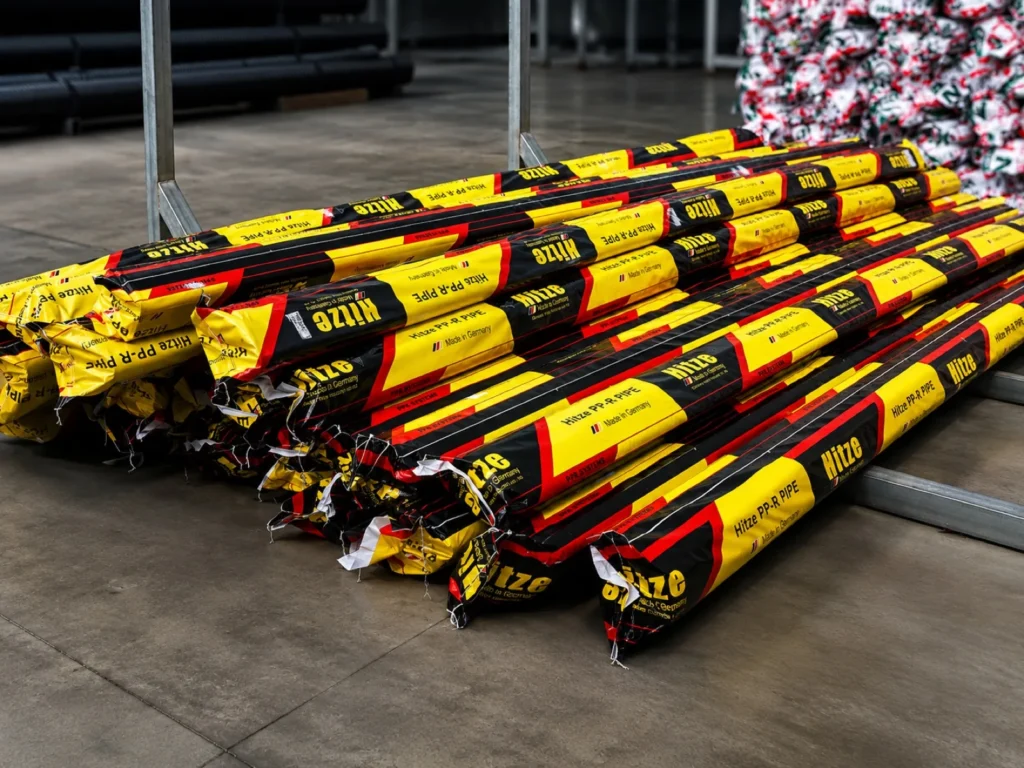
Here is the fact that separates a real ODM programme from a sticker job: the line of text running down a pipe is not marketing space you rent — most of it is required by the product standard. Under EN ISO 15874 (the harmonised standard for PP-R hot-and-cold systems), the marking must be printed or formed directly on the pipe, appear at least once per metre, stay legible without magnification after handling and installation, and — when printed — use a colour that differs from the pipe’s base colour so it stays readable. You cannot delete these items to make room for a bigger logo. Your brand name joins that line; it does not take it over.
What actually has to be in that marking line is specific. Expect the manufacturer’s name or trademark, the material designation (PP-R, PP-RCT, PE-RT, PEX and so on), the nominal size and wall (for example 25×4.2), the pipe series or SDR, the application class and design pressure — the ISO 10508 format such as “Class 1/10 bar, Class 2/10 bar, Class 5/8 bar” that tells an installer which service the pipe is rated for — the reference standard, and a production date or batch code for traceability. Your logo and brand name replace the manufacturer name slot; every technical field stays. A private label that strips the class, pressure or standard reference to look cleaner is not cleaner, it is non-compliant, and any competent inspector will catch it.
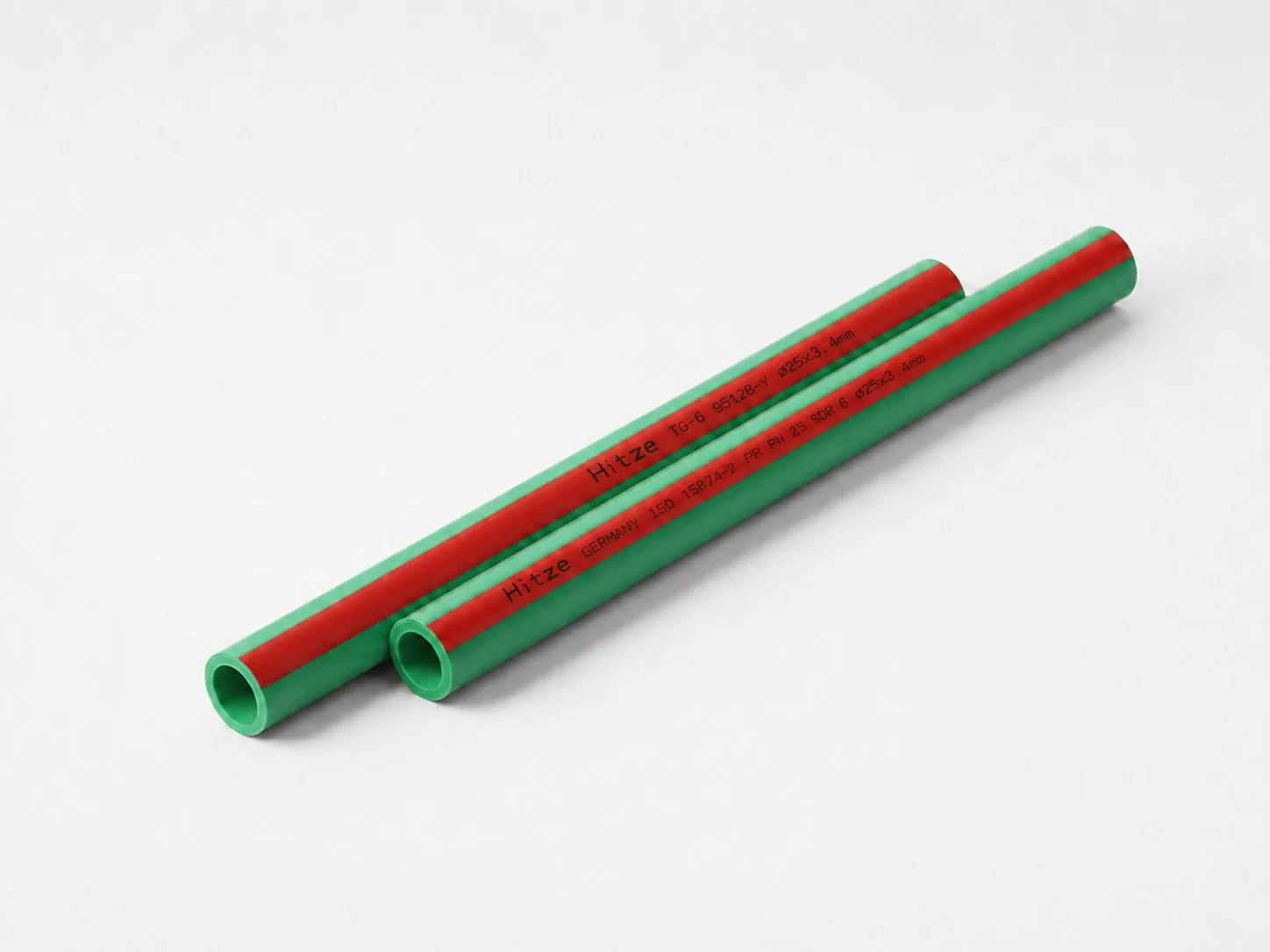
On the production side, changing that print is a real step, not a favour. Swapping the brand name and adding a logo means re-setting the ink-jet or print head on the extrusion line, so — even though Hitze sets no unit minimum — custom pipe print still carries a one-off set-up and lead time that ordering stock coils out of the same run does not. Two decisions drive the cost: whether you want a simple text change (cheaper, faster) or a full graphic logo down the wall (needs artwork proofing and a longer set-up), and whether you also want a custom pipe colour, which is a dedicated resin changeover on top of the print — the single biggest jump in a private-label pipe budget. Sequence these deliberately. Many brands launch on the factory’s standard colour with their own printed name first, then move to a bespoke colour once volume justifies the resin run.
Insider warning
Always sign off a physical print proof pulled from the live line, not a screen mock-up. Ink-jet on a curved, coloured pipe behaves differently from a flat PDF: contrast, character height and logo sharpness all shift. Approving artwork you never saw on the actual pipe is the most common reason a “branded” first order arrives looking wrong — and by then the run is made.
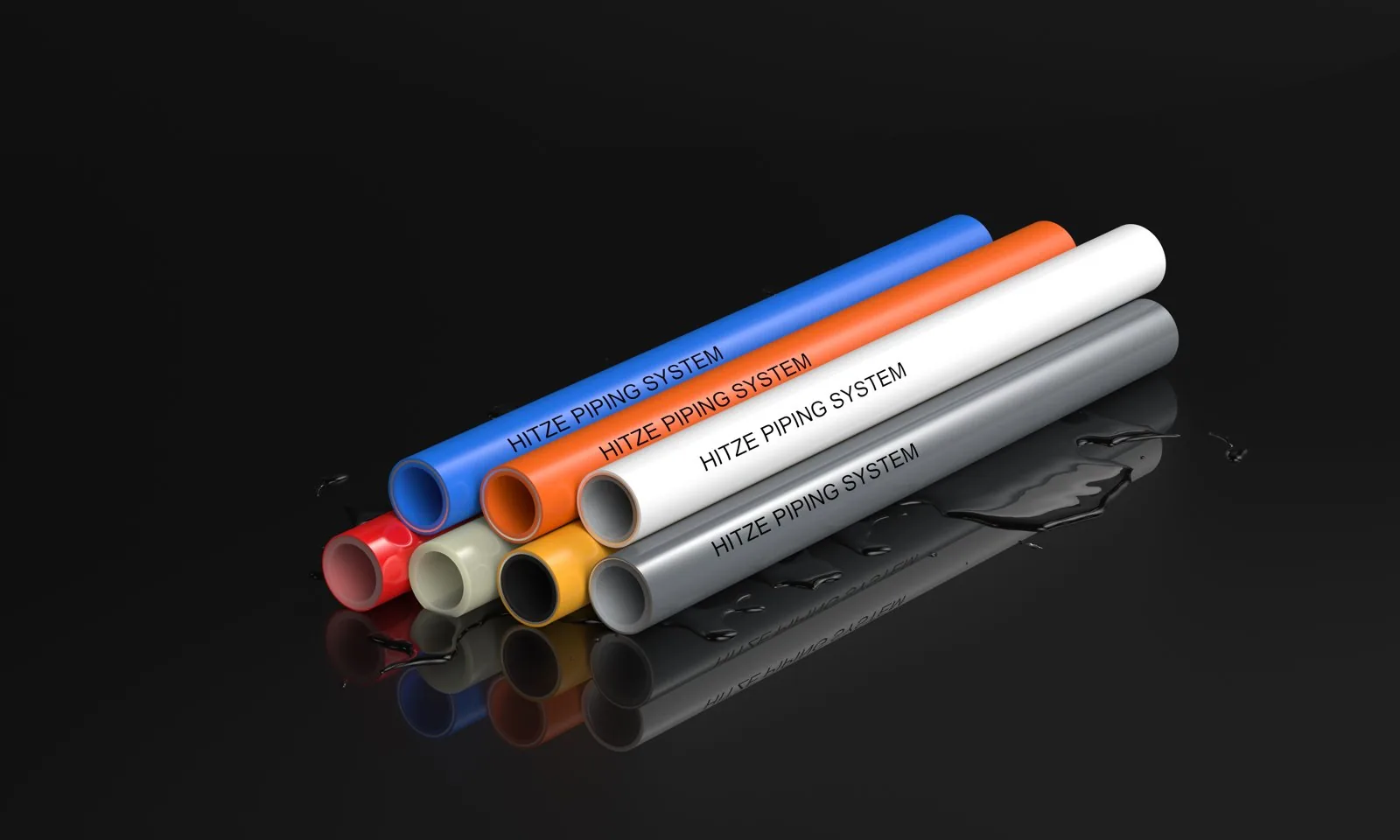
Fittings, Valves and the Marking You Can’t Just Print
Pipe is printed; fittings are moulded and stamped, and that difference reshapes your branding options. A PP-R socket, a press fitting body or a brass valve carries its identity in the tool itself — the size, the pressure rating (PN25 on a ball valve, for example), the material grade and any logo are cast or engraved when the part is formed. Reaching your brand onto that surface means cutting or modifying a mould or die, which is why fittings are the most expensive surface to fully own and the one most first-time programmes defer.
There is a hierarchy of what you can realistically brand on fittings. Cheapest is leaving the moulded technical marking as-is and putting your brand on the fitting’s bag or carton — the part your customer opens. Next is a shared logo cavity, where a factory that has designed for private label can insert a small brand plate into an existing mould, giving you a moulded logo without a full new tool. Most expensive is a dedicated mould, justified only at real volume. For brass, the equivalent choices are laser-marking or stamping your name on the body versus a fully re-cut die. Ask your factory which of these it actually supports before you promise a customer “fully branded fittings” — the answer varies enormously by supplier, and a factory that only offers bag branding should say so plainly.
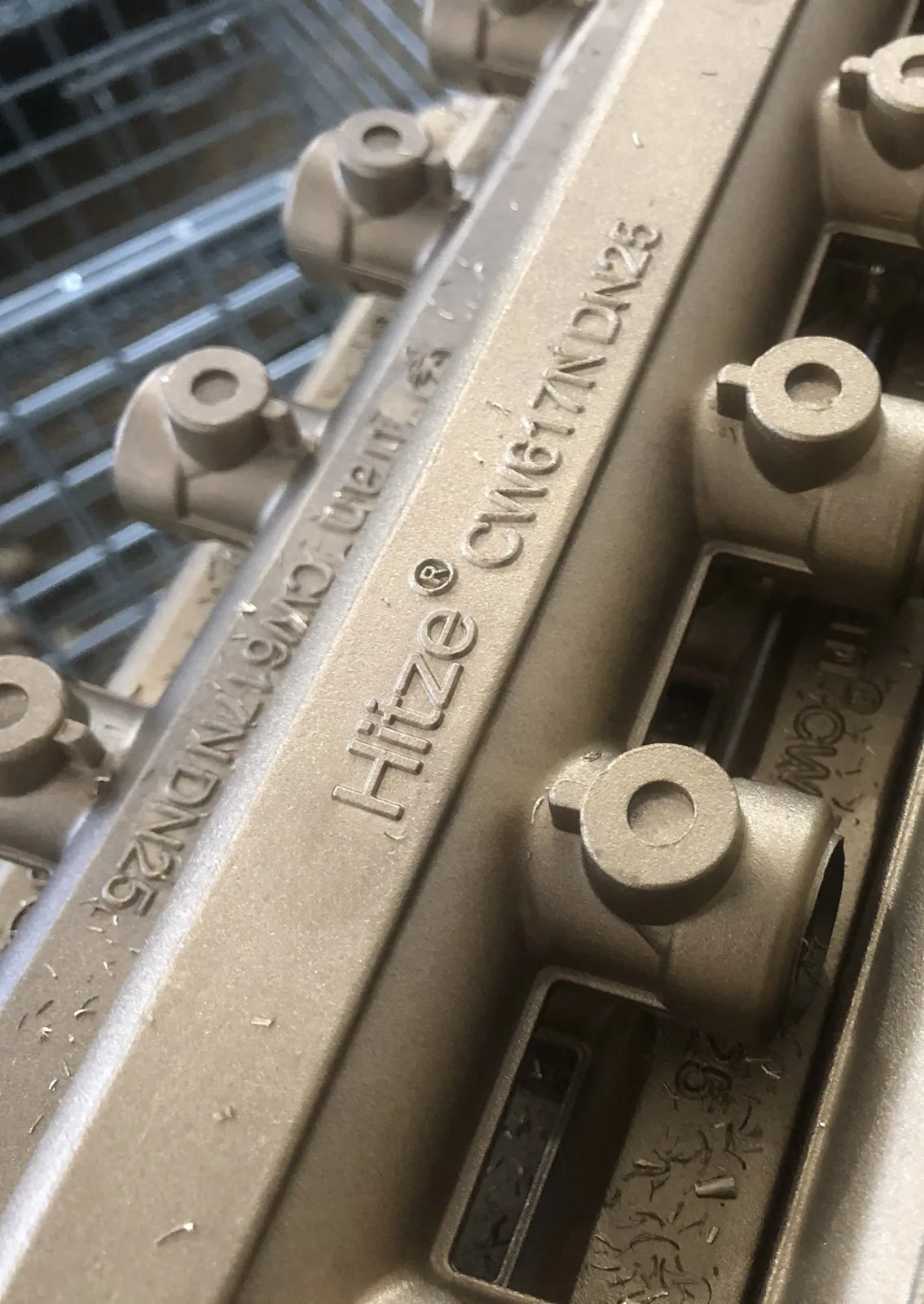
One thing you cannot remove from a fitting is its compliance marking. A lead-free brass body sold into the US carries lead-content and standard markings tied to NSF/ANSI 372 and NSF/ANSI 61; a pressure fitting carries its rating and standard. As with pipe, your brand shares the surface with these marks; it does not replace them. If a supplier offers to give you a “clean” fitting with only your logo and no grade or rating, walk away — you are being handed a product you cannot legally or safely resell into a regulated market.
Packaging: The Easy Surface, Done Properly
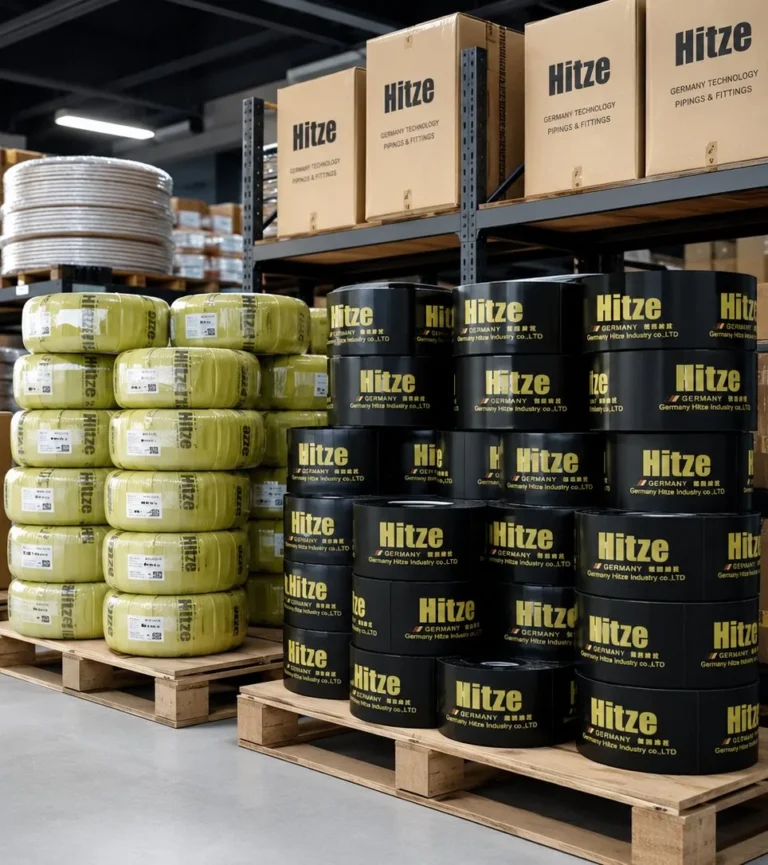
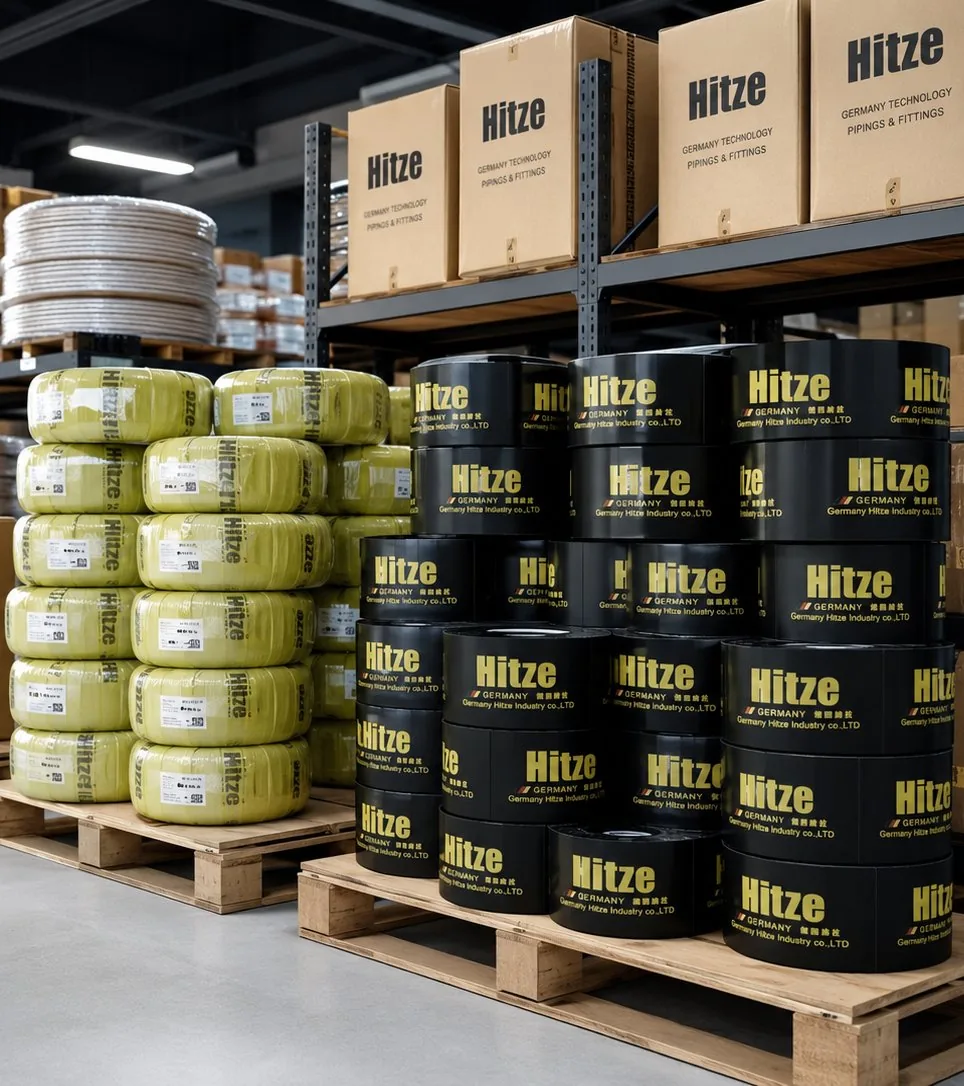
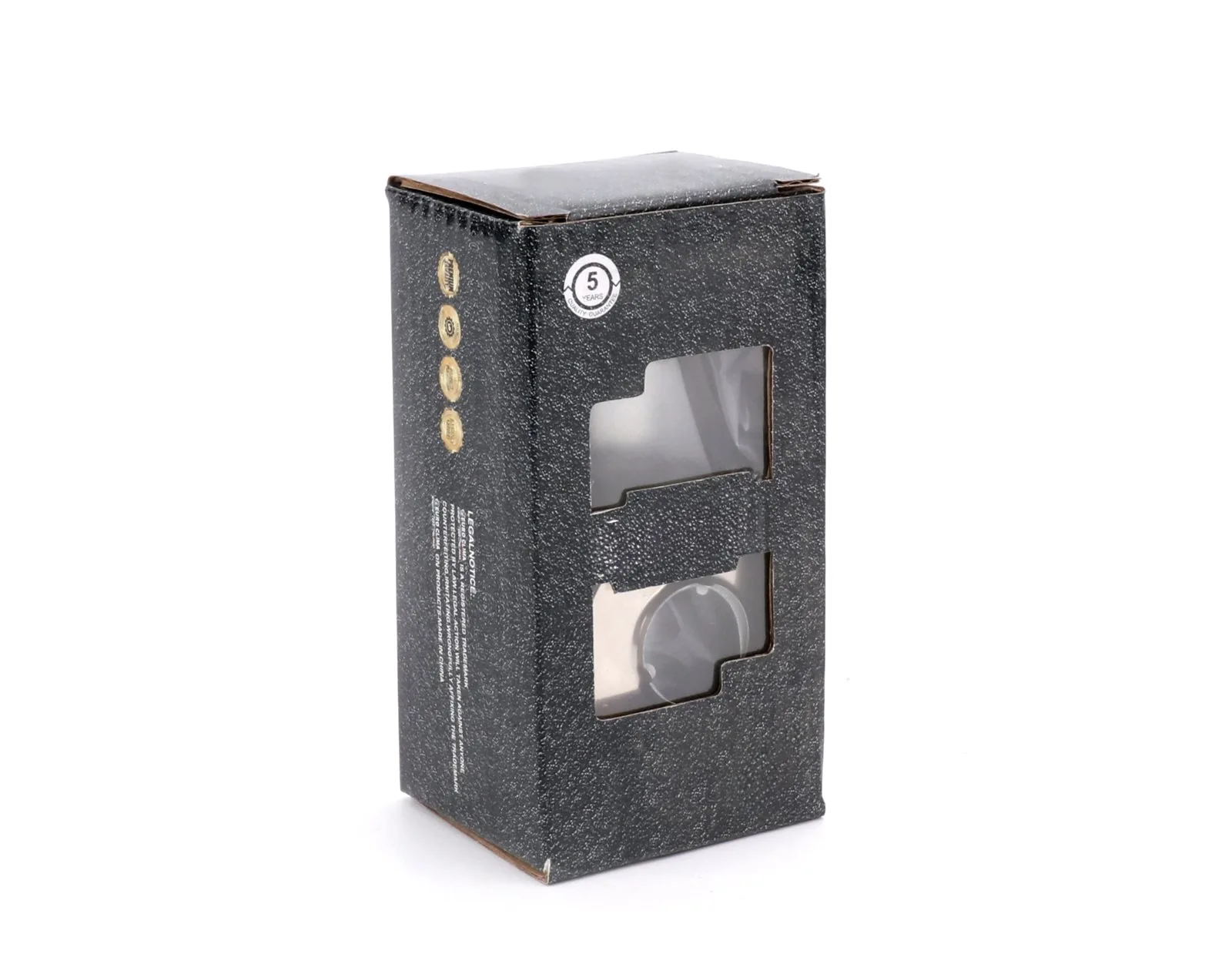
Packaging is the lowest-risk surface, but “easy” is not the same as “trivial.” Get the fundamentals right and it protects the goods, moves through customs cleanly and looks like a brand on a merchant’s shelf. Three layers are worth specifying deliberately. The shipping carton is your logistics unit — it needs your logo, but far more importantly it needs accurate content, size, quantity, batch and country-of-origin marking, because that is what customs and your warehouse read. The retail or trade unit — a display box for fittings, a banded coil, a labelled bundle — is your shelf face and can carry photography, a spec panel and a window. The label is the flexible layer: on a neutral brandable carton, a well-designed label lets you run one stock box across several SKUs and even several brands, which keeps your packaging MOQ low.
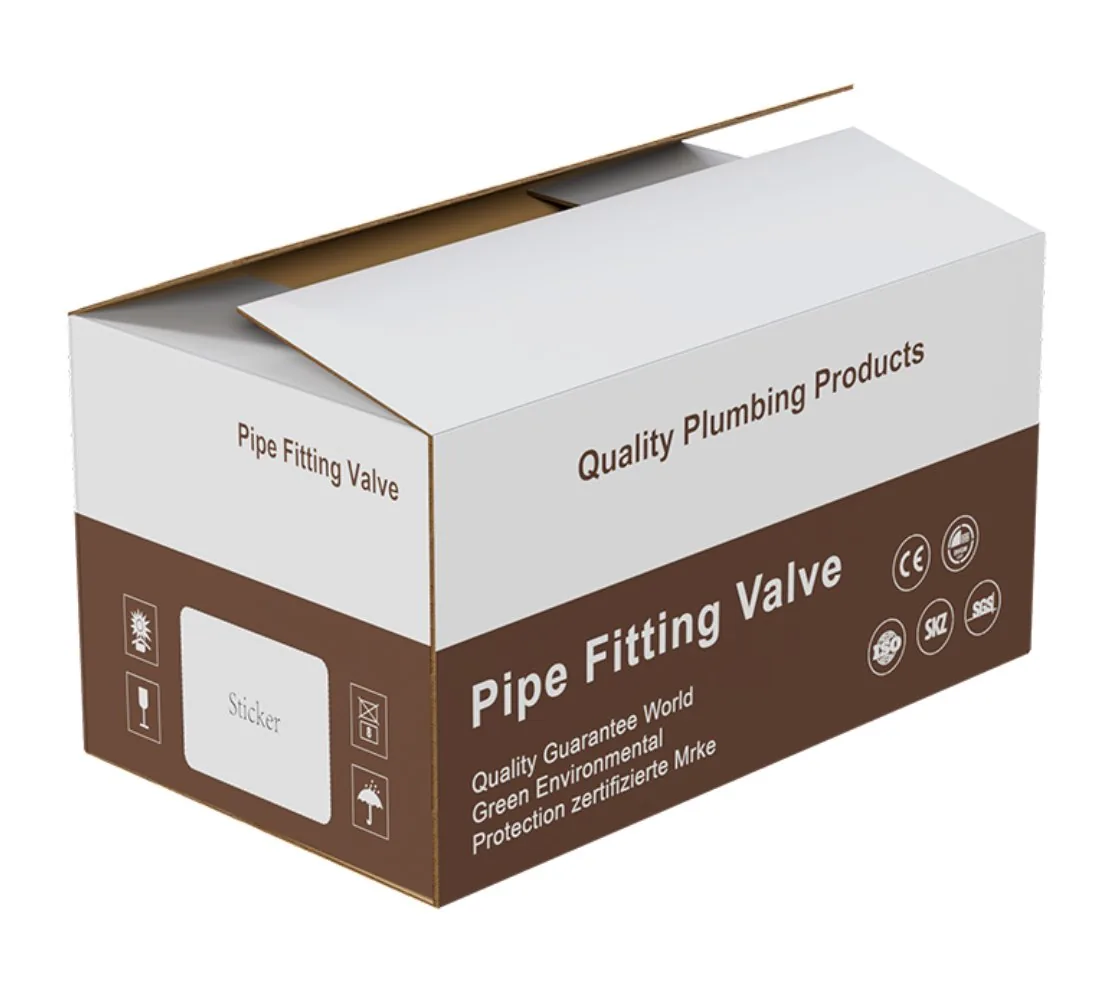
Two details save real money and grief. First, country-of-origin marking is a legal requirement, not a branding choice — US Customs and most import regimes require the true country of origin to be marked legibly and permanently on the goods or their container, and a private label does not change or hide it. Trying to obscure origin to reinforce a “brand story” is exactly how shipments get held or penalised. Be honest on the box and put the brand equity into design and documentation instead. Second, decide early whether packaging print runs on-demand per order or is stocked. Stocking pre-printed cartons cuts lead time on reorders but ties up cash and locks your artwork; label-on-neutral-carton keeps you flexible. For a first launch, flexible almost always wins.
Documentation: Where a Private Label Becomes Legally Real
This is the section most buyers skim and the one that actually decides whether your brand holds up. Documentation is a surface of your brand: the certificate a specifier files, the Declaration of Performance in a submittal, the test report a distributor demands, the installation manual and warranty statement your customer keeps. Each of these names an entity — and if the name is wrong, or the document does not match the goods, the paperwork does the opposite of what you paid for. A mismatch between the brand on the box and the company on the certificate is precisely what makes a customs officer or a project inspector stop and ask questions.
Now the trap. In the EU, putting a construction product on the market under your own name or trademark can legally make you the manufacturer. The Construction Products Regulation ((EU) 305/2011) is explicit: as the European Commission’s own guidance puts it, distributors making construction products available on the market under their own trade names “are indeed considered manufacturers (cf. Article 15).” That is not a paperwork technicality — it means you must draw up your own Declaration of Performance, affix the CE marking under your name and address, and you cannot simply hand out the original factory’s DoP. The obligation to ensure the product meets its declared performance, produced under a proper Factory Production Control system, lands on the entity whose brand is on the pipe.
The trap in one sentence
Brand the pipe and the DoP with your name in the EU and you may become the legal “manufacturer” of record — with the compliance duties that follow — so decide on purpose whether you want the factory to remain the named manufacturer (you distribute) or whether you take that role (and set up the DoP, CE marking and FPC evidence to back it).
The US works differently in mechanism but rewards the same discipline. IAPMO issues the cUPC/UPC certification mark and maintains a public listing; NSF/ANSI 61 governs drinking-water safety and NSF/ANSI 372 governs lead-free content. A product can be listed and marked so that a specific brand appears as the seller of a certified product, but the listing has to actually cover your branded SKU — you cannot bolt your name onto a certificate issued to a different product line and assume it carries. Before you print “cUPC certified” on your carton, confirm the listing scope in writing and that your brand’s presentation is authorised. The honest, defensible position is to sell a product that is genuinely certified, keep the certificate numbers on request, and never imply a listing you cannot point an inspector to.
The practical rule that follows from all of this: brand the box and the pipe freely, but treat certificates and the DoP as a deliberate compliance decision, not a design one. Map, per target market, which document names which entity — and make sure the goods, the markings and the paperwork tell one consistent story. That consistency is the whole game at the border and in the submittal folder.
What Hitze Checks and How an ODM Order Is Built
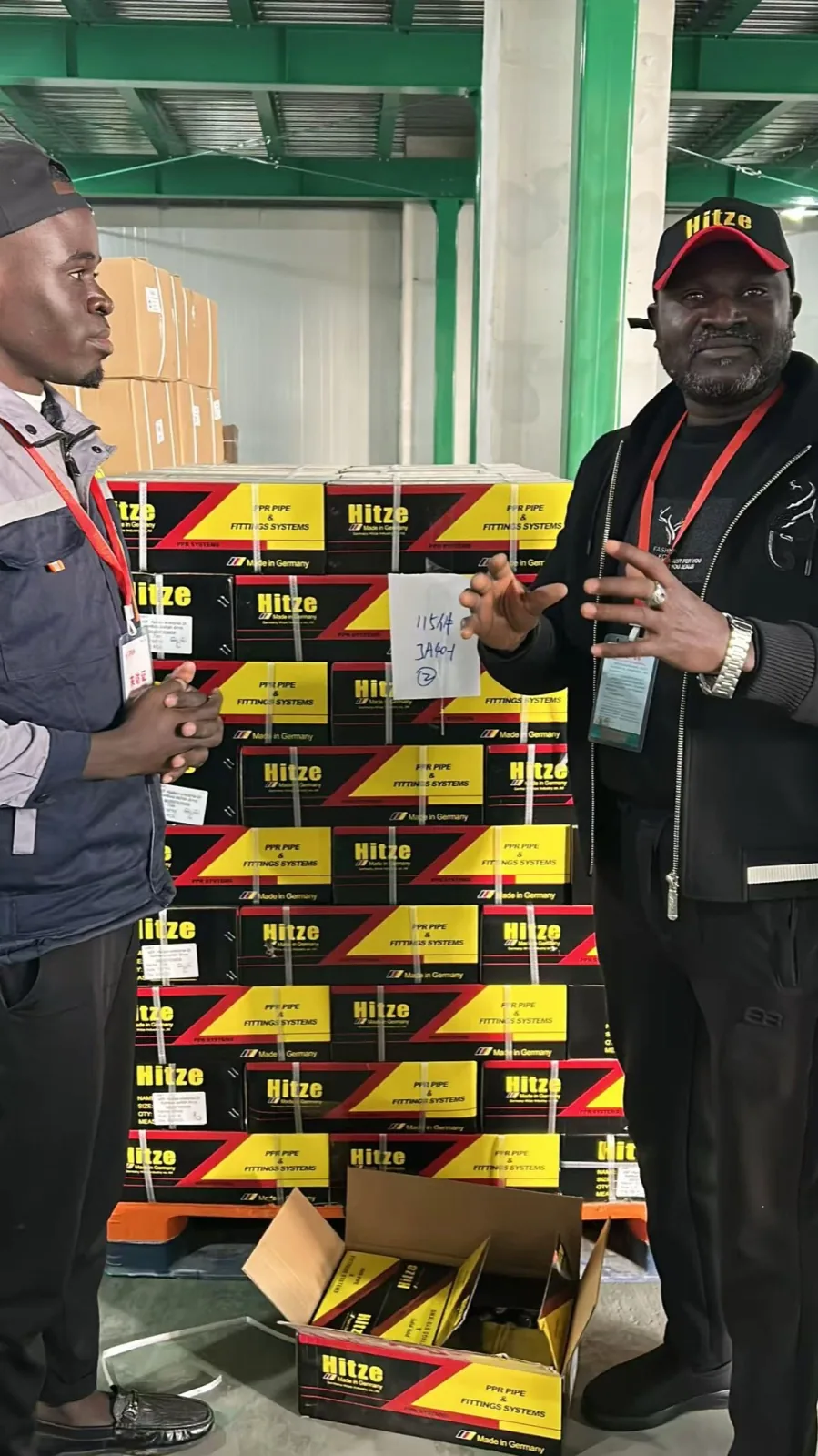
Hitze is a German brand of engineered piping systems, founded in 1974, running a 120,000 m² production base with 1,000+ employees and exporting to 118+ countries, under the legal entity Germany Hitze Industry with a German trademark registered at the DPMA (Reg. No. 30 2020 005 484). The private-label / ODM programme is built around exactly the four surfaces above, and here is how a branded order is actually put together and verified.
Artwork and proofing. Your logo and brand line are set up for both the carton and the pipe-wall print. You approve a physical pipe proof from the live line — not a screen render — so the marking you sign off is the marking you receive, with the required class, pressure and standard fields intact and your name in the manufacturer slot. Carton and label proofs run in parallel.
Compliance mapping. Before anything prints, the target-market documentation is mapped: which of the held certifications applies (SKZ testing on PP-R and PE-Xb, DVGW type examination for PP-R drinking water, WRAS material approval, NSF International’s BS 6920 potable-water test report, ISO 45001, SAI Global to AS 4176.8 (consumer-gas multilayer), plus stated cUPC/UPC, NSF-14, NSF/ANSI 61 and CE with a Declaration of Performance), whether you distribute under the factory as named manufacturer or pursue own-brand documents, and what markings the pipe and fittings must carry to stay compliant. Certificate numbers are available on request.
Build and QC. Pipe is extruded to the relevant standard — DIN 8077/8078 and EN ISO 15874 for PP-R, DIN 4726 for oxygen-barrier heating pipe, EN 12201 for PE100 — with hydrostatic and dimensional checks, and your print applied and verified against the approved proof. Fittings and valves are produced with the agreed marking, and the order is packed into your cartons with correct content, batch and origin marking. A first-order inspection against your approved sample closes the loop before the container ships.
An End-to-End Scenario: Launching “NordPipe” Into Two Markets
Picture a distributor launching an own brand — call it NordPipe — into the UK and the US with a PP-R hot-and-cold range plus press and compression fittings. The wrong way: order a container of fully custom-coloured, custom-printed pipe with moulded-logo fittings and “cUPC/CE” splashed on the carton, all on day one, off a screen mock-up. The likely outcome is a five-figure bet on artwork nobody proofed on real pipe, fittings whose tooling change blew the budget, and certification claims that don’t map to the SKU — plus a customs hold when the origin marking and the paperwork disagree.
The right way is staged. First order: stock pipe and fittings in NordPipe cartons with a label layer, factory as named manufacturer, genuine certificates on request — no MOQ, so a sample or small trial order is the fastest route to real customers. As the range sells through, NordPipe adds its printed name down the pipe wall (text set-up, standard colour retained) and brands fittings by bag and carton. Only when a specific SKU proves itself does it fund a bespoke pipe colour, moulded-logo fittings and — where market and volume justify it — own-brand documentation, accepting the CPR Article 15 manufacturer role in the EU with the DoP and CE marking under its name. Each step is validated on a batch NordPipe can actually sell, so the brand deepens without a single blind bet.
Best For / Not For
A full-depth ODM programme is best for distributors and importers building a durable own brand they intend to reorder and defend in the trade; buyers selling into inspected, regulated markets where the pipe print and paperwork will be scrutinised; and brands that want the product to read as theirs from carton to pipe wall to certificate. It is not the right first move for a buyer testing a market for the first time (start with stock in your carton and skip the tooling), anyone who needs the absolute lowest unit price on a one-off (custom set-ups add cost), or a programme with no plan to reorder — custom print, colour and tooling only pay back across repeat volume. If you fall in the second group, brand the box now and earn the deeper surfaces as the SKU proves itself.
Planning an own-brand pipe line?
This checklist is written for distributors, importers and private-label brands who want the product to look like theirs end to end — not just on the box. If that’s you, Hitze’s private-label & ODM piping programme covers pipe-wall print, fitting marking, packaging and market documentation across the full range, with no MOQ. Start with samples or a small trial order in your carton, then add surfaces as your SKU proves out. Pricing and lead time vary by market and order and are quoted on request.
Two supporting decisions sit right next to packaging: which product actually carries your brand, and whether its compliance holds in your market. If you are still choosing the range, the PEX pipe and multilayer PEX-AL-PEX lines are the usual private-label starting points, and the certifications & compliance page lays out which approvals map to which market before you commit artwork to a certificate.
Frequently Asked Questions
Can I put my own logo on the pipe itself, not just the box?
Yes. Your brand name and logo can be printed down the pipe wall, taking the manufacturer-name slot in the marking line. What you cannot do is delete the technical fields the standard requires — under EN ISO 15874 the marking must still show the material, size, pipe series, application class and design pressure (the ISO 10508 “Class 1/10 bar” format), the standard reference and a production date, printed at least once per metre in contrasting ink. Your logo shares that line; it does not replace it. Hitze sets no MOQ, so you can start with samples or a small trial order — but custom pipe print is a real production set-up, so it still carries a one-off set-up and lead time that stock coils do not.
Does branding the pipe with my name make me the legal manufacturer?
In the EU it can. The Construction Products Regulation ((EU) 305/2011) treats a distributor who places a product on the market under their own trade name as the manufacturer (Article 15), which means drawing up your own Declaration of Performance, affixing the CE marking under your name, and taking responsibility for declared performance — you cannot just reuse the factory’s DoP. This is a decision to make on purpose: either keep the factory as named manufacturer and distribute under your brand, or take the manufacturer role deliberately and set up the DoP, CE marking and Factory Production Control evidence to support it.
Can the certificates (cUPC, NSF, WRAS, CE) be issued under my brand name?
Often yes, but it is a separate, larger step than printing a carton. The base products are already certified — SKZ, DVGW, WRAS, NSF International’s BS 6920 testing, plus stated cUPC/UPC, NSF-14, NSF/ANSI 61 and CE with a Declaration of Performance — so you can ship certified stock or private-label-carton product without funding new certification. Having a certificate or listing presented under your own brand name involves the certifier, fees and sometimes an audit, and the listing must genuinely cover your SKU. Most brands sell the certified product first and pursue own-brand documents once the SKU is proven. Certificate numbers are available on request.
Can I hide or change the country of origin on my private-label packaging?
No — and you should not try. US Customs and most import regimes require the true country of origin to be marked legibly and permanently on imported goods or their container, and private labelling does not change that obligation. Obscuring origin to reinforce a brand story is exactly how shipments get held or penalised. Mark origin honestly and build brand equity through design, product quality and clean documentation instead. Hitze is a German brand engineered in Germany and built to German DIN and EN ISO standards; the honest framing is “German brand,” not a false origin claim on the box.
What HS code and import duty apply to private-label plastic pipe and fittings?
Plastic tubes, pipes and their fittings fall under HS heading 3917, which is harmonised worldwide for its first six digits — private labelling does not change the classification. In the US, plastic pipe/hose fittings under HTSUS 3917.40.00 carry a general (Column 1) duty of 5.3% ad valorem, and PEX supplied with fittings has been classified under 3917.33.00 at 3.1%. The exact subheading and rate depend on material, reinforcement and whether fittings are included, and schedules change — always confirm your specific product and rate with your own customs broker.
How should I sequence a private-label launch to keep MOQ and risk low?
Move outward through the four surfaces. Start with unbranded stock product in your own carton and label — lowest setup, fastest lead time, factory as named manufacturer with certificates on request. Add your printed name down the pipe wall next (a text set-up, keeping the standard colour). Then brand fittings by bag and carton. Only once a specific SKU proves itself do you fund a custom pipe colour, moulded-logo fittings and own-brand documentation. Each step raises setup cost, so validate on a batch you can actually sell before you climb. Hitze has no MOQ — start with samples or a small trial order and climb from there; pricing and lead time vary by market and order and are quoted on request.
Compliance note: standards, certification scopes, tariff classifications and duty rates change and depend on your exact product and market. Certification schemes are referenced generally; Hitze certificate numbers are available on request. Confirm classifications and duties with your customs broker and certification requirements with the relevant issuing body before you rely on them.