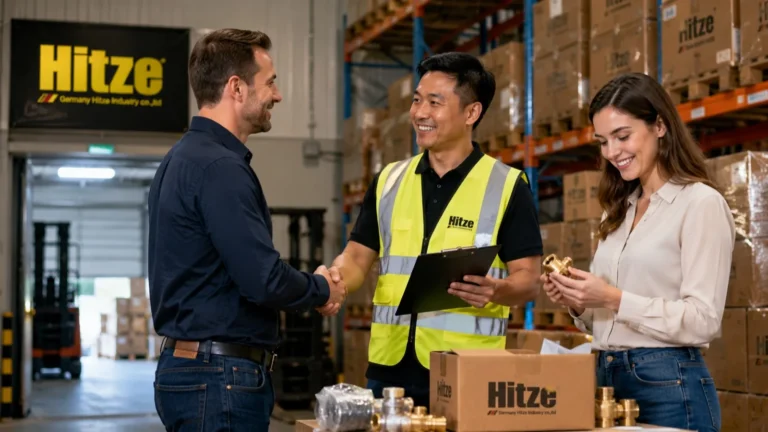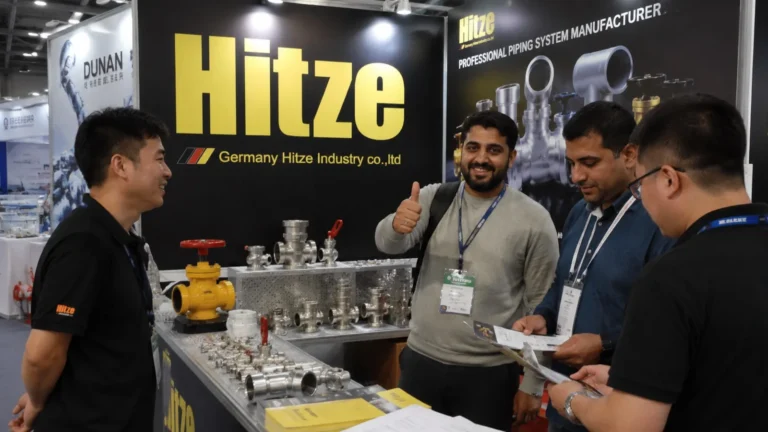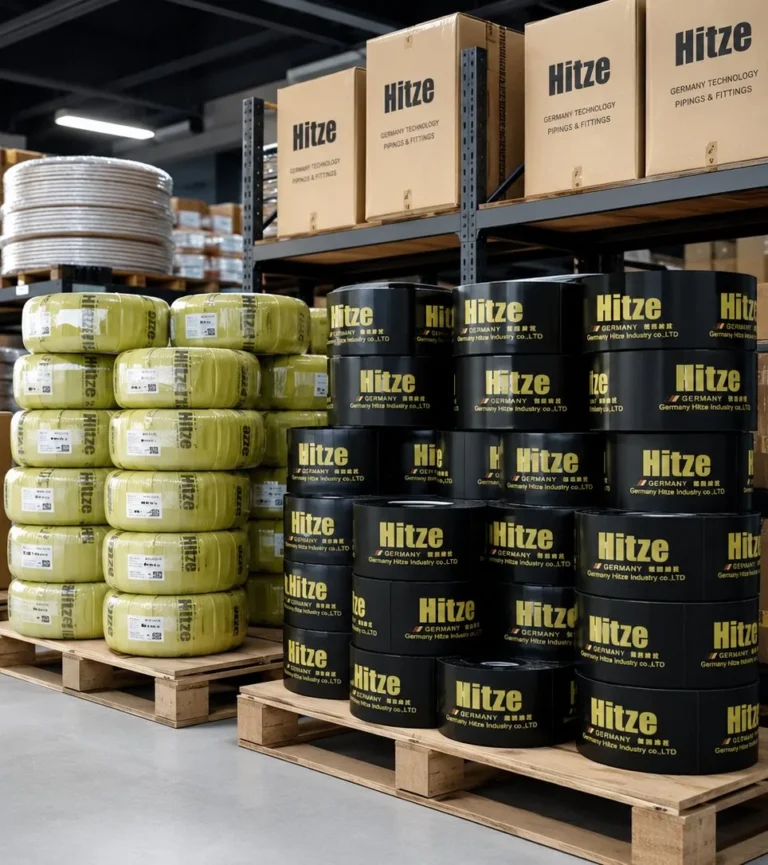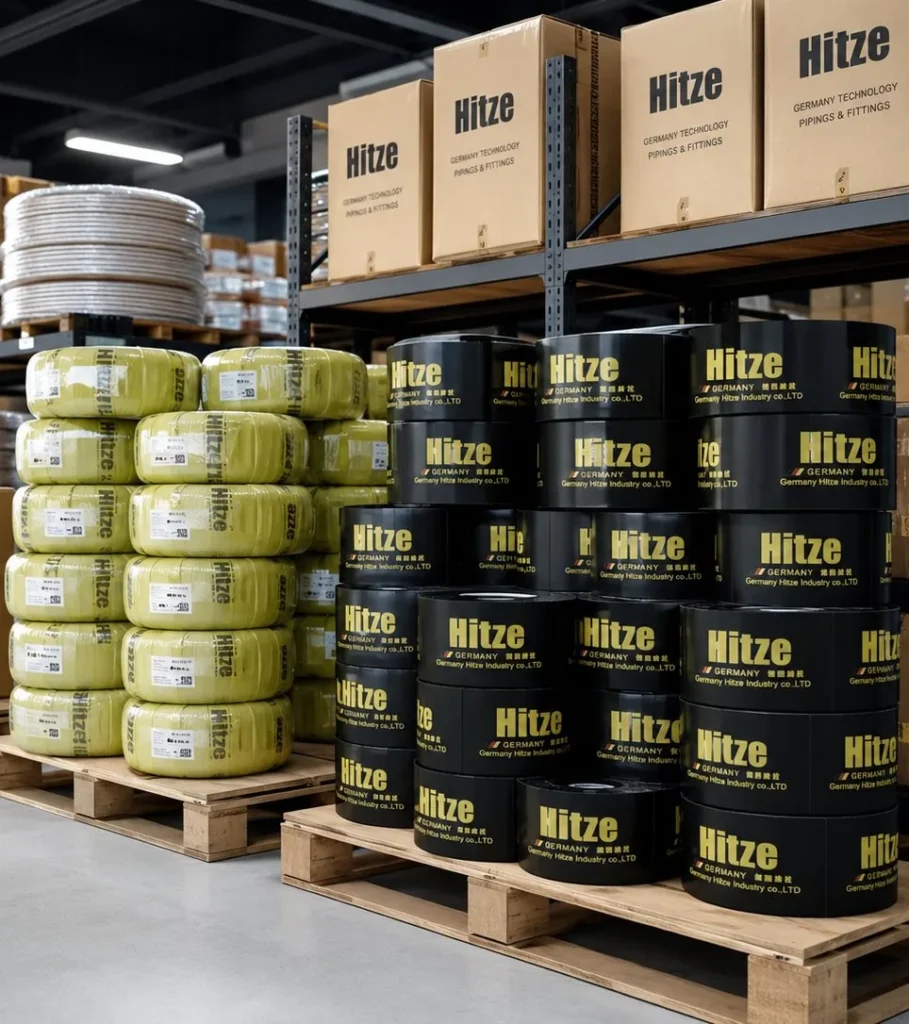
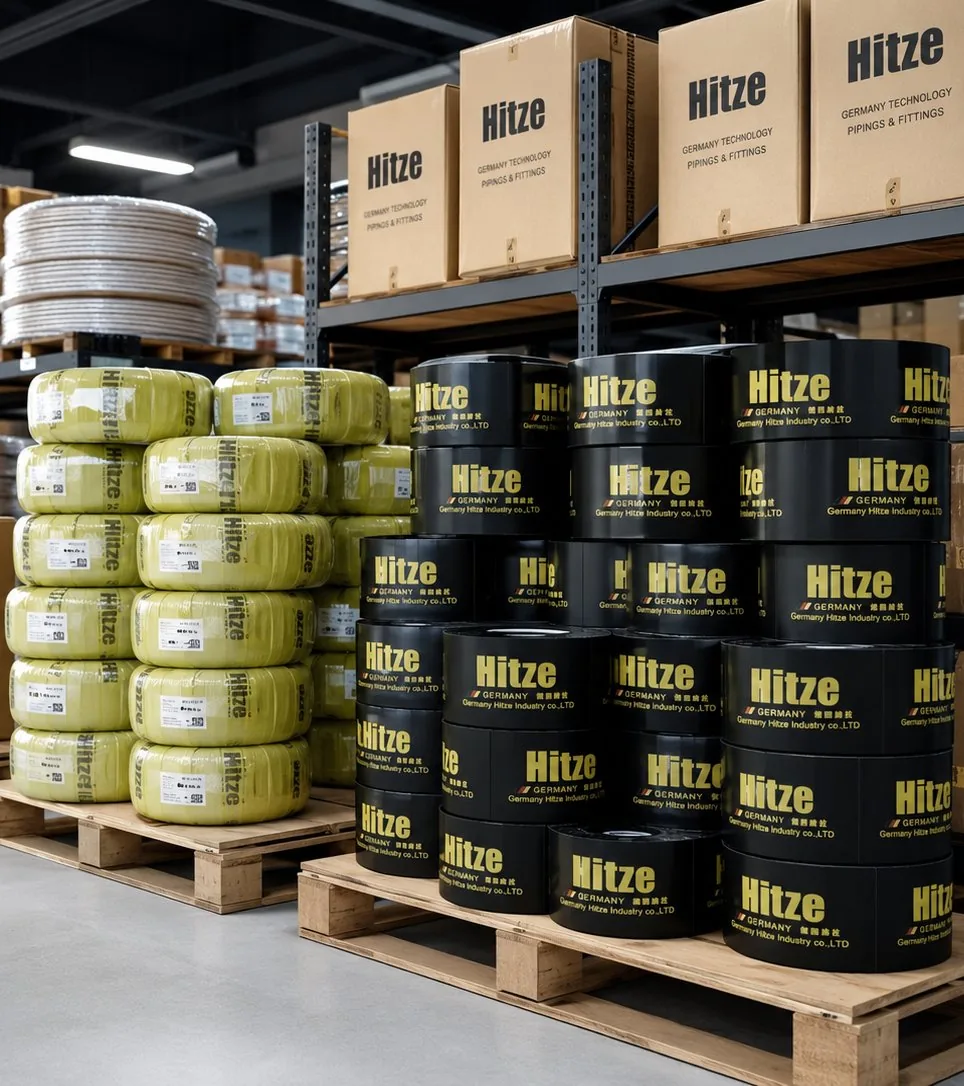
Launching your own pipe brand is not the manufacturing project most people imagine. You are not building an extrusion line or hiring metallurgists. You are doing something narrower and far more achievable: putting your name, print stream, packaging and certification identity on a pipe system that a real factory already engineers, tests and certifies. The hard part is not “can it be made” — it is choosing the right partner, protecting your brand, and inheriting the certifications that let you actually sell. This guide walks the whole path, from first sample to a container of pipe with your logo on the coil, and it is written for the trade buyer who is asking, honestly, whether this is realistic. It is.
- Private-label (ODM) is the fast lane. Putting your brand on an already-engineered, already-certified pipe skips the tooling, testing and certification timeline that a full OEM/from-scratch design would add.
- Certification is inherited, not re-earned. You do not run your own NSF or cUPC tests — you list your brand against the certified manufacturer’s facility. Confirm the base product’s certificates are live before you print a single coil.
- Register your trademark before the first order. A USPTO registration lets you record the mark with U.S. Customs and Border Protection, which can block infringing imports at the border — protection an unregistered brand cannot claim.
- Start with samples, not a container. Sample-first proves print quality, dimensions and fitting compatibility before you commit capital. Hitze has no MOQ, so you can start with samples or a small trial order.
- Match pipe type to your market. PEX-a/b/c and 5-layer PEX-AL-PEX serve different jobs; pick the range your buyers actually specify before you brand it.
Private-label vs OEM: know which project you are actually starting
The single most expensive mistake at the awareness stage is confusing two very different paths. Private-label (ODM) means you put your brand on a factory’s existing, already-engineered product — the tooling exists, the material recipe is proven, and in most cases the pipe is already certified to the standards your market demands. OEM / bespoke design means the factory builds to a specification you originate: a custom wall thickness, a proprietary layer stack, a color and print unique to you. OEM gives you more control and a more defensible product; it also adds tooling cost, a longer lead time, and — critically — a fresh certification cycle, because a product that did not exist before has not been tested or listed.
For a first brand launch, private-label wins on almost every axis that matters to a new entrant: speed, capital at risk, and the ability to inherit certifications instead of paying for them from zero. The honest trade-off is differentiation. If ten distributors all private-label the same base pipe, your only differences are brand, service, and price. That is usually fine at launch — you are testing whether your customers will buy under your name at all — and you can graduate to selective OEM customization (your own color, a proprietary print, a specific size ladder) once the demand is proven. The mistake is starting with a ground-up OEM design for a market you have not yet validated.
Best for / not for
Private-label PEX & multilayer is best for: distributors and importers who already have a customer base and want a house brand; contractors-turned-suppliers who want margin control; regional brands who need a full pipe-and-fitting range under one name without owning a factory. It is not the right fit for: anyone who needs a genuinely novel, patentable pipe construction (that is an OEM/R&D project), or a buyer with no route to market who is hoping the brand itself will create demand — a logo does not sell pipe; a specification and a certificate do.
Choose the pipe range before you choose the logo
Your brand is only as good as the product under it, so specify the range first. A credible whole-house pipe brand usually needs three families: a PEX line for plumbing and hydronic heating, a 5-layer multilayer (PEX-AL-PEX / PERT-AL-PERT) line for applications that need shape retention and a true oxygen barrier, and a matching fitting system (press, compression, or push-fit) so you can sell a warrantable pipe-plus-fitting set rather than orphan coils.
The PEX decision matters more than most first-time brand owners expect. PEX-a (peroxide/Engel method) offers the highest flexibility and shape-memory, which installers value for tight radii and kink repair; PEX-b (silane) is the workhorse for cost-sensitive plumbing runs; PEX-c (electron-beam) sits between. For heating loops, you want an oxygen-barrier grade — Hitze builds barrier heating pipe to DIN 4726, the German standard that limits oxygen diffusion so dissolved oxygen does not corrode the steel and cast-iron components in a closed heating circuit. For hot-and-cold potable systems where dimensional stability and low expansion matter, the 5-layer multilayer pipe — with a butt-welded aluminium core sandwiched between PEX or PE-RT layers — is the pipe to brand. Hitze backs its potable multilayer with the same hygiene credentials that cover its other drinking-water grades — SKZ, DVGW, WRAS and an NSF/BS 6920 potable-water test report — and offers it in the 16, 20, 25 and 32 mm sizes the trade actually stocks. Separately, Hitze also holds a SAI Global StandardsMark to AS 4176.8, the Australian standard for multilayer consumer-gas pipe (aligned to ISO 17484-1) — a distinct credential for gas installations, not a potable-water listing.
A quick spec anchor
When you brand a PEX line for North America, buyers will look for conformance to ASTM F876 (the crosslinked-polyethylene tubing specification, covering burst pressure, sustained hydrostatic pressure, oxidative stability in chlorinated water and degree of crosslinking) and ASTM F877 for the complete hot-and-cold distribution system including fittings. Cite the standard your factory actually holds test data for — never a standard you have only heard of. If a supplier cannot show you the test report behind a standard they name, treat that standard as absent.
Certification: the part that makes or breaks a launch
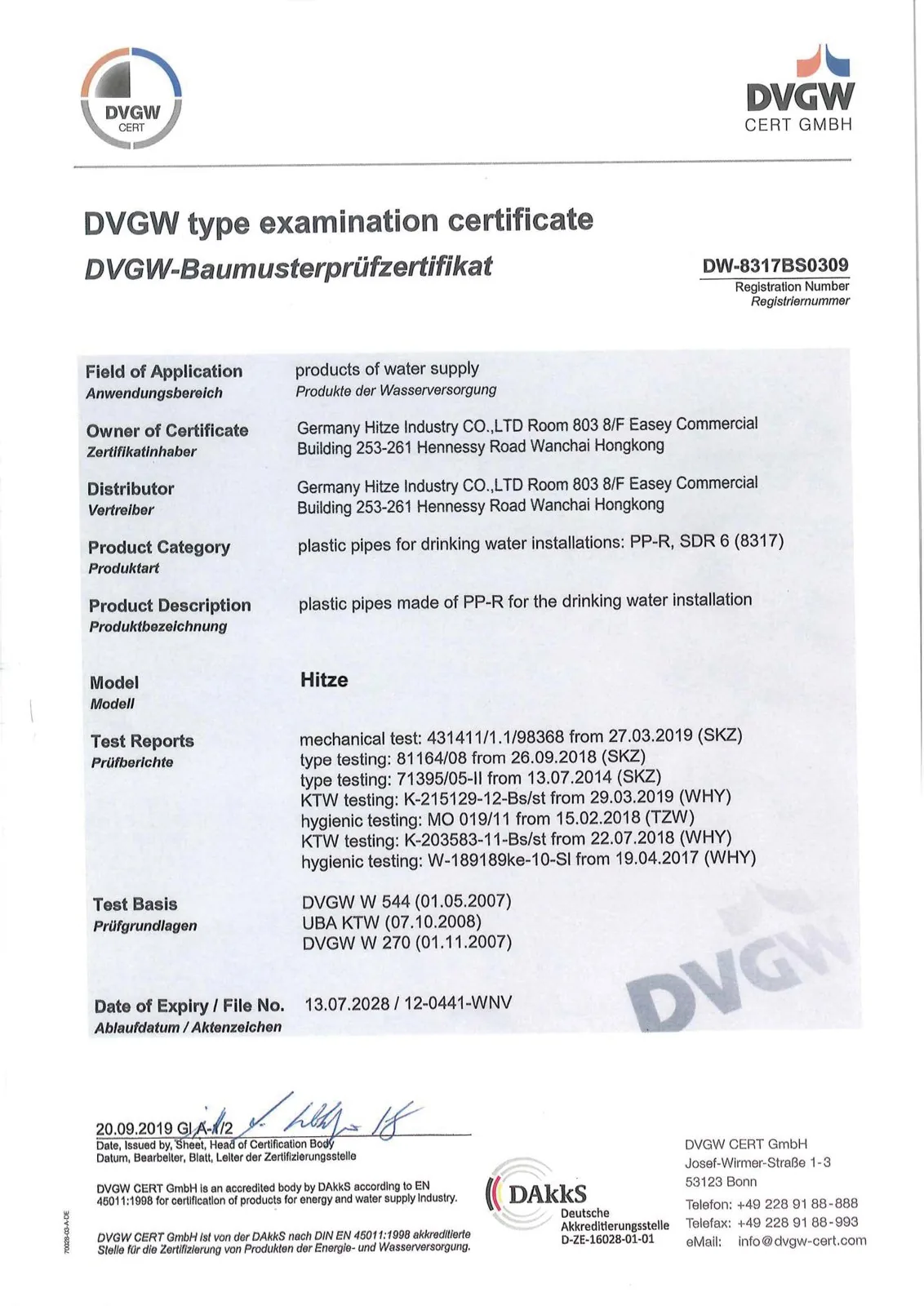
This is where most first-time pipe brands quietly fail, so read it twice. You, the brand owner, almost never run the certification tests yourself. The certification lives with the manufacturing facility and the base product. When you private-label, you list your brand name against a product that is already certified at an already-audited facility — you inherit the compliance, you do not re-earn it. NSF certification, for example, is maintained through ongoing on-site facility inspections and periodic product retesting; the entity carrying that burden is the factory, and your brand rides on the certified base product. IAPMO R&T runs the cUPC listing and labeling system the same way, with initial testing plus periodic production inspection, and publishes its listings in a public product-listing directory you can search.
The practical consequence: your certification questions are questions about the factory, not about you. Before you agree to anything, get the scheme name, the standard, and confirmation that a numbered certificate exists and is current — then verify it in the issuing body’s public register. A certificate PDF emailed to you means little until you have matched it against the register. This is exactly the check an importer performs to avoid the classic trap of a “certified” product whose listing expired two years ago.
Contextual routing: if your first market is North America you are anchored on cUPC / NSF-14 / NSF/ANSI 61; if it is the UK and EU you are anchored on WRAS and DVGW. Hitze holds certificates across both blocs, which is why a single-source brand can cover two markets — see the full scheme list on the certifications & compliance page and confirm the exact certificate for the SKU you plan to brand.
Which certificate unlocks which market
| Market | Certification your brand needs | Issuing body |
|---|---|---|
| USA / Canada (potable + plumbing) | cUPC / UPC, NSF-14, NSF/ANSI 61 | IAPMO R&T, NSF International |
| United Kingdom (potable) | WRAS material approval | WRAS |
| Germany / EU (drinking water) | DVGW type examination; CE + DoP | DVGW / DIN CERTCO |
| Germany (PP-R / PE-Xb quality) | SKZ test & inspection | SKZ (Süddeutsches Kunststoff-Zentrum) |
| Australia (multilayer consumer gas) | StandardsMark to AS 4176.8 (ISO 17484-1) | SAI Global |
Hitze holds certificates under each scheme above; specific certificate numbers are available on request and should be verified in the issuing body’s public register before you brand a SKU.
Protect the brand before you build it
The order of operations trips people up. Register your trademark before your first production run, not after your brand starts selling. A federal USPTO registration gives you nationwide constructive priority, a legal presumption that you own the mark, the right to use the ® symbol, and — the reason it matters most for an importer — the ability to record your mark with U.S. Customs and Border Protection, which can then stop infringing or counterfeit goods carrying your name at the border before they reach the market. Common-law rights from mere use are geographically limited and carry no presumption of validity; they will not get CBP to act. If your route to market is imports, the registration is not a formality, it is your enforcement mechanism.
The second layer of protection is contractual, and it is about the factory itself. The private-label brand owner’s recurring fear is that the factory will quietly resell the same product under a different name, or worse, copy the brand. Address it in writing: a supply agreement with an ownership clause over your artwork, print plates and packaging design; a non-compete or territory clause where you can negotiate one; and — the strongest protection of all — buying from a manufacturer whose own brand and legal identity are established, because a factory with its own registered trademark and export reputation has far more to lose from an IP dispute than an anonymous trading company does. Hitze is a German brand engineered in Germany, operating under German Trademark Reg. No. 30 2020 005 484 at the Deutsches Patent- und Markenamt — a verifiable registration, not a claim, which is precisely the kind of counterparty a private-label brand wants on the other side of the contract.
What Hitze checks and how a private-label order is built
Because the certification you inherit is only as good as the factory behind it, here is what actually happens on a Hitze private-label order, grounded in how the plant runs. Hitze was founded in 1974, operates a 120,000 m² production base with 1,000+ employees, and exports to 118+ countries — the scale that makes consistent reorders and multi-market certification possible in the first place.
- Range and spec lock. You select the pipe families (PEX-a/b/c, PE-RT, 5-layer multilayer, PP-R) and sizes, and Hitze confirms which certificates already cover those exact SKUs so nothing is branded that cannot be sold.
- Sample-first. Before any bulk commitment, you get samples to prove print legibility on the coil, dimensional consistency size-by-size, and fitting compatibility. Hitze has no MOQ, so you can start with samples or a small trial order rather than a full container.
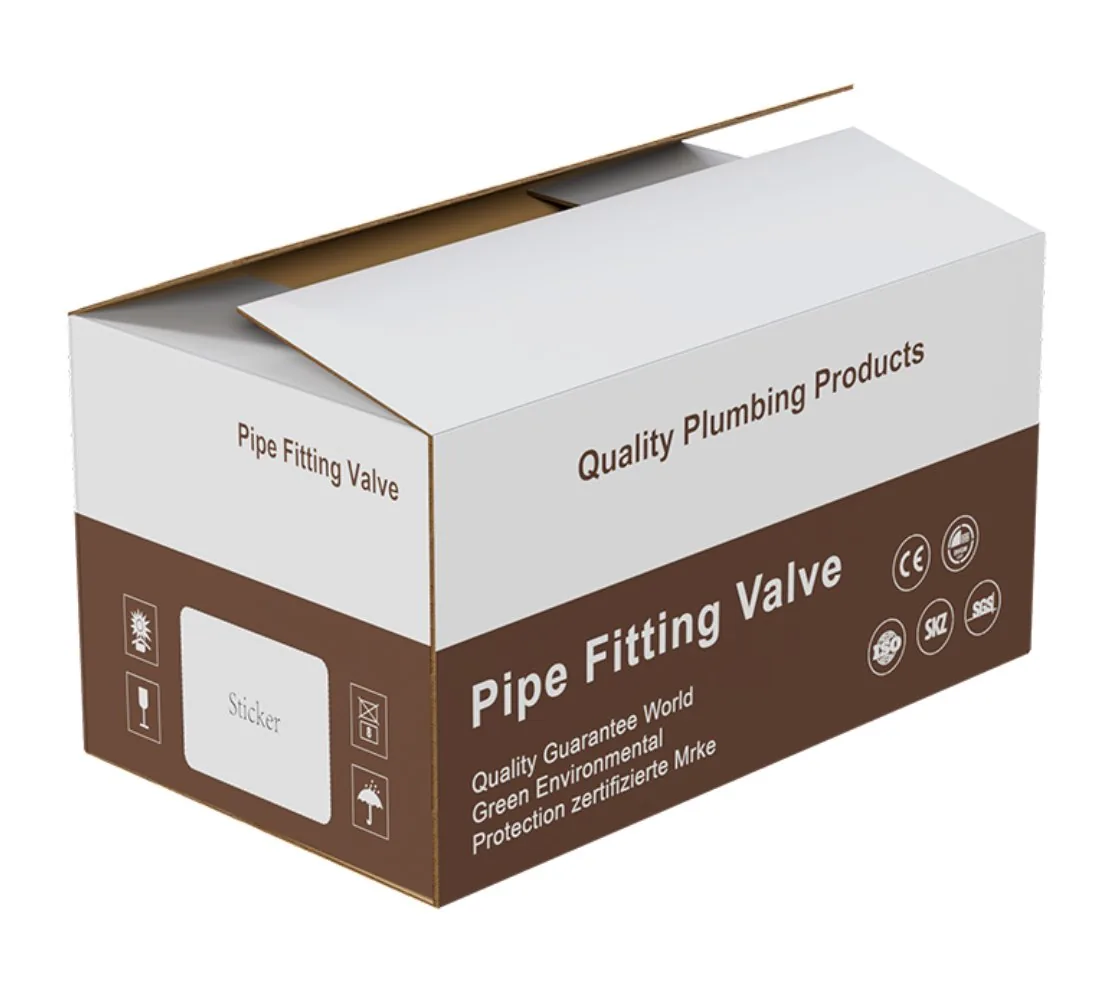
- Print & packaging. Your brand goes onto the printed line marking along the pipe and onto neutral, brandable cartons designed for your logo — so a distributor unpacking a carton sees your identity end to end, not the factory’s.
- Build & verify. Pipe is extruded and, for multilayer, the aluminium core is butt-welded into a continuous oxygen-tight seam; fittings are machined from lead-free / DZR brass grades (CW724R, CW511L, CW602N) or standard CW617N. Lines run against DIN 8077/8078 and EN ISO 15874 for PP-R and DIN 4726 for barrier heating pipe, with hydrostatic pressure verification on the test bench.
- Documentation pack. You receive the certificate references, declarations of performance and test reports tied to the SKUs you branded — the paperwork your own customers and inspectors will demand.
An end-to-end launch: distributor to house brand in one program
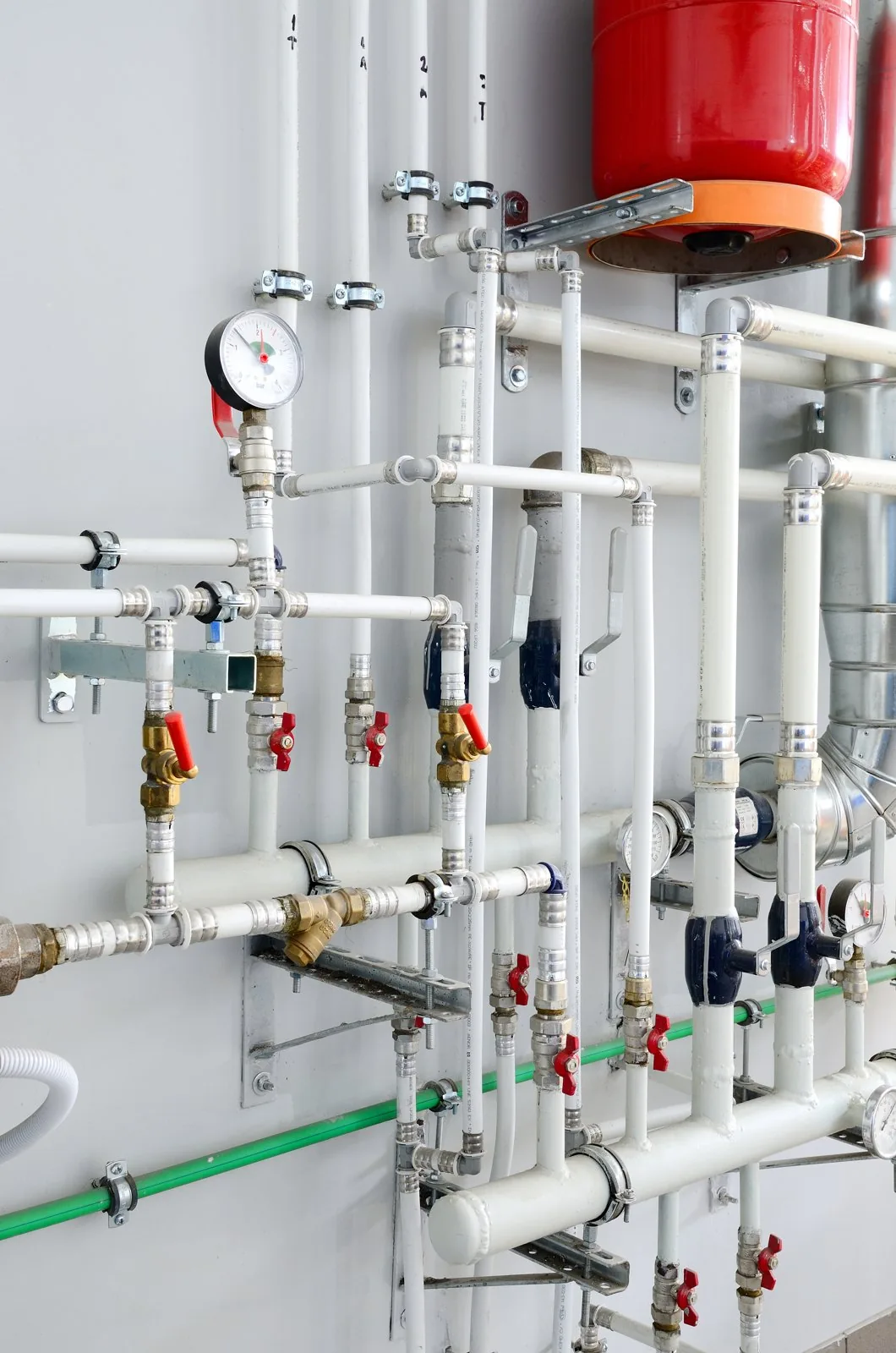
Consider a regional plumbing-and-heating distributor in the US Midwest who currently resells a national PEX brand at thin margin and wants a house line. The path looks like this. First they scope the range: barrier PEX-a for hydronic heating, PEX-b for potable plumbing, and 16/20/25/32 mm multilayer for hot-and-cold, plus a compression and press fitting set so contractors can buy a complete system. They file a USPTO trademark for the house brand while sampling runs, so the mark is pending before the first coil ships. They confirm the base products already carry cUPC and NSF/ANSI 61 for the US market, verify the listings in the IAPMO and NSF directories, and only then approve print artwork.
Samples arrive; they check that the printed brand survives handling, that 20 mm reads 20 mm across three coils, and that their existing press jaws seat correctly on the branded fittings. Satisfied, they place a first container — mixed across families rather than a full container of one size — to seed inventory without overcommitting. The cartons land with their logo, the certificates match the SKUs, and their contractors get a warrantable single-brand system. Six months in, once reorder velocity is proven, they add a proprietary coil color as a small OEM touch to differentiate from anyone private-labeling the same base pipe. The brand is real, it is certified, and it never required owning a factory — only choosing the right one and sequencing the steps correctly.
The soft CTA: is this program for you?
This path fits you if you already have a route to market — a distributor network, a contractor base, or import channels — and you want margin control and a brand you own rather than reselling someone else’s. It is not for a buyer with no demand and no certifications strategy, and it is not for anyone who needs a patentable, ground-up pipe design (that is a longer OEM conversation). If you are the former, the fastest way to pressure-test whether your launch is realistic is to start a sample-first conversation and get the certificate list for the exact SKUs you would brand. Hitze runs a private-label / ODM program for PEX, PE-RT, multilayer, PP-R and fittings — engineered in Germany, built to German DIN standards, and certified across North American and European schemes. Explore the private-label & ODM piping program to see the range and request samples, and if your first product is a specific line, start from the multilayer PEX-AL-PEX pipe or PEX pipe pages to lock your spec first. Hitze has no MOQ, so you can start with samples or a small trial order; pricing and lead time vary by market and order and are quoted on request.
Frequently asked questions
Can I really launch my own pipe brand without owning a factory?
Yes. The private-label (ODM) route means a real manufacturer produces an already-engineered, already-certified pipe and prints your brand on the coil and packaging. You own the brand, the customer relationship and the margin; the factory owns the extrusion lines, the certifications and the quality system. This is how most regional pipe brands are actually built — the risk is in choosing the wrong partner, not in the manufacturing itself.
Do the cUPC, NSF, WRAS or DVGW certificates get issued under my brand name?
The certification lives with the certified manufacturing facility and the base product. When you private-label, your brand is listed against that certified product rather than re-tested from scratch — you inherit the compliance. NSF and IAPMO R&T maintain certification through ongoing facility inspections and periodic retesting, so confirm the base SKU’s certificates are current and verify them in the issuing body’s public register before you brand anything.
Is Hitze pipe made in Germany?
Hitze is a German brand, engineered in Germany and built to German DIN standards (DIN 8077/8078, DIN 4726) with DVGW and SKZ certification. It operates under German Trademark Reg. No. 30 2020 005 484 at the DPMA, which you can verify in the register. When you private-label, you are branding a system designed by a German engineering team and certified across North American and European schemes.
What is the minimum order to launch a private-label pipe line?
Hitze has no MOQ, so you can start with samples or a small trial order to validate print, dimensions and fitting compatibility before scaling up to a bulk order. Pricing and lead time vary by product family and target market and are quoted on request against the specific SKUs you plan to brand.
How do I stop the factory from reselling or copying my brand?
Register your trademark first: a USPTO registration lets you record the mark with U.S. Customs and Border Protection to block infringing imports at the border, and it gives a legal presumption of ownership. Then put artwork ownership and, where possible, territory or non-compete terms in your supply agreement. The strongest protection is choosing a manufacturer with its own established, registered brand and export reputation, which has far more to lose from an IP dispute than an anonymous trader.
Which HS code do I use when importing my branded pipe?
Plastic tubes and pipes fall under HS heading 3917 (“tubes, pipes and hoses and fittings therefor, of plastics”). PEX and multilayer pipe classify within 3917, but the exact 6-digit subheading depends on the pipe’s material and whether it is rigid or flexible, so confirm the precise code per SKU with your customs broker or a binding ruling rather than assuming one code covers your whole range.