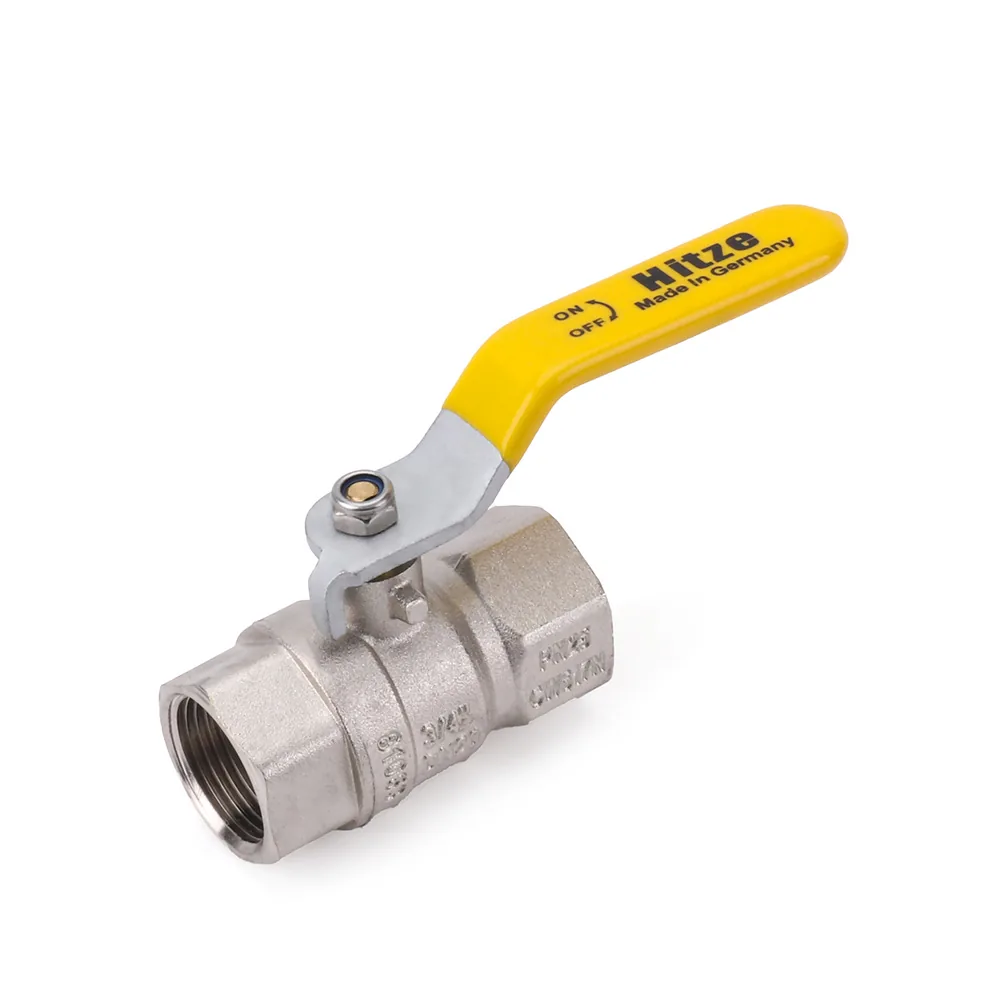
Key Takeaways
- Press = permanent + fastest at volume. A calibrated press tool removes torque as a variable, so leaks trace to a missed press, not a loose nut. Best for concealed risers, radiant loops, and jobs where you’re making dozens of identical joints and can amortise the tool.
- Compression = demountable + tool-light. A metal olive under a hand-tightened nut. Reusable, forgiving on mixed materials, no power tool — but it can back off under vibration and it can crush soft plastic pipe if you over-torque without an insert.
- Push-fit = fastest single joint, no tool at all. A stainless grab ring plus O-ring, made by hand in seconds. Code-listed (ASSE 1061, IAPMO) even behind walls when done right — but rated only to roughly 100 psi at 180°F and unforgiving of scratched or out-of-round pipe.
- The real failure mode is the pipe, not the fitting. Independent forensic reviews put nearly all mechanical-joint leaks down to installation error — burrs, ovality, missed inserts, half-presses. Your fitting choice mostly decides which mistake you’re exposed to.
- Single-brand matters more than which joint. When pipe, insert dimension, O-ring and jaw profile all come from one program, the tolerance stack is designed to close. Mixing brands is where the “which joint leaks?” question actually gets answered — badly.
Ask ten installers “press, compression or push-fit?” and you’ll get ten answers shaped by whatever tool is already in the van. That’s the wrong starting point. The joint is not a preference — it’s a function of the pipe material, whether the connection will ever be seen again, the pressure and temperature it has to survive, and how many of them you’re making before lunch. This guide is written for the contractor and radiant-heating installer deciding, spec by spec, which joint won’t call you back. We’ll be specific about pressure ratings, code listings and the exact places each system quietly fails, then show how Hitze builds all three off one pipe program so the tolerance stack actually closes.
How the three joints actually seal — and why that decides everything
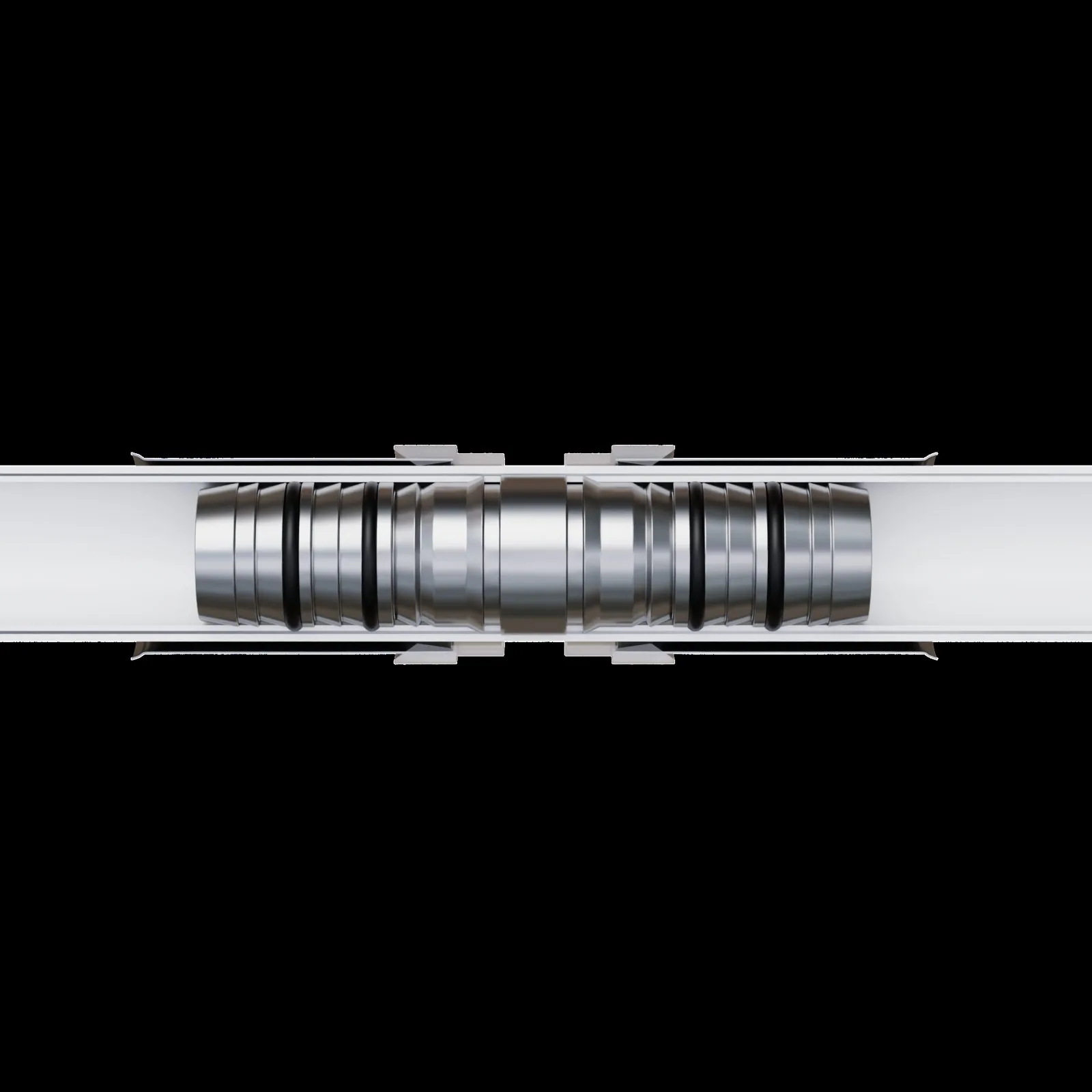
Every leak argument comes back to the sealing mechanism, so start there. A press fitting seals when a press tool — battery, hydraulic or, for smaller sizes, manual — closes a jaw around a metal sleeve and deforms it permanently over an O-ring. The force is calibrated by the tool, not by the person, which is the whole point: on a wall of 40 joints, every one gets the same clamp. A compression fitting seals when you tighten a nut that drives a metal olive (ferrule) into the gap between pipe and body until it bites and deforms. The force here is the person — two turns past hand-tight on copper, less on plastic — which is why compression is both the most forgiving joint to learn and the easiest to get subtly wrong. A push-fit fitting seals with an internal stainless grab ring that grips the pipe outside diameter and a separate O-ring that does the actual sealing; you make it by pushing the pipe home to a marked insertion depth, no tool required.
Read those three descriptions again and the trade-off writes itself. Press removes the human from the clamping force but commits you to a permanent joint and a tool that costs real money. Compression keeps the joint demountable and the toolkit to a spanner, but hands the seal quality back to the installer’s wrist. Push-fit is the fastest single connection anyone can make, but it moves the entire risk onto pipe preparation — a scratch, a burr or an out-of-round end and the O-ring never gets a clean surface to seal against. This is why the honest answer to “which one leaks?” is: the one you prepared badly. Forensic reviews of push-fit failures repeatedly conclude that the fitting design is rarely the culprit; damaged, dirty or under-inserted pipe is.
Press fittings: when permanence and repeatability pay for the tool
Press is the joint you reach for when the connection has to be invisible, permanent and identical across a run — concealed risers in a multi-unit build, a radiant-floor manifold feeding a dozen loops, mechanical-room headers that will be pressurised and forgotten. The economics are simple and unsentimental: the fitting costs more per unit and the tool is a four-figure investment, but a pressed joint takes seconds and the labour saving compounds over hundreds of connections. Independent trade comparisons consistently put press installation “in seconds” against compression joints that each need to be hand-tightened and checked. If your job is 30 fittings, compression wins on cost. If it’s 300, press wins on the clock — and on the fact that nobody has to remember how tight is tight.
The catch that catches people is the jaw profile. Press systems are not universal: the fitting’s sleeve is designed for a specific jaw geometry, and the common profiles — TH, U, F and M — are not interchangeable. Put a U-profile fitting under a TH jaw and you can get a joint that looks pressed but isn’t fully formed. Hitze presses to the TH, U, F and M profiles precisely so buyers can match whatever press tool their crews already own, but the discipline is the same regardless of brand: confirm the profile before you order, not on the wall. There’s also no undo. A pressed joint is permanent; if you got the alignment wrong you’re cutting it out. That permanence is a feature in a wall and a liability on a job that’s still moving.
Best for: concealed and buried joints, high-vibration plant rooms, radiant manifolds, and any job where you’re making enough connections to amortise the tool and want the seal taken out of the installer’s hands. Not for: one-off repairs, jobs where you don’t own the matching jaw, or connections you may need to take apart later.
Compression fittings: the demountable workhorse — and its two quiet failure modes
Compression earns its keep by being reusable and tool-light. A pump connection, an isolation valve, a fixture supply, a transition between materials on a repair — anywhere you might reasonably need to break the joint again, compression is the sane default. It works across copper, plastic and PEX, needs nothing more exotic than a spanner, and a competent installer can make one anywhere without hauling a press. That versatility is exactly why it survives in a world of faster joints.
But it has two failure modes worth naming, because both are invisible until they aren’t. The first is under- or over-torque: too loose and the olive never fully bites, so the joint weeps a week later; too tight on soft pipe and you deform the wall. This is why compression on multilayer or PEX needs a pipe insert (stiffener) in the bore — without it, the nut can crush a soft plastic pipe that would have been perfectly happy under a push-fit or press joint. Engineering references are blunt that on soft plastics “the soft wall deflects inward and the ferrule loses its bite” without a rigid internal insert, with the wall continuing to deflect under sustained pressure until the seal loosens (ESG) — the insert is what stops that. The second failure mode is vibration: on a pump skid or a mechanical room with reciprocating loads, hand-tightened nuts can back off over months. If the location vibrates and you can’t inspect it, that’s a signal to choose press, not compression. Use compression where it plays to type — accessible, serviceable, moderate-pressure — and stop asking it to behave like a permanent joint.
Push-fit fittings: fastest per joint, most sensitive to pipe prep
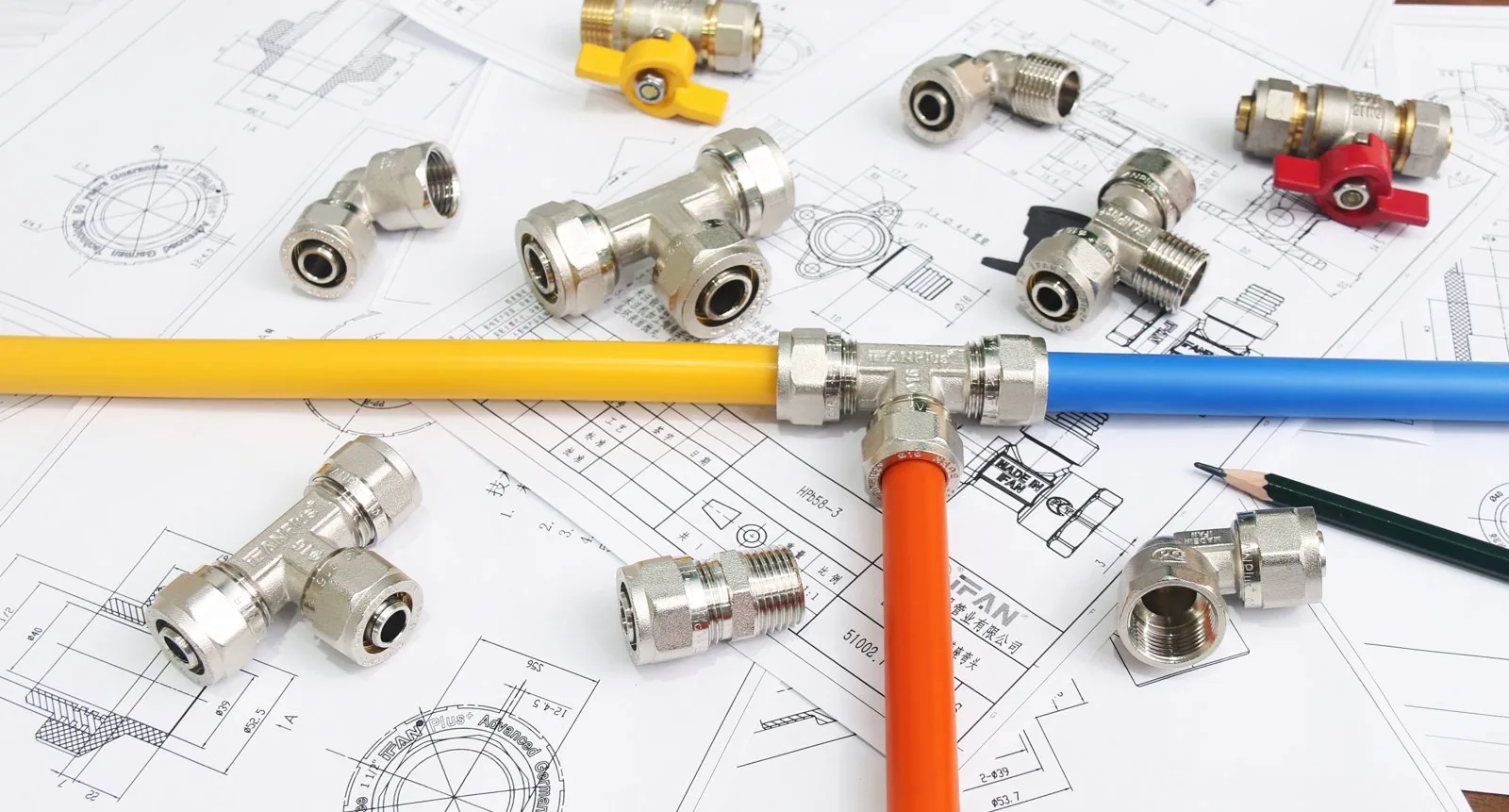
Push-fit is the fastest way to make a single connection: no tool, no flame, no torque call — deburr, mark the insertion depth, push home, done. For retrofits behind a cramped vanity, for a repair where you can’t get a torch near old timber, or for a temporary run you’ll break down next season, it’s genuinely hard to beat. The demountable versions release with a collar or a simple tool, which makes them the natural choice for anything you expect to service. Crucially, push-fit is often the safer mechanical joint on soft plastic pipe: with the correct pipe insert it grips without the crushing risk that a compression nut carries.
Now the part the marketing skips. Push-fit has a hard performance ceiling and a low tolerance for sloppy prep, and both are worth committing to memory. Under the North American standard ASSE/ANSI 1061, push-fit fittings are designed for continuous service up to 100 psi at 180°F (82°C) and a maximum nominal size of 2″ CTS — and they are explicitly not for temperature/pressure relief drain lines unless separately rated to 210°F / 150 psi. That envelope covers most domestic hot and cold and hydronic heating, but it rules out high-pressure and high-temperature industrial duty, which is where compression or press belong. On the “can I bury it in a wall?” question that every inspector asks: yes, when the fitting is genuinely listed for it. IAPMO R&T-listed push-fit fittings may be installed underground and as concealed joints without an access panel, and are recognised under the UPC and IPC — a provision that follows the ASSE 1061 scope rather than any single vendor’s marketing — but that permission is conditional on installing exactly to the manufacturer’s instructions. A push-fit joint on a scratched, dented or out-of-round pipe end is a future leak regardless of what the listing says, because the O-ring never gets the clean, round surface it needs.
Best for: retrofits, tight-access repairs, soft plastic pipe, and demountable connections within the ~100 psi / 180°F envelope. Not for: high-pressure or high-temperature duty, UV-exposed external runs, high-vibration plant, or any joint where you can’t guarantee clean, round, undamaged, fully-inserted pipe.
Side-by-side: the decision table
Print this and pin it to the van. The right column each time is the one whose weakness you can live with on that specific joint.
| Factor | Press | Compression | Push-fit |
|---|---|---|---|
| Tool needed | Press tool (matched jaw profile TH/U/F/M) | Spanner / wrench only | None to fit; small tool to release |
| Joint is | Permanent | Demountable, reusable | Demountable (removable types) |
| Speed per joint | Seconds (fastest at volume) | Slower — tighten & check each | Fastest single joint |
| Typical rating envelope | High pressure/temp per system class | Moderate-to-high, size dependent | 100 psi @ 180°F, ≤2″ CTS (ASSE 1061) |
| Concealed / buried? | Yes | Usually needs access | Yes, if IAPMO/UPC/IPC-listed for it |
| Main failure mode | Missed / partial press | Under/over-torque; vibration loosening | Damaged / out-of-round / under-inserted pipe |
| Sweet spot | High-volume, concealed, permanent | Serviceable, accessible, mixed materials | Retrofit, tight access, soft plastic pipe |
The variable everyone ignores: pipe, insert and O-ring tolerance
Here’s the uncomfortable truth after 40-odd fittings a day for a career: the joint type is the second most important decision. The first is whether the pipe, the insert, the O-ring and the sleeve or olive were all designed to the same tolerance stack. A push-fit O-ring is sized for a specific pipe outside diameter and wall; a compression olive bites a specific bore; a press sleeve deforms to a specific wall thickness. When you mix a fitting from one brand onto pipe from another, you’re gambling that two independent tolerance chains happen to overlap. Sometimes they do. When they don’t, you get the intermittent weep that passes the first pressure test and shows up in the ceiling three months later — and no warranty covers a mixed system.
This is where a single-source program stops being a sales line and becomes an engineering argument. Hitze builds pipe and fittings to the same international system standards — EN ISO 15875 for PEX and EN ISO 21003 for multilayer, both of which explicitly govern the pipe, the fitting and the joint as one qualified system — so the insert dimension, the O-ring groove and the sleeve are matched rather than merely compatible. If you’re specifying radiant heating where every buried joint has to hold for the life of the screed, that matched stack is worth more than any single fitting feature. Trade buyers stocking a full system for installers can see how Hitze structures pipe-plus-fitting supply on the contractor radiant-heating supply page.
What Hitze checks before a fitting ships
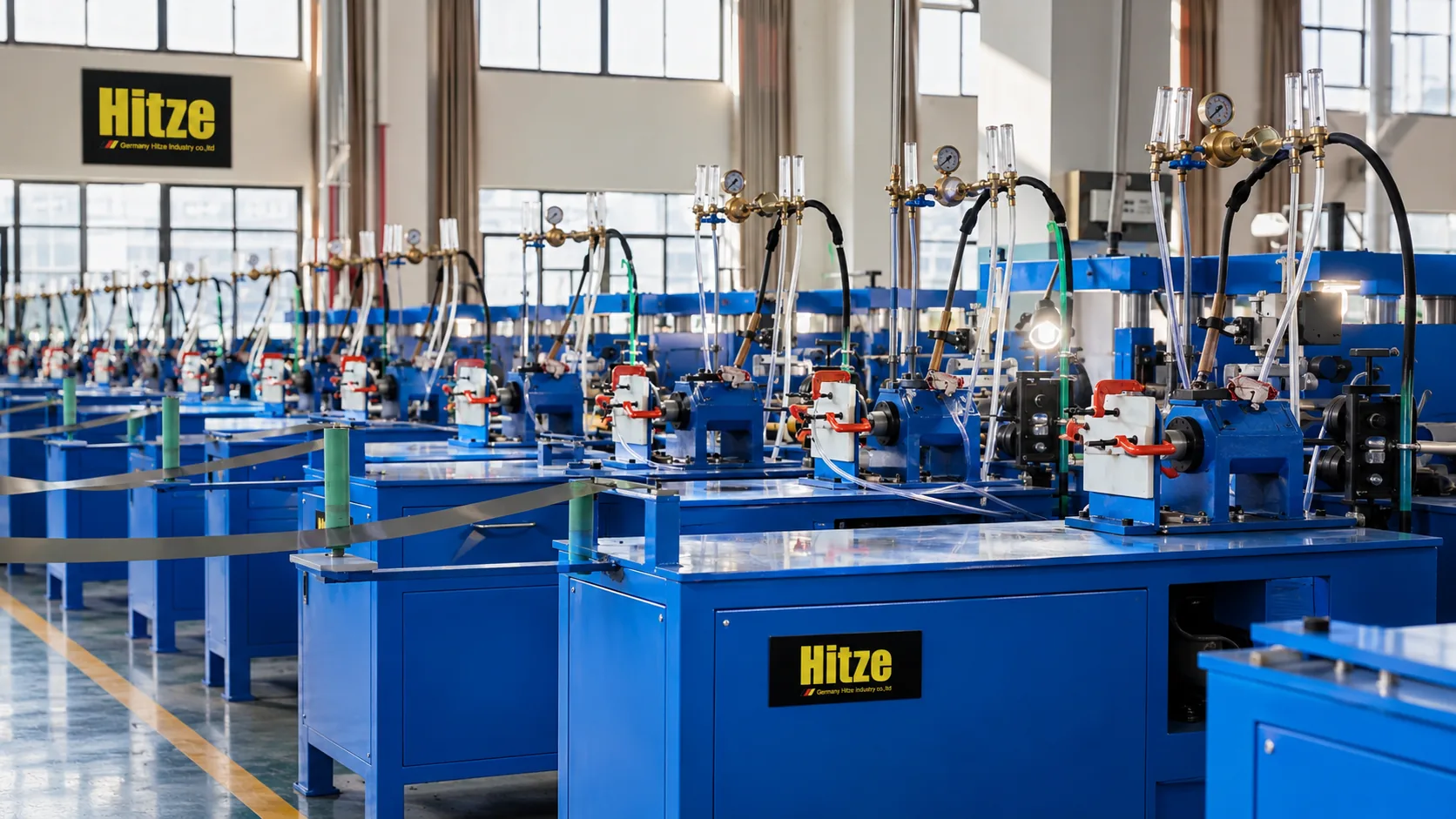
Because the joint’s reliability lives in the tolerance stack, the factory-side controls matter as much as the installer’s technique. Hitze — a German brand engineered in Germany and built to German DIN standards, founded in 1974 with a 120,000 m² production base, 1,000+ employees and exports to 118+ countries — runs press, compression and push-fit ranges off one brass and pipe program so the numbers below are shared, not bolted on afterwards:
- Brass grade, chosen for the duty. Wetted brass is specified from lead-free / DZR grades — CW724R, CW511L, CW602N (DZR) — with CW617N where standard brass is appropriate. The DZR grades resist dezincification, the mechanism that hollows out ordinary brass in aggressive water. This is also what keeps wetted surfaces inside the US federal “lead free” definition of a 0.25% weighted average, calculated under NSF/ANSI/CAN 372.
- Jaw-profile discipline on press. Press fittings are produced to the TH, U, F and M profiles so buyers can match existing press tools rather than re-tool a whole crew.
- System-standard qualification, not part-by-part. Pipe and fittings are built to DIN 8077/8078, EN ISO 15874, ASTM F876/F877 and, for multilayer, EN ISO 21003 — the standards that qualify the joint, not just the component.
- Hydrostatic pressure verification. Finished pipe and fittings are pressure-tested on dedicated benches against the relevant DIN/EN ISO thresholds before release.
- Third-party certification on file. The range is backed by SKZ (Germany), DVGW (Germany, potable), WRAS (UK), NSF/ANSI 61 and cUPC/UPC (IAPMO) listings, with an ISO 45001 management system behind the plant. Specific certificate numbers are available on request and vary by product and market.
A worked example: one bathroom, three joints, three reasons
Walk a single renovation and the “which joint” question answers itself joint by joint. You’re re-piping a second-floor bathroom in multilayer, feeding it from a hot-water cylinder in the utility room below. The concealed vertical riser that runs inside the stud wall and will be plastered over? Press. It’s permanent, it’s buried, and you’re making six identical connections up the run — the pressed joint takes the installer’s torque out of the equation and you’ll never see it again. The isolation valves and the pump connection in the utility room? Compression. They’re accessible, they’re serviceable, and one day someone will need to break that joint to swap the pump — a permanent press joint there just means cutting pipe later. The final fixture supplies behind the vanity, in 15 cm of clearance, where a torch is a fire risk and a press jaw won’t fit? Push-fit — well inside the ~100 psi / 180°F envelope, made by hand in the space you have, and demountable when the client changes the tap in five years.
Three joints, three tools’ worth of thinking, one pipe. Notice what didn’t change: the pipe, the inserts and the brass all came from the same program, so each joint’s tolerance stack was designed to close. That’s the quiet reason this house won’t generate a callback — not that you picked the “best” fitting, but that you picked the right fitting for each location and never mixed the tolerance chains.
So which should you use?
If the joint is concealed, permanent and you’re making it many times over, press — and confirm the jaw profile before you order. If the joint needs to come apart again, sits somewhere accessible, or transitions materials on a repair, compression — with a pipe insert on any soft plastic. If access is tight, a flame is a hazard, or you’re on soft plastic within a domestic pressure/temperature envelope, push-fit — on clean, round, fully-inserted pipe, and only where it’s listed for the location. And on every one of those, the joint outlives the install only if the pipe, insert, seal and fitting were engineered as one system.
Speccing all three off one program?
This is written for contractors, radiant-heating installers and trade buyers who want press, compression and push-fit fittings on a single pipe system with matched tolerances and one certification pack — not five suppliers and a tolerance gamble. It’s not a direct-to-homeowner counter; Hitze supplies trade and wholesale, with no minimum order quantity — you can start with samples or a single trial order. The matched Hitze pipe-and-fitting system carries a 50-year warranty, which only stands when pipe, fittings and joints come from one qualified program.
Compare the ranges directly:
Press fittings ·
Compression fittings ·
Push-fit fittings ·
Lead-free brass fittings
Frequently asked questions
Which fitting type is least likely to leak?
None is inherently leak-proof — each shifts the risk somewhere different. Press removes installer torque error but fails on a missed or partial press. Compression is forgiving to learn but weeps if under-torqued or shaken loose. Push-fit is fast but unforgiving of damaged pipe. Forensic reviews attribute the large majority of mechanical-joint leaks to installation error rather than fitting design, so the most leak-resistant choice is the one your crew prepares correctly — on pipe and fittings from one matched system.
Can push-fit fittings be used behind a wall or underground?
Yes — when the specific fitting is listed for it. IAPMO R&T-listed push-fit fittings may be installed as concealed joints without an access panel and in underground applications, and are recognised under the Uniform Plumbing Code and International Plumbing Code, provided you install exactly to the manufacturer’s instructions and local code. The listing does not rescue a joint made on scratched, dented or under-inserted pipe.
What pressure and temperature can push-fit fittings handle?
Under ASSE/ANSI 1061, push-fit fittings are designed for continuous service up to 100 psi at 180°F (82°C), in sizes up to 2″ CTS, and are not intended for temperature/pressure relief drain lines unless separately rated to 210°F / 150 psi. That envelope suits most domestic hot and cold and hydronic heating; for higher pressure or temperature, choose compression or press.
Do compression fittings work on PEX and multilayer pipe?
Yes, but only with a pipe insert (stiffener) in the bore. Soft plastic pipe can deform or crush under compression-nut torque, so the insert holds the wall round while the olive seals. Without it you risk a joint that passes the first test and creeps later. For soft plastics that will be concealed, many installers prefer press or push-fit, which grip without the crushing risk.
Is it safe to mix one brand’s pipe with another brand’s fittings?
It’s the single biggest avoidable risk. Each fitting is designed to a specific pipe outside diameter, wall and bore; mixing brands means betting two independent tolerance chains overlap. When they don’t, you get intermittent weeping that survives the first pressure test. It also voids most system warranties. Buying pipe and fittings from one program — qualified together under standards like EN ISO 15875 and EN ISO 21003 — is how you keep the tolerance stack closed.
Does the press jaw profile really matter?
Yes — it’s a hard compatibility gate, not a preference. Press fittings are formed for a specific jaw geometry (TH, U, F, M are the common profiles), and a mismatched jaw can produce a joint that looks pressed but isn’t fully formed. Always confirm the fitting’s profile against your press tool before ordering. Hitze produces to TH, U, F and M so crews can match tools they already own.
Sources checked: ASSE/ANSI 1061 (push-fit performance); ISO 21003-3 (multilayer fittings); ISO 15875-3 (PEX fittings); NSF — Safe Drinking Water Act lead-free requirements.


