
Key Takeaways
- “Exclusive” and “sole” are not the same word. An exclusive agreement bars the factory from selling in your territory and from appointing anyone else; a sole agreement only bars other distributors and still lets the factory sell direct. The difference is the entire ballgame for the fear that keeps you up at night.
- Real exclusivity is almost always paid for with a minimum-purchase commitment. No serious factory locks a whole country to you for free. Expect volume targets that convert the deal to non-exclusive if you miss them.
- The law limits what a factory can promise you. In the EU, block-exemption protection needs both parties under a 30% market share, and passive sales (an unsolicited order from your territory) generally cannot be blocked. In the US, vertical territories are judged under the “rule of reason,” not banned outright.
- Certification portability is the clause buyers forget. If cUPC, NSF, WRAS or DVGW approvals sit under the factory’s name and cannot move with you, “exclusive” means nothing the day you want to switch supply.
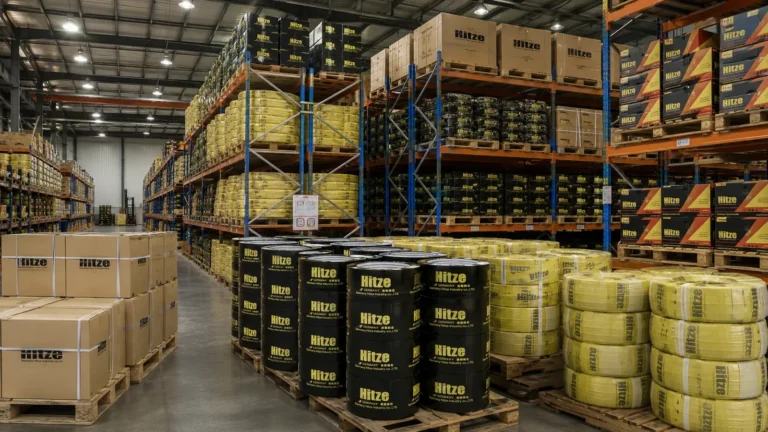
- Hitze is a German brand engineered in Germany, built to DIN standards, selling trade-and-wholesale only. Exclusive and sole territory arrangements are available on request, scoped by product line and market — discussed as part of a wholesale supply relationship.
Every distributor who has built a regional brand around one supplier eventually asks the same question, usually after the second or third reorder: what stops this factory from selling to the plumbing merchant two towns over — or worse, to the contractor I spent three years converting? It is a rational fear. You are the one absorbing the marketing cost, the technical support calls, the warranty conversations and the slow-paying accounts. The factory sees a purchase order. An exclusive-territory agreement is how you convert that asymmetry into something contractual. But the phrase gets thrown around loosely, and a badly drafted “exclusive” deal can be worth less than a good handshake. This guide walks through what these agreements actually contain, where the legal limits sit in the two markets Hitze serves, and the specific clauses that decide whether your territory is protected or merely described.
Exclusive vs Sole vs Non-Exclusive: The Distinction That Decides Everything
Before you negotiate a single number, get the noun right. The three standard structures look similar on a term sheet and behave completely differently in the field. In commercial practice the words “sole” and “exclusive” are used almost interchangeably, and that sloppiness is exactly where distributors get burned — the written agreement has to state, in plain language, whether the supplier itself can still sell into your territory. If your draft says “exclusive” but never closes that door, a court may read it the narrow way, not the way you assumed.
A non-exclusive appointment gives you nothing but a price and a product. The factory can appoint ten other distributors in your city and sell direct to your customers the same afternoon. It is the right structure for a new relationship you are still testing, and the wrong one to build a brand on. A sole appointment is the middle tier: the factory agrees not to appoint any other distributor in the territory, but reserves the right to sell directly itself — typically to national accounts, e-commerce, or a key project it wins on its own. That reservation is the trap. If your fear is “the supplier goes direct to my clients,” a sole agreement does not fix it; it merely removes competing distributors, not the factory. True exclusive distribution is the only structure that closes both doors: no other distributor and no direct factory sales in your defined territory.
| Structure | Other distributors in your territory? | Factory can sell direct? | Best for |
|---|---|---|---|
| Non-exclusive | Yes — unlimited | Yes | Testing a supplier before you commit stock or credit |
| Sole | No | Yes (reserved) | Distributors who accept factory national-account sales but want no rival importer |
| Exclusive | No | No | Distributors investing heavily in one brand who need the channel fully protected |
One more distinction people miss: exclusivity should be scoped by product line, not just geography. A factory that makes eight product families rarely hands all of them to one distributor. It is common — and reasonable — to grant a distributor exclusive rights to, say, multilayer PEX-AL-PEX and PE-RT underfloor pipe in a country, while keeping PP-R or bathroom fixtures open. Pin down the product scope in a schedule, because “our pipe” is not a defined term and you will argue about it later.
The Clauses That Actually Protect You (and the One That Costs You)

A distribution agreement is not one promise; it is a stack of clauses, and the exclusivity grant is only the headline. Four provisions do the real load-bearing work, and skipping any of them turns “exclusive” into a marketing word.
Territory definition and carve-outs. Territory should be nailed down in a schedule, not a sentence — country, region, sometimes channel (retail vs. project vs. online). The carve-outs matter as much as the grant. Does “France” include French overseas territories? Does it include a distributor’s own website that ships nationwide? The EU treats a website in the local language as active selling into a territory, which a supplier can restrict; a genuinely unsolicited order is passive and generally cannot be blocked. Write down which is which so a cross-border online order does not become a dispute.
Minimum purchase commitment. This is the clause that pays for your exclusivity, and the one that costs you if you overreach. Serious factories almost never grant a full country exclusively for nothing; the standard mechanism grants exclusivity but ties it to a minimum annual purchase target, with a miss triggering automatic conversion to non-exclusive or a supplier termination right. Negotiate the target against realistic year-one demand, not your ambition — a distributor who commits to a number they cannot hit has bought the right to lose exclusivity on a technicality. Ask for a ramp: lower year-one volume, stepped increases as the brand takes hold.
Direct-sale and anti-circumvention language. If you negotiated true exclusivity, the contract must explicitly bar the factory from fulfilling orders that originate in your territory, including through a third-country trader who re-exports to your market. Grey-market leakage is the most common way a distributor’s “exclusive” territory quietly fills with product they never sold. A clean agreement names the behaviour and gives you a remedy — price make-good, termination, or both.
Certification portability — the clause buyers forget. Market approvals such as cUPC/UPC (IAPMO), NSF/ANSI 61, WRAS and DVGW are issued against a specific manufacturer and product. If those listings sit under the factory’s name and your agreement is silent on them, an exclusive territory is worth nothing the day the relationship sours — you cannot resell the inventory under the same approvals through a new source, and you cannot certify a replacement overnight. Insist that the agreement documents which certifications back the products you distribute and how the compliance pack (test reports, DoP, listing references) is delivered with every shipment. This is the single most overlooked term in pipe distribution, and the one that determines your leverage at renewal.
What the Law Lets a Factory Promise — EU and US
Exclusive distribution is legal in both of Hitze’s core markets — but the two systems draw the line differently, and a promise a factory cannot legally keep is a liability, not a benefit. Knowing the frame lets you spot when a supplier is over-promising to win your order.
In the European Union, vertical agreements between a supplier and a distributor are governed by the Vertical Block Exemption Regulation, Commission Regulation (EU) 2022/720, which entered into force on 1 June 2022 and applies until 31 May 2034. The block exemption’s safe harbour is available only where both parties hold under 30% market share on their respective markets — the supplier on the market where it sells, the buyer on the market where it purchases (Article 3). Inside that safe harbour a supplier can grant an exclusive territory and stop other distributors from actively targeting it, but it generally cannot forbid passive sales — an unsolicited order from a customer in your territory, or participation in a public or private tender, is passive selling and stays open. A useful modern wrinkle: the 2022 regulation introduced “shared exclusivity,” letting a supplier appoint up to five exclusive distributors to the same territory and still keep the exemption. That is worth knowing before you assume “exclusive” means “only me” — ask whether the grant is single or shared.
In the United States, there is no block-exemption system; vertical territorial restraints are judged under the “rule of reason,” the standard the Supreme Court set in Continental T.V., Inc. v. GTE Sylvania Inc., 433 U.S. 36 (1977), which overturned the earlier rule that treated such territories as automatically illegal. In practice, a manufacturer assigning an exclusive territory to a distributor is rarely a problem absent real market power, because it promotes competition between brands even while limiting it within one. The caveat every distributor should know: horizontal market allocation — competitors carving up territories among themselves — is still per se illegal. So if a factory tries to coordinate territories between its distributors as a cartel rather than granting each one vertically, the arrangement can flip from lawful to unlawful. Keep the deal vertical: factory-to-you, not you-and-your-neighbour.
None of this is legal advice — competition law is fact-specific and you should run any agreement past counsel in the destination market. But the shape is stable: exclusivity is permitted, passive sales and cross-brand competition are protected, and a supplier who promises to shut down every possible sale into your territory forever is either bluffing or drafting something a regulator would not enforce.
How Hitze Approaches Territory Agreements — What We Check and How It’s Built
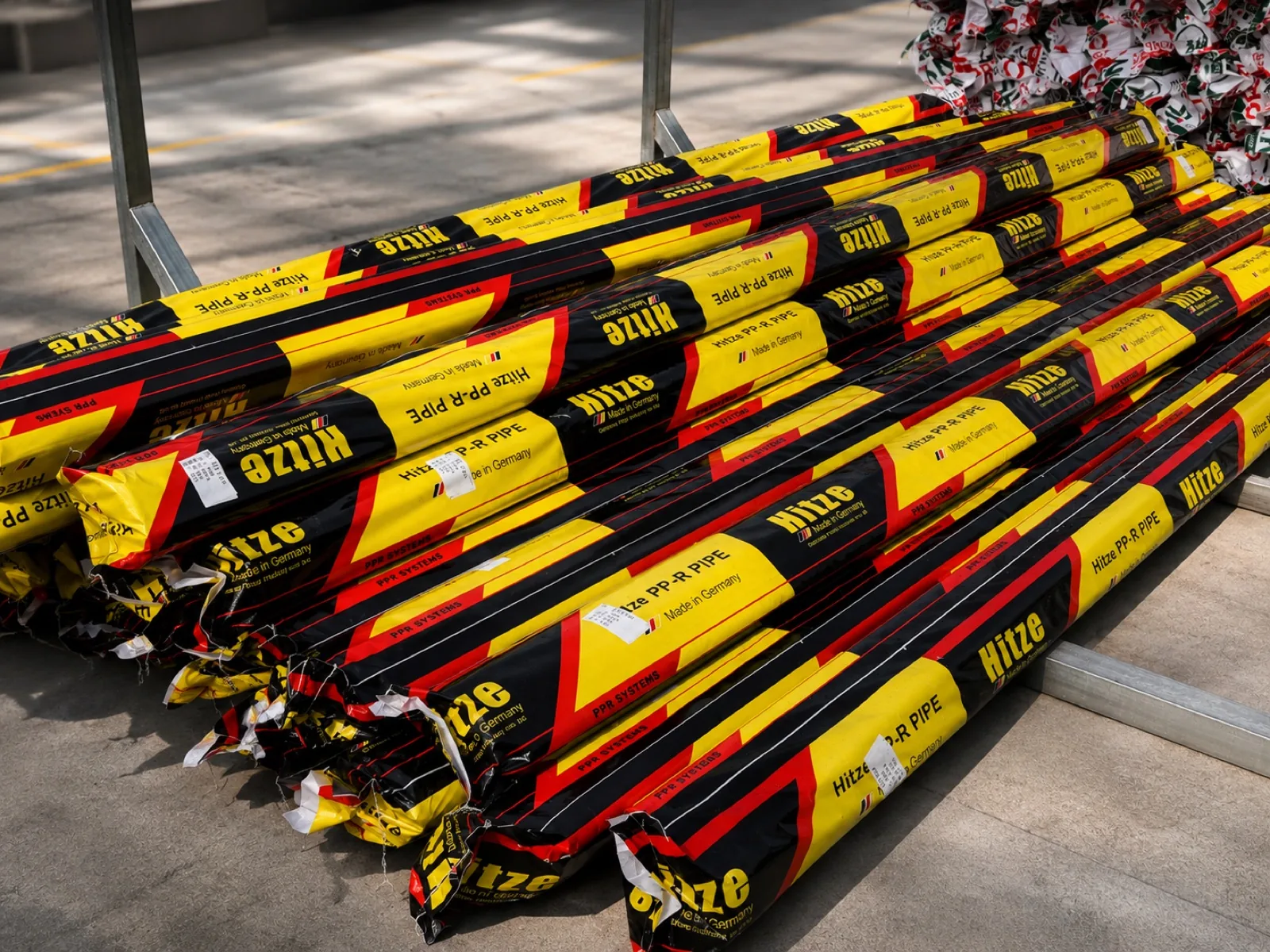
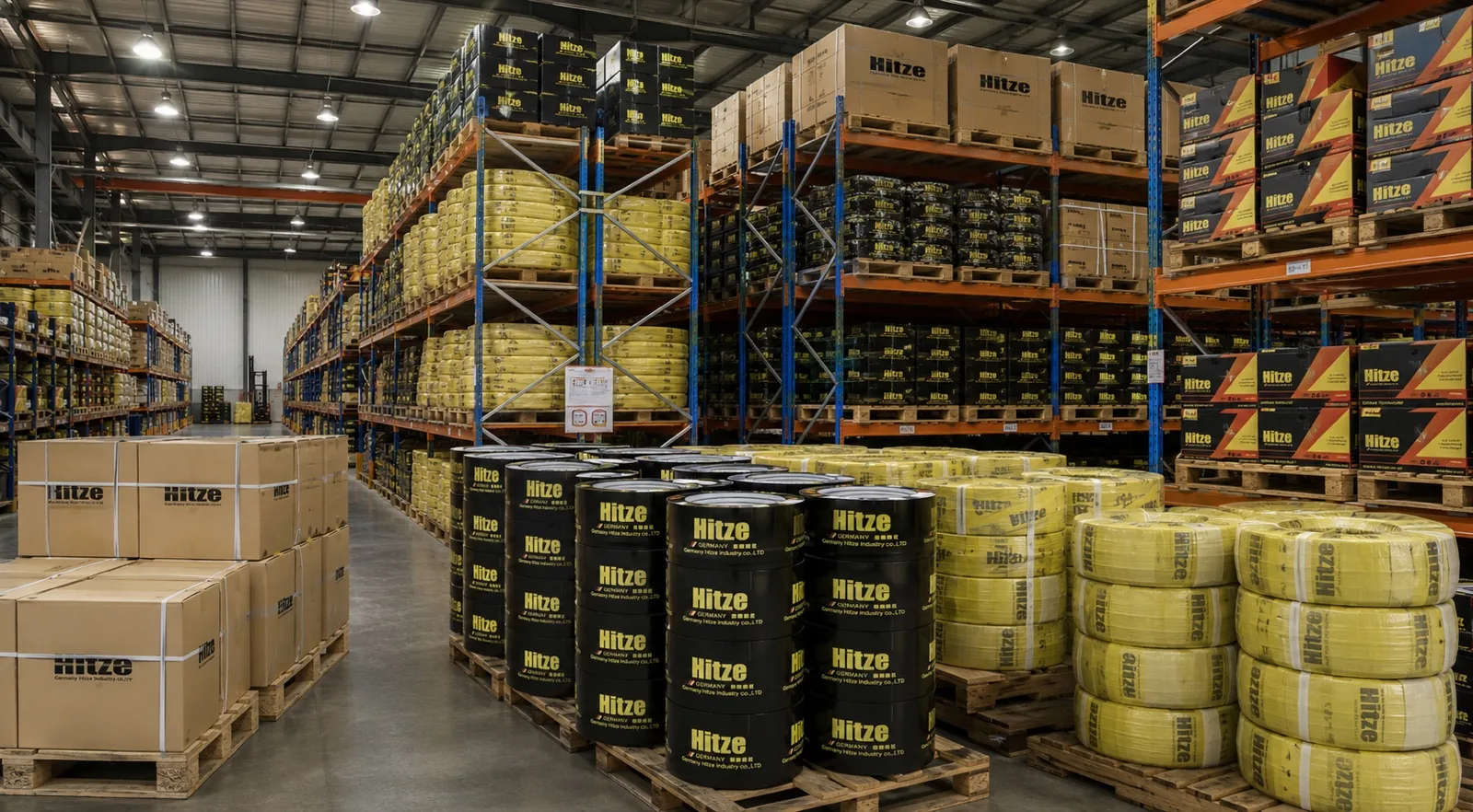
Hitze is a German brand of engineered piping systems — legal entity Germany Hitze Industry Co., Ltd., holder of German Trademark Reg. No. 30 2020 005 484 at the DPMA — founded in 1974, running a 120,000 m² production base with 1,000+ employees and exporting to 118+ countries. We sell trade and wholesale only, never direct to homeowners, which structurally aligns us with distributors rather than competing against them at retail. Exclusive and sole territory arrangements are available on request; the terms are scoped by product line and market and are discussed as part of a broader supply relationship rather than sold off a shelf. Because we do not publish a single fixed template, the specifics — minimum volumes, duration, ramp — vary by market and order and are set in the conversation, not guessed at here.
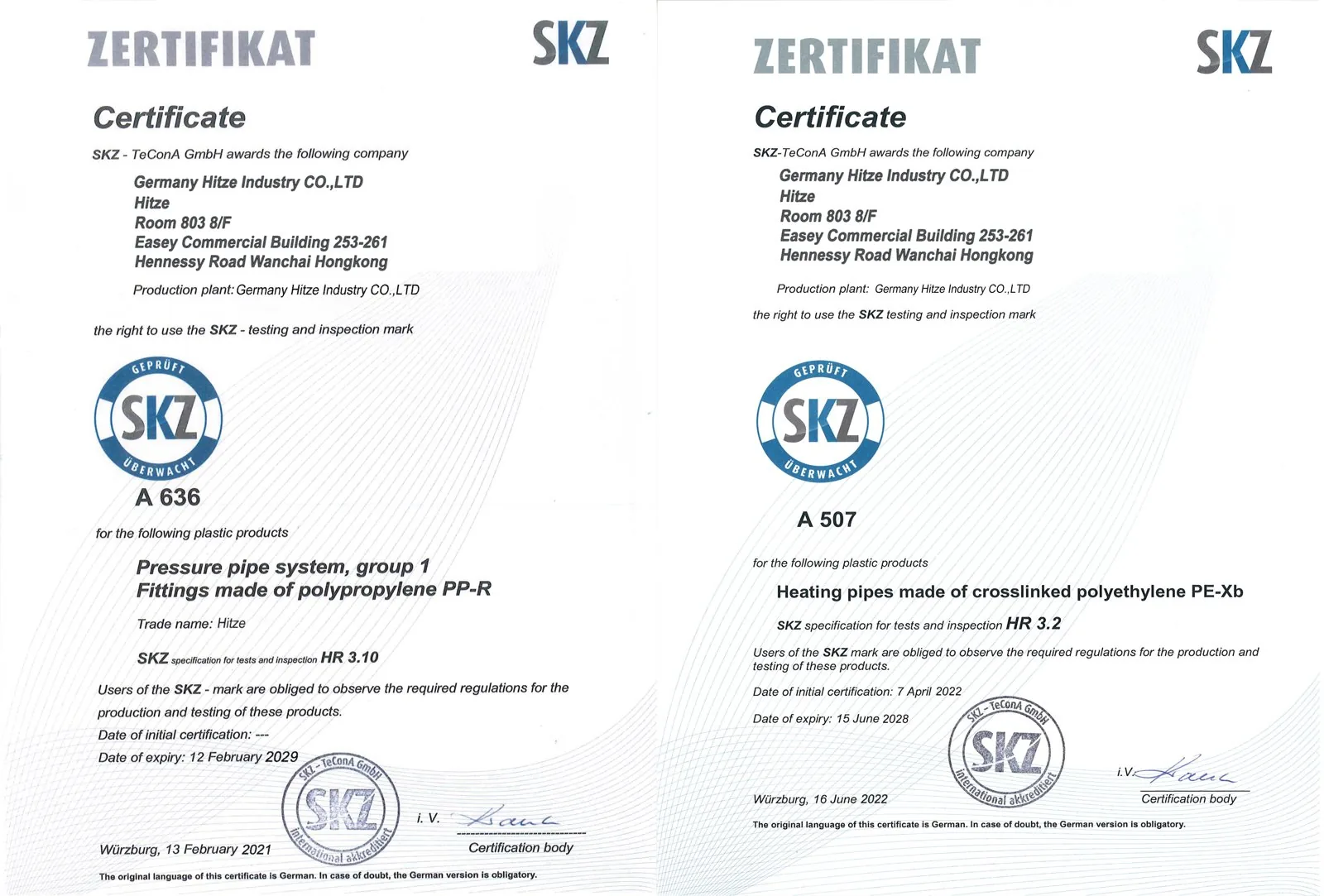
What a distributor should expect us to check before scoping a territory reads like a factory-audit checklist in reverse — we are underwriting the reliability our name is about to be attached to. We look at whether the target market’s approvals line up with what we hold: SKZ test certificates (Süddeutsches Kunststoff-Zentrum) for PP-R and PE-Xb, DVGW type examination for PP-R potable-water pipe, WRAS material approval for the UK, an independent-laboratory potable-water test report, ISO 45001 for occupational health and safety, and SAI Global StandardsMark to AS 4176.8 (Australian consumer-gas multilayer, ISO 17484-1) — with cUPC/UPC, NSF-14 and NSF/ANSI 61 and CE/DoP available where the market needs them. Certificate numbers exist on the physical documents and are available on request. We look at whether one production base can cover the full range a distributor wants to own — multilayer PEX-AL-PEX, PEX, PE-RT, PP-R and PPR-CU, plus press, compression, push-fit and lead-free brass fittings — so exclusivity does not fracture into a half-range that a rival can complete. And we look at reorder consistency, because a protected territory with an unreliable supply line is a liability you have paid a minimum commitment to hold.
A Worked Scenario: Locking Down a Country for a Multilayer Line
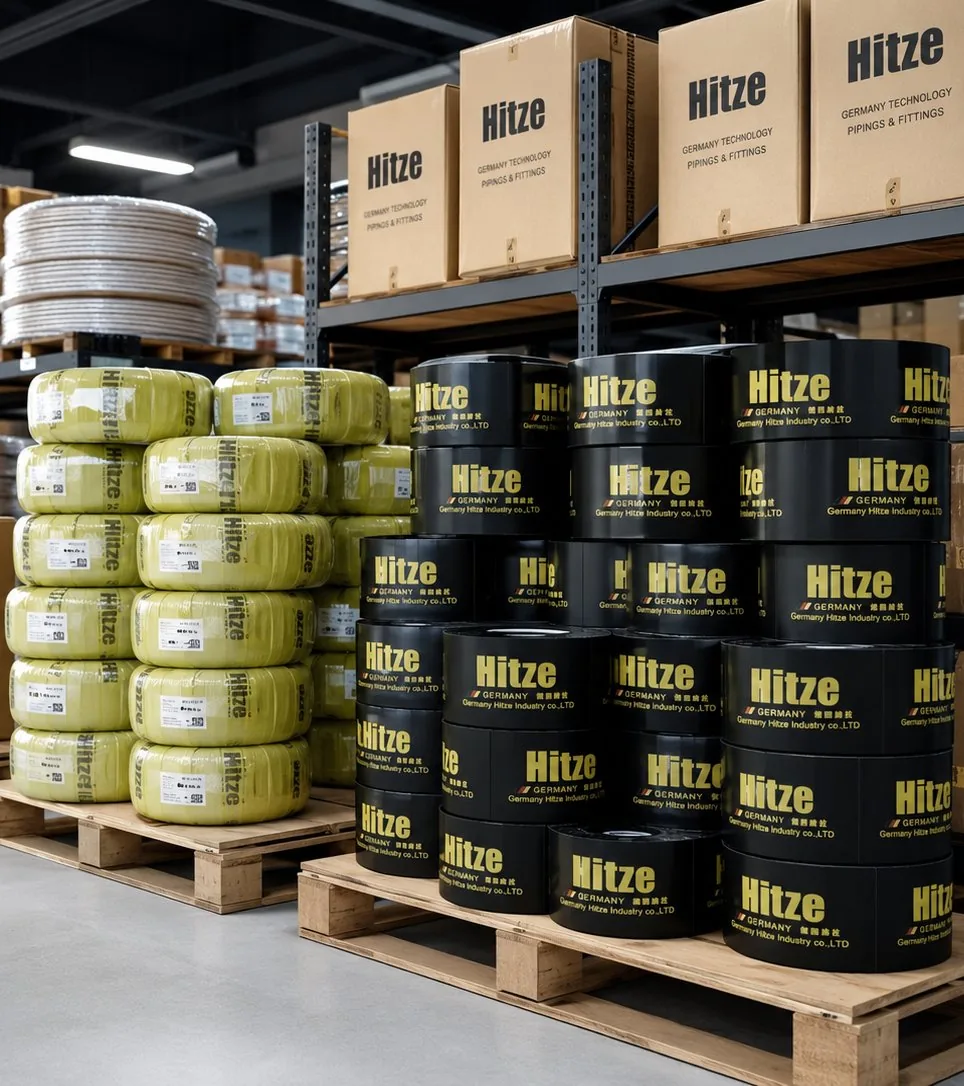
Walk it end to end. A heating wholesaler in Central Europe has spent two years building demand for a multilayer PEX-AL-PEX and PE-RT underfloor range with a matching press-fitting system. They want the country locked so a competing importer cannot undercut the brand they built. Here is how a clean deal comes together, and where the pitfalls sit.
First, they scope exclusive — not sole — for multilayer pipe, PE-RT and the press-fitting system in that country, leaving PP-R and bathroom lines open because they do not sell them. Second, they agree a minimum annual purchase target with a stepped ramp: a modest year-one figure reflecting real demand, rising in years two and three, with a miss converting the deal to sole rather than killing it outright — a fallback that protects the relationship if a bad year hits. Third, they insert anti-circumvention language that bars the factory from filling orders re-exported into their territory through a third-country trader, closing the grey-market gap. Fourth — the clause most distributors skip — they document that the WRAS, DVGW, SKZ and NSF listings backing the range are named in the agreement and that the compliance pack (test reports, Declaration of Performance, listing references) ships with every consignment, so the certifications are portable and their leverage survives to renewal. Finally, because both parties comfortably sit under the EU’s 30% market-share thresholds, the arrangement fits inside the block exemption, and because passive sales stay open, the wholesaler is not promised something the law would strike down. The result is a defensible territory built on a single-brand, full-range line — not a shelf stitched from three suppliers that a rival can pick apart one product at a time.
Best For / Not For: Is an Exclusive Territory Right for You?
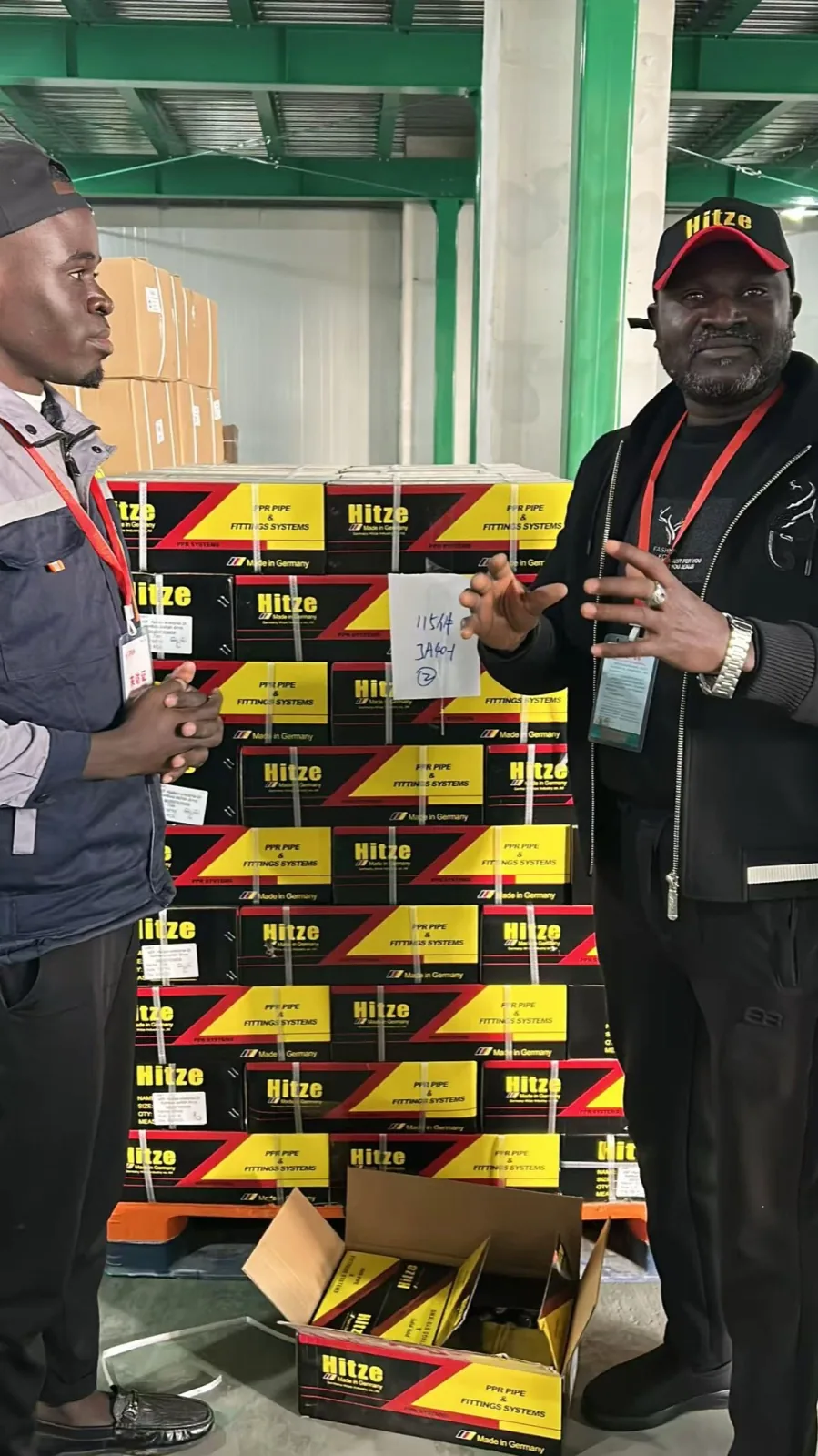
An exclusive or sole territory is best for you if you are investing real money in one brand — a sales team, marketing, technical support, warranty handling — and need the channel protected so you are not building demand a competing importer harvests. It suits distributors who can commit to a realistic minimum volume, who want a full single-brand range they can own end to end, and who value certification portability as strategic leverage rather than paperwork. It is the natural structure once a non-exclusive relationship has proven itself over a few reorders.
It is not for you if your business is opportunistic buying across many suppliers on price, if you cannot commit to a minimum volume without risking your cash flow, or if you are still testing whether the product and the factory hold up — in which case a non-exclusive first order is the disciplined move. Exclusivity is a commitment device: it rewards the distributor who leans in and penalises the one who wanted the protection without the purchase. Be honest about which one you are before you sign a minimum you cannot hit.
Talk to a Factory That Sells Trade-Only
If you are a wholesaler or importer ready to build a protected regional line around a German brand engineered to DIN standards — and you want a supplier whose business model is wholesale-only, so it is not quietly competing with you at retail — an exclusive or sole territory arrangement is available on request, scoped to your market and product mix. The right first step is usually a non-exclusive order that proves reliability, then a territory conversation once the reorder rhythm is established. Start with our wholesale plumbing and heating pipe supply page to see the full range you could own, review what a importer and distributor relationship looks like, or confirm the market approvals behind the products on our certifications and compliance page. This is for trade buyers building a channel — not a fit for one-off retail purchases.
Frequently Asked Questions
What’s the difference between an exclusive and a sole distribution agreement?
An exclusive agreement bars the factory both from appointing other distributors in your territory and from selling there directly. A sole agreement only bars other distributors — the factory reserves the right to sell direct, often to national accounts or online. If your concern is the supplier going direct to your clients, only true exclusivity closes that door, and the contract must say so explicitly because the two words are often used loosely.
Will a pipe factory really give me an exclusive territory?
Reputable factories do grant exclusive and sole territories, but almost always in exchange for a minimum annual purchase commitment — a full country is not locked for free. Expect volume targets, a defined duration, and a clause that converts the deal to non-exclusive if you miss the target. At Hitze, exclusive and sole arrangements are available on request, scoped by product line and market; specific volumes and terms vary by market and order and are set in the conversation.
Is an exclusive distribution agreement legal?
Yes, in both the EU and the US, within limits. The EU’s Vertical Block Exemption Regulation (EU) 2022/720 protects such agreements where both parties hold under 30% market share, though passive sales — unsolicited orders from your territory — generally cannot be blocked. In the US, vertical territories are judged under the “rule of reason” (Continental T.V. v. GTE Sylvania, 1977). Horizontal carve-ups between competing distributors remain illegal. Always confirm with counsel in the destination market.
What happens to certifications if my exclusive supply relationship ends?
Market approvals like cUPC/UPC, NSF/ANSI 61, WRAS and DVGW are issued to a specific manufacturer and product, so they do not automatically transfer to a new source. That is why certification portability is the clause distributors should never skip: document which listings back your products and require the compliance pack — test reports, Declaration of Performance, listing references — to ship with every consignment. It is the leverage that survives a change of supplier.
How do I stop grey-market product leaking into my exclusive territory?
Add explicit anti-circumvention language. A grant of exclusivity does not, on its own, stop a third-country trader from buying elsewhere and re-exporting into your market. The agreement should bar the factory from knowingly filling orders destined for your territory through indirect channels and give you a concrete remedy — a price make-good or termination right — when leakage happens. Under EU rules a supplier can restrict active selling into your territory but generally not genuinely passive sales, so define which is which.
Is Hitze pipe made in Germany?
Hitze is a German brand — legal entity Germany Hitze Industry Co., Ltd., holding German Trademark Reg. No. 30 2020 005 484 at the DPMA — engineered in Germany and built to German DIN standards (DIN 8077/8078, EN ISO 15874, DIN 4726), with DVGW, SKZ, WRAS and further approvals. Founded in 1974, it runs a 120,000 m² production base with 1,000+ employees and exports to 118+ countries, selling trade and wholesale only.