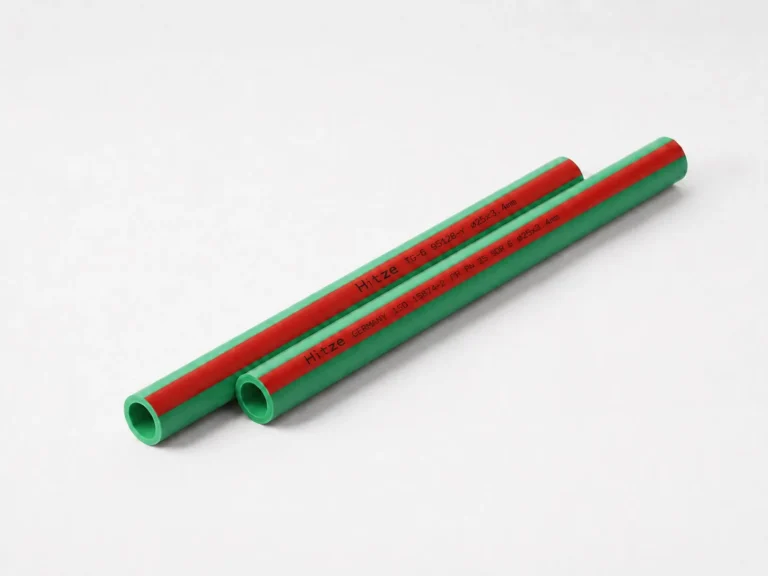
Pipe fittings HS code 3917.40 is the starting point for plastic pipe fittings such as PP-R elbows, tees and sockets. Rigid PP-R pipe starts at 3917.22. Importers must check the exact product, national tariff line, origin and destination rules before declaring; a valve or metal transition needs its own classification review.
Key Takeaways
- Separate rigid propylene-polymer pipe from plastic fittings: 3917.22 and 3917.40.
- Six digits identify the HS group; national extensions and measures still need checking.
- US customs value excludes international freight and insurance; do not use CIF automatically.
- EU CPR obligations depend on the applicable product route, not the word “pipe”.
- Check certificate scope and current status against the exact ordered models.
A supplier’s code is useful evidence, not the final classification decision. Build the import file around the items on your invoice and the rules at your destination. This page keeps PP-R scope explicit while separating product test evidence, shipment documents and valuation questions.
Where PP-R Pipe and Fittings Sit in the HS System
Heading 3917 covers plastic tubes, pipes, hoses and their fittings. Within it, the polymer matters for rigid pipe, while the fitting subheading covers plastic fittings. The official Canadian 2026 tariff schedule shows these descriptions and Canadian extensions. Confirm the destination’s current national line separately. This guide deliberately gives no national duty rate.
| Product to identify | HS starting point / nomenclature | Check before declaration |
|---|---|---|
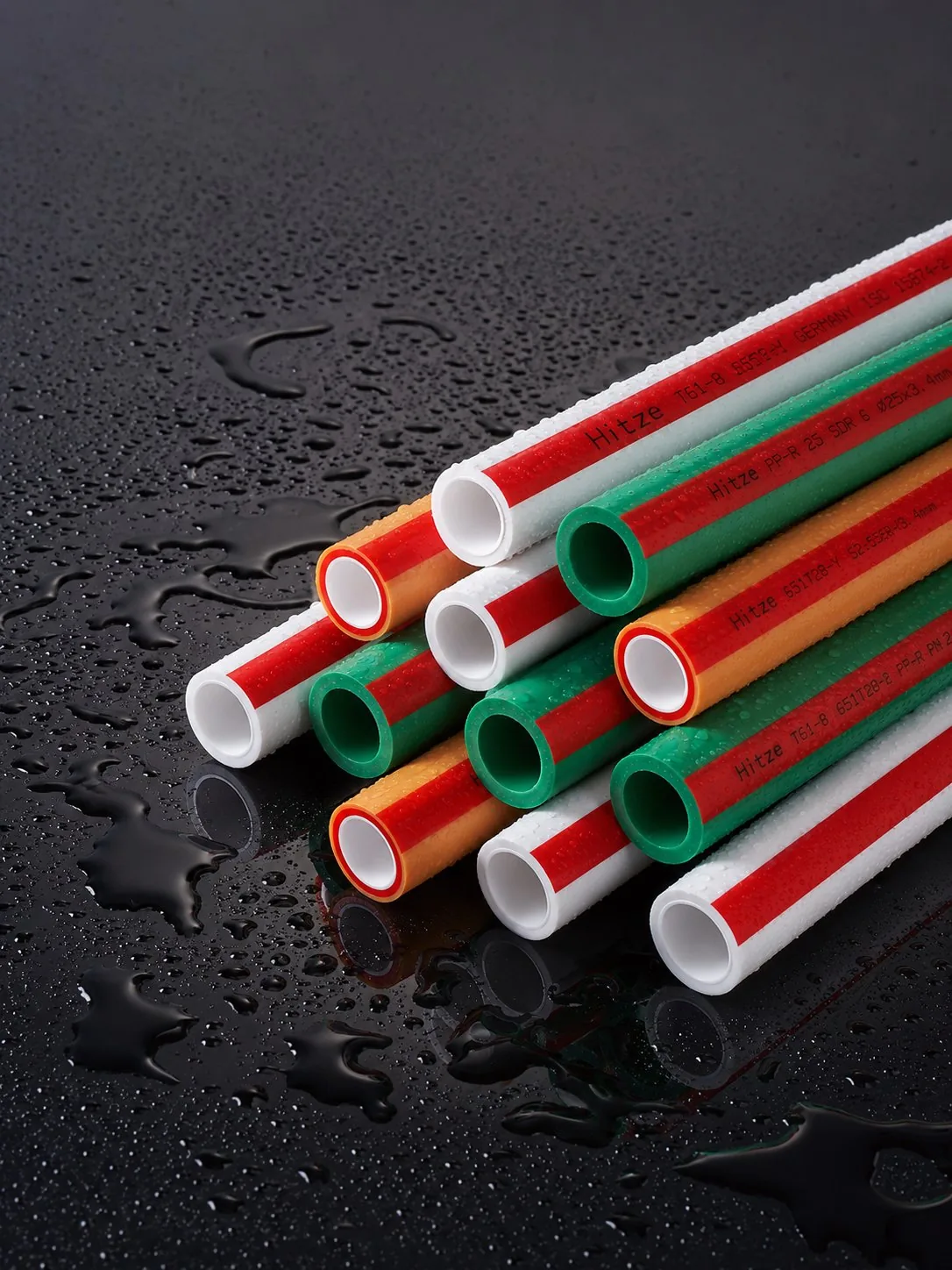
| Rigid PP-R pipe | HS 3917.22 | Propylene polymer and rigid form |
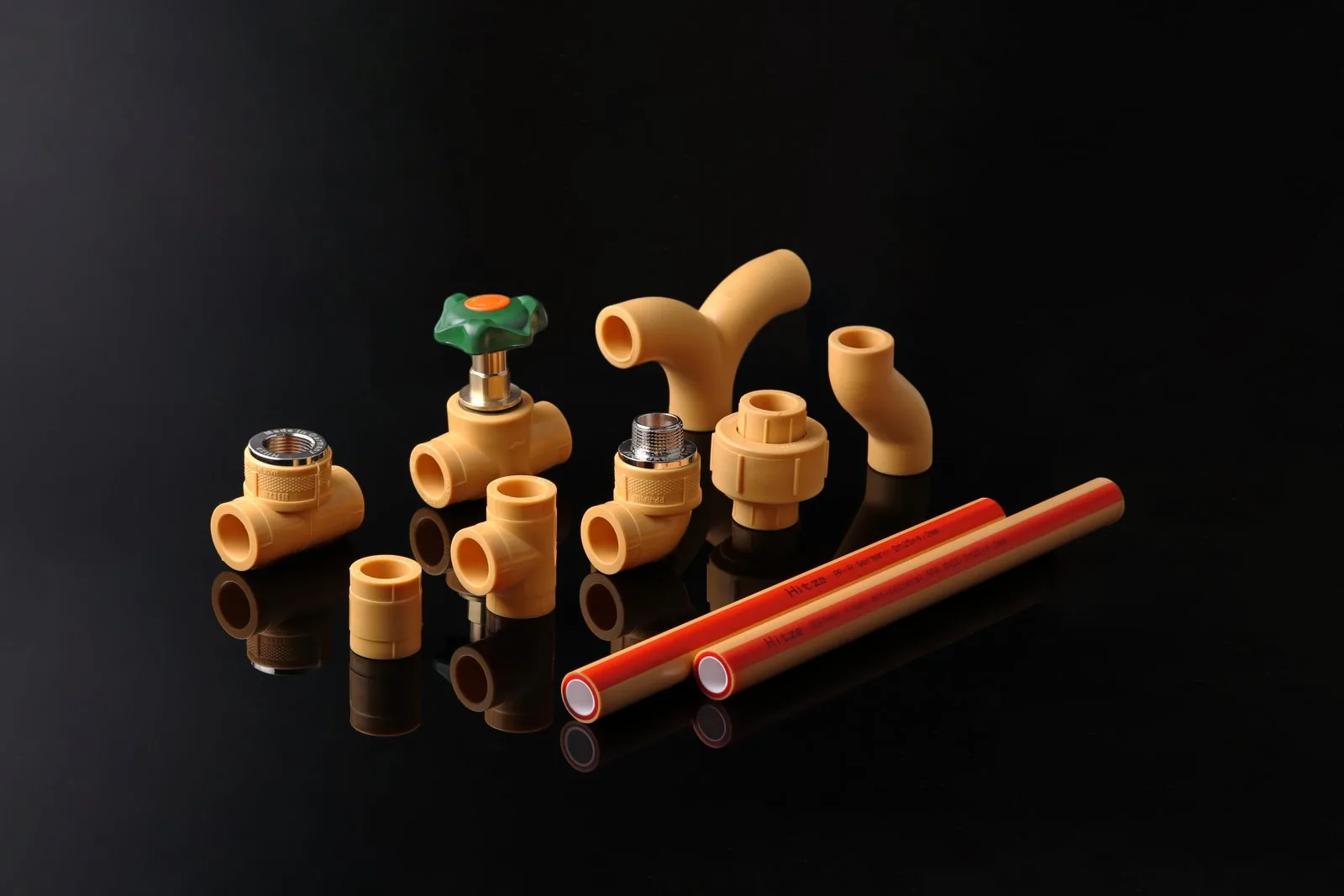
| Plastic PP-R elbows / tees / sockets | HS 3917.40 | Fitting function and material |
| Rigid PE / HDPE pipe | HS 3917.21 | Ethylene polymer |
| Rigid PVC pipe | HS 3917.23 | Vinyl-chloride polymer |
Keep valves, brass-insert transitions and composite products separate in the broker’s review. Do not treat a plastic valve as an ordinary elbow just because both use PP-R. Provide the component materials, a drawing and its function. A binding classification ruling may be appropriate where the national treatment remains uncertain.
Six Digits Are a Starting Point for the Import File
The World Customs Organization defines HS commodity groups using six-digit codes. That common structure helps an importer discuss the same product group across borders. It does not make a national declaration code, duty rate or trade measure portable.
Ask the destination broker to return the full declaration line and the schedule version used. Retain the product description beside that answer. If you later substitute a metal transition, change the origin, or add a valve, send the revision back for review rather than carrying the earlier answer forward.
Build the Document Matrix for the Destination
Start with application and destination. A technical report can show measured performance for the tested specimens; it does not itself prove that an entire shipment satisfies every admission or installation rule. Keep customs entry and installation acceptance as separate checks. For performance evidence, ISO 15874-1 covers PP hot- and cold-water and heating systems, with application conditions and national requirements still governing selection. Match the report to the ordered pipe, fitting and joint.
| Market / route | Source establishes | Does not establish | Decision |
|---|---|---|---|
| United States — import valuation | 19 CFR 152.103: transaction value excludes ocean freight / insurance | Does not approve installation or fix a duty rate | Obtain goods value, documented freight split and applicable additions |
| United Kingdom — import valuation | HMRC Method 1: transport / insurance to UK introduction point included | CIF total is not automatically the declared value | Obtain border-cost allocation and supported deductions |
| EU — construction-product route | Commission CPR overview: obligations depend on OJ-cited harmonised route | ISO scope alone does not establish CE duty or SKU conformity | Identify applicable regime / specification; request its required declaration |
| UK — drinking-water product approval | WRAS process: approval records define product scope | Approval evidence does not determine customs value or prove every SKU covered | Obtain current directory record, model scope and local acceptance |
For the EU, the European Commission’s CPR overview says the obligations do not automatically apply to every construction product. The applicable harmonised standard or assessment route matters. The framework is in transition in 2026, so ask which regime and cited specification cover your product before requesting a CE declaration. Do not infer a CE obligation from an ISO number alone.
What Hitze Can Evidence for the Ordered Line
Hitze offers PP-R sizes OD 20–110 mm, no minimum order quantity and a 50-year commercial warranty. Exact wall, SDR and service-condition tables still need the current technical data sheet. The warranty terms are a commercial commitment, separate from a standard’s design-life calculation.
The documented QC sequence starts with resin verification, then dimensional and ovality checks, then hydrostatic testing of pipes, fittings and fused assemblies. Ask for the reports that connect the ordered models to that sequence. Ask for the inspection plan, specimen-selection basis and model-specific test report before releasing the order.
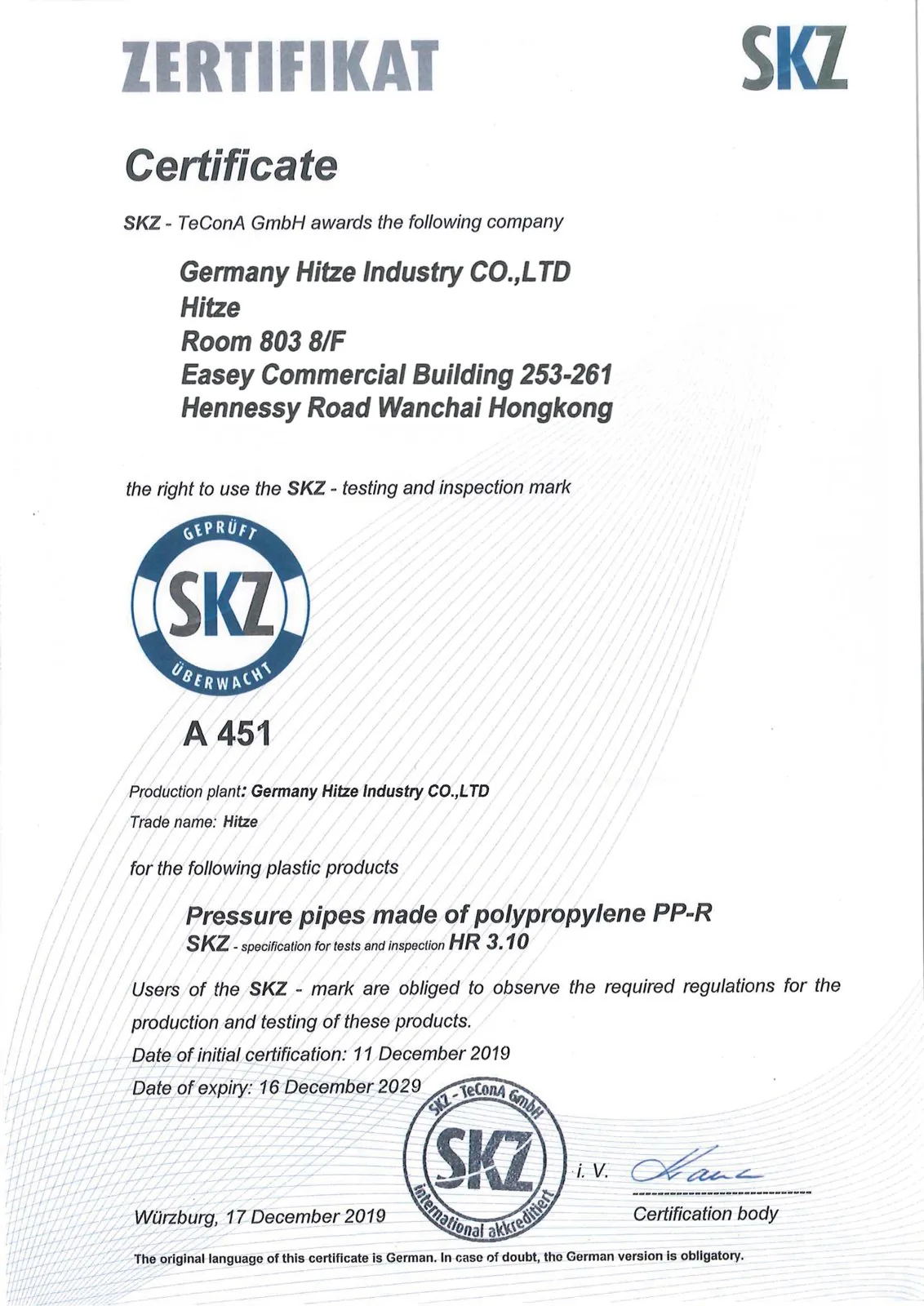
Hitze identifies SKZ testing for PP-R pressure pipe and fittings, DVGW type examination for PP-R drinking-water pipe, and a claimed WRAS product approval for PP-R and PEX lines. A current WRAS listing reference and expiry date must be supplied. Obtain the reference and check the WRAS directory and approval record before relying on it. Confirm the covered models and validity before shipment.
A BS 6920 laboratory report concerns non-metallic materials’ effects on drinking-water quality. It does not establish a listing to NSF/ANSI/CAN 61, which sets health-effects criteria for drinking-water system components. ISO 45001 concerns occupational health and safety management; it is not a pipe approval. Compare the model, application and validity fields, not just logos.
Calculate Customs Value for the Actual Jurisdiction
Customs value follows the destination’s valuation law. US transaction-value rules exclude international freight and insurance from the customs value of the goods. Use documented amounts and check the applicable additions; do not subtract an estimated freight allowance. The UK transaction-value method can require transport and insurance costs to the relevant border, with specific deductions. A CIF invoice total is not a universal tax base.
Give the broker separate goods, freight and insurance amounts, the Incoterm, any buyer-supplied assists or royalties, and the origin evidence. Ask for an itemised valuation worksheet. Then obtain the applicable duty, additional measures, import taxes and fees. No global VAT/GST formula or flat duty percentage can replace that calculation.
The Customs File to Hand Your Broker
Before booking, agree who supplies each document and when. The lead time for production is only one date: laboratory evidence, origin documentation and any destination inspection can follow different schedules. Ask the supplier and broker to identify the dependencies before confirming a ship date.

The broker’s file should identify each SKU, material, function, quantity, net and gross weight, invoice value and Incoterm. Attach the packing list, transport document, applicable origin evidence and requested product reports. Keep the commercial documents consistent; do not invent values on the packing list if the destination uses a separate invoice allocation.
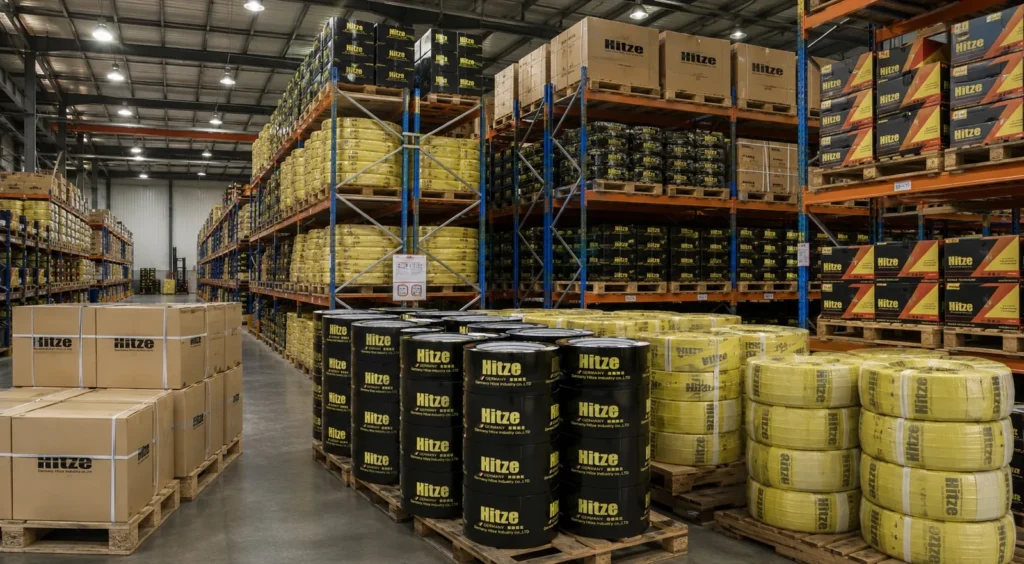
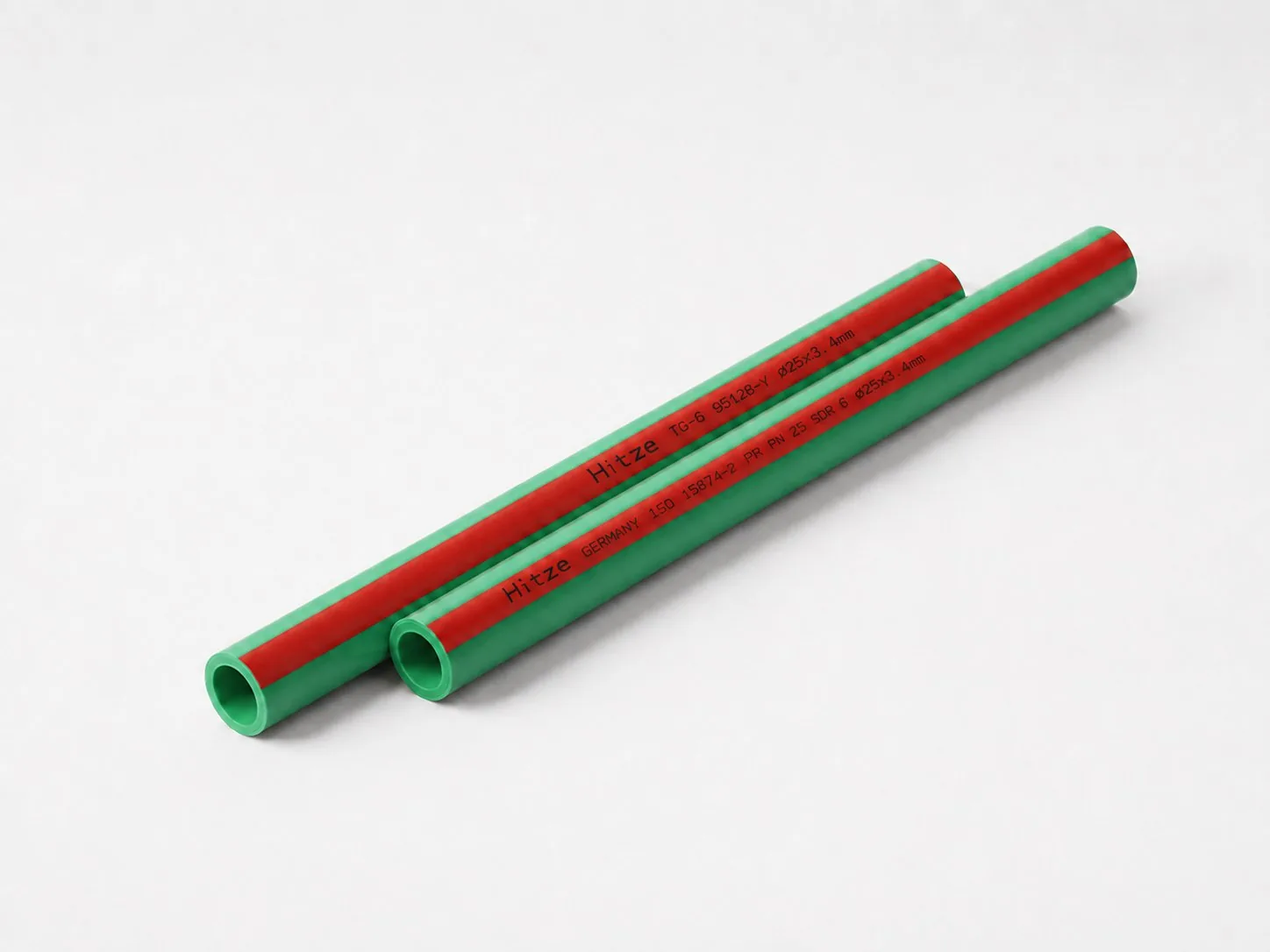
For product selection, use the Hitze PP-R pipe and fittings catalogue alongside the current data sheet. Catalogue photographs identify a family; they cannot establish a certificate’s validity or a country of manufacture.
Classification Checks Before Shipment
Check three boundaries before shipment: pipe versus fitting, fitting versus valve, and national tariff line versus six-digit HS group. For any change in material or function, reopen the classification review. A previous container’s declaration is not proof for a new SKU.
Do not promise a clearance time from paperwork alone. Authorities can inspect the goods, query origin or request extra evidence. Assign an owner to each unresolved classification or approval question and keep the written answer in the shipment file.
Frequently Asked Questions
What is the HS code for plastic pipe fittings?
HS 3917.40 is the six-digit starting point for plastic fittings for tubes, pipes and hoses. Confirm the full national line and exact SKU; a valve or metal transition needs separate review.
Is PP-R pipe declared under the same code?
Rigid PP-R pipe starts at 3917.22, covering rigid tubes, pipes and hoses of propylene polymers. Keep pipe and fittings distinct in the broker’s classification review.
Does every PP-R import need CE or WRAS?
No universal document list applies. Check the destination, application and product scope; EU CPR obligations depend on the applicable harmonised route, and any claimed approval needs its current model-specific record.
Should import duty always use CIF value?
No. US CBP guidance excludes international freight and insurance, while other jurisdictions use different additions and deductions. Ask for a destination-specific valuation worksheet before budgeting duty or import taxes.
Conclusion
For PP-R fittings starting at 3917.40, hold shipment release if the declared item, certificate scope or valuation method remains unresolved. Ask the broker to record the full code and valuation basis, and ask the supplier to identify the evidence for each ordered model before booking. For Hitze’s OD 20–110 mm PP-R range, verify the data sheet and approval scope against each ordered size.