Key takeaways
- Chlorine resistance is tested, not claimed. The oxidative-resistance test is ASTM F2023; the resulting class is printed on the pipe per ASTM F876 and the design basis is listed by the Plastics Pipe Institute in PPI TR-4. No third-party listing, no defensible claim.
- The class ladder is CL1 → CL3 → CL5. CL1 = 25% of the time hot at 140°F (cold plus intermittent hot); CL3 = 50% at 140°F (timed recirculation up to 12 h/day); CL5 = 100% at 140°F (continuous recirculation) — the highest ASTM rating.
- The test water is aggressive on purpose: free chlorine 4.3 ± 0.3 ppm, pH 6.8 ± 0.2, minimum ORP 825 mV. That is a worst-case oxidiser, not a typical tap.
- NSF today: potable PEX is certified to NSF/ANSI/CAN 61 (health effects) and marked NSF-pw; chlorine resistance rides on the F876/F2023 class, and legacy NSF P171 now mostly survives as an optional protocol referenced by F2023.
- Recirculation is the whole game. A dead-leg cold riser needs far less than a timed or continuous hot-return loop. Spec the class to the loop, not to the building.
- Hitze position: we do not publish a fixed CL number in marketing — ask for the current print line + third-party certificate, available on request, and match it to your loop.
If you have ever had a polybutylene claim cross your desk, you already know why this matters. Chlorine in potable water is a slow oxidiser, and over decades it attacks the polymer from the bore outward. The industry response was not a marketing adjective — it was a pressurised, flowing, temperature-accelerated test method and a printed class code you can read off the pipe with a flashlight. This article is about reading that code correctly, because the difference between a CL1 pipe and a CL5 pipe on a continuous hot-water return loop is the difference between a 50-year design life and a warranty file.
The three standards that actually define “chlorine resistance”
There is no single “chlorine rating” standard. Three documents work together, and a spec engineer who cites only one is exposed. First, ASTM F2023 — “Standard Test Method for Evaluating the Oxidative Resistance of Crosslinked Polyethylene (PEX) Pipe, Tubing and Systems to Hot Chlorinated Water” — is the physical test. Pipe samples run under constant internal pressure while chlorinated water of controlled quality flows through them at elevated temperature; failure is defined as any loss of fluid through the wall. Because it runs at multiple temperatures and pressures, the raw time-to-fail data feed a Rate Process Model that extrapolates a life at real end-use conditions.
Second, ASTM F876 is the product specification. It takes the F2023 result and turns it into a printed material designation code and a chlorine-resistance class (CL1/CL3/CL5) that appears on the pipe’s print line. F876 also fixes the pressure ratings you design to: 160 psi at 73.4°F, 100 psi at 180°F, and 80 psi at 200°F. Third, the Plastics Pipe Institute (PPI) TR-4 is the listing directory: it publishes the Hydrostatic Design Basis (HDB) and the chlorine-resistance end-use conditions that a specific compound/producer earned. If a pipe brand claims CL5, the honest verification path is: read the print line, then find the producer’s listing in PPI TR-4, then read the F2023 report behind it. That chain is what separates a substantiated spec from a sticker.
Here is the insider warning: chlorine resistance is a property of the compound and the crosslink, not of a brand name. Two pipes that both say “PEX-a” can carry different CL classes because the antioxidant package and crosslink density differ. Never accept “it’s PEX, it’s fine” — make the class the line item. For the manufacturing side of why the crosslink method changes oxidative behaviour, see our breakdown of PEX-a vs PEX-b vs PEX-c manufacturing methods.
What CL1, CL3 and CL5 actually mean
The class number is not a quality grade in the abstract — it is a statement about how much of the pipe’s service life it spends hot. Chlorine attack accelerates sharply with temperature, so the F2023 extrapolation is anchored to a duty cycle expressed as “percent of time at 140°F (60°C).” Read the class as an application envelope, not a bragging right.
| Class | End-use condition (per ASTM F876) | Real-world duty it covers |
|---|---|---|
| CL1 | 25% of time hot at 140°F, 75% at 73°F | Cold-water distribution plus intermittent (on-demand) hot water — the baseline for potable PEX |
| CL3 | 50% of time hot at 140°F, 50% at 73°F | Timed hot-water recirculation up to about 12 hours per day (residential comfort loops on a timer) |
| CL5 | 100% of time hot at 140°F | Continuous hot-water recirculation with no timer — the highest chlorine rating ASTM offers |
Notice there is no CL2 or CL4 in common use; the market settled on 1, 3 and 5 as the meaningful steps. The practical read for a specifier: a cold-only or intermittent-hot job is comfortably inside CL1, a timed comfort-recirc house wants CL3, and a hotel, gym, or hospital with a pump that never stops wants CL5. Specifying CL5 on a cold riser wastes money on antioxidant package you will never use; specifying CL1 on a continuous return loop is how you get a premature brittle failure at the hottest fitting.
Decoding the material designation code on the print line
The CL class is derived from a four-part material designation code that also rides the print line, e.g. PEX 5306 or PEX 1006. Read it left to right:
First digit — chlorine resistance (1–5). 5 is the top; it maps to the CL5 continuous-recirculation condition. A leading 1 is the CL1 baseline. Second digit — UV resistance (0–3). 0 means no rated UV protection (keep it out of sunlight during storage and rough-in); 3 means roughly six months of UV exposure tolerance from added blockers/inhibitors. Third and fourth digits — the Hydrostatic Design Stress that ties back to the HDB in PPI TR-4. So “PEX 5306” reads as: highest chlorine class, six-month UV, standard design stress. “PEX 1006” reads as: baseline chlorine, no UV rating.
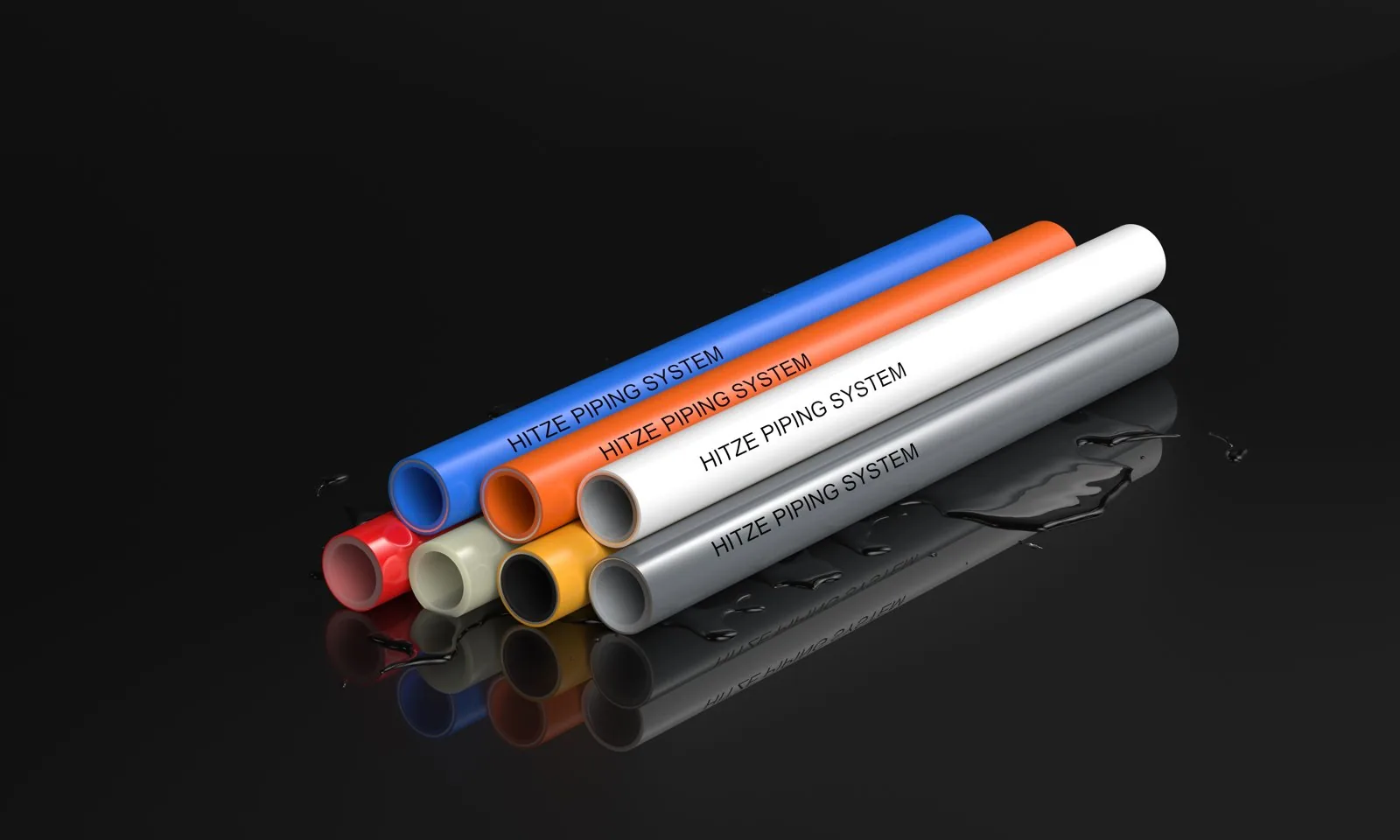
A worked read: you pull a coil marked “½″ PEX-b — ASTM F876/F877 — PEX 5306 — NSF-pw — F2023.” That tells you, without any datasheet, that the pipe is rated to CL5 continuous recirculation, carries six-month UV, is potable-water listed, and was chlorine-tested to F2023. If the same job showed up with a coil that only printed “PEX 1006” and no F2023 callout, you would reject it for a recirc loop on sight. The print line is your first and cheapest QA gate — train your receiving crew to read it before the coil comes off the truck.
The F2023 test water: why 4.3 ppm and pH 6.8 matter
Buyers get suspicious when a lab result looks “too good.” Understanding the test water dissolves that suspicion, because F2023 is deliberately harsher than your municipal supply. The standard runs a controlled water quality of free chlorine 4.3 ± 0.3 ppm at pH 6.8 ± 0.2, with a minimum oxidation-reduction potential (ORP) of 825 mV. Two of those numbers are doing the heavy lifting.
First, the low pH. When chlorine dissolves in water it forms hypochlorous acid (HOCl) and the hypochlorite ion (OCl–). HOCl is the far more aggressive oxidiser, and the equilibrium is pH-dependent: at pH 6.5 chlorine exists almost entirely as HOCl, while at pH 8.5 roughly 90% has shifted to the weaker OCl–. By holding the test near pH 6.8, F2023 keeps the water in its most aggressive HOCl-dominated state. Second, the ORP floor of 825 mV guarantees a consistently oxidising bath — for reference, deionised water sits around 200–300 mV. The point: the pipe is being cooked in a worst-case oxidiser, so a CL5 result is a genuinely conservative promise, not a fair-weather one.
And the effect is real even at trace levels — laboratory work behind these methods found measurably shorter test lifetimes for chlorinated water versus non-chlorinated water at concentrations as low as 0.1 mg/L (ppm). That is the whole reason the class exists: chlorine does not need to be dramatic to matter over a 50-year horizon. This is the same evidentiary logic buyers should apply to brass and fittings — see how potable-water compliance is actually demonstrated in NSF/ANSI 61 lead-free brass compliance.
Chlorine vs chloramine: know which disinfectant your market runs
This is the trade-off engineers most often miss. In the United States, roughly 68% of utilities dose free chlorine and about 8% use chloramines to hold a disinfectant residual — and chloramine use skews higher among the large utilities that serve big-city populations. The F876/F2023 class is built around free chlorine oxidation. Chloramine (chlorine combined with ammonia) is a different, generally slower oxidiser on polyolefins, but it is notably harder on the elastomeric seals and rubber components in a system than on the PEX wall itself.
Practical recommendation: if your project city runs chloramine (Denver, San Francisco, much of the mid-Atlantic, large parts of Texas and Florida have at times), the PEX pipe class is rarely your risk — your risk migrates to O-rings, fitting seals and any EPDM in the assembly. Spec the elastomers for chloramine service and confirm the fitting maker rates them for it. A CL5 pipe on chloramine-incompatible O-rings still leaks; the weakest oxidative link decides the joint. When a client cannot tell you their disinfectant chemistry, treat it as an open item — do not let “it’s chlorinated, probably” stand in for a spec.
NSF/ANSI 61, NSF-pw and the fate of NSF P171
There is real confusion in the field about which NSF mark covers chlorine, so let us separate the layers. NSF/ANSI/CAN 61 is the health-effects standard — it governs what a wetted material may leach into drinking water. It is about contaminants, not longevity. The NSF-pw print mark signals that the product meets NSF/ANSI 61 health requirements and the performance, long-term-strength and quality-control requirements of NSF/ANSI 14. Lead-free content is a separate standard again, NSF/ANSI 372. None of those three is a chlorine-resistance rating on its own.
Chlorine resistance lives with F876/F2023 and the CL class. Historically, NSF Protocol P171 (“Chlorine Resistance of Plastic Piping Materials”) was the standalone chlorine-resistance certification, and you still see older documentation cite it. Today the primary route is the F876 class substantiated by F2023, with P171 largely surviving as an optional protocol that F2023 draws on rather than a mark you should hunt for on the print line. So the current, defensible ask from a supplier is: the NSF-pw listing (61 + 14), the NSF/ANSI 372 lead-free status, and the F876 CL class backed by an F2023 report and PPI TR-4 listing. If a vendor waves “NSF certified” without naming which standard, that is your cue to push for the specific listing numbers — available on request from any serious producer.
Worked scenario: speccing a hotel recirculation riser
A 90-room hotel wants a hot-water recirculation system that runs 24/7 to keep tap-wait under ten seconds on every floor. The municipal supply is free-chlorinated at a typical 1–2 ppm residual. Walk the decision the way a senior spec engineer would:
Step 1 — classify the duty. Continuous recirculation, no timer, hot return loop. That is the CL5 envelope (100% at 140°F). CL3 is disqualified because the pump never stops. Step 2 — set the class as a hard line item. The submittal must show pipe printed to a CL5 (leading-digit-5) designation, e.g. PEX 5306, with F876/F877 and F2023 on the print line. Step 3 — verify the paper. Match the print-line class to the producer’s PPI TR-4 listing and request the F2023 report; confirm NSF-pw and NSF/ANSI 372. Step 4 — protect the joints. Confirm fitting seals are rated for the disinfectant; if the city later switches to chloramine, the elastomers — not the pipe — become the exposure. Step 5 — derate for temperature. At 140°F you are well inside the F876 curve (100 psi at 180°F), but confirm the actual loop pressure against the hot-temperature rating, not the 73°F number.
Do that and the failure mode you were afraid of — brittle oxidative cracking at the hottest fitting five years in — is engineered out before the first coil ships. Skip step 2 and you are trusting a colour, not a class. If you are still weighing the material itself against metal for this kind of loop, our PEX vs copper for potable water comparison lays out the trade buyer’s math.
What Hitze checks — and how the pipe is built to hold the class
Hitze is a German brand of engineered piping systems, engineered in Germany and built to German DIN standards, with a production base of 120,000 m² and export into 118+ countries. On PEX specifically, our position on chlorine is deliberately conservative: we do not publish a fixed CL number in marketing copy, because the honest answer for a spec engineer is the current print line plus the third-party certificate behind it — both available on request and matched to your loop and market. Anyone who quotes you a permanent “CL5” off a homepage without a listing to back it is selling a sticker.
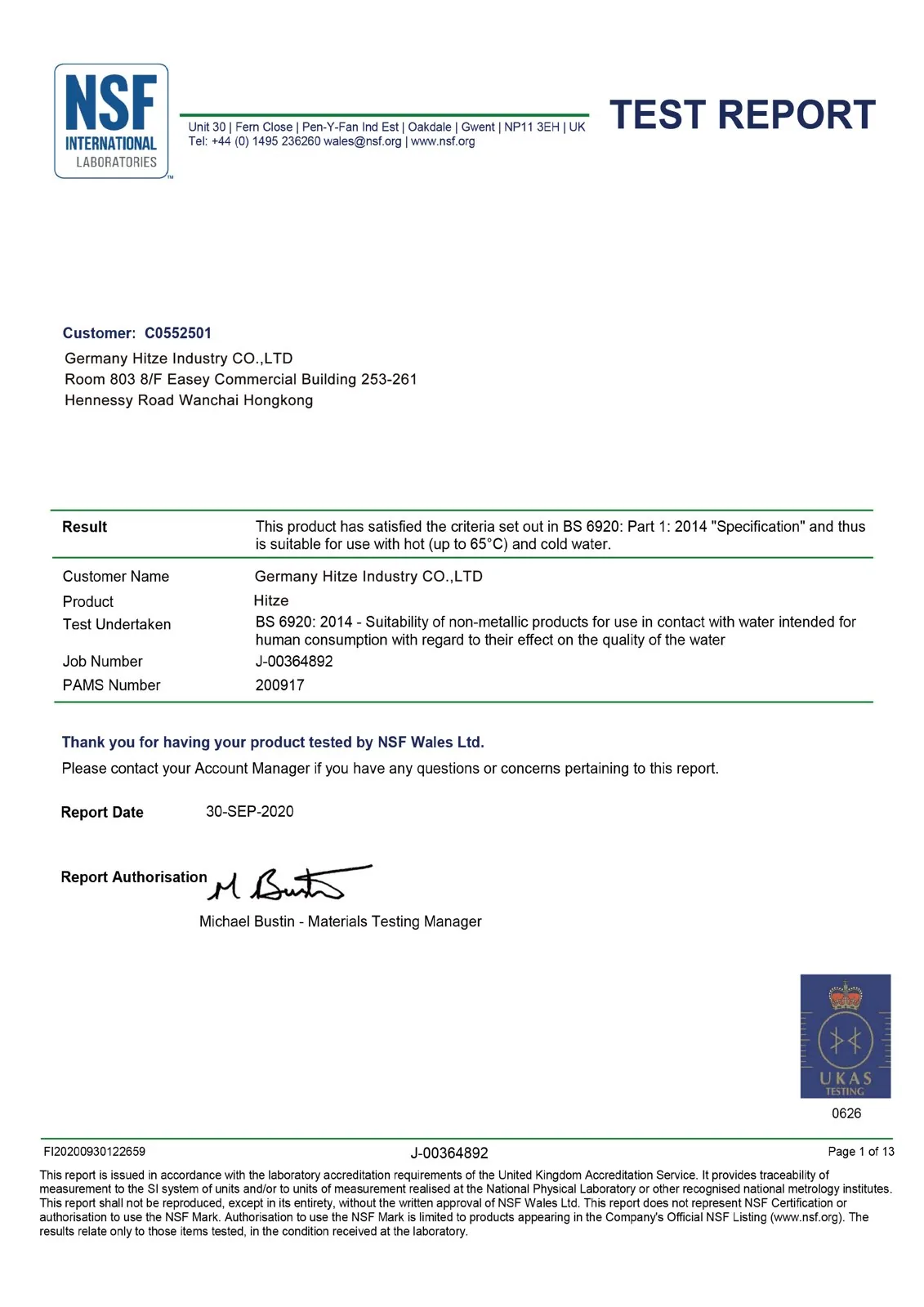
What we can state with discipline is how the product is verified. Hitze holds an SKZ (Süddeutsches Kunststoff-Zentrum, Germany) test scope covering PE-Xb heating pipe alongside PP-R pressure pipe and fittings, a WRAS material approval for potable water in the UK, and an independent NSF Laboratories BS 6920 potable-water test report for hot (≤65°C) and cold contact. Production runs through in-line hydrostatic pressure testing against DIN and EN ISO methods on every pipe family — the same discipline that underpins any chlorine-resistance claim, because a pipe that cannot hold pressure cannot hold a 50-year oxidative promise. For potable-water grades we build to the applicable ASTM F876/F877 requirements where those are the governing spec for the market.
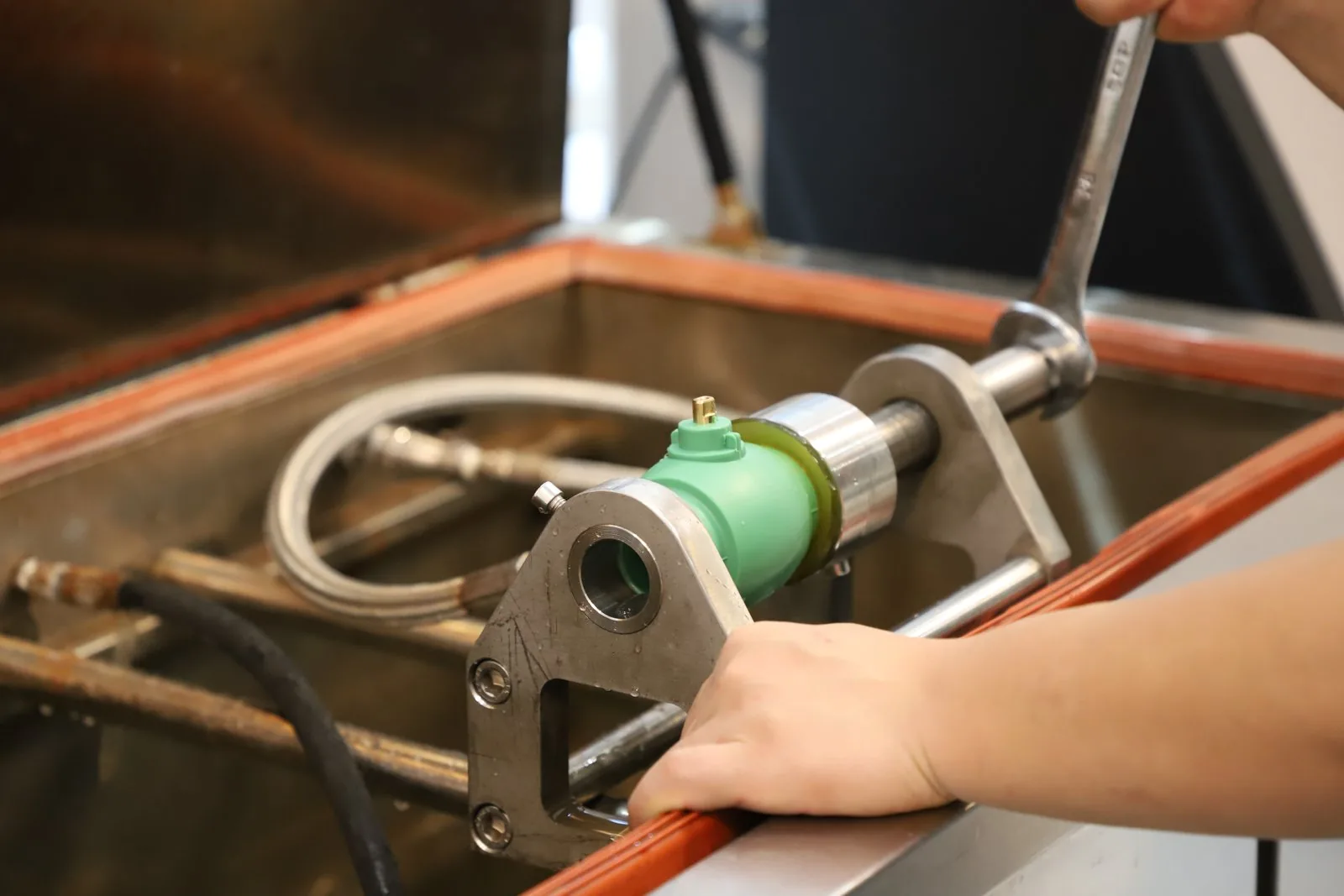
Cert-scope honesty matters here, so read the fine print the way we write it: our SKZ and DVGW scopes sit on PE-Xb heating pipe and PP-R drinking-water pipe respectively — they are not a stand-in for a PEX potable chlorine listing. When you need the chlorine-resistance evidence for a specific PEX potable grade, ask for that grade’s print line and its F2023/PPI TR-4 documentation directly. We would rather hand you the exact certificate than let a broad claim do work it should not.
Best for / not for: matching class to project
Reach for a high chlorine class (CL5) when: the job has continuous hot-water recirculation (hotels, gyms, hospitals, multifamily with a 24/7 pump), the supply is aggressively chlorinated, or the owner wants the longest defensible design life on the hottest lines. CL3 is the right economics when: recirculation is on a timer (residential comfort loops, small commercial) and never runs continuously hot. CL1 is entirely appropriate when: the run is cold distribution or on-demand hot with no recirculation — paying for CL5 there buys antioxidant headroom you will not use.
Not the right tool: chlorine class does not fix a UV-exposure problem — that is the second digit, and no CL rating protects a coil left in the sun. It also does not cover chloramine-driven seal degradation, which is an elastomer spec, not a pipe spec. And it is silent on oxygen ingress in closed heating loops — that is an EN/DIN oxygen-barrier question, not an F876 chlorine question. Keep the four risks — chlorine, UV, seals, oxygen — on separate lines of your submittal.
Who this is for — and how to get the actual documents
If you are a spec engineer, distributor, or private-label brand owner sizing PEX for potable and recirculating hot-water systems and you need the chlorine-resistance evidence to survive an AHJ review or a client audit, that is exactly the conversation Hitze is built for. We supply trade and wholesale only, ship to 118+ countries, and run a no-MOQ, sample-first program — you can pull a real coil, read the print line yourself, and request the matching third-party documentation before you commit to a container. On a matched Hitze pipe-and-fitting system we stand behind a 50-year warranty. Explore the range on our PEX pipe page, then ask for the specific grade’s F876 class and F2023/PPI listing — available on request and matched to your market. Bring us the loop; we will bring the paper.
Frequently asked questions
Is CL5 always better than CL1? Better for continuous hot recirculation, yes — CL5 is the top ASTM chlorine class (100% of time hot at 140°F). But on a cold or intermittent-hot run, CL1 already covers the duty (25% at 140°F), and CL5 just adds antioxidant headroom you will not use. Match the class to the loop, not to the highest number available.
What is the difference between ASTM F2023 and ASTM F876? F2023 is the test method — pressurised PEX in hot, flowing chlorinated water until failure, extrapolated by the Rate Process Model. F876 is the product specification that converts that result into the printed CL class and the pressure ratings (160 psi at 73.4°F, 100 psi at 180°F, 80 psi at 200°F). You need both: one proves it, one prints it.
Does NSF/ANSI 61 certify chlorine resistance? No. NSF/ANSI/CAN 61 is a health-effects (leaching) standard; the NSF-pw mark also brings in NSF/ANSI 14 performance and QC. Chlorine resistance is carried by the F876 CL class backed by F2023 testing and a PPI TR-4 listing. Ask for both sets of documents separately.
Is NSF P171 still used? Rarely as the headline mark. NSF Protocol P171 was the older standalone chlorine-resistance certification and still appears in legacy documentation. Today the F876 class substantiated by F2023 is the primary route, with P171 largely surviving as an optional protocol that F2023 references.
Does the CL class cover chloramine as well as chlorine? The class is built around free-chlorine oxidation, and roughly 68% of US utilities dose chlorine versus about 8% chloramine. Chloramine is generally slower on the PEX wall but harder on elastomeric seals, so on chloramine systems your exposure shifts to O-rings and fitting seals — spec those separately.
What CL rating does Hitze PEX carry? Hitze does not publish a fixed CL number in marketing, because the defensible answer is the current print line plus the third-party certificate behind that specific grade — both available on request and matched to your loop and market. Ask for the F876 class and its F2023/PPI TR-4 documentation directly.


