Key takeaways
- The next verified editions, taken from the organisers’ own calendars: AHR Expo, 25–27 January 2027 (McCormick Place, Chicago), ISH, 15–19 March 2027 (Frankfurt am Main, biennial) and MCE, 7–10 March 2028 (Fiera Milano, biennial). If a show’s dates are not published by its organiser, treat any third-party listing as a rumour.
- ISH 2025 drew 2,183 exhibitors from 54 countries and 163,157 visitors. Nobody walks that. Land with 12–15 pre-qualified exhibitors and a hard cap of 8 booked meetings per day, or the show walks you.
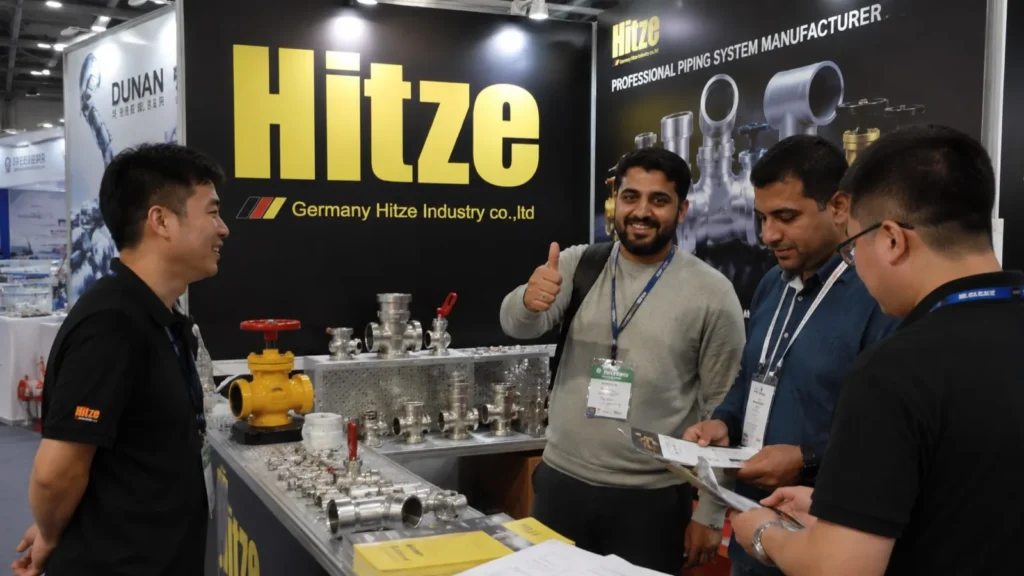
- Traders expose themselves inside five minutes at the booth: a certificate holder name that doesn’t match the brand on the wall, no answer on extrusion-line count or wall-thickness tolerance, and a flinch when you ask to visit the plant “next week while I’m in the region”.
- Samples collected at the show are step one, not the decision. The deal is decided in the post-show loop: certificate register checks, a live video walk of the plant, independent checks on the cut samples, then a trial order inspected before it ships.
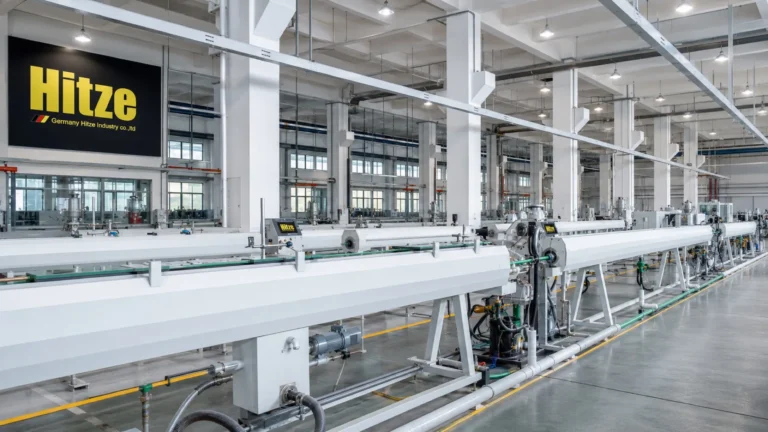
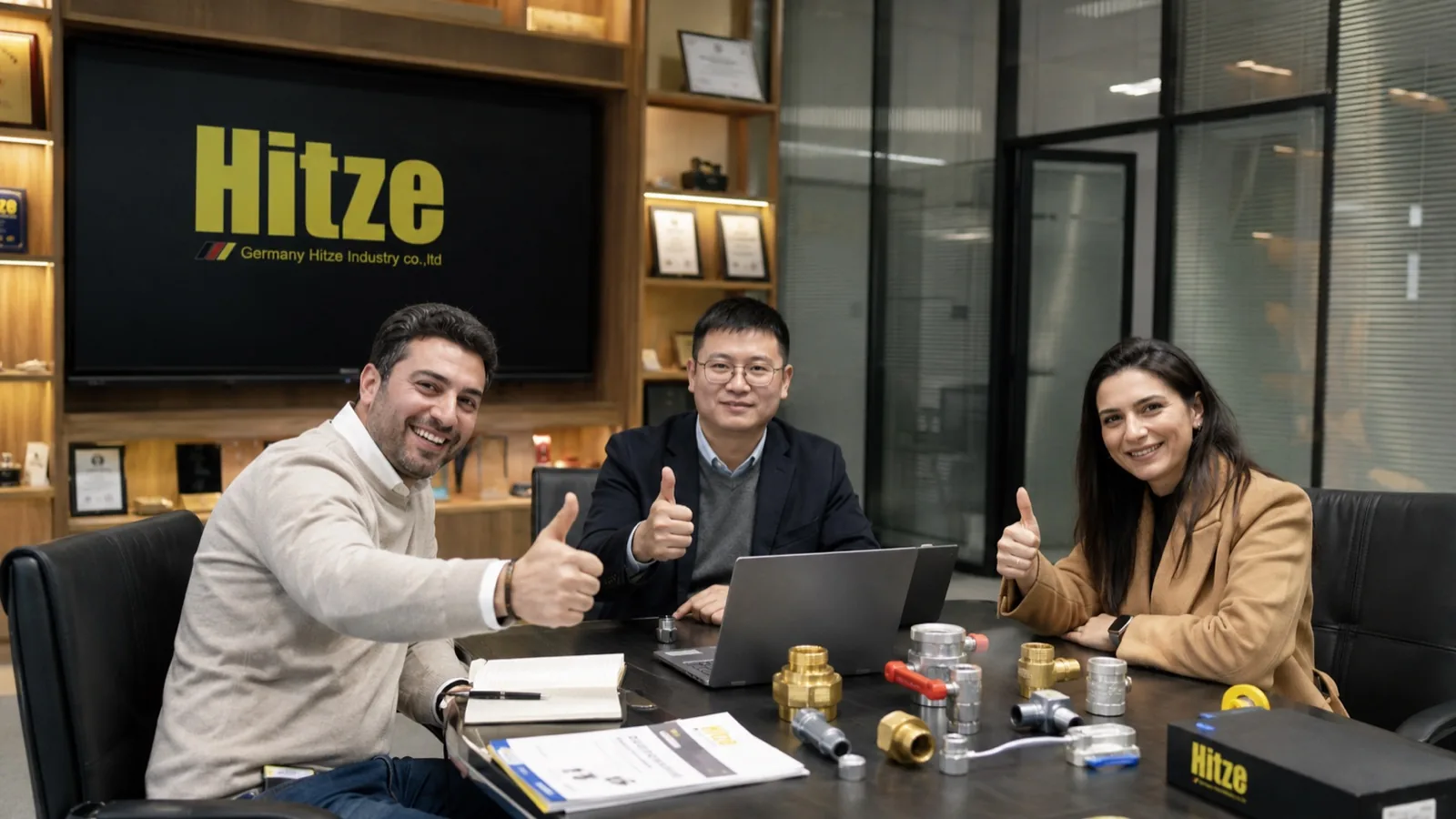
- Hitze — a German brand of engineered piping systems, founded 1974, 120,000 m² production base, exporting to 118+ countries — meets importers sample-first with no minimum order quantity, because a real factory doesn’t need to close you at the booth.
An importer’s travel budget covers maybe two international shows a year. Spend one of them wrong and the cost isn’t the flight — it’s the two suppliers you shortlisted off a handshake, sampled, negotiated with for a quarter, and only then discovered were trading companies brokering someone else’s extrusion capacity. The pipe business is unusually kind to that kind of masquerade: the product is a commodity to the eye, catalogue photos are freely borrowed, and a rented 60 m² booth with a fused-joint display wall looks exactly the same whether there is a factory behind it or a rented office in a free-trade zone.
This guide covers the three plumbing trade shows that matter most for meeting pipe manufacturers — ISH Frankfurt, MCE Milan and AHR Expo — with next-edition dates verified against the organisers’ own sites, then walks the full sourcing sequence: pre-qualifying exhibitors before you fly, the booth questions that separate factories from resellers, what to take away as samples, and the post-show verification loop that turns a stack of business cards into one trial container.
Why trade shows still beat directories — and where they burn importers
A B2B directory gives you a thousand suppliers and no way to smell them. A trade show compresses what would be a month of first calls into three days of face-to-face meetings where you can hold the pipe, read the print line, and watch an engineer’s face when you ask about wall-thickness tolerance. That last part is the real product of the ticket price: technical questions answered live, with no time for the sales office to forward your email to the actual factory. For an importer qualifying suppliers for a certified market — DVGW-territory Europe or code-driven North America — there is no faster filter.
But be honest about what a show cannot do. Booth size correlates with marketing budget, not with production capacity — some trading companies rent larger booths than the factories they broker for, precisely because the booth is their factory. Contract manufacturers exhibit under three or four brand shells at the same fair, sometimes in different halls. And the show-floor sample you’re handed may not come off the line that would run your order. The correct mental model: a trade show is a disqualification engine. You go to strike suppliers off the list quickly and cheaply, not to sign anyone. Every euro of value is in the meetings you refuse to take and the follow-up you do after the hall lights go off.
One more trade-off worth stating plainly: the big three shows skew toward established, certified suppliers because exhibiting there is expensive and the audience is professional. That is a feature for you, not a bug — a supplier who has exhibited at ISH across multiple editions has been publicly answering hard questions from German installers for years. Regional shows cast a wider, cheaper net with a higher trader ratio. Do the big three first; add regional shows only when you’re hunting a specific supply base.
The calendar: ISH, AHR Expo, MCE — verified dates and what each is actually for
ISH Frankfurt is the world’s leading trade fair for HVAC + water and the deepest single pool of piping-system manufacturers anywhere. It runs every two years; the organiser, Messe Frankfurt, has confirmed the next edition for 15–19 March 2027 in Frankfurt am Main. The 2025 edition filled the entire Frankfurt exhibition grounds with 2,183 exhibitors from 54 countries — 72 per cent of them international — and drew 163,157 visitors, per Messe Frankfurt’s final report. For a pipe importer, ISH’s value is concentration: multilayer, PEX, PP-R, press-fitting and manifold suppliers within a few halls of each other, in a market culture where SKZ test reports and DVGW type examinations are table stakes rather than differentiators. Even if you buy exclusively for North America, walk ISH once — it recalibrates what “certified system supplier” is supposed to look like.
AHR Expo is the North American HVACR event, co-located with the ASHRAE Winter Conference. The organiser’s published schedule rotates cities: Chicago, 25–27 January 2027 at McCormick Place, then Orlando on 7–9 February 2028, then Chicago again on 22–24 January 2029. The organiser’s own numbers put the show at roughly 1,900 exhibitors and 55,000 attendees, including 500+ international exhibitors. AHR is where you qualify suppliers who already understand the US and Canadian compliance stack — cUPC listings, NSF marks, lead-free brass — and where you’ll meet the rep networks and wholesalers who will eventually sit between you and your customers. Fewer pure pipe extruders than ISH, but the ones who exhibit are serious about the market.
MCE — Mostra Convegno Expocomfort in Milan is the biennial southern-European counterweight: the organiser has already fixed the 45th edition for 7–10 March 2028 at Fiera Milano (Rho). MCE’s strength is the Mediterranean distribution ecosystem — Italian, Iberian, Balkan, Middle Eastern and North African buyers and the manufacturers who serve them — with a heavy hydronic-comfort and renewables tilt. If your market runs on PP-R and radiant floor systems, MCE’s aisles are disproportionately useful. ISK-SODEX in Istanbul, organised by Hannover Fairs Turkey (a Deutsche Messe subsidiary), is the regional add-on for the Turkish and Central Asian supply base; its editions are announced on the organiser’s own channels, and we cite no dates here because none were verifiable there at the time of writing — which is exactly the discipline you should apply to any show calendar you’re handed.
| Show | Cadence | Next verified edition | Strongest for | Importer’s play |
|---|---|---|---|---|
| ISH, Frankfurt | Biennial | 15–19 March 2027 | European system manufacturers; DVGW/SKZ certification culture | Deep-qualify 12–15 system suppliers; benchmark certification packs |
| AHR Expo, USA | Annual, rotating city | 25–27 January 2027, Chicago | North American code stack (cUPC, NSF); HVACR channel partners | Screen for live cUPC/NSF listings; meet rep networks and wholesalers |
| MCE, Milan | Biennial | 7–10 March 2028 | Mediterranean distribution; hydronics, PP-R, renewables | Source PP-R and radiant systems; scout southern-EU distribution deals |
| ISK-SODEX, Istanbul | Periodic | Check organiser’s calendar | Turkish and regional HVAC supply base | Add only when hunting this specific supply base; verify dates first |
Pre-qualify exhibitors six weeks out, or the show walks you
Every major organiser publishes a searchable exhibitor list four to eight weeks before opening day. That list is your entire pre-show job. Filter to your categories — plastic pipes, fittings, valves, manifolds — and you’ll typically pull 60–120 candidates at a show the size of ISH. Cut that to 25–30 on the obvious criteria (product range matches your gap, markets served include yours), then run desk checks to get to the 12–15 who deserve a booked meeting. At 45 minutes per meeting plus walking time, 8 meetings a day is the realistic ceiling; leave the rest of your floor time unbooked for the discoveries that justify being there in person.
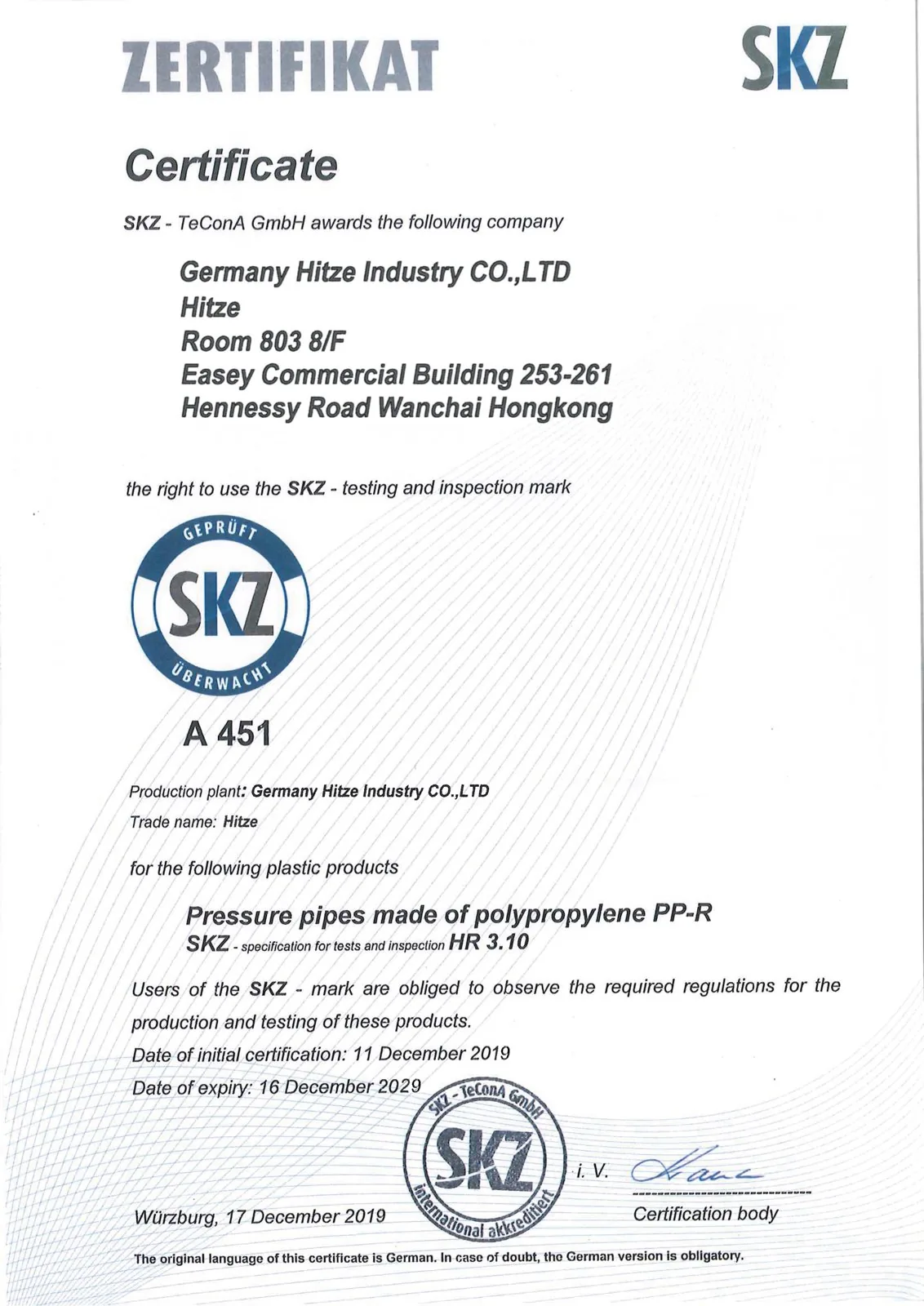
The desk checks are the same ones you’d run before any factory engagement, just compressed. First: does the exhibitor’s name match a manufacturing legal entity, or is it a “Group” or “International Trading” shell? Second: on any certificate PDF they publish, does the certificate holder name match the exhibiting brand? A DVGW type examination or WRAS approval issued to a different company than the one renting the booth is the single most reliable trader tell, and you can catch it from your desk before booking the meeting. Third: reverse-search their catalogue photos — the same pressed-fitting render appearing across four “manufacturers” is one broker network wearing four badges. The full desk-audit sequence is in our factory audit checklist with 8 red flags; run at least the paperwork half of it on every exhibitor you shortlist.
One scheduling insight veterans use: book your strongest candidates for the morning of day two. Day one, booth teams are fresh but slammed with walk-ins; by day three the senior engineers have often flown home and you’re left with sales staff. Day-two mornings get you the technical people, rested, with time to open a sample case. And if a supplier’s booth is staffed entirely by people who can’t answer product questions on any day — that’s not bad luck, that’s the answer. For material-specific homework before those meetings, our guide on how to vet a PEX pipe manufacturer covers the questions that need a factory, not a booth, to answer well.
Booth questions that expose a trader in five minutes
You don’t unmask a trading company by asking “are you a factory?” — everyone says yes, and many bring photos to prove it (sometimes of the same photogenic plant). You unmask them by asking questions whose answers live on the production floor. Six that work, in escalating order:
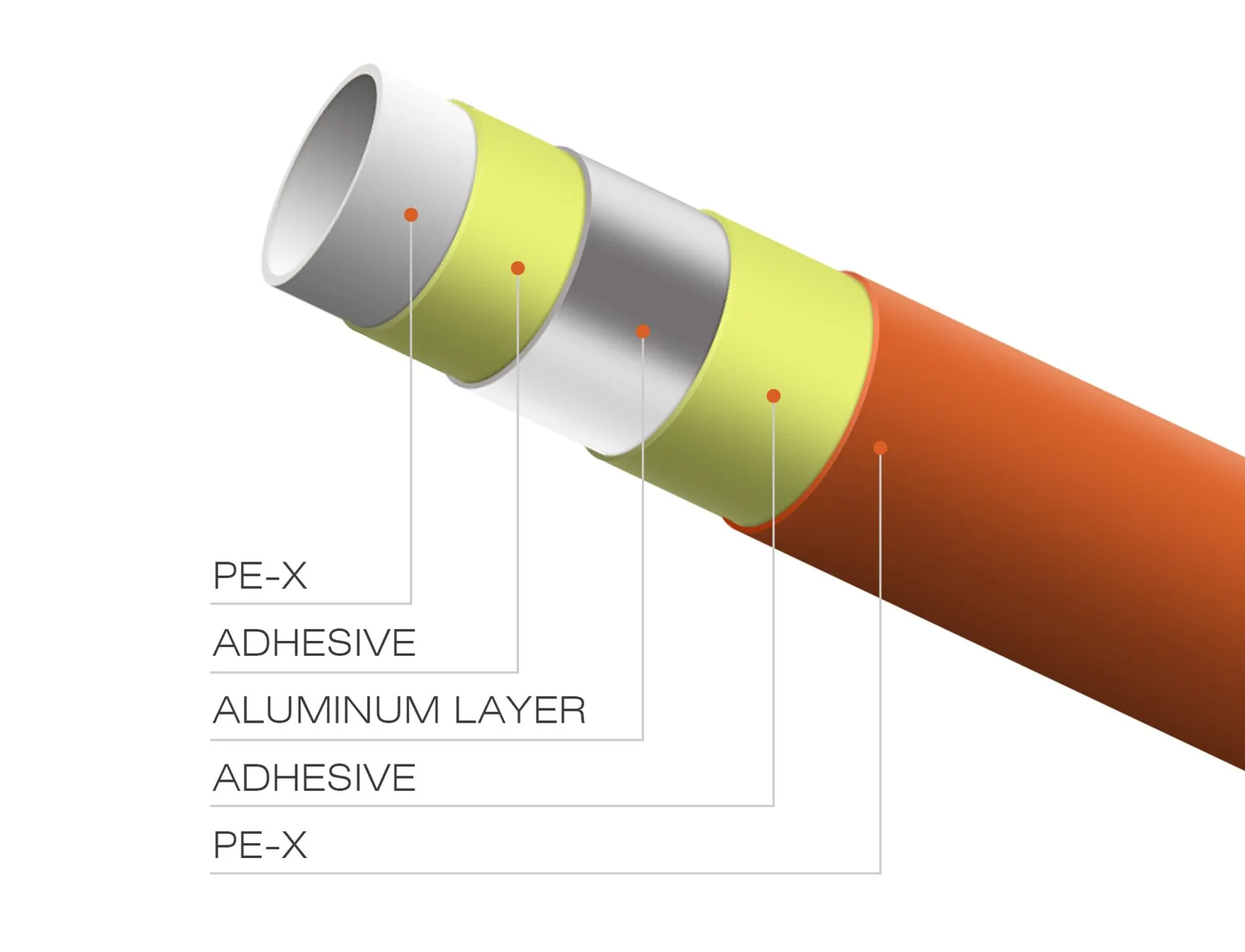
1. “Read me this print line.” Pick up their own display pipe and hand it over. A manufacturer’s engineer reads OD, wall, pressure class and standard — DIN 8077/8078 or EN ISO 15874 for PP-R, ASTM F876/F877 for PEX — like a licence plate. A trader turns the pipe twice and reaches for the brochure. 2. “Who is the certificate holder on this?” Point at any certification logo on the booth wall. If the answer is a name that isn’t on the wall, everything else at that booth is borrowed too. 3. “How many extrusion lines do you run, and what’s your wall-thickness tolerance on a 20 mm pipe?” Factory people answer line counts and tolerances reflexively; brokers give you capacity in containers per month, which is a sales number, not a production one. 4. “Which press-jaw profiles do your fittings accept?” A real multilayer-system maker talks TH, U, F and M profiles and what their fitting geometry was validated with; a reseller doesn’t know that the jaw profile question even has stakes. 5. “Show me a cross-section cut.” For multilayer pipe, the cut should show five bonded layers with an aluminium core — and the maker should volunteer whether that core is butt-welded or overlap-welded, because they know which one they build and why. 6. “Can I visit the plant next week? I’m in the region.” Watch the face, not the words. A factory says yes and reaches for a calendar; a broker offers to “arrange something” and asks how long you’ll be in town.
The pattern behind all six: engineering fluency can’t be rented for a fair week. A brand that actually engineers its system — specifies the alloys, owns the tooling, writes the test plan — answers these questions with opinions, not just facts. That’s the substance behind labels like German engineering, and it’s testable at a booth in a way that country-of-origin marketing never is. If you want the full framework for separating engineering claims from flag-waving, read our breakdown of what “engineered in Germany” actually means versus “China-made” — the short version is that the certificate holder name, the standards the product is built to, and who controls the QC plan matter more than any adjective.
Insider warning on badges and cards: at European shows especially, be alert to cards carrying a Hamburg or Rotterdam sales-office address with no plant address anywhere. A sales office is fine — most manufacturers have them — but a supplier whose only disclosed address is a sales office is asking you to fund a supply chain you’re not allowed to see. Ask for the plant address at the booth and write it on the card in front of them. It sets the tone for everything that follows.
Sample requests at the show: what to take and what to cut open
Leave every serious meeting with physical material, not renders. The right ask is modest and specific: 150–300 mm cut samples of each pipe construction you’d buy (for a multilayer supplier: one of each size you’d stock, say 16/20/25/32 mm), two or three fittings including one cut-away, and the technical datasheet with the dimension and pressure-class table — on paper or by email while you stand there. A manufacturer hands cut samples over freely; the marginal cost is nothing to a company with an extrusion hall. Hesitation about giving away a 20 cm offcut is its own data point.
That evening in the hotel, run the ten-minute check. Read the print line against the datasheet: same standard, same pressure class, same brand name — mismatches mean the sample came from someone else’s line. Measure OD and wall with a calliper if you carry one (roughly the price of a show lunch, and it pays for itself the first time a “2.8 mm wall” measures 2.5). Look at the multilayer cut end: the aluminium layer should be a continuous ring with a visible weld seam, and the layers should not delaminate under a fingernail. Photograph everything next to the exhibitor’s card. By the flight home you’ll have cut your 12 meetings to the 4–6 whose samples and answers both held up.
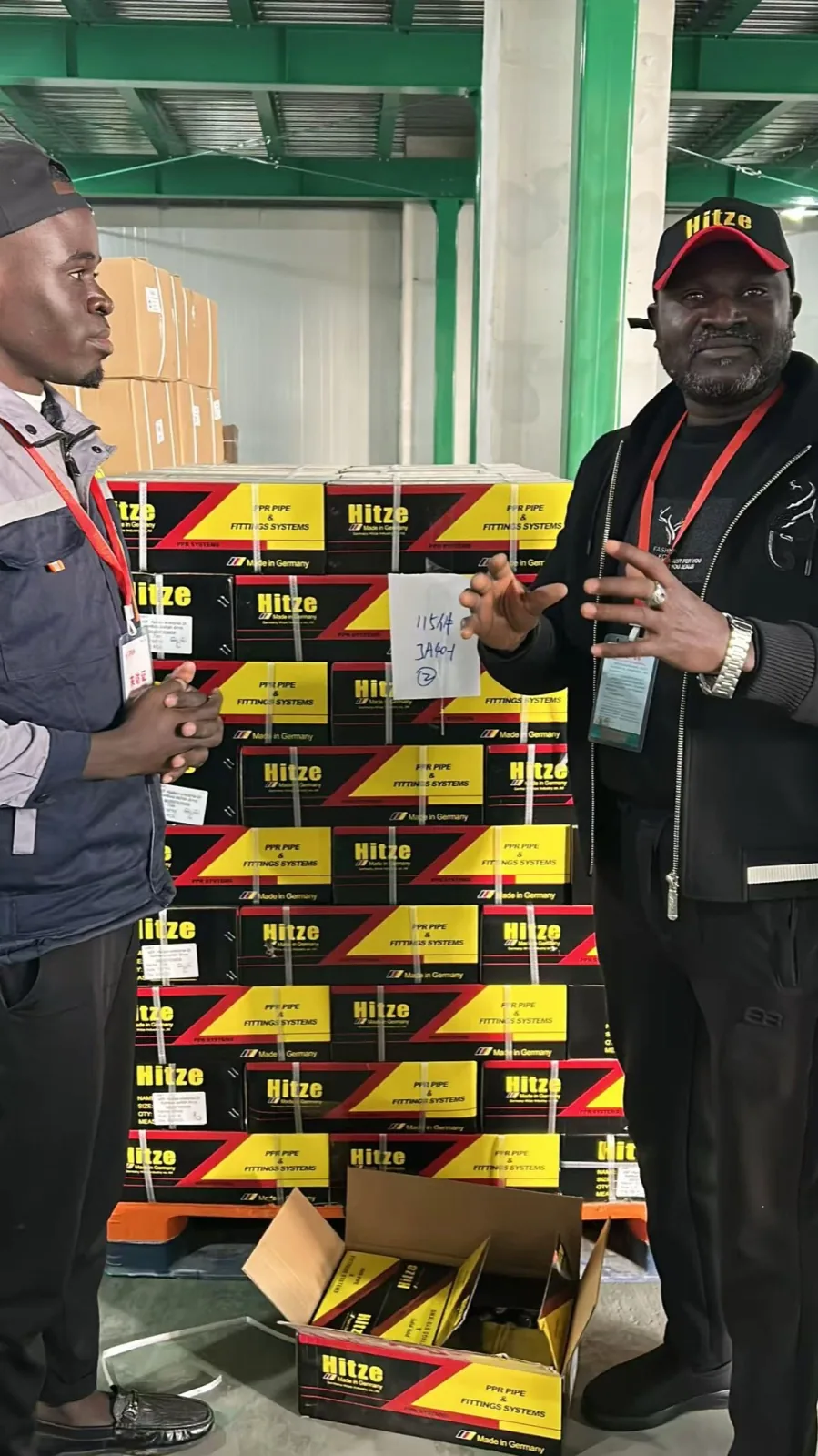
One structural point importers get backwards: the sample conversation is also your minimum-order conversation, and the show floor is where order-size pressure gets applied while your defences are down. A supplier who insists on quoting a full-container commitment before releasing samples is telling you their economics need your deposit more than your confidence. The healthier pattern is sample-first — evaluate, test, then scale. Hitze runs its program that way deliberately: no minimum order quantity, samples and small trial orders first, because the 50-year warranty on the matched pipe-and-fitting system only means something to a buyer who has already satisfied themselves the system earns it.
The post-show verification loop: from handshake to trial container in 90 days
The show ends; the sourcing decision hasn’t started. In weeks 1–2, verify every certificate you were shown in the issuing body’s own register — never from the PDF. DVGW certificates check against the DVGW CERT database, WRAS approvals against the WRAS product and materials directory, NSF marks against NSF’s official listings, cUPC listings against the IAPMO R&T product listing directory, and ISO management-system certificates (ISO 9001, ISO 45001) against IAF CertSearch. You are checking three things each time: the certificate exists, it is current, and the holder is the same legal entity that will sign your contract. In our experience this single pass eliminates a third to a half of trade-show shortlists — before you’ve spent anything beyond desk time.
| What the booth showed you | Where to verify it yourself | What a pass looks like |
|---|---|---|
| DVGW type examination | DVGW CERT database | Holder = the legal entity quoting you; status current |
| WRAS approval | WRAS product & materials directory | Live approval number, not lapsed, covering the material shown |
| NSF-14 / NSF/ANSI 61 marks | NSF official listings | Company and plant listed for the exact product family |
| cUPC / UPC shield | IAPMO R&T product listing directory | Listing covers the sizes and constructions you will import |
| ISO 9001 / ISO 45001 certificates | IAF CertSearch | Accredited certification body; certificate status current |
In weeks 3–6, ask each survivor for a live video walk of the plant — not a produced video, a phone on a stick walking the extrusion hall, the QC lab and the warehouse, with you directing where the camera points. Ask to see the line running your product family and the print line forming in real time. In parallel, send your show samples for independent dimensional and material checks, and for CE-marked construction products request the Declaration of Performance. In weeks 7–12, the one or two finalists get an on-site audit — yours or a commissioned third party’s — and the winner gets a trial order with a pre-shipment inspection at AQL 2.5 under ISO 2859-1 written into the PO. A supplier who accepts third-party inspection without friction has, in that one clause, told you more than the entire booth meeting did.
A worked example of the funnel. A Benelux importer building a multilayer and PEX program flies to ISH with 14 booked meetings, pre-qualified from the exhibitor list. At the show, 6 of the 14 pass the booth questions cleanly — the other 8 fail on certificate-holder mismatches, no plant-visit willingness, or sales staff who couldn’t read their own print line. Five of the six hand over proper cut samples. Back home, register checks kill two more: one DVGW certificate turns out to belong to a different entity in the same “group”, one WRAS approval lapsed the previous year. Video walks narrow three to two; one plant clearly wasn’t running the product it sells. The importer audits both finalists, places a small trial order with the winner — no container commitment, third-party inspection at the factory before shipment — and has a validated supplier 13 weeks after the show closed. Total cash at risk before the trial order: flights, hotel and a lab invoice. That is what a trade show is for.
How Hitze shows up: what we put on the table at a first meeting
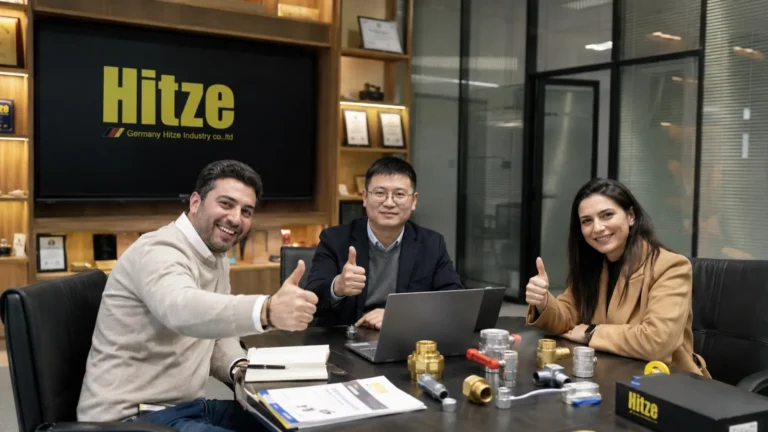
We hold ourselves to the same script we’ve just handed you, so here is what Hitze puts in front of an importer at a fair or a first office meeting — before being asked. The company facts: a German brand of engineered piping systems, trademark registered at the German Patent and Trade Mark Office (DPMA Reg. No. 30 2020 005 484, checkable in the public register), founded 1974, with a 120,000 m² production base, 1,000+ employees and exports to 118+ countries. The paper: SKZ test certificates for PP-R pressure pipe, PP-R fittings and PE-Xb heating pipe; a DVGW type examination for PP-R drinking-water pipe; WRAS material approval; an NSF laboratory BS 6920 potable-water report covering hot (≤65 °C) and cold service; ISO 45001 occupational health and safety certification under UKAS accreditation; and cUPC, NSF-14 and NSF/ANSI 61 coverage with certificate numbers available on request — every item verifiable in the registers named above, under our own name.
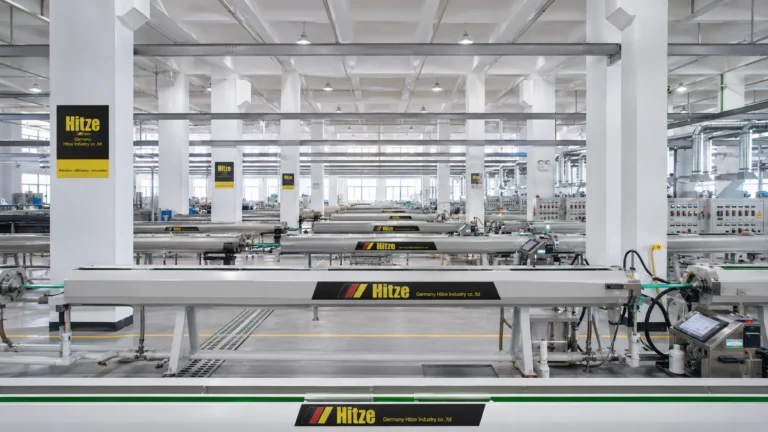
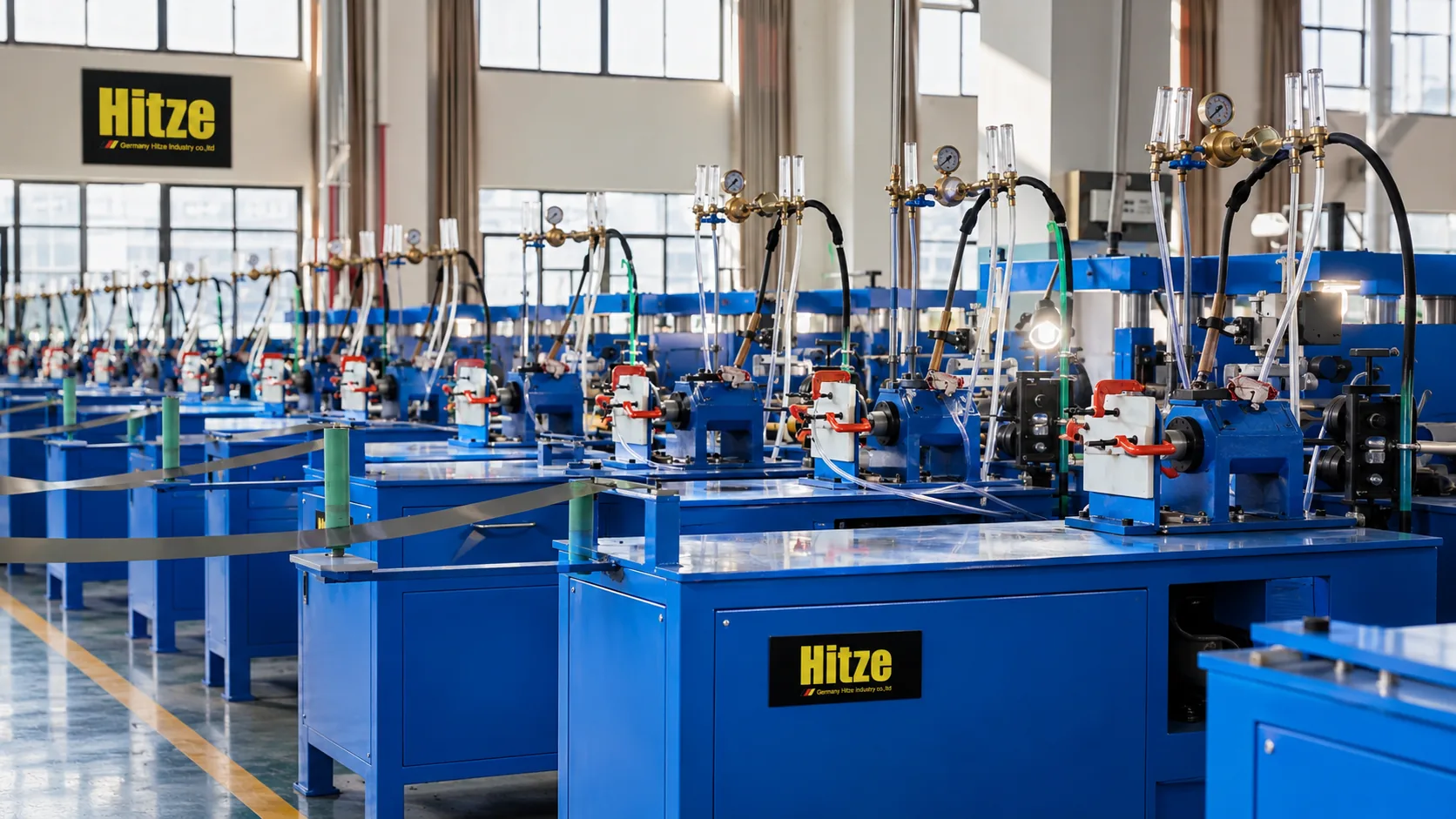
The process behind the paper is what we invite buyers to point a camera at: pipe extruded to DIN 8077/8078 and EN ISO 15874 for PP-R and to DIN 4726 oxygen-barrier requirements for heating pipe; the multilayer line butt-welding the aluminium core into a continuous seam rather than overlapping it; brass machined from named alloys (CW617N standard, CW724R/CW511L/CW602N for dezincification-resistant and lead-free duties); and finished pipe and fittings verified on in-house pressure-test benches before packing. Ask us the six booth questions above — they were written from the answers we give.
Who this is for: importers and distributors building their own certified pipe program — multilayer, PEX, PE-RT, PP-R or the matched fitting range — who want a factory-backed system rather than a broker’s assortment. If that’s you, start the way this article says you should start with anyone: ask for samples. There is no minimum order quantity, trial orders are welcome, and the matched Hitze pipe-and-fitting system carries a 50-year warranty. See what sits behind the brand on our German engineering page, or write to us with the sizes and constructions you’d want cut samples of — we’ll treat it as the first step of your verification loop, because it is.
FAQ
When is the next ISH in Frankfurt?
ISH runs every two years; the organiser Messe Frankfurt has confirmed the next edition for 15–19 March 2027 in Frankfurt am Main. The 2025 edition hosted 2,183 exhibitors from 54 countries, so plan meetings before you fly.
Which plumbing trade show is best for meeting real pipe manufacturers?
No show filters traders out for you. ISH Frankfurt has the highest concentration of certified piping-system manufacturers; AHR Expo is strongest for suppliers already compliant with the North American code stack; MCE Milan leads for the Mediterranean market. The filtering is your job: certificate-holder checks before the show, technical questions at the booth, register verification after.
How do I tell a manufacturer from a trading company at a booth?
Three fast tests: ask who the certificate holder is on the certifications displayed (it should be the exhibiting entity), ask a floor-level production question such as extrusion-line count or wall tolerance, and propose a plant visit on a specific near-term date. Traders fail at least two of the three.
Should I accept samples at the show or have them shipped?
Take cut samples at the booth — they’re the ones physically present and hardest to substitute — then have production-run samples shipped afterwards and check the two against each other. A print-line or dimensional mismatch between booth sample and shipped sample is a serious red flag.
Is Hitze pipe made in Germany?
Hitze is a German brand — trademark registered at the DPMA in Munich — engineered in Germany and built to German DIN standards, with a 120,000 m² production base serving 118+ countries. Its products carry certifications from German and international institutes including SKZ, DVGW and WRAS, all verifiable in the issuers’ public registers under Hitze’s own name — the same check we recommend running on any supplier you meet at a show.