If a project inspector or QA reviewer has ever bounced your pipe submittal for “missing CE / DoP paperwork,” you have run into one of the most misunderstood corners of European construction compliance. The honest answer is not the one most supplier catalogues give you. For the water-supply and heating pressure pipe you are actually specifying, a Declaration of Performance and a CE mark usually should not exist — and demanding one is a sign the document set has been faked. This guide, written for MEP engineers and project specifiers who have to defend a submittal, explains exactly which compliance document proves what, so you never staple the wrong certificate to a job again.
- A DoP + CE mark is only mandatory where a harmonised standard (hEN) has been cited in the EU Official Journal. Under Regulation (EU) 305/2011 (the CPR), no harmonised standard has ever been cited for hot- and cold-water pressure pipe — so PEX, PP-R, PE-RT and multilayer supply pipe legally cannot carry a DoP or CE mark for that use.
- The harmonisation gap covers all plastic piping applications — including plastic drainage and sewerage pipe (EN 1401, EN 13476), which also cannot carry a DoP or CE mark. Where you do see a legitimate DoP + CE on drainage is non-plastic materials with a cited hEN — vitrified clay (EN 295) and cast iron (EN 877).
- Potable-water compliance in Europe runs through the Drinking Water Directive (EU) 2020/2184, not CE marking — the EU Positive List phases in from 2027, replacing national schemes (WRAS, DVGW/KTW, ACS).
- The CPR was overhauled in 2024 (Regulation (EU) 2024/3110): the DoP becomes a Declaration of Performance and Conformity (DoPC) with carbon data and a Digital Product Passport, applying from 8 January 2026.
- For a defensible submittal, ask for the document that matches the product’s regime — not a blanket “send me your CE.” We list the exact pack below.
What a Declaration of Performance and CE Mark Actually Mean (and Don’t)
The single most expensive misconception in pipe procurement is treating “CE marked” as a synonym for “certified safe” or “approved for drinking water.” It is neither. Under the Construction Products Regulation, Regulation (EU) No 305/2011, the CE mark is a legal statement that the manufacturer has drawn up a Declaration of Performance and takes full personal liability for the numbers in it. It is not a quality badge, and it says nothing about whether the product is fit for your particular application. That distinction is the whole game for a specifier: the DoP is a performance declaration, and the CE mark is the manufacturer signing their name under it.
A DoP is only required — and CE marking only permitted — when the product falls under a harmonised European standard (hEN) that has been formally cited in the Official Journal of the EU, or under a European Technical Assessment (ETA). The word “harmonised” is doing heavy lifting. Thousands of EN and EN ISO product standards exist, but only the subset that the Commission has cited as harmonised triggers the CPR machinery. If there is no cited hEN for your product’s application, there is no DoP to issue and no CE mark to affix. Affixing one anyway is itself a compliance breach.
The CPR became fully applicable on 1 July 2013, and it has just been rewritten. Regulation (EU) 2024/3110 entered into force on 7 January 2025 and began applying to the market on 8 January 2026. Under the new text, the DoP evolves into a Declaration of Performance and Conformity (DoPC) that also carries environmental data — Global Warming Potential from 8 January 2026, expanding to full life-cycle indicators by 2032 — and it establishes the legal basis for a Digital Product Passport. If your specification templates still say “DoP,” they will need a language update over the next procurement cycle, even though the underlying logic is unchanged.
The Trap: Why Your Water & Heating Pipe Has No CE Mark — and Shouldn’t
Here is the fact that resolves 90% of submittal arguments. For plastic pressure pipe used in hot- and cold-water supply and heating, no harmonised standard has ever been cited under the CPR. The European Plastic Pipes and Fittings Association (TEPPFA) states it plainly: “there has been no citation of a harmonised standard for plastic pipes, meaning that it is currently neither possible, nor legal to apply the CE marking for the plastic piping systems, or issue a Declaration of Performance (DoP)” for any plastic pipe application. Read TEPPFA’s own list carefully, because this is the point suppliers blur: the gap is not limited to pressure pipe. TEPPFA names hot and cold water distribution, buried and above-ground pressure conveyance, non-pressure soil and waste discharge, and underground non-pressure drainage and sewerage — every plastic application on the list. So the whole-house pressure palette is covered:
- PP-R to EN ISO 15874 — a full product standard, but not a harmonised one.
- PEX (PEX-a/b/c) to EN ISO 15875 — product standard, not harmonised.
- PE-RT to EN ISO 22391 — product standard, not harmonised.
- Multilayer PEX-AL-PEX / PERT-AL-PERT to EN ISO 21003 — product standard, not harmonised.
- PE water supply pipe to EN 12201 — explicitly confirmed as not a harmonised standard, so CE marking cannot legally be applied.
So when a supplier hands you a glossy “CE certificate” for their PEX potable-water coil, you are looking at one of three things: a document for a different application, a self-declared graphic with no legal standing, or an outright fabrication. A specifier who does not know the harmonisation gap can be walked straight into approving a fake. A specifier who does know it treats the presence of a CE-for-potable-PEX claim as a red flag about the whole supplier, not a green light.
This is not a loophole or a shortcut — it is the correct state of the regulation. The absence of a CE mark on your supply pipe is exactly what compliance looks like. What proves the pipe is the right product is a different, stronger document set: third-party type-test reports against the EN ISO / DIN product standard, plus the market-access approval for the water regime (below). Those are the pages that survive an inspection; the CE graphic is the page that fails one.
Where CE + DoP Are Real: It’s the Material, Not the Application
To be precise rather than dismissive: CE marking and a DoP are absolutely real for pipe on a jobsite — but the line that divides “CE” from “no CE” is the material, not pressure-versus-drainage. A common misconception (repeated in a lot of supplier literature) is that plastic drainage pipe carries a CE mark while plastic pressure pipe does not. It does not. Plastic pipe to EN 1401 (solid-wall PVC-U) and EN 13476 (structured-wall PVC-U/PP/PE) sits under the same harmonisation gap as PP-R and PEX pressure pipe — TEPPFA lists “underground non-pressure drainage and sewerage” alongside “hot and cold water distribution” among the applications for which “it is currently neither possible, nor legal to apply the CE marking.” No cited hEN, no DoP, no CE — for plastic, in either direction.
Where a legitimate DoP + CE mark does turn up on drainage is non-plastic materials that have a harmonised standard cited in the Official Journal: vitrified clay pipe to EN 295 and cast iron pipe to EN 877, both harmonised under the CPR since the 1 July 2013 applicability date. So a single project can legitimately show a CE-marked cast-iron soil stack sitting a few metres from a non-CE-marked plastic drainage run — and both from non-CE-marked plastic potable and heating pressure pipe. The rulebook that decides is the harmonised-standard list, and plastic is simply not on it for any application yet.
The table below is the mental model to keep on your submittal checklist. Match the product to its regime first, then demand the document that regime produces.
| Product / application | Reference standard | CE + DoP? | Document that actually proves it |
|---|---|---|---|
| PP-R hot/cold water pipe | EN ISO 15874 | No (no hEN) | Type-test report + potable-water approval |
| PEX supply / heating pipe | EN ISO 15875 | No (no hEN) | Type-test report + potable-water approval |
| PE-RT underfloor-heating pipe | EN ISO 22391 / DIN 4726 | No (no hEN) | Type-test report + oxygen-barrier verification |
| Multilayer PEX-AL-PEX | EN ISO 21003 | No (no hEN) | Type-test report to EN ISO 21003 (e.g. SAI Global StandardsMark) |
| PE100 pressure pipe (water) | EN 12201 / ISO 4427 | No (no hEN) | Third-party product licence + water approval |
| Plastic non-pressure drainage/sewerage | EN 1401 / EN 13476 | No (no hEN) | Type-test report to EN 1401 / EN 13476 |
| Vitrified-clay / cast-iron drainage | EN 295 / EN 877 | Yes (harmonised) | Declaration of Performance + CE mark |
Notice the pattern: the “No (no hEN)” rows are not gaps in quality — they are pipe whose compliance is proven by more demanding, application-specific documents than a self-signed DoP. When someone tells you their supply pipe “isn’t as good” because it lacks a CE mark, they have the logic exactly backwards.
The Document That Really Clears Potable Water: DWD 2020/2184, Not CE
If CE does not clear drinking-water pipe in Europe, what does? For decades the answer was a patchwork of national schemes — WRAS in the UK, DVGW / KTW / W270 in Germany, ACS in France, KIWA in the Netherlands. That patchwork is now being replaced. The Drinking Water Directive (EU) 2020/2184, Article 11 sets EU-wide minimum hygiene requirements for materials in contact with drinking water and creates EU Positive Lists of permitted substances. The implementing decisions and delegated regulations were published on 23 April 2024.
The dates matter for anyone specifying a project that will be built in the next few years. New products placed on the EU market must comply with the European system from around 1 January 2027; existing nationally approved products get a transition, with schemes such as France’s ACS extendable to 31 December 2032. In practical terms: for a submittal today you still lean on the national approval that fits your market (WRAS for the UK, DVGW for Germany, NSF/ANSI 61 for North America), but you should be asking suppliers now whether their material formulations are on track for the EU Positive List, because a product certified only to a legacy national scheme will have a finite shelf life.
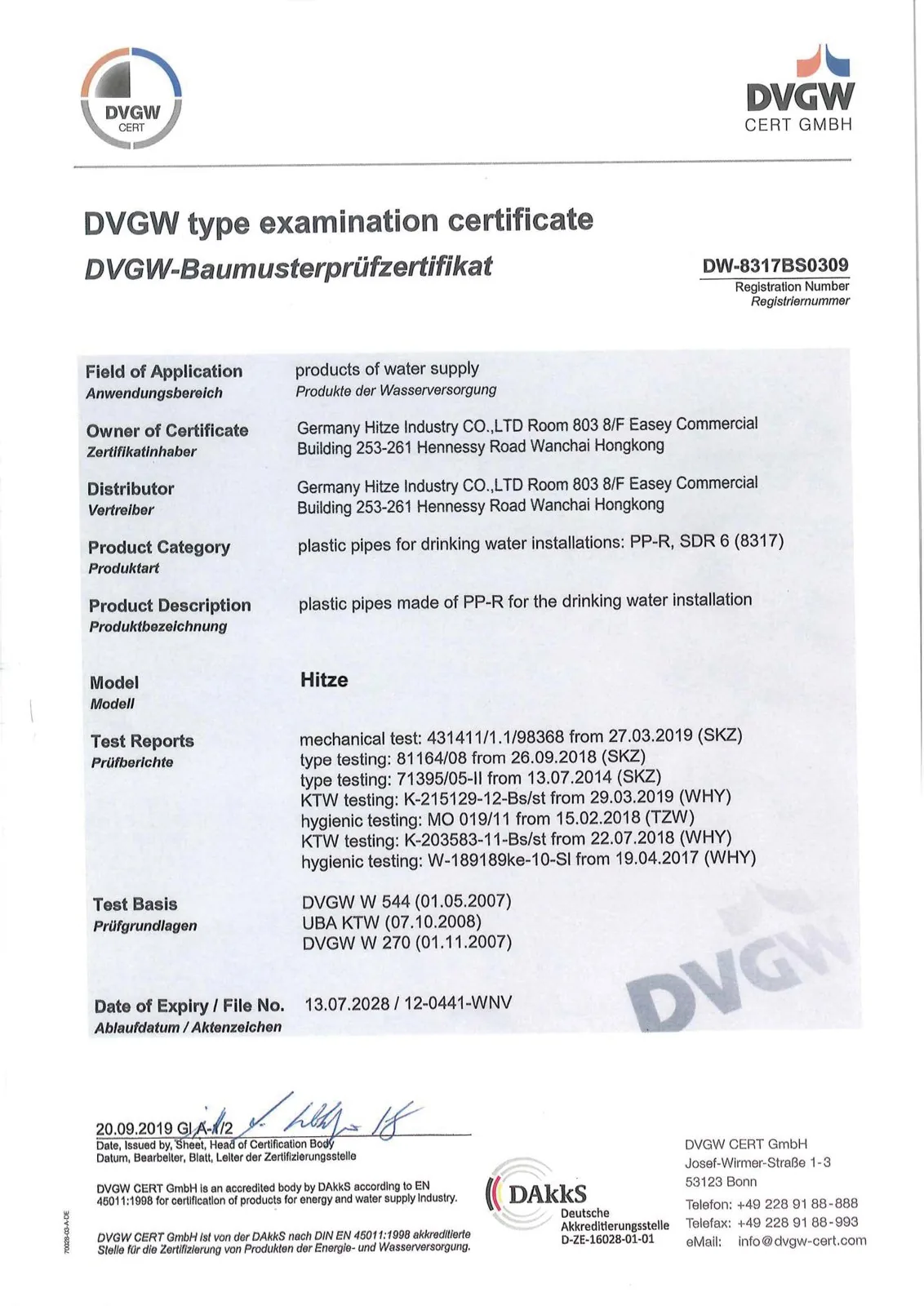
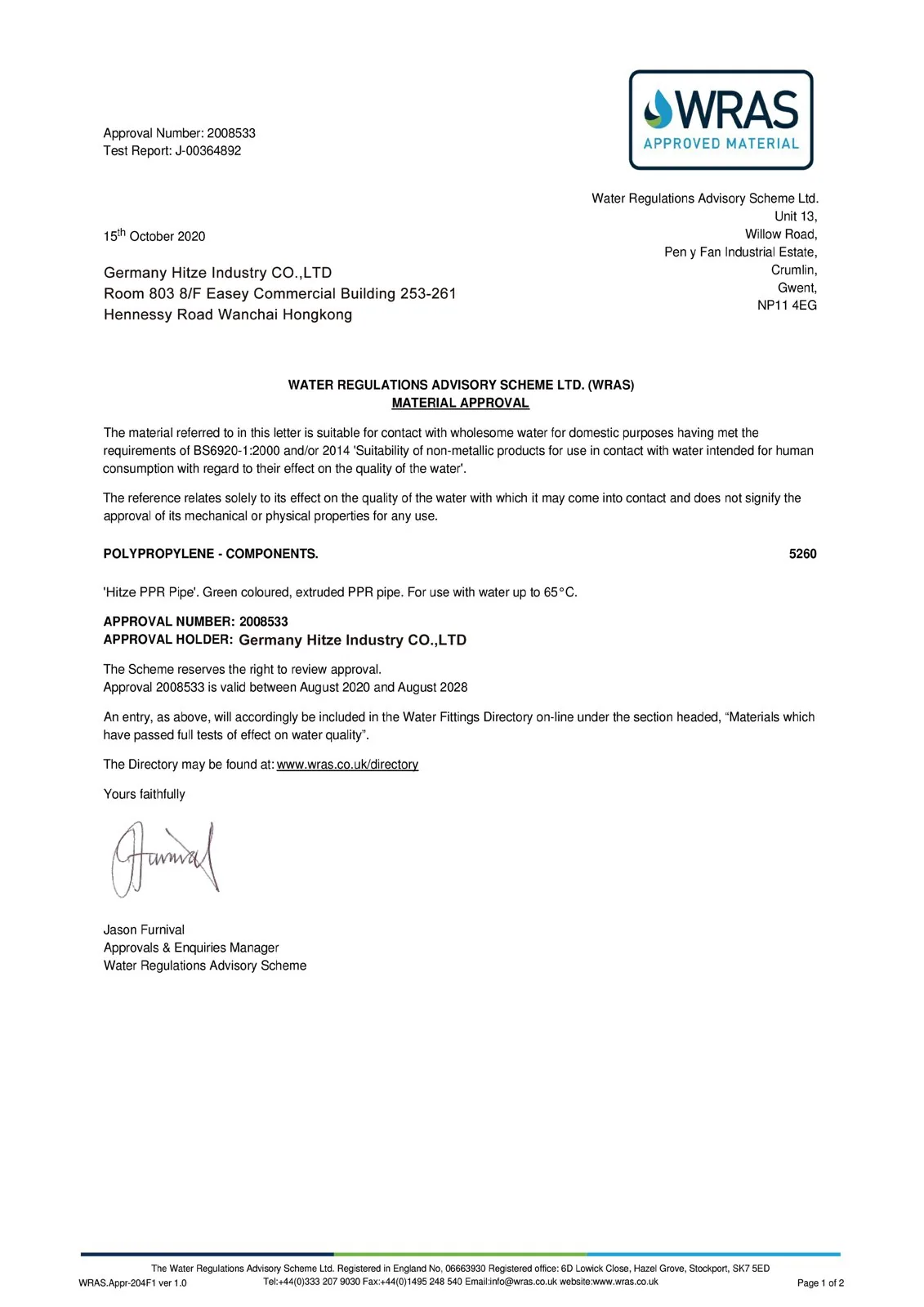
This is where a specifier’s due diligence pays off. A pipe brand that already holds WRAS material approval and a DVGW type examination, plus an independent BS 6920 potable-water test report, is demonstrably inside the water-contact regime that actually governs your submittal — regardless of whether a CE mark exists. Those are the pages an inspector wants to see on a drinking-water line. If you are assembling the compliance pack for a whole project, our certifications & market-compliance overview maps each Hitze scheme to the market it unlocks, so you can hand a reviewer the right document the first time instead of the CE graphic they will reject.
CE, UKCA and North America: One Project, Three Rulebooks
Specifiers working across markets face a second layer of confusion: the mark that satisfies one jurisdiction is meaningless in another. Keeping the three regimes straight avoids the awkward moment where a submittal clears in one country and is rejected in the next.
UK. Post-Brexit, the UK created UKCA marking but then blinked on construction products. On 2 September 2024 the government announced it would recognise CE marking for construction products in Great Britain indefinitely, with a minimum two-year notice before any future change; UKCA remains valid too. So for the CE-relevant products (harmonised lines such as cast-iron and clay drainage), a CE mark is accepted in GB. For your pressure supply pipe, the same “no hEN, no CE” logic applies as in the EU, and WRAS remains the practical potable-water gatekeeper.
North America. CE and DoP are European instruments with no standing here. A US or Canadian inspector wants cUPC / UPC (IAPMO) listing, NSF-14 for the plastic system and NSF/ANSI 61 for drinking-water safety — and, for brass, lead-free compliance. Presenting a CE certificate to an AHJ in the US is a category error that signals the supplier does not understand the market.
The one-line rule for a multi-market spec: the document has to match the destination, not the supplier’s home marketing. A serious manufacturer will hold the right pack for each region and hand you the correct subset per project, rather than sending the same European CE PDF everywhere.
What Hitze Provides for a Submittal — and How the Pack Is Built
Hitze is a German brand of engineered piping systems, built to German DIN standards, founded in 1974, with a 120,000 m² production base, 1,000+ employees and exports to 118+ countries. For a specifier, the relevant point is not the badge on the box — it is whether the documentation stands up in a review. Here is how the compliance pack is assembled, grounded in what Hitze actually tests and certifies:
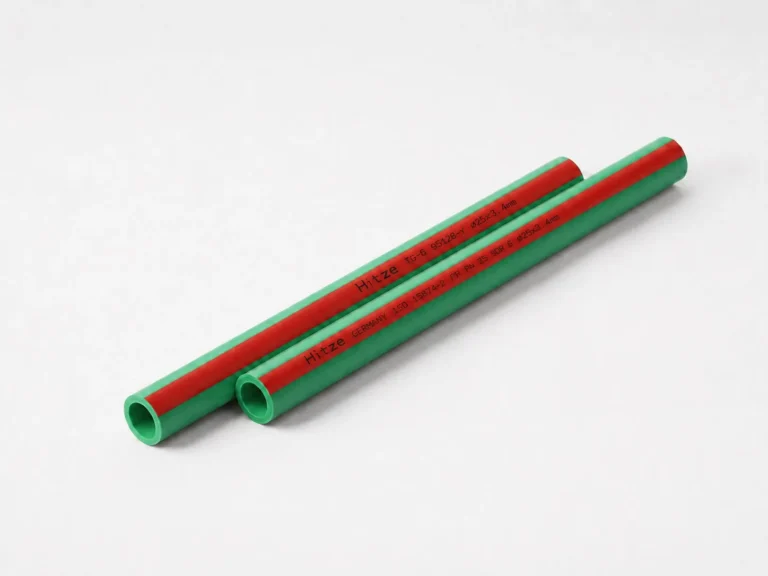
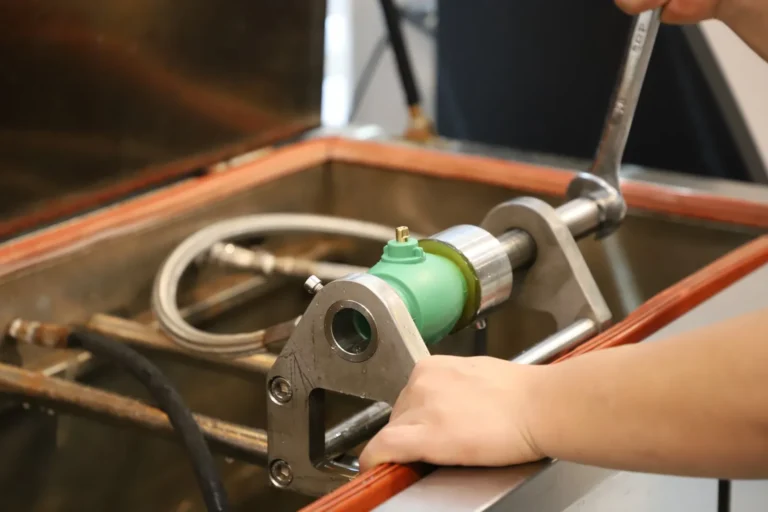
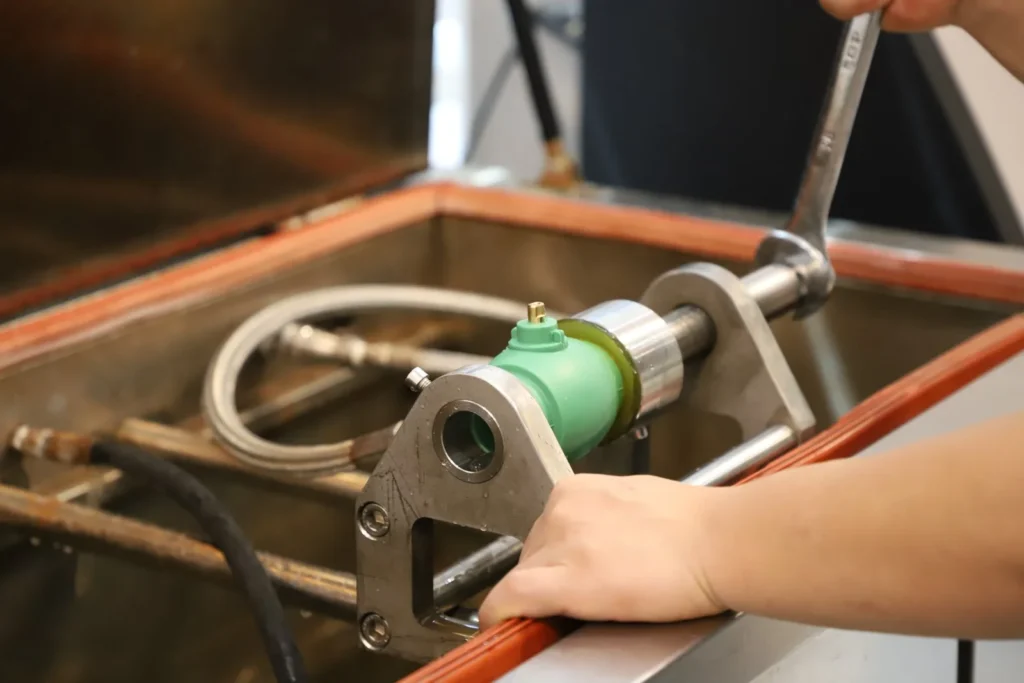
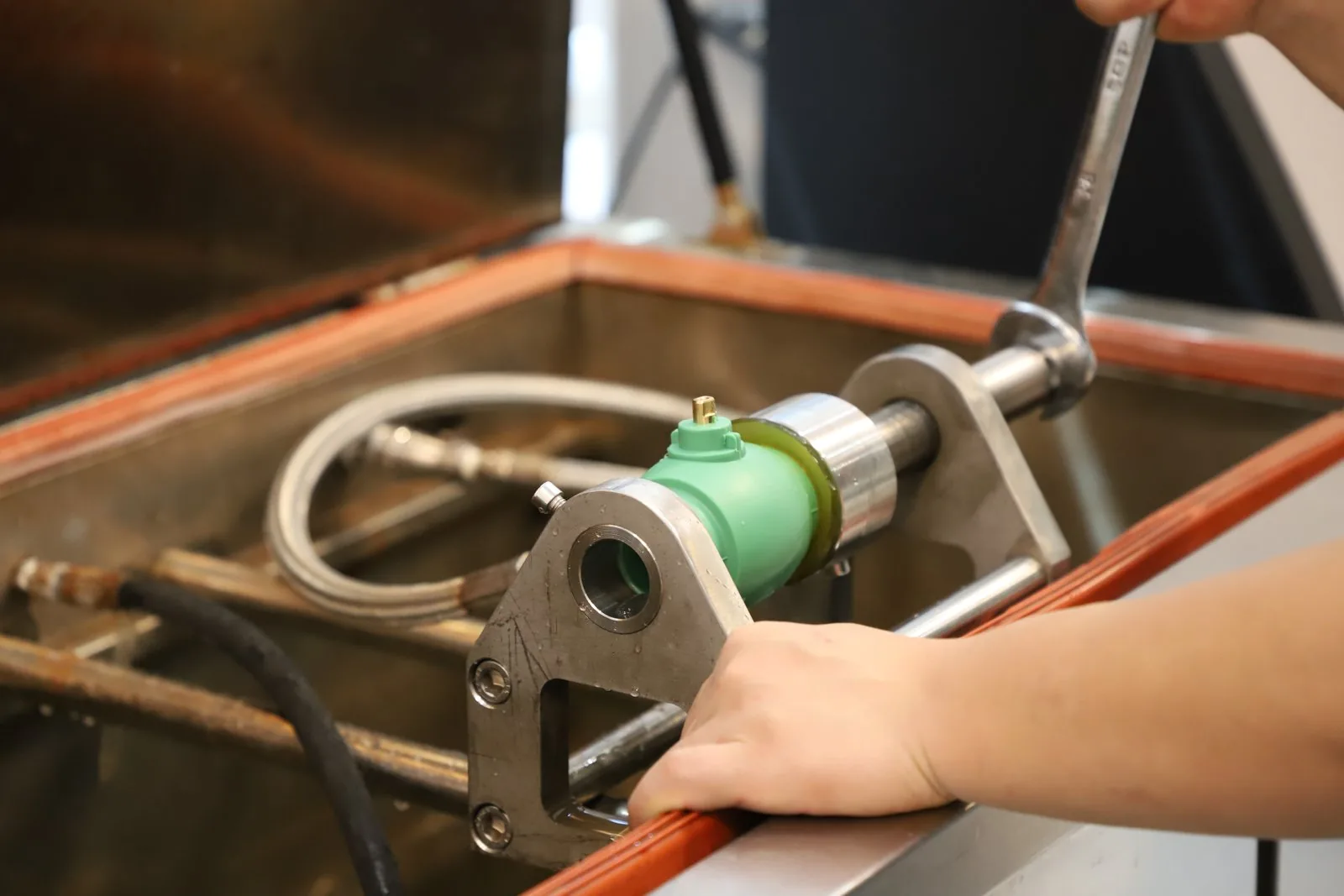
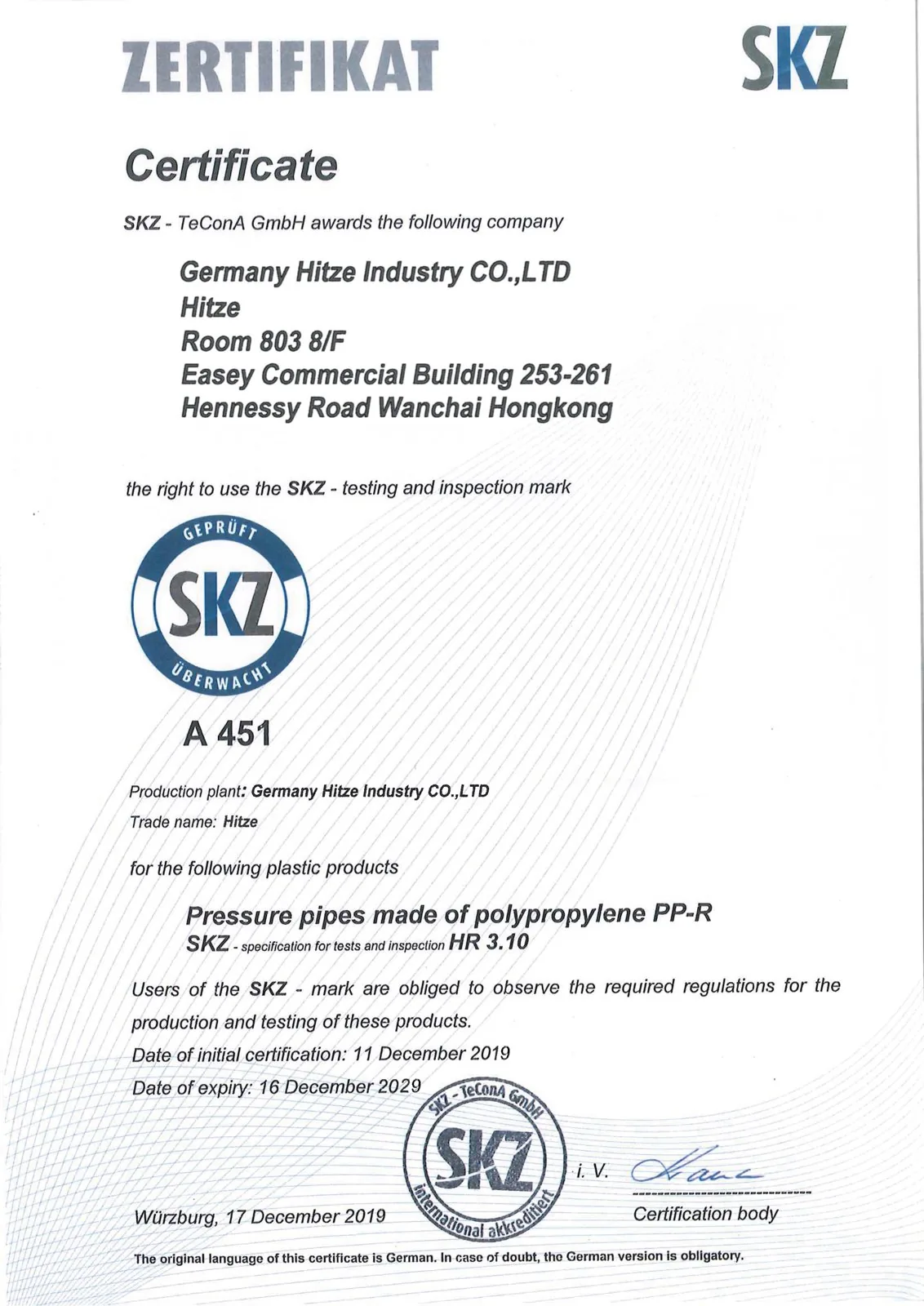
- Pressure pipe (PP-R, PEX, PE-RT, multilayer): instead of an impossible CE/DoP, the pack carries third-party type-test evidence — SKZ (Süddeutsches Kunststoff-Zentrum) test and inspection certificates for PP-R pressure pipe and PE-Xb heating pipe, and a SAI Global StandardsMark against AS 4176.8 (its consumer-gas grade). These prove the pipe meets its EN ISO / DIN product standard.
- Potable-water lines: a DVGW type examination for PP-R drinking-water pipe, WRAS material approval, and an independent BS 6920 potable-water test report (hot ≤ 65°C and cold). This is the water-contact evidence the DWD regime and national reviewers ask for.
- North American projects: cUPC / UPC (IAPMO) listing, NSF-14 and NSF/ANSI 61, with lead-free brass grades (CW724R, CW511L, CW602N DZR) for potable fittings.
- Where CE genuinely applies (harmonised product lines): CE marking with a Declaration of Performance, supplied as the correct instrument for that specific product — not misapplied to pressure pipe.
- Management system: ISO 45001 (URS / UKAS accredited) sits behind the manufacturing, so the QA trail is auditable.
Certificate registration numbers exist on the physical certificates and are available on request; scheme scopes and validity vary by market and product line. What a specifier gets is a pack matched to the project’s jurisdiction and application, so the reviewer sees the document their rulebook actually names. If you are pulling a full system for a named project — pipe, fittings and manifolds under one submittal — our project piping supply team assembles the compliance documentation to match the destination market. For the pressure-pipe lines themselves, the PP-R pipe & fittings and underfloor-heating pipe pages list the standards each is built to.
A Worked Example: Clearing a Cross-Border Residential Tower Submittal
Consider a specifier on a mixed-use residential tower — potable risers, an underfloor-heating loop system on every floor, and a below-ground drainage stack — being built in Germany with a UK sister project to follow. The QA reviewer sends back the first submittal marked “CE/DoP not provided for all piping.” Here is how the corrected pack is built, product by product.
The PP-R potable risers and PE-RT heating loops get no CE mark, because none can legally exist. Instead the submittal carries the SKZ type-test certificates against EN ISO 15874 and the oxygen-barrier verification to DIN 4726, plus the DVGW type examination and WRAS material approval for the water-contact side. If the below-ground drainage is specified in plastic (EN 1401 / EN 13476), it gets no CE mark either — it carries the same harmonisation gap, so the submittal shows a type-test report to that product standard, not a DoP. A CE mark on that line would only appear if the drainage were switched to a harmonised material such as cast iron (EN 877) or vitrified clay (EN 295). The reviewer’s checklist is now satisfied because each line shows the document its regime produces — and the specifier attaches a one-paragraph compliance note explaining that no plastic pipe, pressure or drainage, is CE-markable, pre-empting the same query on the UK phase where CE recognition continues and WRAS governs potable water. One project, three documents, zero fabricated CE certificates. That is what a defensible submittal looks like.
Best For / Not For: Reading a Supplier’s Compliance Behaviour
A supplier is a safe bet for your submittal when they can explain the harmonisation gap without prompting, hand you type-test reports and market-specific water approvals rather than a universal “CE for everything,” name the issuing body for each document, and adjust the pack by destination market. That behaviour signals they have actually been through EU, UK and North American reviews.
Walk away when a supplier produces a “CE certificate” for potable PEX or PP-R pressure pipe, cannot name which harmonised standard it is issued against, offers a single certificate to cover every market, or treats “CE” and “NSF” as interchangeable. Any of these means either they do not understand the regulations or they are hoping you don’t — and on a project submittal, that exposure lands on you, not them.
This is for MEP engineers, project specifiers and importers who have to put a compliance pack in front of a reviewer — not for anyone chasing a CE mark that shouldn’t exist on pressure pipe. Hitze supplies the document set matched to your destination market and application, with the issuing body named on each. Trade and wholesale only; documentation scope varies by market and product line.
Frequently Asked Questions
No. Under the Construction Products Regulation (EU) 305/2011, CE marking and a DoP are only mandatory where a harmonised standard has been cited in the Official Journal. No such standard exists for hot- and cold-water pressure pipe, so PEX (EN ISO 15875) and PP-R (EN ISO 15874) supply pipe legally cannot carry a DoP or CE mark for that application. A supplier presenting one is showing you a document with no legal standing.
With the documents that fit the product’s actual regime: third-party type-test reports against the EN ISO / DIN product standard (for example an SKZ certificate for PP-R), plus the market-access approval for the water contact — WRAS or DVGW in Europe, NSF/ANSI 61 and cUPC in North America. These are more application-specific than a self-signed DoP and are what a reviewer or AHJ actually expects to see on a pressure line.
Products covered by a cited harmonised standard — for drainage, that means non-plastic materials such as vitrified clay (EN 295) and cast iron (EN 877), which are harmonised under the CPR. Note that plastic drainage pipe (EN 1401 / EN 13476) is not harmonised: TEPPFA lists it in the same “no CE, no DoP” bucket as plastic pressure pipe. So on a jobsite you may correctly see a CE-marked cast-iron soil stack next to non-CE-marked plastic drainage, potable and heating pipe.
The revised CPR entered into force on 7 January 2025 and applies to the market from 8 January 2026. The Declaration of Performance becomes a Declaration of Performance and Conformity (DoPC) that adds environmental data — Global Warming Potential from 2026, broadening to full life-cycle indicators by 2032 — and creates the legal basis for a Digital Product Passport. The harmonisation logic is unchanged, so pressure pipe still falls outside the CE/DoPC scope.
Yes. On 2 September 2024 the UK government announced it would recognise CE marking for construction products in Great Britain indefinitely, with a minimum two-year notice before any future change; UKCA marking also remains valid. For potable pressure pipe in the UK, WRAS material approval remains the practical gatekeeper, since the “no harmonised standard, no CE” position applies there as in the EU.
Hitze is a German brand, engineered in Germany and built to German DIN standards, with third-party certification from German bodies including SKZ and DVGW. It holds a German trademark registration and has operated since 1974. For a submittal, what matters is that the pipe carries the certifications your market requires — SKZ and DVGW for Germany, WRAS for the UK, NSF and cUPC for North America — with the issuing body named on each certificate and numbers available on request.
Regulatory references verified against: EUR-Lex Regulation (EU) 305/2011 and Regulation (EU) 2024/3110; TEPPFA (European Plastic Pipes and Fittings Association) standards guidance; and the Drinking Water Directive (EU) 2020/2184 Article 11 implementation timeline. Compliance positions summarise the current framework and are not legal advice; confirm the exact requirement with the relevant authority for your project and market.