Key takeaways
- A pipe factory audit is not a formality — it is the single highest-return hour in a container-scale sourcing decision. third-party inspection firms typically quote a visit in the USD 300–800 range (QIMA, for example, publishes per-man-day rates from about USD 309); a bad supplier can cost USD 10,000–100,000+ in rejected stock, blocked customs and lost customers.
- The eight red flags below split into two groups: paper you can verify from your desk today (legal entity, export rights, live certificate databases) and things you can only see on the floor (real extrusion lines, calibration discipline, a working QC lab, no hidden subcontracting).
- Every certificate a supplier sends as a PDF should be re-confirmed in the issuing body’s own register — GSXT for the business license, IAF CertSearch for ISO, DVGW CERT, the WRAS directory, NSF listings and the IAPMO PLD for market approvals.
- Finished pipe should ship against an AQL 2.5 pre-shipment inspection under ISO 2859-1, not a “trust us” promise.
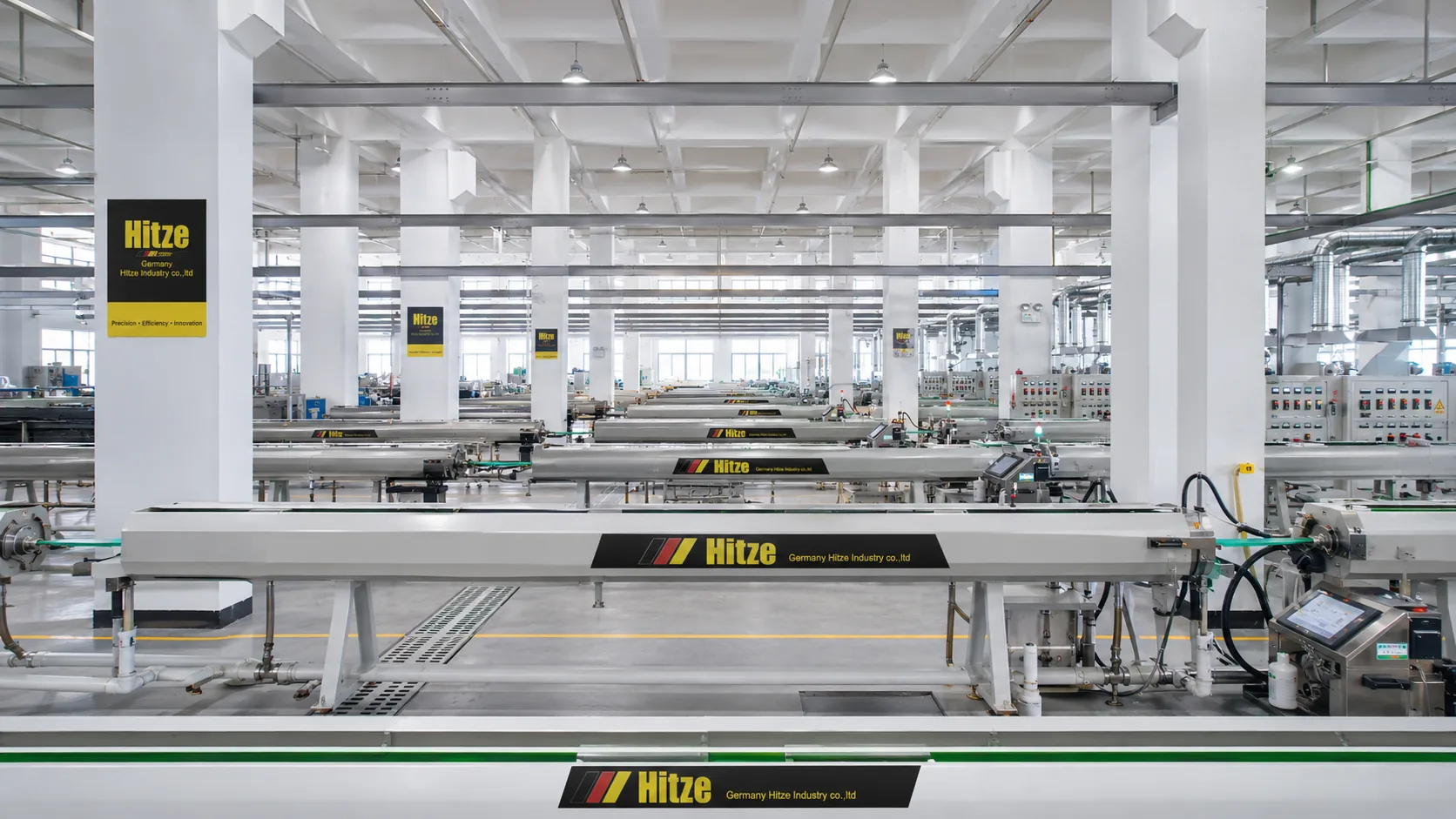
- Hitze is a German brand of piping systems, engineered in Germany and built to German DIN standards — this article shows you what to demand from any supplier, and where a real factory should have nothing to hide.
Most wholesalers do not lose money on the pipe. They lose it on the gap between the glossy PDF a “manufacturer” emails during quoting and the reality that shows up in a 40-foot container ninety days later. The catalogue photos were borrowed. The ISO certificate belonged to a sister company at a different address. The “factory” turned out to be a sales office that brokered the order to whoever had capacity that week. By the time the coils are on your dock — undersized, out-of-round, or missing the certification your own customers require — the wire transfer has long cleared. A factory audit exists to close that ninety-day gap before you fund it.
This is a checklist built from real container-order failures, organised as eight red flags. We wrote it for the distributor persona: the buyer whose reputation rides on reorder consistency and whose margin evaporates the moment a shipment fails inspection. Some of these checks you can run this afternoon without leaving your desk. Others only reveal themselves on the floor — which is exactly why the suppliers hiding something fight so hard to keep you off it.
Red flag 1: The legal entity doesn’t line up (business license, USCC, export rights)
Start where fraud starts: identity. In mainland China every legitimate company carries an 18-character Unified Social Credit Code (USCC), defined by national standard GB 32100-2015 and printed on the business license beside the label that translates as “Unified Social Credit Code.” You do not have to take a scan on faith. Paste that 18-character code into the government’s own GSXT portal (gsxt.gov.cn) and match every character against the license. The registration-status field must read as active (“cunxu” / “zaiying” on the portal); a status meaning deregistered or revoked is a hard stop. A supplier whose license status does not read “active” is a hard stop, not a negotiation.
The second identity check trips up more container buyers than the first: export rights and China Customs registration. A company can be a perfectly real manufacturer and still not be able to ship internationally in its own name. When that is the case, your goods leave the country under a third party’s export license — which means the entity on your commercial invoice, your packing list and your certificate of origin is not the entity you audited. That broken chain of custody is precisely where counterfeit certification and quiet substitution slip in. Ask directly whether the factory exports under its own name. If the answer is “our trading partner handles that,” you are one step removed from the people actually making your pipe.
The tell to watch for: a business license whose registered scope is “wholesale, retail, import and export of building materials” with no manufacturing scope at all. That is the signature of a trading company wearing a factory’s clothes. A real plant’s license names extrusion, moulding or plastic-product manufacturing in its scope.
Red flag 2: Certificates that live only as PDFs, never in a register
A PDF certificate proves nothing. It is a picture. Real certification schemes maintain public registers precisely so buyers can bypass the supplier and confirm validity at the source — and every serious scheme your pipe touches has one. This is the single most under-used defence in B2B pipe sourcing, and it costs nothing but ten minutes.
| Certificate the supplier sends | Where you re-verify it (issuer’s own register) | What must match |
|---|---|---|
| ISO 9001 / ISO 45001 (management systems) | IAF CertSearch (now under Global ACI, which assumed IAF/ILAC roles from 1 Jan 2026) | Exact legal entity, scope, certification body, accreditation body |
| DVGW (EU drinking-water pipe) | DVGW CERT GmbH register | Product type, entity, current validity |
| WRAS (UK potable water) | WRAS approved products directory | 7-digit approval number; note approvals lapse after 5 years |
| NSF/ANSI 61 (US potable water) | NSF certified-products listings | Company and product actually listed, not just “tested” |
| UPC / cUPC (US & Canada plumbing code) | IAPMO R&T Product Listing Directory | Model listed; “c” prefix = Canadian cUPC mark |
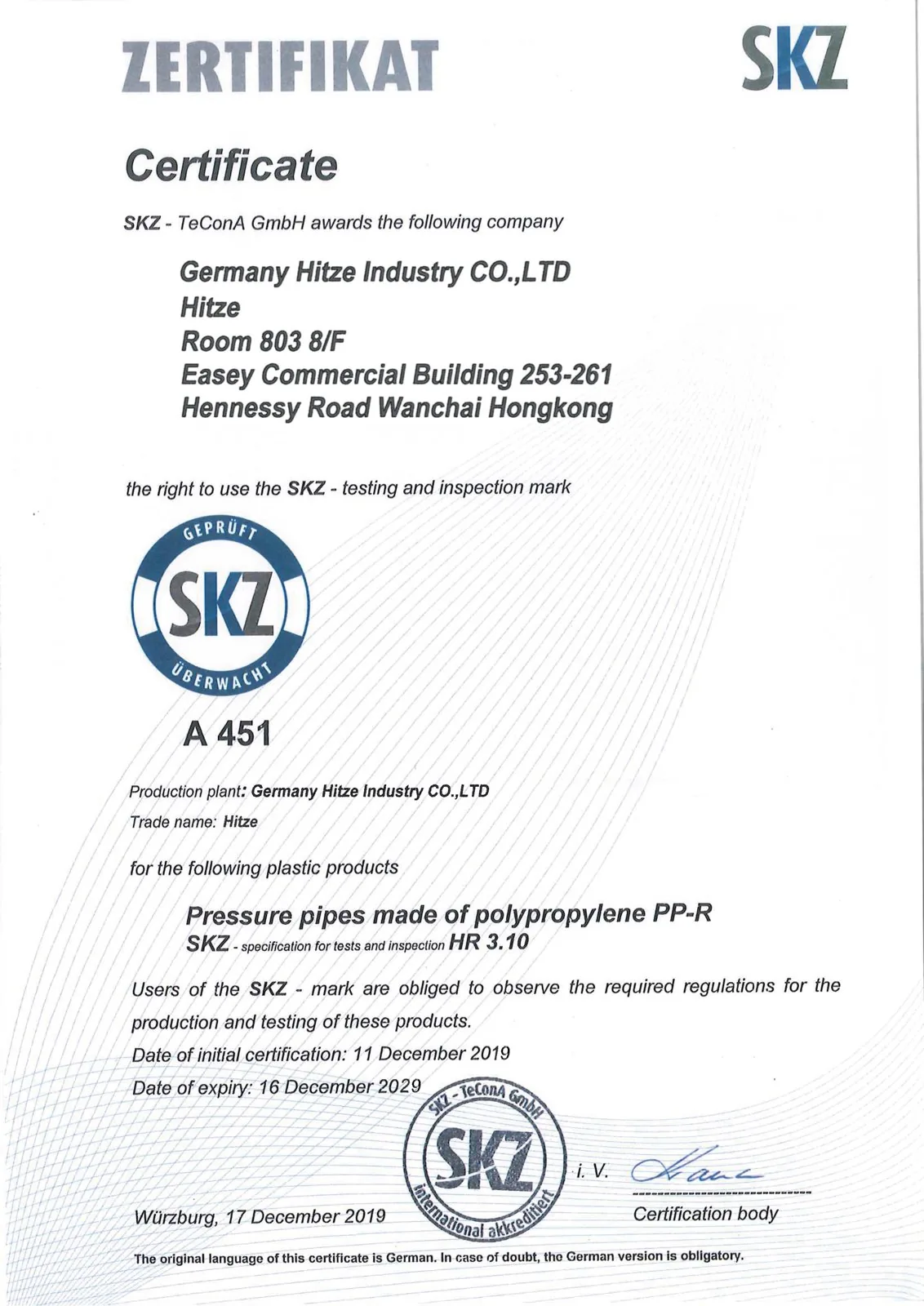
The most common forgery is not a fabricated certificate — it is a real certificate that belongs to a different entity. The scan is genuine; the company name on it is not the company quoting you, or the accreditation has lapsed, or the scope covers a product line that isn’t yours. The register catches all three. If a supplier cannot give you the exact registered name and number to search, treat the certificate as absent. Hitze publishes its scheme memberships — SKZ, DVGW, WRAS, NSF, ISO 45001, SAI Global StandardsMark — and the numbered certificates behind them are available on request precisely so a buyer can run this check; cert numbers vary by product and market. You can see how the full certification pack is structured on our certifications & compliance page.
Red flag 3: No real extrusion or moulding line — you’re auditing a trading desk
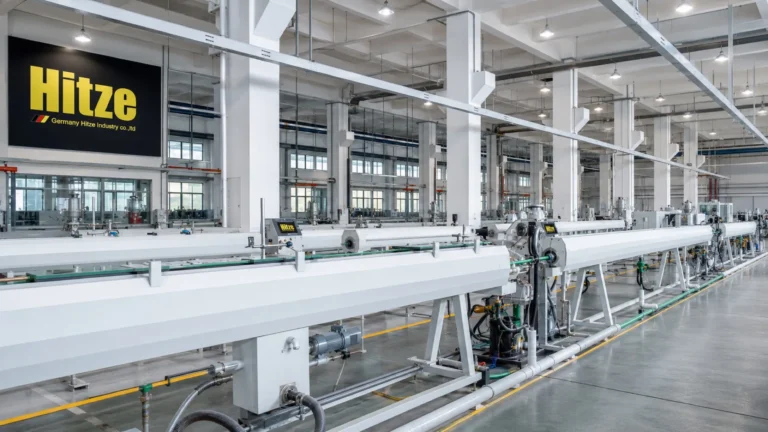
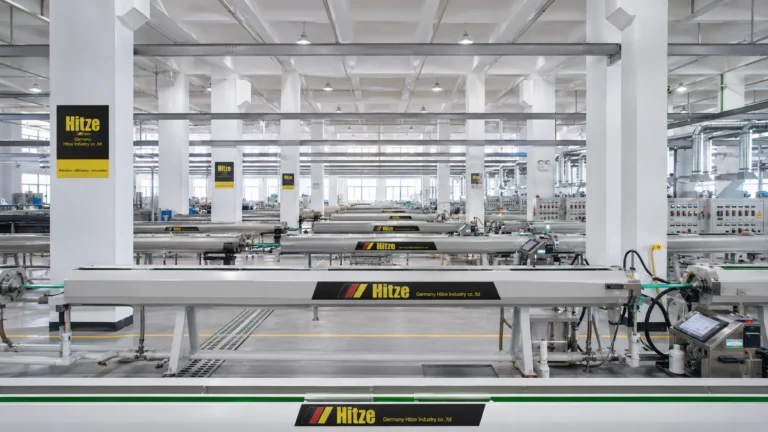
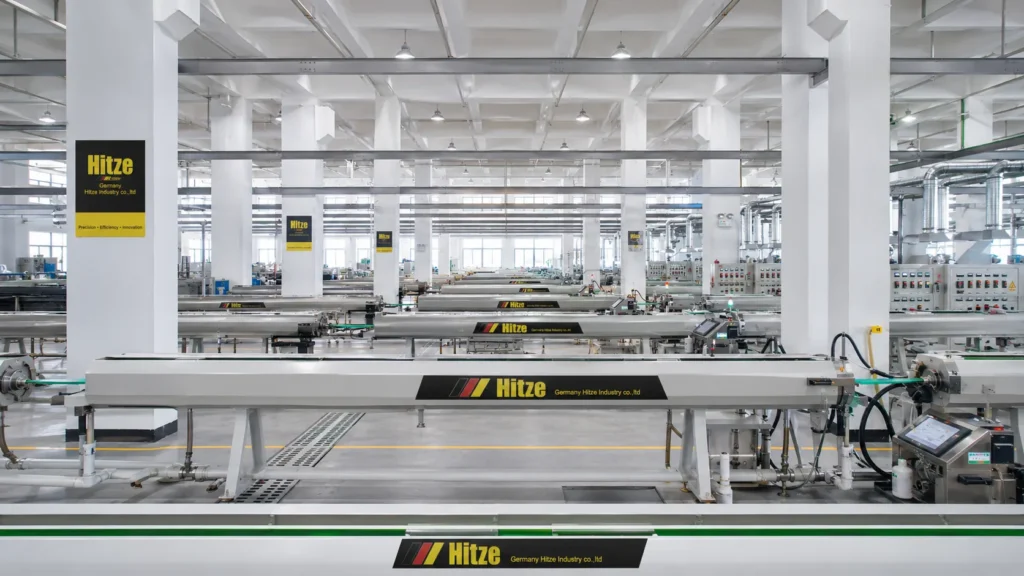
Plastic pipe is made by extrusion; fittings are made by injection moulding and CNC-machined brass. If a “factory” tour skips the extrusion hall — no crosshead die, no sizing and cooling tanks, no haul-off and coiling stations — you are standing in a warehouse, not a plant. The on-site test is blunt and effective: count the active extrusion lines, watch a line actually running, and time the haul-off speed yourself. If the observed throughput cannot physically produce your monthly volume, the shortfall is being made somewhere you have not seen. Walk.
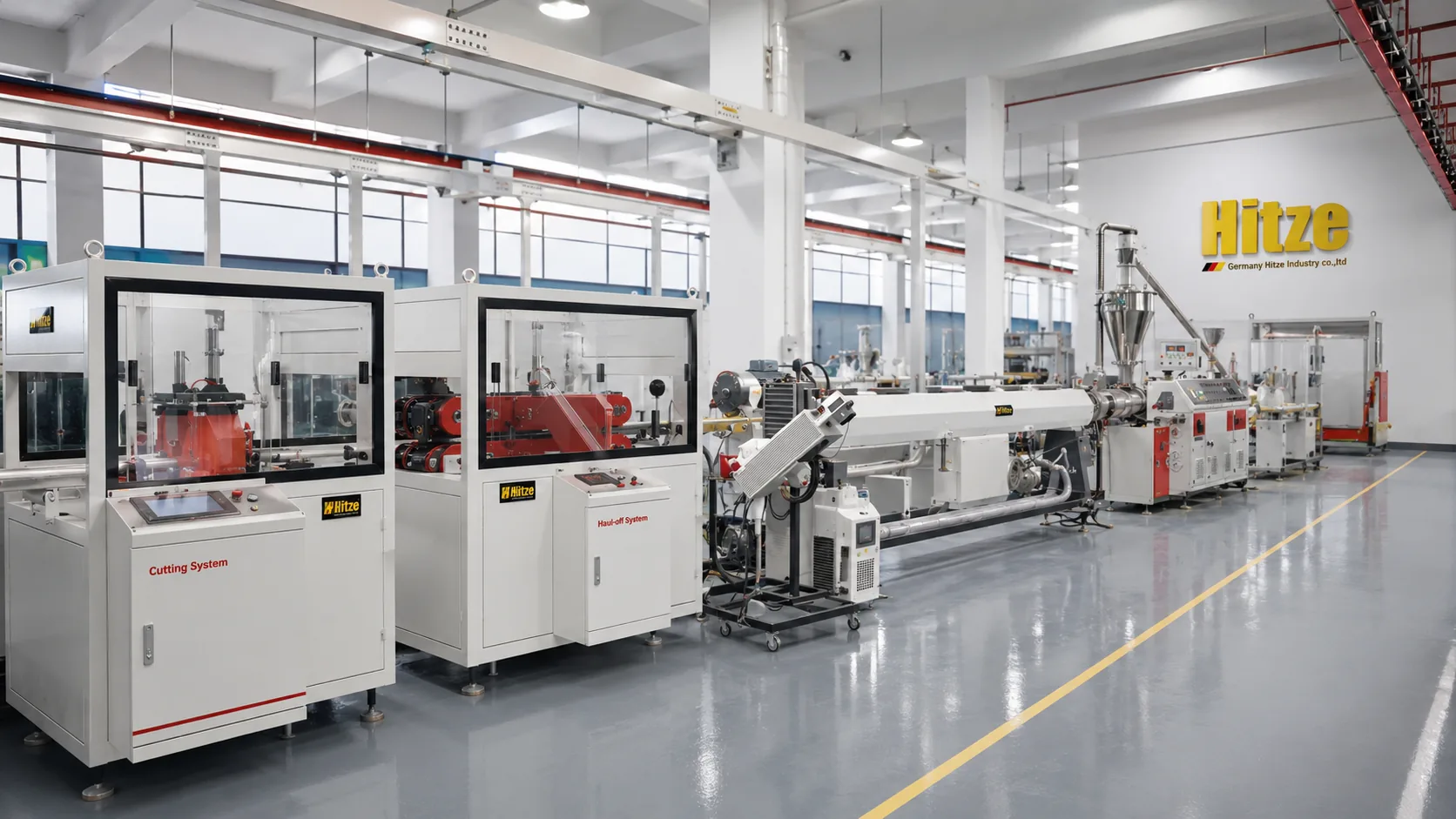
This is where single-source capability separates a manufacturer from a broker. A broker resells pipe from one shop and fittings from another, and the two never see the same QC standard. A real system maker extrudes multilayer PEX-AL-PEX with a butt-welded aluminium core, moulds PP-R fittings, and machines lead-free brass in-house — so pipe and fitting are dimensioned to mate. Hitze’s own base is a stated 120,000 m² of production with pipe extrusion, injection moulding and a brass CNC hall under one roof; that vertical integration is the entire point of buying a system rather than assembling one from strangers. If in-house capability across pipe and fittings matters to your programme, the reasoning behind a single German-engineered system is laid out on our German engineering page.
Red flag 4: A QC lab that exists on paper but never runs
Ask to see the quality lab, then ask to see its logs. The gap between those two requests is where most factories fail quietly. A real pipe lab runs hydrostatic pressure tests: PP-R to EN ISO 15874 and DIN 8077/8078, whose allowable operating pressure is derived from long-term hydrostatic strength curves determined under ISO 9080 — the same standards that underwrite a 50-year design life for PP-R at its rated service conditions. For heating pipe, the barrier check matters: DIN 4726 governs the oxygen-diffusion barrier that stops dissolved oxygen from corroding your customer’s boiler, pump and steel manifold. A supplier who cannot explain why DIN 4726 exists is unlikely to be testing to it.
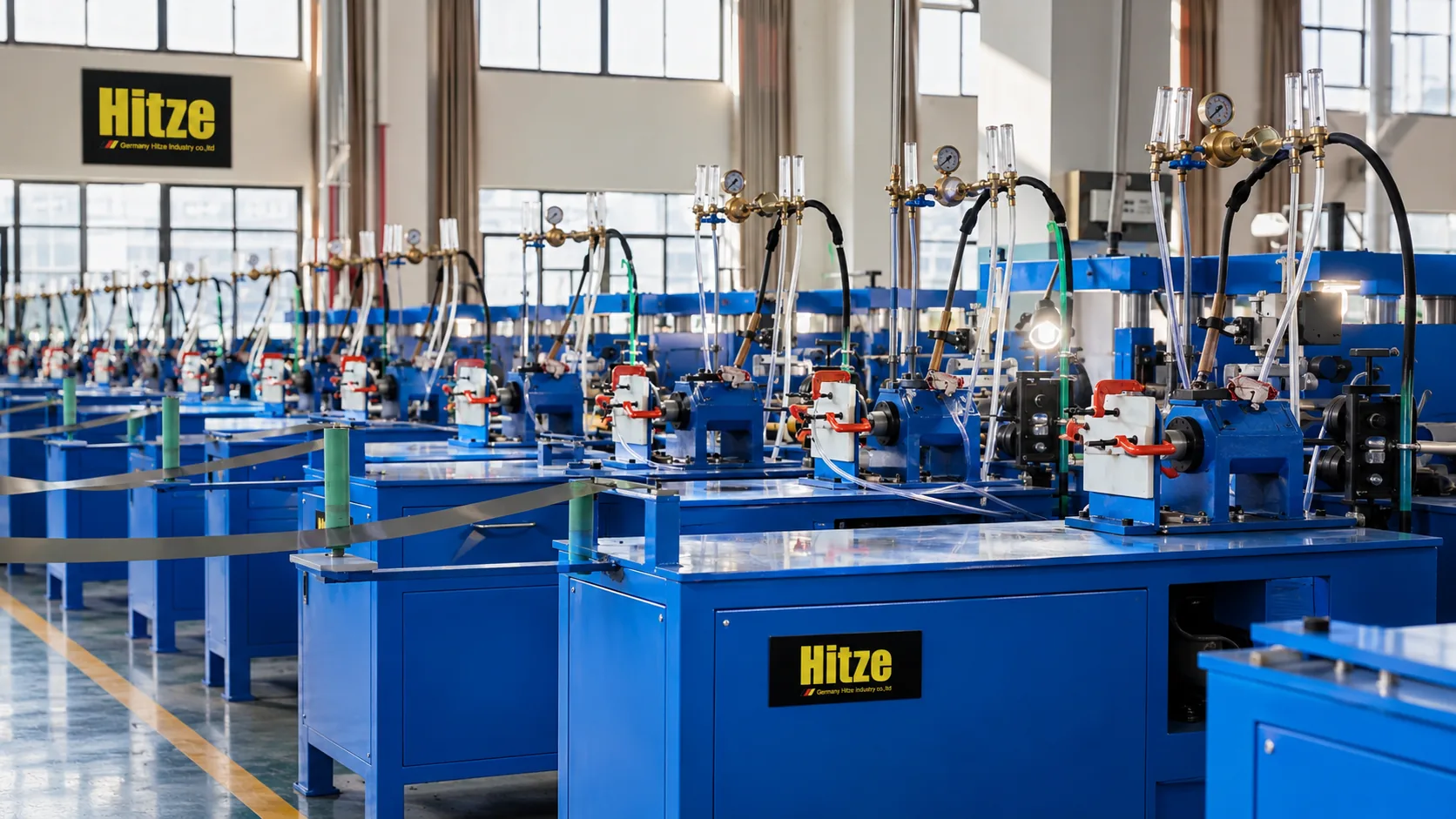
Two insider tells separate a working lab from a display lab. First, a spotless, unused test bench with pristine equipment is a warning, not a reassurance — real gear shows wear and a running log with yesterday’s date on it. Second, ask for the CAPA records (corrective and preventive action). A factory with zero recorded non-conformities is not a perfect factory; it is a factory that does not write problems down — which means it also does not track whether fixes hold. Paradoxically, a supplier who can show you three closed CAPAs from last quarter is safer than one who claims a flawless record.
What Hitze checks, and how it’s built
On Hitze lines, PP-R pipe and fittings are hydrostatically pressure-tested against DIN and EN ISO thresholds before they are released; PEX and PE-RT heating grades are built with the DIN 4726 oxygen barrier laminated into the wall; and brass bar stock is machined to lead-free / DZR grades (CW724R, CW511L, CW602N) for potable contact rather than standard CW617N where the market demands it. Batch-level records tie extrusion runs to test results, which is what makes reorder consistency provable rather than promised. The point is not that this is unique — it is what a properly run lab looks like, and it is what you should be able to see on any audit worth funding.
Red flag 5: Every machine “calibrated” on the same day
Pull the calibration log for the extruders, the pressure-test rigs and the measurement gauges. If every instrument shows the identical calibration date, the log was written the morning of your visit, not maintained across the year. Real calibration is staggered — instruments come due on their own cycles. A single shared date is one of the most reliable signals that the paperwork is theatre. The same logic applies to a suspiciously clean maintenance record: machines that run three shifts leave grease, downtime notes and part-swap entries. Their absence is not tidiness; it is fiction.
Red flag 6: Areas you’re not allowed to see
A legitimate manufacturer wants you to see the whole plant, because the whole plant is the sales pitch. The moment an auditor is steered away from raw-material storage, a specific production line, the waste-treatment area or the warehouse, you are watching deliberate concealment. The two most common things hidden behind a closed door: recycled or off-spec resin blended into the melt (which is why they don’t want you weighing raw-material intake against output), and a production line running a competitor’s order — or a counterfeit — that they’d rather you didn’t photograph. Access refusal is not a scheduling problem to work around. It is the finding.
Red flag 7: Undisclosed subcontracting when the season peaks
This is the red flag that survives a good audit, because it doesn’t exist on audit day. You inspect a capable plant in the low season, sign off, and place your order — which lands during the supplier’s peak, when their own lines are full. The overflow quietly ships to an external facility you never audited, with weaker QC and different resin, and it arrives in your container looking almost right. The defence is contractual, not observational: require written no-subcontracting-without-approval terms, and tie payment to a pre-shipment inspection at the audited address. If a supplier resists naming the exact plant where your goods will be produced, assume the answer is “wherever there’s capacity.”
Red flag 8: No pre-shipment inspection, no AQL, no leverage
The audit verifies capability once; the pre-shipment inspection (PSI) verifies your order before it sails. A supplier who resists a third-party PSI is telling you the goods won’t survive one. Finished pipe should be inspected against an AQL 2.5 plan under ISO 2859-1 — the internationally indexed sampling standard whose current edition is ISO 2859-1:2026. AQL 2.5 sets the worst tolerable defect level at 2.5%: inspect a statistically valid sample, and if defects exceed the acceptance number, the lot is rejected before it leaves the port. Critically, book the PSI so the report lands before your final payment. An inspection you can’t act on is a receipt, not leverage.
A worked example: how these eight catch a bad container before it ships
Picture a distributor sourcing 20/25mm PP-R for a hot-and-cold water range. Supplier A sends a beautiful deck: ISO 9001, DVGW, WRAS, and photos of a spotless plant. Run the eight. The GSXT search (flag 1) shows the license scope is “import and export of building materials” — no manufacturing. The DVGW certificate (flag 2) re-verifies to a different company at another city. On a video walk-through the “extrusion hall” is coils on pallets with no running line (flag 3). Supplier A is a trading desk with borrowed paper. Total cost of finding out: one afternoon at your desk, before a cent moved.
Supplier B passes 1–3, so you fund an on-site audit in the USD 300–800 range typically quoted by third-party inspection firms. The QC lab is real but the calibration log shows every gauge dated the day you arrived (flag 5), and the auditor is kept out of raw-material storage (flag 6). You hold. You add written no-subcontracting terms and an AQL 2.5 PSI tied to final payment (flags 7–8). The first container passes inspection; the second, placed in peak season, fails PSI on out-of-round pipe — because it was subcontracted. Your payment hold means you reject it at the port instead of on your dock. That is the entire return on the checklist: the loss happens on the supplier’s side of the wire transfer, not yours.
Best for / not for: when a deep audit is worth it
This full eight-point audit is best for: first orders with any new supplier; container-scale commitments (the moment of highest return); private-label programmes where certification must issue under your brand; and any product where a certification gap can block resale in your market. For a first significant order, a physical audit is the single highest-return step in the whole sourcing process — the fee is a rounding error against the exposure.
It is not worth a full on-site trip for: a small trial or sample order where a desk-based verification (flags 1, 2 and a video walk-through of flag 3) already screens out the obvious fraud; or a repeat order from a supplier you audited last year and who has passed consecutive PSIs. Remote verification is an excellent filter — it eliminates fabricated suppliers — but it does not replace a physical audit for the order that will actually put your reputation on a customer’s wall.
Auditing pipe suppliers for a container programme?
This checklist is written for wholesalers and importers vetting a factory before a first container. If you’d rather start from a supplier already built to be audited — a German brand engineered in Germany and built to German DIN standards, with SKZ, DVGW, WRAS and NSF scheme memberships and numbered certificates available on request — Hitze is set up for exactly this diligence. MOQ is sample-friendly and terms vary by market and order. It’s a fit for distributors and importers who need provable reorder consistency; it’s not a direct-to-homeowner channel.
Frequently asked questions
How much does a pipe factory audit cost, and is it worth it?
Third-party inspection firms typically quote a factory audit in the USD 300–800 range per visit — QIMA, for instance, publishes per-man-day rates starting around USD 309, and a full audit usually runs one to two man-days. Against the USD 10,000–100,000+ a single bad container can cost in rejected stock, blocked customs clearance and lost customers, it is one of the cheapest insurance policies in international sourcing. For a first container-scale order it is the single highest-return step you can take.
Can I verify a pipe supplier without flying to the factory?
Partly. You can run the desk-based checks today: verify the 18-character USCC on the GSXT portal, re-confirm ISO certificates in IAF CertSearch, and check DVGW, WRAS, NSF and IAPMO market approvals in each issuer’s public register. A live video walk-through screens for a real extrusion line. Remote checks eliminate obvious fraud, but for a first significant order they do not replace a physical audit and a pre-shipment inspection.
How do I know a plumbing certificate is genuine and not a reused PDF?
Never accept the PDF as proof. Take the exact registered company name and certificate number and search the issuing body’s own register — IAF CertSearch for ISO, DVGW CERT for DVGW, the WRAS directory (7-digit number) for WRAS, NSF’s listings for NSF/ANSI 61, and the IAPMO PLD for UPC/cUPC. The most common forgery is a real certificate that belongs to a different entity or has lapsed; the register exposes all three.
What is AQL 2.5 and why should it be in my contract?
AQL 2.5 is an acceptance quality limit under ISO 2859-1 that sets the worst tolerable defect level at 2.5%. Instead of inspecting every unit, an inspector checks a statistically valid sample; if defects exceed the acceptance number, the lot is rejected. Writing an AQL 2.5 pre-shipment inspection into your contract — with the report due before final payment — turns quality from a promise into enforceable leverage.
Is Hitze pipe made in Germany?
Hitze is a German brand of piping systems, engineered in Germany and built to German DIN standards, with a German trademark registration on record at the DPMA. Products are certified under recognised schemes — SKZ, DVGW, WRAS, NSF and others — and the numbered certificates behind them are available on request so buyers can run exactly the register checks described above. Certificate numbers and market coverage vary by product and order.
What’s the difference between a factory and a trading company on paper?
Read the registered business scope on the license. A real manufacturer’s scope names extrusion, injection moulding or plastic-product manufacturing; a trading company’s scope reads “wholesale, retail, import and export.” A trading desk can be legitimate, but it adds a layer between you and the people making your pipe — which is where substituted resin and borrowed certificates tend to enter. If provable reorder consistency matters, source from the entity that actually extrudes.