Key Takeaways
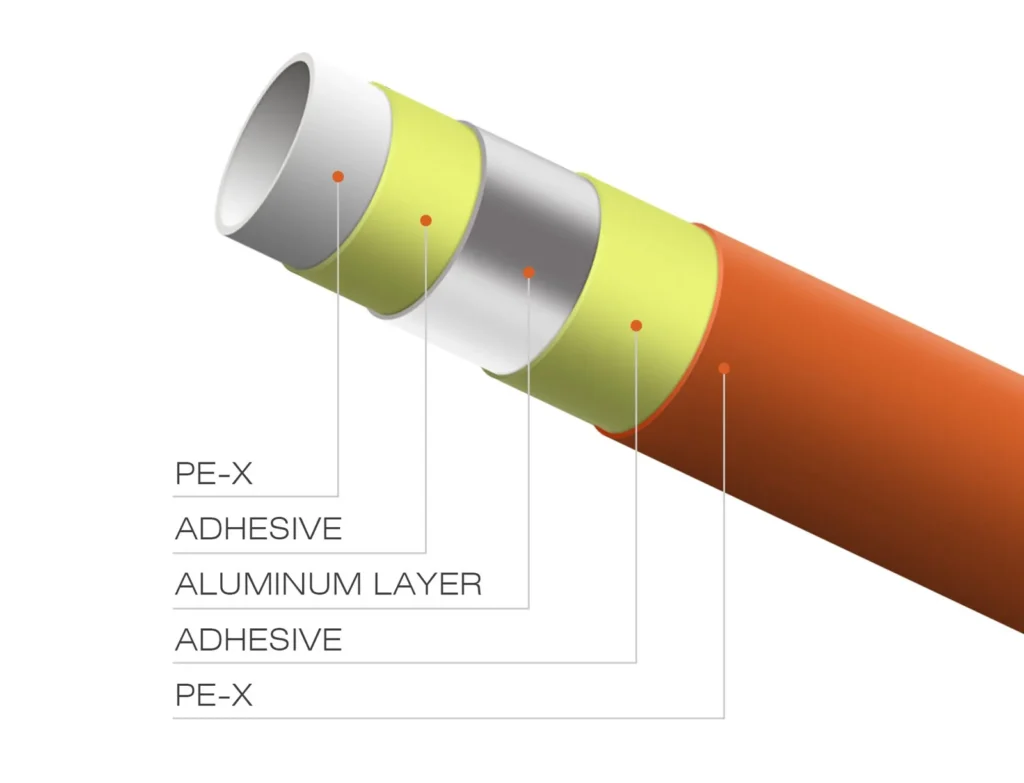
- Same base polymer, different backbone. Both are crosslinked polyethylene. PEX-AL-PEX adds a welded aluminium core between two PEX layers, and that one layer changes how the pipe expands, holds shape, and blocks oxygen.
- Multilayer wins on thermal movement. Mono-layer PEX expands roughly 2 mm per metre for every 10 °C rise; the aluminium core cuts that linear expansion by about 30–40%, so hot runs sag and tick far less.
- Oxygen barrier: absolute vs. coated. Aluminium is a physical, absolute oxygen barrier. Standard PEX needs an EVOH barrier layer, and non-barrier PEX must never touch a ferrous closed loop.
- Install logic is opposite. PEX-a self-supports in long flexible coils and shines with cold-expansion fittings; multilayer is form-stable—it holds a bend and is joined by press or compression.
- Bottom line for a contractor: PEX for long, fitting-light potable and radiant runs where flexibility saves labour; multilayer where exposed runs, tight bends held by hand, gas lines, or a strict oxygen spec drive the decision.
Ask ten installers whether to run PEX or PEX-AL-PEX on the next job and you will get ten answers, most of them habit dressed up as principle. The honest answer is that neither pipe is “better.” They are two different tools that happen to share a base polymer, and the right pick is decided by the run in front of you: is it buried in screed or clipped to a wall, is there a ferrous boiler in the loop, how many bends do you have to hold by hand, and who is crimping it. This guide takes a position on each of those questions instead of listing generic pros and cons, because a comparison that refuses to choose is useless on site.
We will define what actually differs at the wall thickness, walk the four decisions that matter for a real install, give you a segmentation of best-for and not-for, and show how a single-brand pipe-and-fitting system removes the failure mode that quietly causes most callbacks: mixing pipe and fittings that were never tested together.
What actually differs: five layers vs. one
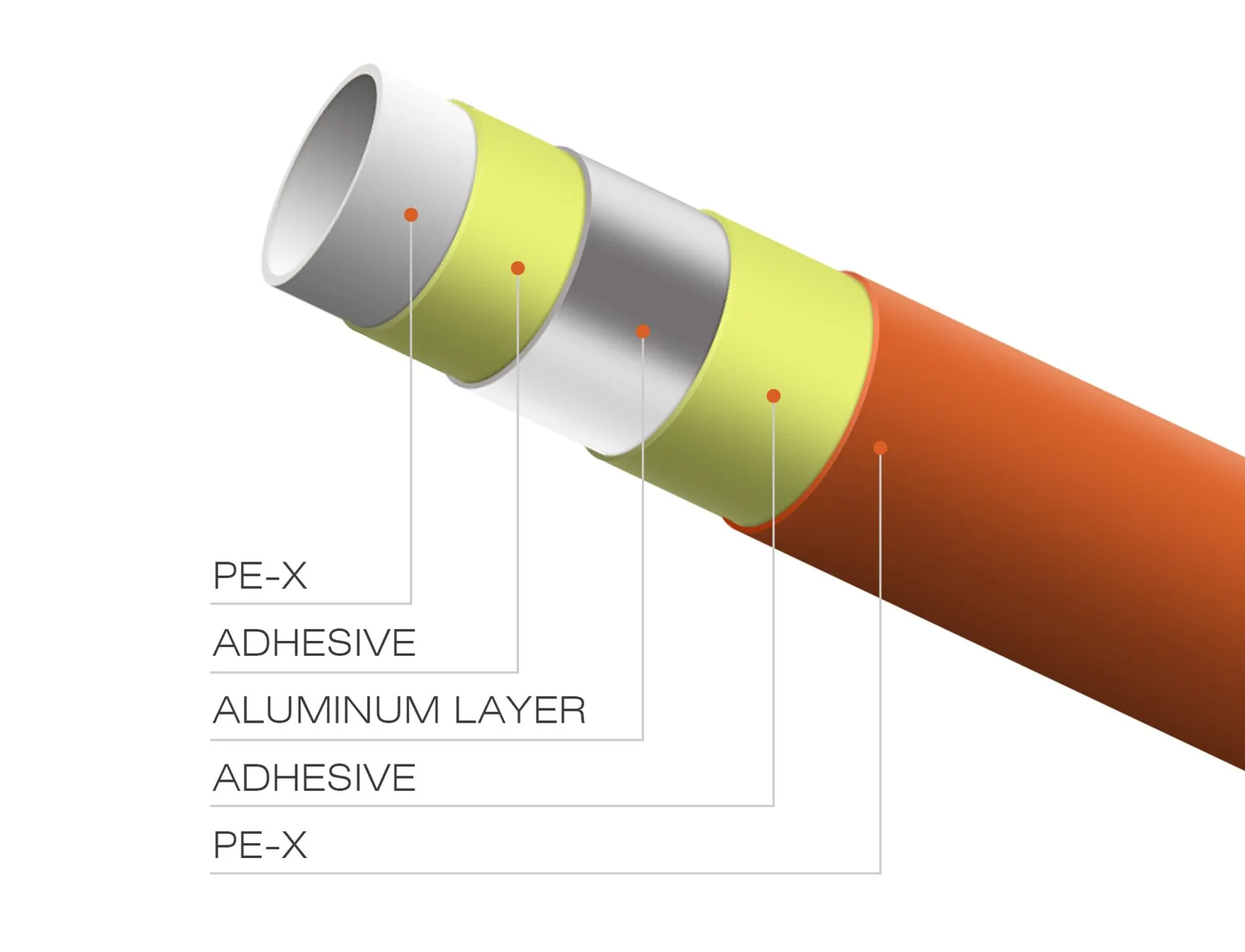
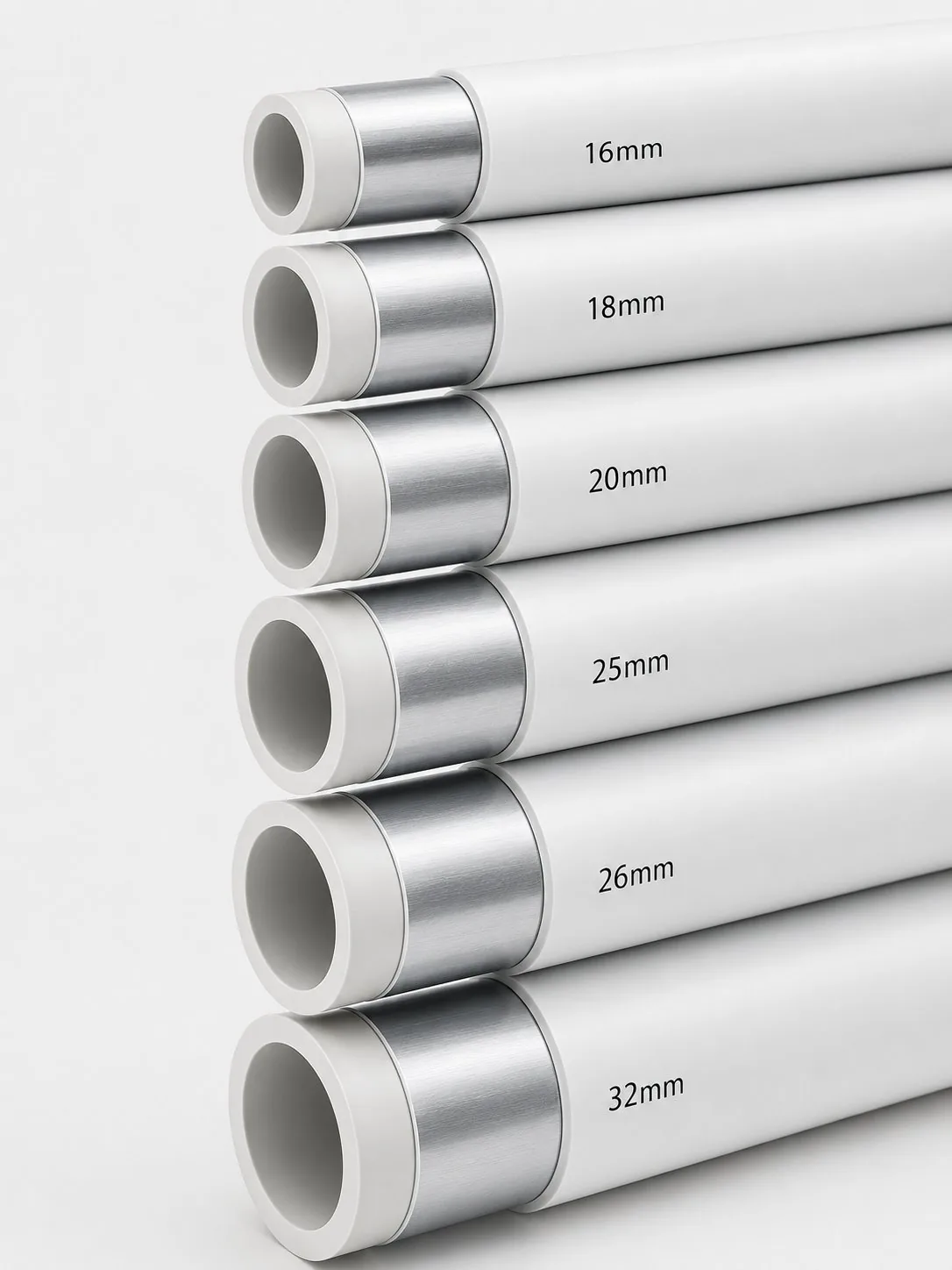
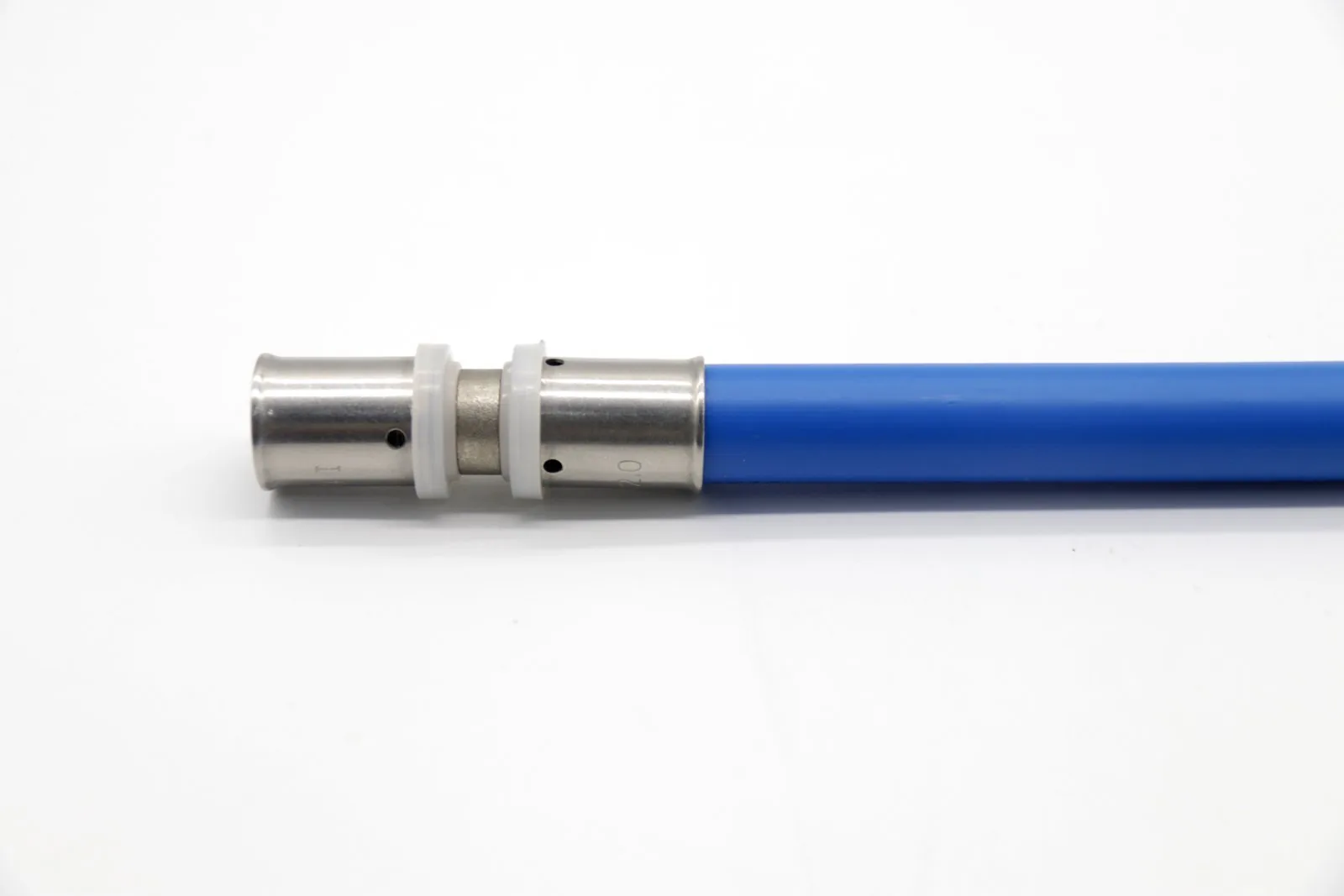
Mono-layer PEX is exactly that—a single wall of crosslinked polyethylene, optionally with a thin EVOH oxygen-barrier layer coated on. It is governed by ASTM F876 (the tubing) and ASTM F877 (the hot- and cold-water distribution system, tubing plus fittings). PEX-AL-PEX is a five-layer composite: PEX, adhesive, a welded aluminium tube, adhesive, PEX. In North America it is covered by its own standard, ASTM F1281, which explicitly requires a welded aluminium core bonded to the PEX layers by melt adhesive—not an overlapped foil. That welded seam is not a detail; an overlapped-foil pipe is a cheaper, weaker animal that fails the standard the moment you test the core.
The aluminium layer is the entire reason multilayer exists, and it buys you three things at once. First, form stability: bend it by hand and it stays bent, because the metal has taken a permanent set while the PEX would spring back. Second, a dramatic drop in thermal expansion. Mono-layer PEX has a linear expansion coefficient around 1.4 × 10⁻⁴ m/m·°C—roughly 2 mm of growth per metre for every 10 °C—so a 6 m hot run swinging 50 °C moves around 60 mm and will tick and sag against its clips unless you build in expansion loops. The aluminium core knocks that movement down by roughly 30–40%, which is why exposed multilayer risers stay quiet and straight. Third, an absolute oxygen barrier, which is a different class of protection from the EVOH coating on barrier PEX, and the subject of the next section.
Where the PEX grade (a / b / c) still matters
Before you even reach the PEX-vs-multilayer question, “PEX” itself is three products. PEX-a is crosslinked by the peroxide (Engel) method and has the highest thermal memory—kink it and a heat gun brings it back, and it is the grade built for ASTM F1960 cold-expansion fittings. PEX-b uses the silane moisture-cure route and is stiffer with less memory; it is typically crimped or clamped. PEX-c is crosslinked by electron-beam irradiation. For the purposes of this comparison the important point is that all three are mono-layer—the moment you laminate an aluminium core into the wall, memory and self-expansion stop mattering, because you are now joining the pipe mechanically. So “PEX-a vs multilayer” is really “flexible, memory-driven install vs. form-stable, mechanically-joined install.”
Oxygen barrier: the decision that protects the boiler
This is where a wrong pipe choice does not leak on day one—it quietly rusts the customer’s boiler over three winters. In any closed hydronic loop, oxygen that diffuses through the tube wall feeds corrosion of every ferrous component: the cast-iron boiler sections, the circulator body, steel panel radiators, the fittings. The system never reaches equilibrium; the oxygen is replaced as fast as it is consumed, so the corrosion runs indefinitely and shows up as black magnetite sludge, seized pumps, and cold spots.
DIN 4726 is the German standard that sets the oxygen-permeability limit for plastic heating pipe, measured at 40 °C—the temperature band a radiant floor actually runs at. Here is the practical hierarchy, and it is a hard rule, not a preference:
- PEX-AL-PEX: the welded aluminium core is a physical, absolute barrier—oxygen cannot pass metal. This is the safest choice for any loop with ferrous parts and the reason multilayer is a default for hydronic distribution.
- Oxygen-barrier PEX (EVOH): a coated barrier engineered to meet DIN 4726. Fully valid for closed heating loops when the pipe carries the barrier and the spec.
- Non-barrier PEX: potable and open-system use only. It belongs in a closed heating loop only if every wetted component is non-ferrous—stainless or bronze circulator, non-ferrous boiler, brass fittings throughout. In practice that is rare, so treating non-barrier PEX as “heating pipe” is the classic expensive mistake.
The insider warning: barrier status is not visible from across the van. Glossy surface and print-line callouts are your only tell, and they are easy to misread on a mixed pallet. If a job has any ferrous component and any doubt, run multilayer or a printed DIN 4726 barrier PEX and remove the question.
Head-to-head spec comparison
The table below is the decision at a glance; the prose around it is where the trade-offs actually live, so read both. Pressure figures are the ASTM F876 ratings for PEX tubing—note how the rating falls with temperature, which is why you never spec a pipe on its cold number alone.
| Property | Mono-layer PEX (a/b/c) | PEX-AL-PEX (multilayer) |
|---|---|---|
| Structure | Single crosslinked-PE wall (+ optional EVOH barrier) | 5 layers: PEX / adhesive / welded aluminium / adhesive / PEX |
| Core standard | ASTM F876 / F877; EN ISO 15875 | ASTM F1281 (welded core); EN ISO 21003 |
| Pressure rating (PEX ref.) | 160 psi @ 73.4 °F; 100 psi @ 180 °F; 80 psi @ 200 °F | Comparable pressure/temperature class; core adds burst reinforcement |
| Thermal expansion | High: ~2 mm/m per 10 °C | ~30–40% lower—far less movement on hot runs |
| Oxygen barrier | Coated (EVOH) if barrier grade; none if non-barrier | Absolute—metal core blocks diffusion |
| Shape behaviour | Springs back; self-supporting flexible coils | Form-stable—holds a hand-bend without clips |
| Jointing | Cold-expansion (F1960), crimp, clamp, push-fit | Press or compression (mechanical) |
| Gas service | No | Yes, in compatible-gas grades where locally approved |
Pressure values are ASTM F876 reference ratings for PEX tubing; multilayer ratings vary by size and class. Always confirm the printed rating and local approval for the specific product and market.
The pressure line deserves a word because it is widely misread. A pipe advertised at “160 psi” is quoting the cold rating; at 180 °F that same tube is a 100 psi pipe, and at 200 °F it is 80 psi. That is not a defect—it is how thermoplastic derates with temperature—but it means a high-temperature run must be specified on its hot number. Both PEX and multilayer follow the same physics here; the aluminium core does not lift the pressure class dramatically, it earns its keep on expansion, shape, and oxygen.
Best for / not for: pick by the run, not by habit
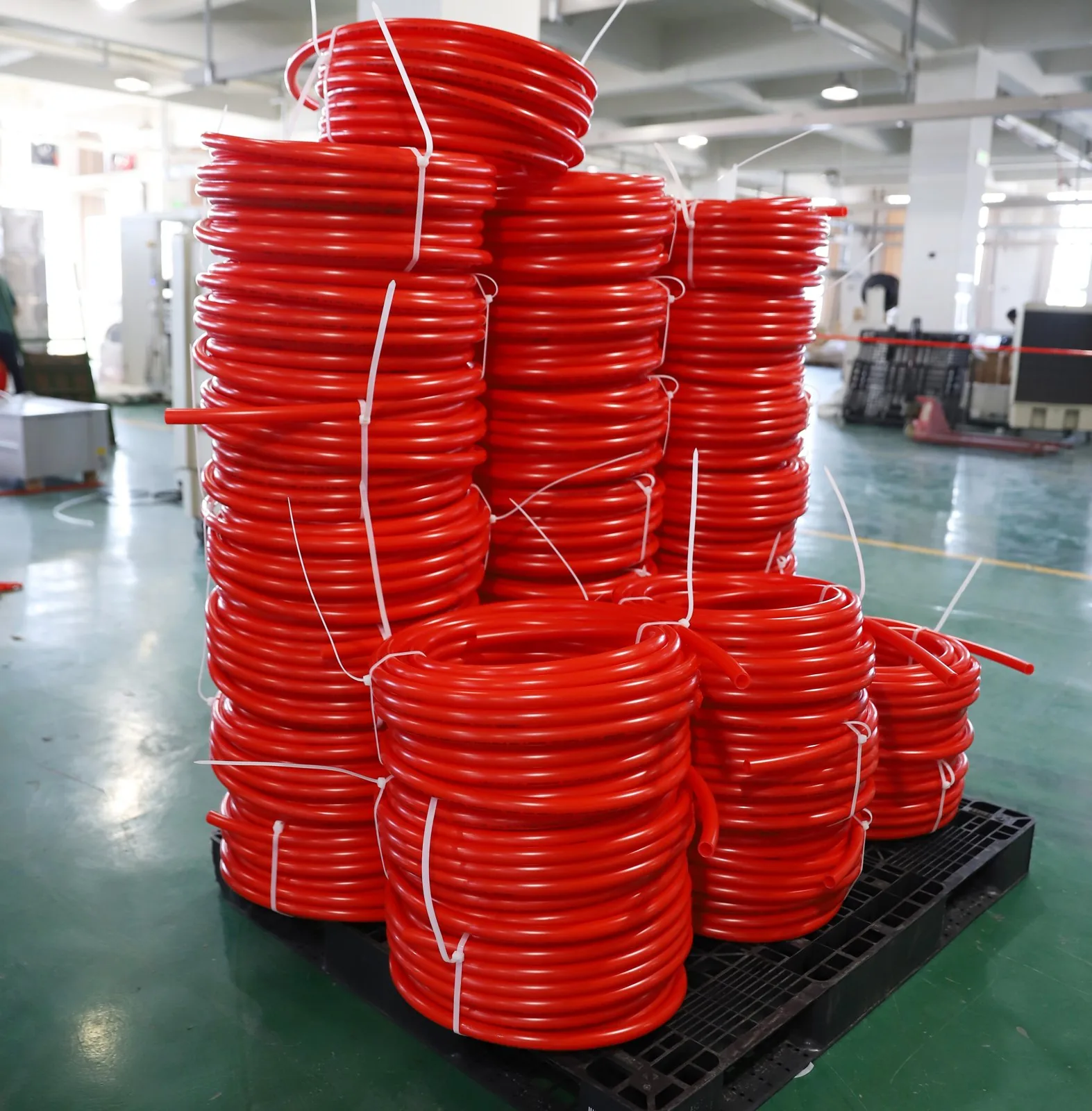
Reach for mono-layer PEX when the run is long and fitting-light—a home-run manifold plumbing job where you want to pull one continuous flexible coil from manifold to fixture with zero joints in the wall. PEX-a in particular, with its thermal memory and cold-expansion fittings, is the fastest, most forgiving pipe for potable distribution and for radiant loops that get buried in screed where thermal movement is restrained anyway. It coils tighter, weighs less per metre, and a kink is recoverable with heat.
Reach for PEX-AL-PEX when the pipe is exposed and has to look right and stay put—plant-room risers, surface-mounted heating drops, anywhere a hand-formed bend must hold its line without a clip every 300 mm. It is the safer default on any ferrous closed loop because the oxygen barrier is absolute, and it is the pipe that carries gas-rated grades where mono-layer PEX simply cannot go. Multilayer is also easier to keep tidy on a photographed or inspected install, because it does not spring or sag.
Do not use non-barrier PEX in a ferrous heating loop—covered above, and worth repeating because it is the most common and most expensive error. Do not run either pipe in sustained UV/outdoor exposure without protection; both crosslinked-PE systems degrade in sunlight. And do not expect multilayer to coil and route like PEX-a: it is stiffer, it needs a bending tool or spring on tight radii to avoid kinking the aluminium, and a kinked aluminium core does not recover—that section is scrap.
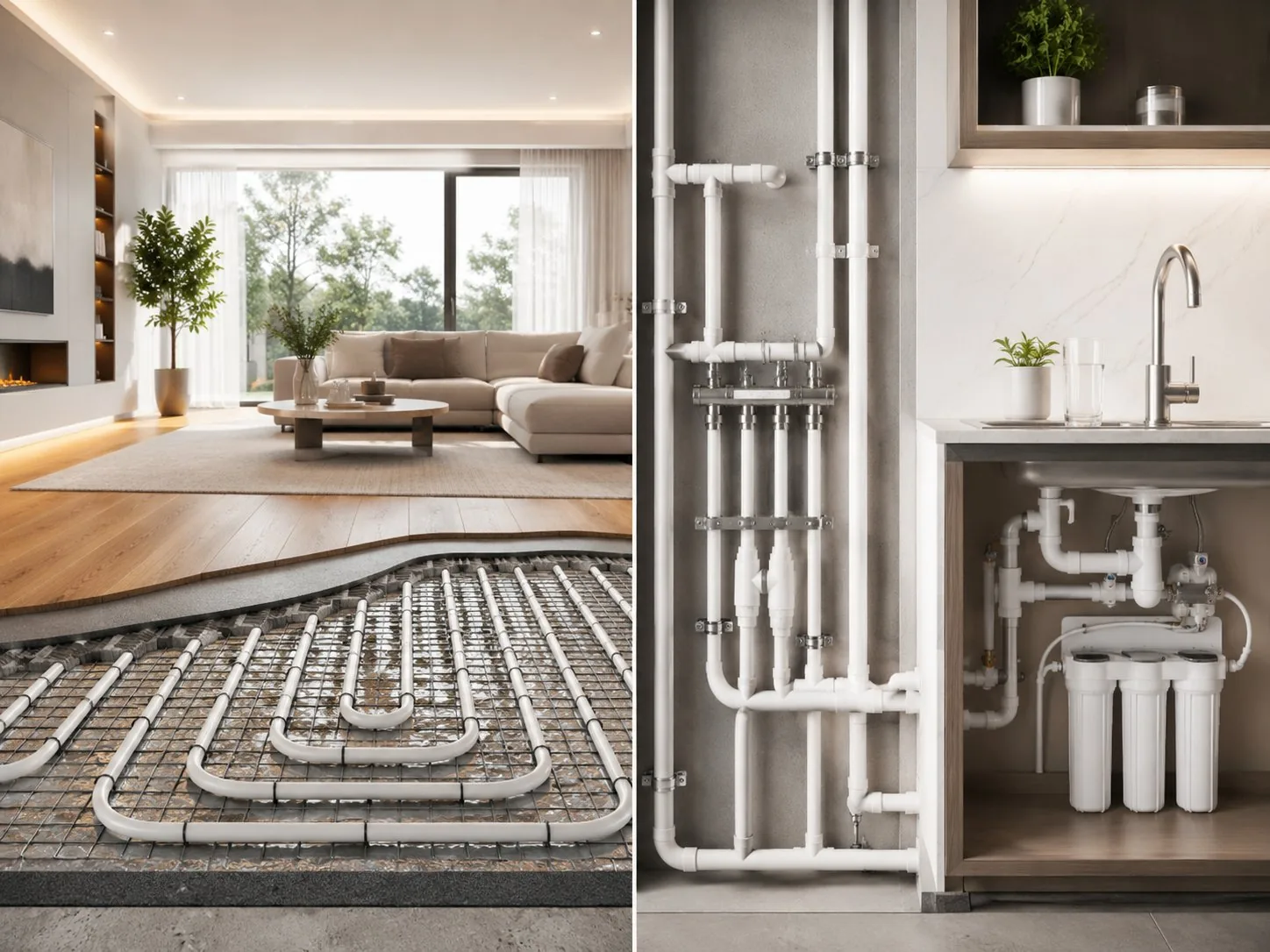
A worked scenario: two-storey house, radiant ground floor
Take a common job to make the choice concrete: a two-storey house, wet radiant heating on the ground floor fed from a gas boiler, and standard potable plumbing to bathrooms and kitchen. Here is how an experienced installer would split it rather than forcing one pipe everywhere.
For the radiant loops in the screed, oxygen-barrier PEX-a at 16 mm is an excellent call: it pulls continuously off the coil with no buried joints, the screed restrains any thermal movement, and the barrier protects the boiler. For the plant-room manifold drops and the exposed distribution feeding those loops, switch to 20 mm PEX-AL-PEX: it holds its bends against the wall without a forest of clips, the exposed hot pipe will not tick as it heats, and the absolute barrier is belt-and-braces on the ferrous side of the boiler. For the potable hot and cold to fixtures, mono-layer PEX home-runs from a manifold are fast and clean; barrier grade is irrelevant on potable, so run non-barrier or standard PEX and save cost. The through-line: one project, three pipe decisions, each made by the run—and critically, one fitting logic that ties them together, which is the next point.
How Hitze builds it — and why single-brand matters
The failure mode that generates the most callbacks is not choosing PEX over multilayer—it is joining a pipe from one maker with a fitting from another that was never validated against it. Insert dimensions, sleeve geometry, and O-ring seats are designed as a system; mix them and you get a joint that passes the pressure test on the bench and weeps under thermal cycling six months later. That is a warranty argument nobody wins.
As a German brand engineered to German DIN standards, Hitze builds both sides of the system in-house so they are tested together. Our multilayer pipe uses a butt-welded aluminium core—a continuous full-length seam rather than an overlapped foil—which is what ASTM F1281 requires and what keeps the oxygen barrier genuinely absolute along the whole length. The PEX range spans PEX-a, PEX-b and PEX-c with dedicated oxygen-barrier heating grades to DIN 4726, and the press and compression fittings are dimensioned to the same pipe. What we verify on the line: aluminium-core weld integrity, layer adhesion (the delamination failure mode you read horror stories about), hydrostatic pressure to the DIN and EN ISO thresholds, and dimensional consistency size-to-size so a contractor’s press jaw seats the same way on every coil.
On compliance, Hitze is SKZ-tested and DVGW-certified in Germany, holds WRAS material approval in the UK and an NSF-referenced potable-water test report, and is certified to schemes including cUPC/UPC (IAPMO), NSF-14 and NSF/ANSI 61, with CE marking and a Declaration of Performance. Multilayer is covered under the SAI Global StandardsMark to AS 4176.8 (its consumer-gas grade; the water multilayer is built to EN ISO 21003). Specific certificate numbers and the exact scheme coverage for a given market are available on request, and which certificate you need is market-dependent—so confirm the target-market listing before you spec, rather than assuming one cert clears every border.
Jointing and tooling: the hidden cost difference
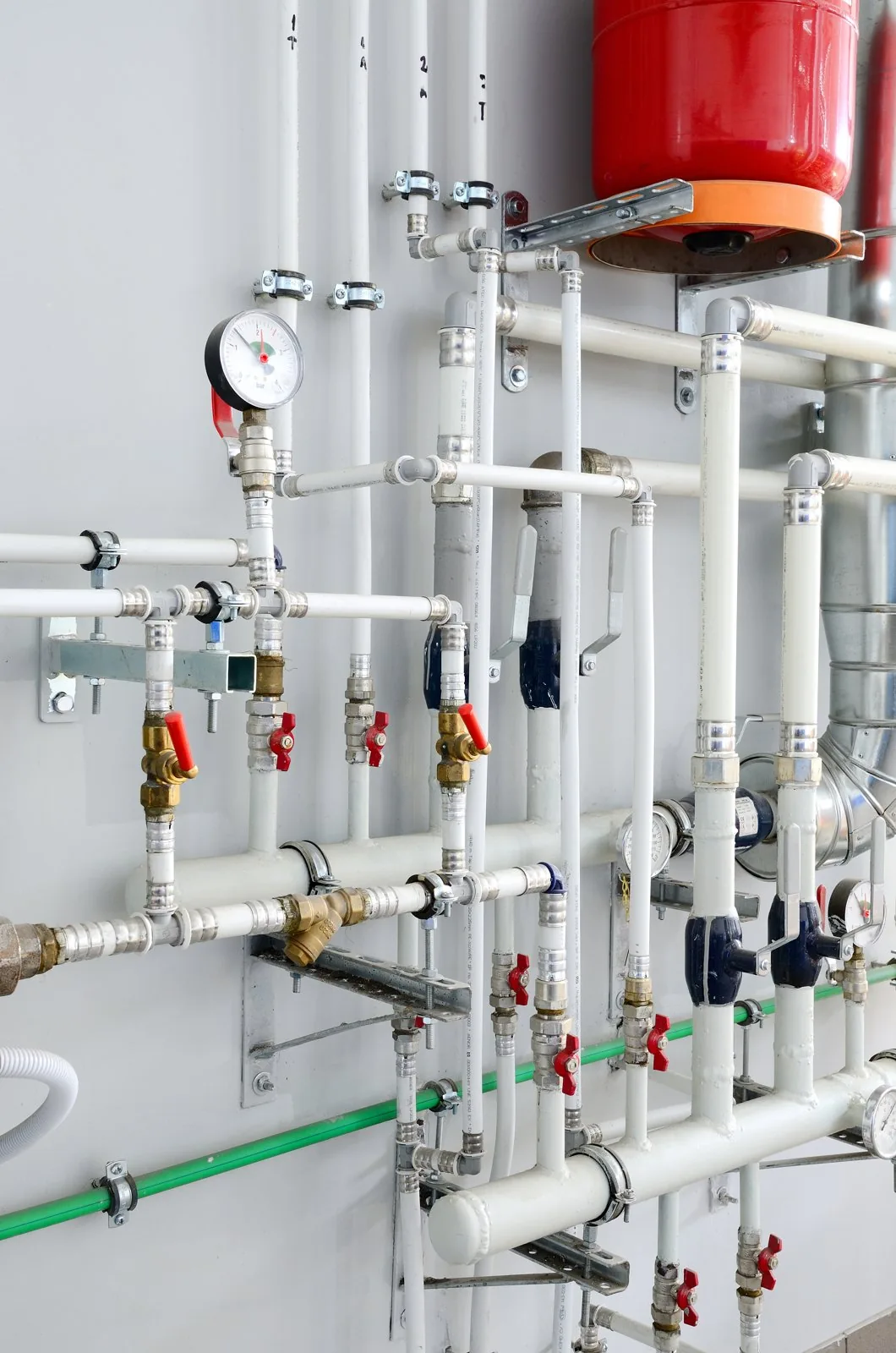
The labour and tooling story flips depending on which pipe you standardise on. Mono-layer PEX-a rewards a cold-expansion tool and F1960 fittings—fast, repeatable, and the pipe’s memory shrinks back onto the fitting for a joint that is arguably the most robust in the PEX world. PEX-b and PEX-c lean on crimp or clamp rings. PEX-AL-PEX is joined mechanically by press (jaw profiles such as TH, U, F and M) or by threaded compression fittings; there is no memory to exploit, so the joint quality is entirely in the tool and the fitting geometry.
The practical consequence for a crew: standardising on multilayer means owning and maintaining a press tool with the right jaw profile for your fittings, and confirming jaw compatibility before the first crimp—the wrong profile makes a joint that looks pressed but is not sealed. Standardising on PEX-a means an expansion tool and a stock of the larger expansion fittings. Neither is wrong; the mistake is buying pipe and fittings on price from different sources and discovering on site that the jaw does not match the sleeve. Sourcing the pipe, the fittings, and the tooling logic as one system is how you make the labour number predictable.
Sourcing the right pipe for the job—who this is for
If you are a contractor or radiant-heating installer stocking a mixed job—buried PEX-a loops, exposed multilayer risers, potable home-runs—the win is a single German-brand system where pipe, fittings and tooling logic are validated together, so a mixed-material install still carries one warranty story. That is where a full-range supplier beats buying each line from a different broker on price.
See how Hitze supplies matched pipe-and-fitting systems for radiant and distribution work on our radiant-heating pipe supply for contractors page, or go straight to the PEX pipe range and the PEX-AL-PEX multilayer range to compare grades and sizes. Trade and wholesale only; sample-friendly, with certification coverage confirmed per market.
One more routing note for buyers thinking past a single job: if you are standardising a whole product line rather than one install, the certification question becomes the gating item, because the cert that clears the US is not the one that clears the EU. Our certifications and compliance overview maps which scheme unlocks which market, and radiant installers usually pair a barrier-pipe decision with a matched underfloor-heating manifold from the same system.
Frequently asked questions
Is PEX-AL-PEX better than PEX?
Neither is universally better—they solve different problems. PEX-AL-PEX has an absolute oxygen barrier and far lower thermal expansion, so it wins on exposed hot runs and any ferrous heating loop. Mono-layer PEX is more flexible and faster to install on long, fitting-light potable and buried radiant runs. Choose by the run, not by reputation.
Can I use non-barrier PEX for radiant floor heating?
Only if every wetted component in the closed loop is non-ferrous—a stainless or bronze circulator, a non-ferrous boiler, brass fittings throughout. If there is any cast iron or steel in the loop, use an oxygen-barrier PEX to DIN 4726 or PEX-AL-PEX, because oxygen diffusing through non-barrier pipe will corrode ferrous parts continuously.
Does PEX-AL-PEX need special fittings?
Yes—it is joined mechanically by press (with the correct jaw profile) or by threaded compression fittings, not by cold-expansion memory fittings. Confirm the fitting and press-jaw match the pipe before you crimp; a mismatched jaw profile can leave a joint that looks pressed but is not sealed. Sourcing pipe and fittings as one tested system avoids this.
Which pipe expands less when hot?
PEX-AL-PEX. Mono-layer PEX grows roughly 2 mm per metre for every 10 °C rise; the welded aluminium core in multilayer cuts that linear expansion by about 30–40%. On exposed hot runs that is the difference between a pipe that ticks and sags against its clips and one that stays quiet and straight.
Can PEX-AL-PEX carry gas?
In compatible-gas grades, and where locally approved, yes—ASTM F1281 covers gases compatible with the composite pipe and fittings. Mono-layer PEX is not a gas pipe. Always verify the specific product’s gas approval and your local code before installing; gas approval is market- and product-specific and available on request.
Is Hitze pipe made in Germany?
Hitze is a German brand, engineered in Germany and built to German DIN standards, and is SKZ-tested and DVGW-certified. Founded in 1974, Hitze runs a 120,000 m² production base with 1,000+ employees and exports to 118+ countries. Certificate numbers and per-market scheme coverage (cUPC/NSF/WRAS/CE and others) are available on request.
Authoritative references used for the standards cited above: ASTM F876 (PEX tubing), ASTM F1281 (PEX-AL-PEX pressure pipe), and DIN CERTCO on plastic heating-pipe systems (DIN 4726).


