Ask any distributor who has been burned by a leak-warranty dispute and they will tell you the cheapest per-metre price is rarely the cheapest system. When you buy pipe from one factory and fittings from another, you save a few cents at the invoice and quietly inherit every gap between them — dimensional tolerance, jaw profile, brass grade, and the one that hurts most, a fractured warranty when a joint weeps behind a customer’s wall. This guide runs the actual total-cost-and-risk math on single-source versus multi-supplier piping, from the buyer’s side of the desk.
Key Takeaways
- Unit price is the smallest number in the equation. Every purchase order you process costs roughly $50–$150 in loaded admin (and up to ~$527 in the worst-documented cases). Two suppliers means two of everything: POs, QC checks, cert files, disputes.
- The real single-source dividend is the warranty. A pipe-and-fitting system from one brand can be warranted as a system. Mix brands and you often void both makers’ coverage — and your insurer may follow suit.
- Multi-supplier still wins on one axis: continuity risk. One factory is one point of failure. The answer is not two factories — it is one factory deep enough to be your dual source internally.
- Compatibility is a standard, not a hope. ASTM F877 lists exactly which fitting specs are valid for PEX; ISO 15874 defines the PP-R pipe-and-fitting system. Single-source means those match by design.
- Best for distributors and importers who resell to trade and carry the callback. Not built for one-off spot buys where you never see the customer again.
The unit price is a decoy: what total cost of ownership actually counts
Total cost of ownership is a boring phrase that hides an expensive truth. The price on the pro-forma is the one number everybody negotiates and the one that matters least once a container is moving. Procurement research is blunt about this: complex supplier decisions should be made on a total-cost basis — quality, delivery, service, and risk premium — because the unit price systematically hides the administrative and failure costs stacked behind it. In practice, distributors who chase the lowest sticker across two or three suppliers routinely end up with a higher landed, carried, and warranted cost than the buyer who consolidated.
Start with the invisible line item: purchase-order processing. A single PO costs on average between $50 and $150 in fully-loaded time — sourcing, negotiating, raising, chasing, receiving, matching, paying — and the worst-documented, high-friction environments push that past $500 per order. Split your pipe and your fittings across two vendors and you have not doubled a small number; you have doubled it and then added the reconciliation cost of making two shipments, two QC reports and two certificate packs agree. For a distributor placing forty replenishment orders a year, that gap alone can erase the two or three cents per metre you thought you saved.
Then there is leverage. Consolidating spend with one supplier tends to unlock volume pricing, priority in the production queue, and payment terms that simply are not offered when your purchasing is fragmented across vendors who each see only a slice of your business. The buyer who gives one factory the whole pipe-plus-fitting-plus-manifold basket is a materially more important customer than the same buyer split three ways — and gets treated like it when a rush order or a claim lands.
The warranty gap nobody prices in until it leaks
Here is the argument that decides most trade buyers, and it has nothing to do with price. When you sell a pipe from one brand and a fitting from another, you have assembled a system that no single party warrants. The pipe maker’s warranty typically assumes their pipe is joined with approved fittings; the fitting maker’s assumes their fitting is used on qualifying pipe. Cross them and, as the trade press and manufacturers state plainly, you can reduce or void both — there is no crimp coupling on the market that lets you join two makers’ PEX and keep both warranties intact. Worse, an insurer investigating a water-damage claim may deny it once they see a mixed-brand, out-of-warranty joint as the failure point.
For a distributor, that risk is not abstract; it is your callback and your reputation. If your customer’s installer makes up a joint with your pipe and someone else’s fitting, and it weeps two years later behind drywall, the claim lands on the last recognisable brand in the chain — often yours. A single-brand system collapses that ambiguity: one manufacturer stands behind the pipe, the fitting, the O-ring and the brass, so the warranty is a system warranty rather than a set of overlapping partial promises that all point at each other.
Compatibility is a standard, not a coincidence
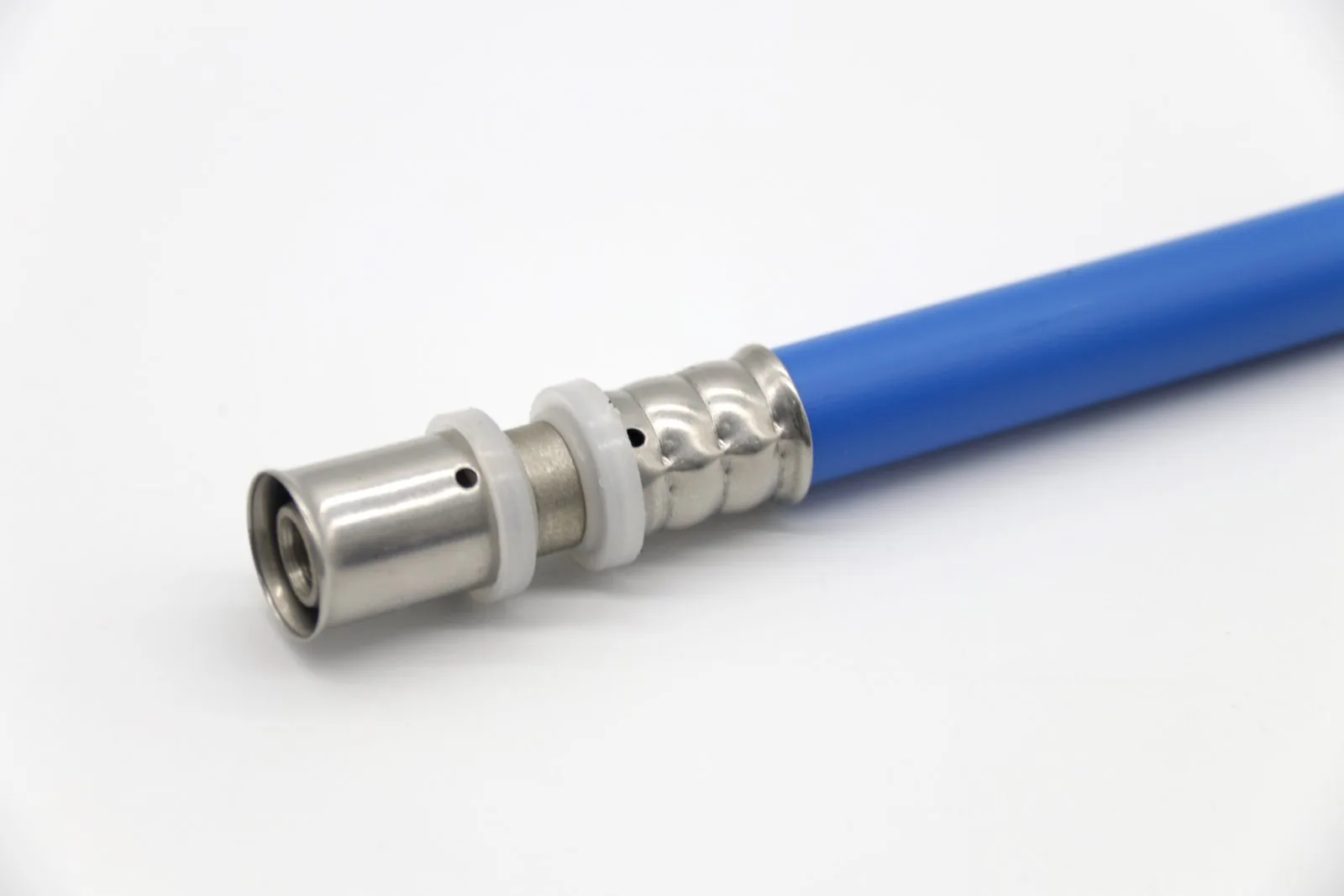
The technical case for single-source is that compatibility is written into the standards — and a two-supplier chain quietly gambles that both ends read the same clause the same way. For PEX, ASTM F877 (hot- and cold-water distribution) does not leave fittings open-ended: it references the exact family of fitting specifications that are valid on SDR9 PEX — F1807 metal-insert crimp fittings, F2080 cold-expansion, F2159 plastic-insert crimp, F1960 and others. When your pipe and fittings come from one manufacturer building to that same reference set, the dimensional tolerance, the insert bore and the ring all resolve to the same spec. When they come from two, you are trusting that a fitting certified under one interpretation seats correctly on a pipe extruded to another — and the joint is where that trust gets tested at 10 bar.
The same logic runs through the PP-R world. EN ISO 15874 is not one document; it is a system standard with Part 1 (general), Part 2 (pipes) and Part 3 (fittings), so that a fused socket and the pipe it welds to share a defined melt behaviour and dimensional class. Heat-fusion is unforgiving here — two PP-R materials with different flow characteristics can weld cosmetically and still under-bond. And in radiant heating, DIN 4726 caps oxygen diffusion at 0.1 g/m³ per day at 40 °C specifically to stop oxygen-diffusion corrosion from eating the ferrous parts of the system; a barrier pipe from one supplier paired with a fitting or manifold that ignores that spec reintroduces exactly the corrosion path the pipe was chosen to close.
Where multi-supplier genuinely wins — and how single-source answers it
An honest comparison has to concede the multi-supplier case, because it is real. One factory is one point of failure: a line outage, a raw-material squeeze, a port strike or a quality wobble hits your whole range at once. Dual sourcing exists precisely to spread that risk, to keep price tension alive, and to give you a warm backup if a supplier stumbles. Any buyer who tells you continuity risk does not matter has not lived through a stock-out on their fastest mover.
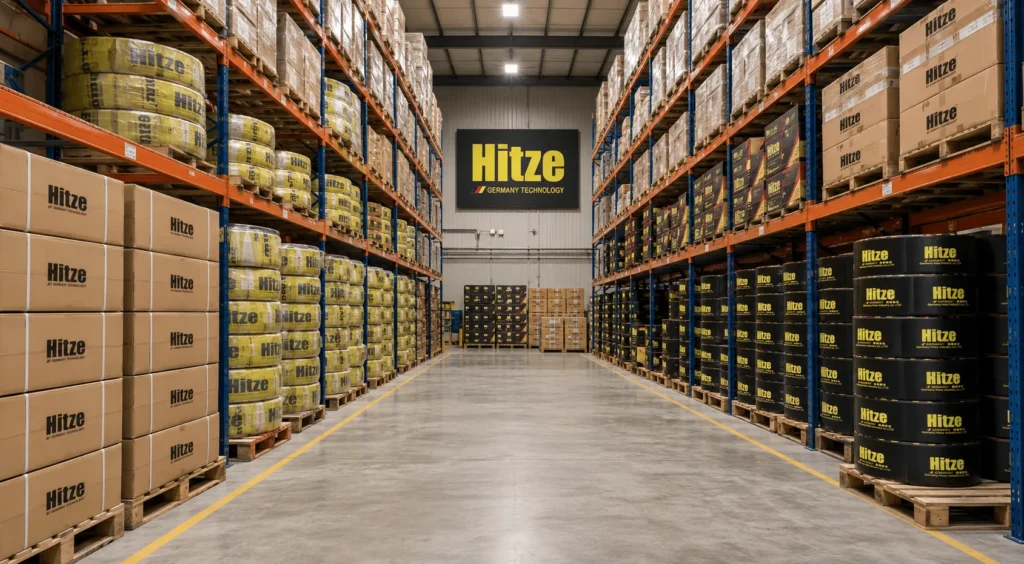
But notice what the multi-supplier structure actually costs to buy that insurance: diluted volume leverage, doubled coordination, two certificate regimes to keep current, and — the part most buyers underweight — a compatibility and warranty gap that shows up only when something fails. The sharper move is not two shallow suppliers; it is one supplier deep enough to be your dual source: a factory running parallel extrusion and moulding lines, holding container-ready stock across the range, and able to keep certificates live so a single audit covers the whole basket. You get single-brand compatibility and warranty and continuity — without paying the two-vendor tax.
Single-source vs multi-supplier: the trade-off at a glance
| Factor | Single-source (one brand, pipe + fittings) | Multi-supplier (pipe and fittings split) |
|---|---|---|
| Unit price | Sometimes a touch higher line-by-line | Can look cheaper per item |
| PO & admin load | One PO chain (~$50–$150 each) | Duplicated across vendors; reconciliation cost added |
| Volume leverage | Full basket = better price, priority, terms | Diluted; each vendor sees a slice |
| Warranty | System warranty; one party accountable | Often voided by mixing; claims point everywhere |
| Compatibility | Built to one reference spec set (F877 / ISO 15874) | Trusted, not guaranteed, at the joint |
| Certification & docs | One pack, one audit for the range | Two regimes to keep current and align |
| Continuity risk | Mitigated only if the factory is deep (parallel lines, stock) | Spread across vendors — the genuine advantage |
What Hitze checks so one brand can carry the whole system
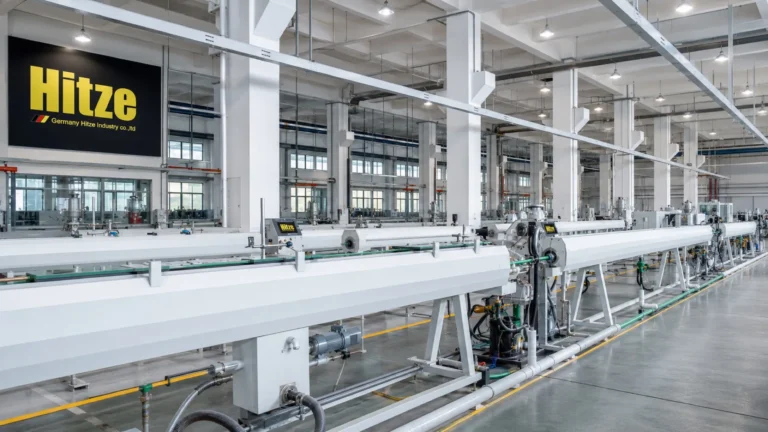
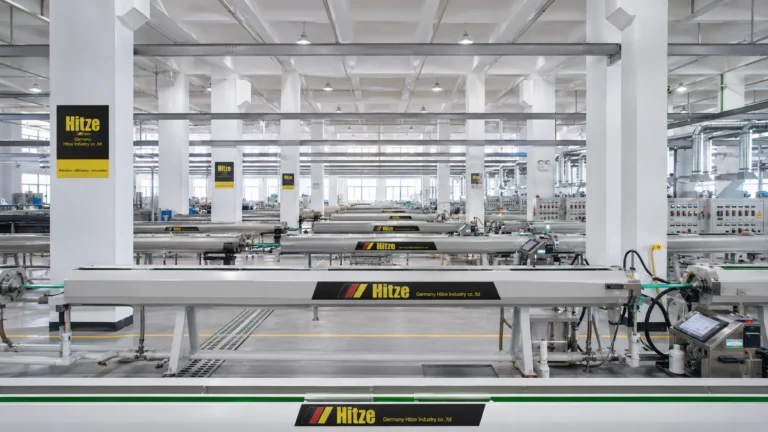
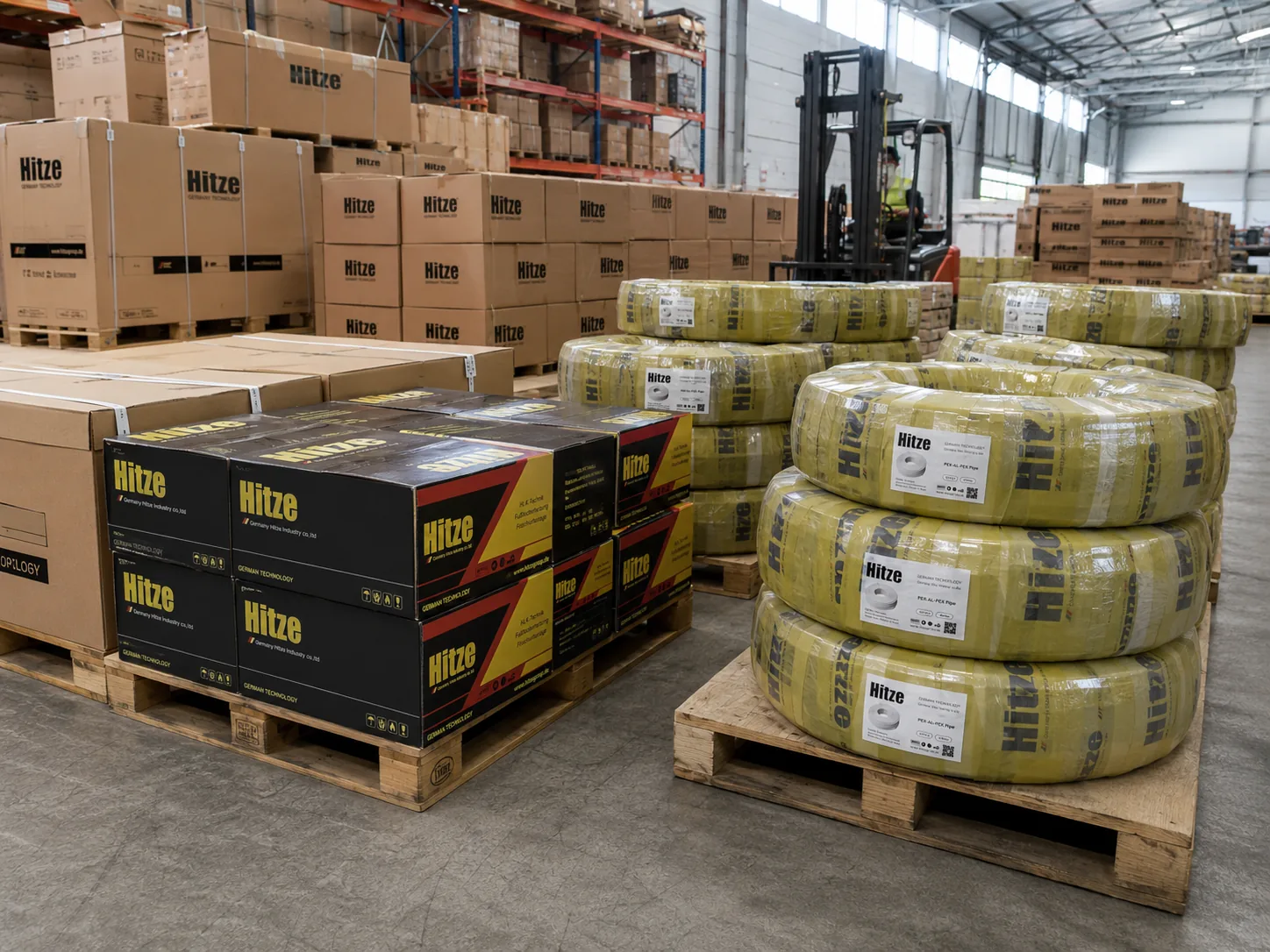
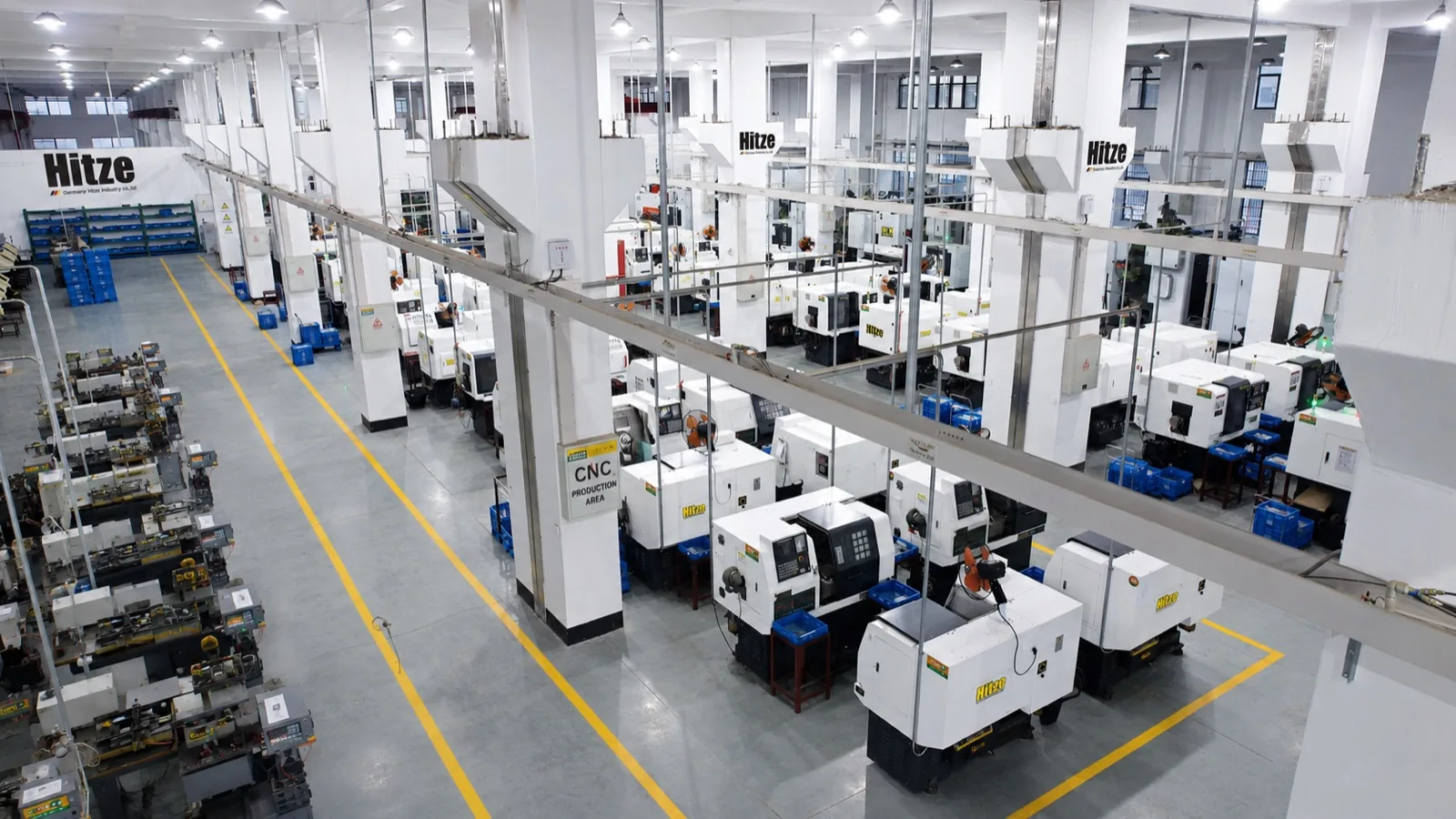
Single-source only pays off if the one factory is genuinely built to carry the range — otherwise you have concentrated your risk without earning the reward. As a German brand engineered in Germany and built to German DIN standards, with a base founded in 1974 and a 120,000 m² production site running parallel extrusion and injection-moulding lines, Hitze structures its own operation to be the dual source inside one supplier. Here is what that looks like in practice:
- Pipe and fittings built to the same reference spec. PP-R systems to DIN 8077/8078 and EN ISO 15874, PEX to ASTM F876/F877, oxygen-barrier heating pipe to DIN 4726, and multilayer to EN ISO 21003 (gas grade to AS 4176.8) — so the socket, the crimp and the pipe resolve to one dimensional world, not two.
- Hydrostatic and joint verification in-house. Fittings and fused joints are clamped and pressure-tested against DIN and EN ISO thresholds on the line, because a system warranty is only as good as the joint that survives the test bench.
- Lead-free brass grades matched to the water. DZR grades CW724R, CW511L, CW602N and standard CW617N across fittings, valves and manifolds — so the metal side of the system is specified, not assumed.
- One certification pack for the range. SKZ (PP-R and PE-Xb), DVGW type examination for PP-R drinking-water pipe, WRAS material approval, an independent NSF / BS 6920 potable test report, ISO 45001, and SAI Global StandardsMark for multilayer — plus certification to cUPC/UPC, NSF-14 and NSF/ANSI 61 and CE with a Declaration of Performance. Certificate numbers are available on request, and scope varies by market and order.
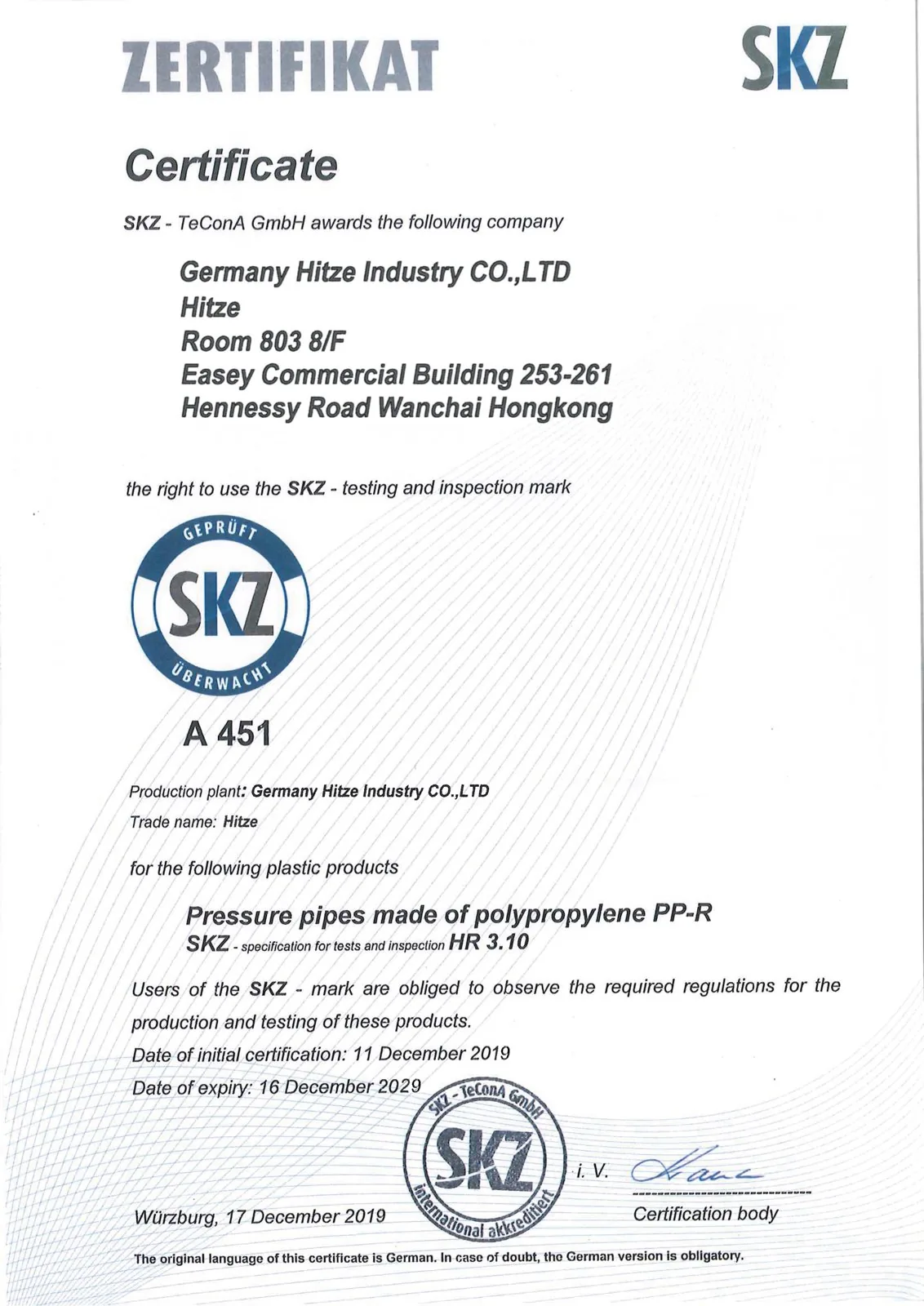
The distinction that matters for a trade buyer: this is one manufacturer standing behind the pipe, the fitting, the brass and the seal — which is precisely what lets the certification and compliance for your resale live in a single certification pack instead of two stapled-together regimes.
A worked scenario: the split-supplier saving that cost a distributor $9,000
Picture a regional wholesaler stocking multilayer PEX-AL-PEX for hydronic and potable runs. To shave cost, they buy pipe from one factory at a slightly keener price and press fittings from a second. On paper the split saves them a few cents per metre — call it a couple of hundred dollars across a container. Over the year they place roughly forty replenishment orders; two vendors means two PO chains, two QC receipts and two certificate files to keep current, so the admin they thought was free quietly consumes most of that saving before a single joint is even pressed.
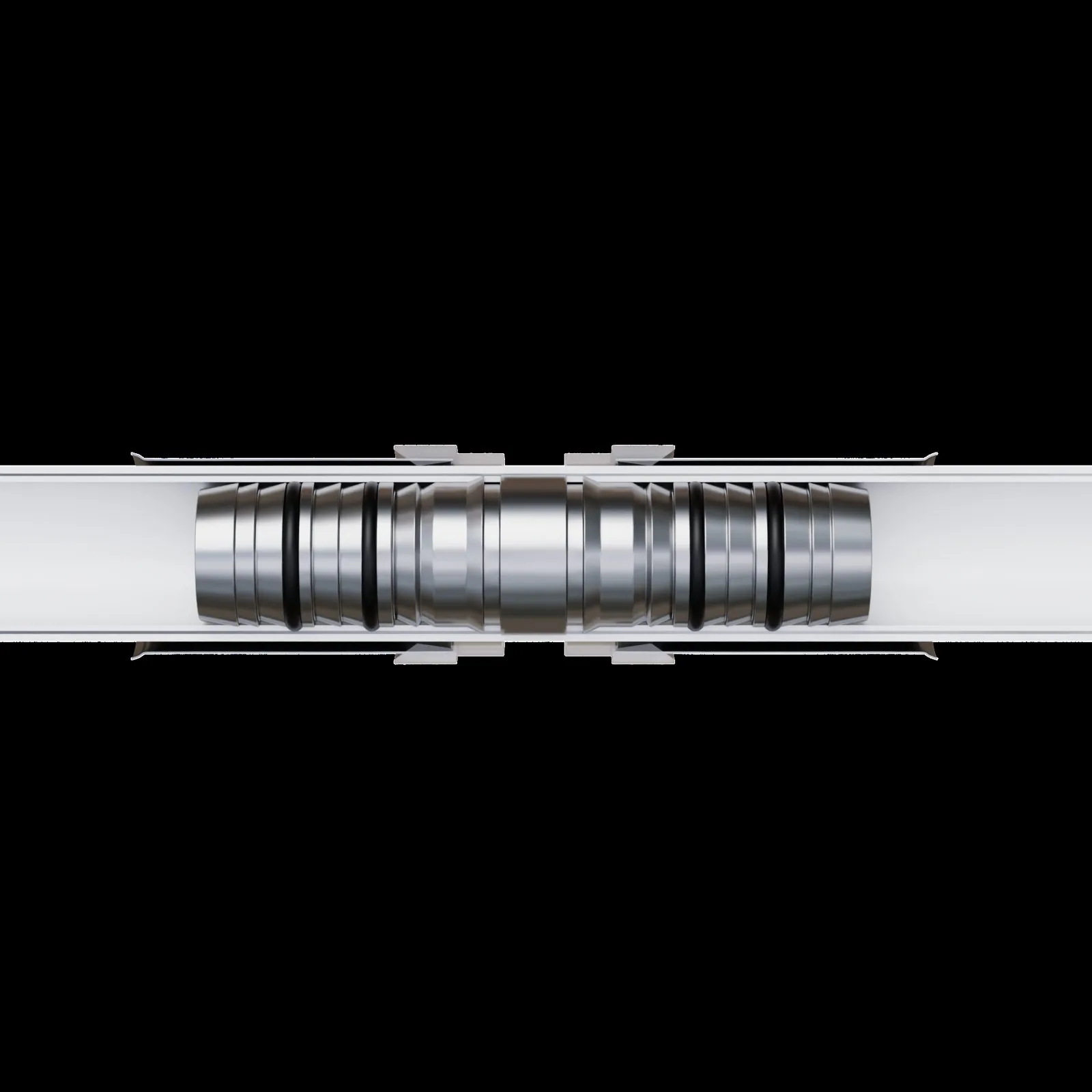
Then the tail risk arrives. A crew presses the second-brand fitting onto the first-brand pipe on a 20 mm riser; the tolerance stack is marginal, and eighteen months later the joint weeps behind a finished wall. The pipe maker points at the fitting, the fitting maker points at the pipe, neither warranty applies to a mixed system, and the insurer declines the water-damage claim for the same reason. The wholesaler eats the remediation, the callback and the relationship damage — comfortably past $9,000 once drywall, labour and goodwill are counted — to protect a few hundred dollars of unit-price saving. A single-brand system would have made that a warranted system joint with no seam for two makers to disown.
Best for / not for: who should consolidate and who shouldn’t
Single-source is best for distributors and importers who resell into the trade and carry the callback — anyone whose brand is the last recognisable name before the installer, and who therefore owns the warranty risk whether they signed up for it or not. It suits buyers building a private-label range (one certified system under your name beats a Frankenstein of two suppliers’ parts), reorder programmes that value consistency between shipments, and specifiers who need a single submittal pack to pass inspection. If you want the full pipe-plus-fittings basket to move under one PO, one warranty and one certificate file, consolidation is the obvious win.
It is not the right default for pure spot buyers doing a one-off container of a single SKU they never warrant, or for a buyer whose overriding constraint is continuity across independent geographies and who genuinely needs two factories on two continents for disaster resilience. Even then, the honest recommendation is to make your primary supplier a deep one — parallel lines, held stock, a live certificate pack — and treat the second source as insurance, not as a way to split every basket in two.
Thinking about consolidating pipe and fittings under one brand?
If you are a distributor or importer who resells to trade and carries the warranty risk, a single-brand system removes the seam that mixed-supplier buying leaves behind — one PO chain, one certification pack, one party accountable for the joint. If you only ever spot-buy a single SKU you never warrant, the math is different and consolidation may not be worth it. For everyone in between, it usually is. Explore Hitze’s wholesale plumbing and heating pipe supply to see the full single-source range, pair it with matched press fittings, or build it under your own label through the private-label and ODM program. There is no MOQ — start with samples or a small trial order — and the matched Hitze pipe-and-fitting system carries a 50-year warranty.
Frequently asked questions
Does mixing pipe and fitting brands really void the warranty?
Very often, yes. Most manufacturers warrant their pipe on the assumption it is joined with their approved fittings, and vice versa — and there is no crimp coupling that lets you join two makers’ PEX and keep both warranties. Beyond the manufacturer, an insurer investigating a water-damage claim can deny it once a mixed-brand, out-of-warranty joint is identified as the failure point. A single-brand system keeps one party accountable for the whole joint.
Isn’t buying from a single supplier riskier if that factory has a problem?
It is — concentration is the one honest advantage of multi-supplier sourcing. The mitigation is to choose a supplier deep enough to act as its own backup: parallel extrusion and moulding lines, container-ready stock across the range, and live certificates so one audit covers everything. That gives you single-brand compatibility and warranty without leaving your whole range exposed to one line going down.
Is single-source actually cheaper, or just more convenient?
On unit price alone it can be a touch higher line-by-line. On total cost of ownership it is usually cheaper: one PO chain instead of two (each order costs roughly $50–$150 in loaded admin), stronger volume leverage on the full basket, one certificate pack to maintain, and the avoided cost of a mixed-brand warranty dispute. The saving from splitting suppliers tends to be small and visible; the cost tends to be large and delayed.
How do I know the pipe and fittings are truly compatible?
Look for one reference spec set on both. For PEX, ASTM F877 defines which fitting specifications (F1807, F2080, F2159 and others) are valid; for PP-R, EN ISO 15874 covers pipes and fittings as one system; for barrier heating pipe, DIN 4726 caps oxygen diffusion at 0.1 g/m³ per day at 40 °C. When one manufacturer builds both ends to the same standards, compatibility is designed in rather than trusted at the joint.
Is Hitze pipe made in Germany?
Hitze is a German brand, engineered in Germany and built to German DIN standards — DIN 8077/8078 and EN ISO 15874 for PP-R, DIN 4726 for barrier heating pipe — and is DVGW- and SKZ-certified. The value for a trade buyer is that the pipe, fittings, brass and seals are engineered as one certified system, so a single certification pack and one accountable party stand behind the whole range.
Can I get the whole single-source range certified under my own brand?
Yes — a single-brand system is easier to private-label precisely because one manufacturer holds the certification scope for pipe and fittings together. That lets the compliance sit under your name as one pack rather than two suppliers’ documents stapled together. There is no MOQ, so you can start with samples or a small trial order, and the matched Hitze pipe-and-fitting system carries a 50-year warranty. Specific certificate numbers and lead times are available on request and vary by market and order.