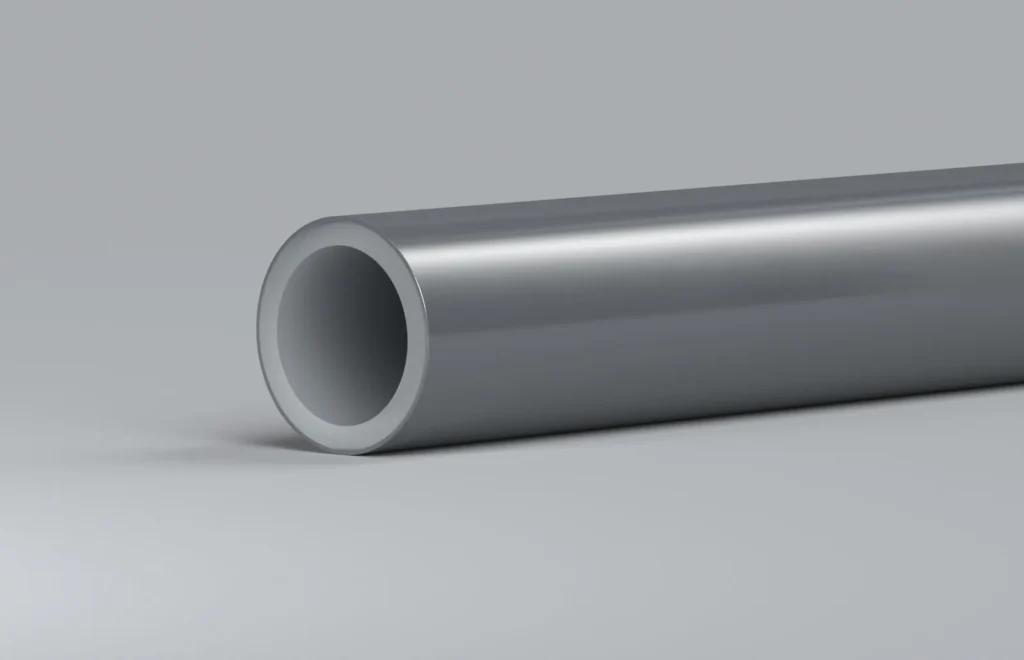
The letter after “PEX” — a, b or c — describes how the pipe was crosslinked, not how good it is. That single misunderstanding drives most of the confusion on the jobsite and most of the marketing noise in the catalogues. All three types are the same crosslinked polyethylene, all three carry the same core certifications, and all three are dimensionally identical under the same ASTM standard. Where they genuinely diverge is flexibility, kink behaviour, and — the one that actually changes what you can do on site — which fitting system they accept. This guide walks the manufacturing methods, the real performance gaps, and the one decision where the type does matter.
Key Takeaways
- The letter is a process, not a grade. PEX-a is crosslinked with peroxide in the melt; PEX-b with silane in a post-extrusion water bath; PEX-c with an electron beam. Same polymer, three roads to the same crosslinked network.
- The standard is the floor — and it is not the same floor for every type. ASTM F876 sets the minimum degree of crosslinking (measured by gel content, ASTM D2765) at 70% for PEX-a and 65% for PEX-b and PEX-c (per Viega). Typical achieved values run higher: PEX-a ~80–85%, PEX-c ~70–75%, PEX-b ~65–70%.
- The one decision that actually matters: cold-expansion (F1960) fittings work only with PEX-a — it has the shape memory to shrink back and seal. Crimp, cinch and push-fit work with all three.
- PEX-a is the most flexible and the only type you can kink-repair with a heat gun. PEX-b and PEX-c are stiffer; a kink means cut and rejoin.
- Best for: installers and distributors who want to match pipe type to tool and job. Not a factor in code approval — F876/F877 pipe is F876/F877 pipe, whatever the letter.
What the a, b and c actually mean: three ways to crosslink one polymer
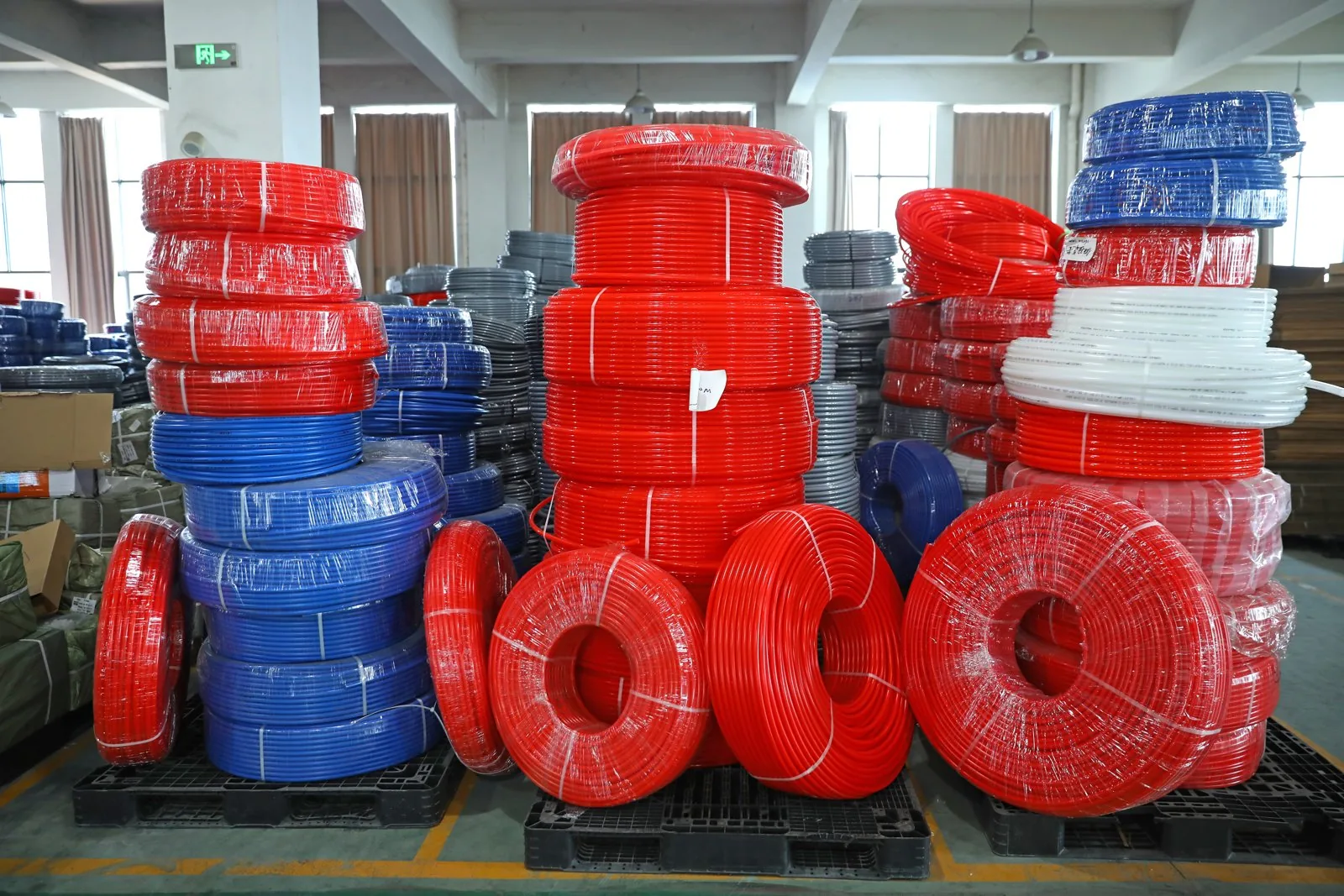
Plain polyethylene is a thermoplastic — it softens and flows when it gets hot, which is exactly what you do not want in a pipe carrying 60 °C water. Crosslinking chemically ties the polymer chains together into a network so the material keeps its shape and pressure rating at temperature. That is what turns PE into PEX. The three letters simply record which crosslinking process the factory used to build that network. None of them is a marketing tier; they are engineering routes, each with a different by-product on the jobsite.
PEX-a (peroxide, the Engel method) crosslinks the polyethylene while it is still molten, during extrusion, above the crystalline melting point. A peroxide is blended into the resin and, under heat and pressure, decomposes into radicals that strip hydrogen atoms and knit carbon-to-carbon bonds directly between chains. Because this happens in the melt, before the polymer has set into a crystalline structure, the crosslinks land the most evenly and the highest — commonly 80–85% (Uponor cites its own Engel-method PEX-a at around 85%). That uniformity is the physical origin of PEX-a’s two signature traits: the most flexibility and the strongest thermal (shape) memory.
PEX-b (silane, the moisture-cure method) is a two-stage process. Silane is grafted onto the polyethylene during extrusion, but the actual crosslinks only form afterward, when the finished pipe sits in a hot water or steam bath and moisture drives a condensation reaction that bridges the chains through silicon-oxygen links. It is the most common method worldwide because it is fast and economical, and modern PEX-b comfortably clears the standard — typically landing in the 65–70% band. The trade-off is that the network forms in the already-solid, crystalline pipe, so it is a touch less uniform and the pipe is noticeably stiffer than PEX-a.
PEX-c (electron-beam irradiation) crosslinks cold. The extruded pipe passes under a high-energy electron beam that splits off hydrogen atoms and forms crosslinks below the melting point, with no chemical additive left in the pipe. It is the cleanest process environmentally, and dosing gives precise control — typical results land around 70–75%. Its historical weakness was beam penetration on thicker walls, which could leave the outer skin more crosslinked than the core; on modern lines running the right wall thicknesses that gap is small, but PEX-c remains stiffer than PEX-a.
The number that separates a good pipe from a bad one is not the letter
Here is the point most comparison charts bury: the letter tells you the process, but the degree of crosslinking tells you whether the pipe is any good — and a well-made PEX-b will beat a badly-made PEX-a every time. ASTM F876 sets a hard floor that differs by method — 70% crosslinking for PEX-a and 65% for PEX-b and PEX-c (per Viega’s reading of the standard) — measured as gel content under ASTM D2765: a specimen is weighed, immersed in hot solvent to dissolve away everything that is not crosslinked, then dried and re-weighed. The insoluble fraction that survives is the network. Below its floor a pipe hasn’t cured enough to hold long-term hydrostatic strength; as a general polymer-engineering principle, pushing crosslink density too high eventually trades toughness for brittleness and stress-cracking risk. The sweet spot is a range, not a “more is always better” line.
What this means for a buyer is blunt: a PEX-a coil that came off a poorly controlled line at 68% — below the 70% floor its own type has to clear — is a worse pipe than a well-cured PEX-b coil comfortably over its 65% floor, even though the marketing says PEX-a is “premium.” The type predicts the typical crosslink range, but only a mill test report against F876 proves the pipe in front of you actually hit it. When you are vetting a manufacturer, the D2765 gel-content result on the batch is the number to ask for — not a reassurance about which of the three letters is on the print stream.
Where the differences are real: flexibility, kink repair and cold weather
Strip away the myths and three practical gaps survive, all of them downstream of how evenly the pipe crosslinked. Flexibility is the first: PEX-a has the tightest bend radius and the softest feel in the hand, which is why radiant-floor crews and repipe installers reach for it — fewer elbows, easier to snake through joists and studs. PEX-b and PEX-c are stiffer; still perfectly workable, but they fight you a little more on tight bends and want more support clips.
Kink repair is the one that saves a fitting on a bad day. Because PEX-a’s crosslinks formed in the melt, it has genuine thermal memory: heat a kinked section with a hot-air gun and the pipe relaxes back to round, and you carry on. Do that to PEX-b or PEX-c and you will scorch it before it recovers — a kink in those types is a cut-and-rejoin, which on a finished wall means an extra coupling you’d rather not bury. Cold-weather behaviour is the third: no PEX is “freeze-proof,” but PEX-a’s elasticity lets it expand further with an ice plug before the wall fails, which is why it is the default in cold-climate and exposed runs. It is a margin, not a guarantee — a hard enough freeze bursts any pipe.
On the specs that get quoted to scare buyers — burst pressure, oxygen permeation, chlorine life — the honest answer is that the differences between compliant types are small and often swamped by other choices. Oxygen resistance in a heating pipe comes from an EVOH barrier laminated to the wall (DIN 4726), not from the crosslinking letter. Chlorine and oxidative resistance are set mostly by the antioxidant package and are tested and marked under ASTM F2023 regardless of type. Chase the certification and the mill data, not the letter, on these.
The one decision that actually changes your job: fittings
If you take one thing from this article to the jobsite, take this: your fitting system, not your preference, often chooses the PEX type for you. Cold-expansion fittings built to ASTM F1960 — the ones where a tool expands the pipe and a reinforcing ring, then the pipe shrinks back tight over the fitting barb — rely entirely on shape memory. Only PEX-a has enough of it, because it is crosslinked in the melt and retains the thermal memory to shrink back over the barb (Viega makes the same point). Try to cold-expand PEX-b or PEX-c and it will not recover enough to seal; the joint is unreliable and unlisted. That is the single hard compatibility rule in the whole PEX world.
Everything else is open. Copper-crimp fittings (ASTM F1807), stainless cinch clamps (ASTM F2098) and push-fit fittings all work across PEX-a, PEX-b and PEX-c, because they clamp mechanically over the pipe rather than relying on the pipe to spring back. So the practical logic runs backwards from the tool: if your crews are standardised on an expansion tool, you are buying PEX-a, full stop. If they run a crimp or cinch tool, any of the three types is fair game and you can choose on flexibility and price. A distributor stocking for a mixed contractor base usually carries PEX-a for the expansion crowd and a crimp-grade PEX-b or PEX-c for everyone else.
| Factor | PEX-a (peroxide) | PEX-b (silane) | PEX-c (e-beam) |
|---|---|---|---|
| Crosslink stage | In the melt (hot) | Post-extrusion water bath | Post-extrusion, cold beam |
| Typical crosslink % | ~80–85% | ~65–70% | ~70–75% |
| F876 minimum crosslink | 70% (gel content) | 65% (gel content) | 65% (gel content) |
| Flexibility | Highest | Stiffer | Stiffer |
| Kink repair (heat gun) | Yes | No — cut & rejoin | No — cut & rejoin |
| Expansion (F1960) | Yes — only PEX-a | No | No |
| Crimp / cinch / push-fit | Works with all three types | ||
| Relative cost | Highest | Lowest | Mid |
Best for / not for: how to choose without overthinking it
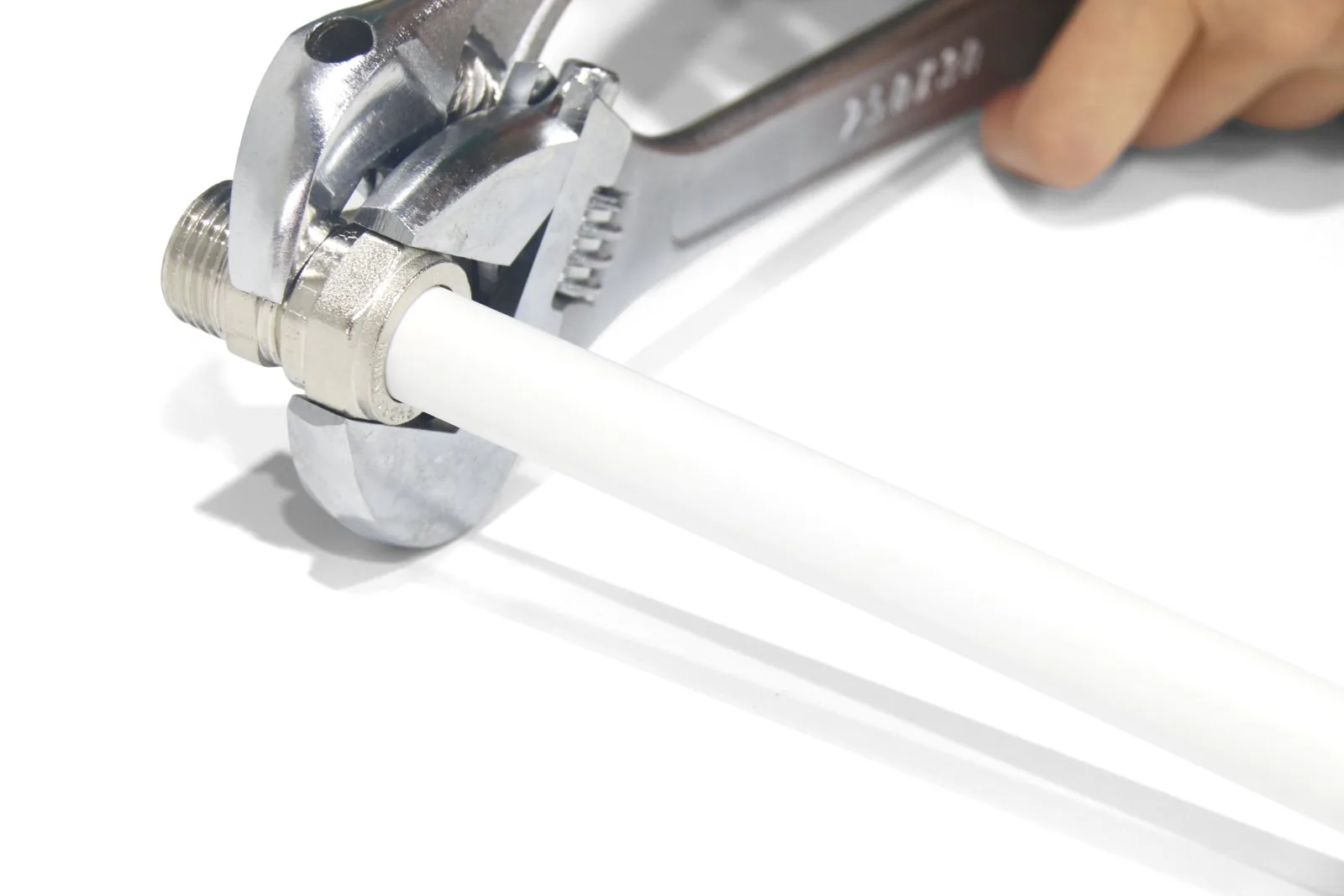
Choose PEX-a when you are running an expansion-tool shop, doing radiant floor loops or a full-house repipe where the tight bend radius and heat-gun kink recovery genuinely save labour, or working cold and exposed runs where the extra elastic margin matters. It costs more per metre and you are paying for real, situational benefits — not a compliance upgrade.
Choose PEX-b when you crimp or cinch, want the lowest landed cost per metre, and are plumbing standard hot-and-cold distribution where flexibility is a convenience rather than a requirement. It is the workhorse of the global PEX market for good reason. Choose PEX-c when you want a middle path — stiffer than PEX-a, cleaner process, no chemical additive — and again run crimp or cinch fittings. Do not choose on the letter alone if a mill test report, a real certification and consistent dimensions are on the table: a certified, dimensionally-tight PEX-b from a controlled line will outperform an uncertified PEX-a coil bought on price.
What Hitze checks, and how the PEX is built
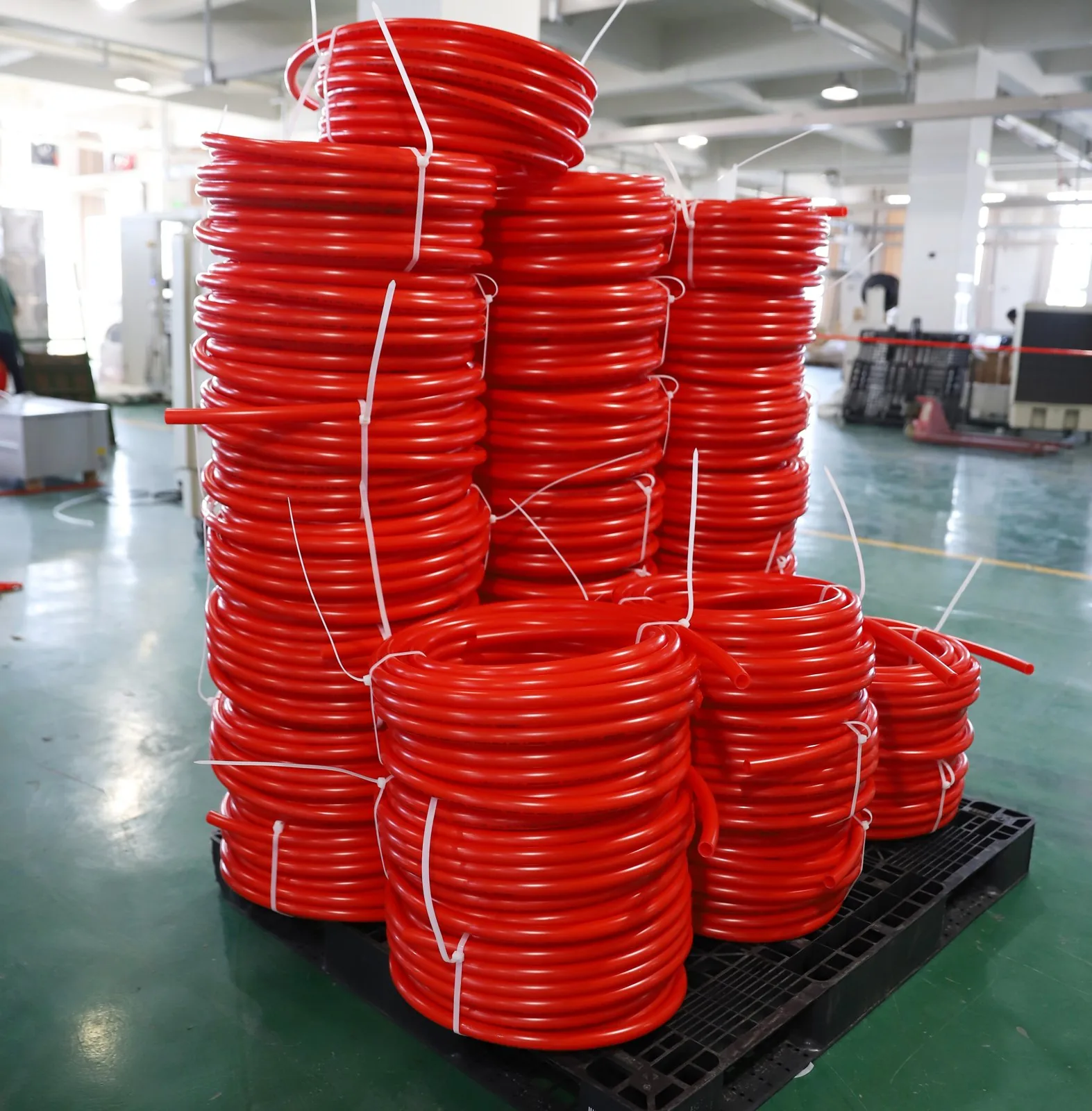
Hitze extrudes all three — PEX-a, PEX-b and PEX-c — in both potable and oxygen-barrier heating grades, so the type follows your fitting system rather than the other way around. On the line, degree of crosslinking is verified by gel-content testing against the ASTM F876 requirement, and finished pipe is pressure-tested batch by batch before it is coiled and packed. For the heating grades, the oxygen barrier is built to DIN 4726 so oxygen-diffusion corrosion cannot reach the ferrous parts of a hydronic system — a property that lives in the barrier layer, not the crosslinking letter.
On documentation, the PE-Xb heating pipe is covered by a numbered SKZ test certificate from the German testing institute (Süddeutsches Kunststoff-Zentrum); the certificate number is available on request. Hitze is a German brand engineered in Germany and built to German DIN standards, founded in 1974, running a 120,000 m² production base with 1,000+ employees and exporting to 118+ countries. Which crosslinking method you specify is a conversation, not a constraint — and the mill data comes with it so your inspector, not just your supplier, is satisfied.
A worked example: speccing a two-part house
Take a real scenario a contractor faces every week: a new build with a radiant-floor ground level and a conventional hot-and-cold repipe upstairs, and a wholesaler who has to stock for it. The radiant loops want tight bends, heat-gun kink recovery and expansion fittings for speed at the manifold — that is a PEX-a job, and the oxygen-barrier grade because it is a sealed hydronic system. Upstairs, the distribution runs are straight, the crew crimps, and cost per metre matters across a whole floor — a crimp-grade PEX-b earns its place. Same house, two letters, and neither choice is about one being “better.” The wholesaler who single-sources both grades plus the matching brass from one manufacturer gets one certificate pack, one set of dimensions that seat on one crimp tool, and one warranty conversation instead of three. That is the quiet win: the type decision gets easy when the range and the paperwork all come from the same line.
Speccing PEX for a project or a stock program?
If you are an installer matching pipe to your tool, or a distributor building a range that covers both the expansion crowd and the crimp crowd, Hitze supplies PEX-a, PEX-b and PEX-c — potable and DIN 4726 oxygen-barrier grades — with gel-content and pressure-test data in the box. Explore the full Hitze PEX pipe range, or line it up against the multilayer PEX-AL-PEX system if you want a semi-rigid alternative that holds its shape. Full documentation and market certifications are on the certifications page. There is no MOQ — start with samples or a small trial order — and the matched Hitze pipe-and-fitting system carries a 50-year warranty; pricing is quoted by market and order.
Who it’s for: trade and wholesale buyers in North America and Europe. Hitze sells to distributors, importers, contractors and private-label brands — not direct to homeowners.
Frequently asked questions
Is PEX-a really better than PEX-b and PEX-c?
PEX-a is more flexible, has the strongest shape memory (so it kink-repairs with a heat gun), and is the only type that accepts cold-expansion F1960 fittings. That makes it the better tool-and-application match for radiant floors, repipes and expansion-fitting shops. It is not “better” as a material once all three meet ASTM F876 — a certified PEX-b at 70% crosslinking outperforms an under-cured PEX-a. Better depends on your fittings and your job.
Does the PEX type change what the plumbing code accepts?
No. ASTM F876 (tubing) and ASTM F877 (system) cover PEX-a, PEX-b and PEX-c equally, and F877 is the standard referenced by the IPC and UPC. All three are dimensionally identical and code-approved when they meet the standard. Inspectors look for the ASTM listing and certification marks on the print stream, not the letter.
Can I use expansion fittings on PEX-b or PEX-c?
No. Cold-expansion (ASTM F1960) fittings depend on the pipe shrinking back over the barb, and only PEX-a has enough shape memory to seal reliably. For PEX-b and PEX-c, use copper-crimp (F1807), stainless cinch clamps (F2098) or push-fit — all of which also work on PEX-a.
Which PEX type resists chlorine and hot water best?
Chlorine and oxidative resistance come mainly from the antioxidant/stabiliser package, not the crosslinking letter, and are tested and marked under ASTM F2023 regardless of type. Ask for the F2023 chlorine-resistance designation on the pipe (for example an end-use rating of 25% at 140 °F / 75% at 73 °F) rather than choosing a letter for chlorine life.
How do I verify a supplier’s PEX actually meets the crosslinking spec?
Ask for the batch gel-content result tested to ASTM D2765 against the applicable ASTM F876 minimum — 70% for PEX-a, 65% for PEX-b and PEX-c — plus the pressure-test record and the certification pack. The letter predicts the typical range; only the mill test report proves the coil in front of you hit it. Hitze provides this data with the shipment.
Is Hitze PEX made in Germany?
Hitze is a German brand, engineered in Germany and built to German DIN standards, with the PE-Xb heating grade covered by a numbered SKZ test certificate. It manufactures PEX-a, PEX-b and PEX-c in potable and DIN 4726 oxygen-barrier grades for trade and wholesale buyers across North America and Europe.


